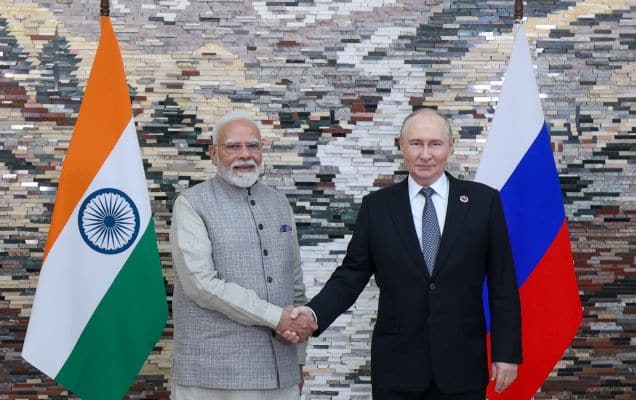
Prime Minister Narendra Modi today, virtually addressed the Council of Mayors and Deputy Mayors of BJP in Ahmedabad, Gujarat. PM Modi started his address by highlighting the journey of Sardar Vallabhbhai Patel, from working for the city of Ahmedabad through the municipality to becoming the Deputy Prime Minister.
PM Modi talked about how Gujarat has been innovating for years in transportation; PM Modi said, “Many years back, the innovative rickshaw service, G-autos, was started in Gujarat. This innovation was done by none other than our team of auto drivers.” PM Modi further encouraged the mayors and deputy mayors to learn from each other and work towards development through forward thinking.
PM Modi talked about making unprecedented investments in the urban infrastructure of India, PM Modi said, “Till 2014, the metro network in our country was less than two hundred and fifty kms. Today the metro network in the country is more than 775 kms”. He also encouraged mayors to reach out to the street vendors about PM Svanidhi. “Today, for the first time, these people have been linked to the banking system through PM Svanidhi Yojana. Under this, about 35 lakh beneficiaries across the country have got the facility of loan from the bank,” he said.
PM Modi further added that it is his endeavour that our cities also become the centre of a holistic lifestyle, PM Modi said, “Today smart facilities are being built in over a hundred cities. These are the cities that are going to be the lighthouses of urban planning in the future.”

PM Modi highlighted the stark difference between earlier governments and the present regime under his leadership in creating housing for the urban poor, he said, “About 1.25 crore houses have been sanctioned across the country under the Pradhan Mantri Awas Yojana - Urban. Before 2014, there was a provision of Rs 20 thousand crores for the houses of the urban poor but in the last 8 years, a provision of more than Rs 2 lakh crores has been made for it. This shows our commitment to the urban poor.”
Talking about how development in urban areas should not be centric over elections but should focus on the betterment of cities regardless of a looming electoral loss, PM Modi gave an example and said, “I put an example of this in front of you from Gujarat itself. In the year 2005, rules and regulations were made to remove urban encroachments…Even then many people felt that this would harm the elections…You will be surprised that people themselves joined this campaign, and started removing their encroachments themselves. When the public sees honesty and implementation is seen without discrimination, then people themselves come forward and support the policies.”
PM Modi iterated that apart from the development and planning of tier-1 cities and satellite towns, we should also focus on developing the tier-2 & 3 cities as well. He further encouraged to use the existing and new systems for multiple utilities. PM Modi said, “The work of CCTV cameras is not only crime detection, but they help in many such tasks, monitoring related to traffic, transport, cleanliness.”

PM Modi also linked the beautification of cities to increased tourism in the country, he said, “Sabarmati Riverfront and Kankaria Lake in Ahmedabad are the best examples of how tourism increases with the beautification of cities, changes in city life. Ahmedabad has now also got the status of World Heritage City.”
PM Modi finally addressed and reiterated how India adopted cleanliness as a way of life from Swachh Bharat Abhiyan, PM Modi said, “Due to the continuous efforts of the last 8 years, unprecedented public awareness has also come about cleanliness. The processing of solid waste has increased from 18 per cent to about 75 per cent as compared to before 2014.” PM Modi further exemplified cities like Surat and Indore, where the waste generated from the cities is becoming a source of income for the urban bodies and urged people to take inspiration from it.
सरदार साहब ने दशकों पहले म्यूनिसिपैलिटी में जो काम किए, उसे आज भी बहुत सम्मान से याद किया जाता है।
— narendramodi_in (@narendramodi_in) September 20, 2022
आपको भी अपने शहरों को उस स्तर पर ले जाना है, कि आने वाली पीढ़ियां आपको याद करके कहें कि, हां, हमारे शहर में एक भाजपा के मेयर आये थे तब ये काम हुआ: PM @narendramodi
सबका साथ-सबका विकास, सबका विश्वास और सबका प्रयास की जो वैचारिक परिपाटी भाजपा ने अपनाई है, वही हमारे शहरी विकास में भी झलकती है।
— narendramodi_in (@narendramodi_in) September 20, 2022
यही हमारे गवर्नेंस मॉडल को दूसरों से अलग करता है: PM @narendramodi
आज़ादी के अमृतकाल में आज भारत अपने अर्बन इंफ्रास्ट्रक्चर पर अभूतपूर्व निवेश कर रहा है।
— narendramodi_in (@narendramodi_in) September 20, 2022
2014 तक हमारे देश में मेट्रो नेटवर्क 250 कि.मी. से भी कम का था।
आज देश में मेट्रो नेटवर्क 775 कि.मी. से भी ज्यादा का हो चुका है।
एक हजार कि.मी. के नए मेट्रो रूट पर काम भी चल रहा है: PM
शहरी गरीबों के साथ-साथ जो हमारा मध्यम वर्ग है, उसके घर के सपने को पूरा करने के लिए भी सरकार ने हज़ारों करोड़ रूपए की मदद दी है।
— narendramodi_in (@narendramodi_in) September 20, 2022
हमने RERA जैसे कानून बनाकर लोगों के हित सुरक्षित किए: PM @narendramodi
चुने हुए जनप्रतिनिधियों की सोच सिर्फ चुनाव को ध्यान में रखते हुए सीमित नहीं होनी चाहिए।
— narendramodi_in (@narendramodi_in) September 20, 2022
चुनाव केंद्रित सोच से शहर का भला नहीं कर सकते: PM @narendramodi
इस वर्ष का जो बजट है, उसमें अर्बन प्लानिंग पर बहुत अधिक बल दिया गया है।
— narendramodi_in (@narendramodi_in) September 20, 2022
अब ये भी आवश्यक है कि शहरों की प्लानिंग का भी विकेंद्रीकरण हो, राज्य के स्तर पर भी शहरों की प्लानिंग होनी चाहिए: PM @narendramodi
इस वर्ष का जो बजट है, उसमें अर्बन प्लानिंग पर बहुत अधिक बल दिया गया है।
— narendramodi_in (@narendramodi_in) September 20, 2022
अब ये भी आवश्यक है कि शहरों की प्लानिंग का भी विकेंद्रीकरण हो, राज्य के स्तर पर भी शहरों की प्लानिंग होनी चाहिए: PM @narendramodi
बीते 8 वर्षों के सतत प्रयासों से आज स्वच्छता को लेकर अभूतपूर्व जनजागृति भी आई है।
— narendramodi_in (@narendramodi_in) September 20, 2022
स्वच्छता को स्थिर बनाना है तो हमें Solid Waste Management और Waste to Wealth हमारी व्यवस्था का हिस्सा होना चाहिए: PM @narendramodi