Taking Decisive Steps Towards Securing Health of Future Generations

Published By : Admin | March 16, 2019 | 09:38 IST

That the future of the country lies in the hands of the young is well known. It is these young people of today who will shape and lead the country tomorrow. Therefore, in order to ensure that our country remains strong tomorrow, the health of the young today must be given utmost priority.

Over the last four years, the government has taken several measures to ensure that the health of infants and children are given maximum attention with a view to give them the utmost quality of life, preparing them for future when they can contribute productively to the cause of nation-building.

Impressive improvement in infant and maternal mortality rates

When a child is born, both the child and the mother need the best healthcare possible under an integrated response mechanism. In India, the infant mortality rate and maternal mortality rates are improving and in the last few years, both the indicators have shown significant reduction.

The under-five child mortality (U5MR) of India showed an impressive decline from 49 per 1000 live births in 2013 to 39 in 2016. India, with the current rate of decline of U5MR is well on track to meet the Sustainable Development Goals target of 25 for under-five child mortality by 2030.
Only half way through its term, the government had brought down the infant mortality rate by three points (8% decline), from 40 per 1000 live births in 2013 to 34 per 1000 live births in 2016.

In tandem with these gains in terms of infant and child health, the country has also shown remarkable reduction in maternal mortality rates with 22% reduction since 2013. Maternal mortality ratio of India has declined from 167 in 2011-2013 to 130 in 2014-2016. Now nearly one thousand fewer women die of pregnancy related complications each month in India. No less than UNICEF has lauded India’s progress on reducing maternal deaths.

The government launched Mission Indradhanush within the first year of its tenure. With the success of the programme, in order to accelerate mission, an Intensified Mission Indradhanush was launched, to reach each and every child up to two years of age and all those pregnant women who have been left uncovered under the routine immunisation programmes.

Four phases of Mission Indradhanush have been completed wherein 3.38 crore children were vaccinated, of which 81.67 lakh children have been fully immunized. 86.88 lakh pregnant women were vaccinated too.

Under Mission Indradhanush, the annual rate of increase of full immunisation coverage has increased from 1% to 6.7 % during the two rounds.
Notably, ‘Mission Indradhanush’ has been selected as one of the 12 best practices globally and has been featured in a special issue of the British Medical Journal, thereby recognising the government’s efforts in this direction.

Successfully handling Japanese Encephalitis

Japanese Encephalitis which has proven to be a life-threatening viral disease affecting mainly children aged less than 15 years across many parts of the country, has been tackled head on by the government. By the middle of 2018, over 15 crore children aged 1-15 years were vaccinated with the JE vaccine. Special JE re-campaign was also carried out in all 38 JE endemic districts of Uttar Pradesh where 99.20 lakh children were administered the vaccine. According to reports, the state of Uttar Pradesh which is one of the worse affected states, has seen a sharp fall in cases of JE.

POSHAN Abhiyaan

The government has sought to address the problem of malnutrition through the landmark POSHAN Abhiyaan to improve nutritional outcomes for children, adolescents, pregnant women and lactating mothers by leveraging technology, targeted approach and convergence. The aim is to reduce stunting, under-nutrition, anemia (among young children, women and adolescent girls) and reduce low birth weight. The target of the mission is to bring down stunting among children in the age group 0-6 years from 38.4% to 25% by 2022. A sum of Rs. 2122.27 crore has been released for FY 2017-18 & 2018-19 with over 10 crore people to benefit.

Therefore, the Modi government through its sincere and timely intervention has sought to strengthen the health of children and women in the country. Realising the need for timely intervention in case of infants, small children and expectant mothers, there has been a well thought out and concerted approach to address their issues. Only a healthy child who grows up to be a healthy adult can lead a healthy and strong nation in future.

Explore More
Today, the entire country and entire world is filled with the spirit of Bhagwan Shri Ram: PM Modi at Dhwajarohan Utsav in Ayodhya

Popular Speeches

Today, the entire country and entire world is filled with the spirit of Bhagwan Shri Ram: PM Modi at Dhwajarohan Utsav in Ayodhya
'Wed in India’ Initiative Fuels The Rise Of NRI And Expat Destination Weddings In India

Media Coverage

'Wed in India’ Initiative Fuels The Rise Of NRI And Expat Destination Weddings In India
NM on the go

Nm on the go

Always be the first to hear from the PM. Get the App Now!
...
6 Years of Jal Jeevan Mission: Transforming Lives, One Tap at a Time
August 14, 2025
Jal Jeevan Mission has become a major development parameter to provide water to every household.” - PM Narendra Modi

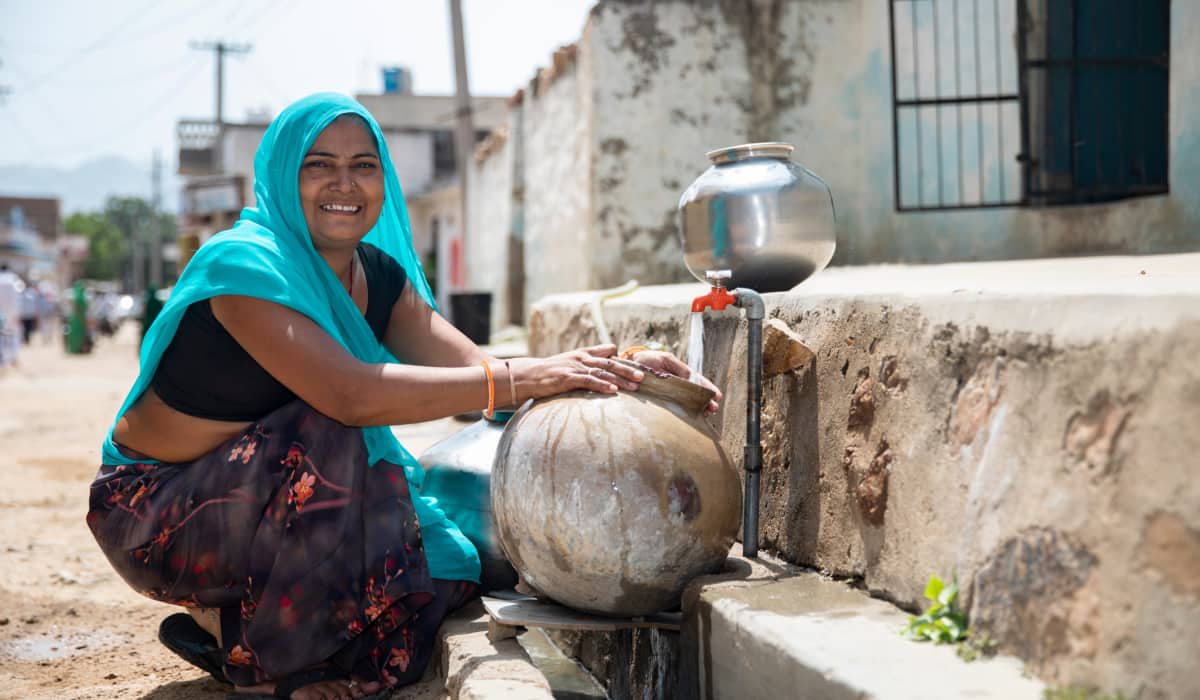
For generations, the sight of women carrying pots of water on their heads was an everyday scene in rural India. It was more than a chore, it was a necessity that was an integral part of their everyday life. The water was brought back, often just one or two pots which had to be stretched for drinking, cooking, cleaning, and washing. It was a routine that left little time for rest, education, or income-generating work, and the burden fell most heavily on women.

Before 2014 water scarcity, one of India’s most pressing problems, was met with little urgency or vision. Access to safe drinking water was fragmented, villages relied on distant sources, and nationwide household tap connections were seen as unrealistic.

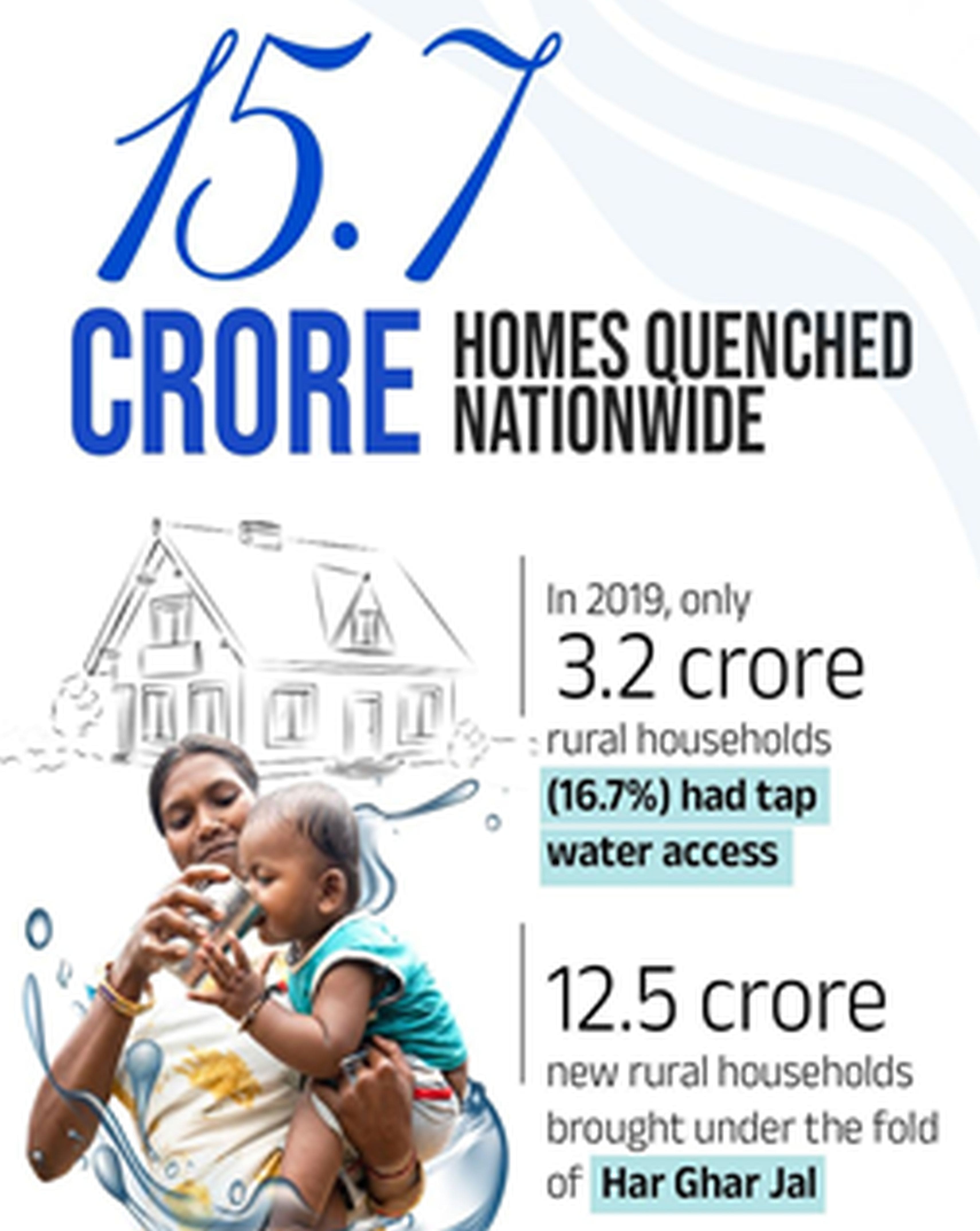
This reality began to shift in 2019, when the Government of India launched the Jal Jeevan Mission (JJM). A centrally sponsored initiative which aims at providing a Functional Household Tap Connection (FHTC) to every rural household. At that time, only 3.2 crore rural households, a modest 16.7% of the total, had tap water. The rest still depended on community sources, often far from home.

As of July 2025, the progress under the Har Ghar Jal program has been exceptional, with 12.5 crore additional rural households connected, bringing the total to over 15.7 crore. The program has achieved 100% tap water coverage in 200 districts and over 2.6 lakh villages, with 8 states and 3 union territories now fully covered. For millions, this means not just access to water at home, but saved time, improved health, and restored dignity. Nearly 80% of tap water coverage has been achieved in 112 aspirational districts, a significant rise from less than 8%. Additionally, 59 lakh households in LWE districts have gained tap water connections, ensuring development reaches every corner. Acknowledging both the significant progress and the road ahead, the Union Budget 2025–26 announced the program’s extension until 2028 with an increased budget.

The Jal Jeevan Mission, launched nationally in 2019, traces its origins to Gujarat, where Narendra Modi, as Chief Minister, tackled water scarcity in the arid state through the Sujalam Sufalam initiative. This effort formed a blueprint for a mission that would one day aim to provide tap water to every rural household in India.

Though drinking water is a State subject, the Government of India has taken on the role of a committed partner, providing technical and financial support while empowering States to plan and implement local solutions. To keep the Mission on track, a strong monitoring system links Aadhaar for targeting, geo-tags assets, conducts third-party inspections, and uses IoT devices to track village water flow.

The Jal Jeevan Mission’s objectives are as much about people as they are about pipes. By prioritizing underserved and water-stressed areas, ensuring that schools, Anganwadi centres, and health facilities have running water, and encouraging local communities to take ownership through contributions or shramdaan, the Mission aims to make safe water everyone’s responsibility..

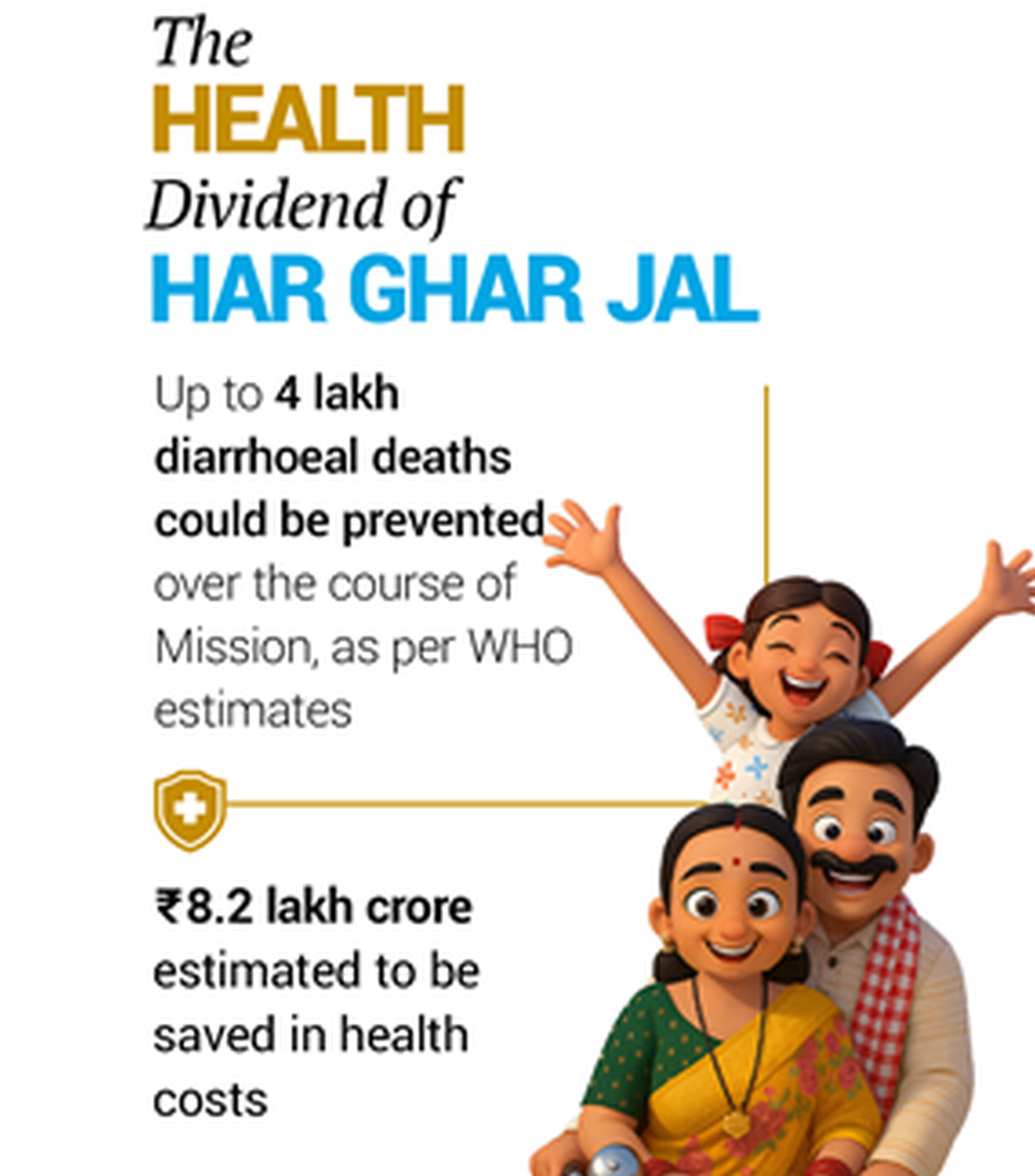
The impact reaches far beyond convenience. The World Health Organization estimates that achieving JJM’s targets could save over 5.5 crore hours each day, time that can now be spent on education, work, or family. 9 crore women no longer need to fetch water from outside. WHO also projects that safe water for all could prevent nearly 4 lakh deaths from diarrhoeal disease and save Rs. 8.2 lakh crores in health costs. Additionally, according to IIM Bangalore and the International Labour Organization, JJM has generated nearly 3 crore person-years of employment during its build-out, with nearly 25 lakh women are trained to use Field testing Kits.

From the quiet relief of a mother filling a glass of clean water in her kitchen, to the confidence of a school where children can drink without worry, the Jal Jeevan Mission is changing what it means to live in rural India.