“We must invest in resilient infrastructure today for a better tomorrow”
“The world can be resilient collectively, only when each country is resilient individually”
“To achieve shared resilience, we must support the most vulnerable”

The Prime Minister, Shri Narendra Modi addressed the 6th edition of the International Conference on Disaster Resilient Infrastructure via video message today.

Addressing the gathering, the Prime Minister extended a warm welcome to all the dignitaries and said that their participation would strengthen the global discourse and decisions on the important issue of Disaster Resilient Infrastructure. Reflecting on the impressive growth of the Coalition for Disaster Resilient Infrastructure since its inception in 2019, the Prime Minister underlined that it is now a global coalition of 39 countries and 7 organizations. “This is a good sign for the future”, he added.

Noting the growing frequency and severity of natural disasters where the damage caused is usually evaluated in dollars, the Prime Minister highlighted that its true impact on people, families and communities is beyond numbers. Shri Modi drew attention to the impact of natural disasters on humans and mentioned earthquakes destroying houses making thousands of people homeless and natural disasters disrupting water and sewage systems putting people’s health at risk. He also touched upon natural disasters that can impact energy plants leading to potentially dangerous situations.

The Prime Minister emphasized, “We must invest in resilient infrastructure today for a better tomorrow.” He stressed that resilience must be factored into new infrastructure creation while also being a part of post-disaster rebuilding. The Prime Minister pointed out that the focus should shift towards resilience in infrastructure once relief and rehabilitation are carried out after a disaster strikes.

Underlining that nature and disasters have no borders, the Prime Minister said that disasters and disruptions cause widespread impact in a highly interconnected world. “The world can be resilient collectively, only when each country is resilient individually”, PM Modi said. He stressed the importance of shared resilience due to shared risks and said that CDRI and this conference will help the world come together for this collective mission.

“To achieve shared resilience, we must support the most vulnerable”, the Prime Minister remarked. Referring to the Small Island Developing States at high risk of disasters, Prime Minister Modi mentioned a CDRI program for funding projects across 13 such places. He gave examples of resilient housing in Dominica, resilient transport networks in Papua New Guinea, and enhanced early warning systems in the Dominican Republic and Fiji. He expressed satisfaction that CDRI also has a focus on the Global South.

The Prime Minister recalled the formation of a new Disaster Risk Reduction Working Group with financing at the heart of its discussions during India’s G20 Presidency and said that such steps will take the world to a resilient future along with the growth of CDRI. He concluded his address by expressing confidence about the fruitful deliberations at ICDRI over the next two days.

Click here to read full text speech

Explore More
Today, the entire country and entire world is filled with the spirit of Bhagwan Shri Ram: PM Modi at Dhwajarohan Utsav in Ayodhya

பிரபலமான பேச்சுகள்

Today, the entire country and entire world is filled with the spirit of Bhagwan Shri Ram: PM Modi at Dhwajarohan Utsav in Ayodhya
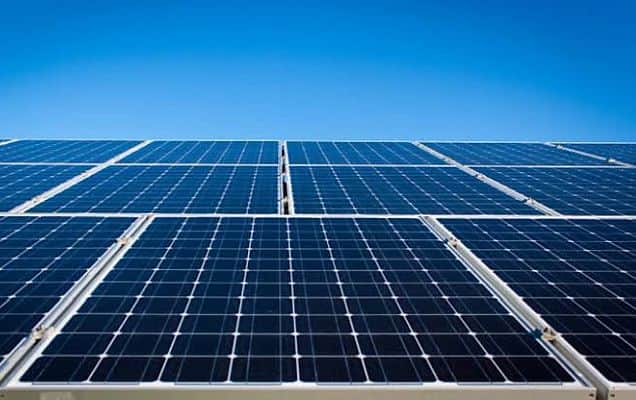
India identifies 102 GWp floating solar potential, eyes new push for reservoir-based projects

Media Coverage

India identifies 102 GWp floating solar potential, eyes new push for reservoir-based projects
NM on the go

Nm on the go

Always be the first to hear from the PM. Get the App Now!
...
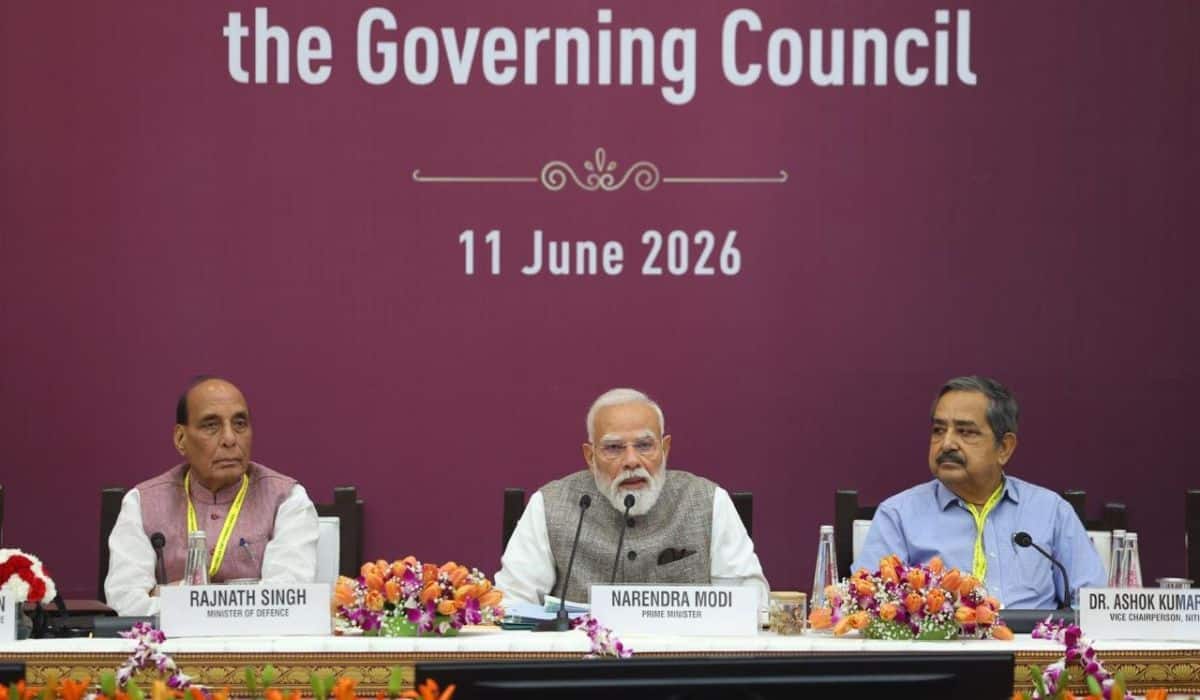
PM chairs 11th Governing Council Meeting of NITI Aayog
June 11, 2026
Vision of Viksit Bharat should become the collective resolve of every State, district, block and village: PM
PM calls India's 70 crore youth its asset, urges States to transform this Demographic dividend into Development dividend
PM encourages States to create opportunities for youth and MSMEs and actively attract investments from countries with which India has signed FTAs
States to strengthen ODOP and leverage opportunities in defence manufacturing: PM
PM emphasizes that AI should be viewed as an opportunity and people should be equipped with future ready skills
PM highlights the need for coordinated efforts to address emerging social challenges such as drug abuse and cyber fraud
PM draws attention to concerns arising from El Niño and urges States to conserve water and promote natural farming
CMs/LGs/Administrators congratulate PM Modi on completing 12 years in office
States express solidarity with the Centre to withstand the global geo-political crisis and to strengthen India’s resilience
All States and 5 UTs attend meeting; first time when CMs of all 28 States participate
Theme of meeting : Inclusive Human Development for Viksit Bharat@2047

Prime Minister Shri Narendra Modi chaired the 11th Governing Council Meeting of NITI Aayog at Rashtrapati Bhavan Cultural Centre, New Delhi, earlier today. This year’s theme was Inclusive Human Development for Viksit Bharat@2047. It was attended by Chief Ministers, Lt. Governors and Administrators representing 28 States and 5 UTs. This was the first time when Chief Ministers of all 28 States participated in the Governing Council Meeting of NITI Aayog.

Prime Minister noted that at a time when many major economies are facing uncertainty and economic challenges, India’s growth story continues to inspire the world. He emphasized the need to further strengthen the nation’s resolve towards self-reliance and highlighted the importance of adopting and implementing global best practices, particularly in the renewable energy sector.

Underscoring the importance of cooperative federalism, Prime Minister stated that the Centre and the States must work together to achieve the goal of a Viksit Bharat. He stressed that the vision of Viksit Bharat should become the collective resolve of every State, district, block and village.

Highlighting the strength of India’s demographic profile, Prime Minister observed that the country’s youth constitute its greatest asset, with nearly 70 crore Indians below the age of 25 years. Calling this a demographic dividend, he urged States to focus on transforming it into a development dividend through education, skilling and capacity-building initiatives that prepare young people for future opportunities and challenges.

Referring to India’s recently concluded trade agreements with several countries, Prime Minister encouraged States to create opportunities for youth and MSMEs and to equip stakeholders to effectively leverage the benefits arising from these agreements. He also urged States to actively attract investments from partner countries.

Emphasizing women-led development, Prime Minister called upon States to work towards increasing the number of Lakhpati Didis from 3 crore to 6 crore and stressed the importance of ensuring a safe and secure environment for Nari Shakti.

Prime Minister urged States to focus on One District One Product (ODOP) initiatives and develop export-oriented strategies around it. He also identified defence manufacturing as an emerging sector where India is establishing a distinct identity and encouraged States to formulate policies to leverage the opportunities arising from its growth.

Prime Minister highlighted the need for coordinated efforts to address emerging social challenges such as drug abuse and cyber fraud through preventive measures, awareness campaigns and effective governance.

Prime Minister also drew attention to concerns arising from El Niño conditions and appealed to States to promote water conservation and encourage natural and organic farming practices. He noted that the purchase of 11 lakh tonnes of organic manure by farmers during the current Kharif season reflected growing confidence in sustainable agriculture.

Prime Minister emphasized the need to evaluate progress at the district level, particularly through aspirational district parameters. Prime Minister suggested that on similar lines, 100 districts should be identified in the field of agriculture to bring positive results. He urged the States to take lead in this pursuit so that a phenomenal change can be achieved through the aspirational approach.

Prime Minister emphasised the need for a monitoring framework and targeted 100-day and five-year goals towards achieving the vision of Viksit Bharat@2047.

Highlighting the importance of good governance, transparency, and infrastructure for attracting investment, he urged States to focus on branding, ease of doing business, and emerging opportunities in sectors such as data centres and artificial intelligence. He emphasized that AI should be viewed as an opportunity and called for greater efforts to equip people with the skills required for the future economy.

The Chief Ministers/Lt. Governors/Administrators congratulated Prime Minister Modi on completing 12 years in his office. They also expressed solidarity with the Centre to withstand the global geo-political crisis and to strengthen India’s resilience with respect to energy requirements, and sustain its growth trajectory.

Prime Minister noted that the discussions were constructive and reflected the aspirations, hopes, experiences, best practices, and challenges of the States. Prime Minister expressed his gratitude to all the CMs, LGs and Administrators for participating in the meeting and expressed confidence that Together, through cooperation, innovation, and a shared commitment to development, India can accelerate its journey towards a Viksit Bharat by 2047.