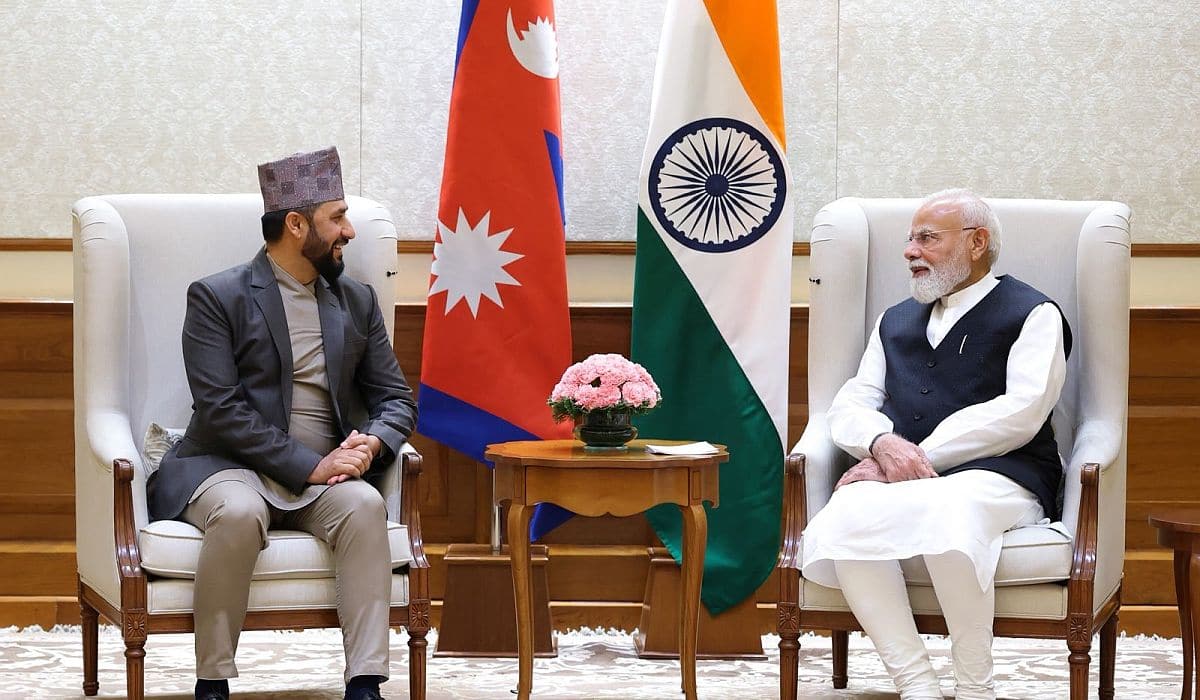
1. The Prime Minister of Australia Mr Tony Abbott paid a State Visit to India from 4-5 September, 2014 at the invitation of Prime Minister Shri Narendra Modi.

2. Prime Minister Abbott was accorded a ceremonial welcome at the Rashtrapati Bhavan on 5 September, 2014. He laid a wreath at the memorial to Mahatma Gandhi at Rajghat and also laid a wreath at India Gate.
3. Prime Minister Modi held talks with Prime Minister Abbott on bilateral, regional and multilateral issues. Prime Minister Abbott called on President Shri Pranab Mukherjee and Vice President Shri Hamid Ansari and received External Affairs Minister Smt Sushma Swaraj. Prime Minister Abbott also visited Mumbai where he called on Governor Shri C. Vidyasagar Rao. He met with Indian business leaders in Mumbai and Delhi. Four Agreements/Memoranda of Understanding were concluded and significant initiatives launched during the visit.


Bilateral Cooperation
4. The Prime Ministers welcomed the rapid growth in bilateral relations in recent years, anchored in shared values, expanding economic engagement, converging strategic interests and a growing shared agenda in regional and multilateral institutions.
5. The Prime Ministers affirmed their commitment to strengthening the bilateral Strategic Partnership and taking it to a new level of mutual trust.

6. The Prime Ministers welcomed the signing of the bilateral Civil Nuclear Cooperation Agreement as a concrete symbol of the bilateral partnership. They noted the Agreement would enable the sale of Australian uranium to support India’s growing energy needs and directed the negotiators to conclude the Administrative Arrangements at an early date. Economic Engagement
7. The Prime Ministers underlined the priority they attached to building the economic partnership, which was a pillar of the relationship. They recommitted both countries to expand trade further for mutual benefit and as a long term and sustainable boost to economic growth in both countries. They agreed there was significant scope to boost investment and collaboration in both directions in infrastructure, resources, agriculture, manufacturing, health, education and other sectors to increase efficiencies, introduce new technologies and develop innovation and skills.
8. Prime Minister Abbott welcomed growing Indian investment in Australia and underlined Australia’s commitment to providing a stable investment environment and streamlined approvals process. Prime Minister Modi too welcomed Australian investments in a range of infrastructure, resources, technology and other projects in India.
9. The Prime Ministers welcomed the progress towards a Comprehensive Economic Cooperation Agreement (CECA) would support a significant expansion of two-way trade and investment. They renewed the commitment of both countries for an early conclusion of an equitable, balanced, comprehensive and high quality agreement.
10. The Prime Ministers noted the expanding bilateral dialogue on economic policy, including in areas such as taxation, competition, financial sector regulation and infrastructure.
11. The Prime Ministers welcomed the delegation of senior Australian business leaders who had accompanied Prime Minister Abbott on his visit. They agreed that economic engagement and business partnerships should be strengthened through a revitalised CEO Forum and encouraged regular exchange of business and trade missions and the convening of an India-Australia Business Summit in Delhi in early 2015.

Defence and Security Cooperation
12. The Prime Ministers reaffirmed their desire for a peaceful, prosperous and stable Asia-Pacific region, underpinned by cooperative mechanisms. They emphasised their interest in building closer cooperation in the maritime domain.
13. The Prime Ministers committed to strengthening the defence and security partnership. They welcomed growing cooperation in defence, counter-terrorism, cyber policy, transnational crime, disarmament and non-proliferation, humanitarian assistance, disaster management and peacekeeping. They called for deepening the framework of defence and security cooperation to guide the bilateral engagement in these and other priority areas.
14. The Prime Ministers welcomed preparations for the inaugural bilateral maritime exercise to be held in 2015 and initiatives under way to further strengthen defence cooperation, including closer engagement and cooperation in defence science and industry. They also explored joint participation in events commemorating World War I. On behalf of the Prime Ministers of Australia and New Zealand, Prime Minister Abbott extended an invitation to Prime Minister Modi to attend the commemoration of the 100 year anniversary of Gallipoli in 2015.
15. The Prime Ministers, noting that both Australians and Indians have been victims of terrorism, commended the work of the Joint Working Group on Counter-Terrorism, including discussions on cyber security and the growing collaboration against the threat posed by terrorist groups. They noted the ongoing cooperation in combating illegal migration.
16. The Prime Ministers, noting the importance of the maritime dimension, welcomed discussions on maritime security in the ongoing disarmament and non-proliferation dialogue held at the level of officials.
Cooperation in Energy, Science, Water, Education and Skills
17. The Prime Ministers agreed to deepen the cooperation between both countries on energy security through a Ministerial-level dialogue. They agreed to develop a strategic partnership on energy and resources based on long-term, sustainable and reliable supply of Australian resources based on India’s energy needs. They agreed that cooperation on energy - extending to coal, LNG, renewables and uranium-and on resources such as iron ore, copper and gold were key elements of the relationship and committed to intensifying these links.
18. The Prime Ministers welcomed the success of the Australia-India Strategic Research Fund, which has provided a high impact knowledge partnership through science and technology cooperation, and announced an extension of the Fund for a further period of four years on the basis of matching commitments and reciprocity with an increasing focus on commercialisation of research outcomes.
19. The Prime Ministers welcomed increasing collaboration on the challenge of managing scarce water resources and river basin management and announced an extension of the MoU on water cooperation. Prime Minister Modi welcomed Australia’s offer to support India’s Ganga rejuvenation efforts.
20. The Prime Ministers agreed to expand high quality knowledge partnerships in education, skills and research that support mutual efforts towards greater economic and social progress. They noted its vital role and contribution to India’s national goals for innovation, productivity and growth.
21. The Prime Ministers welcomed the collaborations between Universities and called for efforts to enlarge the scope for joint research, joint Ph. D. programmes and joint degrees and commended the work of the Australia-India Education Council (AIEC) in advancing education, training and research partnerships. Prime Minister Modi expressed appreciation for the continuing efforts of Australian authorities to ensure the welfare and security of Indian students studying in Australia.
22. The Prime Ministers welcomed the increasing collaboration to develop a quality skills training framework in India. Prime Minister Abbott underlined Australia’s commitment to supporting the up-skilling of India’s workforce, including through Australia’s world class vocational education and training (VET) capabilities. The Prime Ministers welcomed partnerships between India’s Sector Skills Councils and Australia’s Industry Skills Councils in key industry areas.
23. The Prime Ministers welcomed the Australian Government’s New Colombo Plan initiative, under which young Australian students would study in institutions in India, thereby furthering youth and academic exchanges and promoting contacts.
Regional and international cooperation
24. The Prime Ministers discussed the importance of consolidating the G20 as the premier forum for international economic cooperation. Prime Minister Abbott briefed Prime Minister Modi on Australia’s priorities as host of the G20 in 2014 and underlined Australia’s interest in working closely with India to lift ambition and ensure the G20 delivers economic growth, jobs and a resilient global economy. Prime Minister Modi appreciated Australia’s chairmanship and underlined India’s commitment to the G20’s successful contribution to ensuring strong, sustainable and balanced growth of the global economy.
25. The Prime Ministers recognised the importance of the East Asia Summit (EAS) as the pre-eminent regional forum for addressing strategic, political and economic issues. They welcomed increased bilateral collaboration in the EAS, with India and Australia co-chairing the Taskforce on Access to Quality Medicines under the Asia Pacific Leaders Malaria Alliance.
26. The Prime Ministers acknowledged ongoing cooperation in other regional bodies such as the ASEAN Regional Forum and the Asia Europe Meeting. Prime Minister Abbott reiterated Australia’s support for India’s membership of the Asia Pacific Economic Cooperation forum (APEC).
27. The Prime Ministers highlighted the concrete steps towards more effective practical cooperation in the Indian Ocean Regional Association (IORA) and noted that India and Australia would work closely to further strengthen the organisation in the six priority areas of maritime security and piracy, fisheries management; disaster risk reduction; tourism and cultural exchanges, academic and S&T cooperation, and trade and investment facilitation. Both countries look forward to taking this collaboration to a higher level at the next Council of Ministers meeting in Perth in October 2014.
28. The Prime Ministers reaffirmed the importance of reform of the UN, including the Security Council, to better reflect contemporary realities. Prime Minister Modi welcomed Australia’s continuing support for India as a permanent member in a reformed United Nations Security Council.
People to People and cultural Links
29. The Prime Ministers highlighted the importance of bilateral parliamentary exchanges and agreed to reinvigorate reciprocal visits by parliamentary delegations.
30. Underlining the importance of greater connectivity to support growing commercial and cultural ties, including in the education and tourism sectors, the Prime Ministers welcomed the commencement of direct Air India flights to Australia. Noting the growing numbers of tourists travelling in both directions, they welcomed the decision to commence negotiations on a Memorandum of Understanding on Tourism.
31. The Prime Ministers noted progress in negotiations on the Social Security Agreement and called for early conclusion. Noting the importance of promoting exchanges, particularly among the youth, they also called for discussions on a Work and Holiday Visa Agreement.
32. The Prime Ministers recognised that rapidly growing people-to-people links underpin our developing partnership and will enable both countries to build even stronger relations into the future. They noted with appreciation that the Indian community is contributing significantly to the economic and social life of Australia, with India now the largest source of skilled migrants to Australia.
33. The Prime Ministers noted that arts, culture and sports can be powerful forces for bringing people together and called for closer and more intensified exchanges in the fields of culture and creative arts, including visiting exhibitions and professional training and exchanges. They welcomed the establishment of ICCR Chairs of Indian Studies in five Universities in Australia to promote academic and student exchanges and Australia’s support in the establishment of a Nalanda University Chair in Environmental Studies. They also welcomed the signing of an MoU on Sports Cooperation that would facilitate greater exchanges, including on sports training.
34. The Prime Ministers welcomed progress on negotiations for an Agreement on Transfer of Sentenced Persons and looked forward to its early conclusion.
Agreements
35. The following bilateral memoranda of understanding were signed in the presence of the two Prime Ministers:
i. Cooperation in the Peaceful Uses of Nuclear Energy
ii. MOU on cooperation in Sport
iii. Renewal of MOU on cooperation in the field of Water Resources Management
iv. MoU on Cooperation in Technical Vocational Education and Training (TVET)
36. Prime Minister Mr Tony Abbott renewed his invitation to Prime Minister Shri Narendra Modi to visit Australia. Prime Minister Modi accepted the invitation to undertake a bilateral visit to Australia at the time of the G20 Summit in November 2014. Both sides agreed that the visit of Prime Minister Modi to Australia will lead to strengthening of the cooperative relations between the two countries, and will provide further impetus for the future development of the strategic partnership.