PM addresses Kaushal Dikshant Samaroh 2023 via video message

Published By : Admin | October 12, 2023 | 12:49 IST
“Kaushal Dikshant Samaroh reflects the priorities of today's India”
“Country develops more with stronger youth power thereby doing justice to nation’s resources”
“Today, the whole world is of the belief that this century is going to be India's century”
“Our government understood the importance of skill and created a separate ministry for it, allocated separate budget”
“Important for industry, research and skill development institutions to be in tune with present times”
“Scope of skill development is continuously increasing in India. We are not limited to just mechanics, engineers, technology or any other service”
“Unemployment rate in India is at its lowest level in 6 years”
“IMF is confident of India becoming the top three economies of the world in the next 3-4 years”

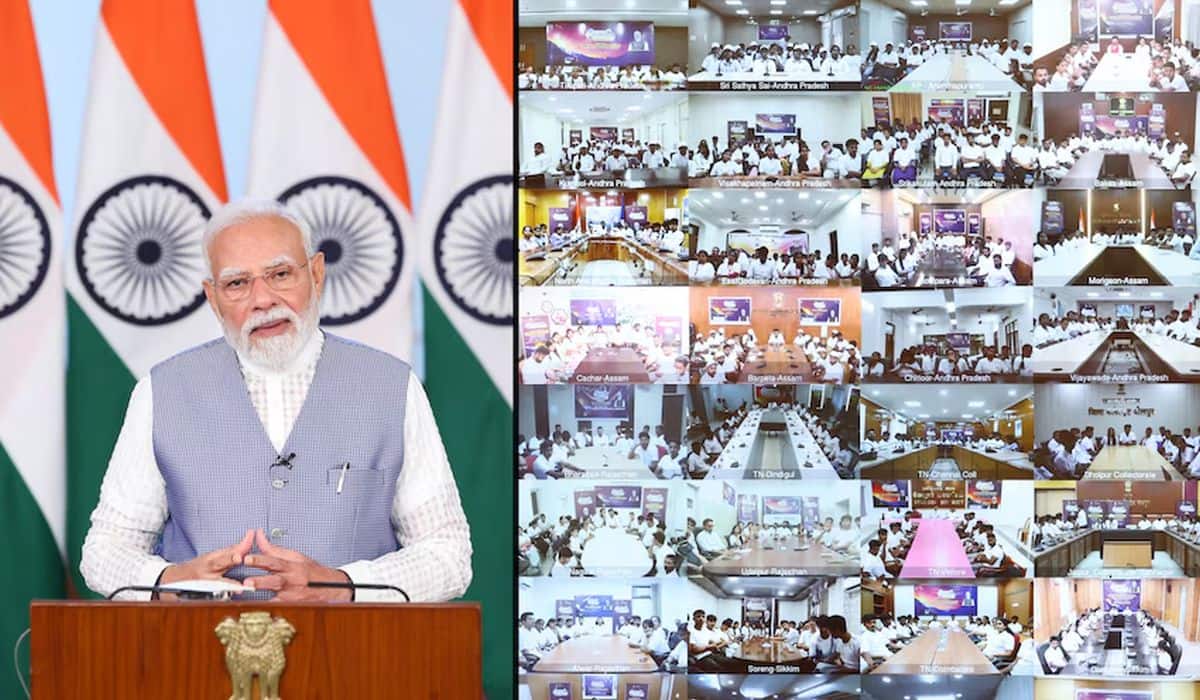
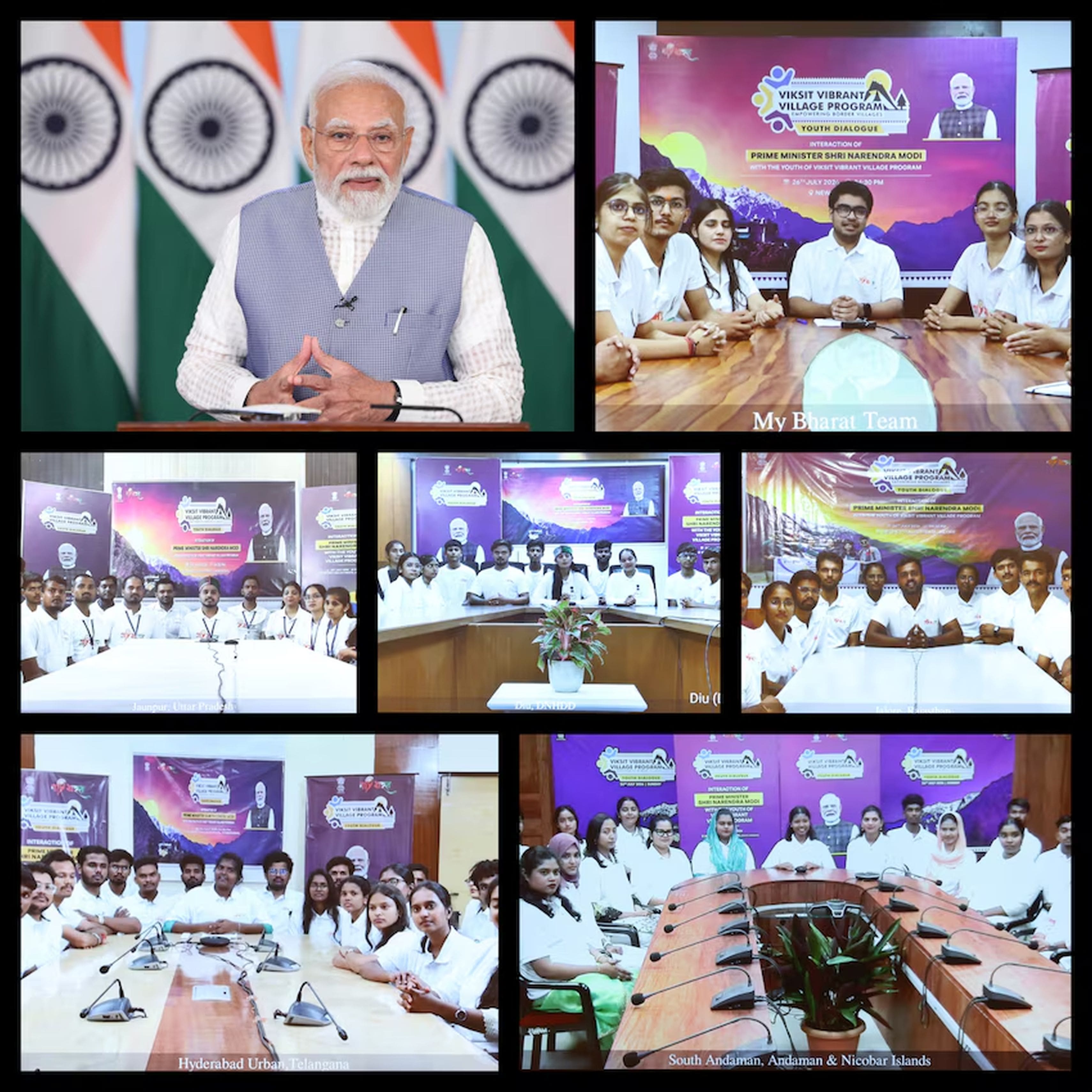
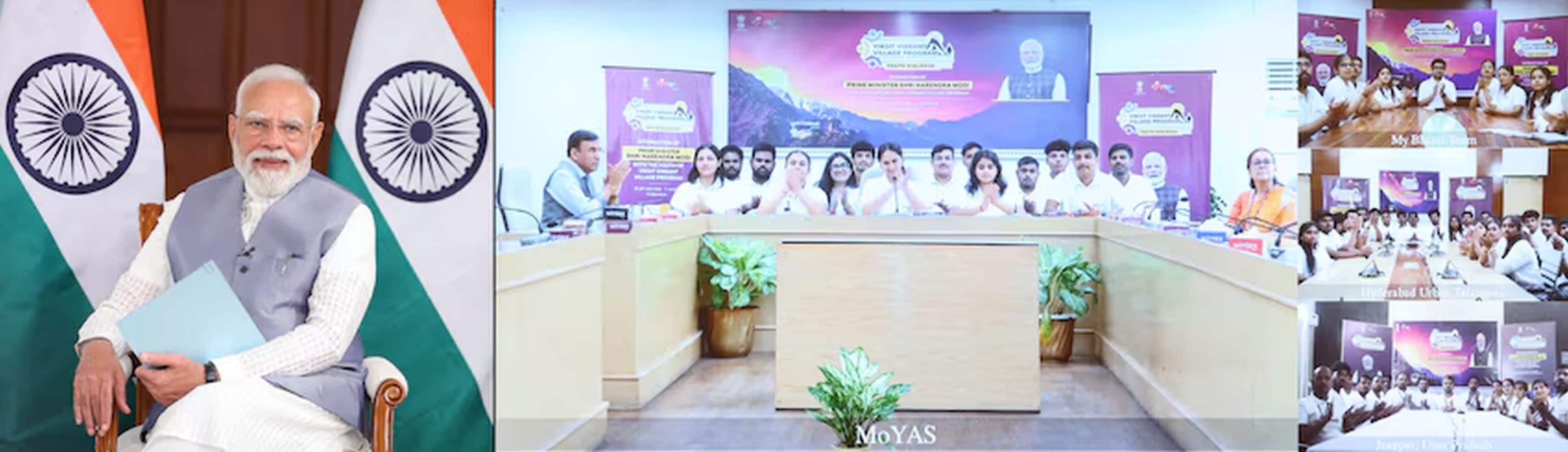
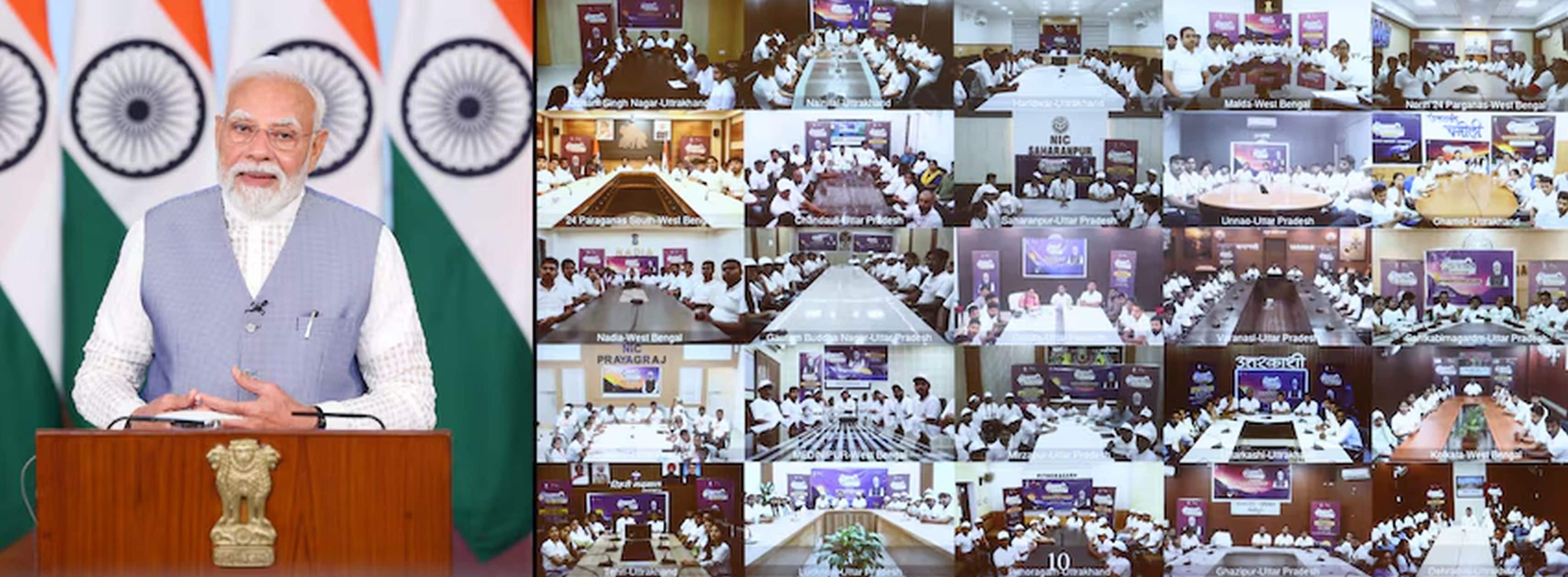
The Prime Minister, Shri Narendra Modi addressed the Kaushal Dikshant Samaroh via video message today.

Addressing the gathering, the Prime Minister remarked that this festival of skill development is unique in itself and today’s event of joint convocation of skill development institutions across the country is a very commendable initiative. He said that Kaushal Dikshant Samaroh reflects the priorities of today's India. Acknowledging the presence of thousands of youth connected with this event through technology, the Prime Minister conveyed his best wishes to all the youth.

Prime Minister Modi highlighted the importance of the power of the youth in utilizing the strengths of any country such as its natural or mineral resources, or its long coastlines and said that the country develops more with stronger youth power thereby doing justice to the nation’s resources. Today, the Prime Minister emphasized that a similar thinking is empowering India’s youth which is making unprecedented improvements in the entire ecosystem. “In this, the country's approach is two-pronged”, the Prime Minister said. He explained that India is preparing its youth to take advantage of new opportunities through skilling and education as he highlighted the new National Education Policy which has been established after almost 4 decades. The Prime Minister also underlined that the Government is establishing a large number of new medical colleges, and skill development institutes like IITs, IIMs or ITIs, and mentioned the crores of youth who have been trained under the Pradhan Mantri Kaushal Vikas Yojana. On the other hand, the Prime Minister stated that traditional sectors which provide jobs are also being strengthened while new sectors that promote employment and entrepreneurship are also being promoted. The Prime Minister also mentioned India making new records in goods exports, mobile exports, electronic exports, services exports, defence exports and manufacturing, and at the same time creating a large number of new opportunities for youth in many sectors such as space, startups, drones, animation, electric vehicles, semiconductors, etc.

“Today, the whole world is of the belief that this century is going to be India's century”, the Prime Minister said as he credited the young population of India for this. Shri Modi underlined that when the elderly population is increasing in many countries of the world, India is getting younger with each passing day. “India has this huge advantage”, he stressed as he noted the world looking towards India for its skilled youth. He informed that India's proposal regarding global skill mapping has been recently accepted at the G20 Summit which will help in creating better opportunities for youth in the coming times. The Prime Minister suggested not wasting any opportunity being created and assured that the Government is ready to support the cause. Shri Modi pointed out the neglect towards skill development in the previous governments and said, “Our government understood the importance of skill and created a separate ministry for it and allocated a separate budget.” He underlined that India is investing more in the skills of its youth than ever before and gave the example of Pradhan Mantri Kaushal Vikas Yojana which has strengthened the youth at the ground level. Under this scheme, the Prime Minister informed that about 1.5 crore youth have been trained so far. He further added that new skill centers are also being established near industrial clusters which will enable the industry to share its requirements with skill development institutes, thereby developing the necessary skill sets among the youth for better employment opportunities.

Highlighting the importance of skilling, upskilling and re-skilling, the Prime Minister noted the rapidly changing demands and nature of jobs and emphasized upgrading the skills accordingly. Therefore, the Prime Minister said, it is very important for industry, research and skill development institutions to be in tune with the present times. Noting the improved focus on skills, the Prime Minister informed that about 5 thousand new ITIs have been set up in the country in the last 9 years adding more than 4 lakh new ITI seats. He also mentioned that institutes are being upgraded as model ITIs with the objective of providing efficient and high-quality training along with best practices.

“The scope of skill development is continuously increasing in India. We are not limited to just mechanics, engineers, technology, or any other service”, the Prime Minister said as he mentioned that women’s self-help groups are being prepared for drone technology. Stressing the importance of Vishwakarmas in our everyday life, Shri Modi mentioned PM Vishwakarma Yojana which enables the Vishwakarmas to link their traditional skills with modern technology and tools.

The Prime Minister noted that new possibilities are being created for the youth as India's economy is expanding. He said that employment creation in India has reached a new height and the unemployment rate in India is at its lowest level in 6 years according to a recent survey. Noting that unemployment is decreasing rapidly in both rural and urban areas of India, the Prime Minister emphasized that the benefits of development are reaching both villages and cities equally, and as a result, new opportunities are increasing equally in both villages and cities. He also pointed out the unprecedented increase in the participation of women in India's workforce and credited the impact of the schemes and campaigns that have been launched in India in the past years regarding women empowerment.

Highlighting the recent figures released by the International Monetary Fund, the Prime Minister informed that India will remain the fastest-growing major economy in the coming years. He also recalled his resolve to take India among the top three economies of the world and said that IMF is also confident of India becoming the top three economies of the world in the next 3-4 years. He underlined that it would create new opportunities for employment and self-employment in the country.

Concluding the address, the Prime Minister stressed making India the biggest center of skilled manpower in the world in order to provide smart and skilled manpower solutions. “The process of learning, teaching and moving forward should continue. May you be successful at every step in life”, the Prime Minister concluded.

Click here to read full text speech

Explore More
Today, the entire country and entire world is filled with the spirit of Bhagwan Shri Ram: PM Modi at Dhwajarohan Utsav in Ayodhya

Popular Speeches

Today, the entire country and entire world is filled with the spirit of Bhagwan Shri Ram: PM Modi at Dhwajarohan Utsav in Ayodhya
Republic Day sales see fastest growth in five years on GST cuts, wedding demand

Media Coverage

Republic Day sales see fastest growth in five years on GST cuts, wedding demand
NM on the go

Nm on the go

Always be the first to hear from the PM. Get the App Now!
...
India - EU Joint Statement on the State Visit of European Council President and European Commission President to India and the 16th India-EU Summit
January 27, 2026

At the invitation of the Hon'ble Prime Minister of India, Shri Narendra Modi, President of the European Council, H.E. Mr. Antonio Costa, and President of the European Commission, H.E. Ms. Ursula von der Leyen, paid a State Visit to India on 25–27 January 2026 as the Chief Guests for the 77th Republic Day of India. President Costa and President von der Leyen were accompanied by a high-level delegation including High Representative for Foreign Affairs and Security Policy Ms. Kaja Kallas and Trade Commissioner Mr. Maroš Šefčovič.

This is the first visit by the leaders of the European Union as Guests of Honour for the Republic Day. It symbolises the growing closeness, depth and dynamism in India–EU relations, and their joint commitment and shared interest in shaping a resilient multipolar global order that underpins peace and stability, economic growth and sustainable development. The visit follows the historic visit of the European Union College of Commissioners led by President von der Leyen to India on 27–28 February 2025.

The two Leaders were warmly welcomed by Hon’ble President of India Smt. Droupadi Murmu at Rashtrapati Bhavan. They then travelled together in a ceremonial procession to attend the Republic Day celebrations and witness the parade. For the first time ever, a contingent consisting of representatives from both the European Union Military Staff and the European Union Naval Operations ATALANTA and ASPIDES participated in the Republic Day Parade. President Costa and President von der Leyen joined President Murmu, for an ‘At-Home’ reception in Rashtrapati Bhavan. In honour of the visiting dignitaries, President Murmu, hosted a Banquet on 27 January 2026. Earlier that afternoon, Prime Minister Modi also hosted a luncheon in their honour.

Prime Minister Narendra Modi along with President Antonio Costa and President Ursula von der Leyen co‑chaired the 16th India–EU Summit in New Delhi on 27 January 2026 and underlined their commitment to raise the India–EU Strategic Partnership to a higher level based on shared values and principles including democracy, human rights, pluralism, rule of law, and the rules‑based international order with the UN at its core. They committed to tackling security threats, promoting inclusive and sustainable growth, strengthening economic resilience and security, advancing climate and biodiversity action, and accelerating progress on the Sustainable Development Goals.

The leaders also addressed the India–EU Business Forum, attended by CEOs and industry leaders from both sides, where they called for ambitious private sector investments to harness synergies in critical sectors and for new business initiatives to drive closer trade and investment ties.

The leaders commended progress on the ‘India‑EU Strategic Partnership: A Roadmap to 2025’. The two sides reiterated their determination to further reinforce their strategic partnership, delivering tangible benefits for both sides. The Summit took place against the backdrop of the positive momentum in India–EU relations in recent years, and sustained high‑level engagement across all domains.

Delivering on the strategic partnership

The leaders hailed the successful conclusion of negotiations of the landmark India–EU Free Trade Agreement (FTA). This historic deal is a milestone in the India–EU Strategic Partnership that will significantly enhance bilateral trade and investment ties, drive shared prosperity, strengthen resilient and diversified supply chains, and support sustainable and inclusive growth.

The leaders welcomed the signing of the India–EU Security and Defence Partnership, the first such overarching defence and security framework between the two sides that will deepen ties in the domains of maritime security, defence industry and technology, cyber and hybrid threats, space, and counter‑terrorism among others. They also welcomed the launch of negotiations on a Security of Information Agreement that will facilitate the exchange of classified information and pave the way for a stronger cooperation in areas related to security and defence.

Regional and Multilateral co‑operation

The leaders emphasized the importance of an effective multilateral system, with the United Nations at its core. They underlined the necessity of comprehensive reform of the UN Security Council, to make it more representative, inclusive, transparent, efficient, effective, democratic, accountable and reflective of contemporary geopolitical realities. They emphasized the World Trade Organization's central role in the multilateral trading system and global trade governance and underlined that meaningful, necessary and comprehensive reform of the WTO is essential to improve its functions so that it is better suited to advance all Members’ objectives.

The leaders underscored the importance of close cooperation on regional and global security matters, acknowledging that the security and prosperity of Europe and the Indo‑Pacific are interconnected.

The two sides reiterated their shared commitment to promoting a free, open, peaceful and prosperous Indo‑Pacific, in accordance with international law, including UNCLOS, recognising their respective roles and engagement in the region. The leaders welcomed closer engagement in the region, including the inaugural edition of the forthcoming India‑EU Consultations on the Indo‑Pacific, in New Delhi. They also looked forward to joint activities in the Indo‑Pacific Oceans Initiative (IPOI), and to strengthen cooperation in the Indian Ocean Rim Association (IORA) under India's Chairship.

On Ukraine, the two sides expressed concern over the ongoing war, which continues to cause immense human suffering and carries global consequences. Both sides will continue to support efforts towards the achievement of a comprehensive, just and lasting peace in Ukraine through dialogue and diplomacy, based on the principles of the UN Charter and of international law, including independence, sovereignty and territorial integrity.

The leaders noted the adoption of the UN Security Council Resolution 2803 of 17 November 2025 which welcomes the establishment of the Board of Peace and authorizes an International Stabilisation Force, as outlined in the Comprehensive Plan, as a step forward to end the Gaza conflict. They encouraged all parties to implement the resolution in its entirety, in line with international law and relevant UN Security Council resolutions. Both sides restated their readiness to support efforts towards just and durable peace and stressed the need for unhindered humanitarian access. They also called for a just and lasting solution, based on the implementation of the two-State solution, through dialogue and diplomacy.

The two sides discussed the recent developments of concern in Iran and the region. They underscored the importance of dialogue and diplomacy in resolving issues in a peaceful manner.

The leaders unequivocally and strongly condemned terrorism and violent extremism, in all its forms and manifestations including cross‑border terrorism. They called for decisive and concerted international efforts to combat terrorism in a comprehensive and sustained manner and in accordance with international law. They agreed to enhance cooperation to counter radicalisation and violent extremism, combat financing of terrorism, promote internationally agreed anti‑money laundering standards, prevent exploitation of new and emerging technologies for terrorist purposes, and tackle terrorist recruitment. They condemned in the strongest terms the terrorist attack in Pahalgam, Jammu and Kashmir on 22 April 2025 and the terror incident near Red Fort, New Delhi on 10 November 2025.

Towards 2030: India–EU Joint Comprehensive Strategic Agenda

The leaders adopted "Towards 2030: India–EU Joint Comprehensive Strategic Agenda” to elevate the strategic cooperation between two sides. The Joint Comprehensive Strategic Agenda is aimed at accelerating progress across five key pillars: prosperity and sustainability, technology and innovation, security and defence, connectivity and global challenges, as well as enabling factors such as skills, mobility, business and people‑to‑people ties.

In the context of global uncertainty and disruptions, closer economic ties between India and the EU are more important than ever to drive growth, job creation, green transition, industrial development, and more resilient, sustainable and trustworthy supply chains. The leaders of India and the EU are committed to ensure the full implementation of the FTA. Additionally, they tasked their respective teams to complete negotiations, at the earliest opportunity, on an Investment Protection Agreement (IPA) and on an Agreement on Geographical Indications (GIs). They committed to work on scaling up bilateral investments and engage in discussion on Blue Valleys to accelerate private sector engagement in strengthening select value chains. They also undertook to work on scaling up investments together in third countries including through trilateral co‑operation, drawing upon India and the EU’s experience in development assistance, including the EU’s Global Gateway Strategy.

India and the EU have complementary strengths in the technology domain. Both sides will increase collaboration across the entire value chain, linking enhanced research and innovation to business engagement and market operationalisation. In the current geopolitical environment and amidst global disruptions, they reaffirmed the India‑EU Trade and Technology Council (TTC), a high‑level coordination platform to address key trade, technology and economic security issues, as the cornerstone of their technology partnership and aim to further enhance its work. The two sides will continue to advance together on promoting Digital Public Infrastructure including interoperable standards and exchange of best practices on regulatory frameworks, collaboration in new technologies (including semiconductors, artificial intelligence, quantum computing, digital public infrastructure and 6G) to build cyber‑secure, trusted digital ecosystems as well as to advance cooperation in clean tech. They will broaden discussions on economic security, in particular on the resilience of supply chains and research security, underlining the importance of protecting sensitive technologies. Both sides agreed to hold the next TTC ministerial meeting in Brussels in 2026 and to deepen business consultations.

The two sides will further strengthen collaboration on emerging technologies, innovation, and research, including by creating EU–India Innovation Hubs and launching an EU–India Startup Partnership. The leaders welcomed the renewal of the India–EU Agreement for Scientific and Technological Cooperation until 2030 and agreed to launch exploratory talks on the association of India to Horizon Europe, the EU’s research and innovation programme. They welcomed the productive discussions at the inaugural India–EU Space Dialogue in Brussels in November 2025.

The leaders recognised the increasing incidents of extreme climate events and reaffirmed the importance of the Paris Agreement, the successive Conference of the Parties’ (COP) outcomes, and respective Nationally Determined Contributions. They agreed to cooperate closely for their effective implementation and to join forces to raise global action, including by holding the increase in the global average temperature to well below 2°C above pre-industrial levels and pursuing efforts to limit the temperature increase to 1.5°C above pre-industrial levels. They reaffirmed the importance of the principles of equity, and common but differentiated responsibilities and respective capabilities, in the light of different national circumstances. They commended the International Solar Alliance’s (ISA) efforts to provide energy access and install large‑scale solar energy capacities in developing countries.

The leaders committed to accelerated cooperation in clean transition and energy resilience in the framework of the EU-India Clean Energy and Climate Partnership. In this context, they welcomed the creation of the India–EU Task Force on Green Hydrogen, and the announcement of an India-EU Wind Business Summit to be convened in 2026. The signing of the India–EU Administrative Arrangement on Disaster Risk Management will pave the way for enhanced coordination in disaster preparedness and response capacities. Closer engagement of the EU with the Coalition for Disaster Resilient Infrastructure (CDRI) and the International Solar Alliance (ISA) complements this cooperation.

The leaders agreed to strengthen cooperation on environmental issues, deepening collaboration on circular economy, biodiversity, water resilience and security, and launching Ocean and Fisheries Dialogue. They reaffirmed their commitment to the full and effective implementation of the Kunming‑Montreal Global Biodiversity Framework.

Geopolitical realities and growing cross‑regional security threats call for closer EU–India cooperation. As the two sides strengthen their security and defence capabilities, they will enhance preparedness across domains – from maritime security to hybrid threats, counterterrorism, space security, and transnational crime – while deepening crisis‑management engagement and mutually beneficial defence‑industry collaboration. India and EU will also engage on the growing challenge of maritime pollution, safety and security of sea farers, and vessels which circumvent compliance to relevant and applicable international maritime regulations, to which they are party.

The two sides will work together to improve regional connectivity, upholding high standards while unlocking new commercial opportunities for EU and Indian businesses. The leaders underlined the launch of joint projects under the India‑EU Connectivity Partnership supported by Global Gateway and India’s MAHASAGAR, the setting up of a regular Aviation Dialogue, and cooperation in the maritime transport sector. They welcomed advances in the India‑Middle East‑Europe Economic Corridor (IMEC), launched during the 2023 G20 New Delhi Summit, and looked forward to the first Ministerial meeting. The two sides will implement trilateral cooperation projects under the India‑EU Administrative Arrangement on Trilateral Cooperation, in areas such as energy, climate resilience, green mobility, and digitalisation.

The leaders highlighted that education and people‑to‑people ties have emerged as vital enablers of the India‑EU Strategic Partnership. They welcomed the conclusion of the India‑EU Comprehensive Framework of Cooperation on Mobility, in line with the national competences of EU Member States and India and domestic legislation of both Parties. They commended the launch of the first pilot European Legal Gateway Office, as a one‑stop hub to provide information and support the movement of workers, starting with the ICT sector. They reaffirmed their commitment to enhancing collaboration on safe, regular and orderly migration, including through circular pathways, for highly skilled workers, students, researchers, and seasonal workers in shortage occupations, whilst also strengthening cooperation on countering irregular migration, in accordance with national competences and the law of both Parties.

Aspiring to deepen educational and academic collaboration, the two sides agreed to launch Education and Skills Dialogue in 2026 to promote skills development, facilitate recognition of qualifications and learning periods abroad, and support systemic collaboration in higher and vocational education.

President Costa and President von der Leyen welcomed the holding of the AI Impact Summit in New Delhi on 19–20 February 2026, and the leaders looked forward to a successful event, re‑emphasizing their commitment to outcome‑oriented cooperation.

The leaders underlined the importance of regular India–EU Summits to take forward the strategic partnership and implement the India‑EU Joint Comprehensive Strategic Agenda. President Costa and President von der Leyen thanked Prime Minister Modi for the warm hospitality and invited him for the 17th India–EU Summit in Brussels at a mutually convenient time next year.