PM to visit Kedarnath and Badrinath on 21st October

Published By : Admin | October 18, 2022 | 22:30 IST
PM to lay foundation stone of connectivity projects worth more than Rs 3400 crore
PM to lay foundation stone of two new ropeway projects connecting Gaurikund to Kedarnath and Govindghat to Hemkund Sahib
Gaurikund to Kedarnath Ropeway will reduce travel time from 6-7 hours to only about 30 mins
Govindghat to Hemkund Sahib ropeway will reduce travel time from more than a day to only about 45 mins
PM to lay foundation stone of road widening projects worth around Rs 1000 crore - to enhance all weather border road connectivity
Projects to give a boost to connectivity and religious tourism in the region

Prime Minister Shri Narendra Modi will visit Uttarakhand on 21st October 2022. In Kedarnath, at around 8:30 AM, he will perform darshan and pooja at Shri Kedarnath Temple. At around 9 AM, Prime Minister will lay the foundation stone of the Kedarnath Ropeway Project. After that, he will visit the Adi Guru Shankaracharya Samadhi Sthal. At around 9:25 AM, Prime Minister will review the progress of development works along Mandakini Asthapath and Saraswati Asthapath.

Thereafter, Prime Minister will reach Badrinath where, at around 11:30 AM, Prime Minister will perform darshan and pooja at Shri Badrinath Temple. At 12 noon, he will review the progress of development work of riverfront, followed by laying the foundation stone of road and ropeway projects at Mana village at 12:30 PM. Thereafter, at around 2 PM, he will review the progress of development work of arrival plaza and lakes.

The ropeway in Kedarnath will be around 9.7 Km long and will connect Gaurikund to Kedarnath, reducing the travel time between the two places from 6-7 hours at present, to only about 30 mins. The Hemkund ropeway will connect Govindghat to Hemkund Sahib. It will be around 12.4 Km long and will reduce the travel time from more than a day to only about 45 mins. This ropeway will also connect Ghangaria, which is the gateway to Valley of Flowers National Park.

The ropeways, which will be developed at a cumulative cost of around Rs 2430 crore, are an environmental friendly mode of transport that will provide safe, secure and stable mode of transport. This major infrastructure development will give a boost to religious tourism, which will give a fillip to the economic development in the region and lead to creation of multiple employment opportunities as well.

Foundation stone of road widening projects worth around Rs 1000 crore will also be laid during the visit. The two road widening projects - from Mana to Mana Pass (NH07) and from Joshimath to Malari (NH107B) - shall be another step towards providing last mile all weather road connectivity to our border areas. Apart from boosting connectivity, these projects will also prove beneficial from a strategic point of view as well.

Kedarnath and Badrinath are one of the most important Hindu shrines. The area is also known for one of the revered Sikh Pilgrim site - Hemkund Sahib. The connectivity projects being undertaken shows the Prime Minister’s commitment to ease access and improve basic infrastructure in places of religious significance.

Explore More
Today, the entire country and entire world is filled with the spirit of Bhagwan Shri Ram: PM Modi at Dhwajarohan Utsav in Ayodhya

Popular Speeches

Today, the entire country and entire world is filled with the spirit of Bhagwan Shri Ram: PM Modi at Dhwajarohan Utsav in Ayodhya
India's pace of economic growth shows that its Viksit Bharat dream is not out of reach

Media Coverage

India's pace of economic growth shows that its Viksit Bharat dream is not out of reach
NM on the go

Nm on the go

Always be the first to hear from the PM. Get the App Now!
...
PM chairs valedictory session of National Departmental Summit on Water
September 02, 2026
This marks the first in a series of Summits envisioned by PM to strengthen spirit of Team India and deepen cooperative federalism
PM stresses adoption of a continuous process of review and follow up to act on actionable and time-bound outcomes
Emphasising Jan Bhagidari, PM calls for promoting Jal Utsav to deepen public awareness on water conservation
PM calls for greater adoption of water-saving technologies and learning from global best practices
PM calls for robust water data governance through effective use of AI
PM suggests structured inter-State Study-visits involving public representatives, officials and farmers on water related issues

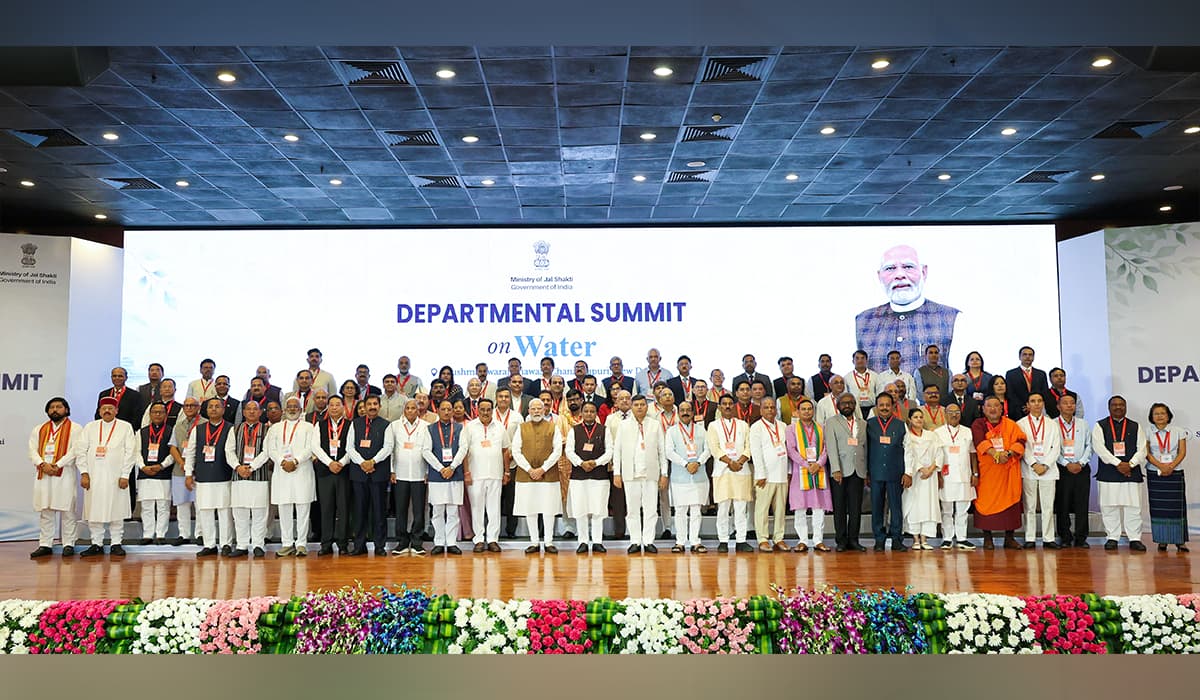
Prime Minister Shri Narendra Modi today chaired the valedictory session of the two-day National Departmental Summit on Water, organised by the Ministry of Jal Shakti. The Summit is the first in a series of Departmental Summits envisioned by Prime Minister to strengthen the spirit of Team India, deepen cooperative federalism and foster collective ownership of national priorities through closer collaboration between the Centre and the States. It brought together Ministers and senior officials from States and Union Territories for focused deliberations on various dimensions of India’s water security.

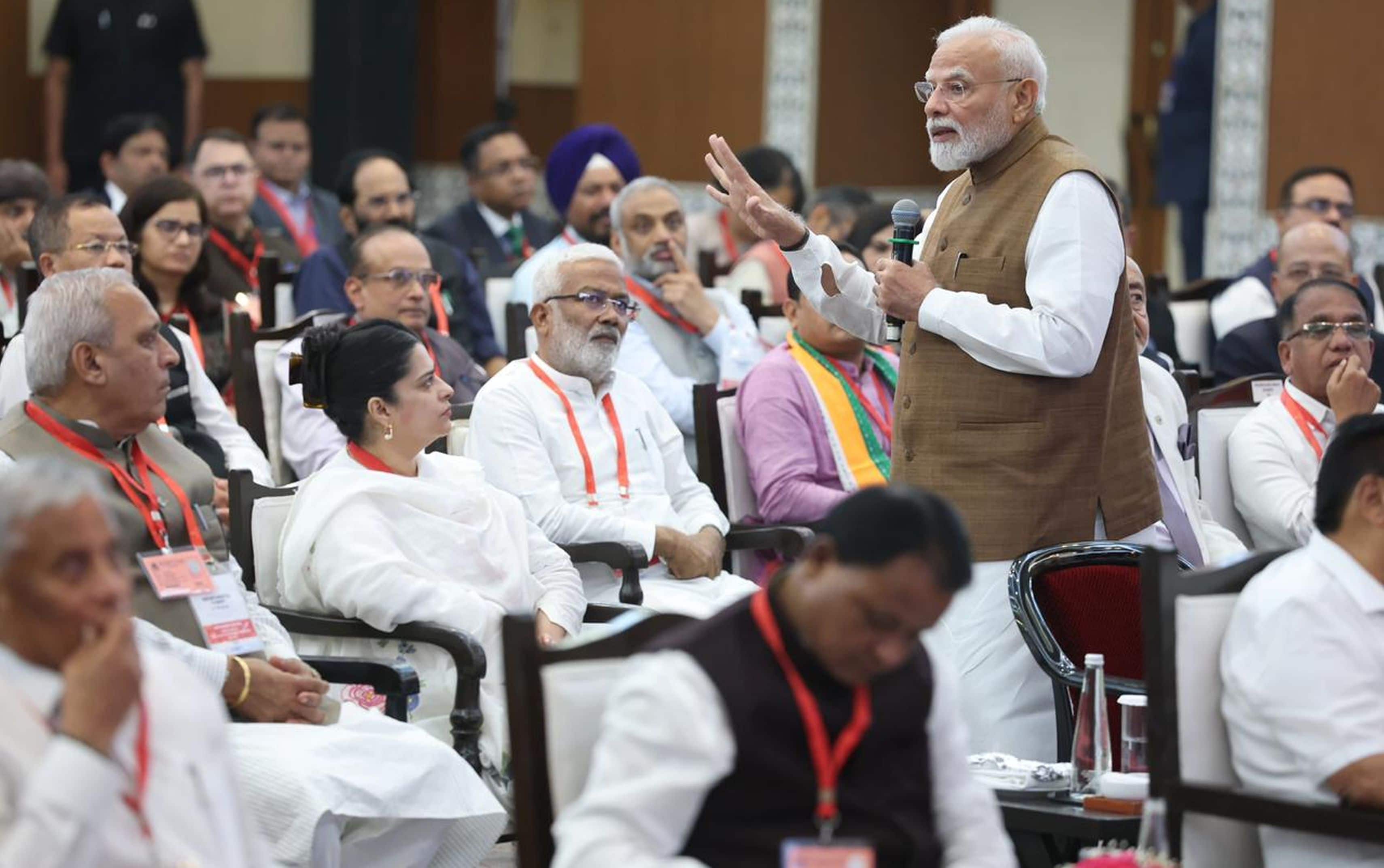
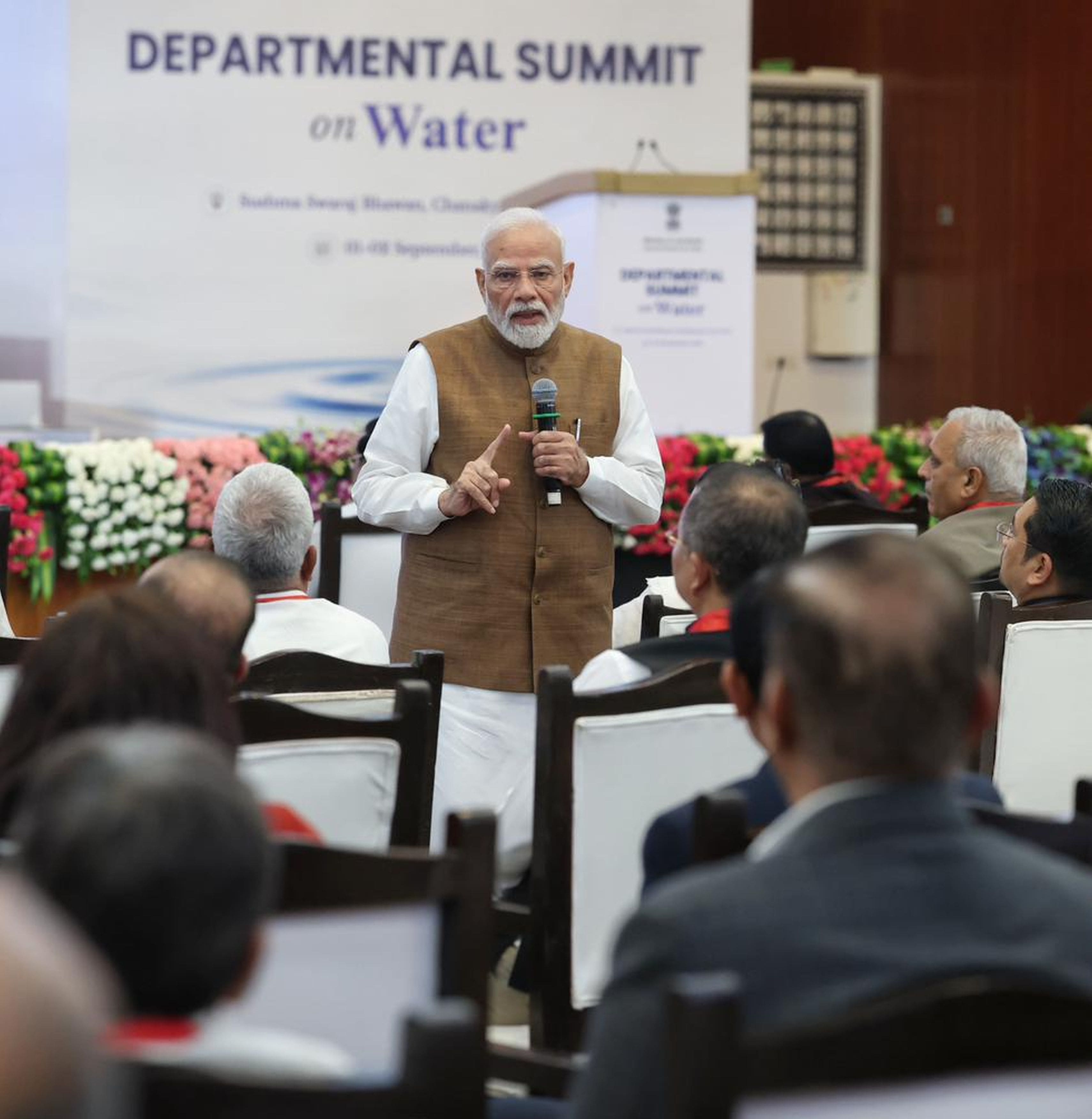
Prime Minister appreciated the intensive two-day deliberations and emphasised that the actionable and time-bound action points emerging from the Summit should be pursued through a continuous process of review and learning. He suggested that the Summit should not remain a one-time exercise and called for a continuous process of review and follow-up.

Prime Minister called for sensitising Urban Local Bodies to the challenges arising from urbanisation, including population growth and future water requirements, and suggested organising similar Chintan Shivirs for Urban Local Bodies. He called for greater adoption of water-saving technologies. He also suggested dedicated exhibitions and workshops, including exposure to global best practices, to enable Indian manufacturers and stakeholders to develop and scale efficient solutions.

Emphasising Jan Bhagidari, Prime Minister suggested promoting “Jal Utsav” to create greater awareness among people. Prime Minister called for making de-silting a regular programme and developing clear criteria and SOPs for de-silting. On dam safety, he stressed rigorous preparedness before every monsoon, adherence to prescribed precautions and creating awareness among school students, including through suitable incorporation in educational curricula.

Prime Minister further called for strengthening knowledge and capacity on water management and governance in universities and higher educational institutions. He suggested structured inter-State study-visits involving public representatives, officials and farmers to facilitate practical learning and replication of successful interventions.

Prime Minister called for robust water data governance, with water-sector data brought together, systematically managed, analysed and effectively utilised. He recommended the use of AI for data collection and analysis through a uniform format. He also stressed anticipatory and integrated planning to address water scarcity through suitable utilisation of treated water for agriculture and industrial purposes.

Drawing upon his experience as Chief Minister of Gujarat, Prime Minister noted that instances of water scarcity could be transformed into opportunities through systematic planning, commitment and deployment of adequate resources and capable officers.

Union Minister for Jal Shakti Shri C. R. Patil highlighted four key outcomes of the summit: accelerated completion of water infrastructure projects; strengthening water conservation as a sustained people’s movement; ensuring long-term sustainability of drinking-water sources; and institutionalising effective operation and maintenance of rural drinking-water schemes.