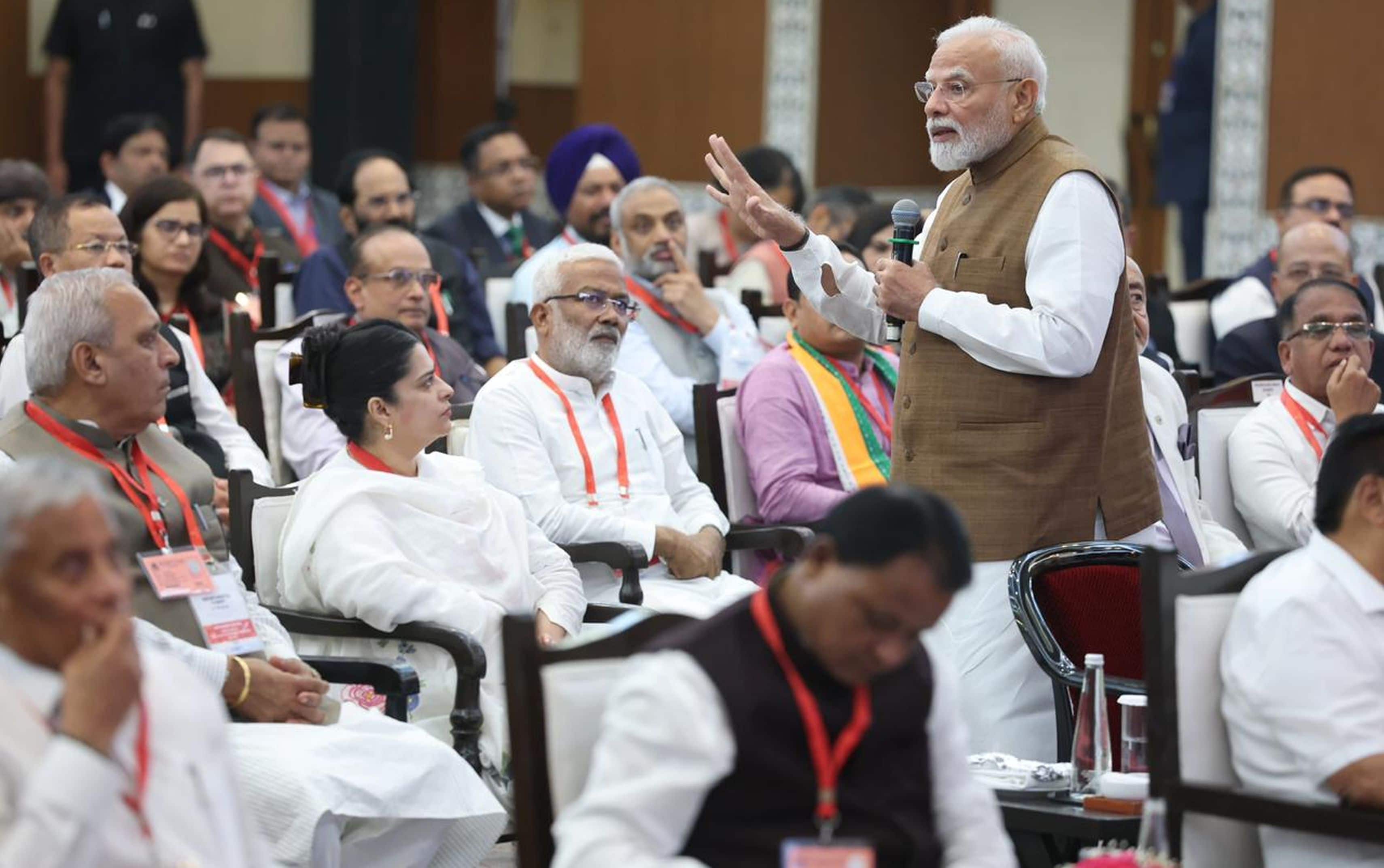
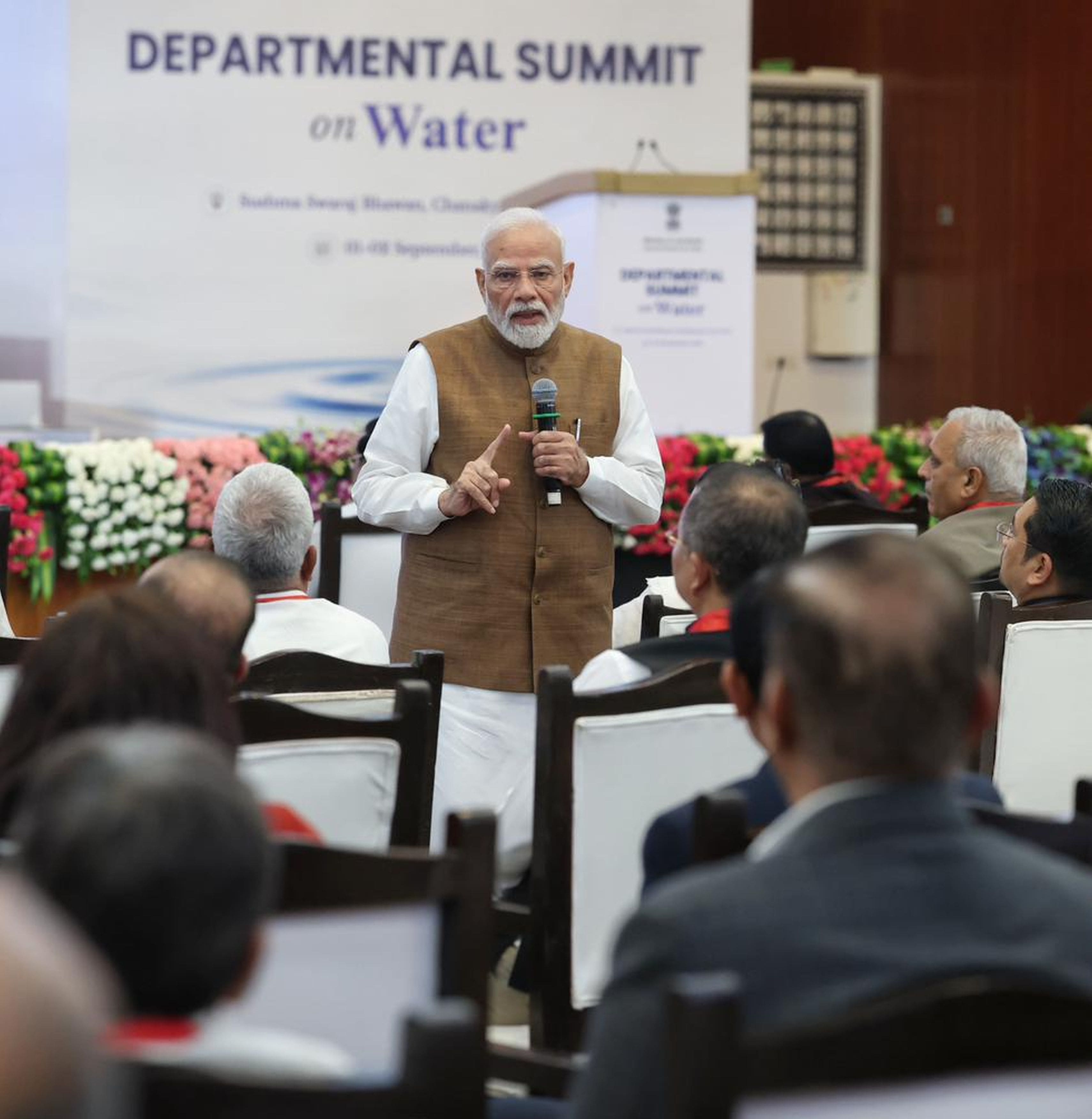
Immediately after returning from his Visit to Italy and Glasgow, the Prime Minister Shri Narendra Modi held a review meeting with districts having low vaccination coverage. The meeting included districts with less than 50% coverage of the first dose and low coverage of the second dose of Covid vaccine. The Prime Minister interacted with District Magistrates of over 40 districts in Jharkhand, Manipur, Nagaland, Arunachal Pradesh, Maharashtra, Meghalaya, and other States with districts having low vaccination coverage.
The District Magistrates gave an account of the issues and challenges being faced in their districts, which has resulted in low vaccination coverage. They highlighted issues like rumours resulting in vaccine hesitancy, difficult terrain, challenges created due to prevailing weather conditions in recent months. They also presented an account of the steps that have been taken by them till now to overcome these challenges. The DMs also shared good practises adopted by them which has led to increase in coverage.
During the interaction, the Prime Minister discussed the issue of vaccine hesitancy and the local factors behind it in detail. He discussed a wide array of ideas that can be implemented for ensuring 100% vaccination coverage in these districts. He spoke about maximising community engagement through religious and community leaders. He exhorted all officials to ensure that the country widens its vaccination coverage by the end of the year and enters the new year with renewed self belief and confidence.

The Union Health Secretary gave an overview of the vaccination coverage in the country. He gave an account of balance vaccine dose availability in the States, and also talked about special vaccination campaigns being run in the States to further improve vaccination coverage.
Addressing the gathering, the Prime Minister thanked the Chief Ministers present and said that their attention will encourage the district to work with more determination. Shri Modi said in this biggest pandemic of the century, the country faced many challenges. He said “one special thing in the country's fight against Corona was that we found new solutions and tried innovative methods”. He urged the administrators to work more on new innovative ways to increase vaccination in their districts. He conveyed that even the better performing districts had similar challenges but they were met with determination and innovation. He asked the officials to develop micro strategies, keeping in mind the experience so far to go for saturation of vaccination by addressing the gaps at local level. The Prime Minister asked the district officials to make different strategies for each village, each town in the districts, if need be. He suggested this can be done by forming a team of 20-25 people depending on the region. He also suggested trying to have a healthy competition in the teams that you have formed. Exhorting the officials to prepare region-wise timetables for local goals, the Prime Minister said “You will have to do your best to take your districts nearer the national average.

The Prime Minister touched upon the issue of rumours and misunderstanding about vaccination. He suggested awareness is the only solution for this and asked the state officials to take help from the religious leaders. The Prime Minister noted that religious leaders are very enthusiastic about the vaccination campaign. Shri Modi recalled his meeting with Pope Francis at the Vatican, a few days ago. He urged for a special emphasis on taking the message of religious leaders on vaccines to the public.
The Prime Minister asked the officials to change gears from arrangements made for taking people to the vaccination center and for safe vaccination to administering vaccines from door to door. He urged the health workers to reach every house with passion ‘har ghar tika, ghar ghar tika’ - Vaccine at every doorstep. He also asked to go in the spirit of ‘Har Ghar Dastak’ knocking on every doorstep to ensure full vaccination. “Now we are preparing to take the vaccination campaign to each household. With the mantra of ‘Har Ghar Dastak’, knock on every door, every household lacking the security net of a double dose of vaccine will be approached” he said.

The Prime Minister cautioned that while knocking on every house, equal attention needed to be paid to the second dose as well as the first dose. Because whenever the cases of infection start decreasing, sometimes the feeling of urgency decreases. The urgency in administering the vaccines comes down among the people. “You will have to contact those people who have not taken the second dose despite the stipulated time on a priority basis...ignoring this has created problems for many countries in the world” he alerted.
The Prime Minister emphasized that under the Free Vaccine for all campaign, India created a record of administering about 2.5 crore vaccine doses in a day, this feat bears testimony to India’s capabilities, he said. He asked the district officials to learn from good practices of their colleagues in better performing districts and emphasized approaches suitable for the local needs and the environment should be adopted.
100 साल की इस सबसे बड़ी महामारी में देश ने अनेक चुनौतियों का सामना किया है।
— PMO India (@PMOIndia) November 3, 2021
कोरोना से देश की लड़ाई में एक खास बात ये भी रही कि हमने नए-नए समाधान खोजे, Innovative तरीके आजमाए।
आपको भी अपने जिलों में वैक्सीनेशन बढ़ाने के लिए नए Innovative तरीकों पर और ज्यादा काम करना होगा: PM
अपने जिलों में एक-एक गांव, एक-एक कस्बे के लिए अगर अलग-अलग रणनीति बनानी हो तो वो भी बनाइए।
— PMO India (@PMOIndia) November 3, 2021
आप क्षेत्र के हिसाब से 20-25 लोगों की टीम बनाकर भी ऐसा कर सकते हैं।
जो टीमें आपने बनाई हों, उनमें एक Healthy Competition हो, इसका भी प्रयास कर सकते हैं: PM
एक चुनौती अफवाह और लोगों में भ्रम की स्थिति भी है।
— PMO India (@PMOIndia) November 3, 2021
अभी बातचीत के दौरान भी इसका जिक्र किया गया है।
इसका एक बड़ा समाधान है कि लोगों को ज्यादा से ज्यादा जागरूक किया जाए।
आप इसमें स्थानीय धर्मगुरुओं की भी मदद और ज्यादा ले सकते हैं: PM
अभी कुछ दिन पहले मेरी वेटिकन में पोप फ्रांसिस जी से भी मुलाकात हुई थी।
— PMO India (@PMOIndia) November 3, 2021
वैक्सीन पर धर्मगुरुओं के संदेश को भी हमें जनता तक पहुंचाने पर विशेष जोर देना होगा: PM @narendramodi
अभी तक आप सभी ने लोगों को वैक्सीनेशन सेंटर तक पहुंचाने और वहां सुरक्षित टीकाकरण के लिए प्रबंध किए।
— PMO India (@PMOIndia) November 3, 2021
अब हर घर टीका, घर-घर टीका, इस जज्बे के साथ आपको हर घर पहुंचना है: PM @narendramodi
हर घर पर दस्तक देते समय, पहली डोज़ के साथ-साथ आप सभी को दूसरी डोज़ पर भी उतना ही ध्यान देना होगा।
— PMO India (@PMOIndia) November 3, 2021
क्योंकि जब भी संक्रमण के केस कम होने लगते हैं, तो कई बार Urgency वाली भावना कम हो जाती है।
लोगों को लगने लगता है कि, इतनी भी क्या जल्दी है, लगा लेंगे: PM
सबको वैक्सीन, मुफ्त वैक्सीन अभियान के तहत हम एक दिन में करीब-करीब ढाई करोड़ वैक्सीन डोज लगाकर दिखा चुके हैं।
— PMO India (@PMOIndia) November 3, 2021
ये दिखाता है कि हमारी कैपेबिलिटी क्या है, हमारा सामर्थ्य क्या है: PM @narendramodi
Click here to read PM's speech