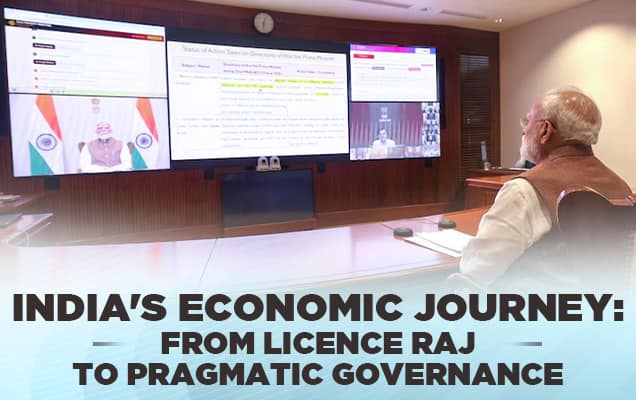
The Prime Minister, Shri Narendra Modi today released the first instalment to 1 lakh beneficiaries of Pradhan Mantri Awas Yojana - Gramin (PMAY - G) under Pradhan Mantri Janjati Adivasi Nyaya Maha Abhiyan (PM-JANMAN) via video conferencing. The Prime Minister also interacted with the beneficiaries of PM-JANMAN on the occasion.
Ms Mankunwari Bai from Jashpur district in Chhattisgarh, who is involved in agricultural work with her husband informed the Prime Minister that she is acquiring training to make Dona Pattal by engaging with self-help groups while also creating awareness about PM-JANMAN related schemes as Janman Sangi by conducting door-to-door campaigns. She is part of the self-help group called Deep Samuh which comprises 12 members. Ms Mankunwari also informed the Prime Minister about her plans to sell the produce created in self-help groups at Van Dhan Kendras. She further spoke about the benefits received and mentioned pucca house, water, gas and electricity connection and Ayushman Card where her husband received free treatment for ear ailment and her daughter received treatment worth Rs 30,000. She also mentioned receiving benefits related to Forest Rights Act (FRA), Kisan Credit Card and PM Kisan Samman Nidhi. Ms Mankunwari said that the tapped water connection is protecting her from consuming contaminated water and thereby saving her and her family from water-borne diseases, the gas connection is helping her save time and eliminating the smoke emitted from firewood. She thanked the Prime Minister and said “The work which wasn’t taken up in the last 75 years has now been completed in 25 days.” Shri Modi also enquired about interest in sports and asked for a show of hands by young women and girls among the crowd. He emphasized indulging in sports and said that most of the sports awards in recent times are being bagged by athletes from the tribal community. The Prime Minister expressed delight that Ms Mankunwari is receiving benefits under several schemes and they are making her life easier. “You have not only availed the benefits but also created awareness among the community”, the Prime Minister said as he underlined that the impact of government schemes increases manifold when it sees the participation of the masses. He concluded his interaction by reiterating the government’s effort to include every single beneficiary and not leave anyone behind.
Smt Lalita Aadivasi of Sahariya Janjati from Shivpuri, Madhya Pradesh a mother of 3 is a beneficiary of Ayushman Card, ration card, PM Kisan Nidhi. Her daughter is in class 6 and gets scholarship, uniform and books along with the benefit of Ladli Lakshmi scheme. Her son, a class 2 student, also gets a scholarship and other facilities. Her youngest son goes to an Anganwadi School. She is associated with Sheetla Maiya Swayam Sahayata Samooh, a self-help group. She is supported by a custom hiring center. The Prime Minister congratulated her on the first installment of pucca house. Smt Lalita thanked the Prime Minister for thinking so sensitively about the tribal issues and informed him about the transformation that JANMAN Abhiyan has ushered in as now tribal population is able to avail all the benefits of available schemes. She told the Prime Minister that she was made aware of the JANMAN Abhiyan and other schemes in the meetings of her self-help group and said that she started getting benefits like the allocation of a house, and her father-in-law received benefits of Kisan Credit Card. 100 additional Ayushman Cards were made during the JANMAN Abhiyan. Her village was fully covered by the Ujjwala Scheme and new households were also covered under the campaign. The Prime Minister conveyed his appreciation for the leadership qualities of the tribal and rural women. Local Panchayat member Vidya Aadivasi explained to the PM the Map and development planning of the village to the Prime Minister with a model of the village. The Prime Minister expressed satisfaction at the impact of PM JANMAN on the ground and reiterated the government’s determination to cover each and every deserving beneficiary.

Ms Bharti Narayan Ran is a student of 9th class in Eklavya Model Residential School, Pimpri and hails from Nashik, Maharashtra impressed the Prime Minister with her Hindi language skills. Upon the PM’s enquiry about the facilities available in her school, she mentioned a large playing field, residential hostel and hygienic food. Ms Bharti also shared her aspirations to become an IAS officer and said that she got inspiration from her elder brother who is a school teacher at Ashram School. Ms Bharti’s brother, Shri Panduranga informed the Prime Minister that he studied in Eklavya Model School from class 6th to 12th under CBSE board and graduated from Nashik. He also informed about inspiring other children to take up studying at Eklavya Model School, especially those who wish to migrate to big cities. Speaking about the benefits received so far, Shri Panduranga mentioned pucca house under PMAY, toilets, employment under MNREGA, Ujjwala gas connection, electricity connection, tapped water supply, One Nation One Ration Card and Ayushman Card. He also mentioned the first installment of Rs 90,000 to be transferred today under PM-JANMAN. He expressed his desire to educate all students so they can find their way to every corner of the country and serve the nation. The Prime Minister also reiterated his clarion call to carry out cleanliness campaigns in all temples and urged the students to show enthusiastic participation in their region. Prime Minister Modi conveyed his blessings to the two students and also bowed before their parents for their commitment towards educating the children. He expressed confidence that Ms Bharti will accomplish her dream and informed that the government is taking all steps to further expand the number of Eklavya schools in the country. PM Modi urged the students present on the occasion to become a part of Eklavya Schools.
Smt Swavi Ganga of Alurisithram Raju District, Andhra Pradesh is a mother of two and has been allocated a house, gas connection, electricity connection and water connection under the JANMAN. Her area, Araku Valley is famous for coffee and she is also involved in coffee plantations. She informed the Prime Minister that due to government schemes, she is able to get good rates for her produce and she is getting benefits of skill development schemes for farming, processing, packaging and marketing also along with PM Kisan Samman Nidhi benefits. She informed that Van Dhan Scheme has not only enhanced her income but saved her from the middleman also. PM Modi congratulated her on becoming Lakhpati Didi and informed her about his efforts to make 2 crore Lakhpati Didis in the country. Smt Swavi conveyed her delight at new roads in the village, water and electric facilities that have come to her village. She said that in the tough cold climate of her valley, a pucca house will bring real transformation in her life. After talking to her the Prime Minister expressed confidence that the resolution of Viksit Bharat by 2047 will certainly be achieved.
Smt Shashi Kiran Birjiya of Gumla District Jharkhand who has 7 people in her family informed the Prime Minister about engaging with a self-help group, purchasing a photocopier and sewing machine and also getting involved in agriculture work. Informing the Prime Minister about the benefits received, she mentioned receiving tapped water connection, electricity, PM Kisan Samman Nidhi and her mother getting accepted for pucca home under PMAY(G) under PM-JANMAN, while also receiving Kisan Credit Card and being associated with Van Dhan Kendras. Upon the Prime Minister’s enquiry about availing the loan through self-help group, Smt Shashi informed that she had recently purchased a photocopier machine which was scarcely available in her village. She further added that through her self-help group known as Ekta Ajeevika Sakhi Mandal consisting of 12 members, she is acquiring training to create Dona Pattal and different kinds of pickles under PM Kaushal Vikas Yojna and she sells it via Van Dhan Kendras. The Prime Minister expressed satisfaction that the impact of government schemes reaching the beneficiaries can be seen on the ground level, be it skill development, basic facilities or animal husbandry. He also added that its speed and scale have increased manifold with the implementation of PM JANMAN. “For the past 10 years, our government is committed to taking all government schemes to all beneficiaries in an easy and time-bound manner”, he added, “Government schemes will reach all beneficiaries. This is Modi’s guarantee.” Smt Shashi thanked the Prime Minister on behalf of all the residents of Gumla district for the implementation of PM-JANMAN and other government schemes.
Addressing on the occasion, the Prime Minister drew attention to the festive mood in the entire nation as he mentioned Uttarayan, Makar Sankranti, Pongal and Bihu celebrations. He said that today’s occasion makes the festive period even more impactful and the interactions with the beneficiaries have transcended him into a joyous mood. “On the one hand, Diwali is being celebrated in Ayodhya, while 1 lakh people from the extremely backward tribal community are also celebrating Diwali”, the Prime Minister said as he mentioned the transfer of funds into their bank accounts for the construction of pucca homes and congratulated them on the occasion.

The Prime Minister expressed confidence that the beneficiaries will celebrate this year’s Diwali in their own homes. Noting the auspicious occasion of the consecration of Ram Temple in Ayodhya, the Prime Minister expressed gratitude for getting the opportunity to become a part of such a historic occasion. PM Modi said that it is natural to remember Mata Shabri during the 11-day fasting ritual undertaken by him to honour the consecration of the Ram Temple.
“Story of Shri Ram is not possible without Mata Shabari”, the Prime Minister said underlining Mata Shabari’s huge role in the transformation of Prince Ram to Maryada Purushottam Ram. “Dashrath's son Ram could become Deenbandhu Ram only when he ate the berries of tribal Mata Shabari”, he said. Quoting Ramcharit Manas, the Prime Minister explained that the relationship of devotion has been said to be the greatest with Lord Shri Ram. “Be it the story of Rajaram in Treta or the current situation, welfare is not possible without the poor, deprived and the tribals”, Shri Modi said as he mentioned constructing 4 crore permanent houses for the poor in the last 10 years. “Modi has reached out to those who were never cared for”, he added.
The Prime Minister said that the goal of PM-JANMAN Maha Abhiyan is to benefit every member of the tribal community through government schemes. He informed that within two months, PM-JANMAN mega campaign has achieved the results that others could only dream of. Recalling the challenges during the inauguration of PM-JANMAN on the birth anniversary of Bhagwan Birsa Munda, the Prime Minister mentioned the difficulties in taking the benefits to far-flung, remote and border areas of the country which are home to tribal communities. He emphasized that it was the present government that took on the huge task and highlighted the challenges of contaminated water, no access to electricity, gas connections, and lack of roads and connectivity to such areas. Explaining why the scheme was called JANMAN, the Prime Minister said, “‘Jan’ means the people and ‘Mann’ means their ‘Mann Ki Baat’ or their inner voice.” He reiterated that all the wishes of the tribal communities will now be fulfilled as the government plans to spend more than Rs 23,000 crores on PM-JANMAN mega campaign.
The Prime Minister said that the country can develop only when no one is left behind in society and the benefits of government schemes reach everyone. Informing that the most backward tribal communities live in about 190 districts of the country, the Prime Minister highlighted the government’s approach to distributing more than 80,000 Ayushman cards within two months. Similarly, the Prime Minister informed that the government has linked about 30,000 farmers of extremely backward tribal communities to the PM Kisan Samman Nidhi, and bank accounts of 40,000 such beneficiaries have been opened. He further added that more than 30,000 underprivileged people have been given Kisan Credit Cards, and about 11,000 have been given land leases under the Forest Rights Act. He pointed out that it is the progress of just a few weeks and the numbers are increasing every day. The government is putting all its efforts into ensuring that every scheme of the government reaches our most backward tribal communities as soon as possible. “I assure you this and this is Modi's guarantee. And you know that Modi's guarantee means the guarantee of fulfillment”, he exclaimed.
Talking about providing pucca houses to Particularly Vulnerable Tribal Groups (PVTGs), the Prime Minister said that money has been transferred directly to the accounts of tribal beneficiaries. They will get 2.5 lakh rupees for a pucca house which will be a source of dignified living with electricity, gas connection, pipe water and toilet. He said that these one lakh beneficiaries are just the beginning and the government will reach each and every deserving candidate. The Prime Minister assured and asked the beneficiaries to strictly stay away from bribing anyone for these benefits.
Recalling his long association with the tribal communities, the Prime Minister said that he relied on his personal experience in PM JANMAN Maha Abhiyan. Furthermore, he credited President Smt Droupadi Murmu for guidance.
“If schemes continued to run on paper, the real beneficiary would never know about the existence of any such scheme”, the Prime Minister said pointing out the challenges in availing them. He emphasized that under PM-JANMAN Maha Abhiyan, the government has changed all the rules which created a hindrance and gave the example of PM Gram Sadak Yojana which made roads easily accessible to the villages of backward tribes, change in rules related to mobile medical units, handing out solar power connections to ensure that electricity reaches every tribal household, and ensuring fast internet connection by setting up hundreds of new mobile towers.
For food security, the Prime Minister mentioned free ration scheme which has been extended by 5 years. He also informed about the plan to create 1000 centers where all the facilities like vaccination, training and Anganwadi, for the vulnerable tribal groups, will be provided under one roof. He also mentioned the creation of hostels for the tribal youth. New Van Dhan Kendras are also coming up, he added.
Noting that the Viksit Bharat Sankalp Yatra along with ‘Modi Ki Guarantee’ vehicles are reaching every village in the country, the Prime Minister said that the vehicle is being run only to connect people with various government schemes. Speaking about the Aspirational District Program, he said that the members of the tribal community have been the biggest beneficiaries. He mentioned electricity connections, One Nation One Ration Card and the Ayushman Bharat scheme.
The Prime Minister also touched upon the dangers of sickle cell anemia and observed that many generations of tribal society have been affected by this disease. He stated that the government is trying to eradicate this disease which is passed from one generation to another. “Sickle cell is also being examined during the Vikas Bharat Sankalp Yatra. More than 40 lakh people have been tested for sickle cell in the last 2 months”, he informed.
Shri Modi informed that the government has increased the budget of schemes related to Scheduled Tribes by 5 times. The total budget of the scholarship which was earlier available for the education of tribal children has now been increased by more than two and a half times. Till 10 years ago, the Prime Minister pointed out that only 90 Eklavya Model Schools were built for tribal children in the country, whereas the present government has started work on building more than 500 new Eklavya Model Schools in the last 10 years. He expressed confidence in tribal students pursuing higher education and working for big companies. “For this, classes in tribal areas are being modernized and centers of higher education are being increased”, he added.
The Prime Minister highlighted that before 2014, MSP was fixed only for about 10 forest produce, whereas the present government has brought about 90 forest produce under the ambit of MSP. “To get higher prices for forest produce, we created Van Dhan Yojana”, Shri Modi said highlighting a large number of women among lakhs of beneficiaries. “In the last 10 years, 23 lakh pattas have been issued to tribal families. We are also promoting the Haat Bazaar of the tribal community. Many campaigns are being run so that our tribal brothers can sell the same goods in other markets of the country which they sell in the market”, he said.
Concluding the address, the Prime Minister said, “My tribal brothers and sisters may live in remote areas but have amazing foresight. Today the tribal society is seeing and understanding how our government is working for the tribal culture and their respect.” He mentioned the declaration by the government to celebrate the birth anniversary of Bhagwan Birsa Munda as Janjatiya Gaurav Diwas and the development of 10 big museums of tribal freedom fighters across the country. PM Modi assured the tribal community of continuously working for their respect and comfort.
Background
In line with the Prime Minister's efforts towards the vision of Antyodaya to empower the last person at the last mile, PM-JANMAN was launched for the socio-economic welfare of Particularly Vulnerable Tribal Groups (PVTGs) on 15th November 2023, on the occasion of Janjatiya Gaurav Diwas.
PM-JANMAN, with a budget of approximately Rs 24,000 crores focuses on 11 critical interventions through 9 Ministries and is aimed to improve socio-economic conditions of the PVTGs by saturating PVTG households and habitations with basic facilities such as safe housing, clean drinking water and sanitation, improved access to education, health and nutrition, electricity, road and telecom connectivity, and sustainable livelihood opportunities.
सरकार की योजनाएं अति पिछड़े जनजातीय भाई-बहन तक पहुंचें, यही पीएम जनमन महाअभियान का उद्देश्य है। pic.twitter.com/D74fKrrFMl
— PMO India (@PMOIndia) January 15, 2024
हमारे देश का विकास तभी हो सकता है जब समाज में कोई छूटे नहीं, हर किसी तक सरकार की योजनाओं का लाभ पहुंचे। pic.twitter.com/ieLPEgIUNR
— PMO India (@PMOIndia) January 15, 2024
आज देश में वो सरकार है जो सबसे पहले गरीबों के बारे में सोचती है। pic.twitter.com/Wv0lnKnEI2
— PMO India (@PMOIndia) January 15, 2024
केंद्र सरकार जो आकांक्षी जिला प्रोग्राम चला रही है उसका सबसे बड़ा लाभ हमारे आदिवासी भाई-बहनों को ही मिला है। pic.twitter.com/P0iYymkqgm
— PMO India (@PMOIndia) January 15, 2024
विकसित भारत संकल्प यात्रा के दौरान भी सिकल सेल की जांच की जा रही है। pic.twitter.com/2OVmfBlDzu
— PMO India (@PMOIndia) January 15, 2024
आज आदिवासी समाज देख और समझ रहा है कि कैसे हमारी सरकार जनजातीय संस्कृति और उनके सम्मान के लिए काम कर रही है: PM @narendramodi pic.twitter.com/oilNc52Fat
— PMO India (@PMOIndia) January 15, 2024