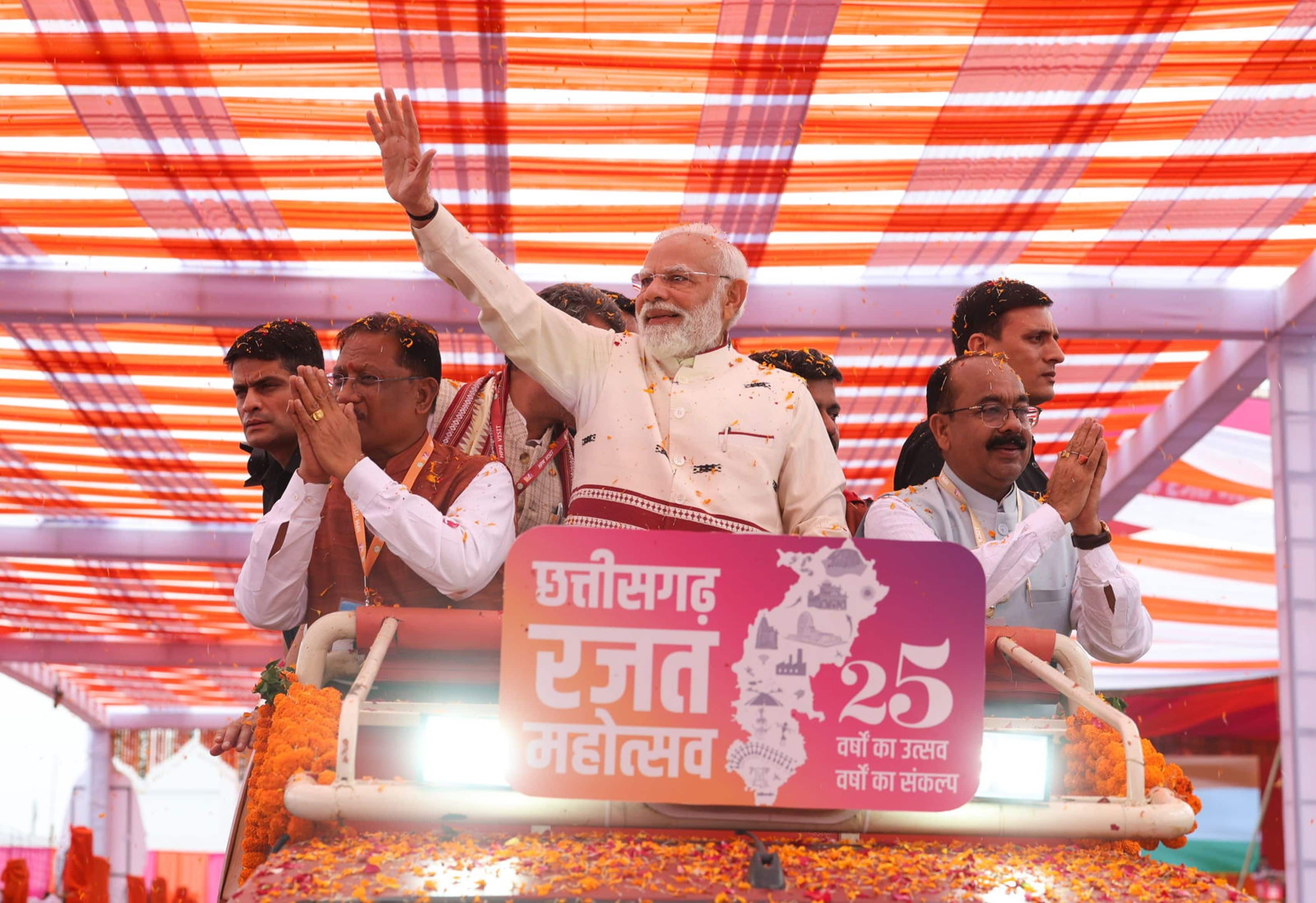
Prime Minister Shri Narendra Modi addressed the Chhattisgarh Rajat Mahotsav, marking 25 years of formation of the State of Chhattisgarh at Nava Raipur today. He also inaugurated and laid the foundation stone for developmental and transformative projects worth over ₹14,260 crore, covering key sectors such as roads, industry, healthcare, and energy. Speaking on the occasion, the Prime Minister greeted the people of Chhattisgarh remarking that today, the state of Chhattisgarh has completed 25 years since its formation. On this occasion, he extended heartfelt congratulations and best wishes to all the people of Chhattisgarh.
Shri Modi stated that participating in the Silver Jubilee celebrations of Chhattisgarh alongside the people of the state is a matter of great fortune for him. He remarked that as a party worker, he had witnessed the period before the formation of the state and has also been a witness to its journey over the past 25 years. Therefore, being part of this proud moment is a deeply moving experience for him.
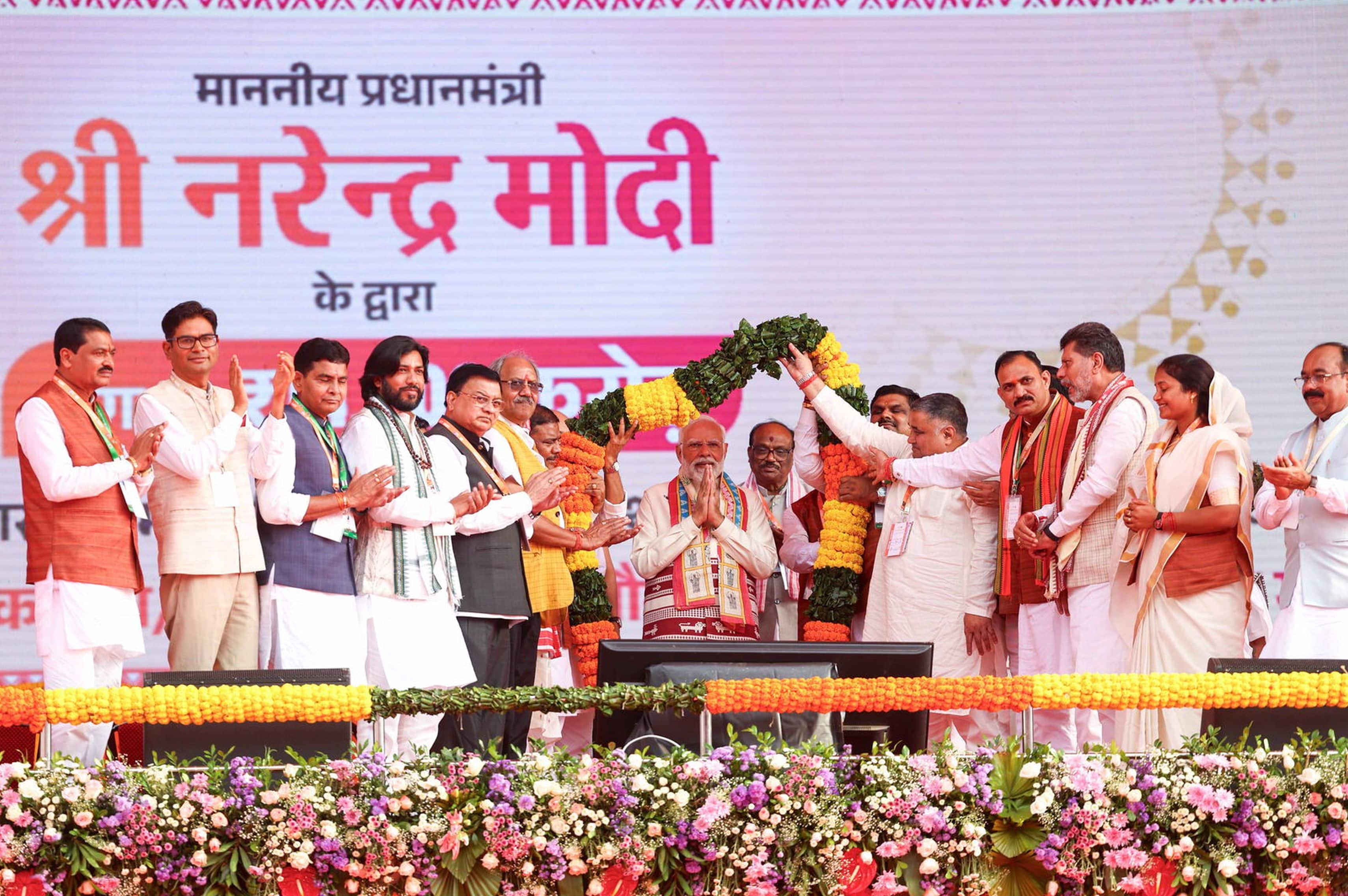
“Twenty-five years ago, the government of Atal Bihari Vajpayee handed over the Chhattisgarh of your dreams to you, along with a resolve that the state would reach new heights of development”, said Shri Modi. He remarked that looking back at the journey of the past 25 years fills him with pride. He highlighted that the people of Chhattisgarh have collectively achieved numerous milestones. “The seed that was sown twenty-five years ago has now grown into a flourishing tree of development. Chhattisgarh is rapidly advancing on the path of progress”, remarked the Prime Minister. He added that today, the state has also received a new temple of democracy—a new Assembly building. Before arriving at the venue, he had the opportunity to inaugurate the Tribal Museum. From the same platform, projects worth approximately ₹14,000 crore were inaugurated and launched. He extended his congratulations to everyone for these development initiatives.
The Prime Minister observed that since the year 2000, an entire generation has changed. Today, there is a new generation of youth who have not seen the earlier days when reaching villages was a challenge and many villages lacked any trace of roads. He highlighted that today, the road network in Chhattisgarh’s villages has expanded to 40,000 kilometers. Over the past 11 years, the state has witnessed unprecedented expansion of national highways, and new expressways are becoming symbols of Chhattisgarh’s progress. Shri Modi noted that earlier, traveling from Raipur to Bilaspur took several hours, but now that time has been reduced by half. He also announced the foundation stone of a new four-lane highway, which will further enhance connectivity between Chhattisgarh and Jharkhand.
Highlighting that extensive work has been done to improve rail and air connectivity in Chhattisgarh, Shri Modi noted that high-speed trains like Vande Bharat now operate in the state, and cities such as Raipur, Bilaspur, and Jagdalpur are now connected through direct flights. He remarked that Chhattisgarh, once known primarily for the export of raw materials, is now emerging in a new role as an industrial state. The Prime Minister congratulated every Chief Minister and every government for the achievements of Chhattisgarh over the past 25 years. He stated that a major share of credit goes to Dr. Raman Singh, who led the state during a time of significant challenges. He expressed happiness that Dr. Raman Singh is now guiding the Assembly as its Speaker, and that the government under Shri Vishnu Deo Sai is propelling Chhattisgarh’s development forward at a rapid pace.
Shri Modi stated that he has witnessed poverty up close and understands the concerns and helplessness of the poor. He remarked that when the nation gave him the opportunity to serve, he prioritized welfare for the underprivileged. He emphasized that his government has focused extensively on healthcare, income, education, and irrigation for the poor.
Citing an example, noting that 25 years ago, Chhattisgarh had only one medical college, Shri Modi said today, the state has 14 medical colleges and an AIIMS in Raipur. He recalled that the nationwide campaign to establish Ayushman Arogya Mandirs began in Chhattisgarh. Currently, the state has over 5,500 Ayushman Arogya Mandirs.
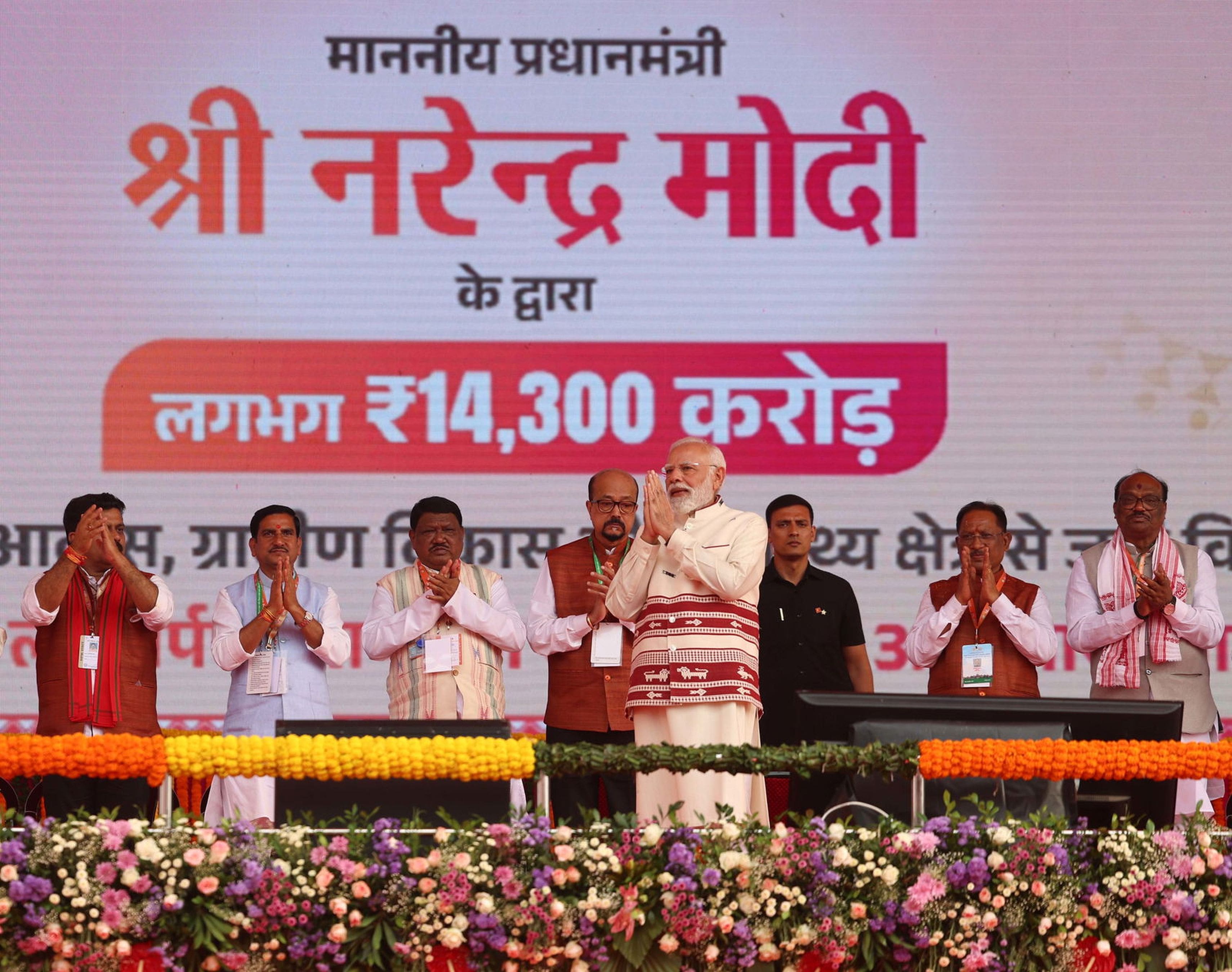
“Our government’s effort is to ensure that every poor citizen lives a life of dignity”, said the Prime Minister, remarking that life in slums and temporary shelters further deepens despair and weakens the resolve to fight poverty. Therefore, our government has resolved to provide permanent housing to every poor family. He highlighted that in the past 11 years, four crore poor families have received pucca houses, and now the government is working with a resolve to build three crore new homes. On this day alone, over 3.5 lakh families in Chhattisgarh are entering their new homes, and nearly three lakh families have received a disbursement of ₹1,200 crore. The Prime Minister said this reflects the seriousness with which their government in Chhattisgarh is working to provide housing to the poor. He added that in the past year alone, seven lakh pucca houses have been built for the underprivileged. He emphasized that these are not just statistics—each home represents a family’s dream and immense joy. He extended his heartfelt congratulations to all beneficiary families.
Underscoring that their government is continuously working to make life easier for the people of Chhattisgarh and to reduce their hardships, the Prime Minister highlighted that electricity has now reached every village in the state, and even areas that once lacked power now have access to the internet. Shri Modi recalled that there was a time when an LPG connection was a distant dream for ordinary families. Today, gas connections have reached villages and households of the poor, Dalits, backward classes, and tribal communities across Chhattisgarh. He added that the government is now working to provide affordable gas through pipelines in addition to cylinders. He announced that the Nagpur-Jharsuguda gas pipeline has been dedicated to the nation today and congratulated the people of Chhattisgarh for this project.
Noting that Chhattisgarh is home to one of the country’s largest tribal populations—a community with a proud history and immense contributions to India’s heritage and development, Shri Modi emphasized that the government is consistently working to ensure that the entire nation and the world recognize and celebrate the contributions of tribal communities. Whether through the establishment of museums dedicated to tribal freedom fighters across the country or by declaring the birth anniversary of Bhagwan Birsa Munda as Janjatiya Gaurav Diwas, the government’s constant endeavour is to honour and glorify the legacy of the tribal society.
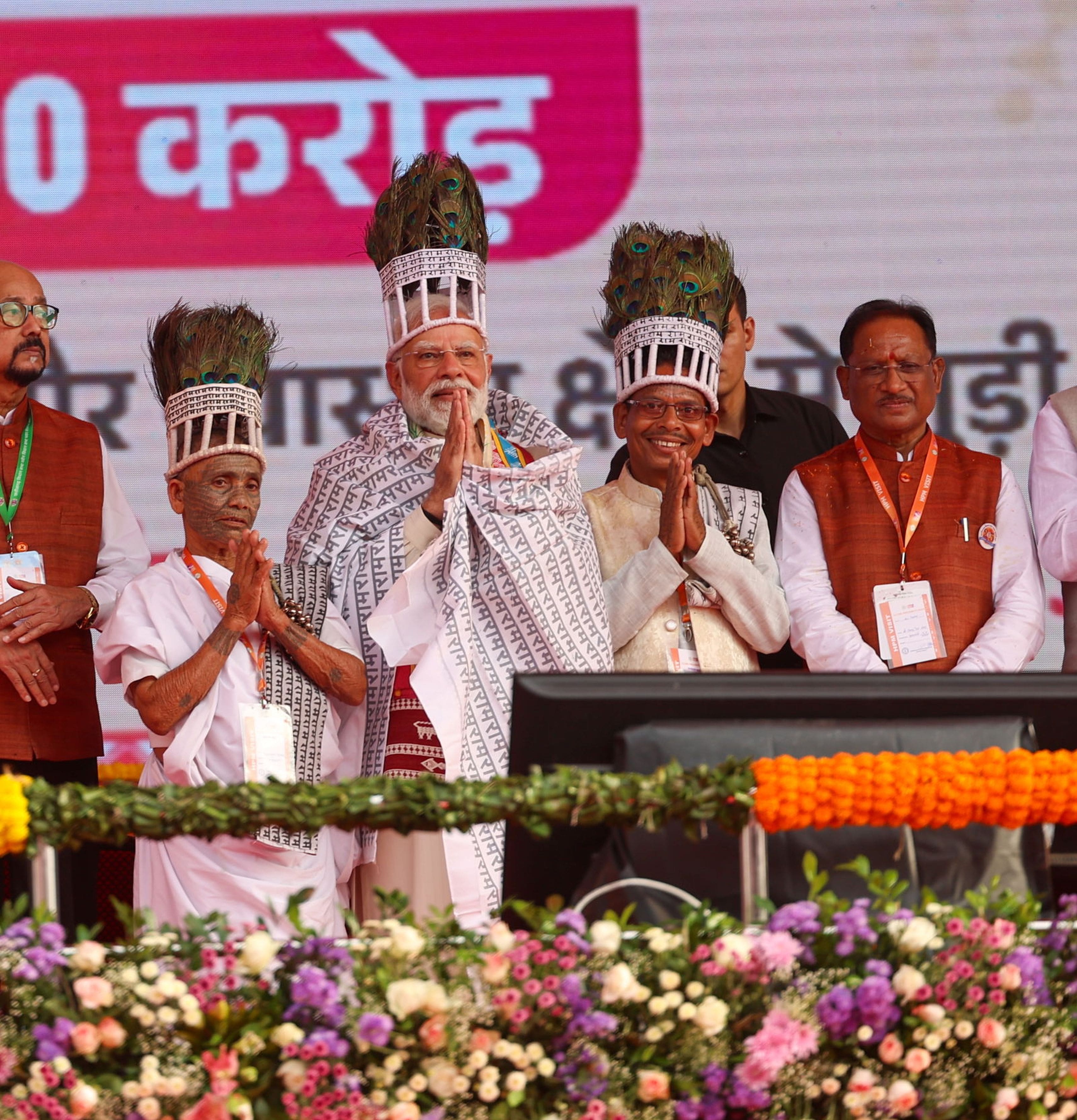
Pointing out that today, another significant step has been taken in this direction with the inauguration of the Shaheed Veer Narayan Singh Tribal Freedom Fighters Museum, the Prime Minister highlighted that the museum showcases over 150 years of tribal history prior to independence, detailing how tribal freedom fighters contributed to India’s struggle for freedom. He expressed confidence that the museum will continue to inspire future generations.
Stressing that their government is simultaneously working to preserve tribal heritage and promote tribal development and welfare, Shri Modi cited the Dharti Aaba Janjatiya Gram Utkarsh Abhiyan, which is bringing new light of development to thousands of tribal villages across the country. He noted that this is an ₹80,000 crore initiative—unprecedented in scale for tribal regions in independent India. He further stated that for the first time, a national scheme has been formulated for the development of the most vulnerable tribal groups. Under the PM-JANMAN scheme, development work is being carried out in thousands of habitations of these communities.
Prime Minister stated that tribal communities have been collecting forest produce for generations. He highlighted that it is the current government that created opportunities for greater earnings through Van Dhan Kendras. He noted that improved arrangements for the procurement of tendu leaves have resulted in significantly higher income for collectors in Chhattisgarh.
Expressing satisfaction that Chhattisgarh is now freeing itself from the shackles of Naxalism and Maoist terrorism, Shri Modi acknowledged the painful experiences endured by the people for 50–55 years due to Naxalism. He criticized those who pretend to uphold the Constitution and shed crocodile tears in the name of social justice, stating that they committed decades of injustice against the people for their own political gain. He remarked that due to Maoist terrorism, tribal regions in Chhattisgarh were deprived of roads for a long time. Children lacked access to schools, the sick were denied hospitals, and those who ruled the country for decades abandoned the people to their fate while enjoying the comforts of life.
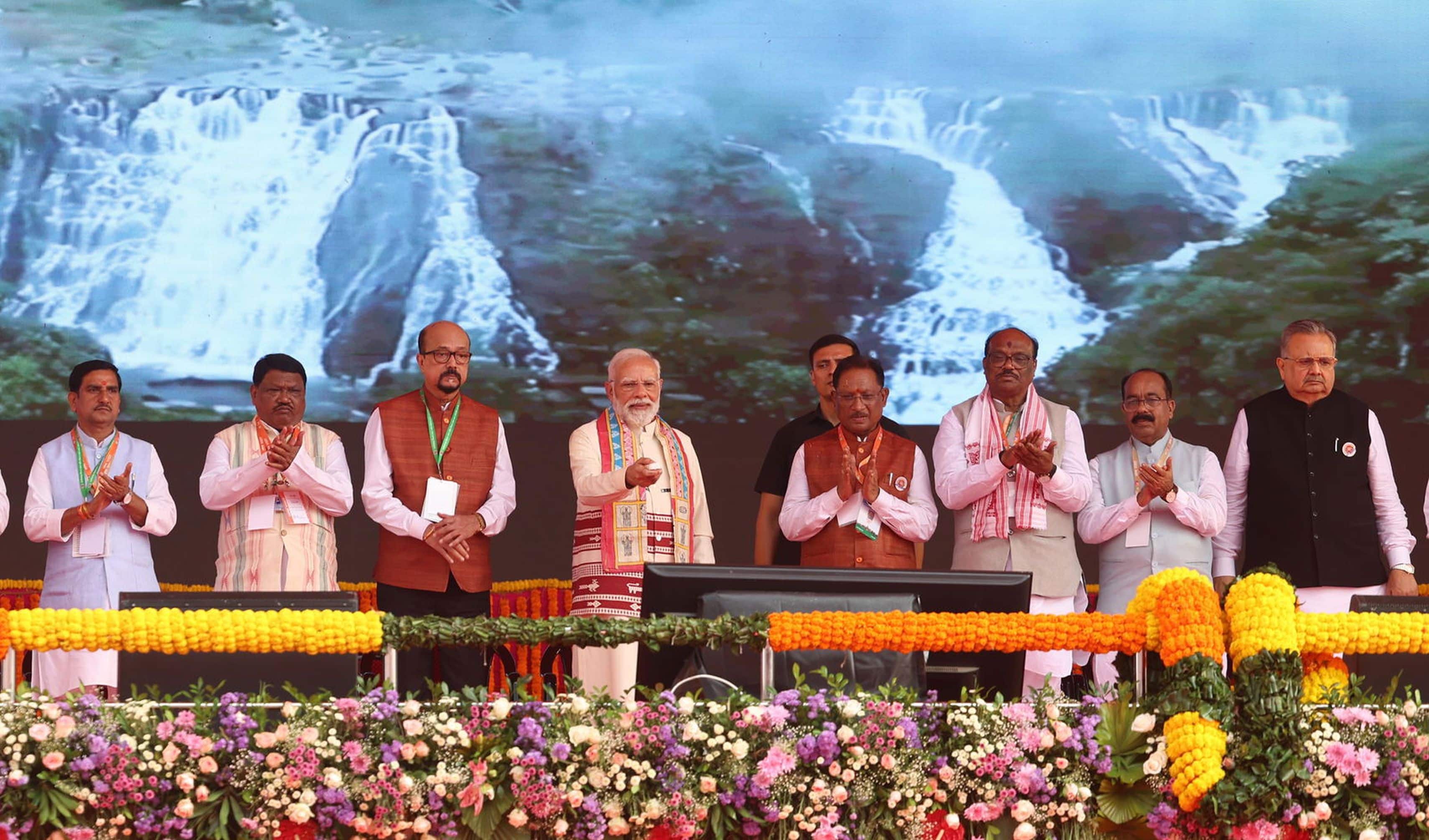
Stressing that he could not allow his tribal brothers and sisters to be ruined by the cycle of violence, nor could he bear to see countless mothers weeping for their children, Shri Modi remarked that when the nation gave him the opportunity to serve in 2014, his government resolved to free India from Maoist terrorism. Affirming that the results of this resolve are now visible to the entire country, the Prime Minister said that eleven years ago, over 125 districts were affected by Maoist terror; today, only three districts remain where traces of Maoist activity persist. “The day is not far when Chhattisgarh and the entire nation will be completely free from Maoist terrorism”, affirmed the Prime Minister
The Prime Minister further highlighted that many individuals in Chhattisgarh who had once taken the path of violence are now surrendering rapidly. He noted that just a few days ago, more than twenty Naxalites in Kanker returned to the mainstream, and earlier, on October 17 in Bastar, over 200 Naxalites surrendered. He added that in recent months, dozens of individuals associated with Maoist terror across the country have laid down arms, many of whom had bounties worth lakhs and crores of rupees. These individuals have now accepted the Constitution of India.
Prime Minister Shri Narendra Modi stated that the elimination of Maoist terrorism has made the impossible possible. He remarked that areas once gripped by fear of bombs and guns have now transformed. In Chilkapalli village of Bijapur, electricity has reached for the first time in seven decades. In Rekawaya village of Abujhmad, school construction has begun for the first time since independence. He highlighted that Puvarti village, once considered a stronghold of terror, is now witnessing a wave of development. The red flag has been replaced by the national tricolour. He noted that regions like Bastar are now filled with celebration, hosting events such as Bastar Pandum and Bastar Olympics.
Urging everyone to imagine how far Chhattisgarh has progressed over the past 25 years despite the challenge of Naxalism, and how much faster the pace will be once this challenge is fully overcome, Shri Modi emphasized that the coming years are crucial for Chhattisgarh. To build a developed India, it is essential for Chhattisgarh to be developed. Addressing the youth of the state, the Prime Minister said this is their time, and there is no goal they cannot achieve. He assured them that their government stands with them at every step and with every resolve. The Prime Minister concluded by affirming that together, we will advance Chhattisgarh and move the nation forward and extended his heartfelt best wishes to every brother and sister of Chhattisgarh.
The Governor of Chhattisgarh, Shri Ramen Deka, Chief Minister of Chhattisgarh, Shri Vishnu Deo Sai, Union Ministers, Shri Jual Oram, Shri Durga Das Uikey, Shri Tokan Sahu were present among other dignitaries at the event.

Background
Prime Minister participated in Chhattisgarh Rajat Mahotsav, marking 25 years of formation of the State of Chhattisgarh. He inaugurated and laid the foundation stone for developmental and transformative projects worth over ₹14,260 crore, covering key sectors such as roads, industry, healthcare, and energy.
To strengthen rural livelihoods, Prime Minister inaugurated 12 new Start-Up Village Entrepreneurship Programme (SVEP) blocks across nine districts of Chhattisgarh. Prime Minister participated in the Griha Pravesh of 3.51 lakh completed houses and released ₹1200 Crore as installment to 3 lakh beneficiaries under the Pradhan Mantri Awas Yojana (Gramin), ensuring dignified housing and security for rural households across the State.
Enhancing connectivity, Prime Minister laid the foundation stone for the four-lane Greenfield Highway from Pathalgaon–Kunkuri to the Chhattisgarh–Jharkhand Border, being developed under the Bharatmala Pariyojana by the National Highways Authority of India (NHAI) at a cost of around ₹3,150 crore. This strategic corridor will connect key coal mines, industrial zones, and steel plants across Korba, Raigarh, Jashpur, Ranchi, and Jamshedpur, serving as a major economic artery that strengthens regional trade linkages and integrates Central India with the Eastern region.
In addition, Prime Minister laid the foundation stone for the construction and upgradation of NH-130D (Narayanpur–Kasturmeta–Kutul–Nilangur–Maharashtra Border), spanning multiple segments across Bastar and Narayanpur districts. PM will also inaugurate the upgradation of NH-130C (Madangmuda–Deobhog–Odisha Border) into a two-lane highway with paved shoulders. These will significantly enhance road connectivity in tribal and interior regions, improving access to healthcare, education, and markets, and boosting socio-economic development in remote areas.
In the power sector, Prime Minister inaugurated the Inter-Regional ER–WR Interconnection Project, which will enhance the inter-regional power transfer capacity between the Eastern and Western grids by 1,600 MW, improving grid reliability and ensuring a stable power supply across the region.
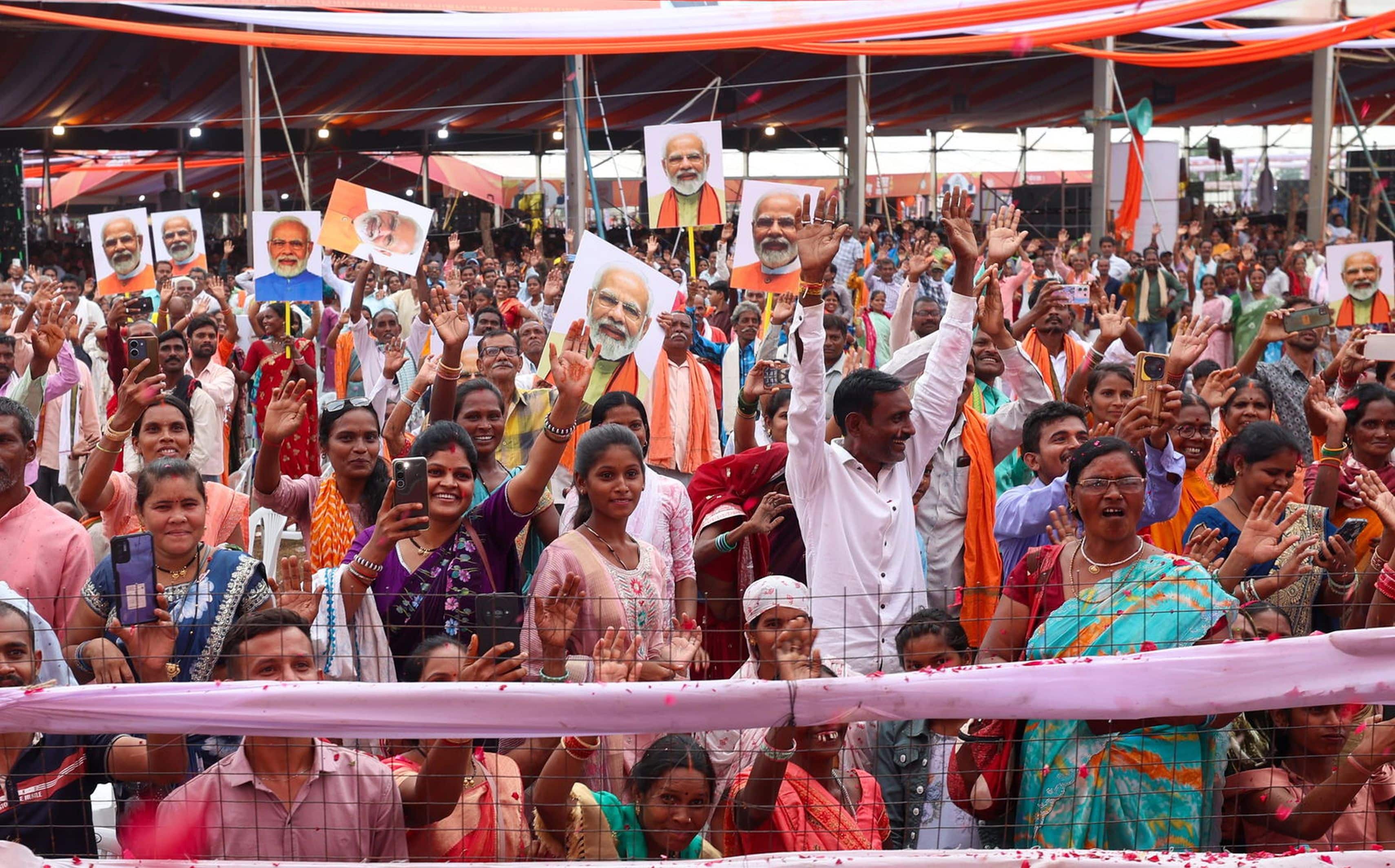
Along with this, Prime Minister dedicated, inaugurated, and laid the foundation stone for multiple energy sector projects worth over ₹3,750 crore, aimed at strengthening Chhattisgarh’s power infrastructure, improving supply reliability, and enhancing transmission capacity.
Under the Revamped Distribution Sector Scheme (RDSS), works worth about ₹1,860 crore will be dedicated by Prime Minister, including construction of new power lines, feeder bifurcation, installation of transformers, conversion of conductors, and strengthening of low-tension networks to improve rural and agricultural power supply. Prime Minister will also inaugurate nine new power substations built at a cost of around ₹480 crore across districts such as Raipur, Bilaspur, Durg, Bemetara, Gariyaband, and Bastar. These will benefit over 15 lakh people by ensuring stable voltage, reducing outages, and providing reliable electricity even in remote and tribal areas. Additionally, foundation stone will be laid for new substations and transmission projects worth over ₹1,415 crore, including major facilities at Kanker and Balodabazar–Bhatapara, along with new RDSS works across several districts to further expand the reach and quality of electricity in the State.
In the petroleum and natural gas sector, Prime Minister will inaugurate HPCL’s state-of-the-art Petroleum Oil Depot at Raipur, built at a cost of over ₹460 crore with a storage capacity of 54,000 Kilolitres (KL) for petrol, diesel, and ethanol. The facility will serve as a major fuel hub, ensuring uninterrupted supply across Chhattisgarh and neighbouring states. With 10,000 KL ethanol storage, the depot also supports the Ethanol Blending Programme, reducing fossil fuel dependency and promoting cleaner energy growth.
Prime Minister will also dedicate the 489 km Nagpur–Jharsuguda Natural Gas Pipeline, built at a cost of around ₹1,950 crore. The project is a major step toward increasing the share of natural gas in India’s energy mix to 15% and achieving the vision of “One Nation, One Gas Grid.” The pipeline will connect 11 districts of Chhattisgarh to the National Gas Grid, boosting industrial development and providing cleaner and affordable fuel to the region.
To promote industrial growth and employment, Prime Minister will lay the foundation stone for two Smart Industrial Areas — one at Siladehi–Gatwa–Birra in Janjgir–Champa district and another at Bijletala in Rajnandgaon district. Additionally, Prime Minister will lay the foundation stone of a Pharmaceutical Park at Sector–22, Nava Raipur Atal Nagar. This park will serve as a dedicated zone for drug and healthcare manufacturing,
Boosting healthcare sector, Prime Minister will lay the foundation stone for five new Government Medical Colleges — at Manendragarh, Kabirdham, Janjgir–Champa, and Geedam (Dantewada), Government Ayurveda College and Hospital at Bilaspur. These projects will strengthen medical education, expand healthcare access, and promote traditional medicine across Chhattisgarh.
Click here to read full text speech
छत्तीसगढ़ आज विकास के पथ पर तेज़ गति से आगे बढ़ रहा है: PM @narendramodi pic.twitter.com/yIaUEkgWBs
— PMO India (@PMOIndia) November 1, 2025
हमारी कोशिश यही है कि आदिवासी समाज के योगदान का हमेशा गौरवगान होता रहे: PM @narendramodi pic.twitter.com/fheLrSoqEs
— PMO India (@PMOIndia) November 1, 2025
वो दिन दूर नहीं...जब हमारा छत्तीसगढ़...हमारा देश...माओवादी आतंक से पूरी तरह मुक्त हो जाएगा: PM @narendramodi pic.twitter.com/AyaAfyEFZL
— PMO India (@PMOIndia) November 1, 2025