PM Modi addresses the Uttar Pradesh International Trade Show at Greater Noida

Published By : Admin | September 25, 2025 | 10:00 IST
India has made Open Platforms providing opportunities for everyone, Platforms for All, Progress for All: PM
Despite global disruptions and uncertainty, India's growth remains remarkable: PM
India must become self-reliant; Every product that can be made in India should be made in India: PM
In India, we are developing a vibrant defence sector, creating an ecosystem where every component bears the mark of 'Made in India': PM
The structural reforms in GST are set to give new wings to India's growth story: PM

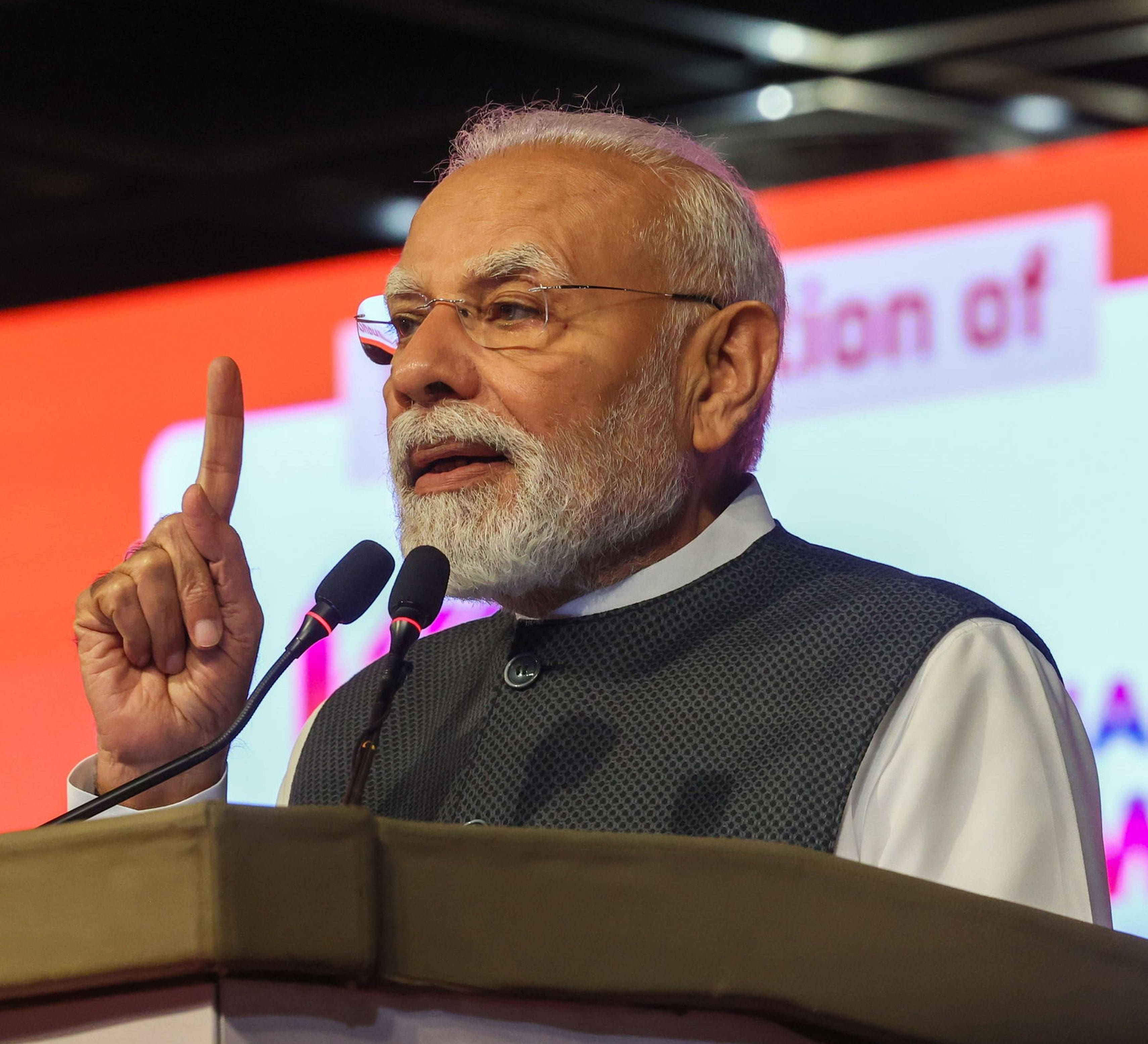
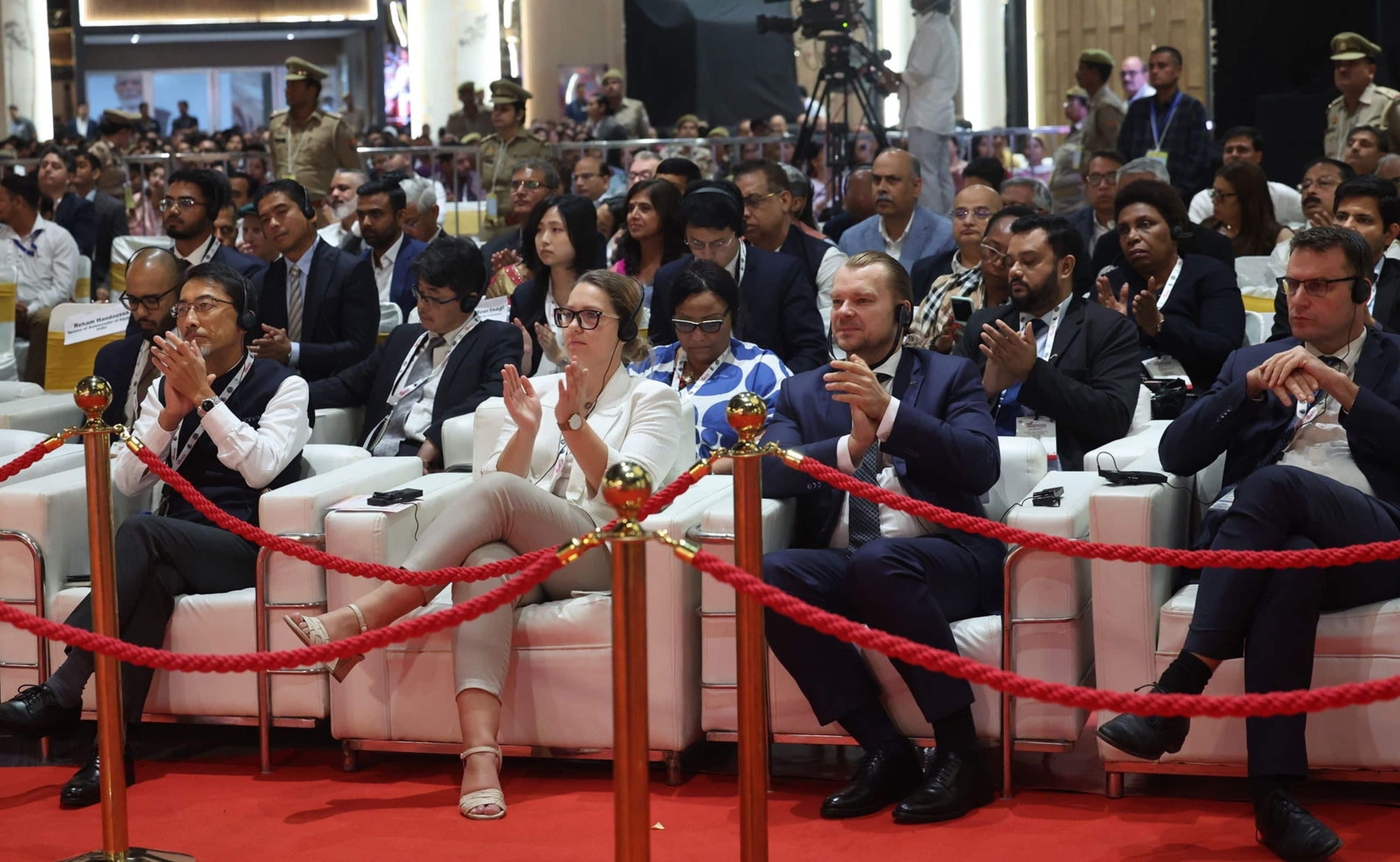
Prime Minister Shri Narendra Modi inaugurated and addressed the Uttar Pradesh International Trade Show 2025 in Greater Noida, Uttar Pradesh today. Speaking on the occasion, Prime Minister welcomed all traders, investors, entrepreneurs, and young participants attending the UP International Trade Show. He expressed happiness that over 2,200 exhibitors are showcasing their products and services at the event. Shri Modi highlighted that Russia is the country partner for this edition of the trade show, underscoring the strengthening of a time-tested partnership. He congratulated Chief Minister Yogi Adityanath, government colleagues, and other stakeholders for organizing the event. The Prime Minister noted that the occasion coincides with the birth anniversary of Pandit Deendayal Upadhyaya, who guided the nation on the path of Antyodaya—upliftment of the last person in the queue. He emphasized that Antyodaya means ensuring development reaches even the poorest, eliminating all forms of discrimination. He further remarked that India is now offering this very model of inclusive development to the world.

Citing an example, the Prime Minister noted the global recognition of India’s Fintech sector. He highlighted that its most significant feature is its contribution to inclusive development. Shri Modi emphasized that India has built open platforms that take everyone along—such as UPI, Aadhaar, DigiLocker, and ONDC—offering equal opportunities to all. He underscored the principle of “Platforms for All, Progress for All.” The Prime Minister remarked that the impact of these platforms is visible across India, with both mall shoppers and street-side tea vendors using UPI. He pointed out that formal credit, once accessible only to large companies, now reaches street vendors through the PM SVANidhi scheme.
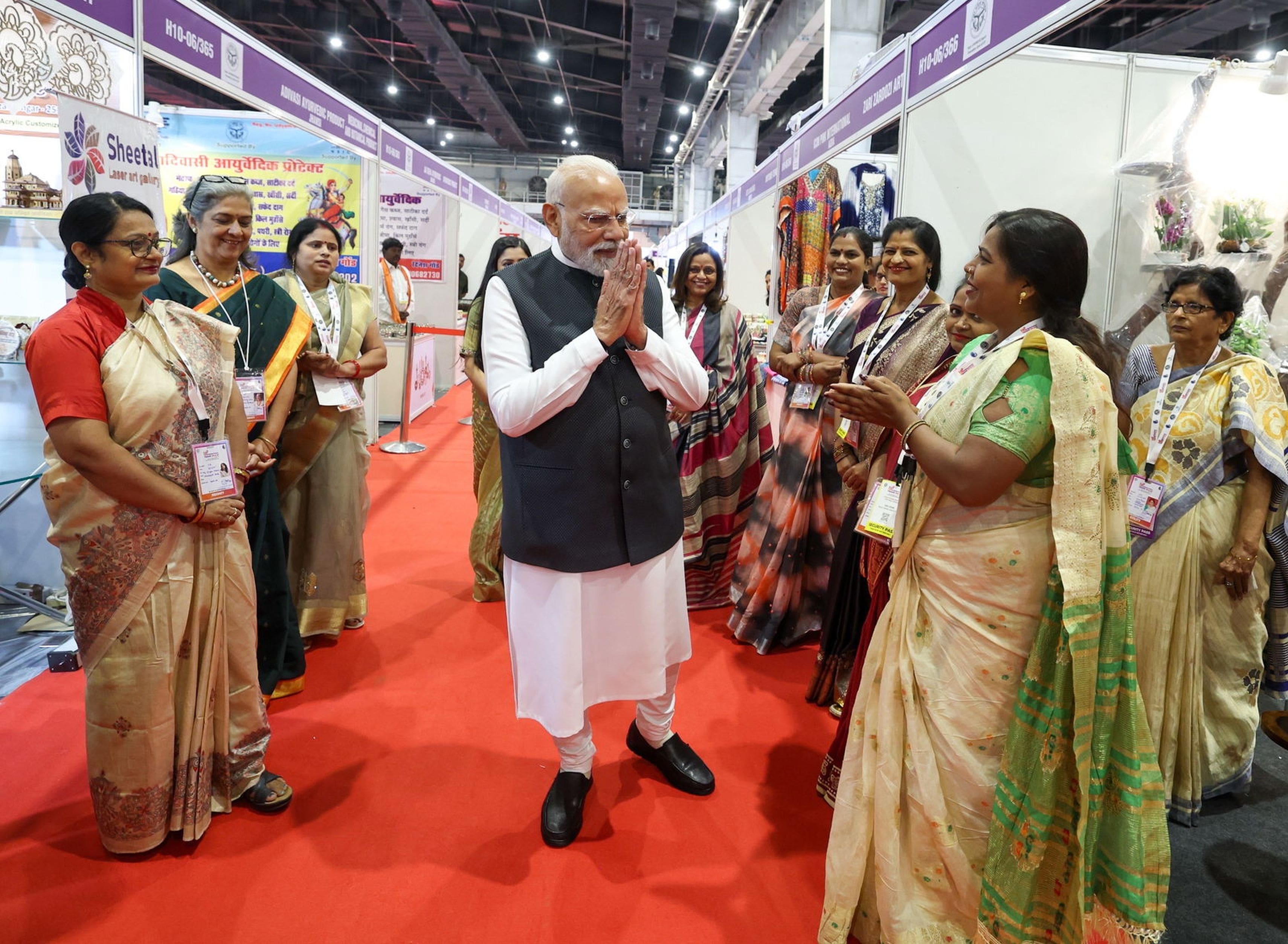
Citing the Government e-Marketplace (GeM) as another transformative example, Shri Modi recalled that there was a time when selling goods to the government was limited to large players. Today, nearly 25 lakh sellers and service providers are connected to the GeM portal. These include small traders, entrepreneurs, and shopkeepers who are now able to sell directly to the Government of India. The Prime Minister highlighted that the government has procured goods and services worth ₹15 lakh crore through GeM so far. Of this, approximately ₹7 lakh crore worth of purchases have been made from MSMEs and small industries. He remarked that such a scenario was unimaginable under previous governments. Now, even a small shopkeeper in a remote corner of the country is selling products on the GeM portal. The Prime Minister emphasized that this is the essence of Antyodaya and the foundation of India’s development model.

Underlining that India is advancing toward its goal of becoming a developed nation by 2047, the Prime Minister emphasised, “Despite global disruptions and uncertainty, India’s growth remains attractive”. He remarked that disruptions do not divert India—they reveal new directions. Amidst these challenges, India is laying a strong foundation for the coming decades. Shri Modi reiterated that the nation’s resolve and guiding mantra is Aatmanirbhar Bharat. He asserted that there is no greater helplessness than dependence on others. In a changing world, the more a country relies on others, the more its growth is compromised. “India must become self-reliant. Every product that can be made in India must be produced in India”, stressed the Prime Minister. Addressing the large gathering of entrepreneurs, traders, and innovators, the Prime Minister noted that they are key stakeholders in the Aatmanirbhar Bharat campaign, urging them to design business models that strengthen India’s self-reliance.

Underscoring that the government is strongly focused on Make in India and boosting domestic manufacturing, the Prime Minister emphasized the vision to produce everything from chips to ships within the country. To support this, the government is continuously working to enhance Ease of Doing Business. Shri Modi highlighted that over 40,000 compliances have been eliminated, and hundreds of rules that previously led to legal cases over minor business errors have been decriminalized. He affirmed that the government stands shoulder to shoulder with entrepreneurs. However, he also shared key expectations, urging that all manufactured products must be of the highest quality. The Prime Minister noted that citizens increasingly expect consistent improvement in the quality of indigenous products and stressed that there must be no compromise on quality. He remarked that every Indian is now connecting with swadeshi and wants to buy local products. The sentiment of proudly saying “this is swadeshi” is being felt across the country. He called on traders to adopt this mantra and prioritize products that are made in India.
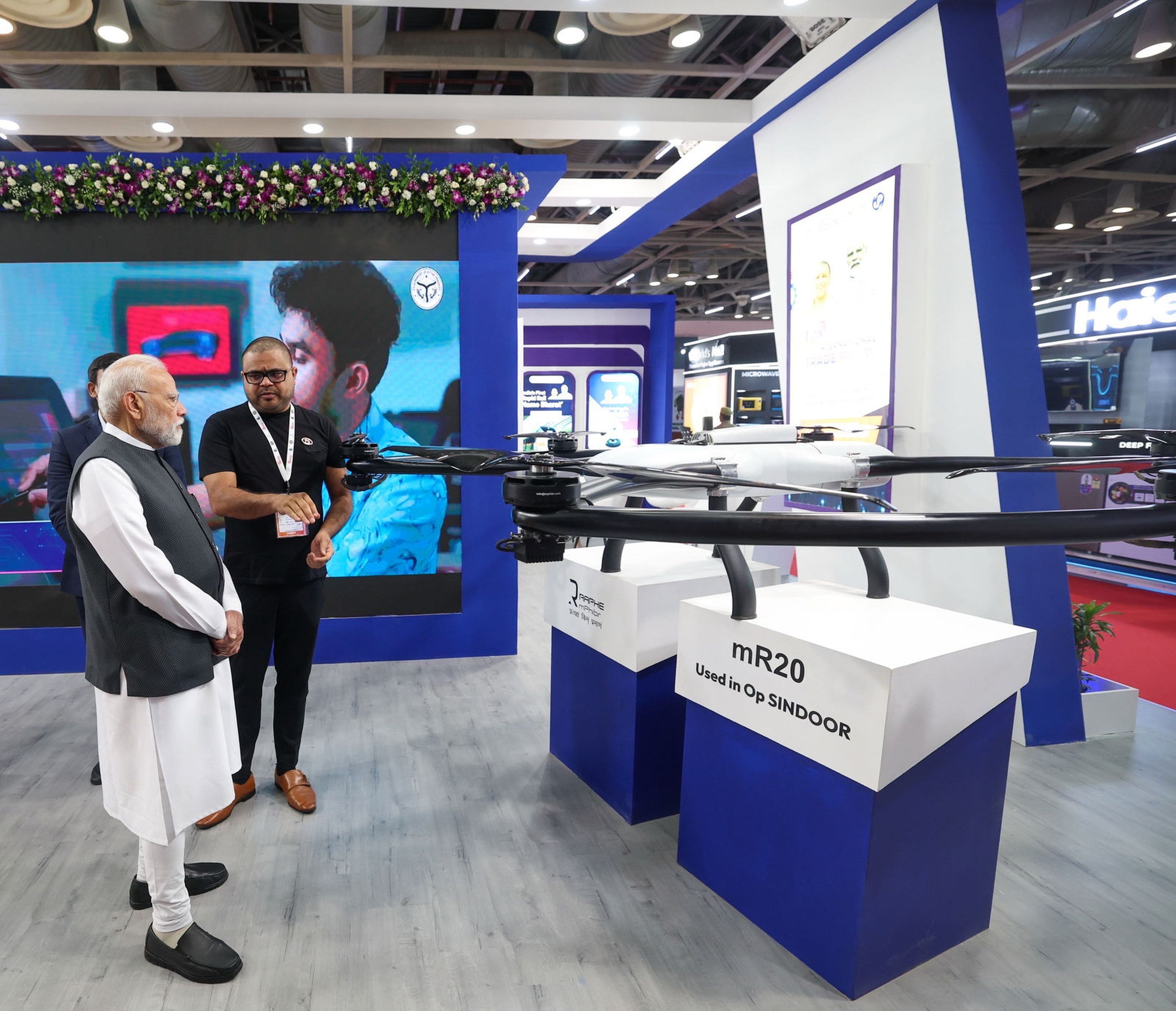
The Prime Minister underscored the critical importance of research, stating that investment in this domain must increase manifold. He affirmed that the government has already taken necessary steps to support this expansion. Shri Modi emphasized that private investment in research is now imperative and must be actively pursued. He described this as a demand of the times and called for the creation of a comprehensive ecosystem for indigenous research, design, and development.

Highlighting that Uttar Pradesh is brimming with extraordinary investment potential, the Prime Minister noted that the connectivity revolution in recent years has significantly reduced logistics costs. Uttar Pradesh now has the highest number of expressways in the country and leads in the number of international airports. It serves as a hub for two major dedicated freight corridors. Shri Modi remarked that UP ranks number one in heritage tourism, and initiatives like Namami Gange have placed the state on the cruise tourism map. He emphasized that the One District One Product scheme has enabled products from various districts in UP to reach international markets. In manufacturing, UP is setting new records, especially in electronics and mobile production. The Prime Minister stated that India has become the world’s second-largest mobile producer in the past decade, with UP playing a major role—producing nearly 55 percent of all mobile phones manufactured in the country. He added that UP will also strengthen India’s self-reliance in the semiconductor sector, with a major semiconductor facility set to begin operations just a few kilometers away.

Shri Modi cited the defence sector as another key example, stating that India’s armed forces seek indigenous solutions and aim to reduce external dependence. “In India, we are developing a vibrant defence sector, creating an ecosystem where every component bears the mark of 'Made in India'”, emphasised the Prime Minister highlighting Uttar Pradesh’s significant role in this transformation, noting that production of AK-203 rifles will soon commence at a factory established with Russian collaboration. He added that a Defence Corridor is being developed in UP, where manufacturing of BrahMos missiles and other weapon systems has already begun. The Prime Minister urged all stakeholders to invest and manufacture in Uttar Pradesh, which boasts a robust and expanding network of millions of MSMEs. He encouraged leveraging their capabilities to produce complete products within the state. He assured that both the Government of Uttar Pradesh and the Government of India stand ready to provide full support.

Affirming that India stands firmly with its industries, traders, and citizens, driven by the commitment to Reform, Perform, and Transform, Shri Modi highlighted that just three days ago, next-generation GST reforms were implemented, describing them as ‘structural changes that will propel India’s growth story’. These reforms will simplify GST registration, reduce tax disputes, and accelerate refunds for MSMEs, benefiting every sector. The Prime Minister noted that stakeholders have experienced three distinct phases—pre-GST, post-GST, and now the next-generation GST reforms—and emphasized the significant difference they have made. He illustrated this with examples, stating that before 2014, the multitude of taxes made it difficult to manage both business costs and household budgets. A shirt priced at ₹1,000 attracted nearly ₹170 in taxes before 2014. After the introduction of GST in 2017, this dropped to ₹50. With the revised rates effective from September 22, the same ₹1,000 shirt now incurs only ₹35 in tax.
Elaborating further, the Prime Minister illustrated the tangible benefits of GST reforms with a relatable example. He noted that in 2014, spending ₹100 on essentials like toothpaste, shampoo, hair oil, and shaving cream incurred ₹31 in taxes, making the bill ₹131. After the introduction of GST in 2017, the same ₹100 worth of goods cost ₹118, resulting in a direct saving of ₹13. With the latest generation of GST reforms, this cost has further reduced to ₹105—yielding a total saving of ₹26 compared to pre-2014 rates. Shri Modi emphasized that this reflects significant monthly savings for ordinary families. He explained that a household spending ₹1 lakh annually on necessities in 2014 would have paid ₹20,000–₹25,000 in taxes. Today, under the new GST regime, the same family pays only ₹5,000–₹6,000 annually, as most essential items now attract just 5 percent GST.

Emphasising the pivotal role of tractors in India’s rural economy, the Prime Minister noted that prior to 2014, purchasing a tractor incurred over ₹70,000 in taxes. Today, the same tractor attracts only ₹30,000 in tax, resulting in a direct saving of more than ₹40,000 for farmers. He highlighted that three-wheelers, a major source of employment for the poor, previously attracted ₹55,000 in tax, which has now reduced to ₹35,000—yielding a ₹20,000 saving. Similarly, due to lower GST rates, scooters are now ₹8,000 cheaper and motorcycles ₹9,000 cheaper compared to 2014. Shri Modi remarked that these savings benefit the poor, neo-middle class, and middle class alike. Despite this, he cautioned that certain political parties are attempting to mislead the public. He criticised the opposition parties of spreading falsehoods to cover up their own governance failures, asserting that during their tenure, excessive taxation burdened ordinary citizens. The Prime Minister stated that his government has significantly reduced taxes, curbed inflation, and increased both income and savings for the people. He noted that by making income up to ₹12 lakh tax-free and implementing new GST reforms, citizens are set to save ₹2.5 lakh crore this year alone. He declared that the nation is celebrating the GST Savings Festival and affirmed that, with public support, the momentum of GST reforms will continue unabated.
The Prime Minister stated that India today possesses strong willpower for reforms, backed by democratic and political stability, along with policy predictability. He emphasized that India has a vast, skilled workforce and a dynamic young consumer base—an unmatched combination not found together in any other region globally. Shri Modi remarked that for any investor or company seeking to elevate their growth, investing in India presents the most attractive opportunity. He asserted that investing in India, and in Uttar Pradesh in particular, is a win-win situation. The Prime Minister concluded by affirming that through collective efforts, a developed India and a developed Uttar Pradesh will be realized. He extended his best wishes to all participants of the International Trade Show.

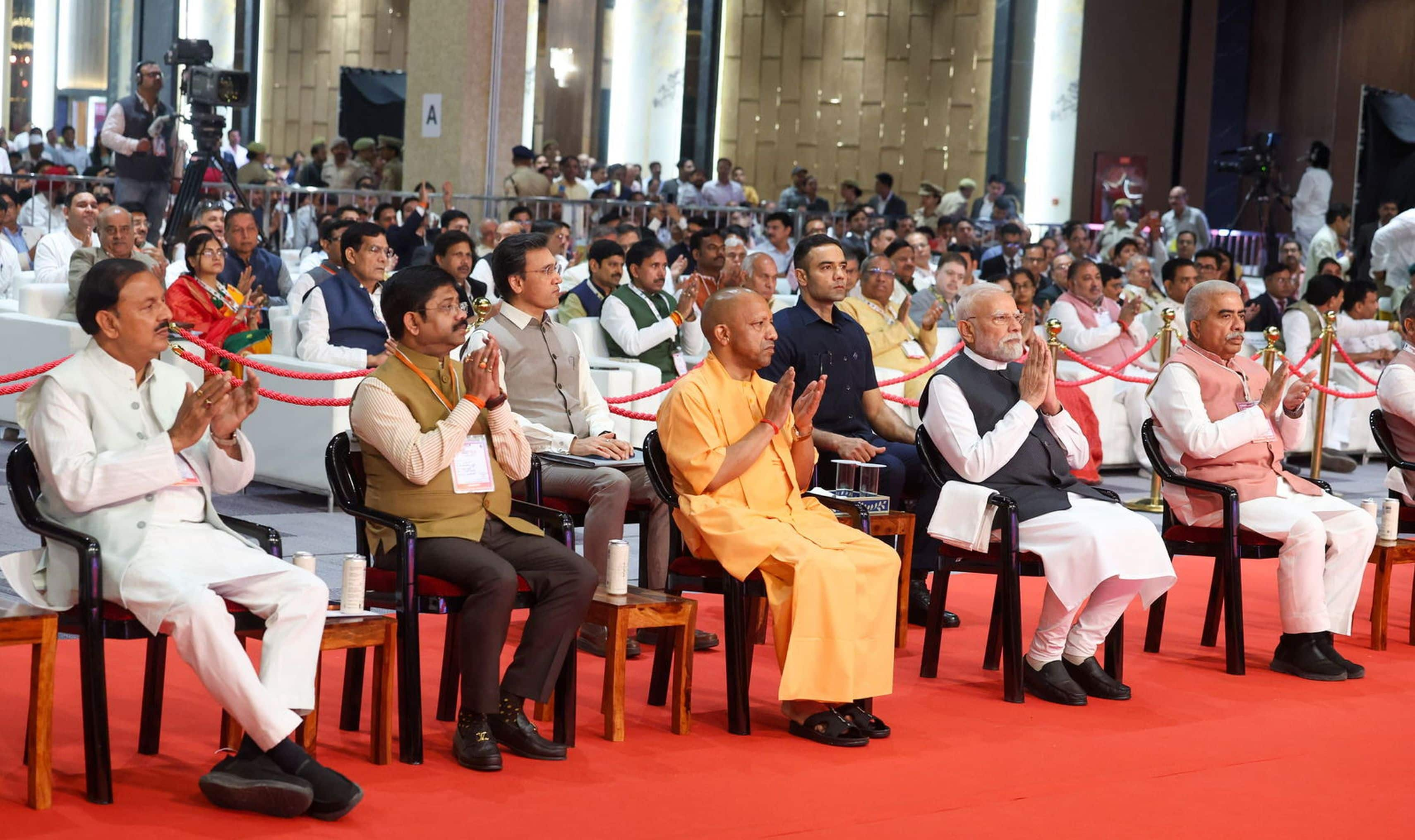
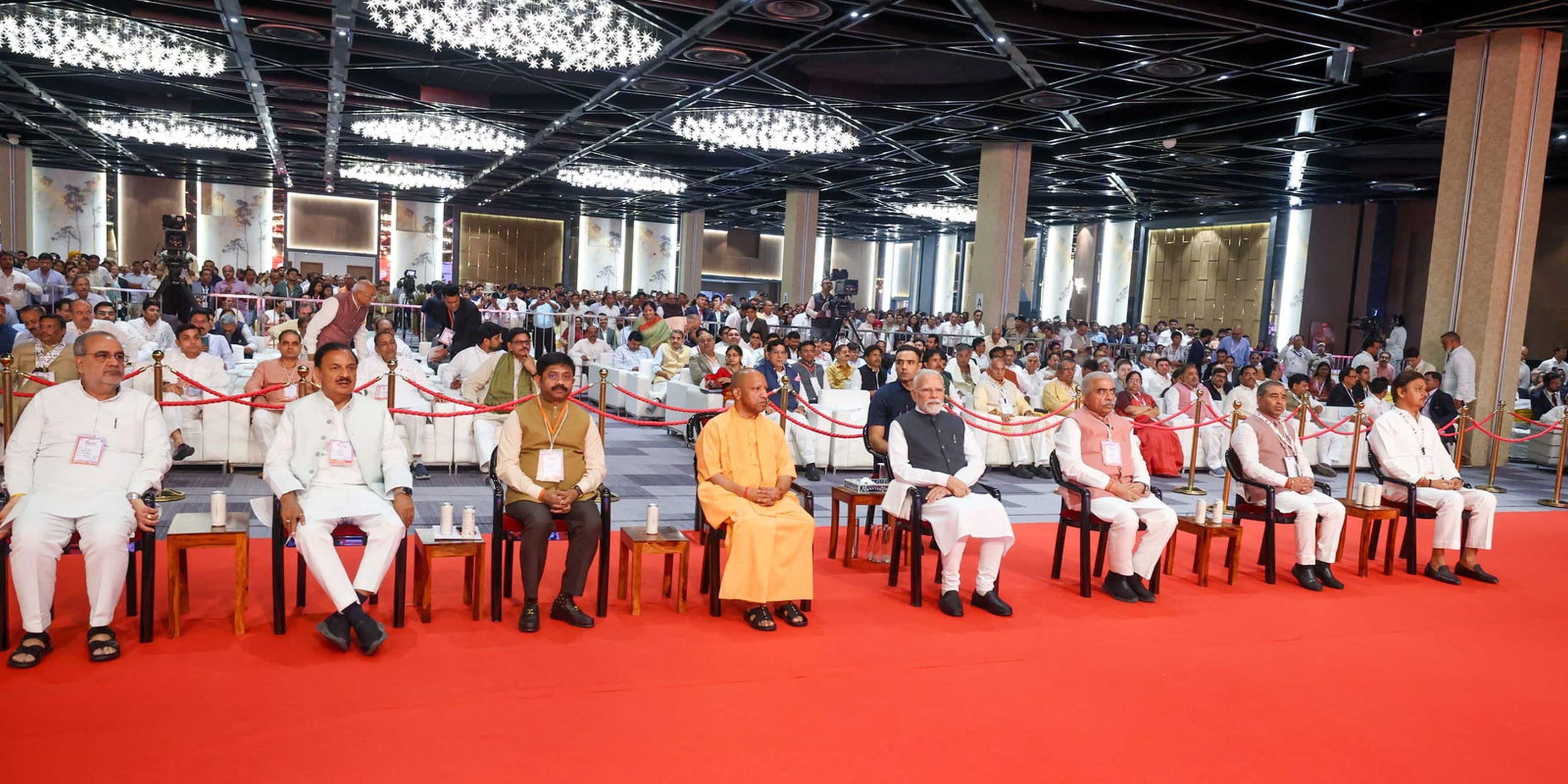
The Chief Minister of Uttar Pradesh, Shri Yogi Adityanath was present among other dignitaries at the event.
Background

In line with his commitment to Make in India, Vocal for Local and Aatmanirbhar Bharat, Prime Minister inaugurated the Uttar Pradesh International Trade Show-2025 (UPITS-2025) at Greater Noida in Gautam Buddha Nagar district.

The trade show, under the theme “Ultimate Sourcing Begins Here”, will be held from 25th to 29th September. It will have three core objectives- innovation, integration, and internationalization. A three-pronged buyer strategy will target international buyers, domestic Business-to-business (B2B) buyers, and domestic Business-to-Consumer (B2C) buyers, providing opportunities for exporters, small businesses, and consumers alike.
UPITS-2025 will highlight the state’s diverse craft traditions, modern industries, robust MSMEs, and emerging entrepreneurs on a single platform. Key sectors that will be represented include handicrafts, textiles, leather, agriculture, food processing, IT, electronics, AYUSH among others. It will also feature Uttar Pradesh’s rich art, culture, and cuisine under one roof.

Russia will participate as a partner country adding strategic significance opening avenues for bilateral trade, technology exchange, and long-term cooperation. Over 2,400 exhibitors; 1,25,000 B2B visitors; and 4,50,000 B2C visitors will participate in the trade show.

Click here to read full text speech

Explore More
Today, the entire country and entire world is filled with the spirit of Bhagwan Shri Ram: PM Modi at Dhwajarohan Utsav in Ayodhya

Popular Speeches

Today, the entire country and entire world is filled with the spirit of Bhagwan Shri Ram: PM Modi at Dhwajarohan Utsav in Ayodhya
Lakshadweep Tourist Numbers Soar After PM Modi’s Appeal, Maldives Sees Sharp Dip In Indian Visitors

Media Coverage

Lakshadweep Tourist Numbers Soar After PM Modi’s Appeal, Maldives Sees Sharp Dip In Indian Visitors
NM on the go

Nm on the go

Always be the first to hear from the PM. Get the App Now!
...
India-Italy Joint Declaration
May 20, 2026

At the invitation of the President of the Council of Ministers of the Italian Republic, Giorgia Meloni, the Prime Minister of India, Shri Narendra Modi, paid an official visit to Italy on 19-20 May 2026. The visit, following Prime Minister Modi’s visit to Italy in June 2024 for the G7 Summit and Prime Minister Meloni’s visit to India for the G20 Summit in 2023, provided renewed momentum to the bilateral ties. The two leaders decided to elevate India-Italy relations to the level of a Special Strategic Partnership.

Political Dialogue

The two Prime Ministers welcomed the strong momentum of high-level exchanges and agreed to hold annual meetings of leaders including on the sidelines of multilateral events, as well as regular Ministerial and institutional-level meetings.

They appreciated the concrete progress achieved across the diverse pillars of the Joint Strategic Action Plan 2025-2029 adopted by the two leaders in their meeting during the G20 Summit held in Rio de Janeiro in November 2024. They agreed to establish Foreign Ministers-led mechanism to review the India-Italy Joint Strategic Action Plan 2025-29 and provide strategic guidance to India-Italy Special Strategic Partnership.

Economic Cooperation and Investments

Both leaders expressed satisfaction at the growing dynamism of bilateral economic and industrial cooperation, with three high level business fora held since the last year. Building on the opportunities arising from India’s rapid and consistent economic growth and the successful conclusion of the negotiations for the EU–India Free Trade Agreement, they reaffirmed the shared objective of expanding bilateral trade in both direction with aim to reach to € 20 billion by 2029.

They welcomed the increase of bilateral investments in key sectors and encouraged the respective industries to forge industrial and technology partnerships in order to build resilient supply chains. They welcomed the prospect of greater investments, particularly in textiles, clean technologies, semiconductors, automotive, energy, tourism, pharmaceuticals and medical technologies, digital technologies, critical raw materials, steel, ports and infrastructure. They encouraged industries to utilize the policy incentives and schemes in place in both countries which seek to enhance business linkages and production facilities.

Both Prime Ministers agreed to encourage dialogue and cooperation among stock exchanges, investment funds, venture capital, banks, insurance companies and financial institutions.

They agreed to facilitate industrial partnerships, including between SMEs, to foster deeper integration of supply chains. They encouraged new sectoral missions in the coming months in priority areas of mutual interest.

The two Prime Ministers welcomed the signing of the Memorandum of Understanding for cooperation in Critical Minerals. They agreed to further strengthen and expand bilateral cooperation in field of critical minerals by establishing a structured framework for collaboration, with particular emphasis on sustainability and resilient supply chains. They underscored the importance of promoting joint efforts in recovery of critical minerals from unconventional sources, including electronic waste and mine tailings, as an integral component of circular economy initiatives. They also expressed satisfaction on signing of the Memorandum of Understanding for cooperation in the field of agriculture and agricultural research between respective ministries and institutions.

Connectivity

The two Prime Ministers reaffirmed their commitment to cooperate on the India-Middle East-Europe Economic Corridor (IMEC), recognising its transformational potential in reshaping and promoting global trade, connectivity and prosperity. Appreciating the preliminary discussions around the project, they encouraged the first IMEC Ministerial meeting to take concrete steps for advancing this initiative in 2026.

They welcomed the signing of an MoU on maritime transport and ports and directed their respective ministries/departments to establish a joint working group to implement the MoU at the earliest.

Science, Technology, Innovation, Start-ups and Artificial Intelligence

The two Prime Ministers reaffirmed that innovation, science and technology are core drivers of the India-Italy partnership.

They announced the creation of INNOVIT India, an innovation hub located in India aimed at strengthening cooperation between the respective innovation ecosystems, support startup acceleration programs, market access and business matching, joint research, university collaboration, and talent mobility in sectors including fintech, healthcare, semiconductors, logistics and supply chains, agritech, energy, quantum computing, and artificial intelligence. Both leaders welcomed the inaugural Science and Innovation Dialogue between Indian and Italian universities and research centres held in Delhi in April 2025 and look forward to holding its next edition in Italy later this year.

Both leaders underlined the importance of an open, free, secure, stable, accessible and peaceful ICT environment, which is an enabler for innovation and economic growth. PM Modi thanked PM Meloni for Italy’s constructive participation in the AI Impact Summit that took place on 19th February 2026 in New Delhi. Both leaders reaffirmed their commitment to a human-centric, secure, trustworthy and robust Artificial Intelligence. They agreed to collaborate in this domain including in third countries.

The two Prime Ministers placed particular emphasis on opportunities for cooperation in the field of supercomputing.

Building on the 2025–2027 Executive Program for Scientific Cooperation, they supported the implementation of joint projects and the facilitation of mobility of researchers in area of quantum technologies, renewable energy, green hydrogen and sustainable blue economy. They also welcomed the ongoing implementation of the Memorandum of Understanding for cooperation in the field of scientific research and the launching of a joint call for proposals to fund research projects.

The two Prime Ministers acknowledged the longstanding scientific collaboration between the Indian Academia and the International Centre for Theoretical Physics (ICTP) in Trieste and welcomed the signing of a Letter of Intent between the Indian Department of Science and Technology and the Elettra Sincrotrone center in Trieste, Italy in support of activities related to the access of synchrotron radiation facility at Elettra for Indian researchers.

Space

While appreciating the ongoing collaboration between Italian Space Agency and the Indian Space Research Organisation, the two leaders agreed to strengthen the partnership on Earth observation, heliophysics and space exploration, with focused thematic engagement and to explore cooperation on access to space and protection of space infrastructures. They expressed satisfaction with the recent reciprocal visits of their respective space industry delegations and looked forward to further promote commercial collaboration through exchanges of experts and joint initiatives also in third countries.

Defence

Both Prime Ministers expressed satisfaction with the deepening of defence cooperation including through Ministerial exchanges, service-to-service ties, port visits, and welcomed the adoption of a Joint Declaration of Intent and a Defence Industrial Roadmap which will promote partnerships for technological cooperation, co-production and co-development projects, including helicopters, naval platforms, marine armament and electronic warfare. They also recognized the importance of protecting critical infrastructures and their related supply chains through the strengthening of industrial resilience.

The two sides agreed to examine the feasibility of establishing an annual high level military structured dialogue, complementing the work of the Joint Defence Committee and the Military Cooperation Group, and to promote joint exercises and inter-force courses.

Both leaders agreed to launch a Dialogue on Maritime Security, with the aim of increasing maritime security cooperation, coordination, and the exchange of information and best practices in the maritime domain.

Security

The two leaders strongly condemned terrorism and violent extremism in all its forms and manifestations, including cross border terrorism. The two leaders strongly condemned the April 2025 Pahalgam terror attack and reiterated their commitment to cooperate in the fight against terrorists and terrorist groups and their affiliates including those listed in the UN Security Council 1267 Sanctions regime. They called upon all countries to continue to work towards eliminating terrorist safe havens and infrastructure, disrupting terrorist networks and combating the financing of terrorism, consistent with the Financial Action Task Force’s guidelines. Both leaders reiterated their commitment to work together at the UN, FATF and other multilateral platforms.

Both leaders welcomed the first meeting of the Permanent Task Force between India and Italy on countering the financing of terrorism and the upcoming meeting of the Joint Working Group on Counter Terrorism.

Both leaders welcomed the conclusion of an MoU between the Italian Guardia di Finanza and the Directorate of Enforcement of India and looked forward to early conclusion of the Agreement on Exchange and Mutual Protection of Classified Information and the Agreement on strengthening of Police Cooperation. They also welcomed the ongoing discussions on other agreements including Extradition Treaty and Mutual Legal Assistance Treaty.

Migration and Mobility

The two leaders agreed to enhance mobility of students, researchers and skilled workers, particularly in STEM sectors, and to expand cooperation on skills development, in line with the needs of the labour market, including through a specific Joint Declaration of Intent on the facilitation of mobility of nurses from India to Italy. In this context, they welcomed the ongoing discussions between relevant agencies on Social Security Agreement (SSA).

They welcomed the launch of "ICI - Italy Calls India: a University-Enterprise talent bridge” aimed at enhancing the talent of Indian students enrolled in Italian universities by offering concrete pathways for guidance, matching, and qualified integration into Italian enterprises.

They also discussed the possibility of strengthening the cooperation to fight against irregular migration, labour exploitation and human trafficking to ensure safe and legal migration.

Culture and Educational Exchanges

The two leaders highlighted culture as a key pillar of bilateral dialogue and welcomed the signing of an MoU regarding Italy’s participation in the development of the National Maritime Heritage Complex in Lothal. They acknowledged the Indian National Pavilion at the Venice Art Biennale in 2026. They expressed their intention to celebrate 2027 as the "Year of Culture and Tourism between Italy and India”, which will feature a broad calendar of initiatives, and pave the way to a major exhibition on ancient cultural relations between Italy and India to be co-organized by the two Ministries of Culture.

The two leaders encouraged the organization of an Italy–India Cultural Forum, bringing together institutions, experts, and representatives of the creative industries. The two leaders appreciated the launching of the twinning program between Indian and Italian sites inscribed on the UNESCO World Heritage List, aimed at strengthening cooperation in the protection, enhancement and management of cultural heritage.

The two leaders agreed to further develop the film and audio-visual cooperation between the two Nations, building on the strength and innovative capacities of their industries and on the legal framework provided by the bilateral co-production agreement.

The two Prime Ministers reaffirmed their intention to strengthening cooperation in higher education and welcomed the adoption of the Indo-Italian Roadmap on Higher Education and Research. Prime Minister Modi invited Italian universities and institutions of excellence to open campuses in India under India’s New Education Policy.

India-EU Relations

The Leaders welcomed the new Joint India–EU Comprehensive Strategic Agenda agreed at the India–EU Summit on 27 January 2026 and the conclusion of negotiations of the India–EU Free Trade Agreement which would elevate ties to a new level by enhancing market access, reducing trade barriers, and strengthening economic security and resilience through diversified value chains and new market opportunities.

They also reaffirmed their support for strengthening the India–EU Trade and Technology Council as a key platform for cooperation in trade, critical technologies, and economic security. The leaders welcomed the India–EU Security and Defence Partnership and appreciated progress in mobility cooperation, including the MoU on a Comprehensive Framework for Mobility.

Multilateral Cooperation

Both Leaders stressed the urgent need to reform the United Nations to make it more representative and suited to present-day realities.

Both Leaders emphasized the importance of working together in the United Nations and other global platforms including G20 to protect multilateralism and uphold a rules-based international order.

Recognizing the strategic priority both countries attach to Africa, the two Prime Ministers agreed to work together in trilateral initiatives with African partners in areas such as Digital Public Infrastructure (DPI), agriculture, education, healthcare, artificial intelligence, connectivity and infrastructure and renewable energy in line with India’s development partnership in Africa and Italy’s Mattei Plan.

The Leaders reaffirmed their shared commitment to a free, open, peaceful and prosperous Indo-Pacific, in line with international law, including UNCLOS. They look forward to their continued partnership in Science and Technology and Academic cooperation pillar of Indo-Pacific Ocean Initiatives.

Both leaders expressed deep concern over the situation in the West Asia/the Middle East and its effects in the region as well as the rest of the world. The leaders welcomed the ceasefire announced on 8 April 2026 and underlined the importance of de-escalation, dialogue and diplomacy for a lasting peace in the West Asia/the Middle East. They also called for freedom of navigation and the resumption of global flows through Strait of Hormuz.

Both leaders expressed concern over the ongoing war in Ukraine, which continues to cause immense human suffering and negative global consequences. They agreed to continue to support efforts towards the achievement of a comprehensive, just and lasting peace in Ukraine through dialogue and diplomacy, in accordance with the international law and the principles of the UN Charter.

Conclusion

Noting the impressive growth and deepening of India-Italy Special Strategic Partnership, the two leaders reaffirmed their commitment to further expand cooperation across all sectors and continue close high-level consultations on key global and regional developments.

Prime Minister Modi thanked Prime Minister Meloni for the warm hospitality extended by the Government and the people of the Italian Republic and invited Prime Minister Meloni to visit India at a mutually convenient time.