Today, Chhattisgarh stands at a new pinnacle of its aspirations; on this proud occasion, I pay tribute to the visionary and compassionate leader whose foresight led to the creation of this state—Bharat Ratna, the revered Shri Atal Bihari Vajpayee ji: PM
Today, the entire nation is moving forward by embracing both heritage and development together: PM
India is the Mother of Democracy: PM
India is now moving towards the eradication of Naxalism and Maoist terrorism: PM
This Vidhansabha is not merely a place for lawmaking, but a vibrant centre for shaping the destiny of Chhattisgarh: PM

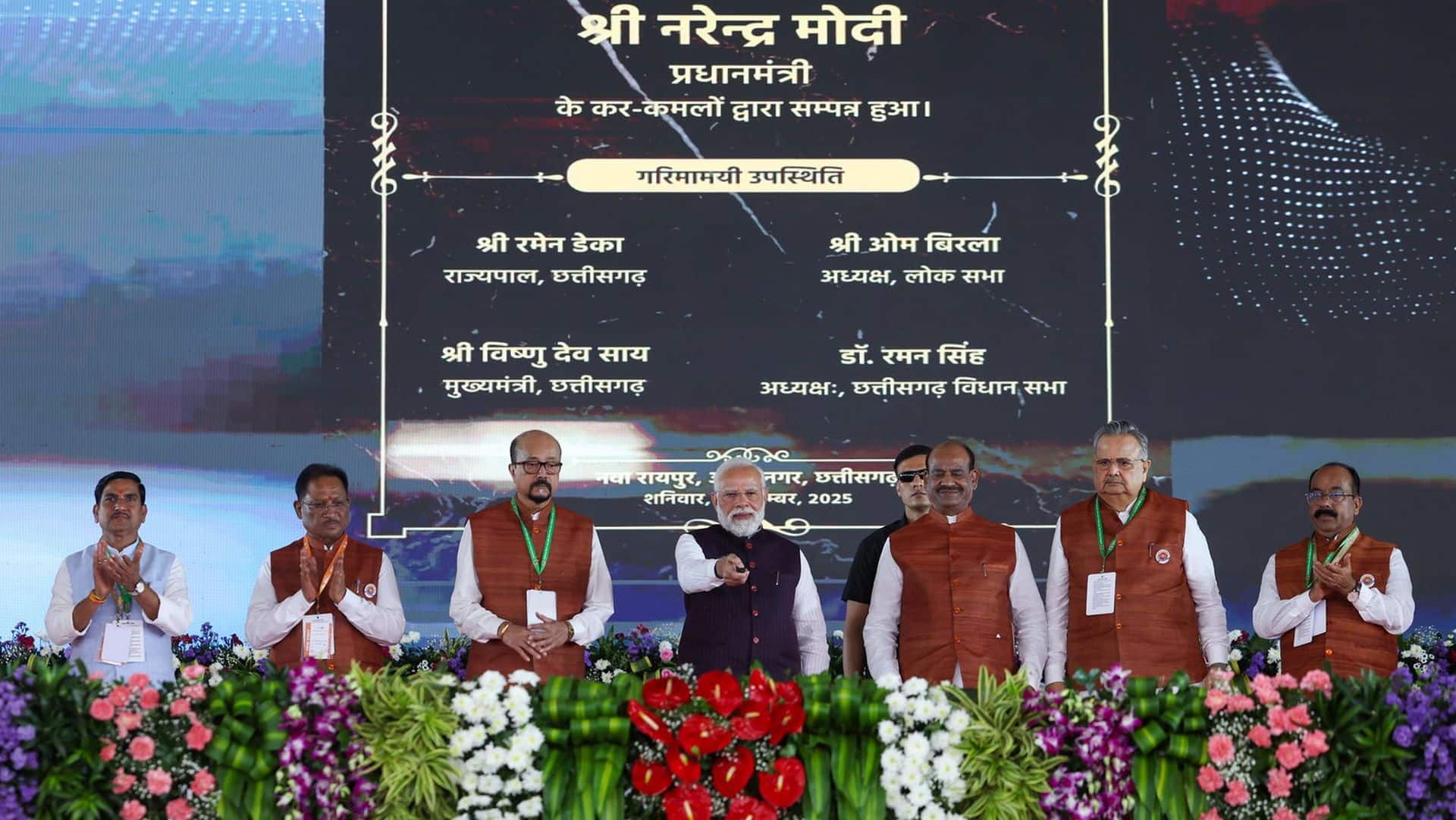
Prime Minister Shri Narendra Modi inaugurated the new building of Chhattisgarh Vidhansabha at Nava Raipur, Chhattisgarh today. Addressing the gathering on the occasion, the Prime Minister remarked that today marks a golden beginning for Chhattisgarh’s development journey. He stated that personally, this is a very joyful and significant day for him. He highlighted his deep emotional bond with this land, nurtured over several decades. Recalling his time as a party worker, Shri Modi said he spent considerable time in Chhattisgarh and learnt a lot. He further recalled the vision of Chhattisgarh, the resolve for its creation, and the fulfillment of that resolve, affirming that he has been a witness to every moment of Chhattisgarh’s transformation. As the state reaches a major milestone in its 25-year journey, he expressed gratitude for the opportunity to be part of this moment. On the occasion of the Silver Jubilee celebrations, the Prime Minister said he was privileged to inaugurate the new Assembly building for the people of the state. He extended his best wishes and congratulations to the people of Chhattisgarh and the state government on this occasion.

“This year, 2025 marks the Amrit Year of the Indian Republic, commemorating 75 years since India dedicated its Constitution to its citizens”, said Shri Modi. On this historic occasion, he paid tribute to the eminent members of the Constituent Assembly from the region—Shri Ravishankar Shukla, Barrister Thakur Chedilal, Shri Ghanshyam Singh Gupta, Shri Kishori Mohan Tripathi, Shri Ramprasad Potai, and Shri Raghuraj Singh—who, despite the backwardness of the region at the time, reached Delhi and played a significant role in the drafting of the Constitution under the leadership of Babasaheb Ambedkar.
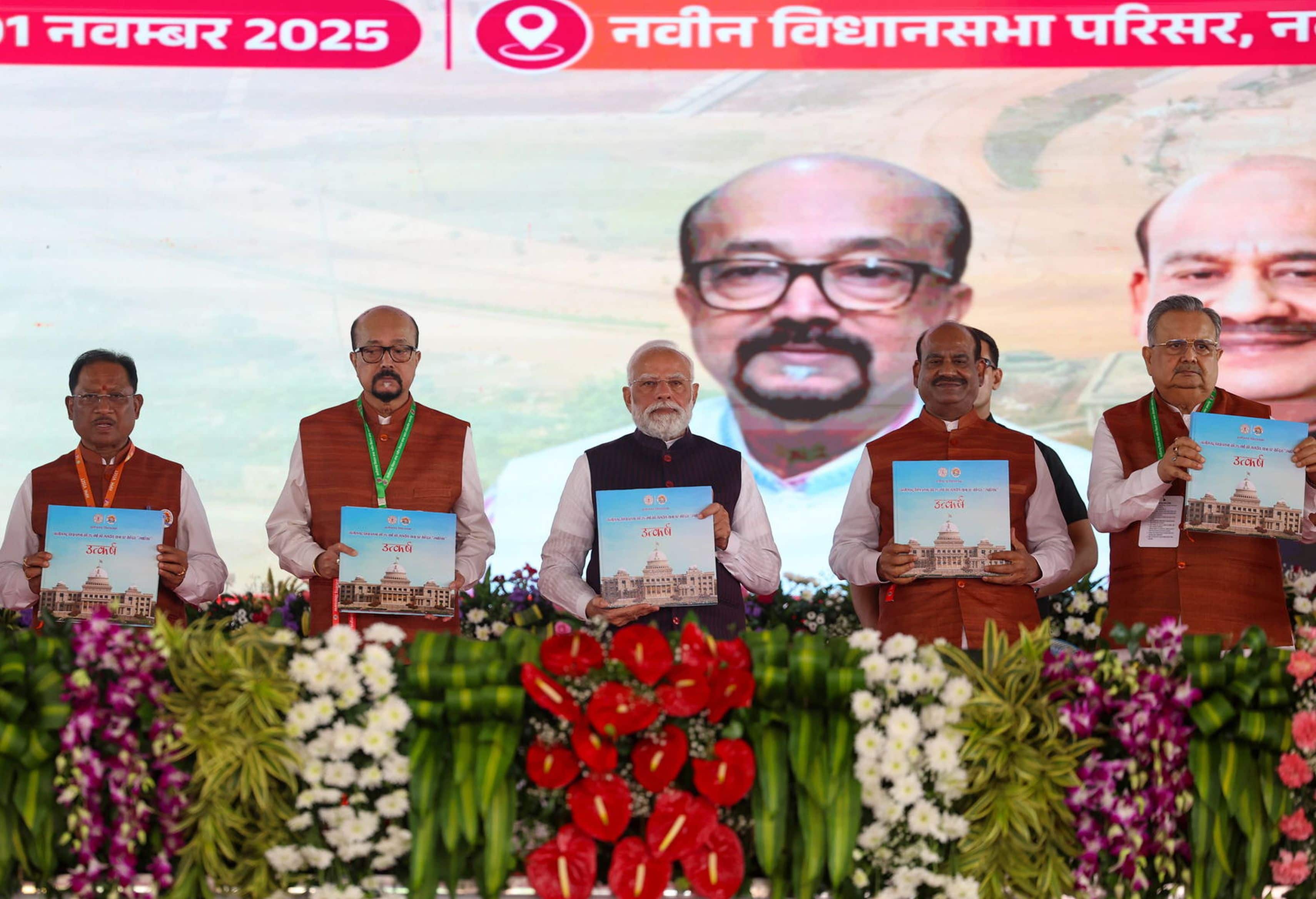
The Prime Minister remarked that today is a golden chapter in the history of Chhattisgarh. As the grand and modern Assembly building is being inaugurated, he emphasized that this is not merely a ceremony for a building, but a celebration of 25 years of public aspiration, struggle, and pride. “Today, Chhattisgarh stands at a new pinnacle of its aspirations; on this proud occasion, I pay tribute to the visionary and compassionate leader whose foresight led to the creation of this state—Bharat Ratna, the revered Shri Atal Bihari Vajpayee ji”, said Shri Modi. He recalled that when Atal ji formed the state of Chhattisgarh in the year 2000, it was not just an administrative decision, but a step towards opening new avenues of development and recognizing the soul of Chhattisgarh. The Prime Minister noted that today, along with the inauguration of the Assembly building, the unveiling of Atal ji’s statue has also taken place, and the heart naturally says—‘Atal ji, look, your dream is coming true, the Chhattisgarh you envisioned is now filled with self-confidence and is reaching new heights of development’.

Stating that the history of the Chhattisgarh Legislative Assembly is in itself a source of inspiration, Shri Modi recalled that when this beautiful state was established in the year 2000, the first Assembly session was held at Jashpur Hall in Rajkumar College, Raipur. That period was marked by limited resources but unlimited dreams. He noted that there was only one sentiment at the time: “We will brighten our destiny with greater speed.” The Prime Minister mentioned that the Assembly building that came up later was originally the premises of another department. From there, the journey of democracy in Chhattisgarh began with renewed energy. He highlighted that today, after 25 years, the same democracy and the same people are inaugurating a modern, digital, and self-reliant Assembly building.
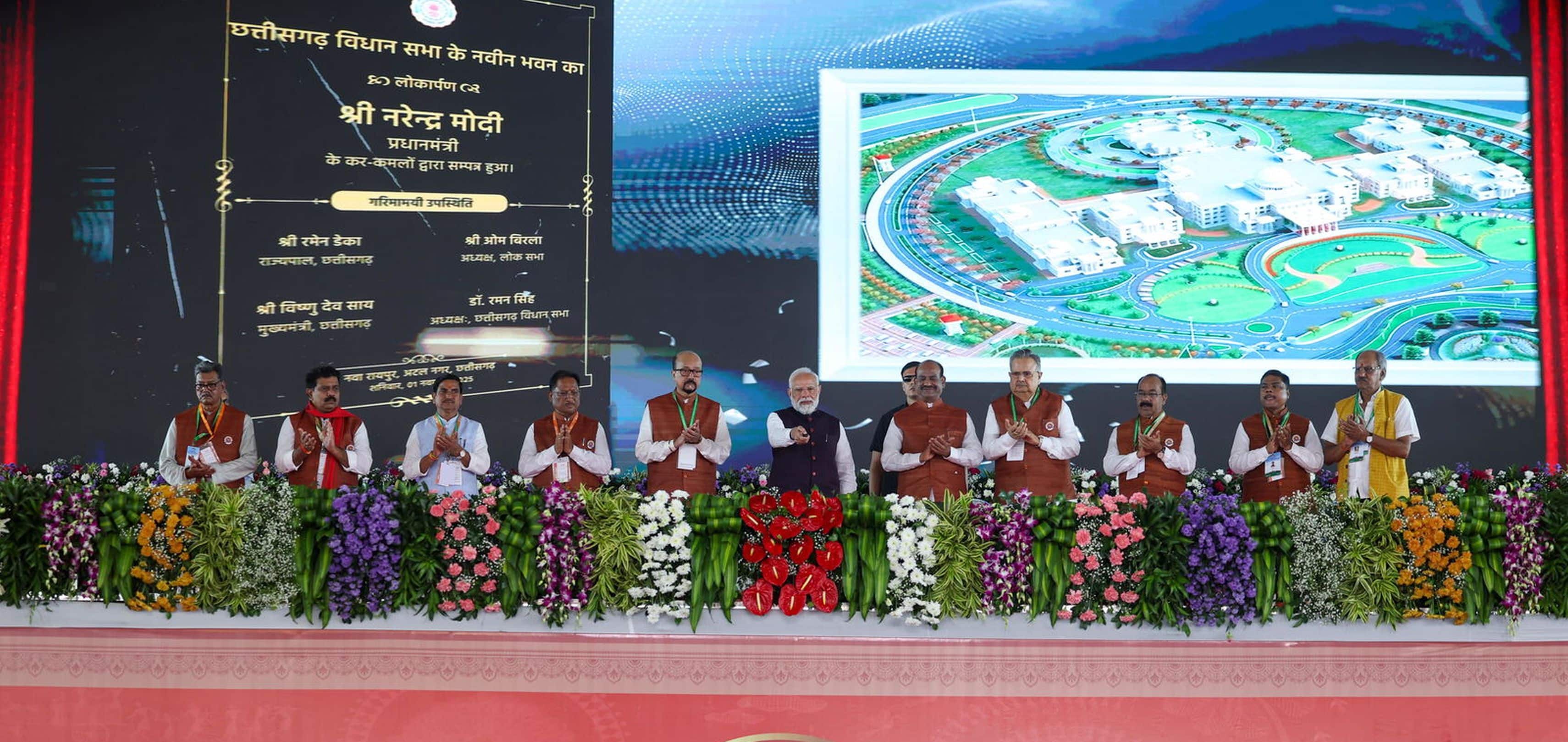
Referring to the assembly building as a pilgrimage site of democracy, the Prime Minister remarked that every pillar of the Assembly symbolizes transparency, every corridor reminds us of accountability, and every chamber reflects the voice of the people. He emphasized that the decisions made here will shape the destiny of Chhattisgarh for decades to come, and every word spoken within these walls will become an integral part of the state’s past, present, and future. Shri Modi expressed confidence that this building will serve as the centre of Chhattisgarh’s policy, destiny, and policymakers for the decades ahead.

“Today, the entire nation is moving forward by embracing both heritage and development together” underlined the Prime Minister, emphasizing that this spirit is reflected in every policy and decision of the government. He remarked that the sacred Sengol now inspires the Indian Parliament, and the new galleries of the Parliament connect the world with the ancient roots of India’s democracy. The statues installed in the Parliament complex convey to the world the profound depth of democratic traditions in India. Shri Modi expressed happiness that this very ethos and sentiment are also reflected in the new Assembly of Chhattisgarh. He stated that the new Assembly complex is a reflection of the state’s rich cultural heritage. Every element of this Assembly carries the inspiration of the great personalities born on the land of Chhattisgarh. He affirmed that prioritizing the deprived, and the principle of ‘Sabka Saath, Sabka Vikas’ are hallmarks of their government’s good governance. This, he said, is the spirit of the Constitution of India and the values imparted by our great leaders, sages, and thinkers.

Prime Minister Shri Modi shared that while observing the new Assembly building, he noticed a beautiful glimpse of Bastar art. He recalled presenting the same Bastar artwork to the Prime Minister of Thailand a few months ago, describing it as a symbol of India’s creativity and cultural strength.

Shri Modi further remarked that the walls of the building carry the message of Baba Guru Ghasidas ji which teaches the values of inclusivity, development for all, and respect for all. He noted that every doorway reflects the warmth taught by Mata Shabari, reminding us to welcome every guest and citizen with affection. The Prime Minister stated that every chair in the Assembly embodies the spirit of truth and fearlessness taught by Sant Kabir. He added that the foundation of the building carries the resolve of Mahaprabhu Vallabhacharya ji’s principle—“Nara Seva, Narayan Seva.”

Exclaiming “India is the Mother of Democracy”, Shri Modi emphasized that India’s tribal communities have lived democratic traditions for generations. He cited the Muriya Darbar of Bastar as a living example—an ‘ancient parliament’ that reflects grassroots democratic practices. He remarked that for years, society and governance in India have worked together to resolve challenges. The Prime Minister expressed happiness that the tradition of Muriya Darbar has also been given a place in the new Assembly building.

Shri Modi stated that while every corner of the Assembly reflects the ideals of our great leaders, its Speaker’s Chair is graced by the experienced leadership of Dr. Raman Singh. He remarked that Dr. Raman Singh is a powerful example of how a dedicated party worker, through hard work and commitment, can strengthen democratic institutions.

The Prime Minister quoted Rashtrakavi Nirala’s prayer to Maa Saraswati, noting that it was not merely poetry, but a mantra for the rebirth of independent India. He highlighted Nirala’s call for “Nav Gati, Nav Lay, Nav Swar,” symbolizing a Bharat rooted in tradition yet confidently moving towards the future. Standing in the new Assembly of Chhattisgarh, Shri Modi affirmed that this sentiment is equally relevant here. He described the building as a symbol of ‘Nav Swar’—where the echoes of past experiences meet the energy of new dreams. With this energy, he said, we must build a Bharat and lay the foundation of a Chhattisgarh that remains connected to its heritage while advancing on the path of development.
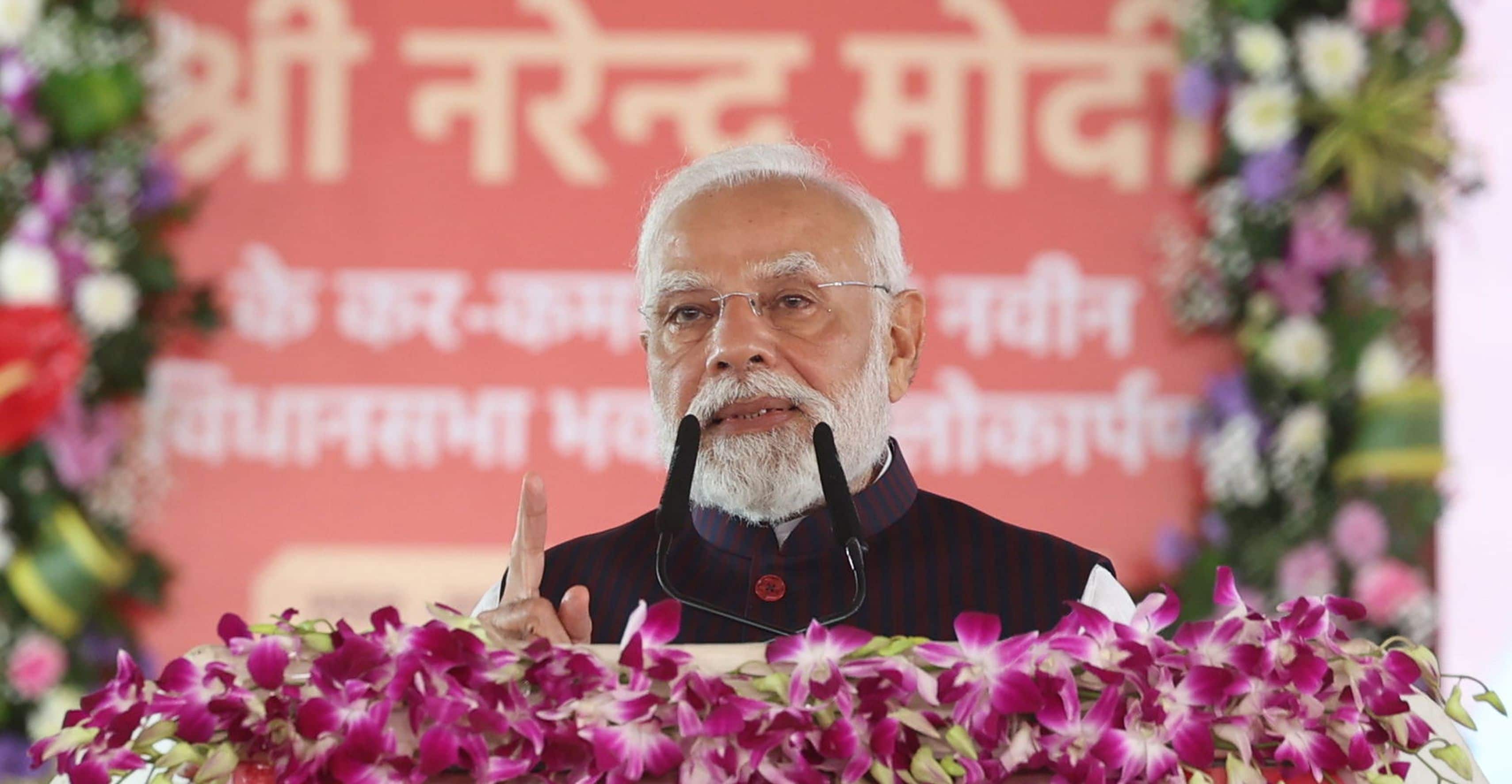
Underscoring that “Nagarik Devo Bhava” is the guiding mantra of good governance, Shri Modi emphasized that every decision taken in the Assembly must prioritize the welfare of the people. Laws enacted here should accelerate reform, simplify citizens’ lives, and reduce unnecessary government interference. He remarked that governance should neither be absent nor excessive—this balance is the only true formula for rapid progress.

The Prime Minister highlighted that Chhattisgarh is the maternal home of Lord Shri Ram, and referred to him as the nephew of this land. He said that there could be no better occasion than today to recall the ideals of Shri Ram in this new Assembly complex. He affirmed that Lord Ram’s values offer timeless lessons in good governance.

Recalling that during the consecration of the Ram Mandir in Ayodhya, Shri Modi said the nation collectively resolved to move from devotion to nation-building—from “Dev to Desh” and “Ram to Rashtra.” He emphasized that the essence of “Ram to Rashtra” lies in the vision of symbolizing a governance rooted in good administration and public welfare, reflecting the spirit of inclusive development—“Sabka Saath, Sabka Vikas.” The Prime Minister elaborated that “Ram to Rashtra” envisions a nation wherein the society free from poverty and sorrow, where India advances by eradicating deprivation. He added that it also means a country where no one suffers premature death due to illness, and where a healthy and happy India is built. Finally, he stated that “Ram to Rashtra” also signifies a society free from discrimination, where social justice prevails across all communities.

Prime Minister further stated that “Ram to Rashtra” also signifies the resolve to eliminate forces opposed to humanity, a pledge to destroy terror. He remarked that this resolve was clearly demonstrated in Operation Sindoor, where India broke the backbone of terrorism. “India is now moving towards the eradication of Naxalism and Maoist terrorism, and is filled with pride over its unprecedented victories”, affirmed the Prime Minister, adding that this spirit of pride is visibly reflected across the new premises of the Chhattisgarh Assembly.
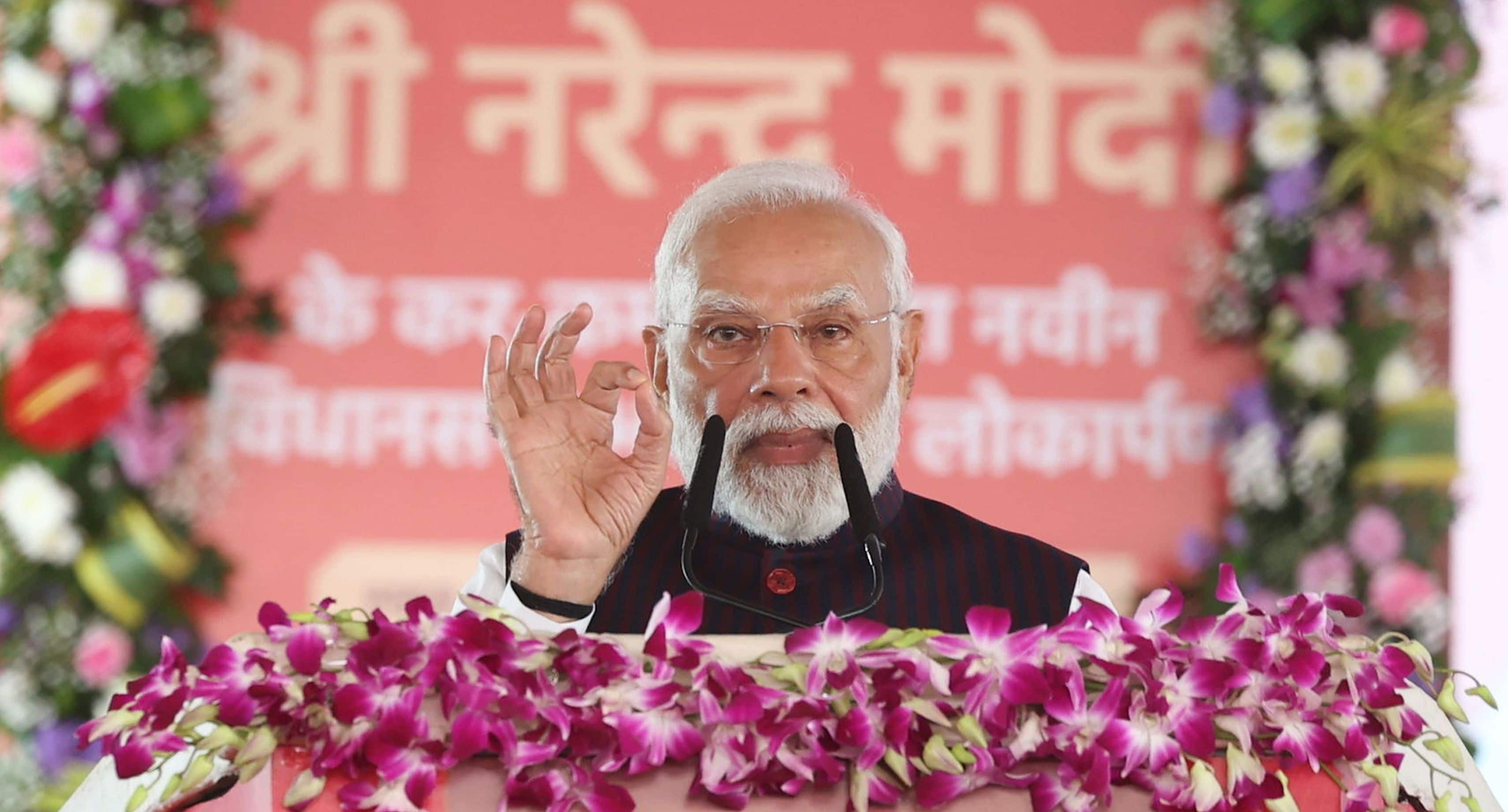
Highlighting that the transformation witnessed by Chhattisgarh over the past 25 years is remarkable and inspiring, Shri Modi said, “once known for Naxalism and backwardness, the state is now emerging as a symbol of prosperity, security, and stability”. He noted that the Bastar Olympics is now being discussed across the country, and that development and peace have returned to Naxal-affected regions. The Prime Minister credited this transformation to the hard work of the people of Chhattisgarh and the visionary leadership of their governments.

Underlining that the Silver Jubilee celebrations of Chhattisgarh are now becoming the starting point for a larger national goal, the Prime Minister emphasized that Chhattisgarh will play a significant role in achieving the vision of a developed India by 2047. Shri Modi urged all present to build a system and set an example through the Assembly that inspires every state in the country to innovate and contribute to this mission. He called for excellence in the dialogues held here, in the questions raised, and in the proceedings of the House. He stressed that every action, in every form, must be directed towards building a developed Chhattisgarh and a developed India.

The Prime Minister further remarked that the true greatness of Chhattisgarh’s new Assembly lies not in its grandeur, but in the welfare-oriented decisions made within it. He said this will depend on how deeply the House understands the dreams and aspirations of Chhattisgarh and how far it goes to fulfill them. He stated that every decision must honor the hard work of farmers, guide the dreams of youth, bring new hope to women, and serve as a medium for uplifting the most marginalized. “This Vidhansabha is not merely a place for lawmaking, but a vibrant centre for shaping the destiny of Chhattisgarh”, said Shri Modi and urged that every idea emerging from this House must carry the spirit of public service, the resolve for development, and the confidence to elevate India to new heights. He affirmed that this is our collective aspiration.

Underscoring that the true significance of inaugurating the new Assembly building lies in taking a solemn pledge to uphold duty above all in a democracy and to fulfill our roles in public life with commitment, the Prime Minister urged everyone to leave this complex with a resolve, especially in this Amrit Year of the Indian Republic, to dedicate their lives to the service of the people. He concluded by extending his heartfelt congratulations and best wishes to all on the inauguration of this beautiful new temple of democracy.

The Governor of Chhattisgarh, Shri Ramen Deka, Lok Sabha Speaker, Shri Om Birla, Speaker of the Chhattisgarh Legislative Assembly, Dr. Raman Singh, Chief Minister of Chhattisgarh, Shri Vishnu Deo Sai, Union Minister, Shri Tokan Sahu and other distinguished guests were present at the event.

Background

The new building of Chhattisgarh Vidhansabha, has been built on the Green Building concept, planned to be fully powered by solar energy and equipped with a rainwater harvesting system.

Click here to read full text speech

Explore More
Today, the entire country and entire world is filled with the spirit of Bhagwan Shri Ram: PM Modi at Dhwajarohan Utsav in Ayodhya

Popular Speeches

Today, the entire country and entire world is filled with the spirit of Bhagwan Shri Ram: PM Modi at Dhwajarohan Utsav in Ayodhya
‘Highly Focused’: Canada PM Mark Carney Calls PM Modi A ‘Unique Leader’ After India Visit

Media Coverage

‘Highly Focused’: Canada PM Mark Carney Calls PM Modi A ‘Unique Leader’ After India Visit
NM on the go

Nm on the go

Always be the first to hear from the PM. Get the App Now!
...
India – Finland Joint Statement on the State Visit of President of the Republic of Finland
March 05, 2026

At the invitation of the Hon'ble Prime Minister of India, Shri Narendra Modi, President of the Republic of Finland, H.E. Dr. Alexander Stubb, is on a State Visit to India from 4-7 March 2026. President Stubb, who is on his first visit to India in his present capacity, is visiting New Delhi and Mumbai and is accompanied by Ms. Sari Multala, Minister of Climate and the Environment of Finland, Mr. Matias Marttinen, Minister of Employment of Finland, and a high-level delegation comprising of officials and business leaders. Prime Minister Modi inaugurated the 11th edition of the Raisina Dialogue on 5 March 2026 in New Delhi with President Stubb as the Chief Guest delivering the Inaugural Keynote Address. President Stubb’s visit follows the visit of H.E. Mr. Petteri Orpo, Prime Minister of the Republic of Finland for the AI Impact Summit in February 2026.

On 5 March 2026, President Stubb was warmly welcomed by Hon’ble President of India Smt. Droupadi Murmu at Rashtrapati Bhavan. Prime Minister Modi and President Stubb held wide-ranging discussions during a bilateral meeting, and jointly addressed the media. Prime Minister Modi also hosted a luncheon in honour of the visiting dignitary.

The President of Finland congratulated India for successfully hosting the AI Impact Summit 2026. Both Leaders shared the view that working towards safe, trustworthy, and inclusive development of AI is of paramount importance.

The Leaders affirmed the deep and enduring friendship between India and Finland, built on a foundation of mutual respect and the values of democracy and rule of law, as well as commitment to global peace, security, and international law.

The Prime Minister of India and the President of Finland reiterated their commitment to the rules-based international order and multilateral cooperation, with the UN at its core.

The Leaders underlined the importance of redoubling efforts to reach the Sustainable Development Goals, and the importance of global cooperation against the challenges of climate change and loss of biodiversity.

Welcoming the landmark Free Trade Agreement between India and the European Union concluded in the India-EU Summit on 27 January 2026, the Leaders acknowledged the immense and mutually beneficial opportunities for both parties of increased trade and investments, including for the India-Finland bilateral relationship.

Building on the momentum provided by the India-Finland Virtual Summit on 16 March 2021 and the meetings of the Prime Ministers of both countries in the margins of two editions of India-Nordic Summit in 2018 and 2022 in Stockholm and Copenhagen respectively, as well as during the AI Impact Summit in February 2026, the Leaders emphasized their shared commitment to continue expanding and deepening the cooperation between the two nations. In this spirit, the leaders agreed to elevate the India-Finland relations to a Strategic Partnership in Digitalization and Sustainability, based on converging interests and mutual benefits.

Trade and Investment

The Prime Minister of India and the President of Finland called upon the business community to make use of the vast opportunities unleashed by the landmark India-EU FTA. In this context, The Leaders agreed that the aim should be to double the value of current trade between India and Finland by 2030.

The Leaders took note of the lively interactions between the respective business communities, reflected by the large business delegation visiting India together with the Finnish President, as well as the companies that joined the Finnish Prime Minister in February in connection with the AI Impact Summit in New Delhi. Both leaders expressed confidence that the India-Finland Business Summit and CEOs interaction scheduled to take place in Mumbai on 7 March would help pave the way for enhancing trade, technology collaboration and investments ties.

The Leaders welcomed the growing startup collaboration, manifested by the active participation of innovative Indian startups in Slush in Helsinki and Finnish startups in Startup Mahakumbh in New Delhi, as well as initiatives such as the Indo-Finland Startup Corridor.

Digitalization

Recognizing the transformative power of digitalization as a key driver of inclusive social and economic development, the Leaders identified digital transformation, including new and emerging technologies such as 5G, 6G, high-performance and quantum computing and Artificial Intelligence, as priority areas where collaboration based on mutual trust and benefit can be strengthened. The Leaders noted India’s experience in Digital Public Infrastructure, including digital payments such as the Unified Payments Interface (UPI), and discussed possibilities for cooperation in this area.

Against this backdrop, the Leaders asked the relevant ministries to establish a cross-sectoral Joint Working Group on Digitalization to define priorities and foster work on concrete and substantial actions driving the digital transition.

The Finnish President emphasized the positive impact of the considerable number of Indian professionals in the Finnish R&D and tech innovation ecosystems, contributing to social and economic development by means of digital transition and sustainability for the benefit of all.

The Leaders noted with satisfaction the Joint Calls by the Indian Department of Science and Technology and Business Finland to provide RDI funding for joint initiatives of Indian and Finnish companies and research organizations with focus on semiconductors, 6G, and energy systems. They also took note of the cooperation framework between Bharat 6G Alliance and the University of Oulu, Finland, welcoming all efforts to further strengthen bilateral collaboration on 6G.

Furthermore, the Leaders welcomed the work between the Indian Ministry of Electronics and Information Technology and Business Finland to further explore avenues of RDI collaboration with special focus on AI, noting also the discussions between the Indian Centre for Development of Advanced Computing and the Finnish IT Centre for Science with respect to High-Performance Computing.

In the field of advanced technology, the Leaders also highlighted Space tech as an emerging area of collaboration with considerable future potential and active private sector engagement between Indian and Finnish players.

Sustainability

On sustainability, both Leaders underlined the great potential in advancing clean energy solutions, notably in areas such as low carbon transition, energy efficiency, biofuels, smart grids, and green hydrogen. In addition, they highlighted the importance of cooperation in circular economy, sustainable water management and meteorology.

To this end, the Leaders welcomed the establishment of a Joint Working Group on Sustainability, bringing together relevant actors from both countries to enhance collaboration on sustainability-related issues.

Moreover, the Leaders underscored the importance of implementing the Memorandum of Understanding on Cooperation in the field of Renewable Energy, encompassing many key areas of collaboration that contribute to sustainability, including bioenergy and waste-to-energy solutions, power storage and flexible RE systems, green hydrogen, as well as wind, solar and small hydro power.

They acknowledged the renewal of the Memorandum of Understanding on Environmental Cooperation, and collaboration under the Leadership Group for Industry Transition (LeadIT) and encouraged the parties to advance the deeper collaboration in circular economy, climate action, and sustainability.

Both sides acknowledged that the rapid deployment of Smart Energy solutions, including Advanced Metering Infrastructure (AMI) and other digital grid technologies, has enhanced efficiency while increasing cybersecurity risks to critical power infrastructure. They agreed to explore future areas of cooperation in promoting resilient, reliable and sustainable smart grid systems.

The Finnish President extended his appreciation to India for hosting the next World Circular Economy Forum in the later part of 2026, a Finnish initiative providing a platform to enhance circular economy solutions and bring together leading expertise in the search for new collaborative initiatives.

The Prime Minister of India acknowledged Finland’s active role in bringing together Indian, Finnish and other Nordic stakeholders in the framework of the Indo-Nordic Water Forum, promoting new collaborations and best practices in water resources management and wastewater management for circular economy solutions.

With respect to meteorological collaboration, the Leaders underscored the ongoing cooperation in aerosol monitoring and air quality forecasting between the Finnish Meteorological Institute (FMI) and the Indian Meteorological Department (IMD). They welcomed the work to establish a Virtual Research Center between FMI and the Indian Institute of Technology Madras (IITM), also taking note of the already ongoing FMI-IITM research collaboration with multilateral projects exceeding a total value of Euros 11 million.

The Leaders also took note of the exchange of experiences between the Indian Ministry of Rural Development and the National Land Survey of Finland and the Finnish Environment Institute, cities, and companies about Land Stack, an integrated GIS based digital platform of land and property information.

The Leaders welcomed the signing of Memorandum of Understanding on fostering cooperation in the field of Official Statistics which provides a framework for exchange of best practices, methodologies, and technical expertise in the area of official statistics.

Mobility, education, and people-to-people contacts

The Prime Minister of India and the President of Finland recognized the importance of people-to-people contacts in all fields, including skilled workers, specialists and young professionals, researchers and students, businesspersons, and academics, thereby nurturing economic prosperity, contributing to a rich social fabric, and enhancing mutual understanding.

In this context, the Leaders hailed the signing of a Memorandum of Understanding on Migration and Mobility Partnership, laying the frameworks for smooth, orderly, and mutually beneficial mobility for the years to come. Both sides agreed to take the steps required for the implementation of the MoU in a comprehensive and coordinated manner, that serves both India’s and Finland’s prosperity and economic growth. The Leaders also acknowledged the contacts between the respective Foreign Ministries, looking into possibilities of establishing bilateral dialogue on consular matters.

The Leaders took note of the Joint Statement endorsed by the High-Level Dialogue on Cooperation in Education (31 January 2024) and encouraged the relevant parties to accelerate their joint efforts to advance the common agenda, focusing on the agreed areas of secondary education, higher education, skill development, and student mobility.

In this context, they noted the growing interest in India towards the Finnish education system, the increasing cooperation in teacher training, as well as early childhood education institutions and schools that are being set up according to the Finnish model, as concrete expressions of the stakeholders’ shared will and commitment to continue developing the collaboration on education.

Furthermore, the Leaders highlighted the discussions on a bilateral audiovisual co-production agreement that will provide a solid frame to enhance cooperation in the film and gaming industries.

India-EU-relations

Both Leaders welcomed the new Joint India-EU Comprehensive Strategic Agenda, endorsed in the India-EU Summit on 27 January 2026, based on shared values and principles, mutual trust, converging interests, and shared political will. They agreed that India and the EU can be stable, predictable, and trusted partners, building a multifaceted and deepening long-term relationship with many positive outcomes for both sides.

The Leaders underlined that the conclusion of Free Trade Agreement takes the India-EU relations to a new level. In addition to clear economic benefits by enhancing market access and removing trade barriers, both Leaders noted that the FTA could support economic security and resilience through diversifying critical value chains and opening new markets.

As a platform to address key trade, technology, and economic security issues, the Leaders reaffirmed their support to further enhance the work of the India-EU Trade and Technology Council as the cornerstone of the India-EU technology partnership.

The Prime Minister of India and the President of Finland underscored that the signing of India-EU Security and Defense Partnership added another meaningful dimension to the India-EU Strategic Partnership that will deepen co-operation in areas of shared interests, including maritime security, defense industry, cyber and hybrid threats, space, as well as counter-terrorism.

The leaders lauded the signing of the MoU on Comprehensive Framework of Cooperation on Mobility and the launch of pilot European Union Legal Gateway Office in India.

Multilateral cooperation

The Leaders recognized the need to reform the UN system. In this context, they emphasized the importance of a comprehensive reform of the UN Security Council to make it more efficient, representative, inclusive, and reflective of contemporary geopolitical realities. The President of Finland reiterated Finland’s support for the permanent membership of India in a reformed UNSC.

The leaders underscored the vital role of cooperation within the United Nations and other international bodies to safeguard multilateralism and uphold a rules-based international order, including supporting mutual candidacies and nominations.

Both sides agreed to continue their constructive cooperation in multilateral fora, including on peace and security, human rights, sustainable development as well as climate change and biodiversity.

The Leaders reiterated their shared commitment to promoting a free, open, peaceful and prosperous Indo‑Pacific, in accordance with international law, including the UNCLOS. In this context, India welcomed Finland to join the Indo-Pacific Oceans Initiative.

Both leaders reaffirmed their commitment to further strengthening cooperation and dialogue on Arctic matters, including through joint research initiatives, academic exchanges, and capacity-building programmes. They took note of the first India–Finland Arctic Dialogue titled "The Himalayan and Arctic Ecosystems: India–Finland Partnership for a Sustainable Future” held in January 2026 in Rovaniemi, Finland, which brought together parliamentarians, government officials, academics and experts to deliberate on strategies and pathways for deepening collaboration on Arctic matters. Both leaders also underscored the importance of advancing cooperation in the structures of the Arctic Council, and within the broader framework of the India-Nordic Summit.

Both leaders unequivocally and strongly condemned terrorism and violent extremism in all its forms and manifestations, including cross-border terrorism. They called for decisive and concerted international efforts to combat terrorism in a comprehensive and sustained manner and in accordance with international law. They agreed to enhance cooperation to counter violent radicalization and extremism, combat financing of terrorism, promote internationally agreed anti‑money laundering standards, prevent exploitation of new and emerging technologies for terrorist purposes, and tackle terrorist recruitment. The leaders reaffirmed strong commitment to continue taking active measures to disrupt the terror financing channels including at the UN and FATF. They condemned in the strongest terms the terrorist attack in Pahalgam, Jammu and Kashmir on 22 April 2025 and the terror incident near Red Fort, New Delhi on 10 November 2025.

Both Leaders agreed to continue to support efforts towards the achievement of a comprehensive, just, and lasting peace in Ukraine through dialogue and diplomacy, based on the principles of the UN Charter and international law, including independence, sovereignty, and territorial integrity.

Conclusion

To take forward the cooperation under the India-Finland Strategic Partnership in Digitalization and Sustainability, the Leaders asked the respective Working Groups on Digitalization and Sustainability to develop a future-oriented and concrete Action Plan, including definition of priority areas and related actions, and report back to the Ministry for Foreign Affairs of the Republic of Finland and the Ministry of External Affairs of the Republic of India on the progress achieved.

The President of Finland thanked the Prime Minister of India for the excellent arrangements during his state visit, and both Leaders expressed their appreciation of the open and constructive dialogue, and the forward-reaching and evolving cooperation. They agreed to continue their interaction with a solid foundation in a shared spirit of mutual respect and collaboration. President Stubb invited Prime Minister Modi to pay a visit to Finland, and Prime Minister Modi accepted the invitation.