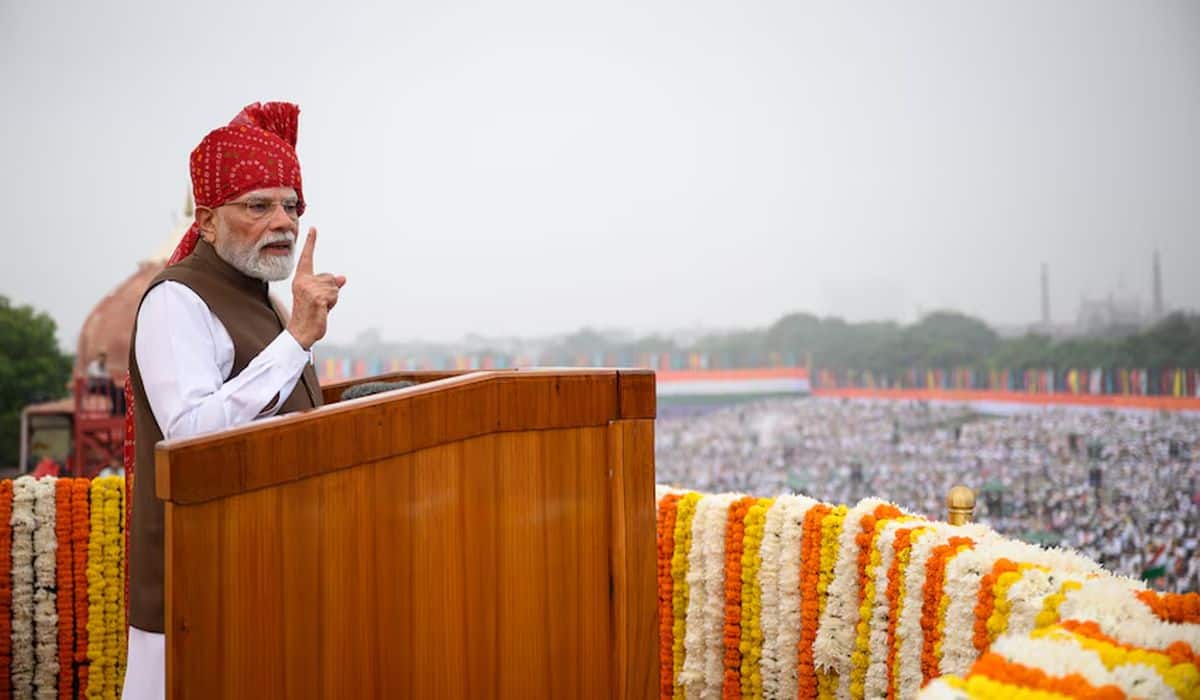
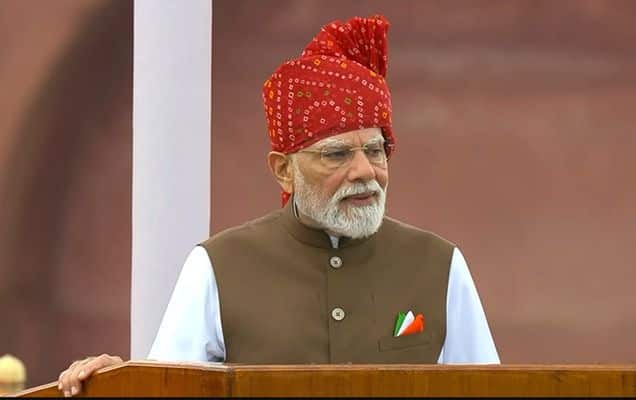
The Prime Minister Shri Narendra Modi participated in the ABP Network India@2047 Summit in the Bharat Mandapam, New Delhi today. Addressing the gathering, he said that the event at Bharat Mandapam has been abuzz since this morning. He noted his interaction with the organizing team and highlighted the rich diversity of the summit. He acknowledged the participation of several distinguished individuals who have contributed to the event’s dynamism. The Prime Minister expressed confidence that all attendees had a highly positive experience. Emphasizing the significant presence of youth and women at the summit, he specifically highlighted the inspiring experiences shared by Drone Didis and Lakhpati Didis. He noted that their stories serve as a source of motivation.
Describing the summit as a reflection of a transforming India that is asserting itself in every sector, Shri Modi emphasized that the nation’s greatest aspiration is to become a developed country by 2047. Highlighting India’s strength, resources, and determination, he invoked Swami Vivekananda’s words, urging people to rise, awaken, and persist until they reach their objectives. He noted that this unwavering spirit is visible in every citizen today. Shri Modi underscored the role of such summits in the pursuit of a developed India. He commended the organizers for hosting an outstanding summit and extended congratulations to Shri Atideb Sarkar, Shri Rajnish, and the entire ABP Network team for their efforts.

Mentioning that today marks a historic moment for India, the Prime Minister shared that he had a conversation with the Prime Minister of the United Kingdom and expressed happiness over the finalization of the India-UK Free Trade Agreement. He emphasized that this agreement between two major open-market economies will add a new chapter in trade and economic cooperation, benefiting the development of both nations. He noted that this is great news for India's youth, as it will boost economic activity and open new opportunities for Indian businesses and MSMEs. Prime Minister also mentioned that India has recently signed trade agreements with the UAE, Australia, and Mauritius. He underscored that India is not only implementing reforms but actively engaging with the world to position itself as a vibrant hub for trade and commerce.
Emphasising that bold decision-making and goal achievement require putting the nation’s interests first and having confidence in its potential, Shri Modi noted that, unfortunately, for decades, India was caught in a conflicting approach that hindered progress. He highlighted how, in the past, major decisions were delayed due to concerns over global opinions, electoral calculations, and political survival. He pointed out that self-interest often took precedence over necessary reforms, causing setbacks for the country. He stressed that no nation can advance if its decisions are dictated by short-term political considerations. True progress, he affirmed, happens when the sole criterion for decision-making is "Nation First." He stated that over the past decade, India has adhered to this principle, and the country is now witnessing the results of this approach.
“Over the past 10-11 years, our government has taken a series of decisive actions to address long-pending issues that lacked political will and remained unresolved for decades”, said the Prime Minister, citing the banking sector as a key example, emphasizing that banking is the backbone of the economy. He recalled that before 2014, India's banks were on the brink of collapse, and every financial summit inevitably discussed banking losses. However, he noted that today, India’s banking sector is among the strongest in the world, with banks reporting record profits and depositors benefiting from these reforms. The Prime Minister credited his government’s continuous efforts in the banking sector for these achievements, highlighting key reforms, mergers of small banks in the national interest, and measures to strengthen financial institutions. He also referred to the past condition of Air India, noting that the airline was sinking, costing the country thousands of crores, while previous governments hesitated to take corrective steps. He asserted that his government made the necessary decisions to prevent further losses. “For our government, the nation’s interest remains paramount”, he reaffirmed.

Underlining a significant governance transformation, recalling a former Prime Minister's admission that only 15% of government funds meant for the poor actually reached them, Shri Modi noted that despite changing governments over the years, no concrete steps were taken to ensure direct financial assistance to beneficiaries. He stated that their government introduced the Direct Benefit Transfer (DBT) system to ensure that every rupee meant for the poor reached them without leakage. He emphasized that this reform eliminated inefficiencies in government schemes and enabled direct financial benefits for intended recipients. He revealed that government records previously contained 10 crore fraudulent beneficiaries who never existed, yet were receiving benefits. These names were embedded in a system created by past administrations. Shri Modi asserted that his government removed these 10 crore false entries from official records and ensured that funds were transferred directly to the bank accounts of the rightful beneficiaries through DBT. He underscored that this reform has prevented over ₹3.5 lakh crore from falling into the wrong hands.
Prime Minister highlighted the decades-long delay in implementing the One Rank One Pension (OROP) scheme. He noted that previous governments rejected the proposal citing financial burden, but his government prioritized the interests of those who dedicated their lives to national security. He stated that OROP has benefited millions of military families. He emphasized that his government has disbursed over ₹1.25 lakh crore to former servicemen under the scheme, ensuring their rightful entitlements. The Prime Minister also addressed the issue of reservation for economically disadvantaged families, noting that despite years of discussions, no concrete steps were taken. He affirmed that his government took decisive action to implement this policy. Regarding the 33% reservation for women in the Lok Sabha and State Assemblies, the Prime Minister recalled past political obstacles that hindered its progress. He asserted that vested interests delayed this crucial reform, but his government upheld the principle of national interest by enacting legislation to empower women through political representation.
Highlighting that several crucial issues in the past were deliberately avoided due to political concerns over vote banks, Shri Modi cited the example of Triple Talaq, which had devastating consequences for countless Muslim women, yet previous governments remained indifferent to their plight. He stated that his government prioritized women's rights and the well-being of Muslim families by enacting legislation against Triple Talaq, ensuring justice and empowerment. He also addressed the longstanding need for reforms in the Waqf Act, noting that necessary amendments were delayed for decades due to political considerations. Shri Modi affirmed that his government has now introduced key changes that will genuinely benefit Muslim mothers, sisters, and economically disadvantaged sections of the community.

Underlining a significant initiative undertaken by his government—the interlinking of rivers, the Prime Minister pointed out that for decades, water disputes dominated discussions, but his administration, in collaboration with state governments, has launched a major campaign to connect rivers. The Prime Minister cited key projects such as the Ken-Betwa Link Project and the Parvati-Kalisindh-Chambal Link Project, emphasizing that these initiatives will benefit millions of farmers by ensuring water accessibility. He noted the ongoing media discourse on water resources, underscoring the past scenario where India’s rightful share of water was flowing beyond its borders. “India's water will remain within the nation, serving its rightful purpose for the country’s development”, he affirmed.
Shri Modi highlighted that while the construction of the new Parliament building is widely discussed, a crucial achievement often overlooked is the establishment of the Dr. Ambedkar National Memorial in Delhi. He noted that the initiative was originally introduced during Atal Bihari Vajpayee’s government, but the construction remained stalled for a decade. He emphasized that his government not only completed the memorial but also developed key sites associated with Babasaheb Ambedkar into the Panchteerth, ensuring global recognition of his legacy.
Recalling the circumstances in which his government was formed in 2014, at a time when public trust in governance was severely shaken, the Prime Minister noted that some had even begun to question whether democracy and development could coexist. “Today's India stands as a testament to the power of democracy, proudly demonstrating that Democracy Can Deliver", he asserted. The PM highlighted that over the past decade, 25 crore people have risen out of poverty, sending a strong message to the world about the effectiveness of democratic governance. He pointed out that millions of small entrepreneurs who received loans under the Mudra Yojana have experienced firsthand the positive impact of democracy. Additionally, numerous districts once labeled as backward have transformed into Aspirational Districts, excelling in key developmental parameters—further reinforcing that democracy can produce tangible results. Prime Minister further emphasized that India's tribal communities, including some of the most marginalized groups, were historically left out of development. With the implementation of the PM Janman Yojana, these communities are now accessing government services, strengthening their belief in democracy's ability to uplift. He affirmed that true democracy ensures that development and national resources reach the last citizen without discrimination, and his government remains committed to this fundamental objective.

Stressing that India is building a future defined by rapid development, enriched by progressive thinking, strong resolve, and deep compassion, Shri Modi underlined the shift towards Human-Centric Globalization, where growth is not solely driven by markets but by ensuring dignity and the fulfillment of people's aspirations. “Our government is moving beyond a GDP-centric approach toward GEP-Centric Progress—Gross Empowerment of People—focusing on the collective upliftment of society”, he exclaimed. Outlining key measures that exemplify this vision, He noted that when a poor family receives a permanent home, their empowerment and self-respect grow. When sanitation facilities are built, individuals are freed from the indignity of open defecation. When beneficiaries of Ayushman Bharat receive free healthcare up to ₹5 lakh, their biggest financial worries are alleviated. He asserted that numerous such initiatives are strengthening the path of inclusive and sensitive development, ensuring that every citizen is empowered.
Reiterating the government's core philosophy of ‘Nagarik Devo Bhava’, emphasizing the commitment to serving the people, the Prime Minister stated that his administration views citizens as central to governance rather than adhering to the old "Mai-Baap" culture. He highlighted the shift towards a service-oriented approach, where the government proactively ensures accessibility for citizens. He pointed out that earlier, people had to repeatedly visit government offices just to get their documents attested, whereas now, self-attestation has made the process more convenient. He noted the presence of numerous young individuals at the event and underscored how digital advancements have streamlined administrative processes, making public services more efficient and citizen-friendly.
Shri Modi highlighted the transformation in government processes, making them more accessible and citizen-friendly. He recalled the challenges faced by senior citizens, who previously had to visit offices or banks every year to provide proof of their existence. He emphasized that his government introduced a digital system, allowing senior citizens to submit their life certificates remotely. He pointed out how routine tasks, such as obtaining electricity connections, installing water taps, paying bills, booking gas cylinders, and receiving deliveries, used to require repeated visits and even taking leave from work. He noted that today, many of these services have been streamlined through online platforms, reducing inconvenience for citizens. Shri Modi reaffirmed his government's commitment to making every government-citizen interaction—whether for passports, tax refunds, or other services—simple, fast, and efficient. He stated that this approach aligns with the principle of ‘Nagarik Devo Bhava’, strengthening the foundation for a developed India by 2047.

Underlining India’s unique approach of advancing both tradition and progress simultaneously, emphasizing the nation's commitment to "Vikas bhi, Virasat bhi", the Prime Minister pointed out that India is demonstrating how tradition and technology can thrive together. He noted that the country ranks among the global leaders in digital transactions while also taking yoga and Ayurveda to the world stage. He remarked that India has become a highly attractive destination for investment, with record FDI inflows in the past decade. He also emphasized the return of stolen artifacts and heritage items in unprecedented numbers, reflecting India's growing global stature. Prime Minister stated that India is now the world’s second-largest mobile phone manufacturer and a leading producer of superfoods like millets. Additionally, he highlighted the country's achievement in solar energy, surpassing 100 GW of production capacity—reinforcing India’s leadership in renewable energy.
Shri Modi emphasized that progress does not require abandoning one's cultural roots. He stated that the deeper India remains connected to its heritage, the stronger its integration with modern advancements will be. He highlighted that India is preserving its ancient legacy while ensuring it remains a source of strength for the future. He underscored that every step in the journey toward a developed India by 2047 holds immense significance. He pointed out that often, people fail to realize the multiplier effect of government decisions. He cited the example of the media and content creation sector, recalling that a decade ago, when he spoke about Digital India, many expressed skepticism. Today, he noted, Digital India has seamlessly integrated into daily life. Shri Modi credited affordable data and domestically manufactured smartphones with revolutionizing the digital space. While Digital India has enhanced ease of living, he highlighted its impact on content and creativity, which often goes unrecognized. He also shared examples of how digital platforms have empowered individuals. He cited examples of a rural woman who has achieved success with millions of subscribers, a tribal youth showcasing traditional art to a global audience, and a student explaining technology in innovative ways. Referring to the recent Waves Summit in Mumbai, where global leaders from media, entertainment, and the creative industries convened, Shri Modi noted that YouTube alone has paid Indian content creators ₹21,000 crore over the last three years, further proving that smartphones have evolved beyond communication tools into powerful instruments for creativity and income generation.
Emphasising that the vision of a developed India by 2047 is closely linked to the Aatmanirbhar Bharat initiative, the Prime Minister stated, “self-reliance has always been a fundamental part of India’s economic DNA”. He added that yet for years, the country was perceived only as a market rather than a manufacturer. He asserted that this narrative is now changing and highlighted India's emergence as a major defense manufacturer and exporter, with defense products being supplied to over 100 countries. He noted the continuous rise in defense exports and underscored the strength of India’s indigenous naval fleet, including INS Vikrant, INS Surat, and INS Nilgiri, built entirely through domestic capability. Prime Minister pointed out that India is excelling in sectors previously considered outside its strengths, such as electronics manufacturing. He noted that in recent years, the country has become a significant exporter of electronic products, with local innovations reaching global markets. He referred to recent export figures, stating that India's total exports reached a record $825 billion last year, nearly doubling in a decade. To further accelerate this momentum, he announced the launch of Mission Manufacturing in the latest budget, aimed at taking India’s production capabilities to new heights. “India’s growing manufacturing prowess is shaping its people’s identities as creators, innovators, and disruptors on the global stage”, he added.

Underscoring that this decade will define India's trajectory for centuries to come, Shri Modi described it as a pivotal period in shaping the nation's destiny. He expressed confidence that the spirit of transformation is evident in every citizen, institution, and sector across the country. Noting that the discussions at the summit reflected this shared vision of progress, Shri Modi concluded by extending congratulations to ABP Network for successfully organizing the summit.
Click here to read full text speech
India and the UK have successfully finalised the Free Trade Agreement. pic.twitter.com/HnHA1qgnOo
— PMO India (@PMOIndia) May 6, 2025
India is becoming a vibrant hub of trade and commerce. pic.twitter.com/xQLiIyaWpc
— PMO India (@PMOIndia) May 6, 2025
Nation First - Over the past decade, India has consistently followed this very policy. pic.twitter.com/7wIBdDgCwt
— PMO India (@PMOIndia) May 6, 2025
Democracy can deliver. pic.twitter.com/m7bune8OZC
— PMO India (@PMOIndia) May 6, 2025
Gross Empowerment of People. pic.twitter.com/niZz3eTCfq
— PMO India (@PMOIndia) May 6, 2025
India is showing the world how tradition and technology can thrive together. pic.twitter.com/adhaJcAGAp
— PMO India (@PMOIndia) May 6, 2025
Self-reliance has always been a part of our economic DNA. pic.twitter.com/l96JblQN3F
— PMO India (@PMOIndia) May 6, 2025