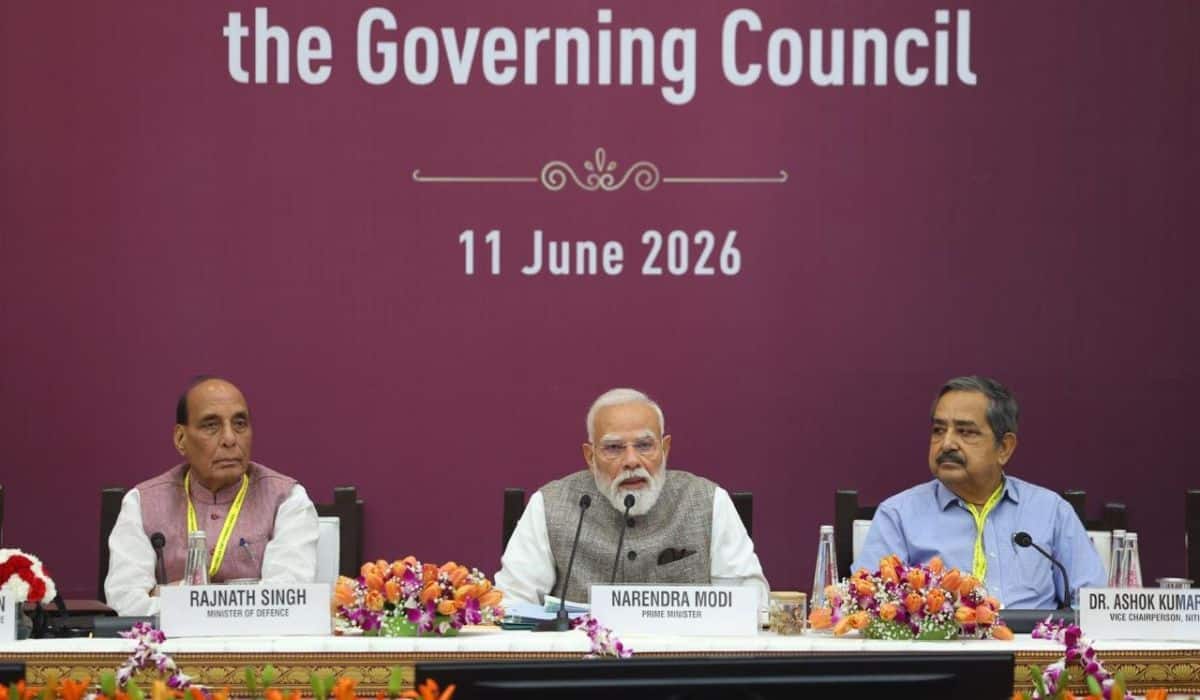
The Prime Minister, Shri Narendra Modi addressed the post-budget webinar on ‘Harnessing Youth Power - Skilling and Education’ today. It is the third of a series of 12 post-budget webinars organized by the government to seek ideas and suggestions for the effective implementation of the initiatives announced in the Union Budget 2023.
Addressing the gathering, the Prime Minister underlined that Skill and Education are the two principal tools during India’s Amrit Kaal and it is the youth who are leading the nation’s Amrit Yatra with the vision of a developed India. Highlighting the special emphasis given towards the youth and their future in the first budget of Amrit Kaal, the Prime Minister said that this year’s budget strengthens the foundations of the education system by making it more practical and industry oriented. The Prime Minister lamented the lack of flexibility in the education system over the years and mentioned the efforts of the government to bring about change. “Education and skilling have been reoriented according to the aptitude of the youth and the demands of the future”, the Prime Minister said. He further added that equal emphasis is being given to both education and skilling as part of the New Educational Policy and expressed delight that this step has garnered the support of teachers. The Prime Minister stated that the move encourages the government to undertake further reforms in the education and skilling sectors while unburdening our students from the regulations of the past.
Noting the experiences during the Covid pandemic, the Prime Minister underlined that new technology is helping create new types of classrooms. He noted that the government is focussing on tools that ensure ‘anywhere access to knowledge’ and gave the example of SWAYAM, an e-learning platform with 3 crore members. He pointed out the possibility of Virtual Labs and National Digital Library becoming a huge medium of knowledge. He also mentioned the opportunity to study in local languages through DTH channels and said that many such digital and technology-based initiatives are going on in the country which will get more strength from the National Digital University. “Such futuristic steps are going to change the entire space of our education, skills and knowledge-science”, the Prime Minister said, “Now the role of our teachers will not be limited only to the classroom.” He mentioned that more variety of teaching material will be available for our educational institutions from all over the country which will open new doors of opportunities for the teachers while filling the gap between village and city schools.
Throwing light on ‘on-the-job learning’ the Prime Minister noted the special emphasis by several countries and highlighted the efforts of the central government in providing focused internships and apprenticeships to give ‘outside the classroom exposure’ to its youth. “Today there are about 75 thousand employers on the National Internship Portal where requirements for 25 lakh internships have been posted so far”, the Prime Minister informed. He urged the industry and educational institutions to make maximum use of this portal and further expand the culture of internship in the country.
The Prime Minister expressed the belief that apprenticeships will make our youth future-ready and highlighted the efforts of the government in promoting apprenticeships in India. He mentioned that it will help the industries in the identification of the workforce with the right skills. Throwing light on this year’s budget, the Prime Minister highlighted the provision of a stipend that has been made available for about 50 lakh youth under the National Apprenticeship Promotion Scheme. He said that it is creating an environment for apprenticeships and also helping the industry in payments.
Underlining the need for a skilled workforce, the Prime Minister underlined that the world is looking at India as a manufacturing hub and noted the enthusiasm of the world about investing in the country. He underlined the focus on skilling in this year’s budget and mentioned the Pradhan Mantri Kaushal Vikas Yojana 4.0 that will skill, reskill and upskill lakhs of youth in the coming years. He informed that tailor-made programs are being made according to the needs of tribals, differently-abled and women through this scheme. He also highlighted the focus on creating a skilled workforce for Industry 4.0 sectors like AI, Robotics, IoT, and Drones, thereby making it easier for international investors to scout talent without having to spend much energy and resources on re-skilling. The Prime Minister also gave the example of PM Vishwakarma Kaushal Samman Yojana where emphasis is laid on skill development of traditional artisans, handicraftsmen, and artists to prepare them for a new market and also help in availing better prices for their products.
The Prime Minister highlighted the importance of the role and partnership of academia and industry in bringing rapid changes in the education sector in India. He underlined that research will be made possible according to the needs of the market while also creating room for adequate funding from the research industry. Highlighting this year’s budget, the Prime Minister mentioned the 3 centers of excellence for AI and said that it will strengthen the industry-academia partnership. He also stated that ICMR Labs will now be made available to medical colleges and private sector R&D teams. The Prime Minister urged the private sector to take maximum advantage of every such step to strengthen the R&D ecosystem in the country.
Laying emphasis on the ‘whole of government’ approach of the government, the Prime Minister said that education and skilling are not limited to the concerned ministry or department but their possibilities remain in every sector The Prime Minister urged the stakeholders related to skilling and education to study these opportunities coming up in different sectors and help in creating the required workforce. Giving the example of India’s fast-expanding civil aviation sector, the Prime Minister said that it showcases the growing travel and tourism industry of India while opening doors to huge sources of employment. The Prime Minister expressed the desire to prepare an updated database of the youth who have been trained under the ‘Skill India Mission’. Concluding the address, the Prime Minister stressed that the trained workforce of India should not be left behind after the advent of digital technology and AI and urged industry experts to work in this direction.
विकसित भारत के विज़न को लेकर देश की अमृतयात्रा का नेतृत्व हमारे युवा ही कर रहे हैं। pic.twitter.com/UzdRqpQq9A
— PMO India (@PMOIndia) February 25, 2023
वर्षों से हमारा education sector, rigidity का शिकार रहा।
— PMO India (@PMOIndia) February 25, 2023
हमने इसको बदलने का प्रयास किया है। pic.twitter.com/oColTAyXZt
आज सरकार ऐसे tools पर फोकस कर रही है, जिससे ‘anywhere access of knowledge’ सुनिश्चित हो सके। pic.twitter.com/TlTGfEg7UT
— PMO India (@PMOIndia) February 25, 2023
आज भारत को दुनिया manufacturing hub के रूप में देख रही है।
— PMO India (@PMOIndia) February 25, 2023
इसलिए आज भारत में निवेश को लेकर दुनिया में उत्साह है।
ऐसे में skilled workforce आज बहुत काम आती है। pic.twitter.com/o8OrPU8M4y