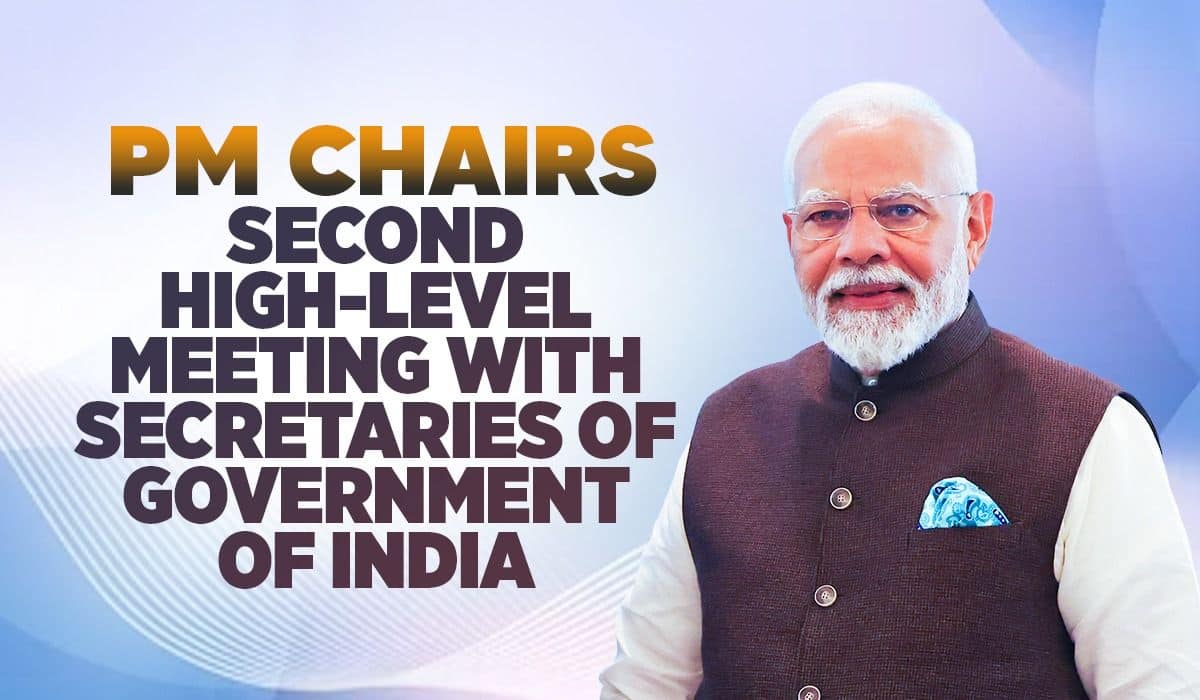
The Prime Minister Shri Narendra Modi addressed the post-budget webinar on agriculture and rural prosperity today via video-conferencing. Emphasizing the importance of participation in the post-budget webinar, the Prime Minister thanked everyone for joining the program and highlighted that this year's budget is the first full budget of the Government's third term, showcasing continuity in policies and a new expansion of the vision for Viksit Bharat. He acknowledged the valuable inputs and suggestions from all stakeholders before the budget, which were very helpful. He stressed that the role of stakeholders has become even more crucial in making this budget more effective.
“Our resolve towards the goal of Viksit Bharat is very clear and together, we are building an India where farmers are prosperous and empowered”, exclaimed Shri Modi and highlighted that the effort is to ensure no farmer is left behind and to advance every farmer. He stated that agriculture is considered the first engine of development, giving farmers a place of pride. “India is simultaneously working towards two major goals: the development of the agriculture sector and the prosperity of villages”, he mentioned.

Shri Modi highlighted that the PM Kisan Samman Nidhi Yojana, implemented six years ago, has provided nearly ₹3.75 lakh crore to farmers and the amount has been directly transferred to the accounts of 11 crore farmers. He emphasized that the annual financial assistance of ₹6,000 is strengthening the rural economy. He mentioned that a farmer-centric digital infrastructure has been created to ensure the benefits of this scheme reach farmers across the country, eliminating any scope for intermediaries or leakages. The Prime Minister remarked that the success of such schemes is possible with the support of experts and visionary individuals. He appreciated their contributions, stating that any scheme can be implemented with full strength and transparency with their help. He expressed his appreciation for their efforts and mentioned that the Government is now working swiftly to implement the announcements made in this year's budget, seeking their continued cooperation.
Underlining that India's agricultural production has reached record levels, the Prime Minister said that 10-11 years ago, agricultural production was around 265 million tons, which has now increased to over 330 million tons. Similarly, horticultural production has exceeded 350 million tons. He attributed this success to the Government's approach from seed to market, agricultural reforms, farmer empowerment, and a strong value chain. Shri Modi emphasized the need to fully utilize the country's agricultural potential and achieve even bigger targets. In this direction, the budget has announced the PM Dhan Dhaanya Krishi Yojana, focusing on the development of the 100 least productive agricultural districts, he added. The Prime Minister mentioned the positive results seen from the Aspirational Districts program on various development parameters, benefiting from collaboration, convergence, and healthy competition. He urged everyone to study the outcomes from these districts and apply the learnings to advance the PM Dhan Dhaanya Krishi Yojana, which will help increase farmers' income in these 100 districts.
Prime Minister underscored that efforts in recent years have increased the country's pulse production, however, 20 percent of domestic consumption still relies on imports, necessitating an increase in pulse production. He remarked that while India has achieved self-sufficiency in chickpeas and mung, there is a need to accelerate the production of pigeon peas, black gram, and lentils. To boost pulse production, it is essential to maintain the supply of advanced seeds and promote hybrid varieties, he stated, stressing on the need to focus on addressing challenges such as climate change, market uncertainty, and price fluctuations.

Pointing out that in the past decade, ICAR has utilized modern tools and cutting-edge technologies in its breeding program, and as a result, over 2,900 new varieties of crops, including grains, oilseeds, pulses, fodder, and sugarcane, have been developed between 2014 and 2024, the Prime Minister emphasized the need to ensure that these new varieties are available to farmers at affordable rates and that their produce is not affected by weather fluctuations. He mentioned the announcement of a national mission for high-yield seeds in this year's budget. He urged private sector participants to focus on the dissemination of these seeds, ensuring they reach small farmers by becoming part of the seed chain.
Shri Modi remarked that there was a growing awareness about nutrition among people today and underscored that significant investments have been made in sectors such as horticulture, dairy, and fishery products to meet the increasing demand. He mentioned that various programs were being implemented to boost the production of fruits and vegetables, and the formation of the Makhana Board in Bihar has been announced. He urged all stakeholders to explore new ways to promote diverse nutritional foods, ensuring their reach to every corner of the country and the global market.
Recalling the launch of the PM Matsya Sampada Yojana in 2019, aimed at strengthening the value chain, infrastructure, and modernization of the fisheries sector, the Prime Minister stated that this initiative had improved production, productivity, and post-harvest management in the fisheries sector, while the investments in this sector had increased through various schemes, resulting in a doubling of fish production and exports. He underlined the need to promote sustainable fishing in the Indian Exclusive Economic Zone and open seas, and a plan will be prepared for this purpose. Shri Modi urged stakeholders to brainstorm ideas to promote ease of doing business in this sector and start working on them as soon as possible. He also stressed the importance of protecting the interests of traditional fishermen.

“Our Government is committed to enriching the rural economy”, said the Prime Minister and highlighted that under the PM Awas Yojana-Gramin, crores of poor people are being provided with homes, and the Swamitva Yojana has given property owners 'Record of Rights.' He mentioned that the economic strength of self-help groups has increased, and they have received additional support. He noted that the Pradhan Mantri Gram Sadak Yojana has benefited small farmers and businesses. Reiterating the goal to create 3 crore Lakhpati Didis, while efforts have already resulted in 1.25 crore women becoming Lakhpati Didis, Shri Modi emphasized that the announcements in this budget for rural prosperity and development programs have created numerous new employment opportunities. Investments in skilling and technology are generating new opportunities, he added. The Prime Minister urged everyone to discuss how to make the ongoing schemes more effective. He expressed confidence that positive results will be achieved with their suggestions and contributions. He concluded by stating that active participation from everyone will empower villages and enrich rural families. He expressed confidence that the webinar will help ensure swift implementation of the schemes of the budget. He urged all the stakeholders involved to work in unison to achieve the targets of the budget.
Click here to read full text speech
विकसित भारत के लक्ष्य की ओर बढ़ रहे भारत के संकल्प बहुत स्पष्ट हैं।
— PMO India (@PMOIndia) March 1, 2025
हम सभी मिलकर एक ऐसे भारत के निर्माण में जुटे हैं, जहां किसान समृद्ध हो, सशक्त हो: PM @narendramodi
हमने कृषि को विकास का पहला इंजन मानते हुए अपने अन्नदाताओं को गौरवपूर्ण स्थान दिया है।
— PMO India (@PMOIndia) March 1, 2025
हम दो बड़े लक्ष्यों की ओर एक साथ बढ़ रहे हैं - पहला, कृषि सेक्टर का विकास और दूसरा, हमारे गांवों की समृद्धि: PM @narendramodi
हमने बजट में 'पीएम धन धान्य कृषि योजना' का ऐलान किया है।
— PMO India (@PMOIndia) March 1, 2025
इसके तहत देश के 100 सबसे कम कृषि उत्पादकता वाले जिले... low productivity वाले जिलों के विकास पर फोकस किया जाएगा: PM @narendramodi
आज लोगों में पोषण को लेकर काफी जागरूकता बढ़ी है।
— PMO India (@PMOIndia) March 1, 2025
इसलिए, बागवानी, डेयरी और फिशरी प्रोडक्ट्स की बढ़ती मांग को देखते हुए इन सेक्टर्स में काफी इंवेस्टमेंट किया गया है। फल और सब्जियों का उत्पादन बढ़ाने के लिए अनेक कार्यक्रम चलाये जा रहे हैं।
बिहार में मखाना बोर्ड के गठन की घोषणा भी…
हमारी सरकार ग्रामीण अर्थव्यवस्था को समृद्ध बनाने के लिए प्रतिबद्ध है।
— PMO India (@PMOIndia) March 1, 2025
पीएम आवास योजना-ग्रामीण के तहत करोड़ों गरीबों को घर दिया जा रहा है, स्वामित्व योजना से संपत्ति मालिकों को ‘Record of Rights’ मिला है: PM @narendramodi