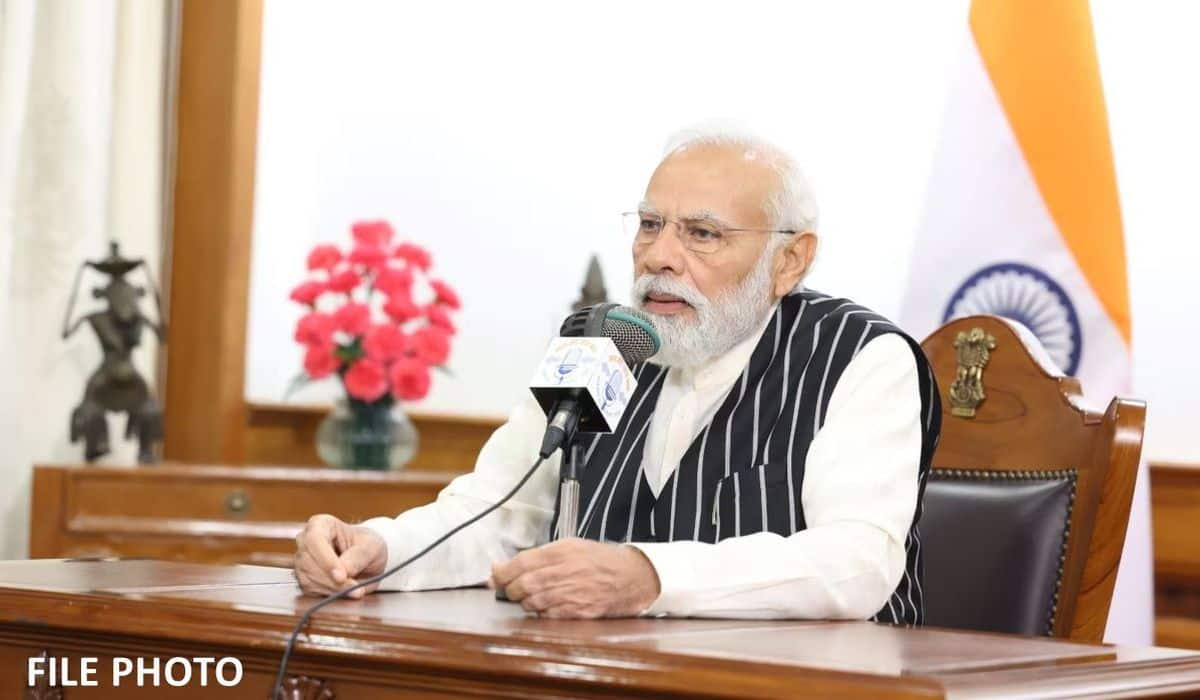
Kickstarting the virtual Jan Chaupal in Uttar Pradesh’s Bijnor today, Prime Minister Narendra Modi quoted eminent Hindi poet Dushyant Kumar - “Yahan tak aate-aate sookh jaati hai kai nadiyaan. Mujhe maaloom hai paani kahan thahra hua hoga”. Taking a cue from these lines, PM Modi slammed the opposition. He said, “Before 2017, Uttar Pradesh’s development was like still water in a stagnant river. Development remained static throughout the tenure of the previous government. The government did not care for the welfare of the poor. Political will was marred by selfish agendas for then political executives of Uttar Pradesh. The poor was denied of a home while a few built palaces for themselves. The projects were halted and red tapism was rampant which restricted development.”
Continuing his election campaigning spree, PM Modi said, “The Bharatiya Janata Party considers every person in the state as its family. Our mantra is- ‘Sabka Saath, Sabka Vikas, Sabka Vishwas, Sabka Prayas’. That is why there is no place for nepotism and appeasement in the BJP government.”
“When we gave houses to the poor under the PM Awas Yojana, we did not ask their caste, their creed. Under Ujjwala Yojana, gas connections were given without asking the poor mothers and sisters of their caste,” he added.

Mounting a blistering attack on the opposition, PM Modi said, “In the previous governments, urea used to go to the black marketers, not to the farmers. But we have restarted the Gorakhpur fertilizer factory which was closed for years in the state. The neem coated urea produced from there will benefit the farmers of the entire state.”
“We want; that in the next 25 years, when nation would complete 100 years of independence, UP should make a mark through its development story. Our government is making continuous efforts to see that the businessmen, industrialists, farmers here get all help possible,” asserted PM Modi.

PM Modi said, “Earlier governments tarnished the image of the state. Today UP is becoming the first state in the country to have five international airports. This can happen only under the double engine government of BJP. Humari Soch Imaandar Aur Kaam Asardar Hai.”
Calling for high voter turnout, PM Modi urged citizens of Uttar Pradesh to come out and vote in large numbers.
2017 से पहले, उत्तर प्रदेश में भी विकास की नदी का पानी ठहरा हुआ था।
— narendramodi_in (@narendramodi_in) February 7, 2022
ये पानी नकली समाजवादियों के परिवार में, उनके करीबियों में ठहरा हुआ था।
इन लोगों को सामान्य मानवी की प्यास से कभी कोई मतलब नहीं रहा।
वो सिर्फ अपनी प्यास बुझाते रहे, अपनी तिजोरियों की प्यास बुझाते रहे: PM
भारतीय जनता पार्टी, प्रदेश के प्रत्येक व्यक्ति को अपना परिवार मानती है।
— narendramodi_in (@narendramodi_in) February 7, 2022
हमारा मंत्र है- सबका-साथ, सबका-विकास, सबका विश्वास और सबका प्रयास।
इसलिए बीजेपी की सरकार में भाई-भतीजावाद और तुष्टीकरण की कोई जगह नही हैं: PM @narendramodi
पिछले पांच साल में योगी जी की सरकार का प्रयास रहा है कि विकास कुछ इलाकों तक ही सीमित ना रहे।
— narendramodi_in (@narendramodi_in) February 7, 2022
इसी सोच के साथ हमारी सरकार मुरादाबाद, बिजनौर, अमरोहा जैसे शहरों में भी कनेक्टिविटी बढ़ा रही है: PM @narendramodi
हम चाहते हैं आने वाले 25 वर्षों में जब देश आज़ादी के सौ साल पूरे करे तो यूपी विकास की सुनहरी गाथा के साथ अपना परचम लहराए।
— narendramodi_in (@narendramodi_in) February 7, 2022
हमारी सरकार लगातार कोशिश में जुटी है यहां के व्यापारियों, उद्यमियों, किसानों को हर संभव सहायता दी जाए: PM @narendramodi
हमारी सरकार ने बिजनौर की नगीना काष्ठ कला को वन डिस्ट्रिक्ट वन प्रोडक्ट योजना में शामिल किया है।
— narendramodi_in (@narendramodi_in) February 7, 2022
इस वजह से आज बिजनौर की कला की पहचान विदेशों में और बढ़ रही है।
दुनिया भर में मशहूर मुरादाबाद के पीतल को भी वन डिस्ट्रिक्ट वन प्रोडक्ट योजना से जोड़ा गया है: PM @narendramodi
केंद्र सरकार और यूपी की भाजपा सरकार अपने किसान भाइयों के सम्मान और उनका अधिकार वापस दिलाने के लिए प्रतिबद्ध है।
— narendramodi_in (@narendramodi_in) February 7, 2022
पिछले पांच साल में गन्ना किसानों को डेढ़ लाख करोड़ रुपये से ज्यादा का भुगतान किया गया है।
इतना तो पहले की दो सरकारों में मिलाकर नहीं किया गया है: PM @narendramodi
पिछली सरकारों में यूरिया आती थी किसानों के लिए लेकिन चली जाती थी कालाबाजारी करने वालों के पास।
— narendramodi_in (@narendramodi_in) February 7, 2022
हमने प्रदेश में वर्षों से बंद पड़े गोरखपुर खाद कारखाने को फिर से चालू किया है।
वहां से निकला नीम कोटेड यूरिया पूरे प्रदेश के किसानों के खेतों को लाभ पहुंचाएगा: PM @narendramodi
आपको जानकर आश्चर्य होगा पहले की सरकार में गेहूं की जितनी सरकारी खरीद हुई थी, योगी जी की सरकार ने उससे दोगुने से भी ज्यादा गेहूं MSP पर खरीदा है।
— narendramodi_in (@narendramodi_in) February 7, 2022
योगी जी की सरकार में किसानों से अनाज खरीद में हर साल रिकार्ड बनाया गया है: PM @narendramodi
अपने किसानों को, और पूरे पश्चिमी यूपी को मैं एक बात और याद दिलाना चाहता हूँ।
— narendramodi_in (@narendramodi_in) February 7, 2022
आज जो लोग आपको बहकाने की कोशिश कर रहे हैं, उनसे ये जरूर पूछिएगा।
जब उनकी सरकार थी, तब वो इस इलाके में, आपके गांवों में कितनी बिजली देते थे? - PM @narendramodi
आप याद करिए,
— narendramodi_in (@narendramodi_in) February 7, 2022
महिलाओं से, हमारी बहनों-बेटियों से छेड़छाड़ कितनी आम बात थी।
हालात इतने खराब थे कि चेन लूटे जाने पर इस बात का शुक्र मनाया जाता था कि चलो जान तो बच गई।
योगी जी की सरकार ने बेटियों को उस भय से मुक्त करके दिखाया है।
हमने बेटियों को उनका असल सम्मान दिलाया है: PM
पहले की सरकारों का माडल समस्या पैदा करो फिर सहानुभूति के नाम पर सब समेट लो का था।
— narendramodi_in (@narendramodi_in) February 7, 2022
उनके इस मॉडल से किसान, नौजवान, गरीब, शोषित, दलित सब परेशान थे: PM @narendramodi
पहले की सरकारों ने यूपी की छवि को ख़राब किया।
— narendramodi_in (@narendramodi_in) February 7, 2022
आज यूपी पांच अंतरराष्ट्रीय एयरपोर्ट वाला देश का पहला राज्य बन रहा है।
यह सिर्फ भाजपा की डबल इंजन सरकार में ही हो सकता है।
क्योंकि हमारी सोच ईमानदार और काम असरदार है: PM @narendramodi
ये लोग जात-पात के नाम पर बंटबारा करके भाजपा को रोकना चाहते हैं।
— narendramodi_in (@narendramodi_in) February 7, 2022
मैं आपसे कहना चाहता हूँ, इस खेल से सावधान रहिएगा।
इस चुनाव में और कुछ नहीं देखना है, केवल कमल छाप देखना है, केवल भाजपा को देखना है।
भाजपा आएगी तो आपकी सुरक्षा होगी: PM @narendramodi
जो अपराधी यूपी छोड़कर भाग गए थे, वो भी उम्मीद लगाए बैठे हैं कि सरकार बदलें तो फिर से लौटकर आयें।
— narendramodi_in (@narendramodi_in) February 7, 2022
ये अपराधी चाहते हैं कि लूट डकैती छिनैती का जो धंधा पाँच साल से ठप्प पड़ा है, यूपी की जनता से उसकी भरपाई करें।
इनके गुर्गे भी पूरी ताकत लगाए हुये हैं: PM @narendramodi
यूपी ने है भरी हुंकार,
— narendramodi_in (@narendramodi_in) February 7, 2022
एक बार फिर योगी सरकार: PM @narendramodi