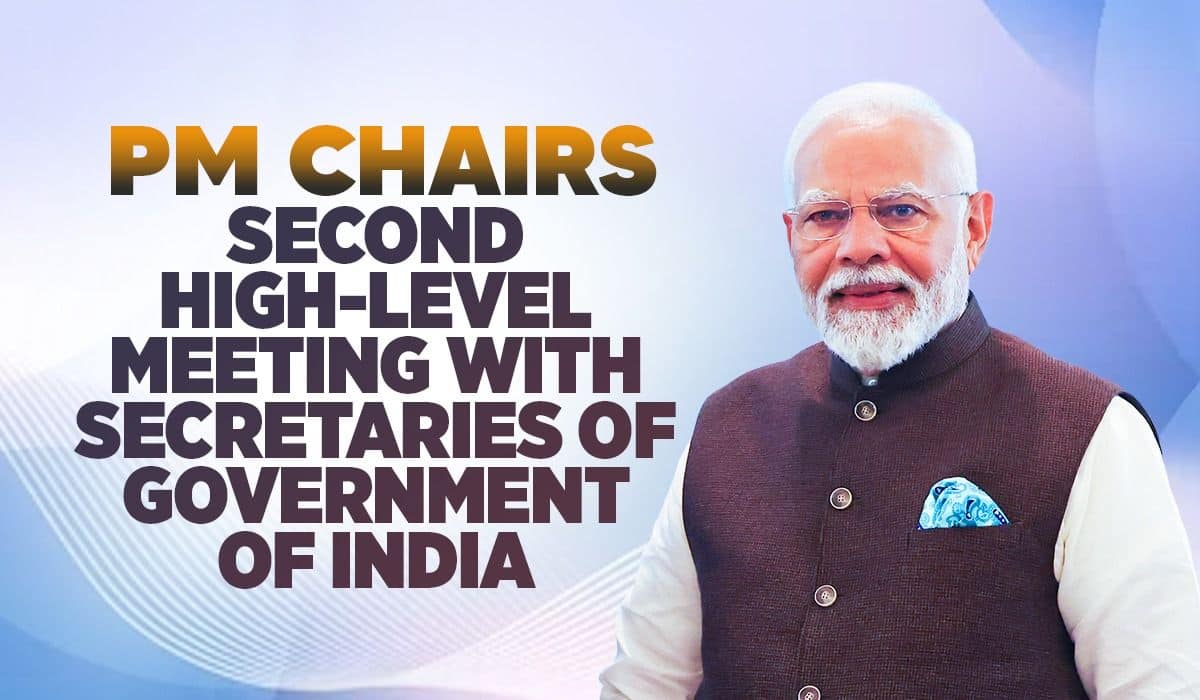
The Prime Minister, Shri Narendra Modi, today inaugurated the International Conference on Frontiers in Yoga Research and its applications, at Jigani, Bengaluru.
He unveiled the Foundation Stone for a hospital of integrative medicine.

Following is the text of the Prime Minister’s inaugural address:
Governor of Karnataka Shri Vajubhai Vala,
Chief Minister of Karnataka Shri Siddaramaiah,
My valued colleagues in the Council of Ministers,
Dr. Nagendra,
Dignitaries on the dais, esteemed guests from all over the world and Yoga enthusiasts,

It is a great pleasure and privilege to participate in the 21st International Conference on frontiers in yoga research and its applications.
Iam deeply grateful to Vivekananda Yoga Anusandhan Sansthan for organizing this conference.
Vivekananda’s vision was a synthesis of a deep reading of the Indian and Western thought, and drew its spirit from our ancient philosophy and knowledge.
He not only made a unique contribution to the spiritual revival of India, he also placed our timeless wisdom before the world.
He had a deep understanding of the beauty of human diversity and spoke passionately for unity in our world.
This is a particularly special year for the science of yoga.
On June 21, more than a million people in 192 countries came together to celebrate the first International Day of Yoga.
The overwhelming global support is a mark of Yoga's growing international popularity.
It is also a symbol of the universal aspiration for health and well being.
It reflects the shared global desire for balance between human and Mother Nature; and, peace and harmony between people and nations.
Above all, it demonstrated once again the capacity of people from different cultures to reach beyond the familiar boundaries of their lives and unite in pursuit of a larger good.
It is this spirit of unity that demonstrates the timeless science of yoga.

And, it is this belief in the power of yoga and faith in humanity that I proposed this initiative in my inaugural address to the United Nations General Assembly in September 2014.
When it comes to a sustainable future for our world, a healthy habit and happier people, a change in our way of life that influences the choices we make as individuals, nations and global community is important.
This is a recognition that is dawning on the world. And, across cultures and geography, people are increasingly taking to yoga to redefine their lives - to find oneness between their inner self and outer world; between their existence and their environment.
The WHO fact sheet on the global burden of disease says that non-communicable diseases are the leading causes of death worldwide. In 2008, 80 percent of deaths due to these diseases were in developing countries, up from 40 percent in 1990.
By 2030, low-income countries will have eight times more deaths attributed to NCDs than high-income countries.
In India, cardiovascular diseases, cancers, chronic respiratory diseases, diabetes, and other Non Communicable Diseases are estimated to account for 60% of all deaths. These diseases account for about 40% of all hospital stays and roughly 35% of all recorded outpatient visits.
We face the tragedy of productive lives cut short and families that must deal with untimely loss; the huge toll on the economy; and, the excessive burden on the over-stretched health system.
Some studies have estimated that India stands to lose about 4.58 trillion dollars before 2030 due to non communicable diseases and mental health conditions.
So, we must address the question of psychological state of our existence as much as we try to advance our physical and material life.
This is where the role of Yoga is paramount. Across the world, there are moving stories of transformed lives and rekindled hopes due to Yoga.
The prediction of Shri Aurobindo that “Indian Yoga ... is potentially one of these dynamic elements of the future life of humanity” is coming true.
This discipline was not originally considered or conceived as system of medicine. But, because Yoga is about aholistic lifestyle and the physical, mental, intellectual, emotional, moral and spiritual harmony, it has profound health benefits.
It fits well with the change in the way that world increasingly defines health. We are no longer satisfied with just preventing and managing diseases. People now demand promotion of wellness, which is a healthy balance of the mind, body and spirit.
We now increasingly hear voices calling for holistic treatment, which means dealing not just with the immediate ailment, but with the complete person, physically, psychologically, socially, and spiritually.

Traditional Indian systems are rooted in looking at human beings in totality. They see the link between Adhi or problems at the mind level and Vyadhi or problems at the physical level.
They probe deeper causes, not just look at symptoms. They treat the person, not just cure the disease. They may at times take longer to take effect, but they tend to have deeper and longer impact. And, they are without side effects.
As I argued at the Science Congress this morning, like traditional knowledge, science has also evolved through human experiences and exploration of Nature. So, we must recognize that science, as we see it, does not constitute the only form of empirical knowledge about the world.
And, we must remember that the western system of thought, from Hippocrates to Percival to Edison have expressed views on health that are not fundamentally different from the philosophy of the Indian System.
So, along with the accumulated wisdom and experience gathered over the ages, we must also apply the techniques and methods of modern science to test and validate results, assure quality and explain benefits.
And, this is why we are placing emphasis on our efforts to increase awareness, acceptance and adoption of AYUSH System of Medicine.
And, in doing so, we will create better wellness among people, rely more on local resources and reduce healthcare costs.
We will also reduce the social and economic costs to our society and promote a more environment friendly healthcare system.
I am not here to advocate the supremacy of one system over another. I believe that humanity is wealthier for its diversity. Civilisations, cultures and countries have enriched each other by sharing their knowledge and wisdom. And, we can progress more by learning from each other.
It is in this spirit that Swami Vivekananda called for combining the best from the East and the West.

So, it must be in the area of healthcare. My vision for healthcare is an integrated system that understands and builds on the best and most effective of different traditions.
This is why I deeply appreciate your effort to integrate Yoga, Ayurveda, Naturopathy, Unani, Siddha, Homeopathy and Modern Medicine by bringing prominent researchers and doctors on one platform.Your focus on four major non-communicable diseases - Diabetes, Cancer, Psychiatric disorders, Hypertension and Cardiovascular diseases is appreciable.
It addresses issues that are very close to my heart.
Modern systems of medicine have transformed healthcare; screening, detection and diagnosis of diseases. Use of technology has reduced barriers to accessing health care, and improved our understanding of disease patterns. Breakthroughs in medicines and vaccines have helped conquer and contain many diseases.
But, as our understanding of its limitation and its side effects have grown, as we have experienced the growing costs of modern medicine systems, we have begun to look beyond to traditional systems, not just in India, but in other countries as well.
Their popularity is growing. Yoga is now a global heritage. And, the world is embracing traditional Indian medicine with great enthusiasm.
So, we look to you at this conference to define the path forward in the service of humanity.
I hope that health professionals, policymakers, government organizations and Industry will bridge the distance between the various forms of medical systems.
I hope that you will to integrate yoga and traditional Indian medicine more closely into our healthcare system and make wellness a part of life for all in India and rest of the world.
You will contribute not only to healthier and happier life for people, but also to a more prosperous and peaceful world, and a more sustainable future for our planet. Thank you.
Swami Vivekananda's vision was a deep reading of Indian & Western thought & drew its spirit from our ancient philosophy & knowledge: PM
— PMO India (@PMOIndia) January 3, 2016
Swami Vivekananda placed our timeless wisdom before the world: PM @narendramodi at a Yoga Conference https://t.co/TAsStb5hm0
— PMO India (@PMOIndia) January 3, 2016
On June 21 more than a million people in 192 countries came together to celebrate the first International Day of Yoga: PM @narendramodi
— PMO India (@PMOIndia) January 3, 2016
The overwhelming global support is a mark of Yoga's growing international popularity: PM @narendramodi at Yoga Conference
— PMO India (@PMOIndia) January 3, 2016
Across cultures and geography, people are increasingly taking to yoga to redefine their lives: PM @narendramodi
— PMO India (@PMOIndia) January 3, 2016
Across the world there are moving stories of transformed lives and rekindled hopes due to Yoga: PM @narendramodi
— PMO India (@PMOIndia) January 3, 2016
PM @narendramodi is speaking about Yoga. Watch his speech. https://t.co/e9k79sosjP
— PMO India (@PMOIndia) January 3, 2016
We need to create the best quality Yoga teachers: PM @narendramodi
— PMO India (@PMOIndia) January 3, 2016
We are placing emphasis on our efforts to increase awareness, acceptance and adoption of Ayush System of Medicine: PM @narendramodi
— PMO India (@PMOIndia) January 3, 2016
We will also reduce the social and economic costs to our society and promote a more environment friendly healthcare system: PM
— PMO India (@PMOIndia) January 3, 2016
Humanity is wealthier for its diversity: PM @narendramodi
— PMO India (@PMOIndia) January 3, 2016
My vision for healthcare is an integrated system that understands and builds on the best and most effective of different traditions: PM
— PMO India (@PMOIndia) January 3, 2016
Yoga is now a global heritage. And, the world is embracing traditional Indian medicine with great enthusiasm: PM @narendramodi
— PMO India (@PMOIndia) January 3, 2016