Modi 3.0: The Spiritual and Political Journey of PM Narendra Modi
The Bhagavad Gita begins with a unique phrase: “Dharmakshetre Kurukshetre,” which translates to “the field of dharma and the field of karma.” This phrase underscores the inseparable nature of righteousness (dharma) and action (karma). Similarly, in the life of Narendra Modi, the Prime Minister of India, we observe a harmonious blend of spiritual seeking (saadhana) and decisive governance (shasana). This duality shapes his persona as both a seeker of truth (Saadhak Modi) and a ruler (Shashak Modi).
Modi 3.0 is a coalition government, which on the surface may appear weaker compared to the BJP having an absolute majority. However, it is crucial to recognize that Modi is a strong individual and a practical and astute politician. Combined with the non-attachment quality derived from his spiritual practices, he is well-positioned to lead India for the next five years. His partners are rendering full support, and we should believe in what they are saying until otherwise indicated.
Early Life and Political Ascendancy
Born on September 17, 1950, in Vadnagar, Modi’s early life was marked by humble beginnings. He worked at his father’s tea stall and later ran his own tea stall. His early experiences instilled a strong work ethic and a deep understanding of India’s grassroots issues. Modi joined the Rashtriya Swayamsevak Sangh (RSS) in his youth, which played a crucial role in shaping his political ideology and career.
His political career gained momentum when he became the Chief Minister of Gujarat in 2001. Under his leadership, Gujarat witnessed substantial economic growth, focusing on industrialization and infrastructure development.
The Driving Forces Behind Modi’s Life
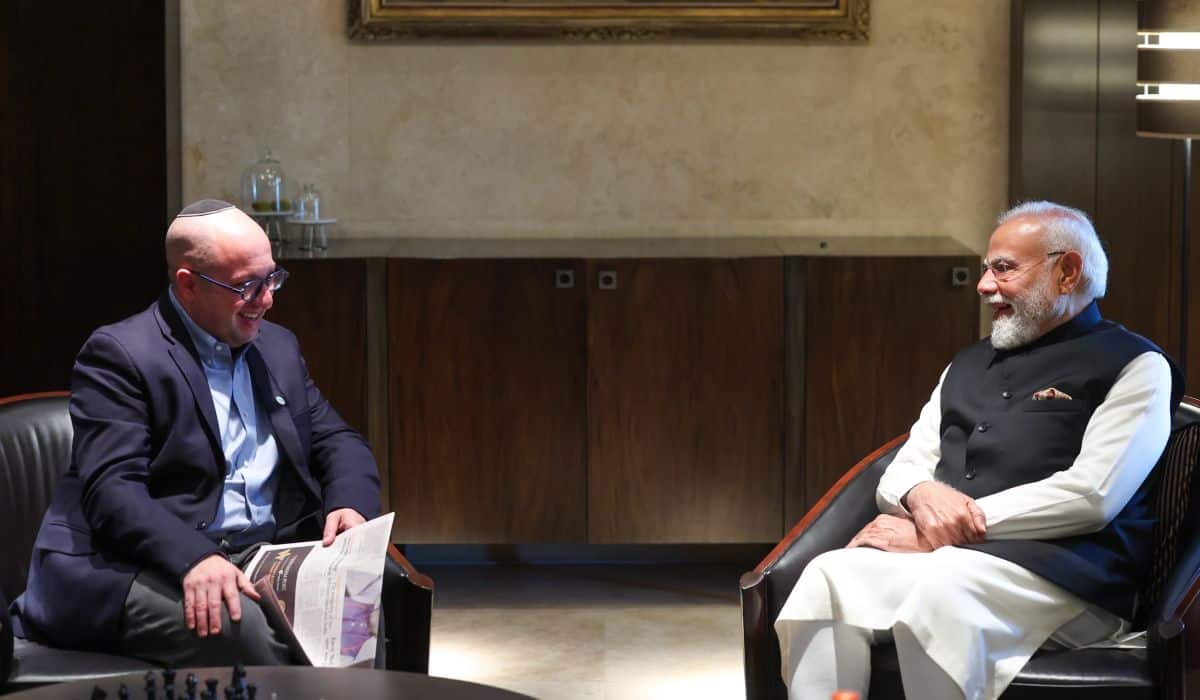
Modi rarely speaks about his spiritual practices, though glimpses of his dedication are visible during significant moments. He fasts during Navaratri, undertakes spiritual retreats, and engaged in intense meditation in Kedarnath after the 2019 elections. In a recent interview with Rubika Liyakat, Modi hinted that he is working for the ‘Parmatma’ (Supreme Being). To understand this, we need to explore the three driving forces that propel human actions.
1. Desires as Driving Forces
- The most basic driving force is desire. Desires motivate us to achieve tangible goals, such as buying a car or winning an election. These desires require effort and planning. Modi’s rise from humble beginnings to the highest office in India reflects his early desires and ambitions. His relentless work ethic, strategic acumen, and ability to connect with the masses were pivotal in his electoral victories.
2. Intrinsic Driving Forces
- When one transcends personal desires, intrinsic motivation takes over. This is the beginning of ‘nishkam karma’ – selfless action without attachment to the outcomes. Modi’s governance style often reflects this principle. His initiatives, like the Swachh Bharat Abhiyan (Clean India Mission) and Digital India, aim to serve the nation selflessly. These efforts go beyond personal gains and are driven by a deeper commitment to societal welfare.
3. Transcendental Driving Forces
- The highest level of motivation is when actions are driven by a connection with the Parmatma. Here, the individual ego dissolves, and one works for the universal good. Modi’s reference to working for Parmatma indicates this transcendental motivation. His vision for India, encapsulated in the motto “Sabka Saath, Sabka Vikas, Sabka Vishwas” (Together with all, Development for all, Trust of all), reflects an inclusive and holistic approach to governance. It signifies a commitment to universal well-being, beyond narrow self-interests.
The Spiritual Foundation of Saadhak Modi
Modi’s spiritual practices provide the foundation for his resilience and clarity in decision-making. His fasting during Navaratri, his meditative retreat in Kedarnath, and his deep respect for various places of worship illustrate his spiritual depth. These practices are not mere rituals but are integral to his inner discipline and strength.
1. Navaratri Fasting and Discipline
- Modi’s fasting during Navaratri exemplifies his self-discipline and spiritual devotion. This practice is not just about abstaining from food but also about purifying the mind and body. It reflects a commitment to inner growth and self-control, qualities essential for effective leadership.
2. Meditation in Kedarnath
- After the 2019 election victory, Modi’s retreat to Kedarnath for meditation was a powerful statement. It demonstrated his need for spiritual rejuvenation amidst the political hustle. Such retreats help him maintain balance, providing the mental clarity needed for the complex responsibilities of governance.
3. Devotion to Divine Energies
- Modi’s visits to religious sites, like the Swaminarayan Temple or the banks of the Ganga, showcase his reverence for divine energies. His actions reflect a deep-rooted belief in the power of spirituality to guide and support his mission. This devotion reinforces his inner resolve and aligns his actions with a higher purpose.
The Governance of Shashak Modi
As a ruler, Modi’s actions are driven by a vision for a strong, self-reliant India. His policies and initiatives aim to transform India into a global powerhouse while addressing the needs of its diverse population.
1. Economic Reforms and Development
- Modi’s tenure has seen significant economic reforms. The “Make in India” initiative aims to boost manufacturing and create jobs, transforming India into a global manufacturing hub. The implementation of the Goods and Services Tax (GST) has streamlined the tax system, fostering a unified economic market.
2. Digital India and Technological Advancements
- The “Digital India” campaign seeks to bridge the digital divide, promoting digital literacy and e-governance. Initiatives like BharatNet aim to connect rural areas with high-speed internet, fostering inclusive growth and empowering citizens with digital tools.
3. Social Welfare and Inclusivity
- Social welfare schemes like the “Swachh Bharat Abhiyan” and “Pradhan Mantri Jan Dhan Yojana” focus on improving sanitation and financial inclusion. These initiatives reflect Modi’s commitment to holistic development and improving the quality of life for all Indians, especially the underprivileged.
Landmark Events: Abrogation of Article 370 and Ayodhya Ram Mandir
Two landmark events under Modi’s leadership have significantly shaped India’s socio-political landscape: the abrogation of Article 370 in Kashmir and the construction of the Ayodhya Ram Mandir.
1. Abrogation of Article 370
- On August 5, 2019, the Modi government took the historic step of abrogating Article 370, which granted special autonomy to the region of Jammu and Kashmir. This move aimed to integrate the region more closely with the rest of India, bringing it under the same set of laws and governance structures. While this decision was met with both support and criticism, it marked a significant shift in India’s approach to Kashmir, aiming for long-term peace and development in the region.
2. Construction of Ayodhya Ram Mandir
- The construction of the Ram Mandir in Ayodhya is another monumental achievement. After decades of legal and political battles, the Supreme Court of India paved the way for the construction of the temple at the disputed site in 2019. Modi laid the foundation stone for the temple in August 2020, fulfilling a long-standing promise to his supporters. This event holds immense cultural and religious significance for many Indians, symbolizing the reclamation of cultural heritage and religious pride.
Modi’s Power: The Synergy of Saadhana and Shasan
Modi often states that his strength comes from the 140 crore people of India. While this is true in a geopolitical sense, his real power lies in his spiritual practice (saadhana). This spiritual foundation aligns him with the universe’s energies, enabling him to navigate the complexities of governance with clarity and purpose.
1. Spiritual Resilience
Modi’s spiritual practices provide him with resilience. His ability to remain focused and composed, even in the face of adversity, stems from his deep spiritual grounding. This inner strength is crucial for leading a diverse and dynamic country like India.
2. Alignment with Universal Energies
- Modi’s connection with the Parmatma and his devotion to divine energies align him with the universe’s natural flow. This alignment brings a sense of synchronicity, where his actions are supported by a larger cosmic order. It explains his unwavering commitment to his vision for India and his ability to mobilize resources and people towards common goals.
3. Devotion and Humility
- Modi’s visits to religious sites, such as the Gurudwara in Patna or the banks of the Ganga, reflect his humility and devotion. These actions signify his recognition of a higher power and his role as a servant leader. This humility fosters trust and respect among the people, strengthening his leadership.
What to Expect from Modi 3.0
As Narendra Modi embarks on his third term, we can expect more robust and courageous steps both domestically and globally. India may witness three facets of Modi’s leadership:
1. Governance Side
- Universality may become the guiding theme across various domains, including education, judiciary, and gender equality. Modi’s governance will likely focus on what is best for India, promoting inclusivity and collaboration. Reforms aimed at creating a more equitable and efficient system will be at the forefront.
2. Foreign Policy and Global Collaboration
- In foreign policy, Modi is expected to push for more collaborations and inclusivity. We will see a firm and resilient stance in international relations, balanced with a loving and emotional outreach to global partners. Modi’s diplomatic efforts will aim to strengthen India’s position on the world stage, fostering global cooperation and mutual respect.
3. Increasing Spirituality and Graceful Exit
- As his term progresses, an increasingly spiritual Modi may transition towards a graceful exit from politics. His leadership will likely reflect a deeper connection with his spiritual roots, guiding his actions towards the universal good. This phase will highlight his dedication to the principle of ‘sarve bhavantu sukhinah’ (may all beings be happy), ensuring that his policies benefit the larger human community.
Conclusion
Narendra Modi’s journey as Saadhak Modi and Shashak Modi illustrates the powerful synergy between spiritual seeking and decisive governance. His life embodies the principle that the field of dharma (righteousness) and the field of karma (action) are inseparable. Modi’s spiritual practices provide the foundation for his resilience and clarity, while his governance reflects a commitment to holistic development and inclusive growth.
By transcending personal desires and aligning his actions with a higher purpose, Modi exemplifies the principles of nishkam karma and devotion to Parmatma. His leadership is not just about political power but about serving the nation with humility and dedication. As India continues its journey towards becoming a global powerhouse, the dual forces of Saadhak Modi and Shashak Modi will remain pivotal in shaping its destiny.
Author Name: Krishna Bhatta
Disclaimer:
This article was first published in Thrive Global
Krishna Bhatta, MD, FRCS is an author, surgeon and an inventor, currently working as a Urologist ( former chief of urology) at Northern Light Eastern Maine Medical Center in Bangor, Maine.