Mann Ki Baat: A Decade of Dialogue, Diversity, and Driving Social Change

Published By : Admin | February 15, 2024 | 15:36 IST

On October 3rd, 2014, Prime Minister Narendra Modi embarked on a groundbreaking initiative by launching Mann Ki Baat, a radio program aimed at fostering mass engagement and embodying his vision of a governance model centred around the people. Over the past decade, this program has emerged as a significant platform for public discourse, revitalising radio in India and igniting a dialogue that transcends geographical and social boundaries. With each episode, PM Modi has delved into a diverse range of issues, addressing concerns that resonate with every Indian citizen and reflecting a deep understanding of the nation's pulse.

Through 109 episodes so far, PM Modi has demonstrated an unwavering dedication to addressing the concerns of every Indian citizen, from the challenges of exam stress to the importance of waste management and water conservation. Through this platform, he has not only conveyed his priorities but has also shared real-life stories, concerns, and innovative ideas sourced from ordinary citizens. By engaging in this continuous dialogue, Mann Ki Baat has transformed into a forum for participatory governance, bridging the gap between the government and the people.

Mann Ki Baat represents a historic departure from traditional modes of governance, providing citizens with an unprecedented opportunity to express their opinions, share constructive views, and contribute to the nation-building process. This platform has empowered individuals from all walks of life to engage directly with the highest office in the country, fostering a sense of inclusivity and participation in the democratic process. Never before had an Indian Prime Minister initiated a two-way, non-political communication channel with citizens on such a scale.

Beyond its role as a platform for dialogue, Mann Ki Baat holds immense significance in fostering national unity and integration. PM Modi's choice of topics reflects a keen awareness of India's cultural and social diversity as he addresses issues that resonate with citizens across the country. By transcending religious and cultural boundaries, Mann Ki Baat reinforces the principle of equality and promotes a sense of belonging and solidarity among the diverse communities that make up India's social fabric.

One of the most remarkable aspects of Mann Ki Baat is its role as a catalyst for social change. Through this program, PM Modi has leveraged the transformative power of storytelling to inspire collective action and drive positive change at the grassroots level. Initiatives such as the 'selfie with daughter' campaign, the promotion of Yoga and Ayurveda, and the emphasis on using indigenous products have resonated with millions of citizens, sparking mass movements that have brought about tangible improvements in society.

In addition to driving social change, Mann Ki Baat has served as an effective platform for creating awareness about government welfare schemes. PM Modi has consistently used this program to highlight initiatives such as the Jan Dhan Yojana, Ujjwala Yojana, Ayushman Bharat, and Awas Yojana, urging citizens to avail themselves of these schemes for their benefit. By disseminating information about government programs through Mann Ki Baat, PM Modi has successfully reached millions of people, particularly those in rural and remote areas, ensuring that they have access to vital services and resources.

At its core, Mann Ki Baat is not just a radio program but an expression of the public's aspirations and a reflection of India's ongoing development journey. By showcasing the achievements of ordinary citizens and celebrating India's strengths, PM Modi has instilled a sense of hope and aspiration among the populace. Through his engaging narratives and inspirational stories, he has fostered a culture of innovation and entrepreneurship and encouraged citizens to strive for excellence and contribute to the nation's progress.

In conclusion, Mann Ki Baat has emerged as a transformative force in Indian governance, embodying the principles of participatory democracy, inclusivity, and social change. Through this program, Prime Minister Narendra Modi has redefined the relationship between the government and the people, empowering citizens to actively participate in the nation-building process. As Mann Ki Baat continues to inspire hope, drive social change, and foster national unity, it stands as a shining example of the transformative potential of dialogue and engagement in shaping the future of India.

Explore More
Today, the entire country and entire world is filled with the spirit of Bhagwan Shri Ram: PM Modi at Dhwajarohan Utsav in Ayodhya

Popular Speeches

Today, the entire country and entire world is filled with the spirit of Bhagwan Shri Ram: PM Modi at Dhwajarohan Utsav in Ayodhya
India's electronics exports cross $47 billion in 2025 on iPhone push

Media Coverage

India's electronics exports cross $47 billion in 2025 on iPhone push
NM on the go

Nm on the go

Always be the first to hear from the PM. Get the App Now!
...
6 Years of Jal Jeevan Mission: Transforming Lives, One Tap at a Time
August 14, 2025
Jal Jeevan Mission has become a major development parameter to provide water to every household.” - PM Narendra Modi

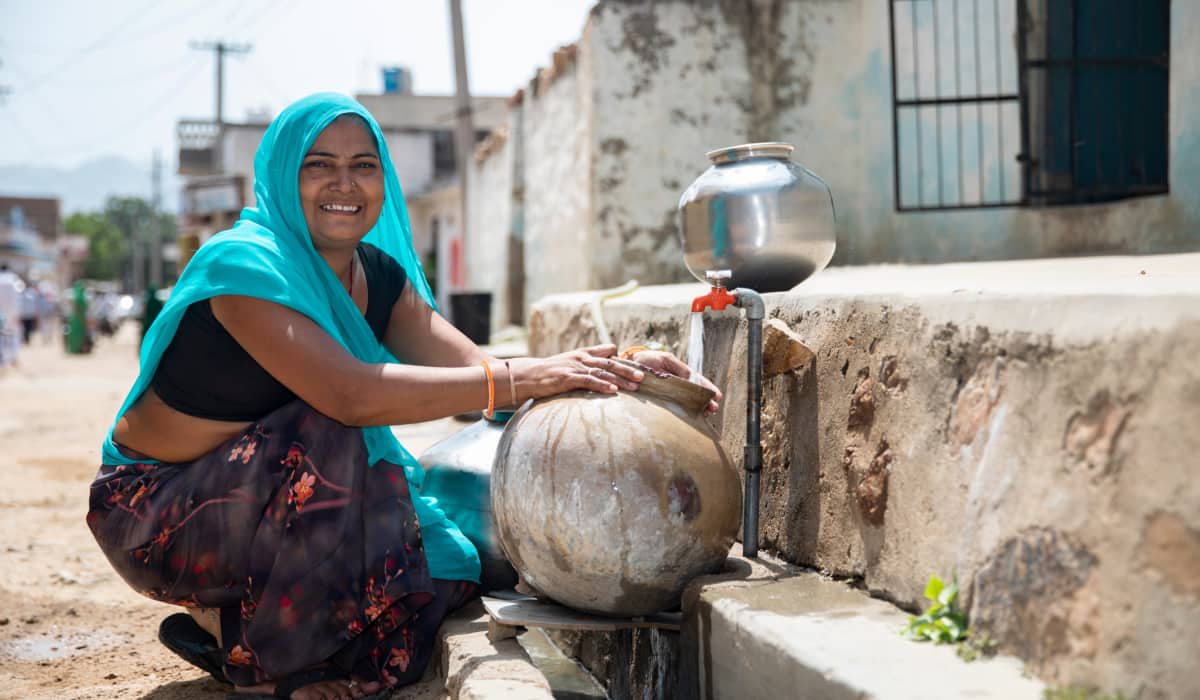
For generations, the sight of women carrying pots of water on their heads was an everyday scene in rural India. It was more than a chore, it was a necessity that was an integral part of their everyday life. The water was brought back, often just one or two pots which had to be stretched for drinking, cooking, cleaning, and washing. It was a routine that left little time for rest, education, or income-generating work, and the burden fell most heavily on women.

Before 2014 water scarcity, one of India’s most pressing problems, was met with little urgency or vision. Access to safe drinking water was fragmented, villages relied on distant sources, and nationwide household tap connections were seen as unrealistic.

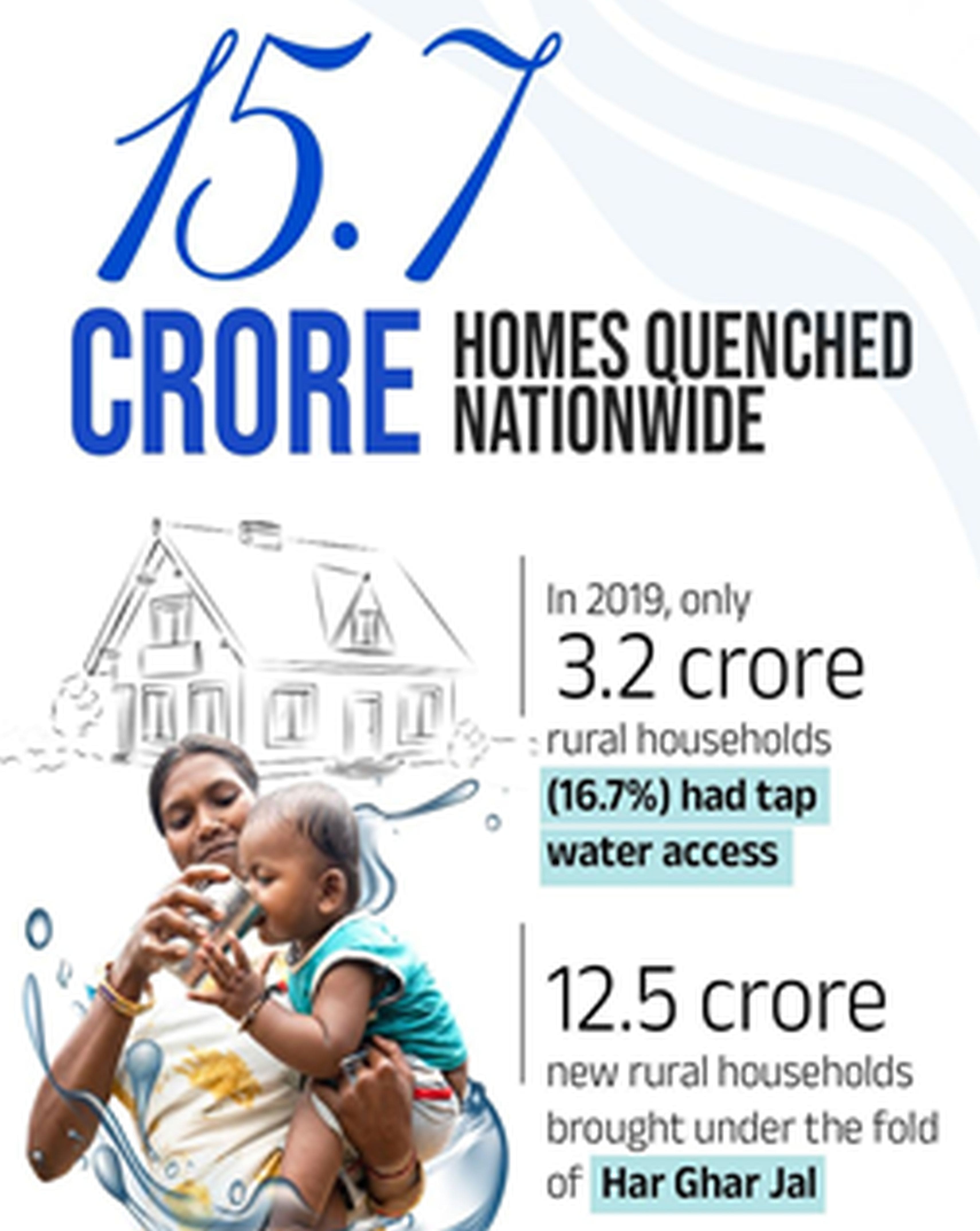
This reality began to shift in 2019, when the Government of India launched the Jal Jeevan Mission (JJM). A centrally sponsored initiative which aims at providing a Functional Household Tap Connection (FHTC) to every rural household. At that time, only 3.2 crore rural households, a modest 16.7% of the total, had tap water. The rest still depended on community sources, often far from home.

As of July 2025, the progress under the Har Ghar Jal program has been exceptional, with 12.5 crore additional rural households connected, bringing the total to over 15.7 crore. The program has achieved 100% tap water coverage in 200 districts and over 2.6 lakh villages, with 8 states and 3 union territories now fully covered. For millions, this means not just access to water at home, but saved time, improved health, and restored dignity. Nearly 80% of tap water coverage has been achieved in 112 aspirational districts, a significant rise from less than 8%. Additionally, 59 lakh households in LWE districts have gained tap water connections, ensuring development reaches every corner. Acknowledging both the significant progress and the road ahead, the Union Budget 2025–26 announced the program’s extension until 2028 with an increased budget.

The Jal Jeevan Mission, launched nationally in 2019, traces its origins to Gujarat, where Narendra Modi, as Chief Minister, tackled water scarcity in the arid state through the Sujalam Sufalam initiative. This effort formed a blueprint for a mission that would one day aim to provide tap water to every rural household in India.

Though drinking water is a State subject, the Government of India has taken on the role of a committed partner, providing technical and financial support while empowering States to plan and implement local solutions. To keep the Mission on track, a strong monitoring system links Aadhaar for targeting, geo-tags assets, conducts third-party inspections, and uses IoT devices to track village water flow.

The Jal Jeevan Mission’s objectives are as much about people as they are about pipes. By prioritizing underserved and water-stressed areas, ensuring that schools, Anganwadi centres, and health facilities have running water, and encouraging local communities to take ownership through contributions or shramdaan, the Mission aims to make safe water everyone’s responsibility..

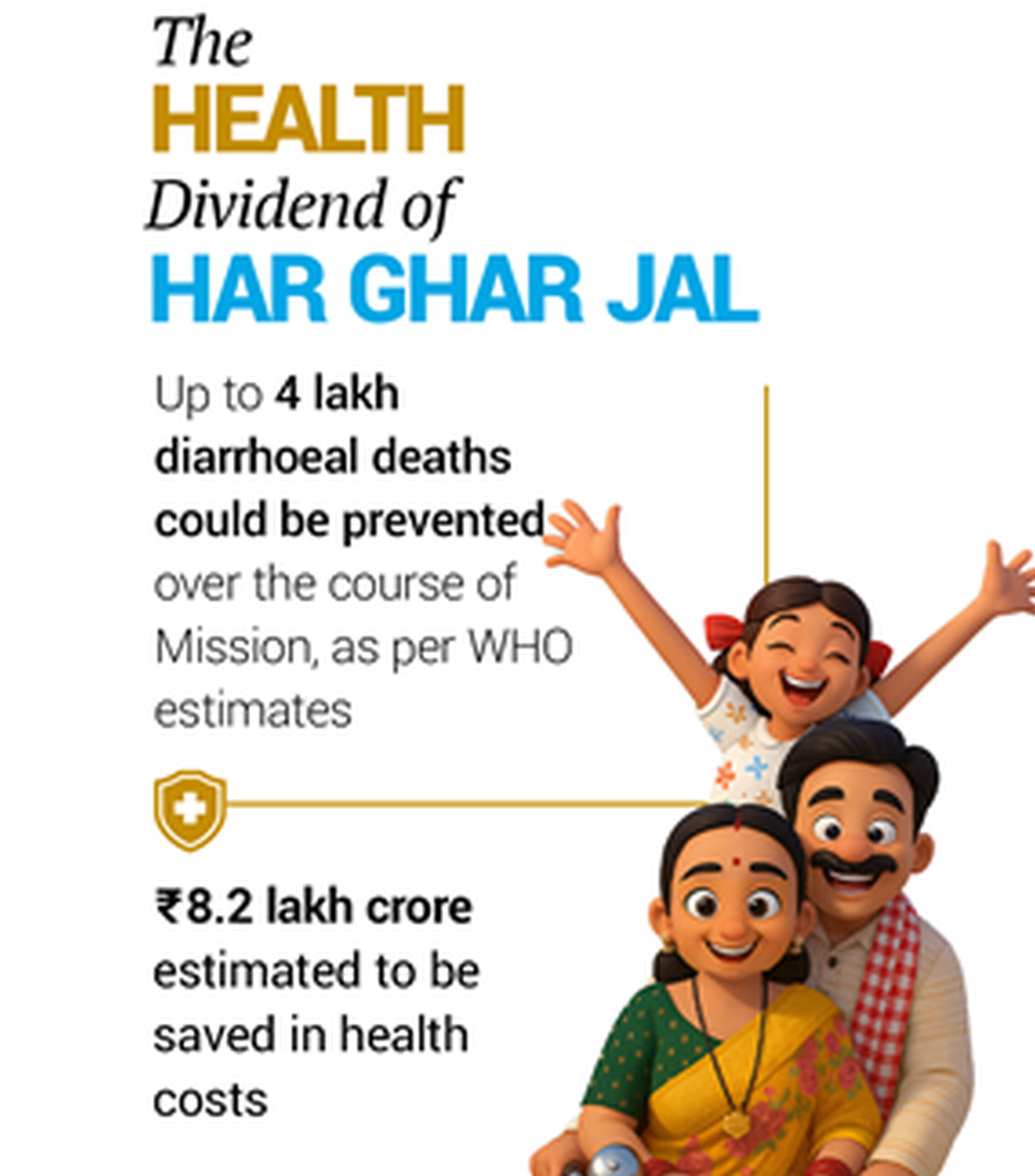
The impact reaches far beyond convenience. The World Health Organization estimates that achieving JJM’s targets could save over 5.5 crore hours each day, time that can now be spent on education, work, or family. 9 crore women no longer need to fetch water from outside. WHO also projects that safe water for all could prevent nearly 4 lakh deaths from diarrhoeal disease and save Rs. 8.2 lakh crores in health costs. Additionally, according to IIM Bangalore and the International Labour Organization, JJM has generated nearly 3 crore person-years of employment during its build-out, with nearly 25 lakh women are trained to use Field testing Kits.

From the quiet relief of a mother filling a glass of clean water in her kitchen, to the confidence of a school where children can drink without worry, the Jal Jeevan Mission is changing what it means to live in rural India.