Farmers are the ones, who take the country forward: PM Modi

Published By : Admin | October 26, 2018 | 11:33 IST
Farmers are the ones, who take the country forward: PM Modi
PM Modi reiterates Government’s commitment to double the income of farmers by 2022
PM Modi emphasizes the need to evolve new technologies and ways that will help eliminate the need for farmers to burn crop stubble

My Cabinet colleague, Radhamohan Singh ji; the popular, successful and zealous Chief Minister of Uttar Pradesh, Yogi Adityanath ji; Assistant Deputy Minister of the government of Japan, Takami Nakada ji; Israel's Ambassador Maya Kadosh ji; agricultural scientists, other dignitaries and my dear farmer brothers and sisters who have come here from every corner of UP.

There are still a few months remaining for the Ardha-Kumbh mela of Prayagraj. However, another Kumbh has begun in UP from today. About 50 thousand farmers from different villages of UP and scientists and entrepreneurs from around the world and within the country are becoming a part of this Agricultural Kumbh in Lucknow. I welcome you all. And as a Parliamentarian from UP, it's my responsibility to stand with you at all times and make efforts in your journey of development.

A few months back, during Krishi Unnati Mela, I had advised to organize large farmer fairs. Krishi Kumbh Mela is just an extension of that. I congratulate Yogi ji and his entire team for this great effort. I also want to offer my gratitude to the government of Japan and the government of Israel for partnering with us in this event. At the same time, the partner state of Haryana will also benefit out of it.

Friends,

Whenever the word 'Kumbh' gets associated with any event, its significance increases manifold. The Kumbh, in a way, is an inter-flow of ideas and the expression of humanity. I believe that the Krishi Kumbh will fulfill this tradition and in the next three days, new paths will open up for modern techniques and other opportunities.

Friends,

I was told that there are almost 200 stalls in this fair that are informing the farmers about modern techniques and machines related to agriculture. I believe that every farmer will benefit from this and at the same time it will help the farmers in ensuring quality.

Friends,

The Kharif season is about to get over everywhere around the country. All the farmer brothers and sisters are busy these days. Even this time, a record production is expected. UP is a place where the hard-working farmers produce the country's 20% of the food grains. I congratulate you all for the same. Several crops including rice and pulses are being purchased in Mandis across the country. I was told that in several parts of Uttar Pradesh too, grand arrangements have been made. This time the value received by the farmers for their crops is based upon the new Minimum Support Price. You all are aware of the fact that the government has made a historic increase in the MSP of 21 crops. It has been decided that the farmer should get direct profit of at least 50% of the cost.

Friends,

As the farmers of UP are engaged in record production, Yogi ji's government is breaking records in the purchase of that produce. Therefore, I congratulate Yogi ji's government. This time about 50-55 lakh metric tonnes of wheat has been purchased whereas the previous government used to purchase only 7-8 lakh metric tonnes of wheat. This means that considering that the farmers get a fair price, the purchase made by the Bharatiya Janata Party's Yogi Government has been 7-8 times more. Moreover, this purchase has been made directly from the farmers by the use of technology i.e. e-Uparjan so as to keep the middlemen away.

Friends,

This transformation is visible not only in the case of wheat and paddy but also in the case of sugarcane. Farmers have been paid more than Rs 27 thousand crores this season. Besides, Rs.11 thousand crores from the amount due have also been paid to the farmers. I was told that the Yogi government is trying to clear the amount due by the sugar Mills. I am glad that the UP government, for the first time, has decided to purchase potatoes. This will definitely help the farmers who don't get the fair price for their potatoes.

Friends,

These efforts in UP are part of that commitment of the central government as a result of which the villages and the farmers have become an important part of our economic planning. As per our clear conviction, it is the farmer that takes the nation forward, not the other way round. Therefore, the government is working on the problems associated with agriculture and farmers holistically and not in bits and pieces. Our focus is on removing every little problem faced by the farmers.

Friends,

The government is committed to doubling the farmer’s income by 2022 that will mark 75 years of Indian independence. Following the policy of minimum cost and maximum profit, scientific techniques have been beautifully blended with agriculture. A strong system of 'seed to the market' is being prepared in the country. Several initiatives are being taken in different areas ranging from soil health to improvement in Mandis. More than 16 crore soil health cards have been handed over to the farmers across the country of which 3 crores have been distributed in UP. This will help the farmers to decide which crop is suitable for a particular soil type and the amount of fertilizer required for the crops.

Friends,

In order to keep the characteristics and fertility of the soil intact, organic farming is being promoted. The farmers are being encouraged to maximize their use of fertilizers made from waste, so as to ensure production according to the needs of the country. The availability of the fertilizers like Urea in adequate amounts is also being ensured. At the same time, the irrigation facilities are also being strengthened. Apart from the major irrigation projects, new technologies in irrigation are also being promoted. Farmers are being encouraged to use 'Per Drop More Crop'. Micro irrigation systems like drip irrigation and sprinkler irrigation are becoming part of our irrigation system.

Israel has received accolades in new irrigation techniques. At the same time, Japan is doing a commendable job in agricultural technologies. Therefore, as a partner in the Agriculture Kumbh, you are going to draw the benefits from the expertise of the two countries.

Friends,

Besides, we are rapidly moving forward in converting the electric and Diesel pumps into solar pumps. Besides these systems, pumps are important part of irrigation and major efforts are going on in this direction. A massive campaign is being run to convert these electric and diesel pumps to solar pumps. Under this, in the next four years, solar pumps will be installed in the fields of about 28 lakh farmers across the country. Firstly, the farmers will get free electricity and secondly, the surplus electricity can be sold to the power discoms.

Friends,

The farmer who was once 'Annadata' or producer of food grains now has the capability of being 'Urjadata' or producer of energy. The Annadata will now be Urjadata.

Friends,

The fact that this will bring a sea change in the lives of the farmers can be exemplified from one instance. I was in Gujarat a few days back. There I noticed that in a village, a few farmer families had collectively installed solar panels and solar pumps inside their fields. They have started generating electricity from solar energy. That was used in their fields and in solar pumps. It fulfilled their need of electricity. Moreover, they are earning Rs.50 thousand more annually by selling the surplus electricity.

Friends,

The government has made serious attempts to deliver the benefits of science to the farmers. The work of connecting the farmers and the scientists directly with the research centres has begun, so that the knowledge and information related to farming and seeds as a result of the research and discovery can reach the farmers at the shortest possible time. Therefore, about 700 Krishi Vigyan Kendras have been set up throughout the country. Modern institutions related to agriculture research are also being set up. Rice Research Centre is being established in Varanasi. The government has made efforts to ensure maximum price for the farmers' crops and for value addition. The government has allowed 100% FDI in the food processing sector. We all are aware of the fact that selling tomatoes will generate less income than selling tomato sauce in a bottle. Selling raw mangoes will fetch lower income than selling pickles made from raw mangoes. Similarly, selling green chillies will generate less income but selling chilli powder will generate greater income. This is called value addition. Moreover, TOP scheme with a cost of Rs.500 crores which is related to value addition of Tomatoes, Onions and Potatoes was announced in this year's budget. This will benefit the potato farmers of UP to a great extent. This has opened up new opportunities for investment in the field of agriculture which is benefitting UP. I was told that in UP Investors Summit, proposals of about Rs.16 thousand crores were made in food processing sector. Out of these, 14 projects worth Rs.3500 crores have already been launched.

Friends,

These steps are for making agriculture profitable. Besides, other steps are also being taken to increase the income of the farmers. After the success of Green Revolution, we have started walking on the new paths of white revolution, sweet revolution and blue revolution. We are creating record in the field of milk production, honey production and eggs or fish production. Two days ago, the government of India has taken a major decision for the fishermen families associated with fish production. The government has given approval to a new fund of Rs.7500 crores.

Friends,

All of you, the farmers, agriculture experts, scientists who are present here in Krishi Kumbh are important part of India's economy. This is because your efforts will have a major impact on our fast growing economy in the coming days. I urge you all to sit together and discuss about the techniques related to agriculture. It is essential to discuss on myriad issues like how to use less fertilizers, how to maximize the utilization of less water, how to improve warehouses for crops and how to use techniques like robots and drones effectively in agriculture.

Besides, how can we turn crop stubble into wealth with the help of new technology. Waste can be turned into wealth. Nothing is useless inside an agricultural field before and after harvest. Everything related to the field is gold. If the farmer uses his field effectively, nothing will go waste. Wealth can be created out of waste. There is a need to work more effectively in this direction. The government is giving a discount of 50-80% on crop waste to stop stubble burning. However, with technology-based solutions, we have to put an end to the compulsion of our farmer brothers of burning the crop stubble. This will protect the environment.

I believe that in the next three days, effective discussion will take place to find ways of making agriculture profitable and making value addition. The discussion should especially focus upon how new experiments can be conducted in the different districts of UP according to their needs.

I hope that the Krishi Kumbh will give a new direction to the agriculture system of the UP as well as the entire country. With this expectation, once again, my best wishes to you all.

Thank you!

Explore More
ಶ್ರೀರಾಮ ಜನ್ಮಭೂಮಿ ಮಂದಿರದ ಧ್ವಜಾರೋಹಣ ಉತ್ಸವ ಉದ್ದೇಶಿಸಿ ಪ್ರಧಾನಮಂತ್ರಿ ಅವರ ಭಾಷಣ

ಜನಪ್ರಿಯ ಭಾಷಣಗಳು

ಶ್ರೀರಾಮ ಜನ್ಮಭೂಮಿ ಮಂದಿರದ ಧ್ವಜಾರೋಹಣ ಉತ್ಸವ ಉದ್ದೇಶಿಸಿ ಪ್ರಧಾನಮಂತ್ರಿ ಅವರ ಭಾಷಣ
PLP to PLI, reform express at full speed, says PM Modi

Media Coverage

PLP to PLI, reform express at full speed, says PM Modi
NM on the go

Nm on the go

Always be the first to hear from the PM. Get the App Now!
...
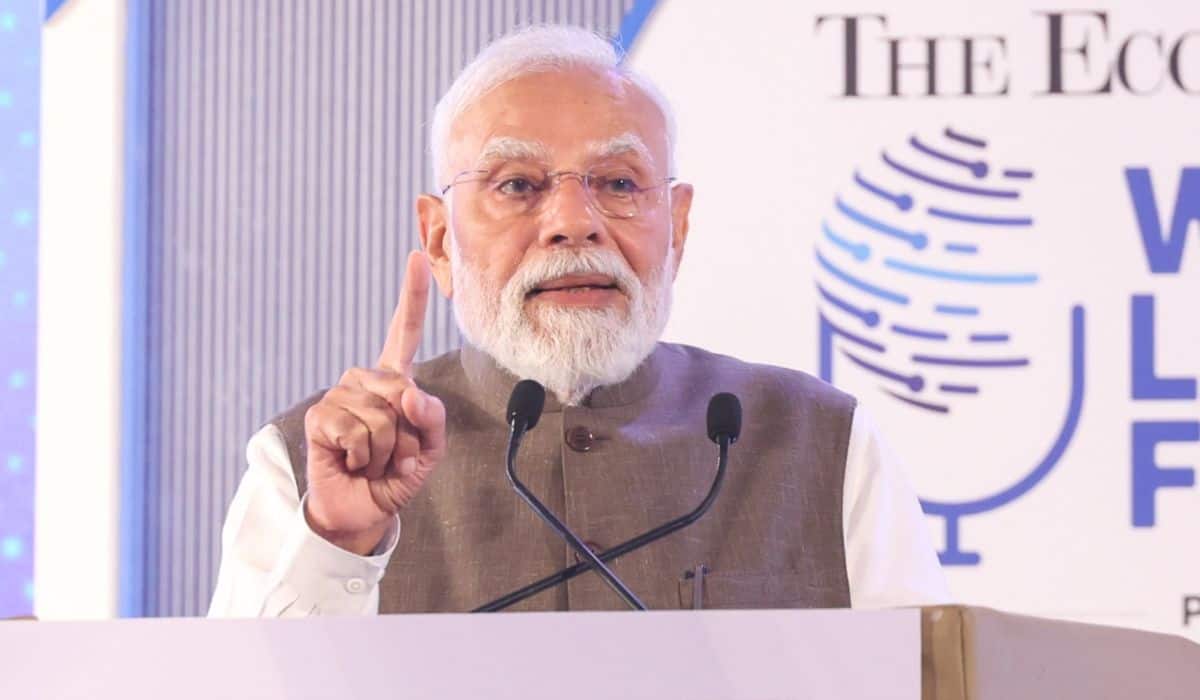
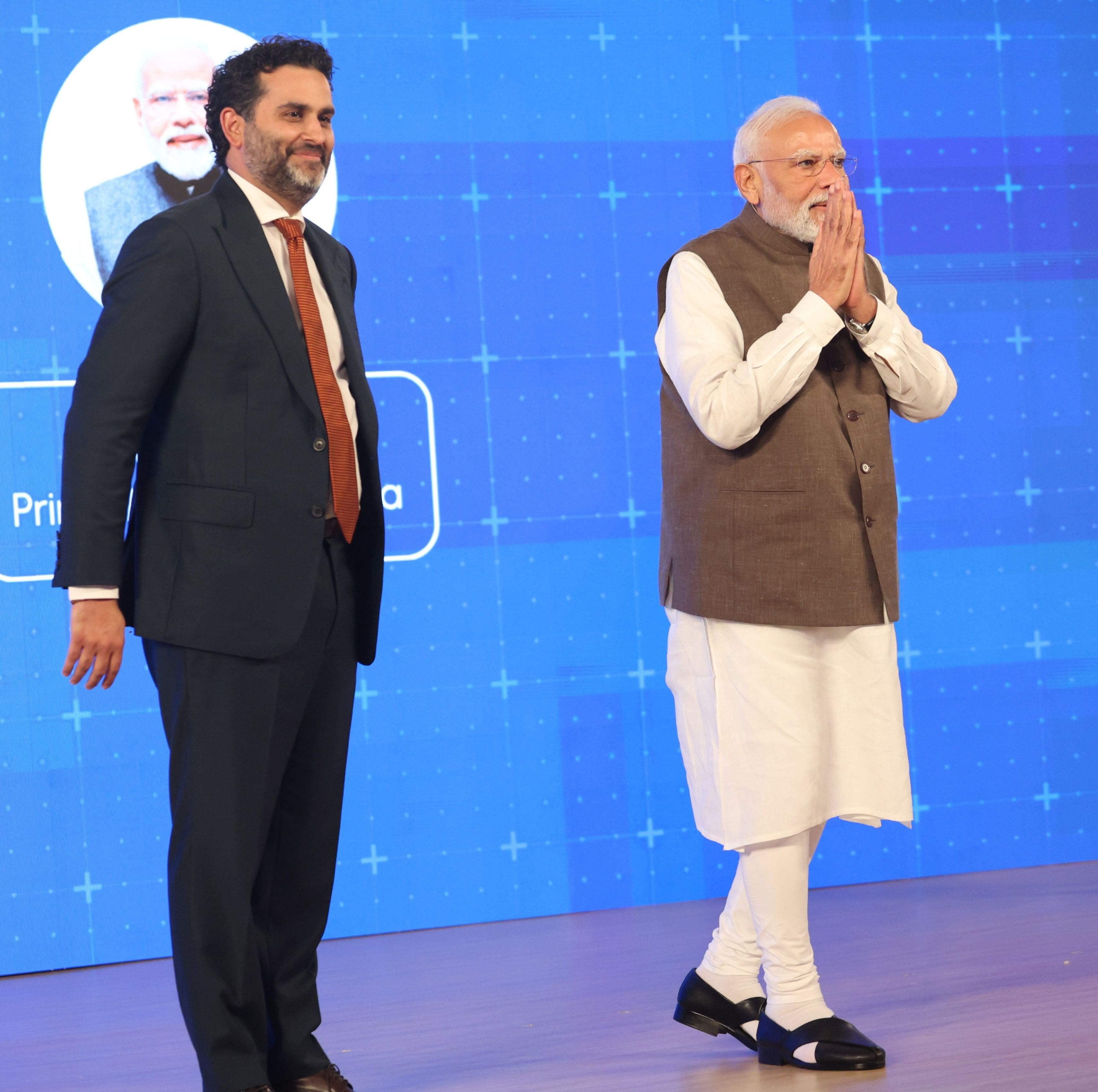
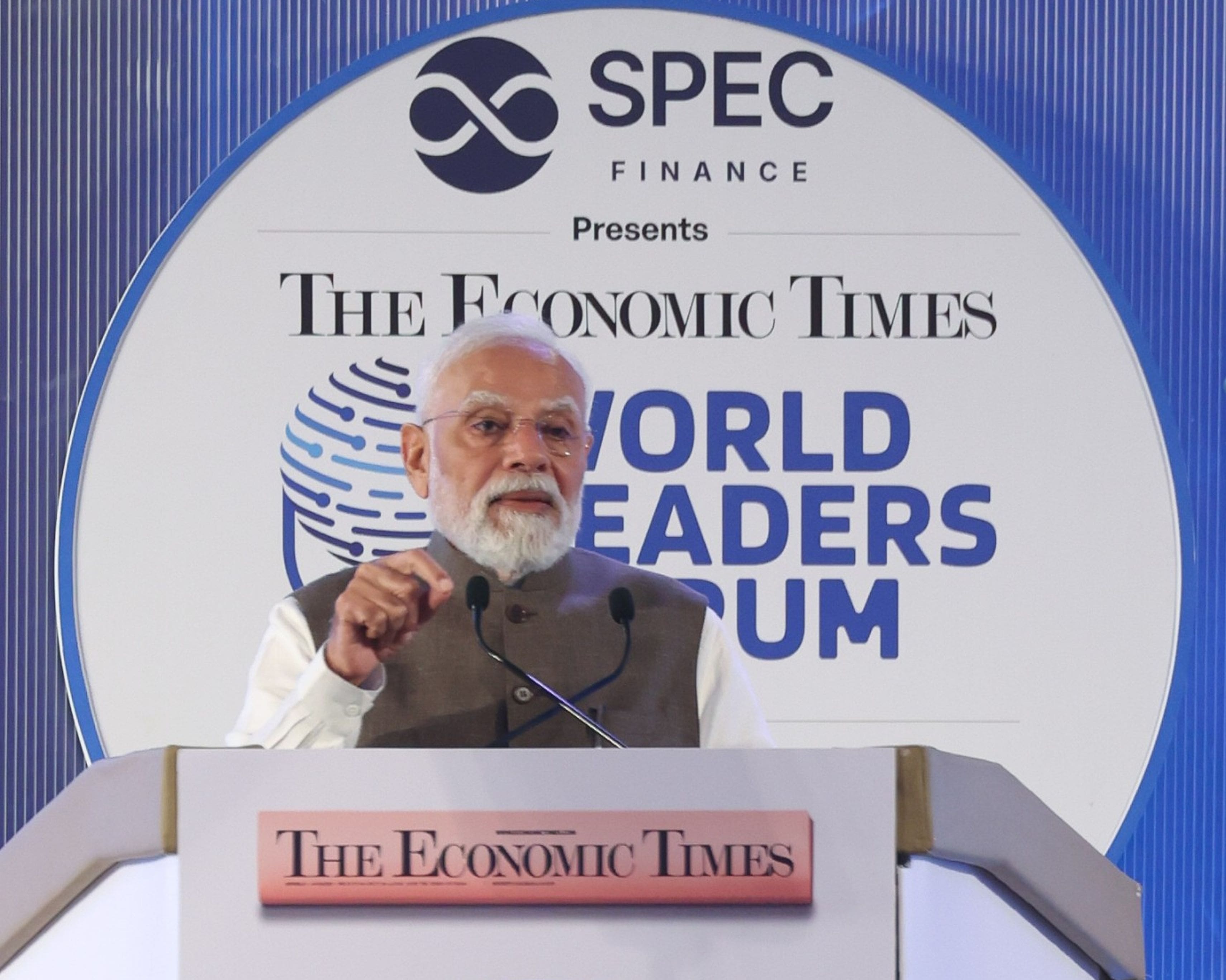
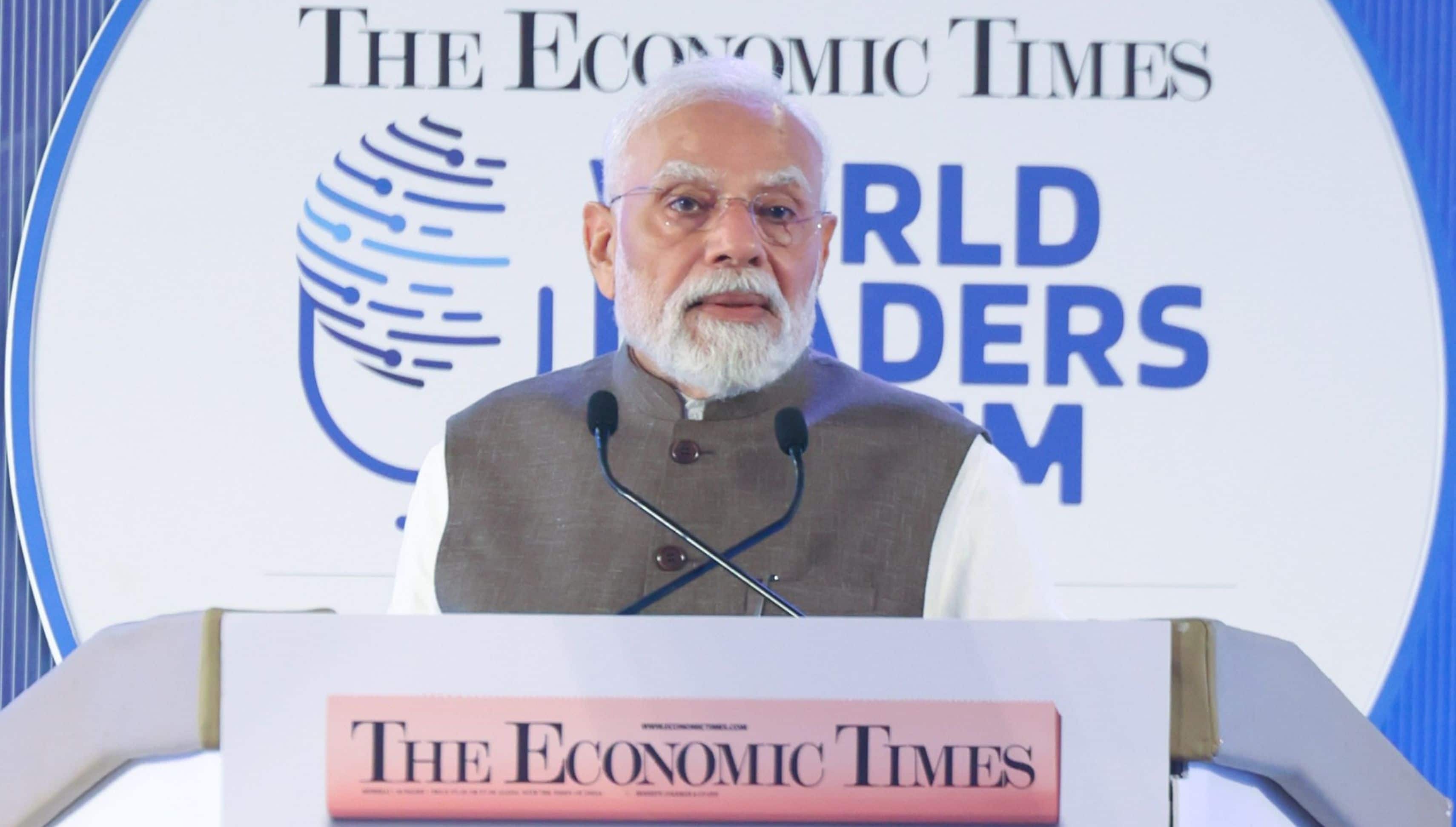
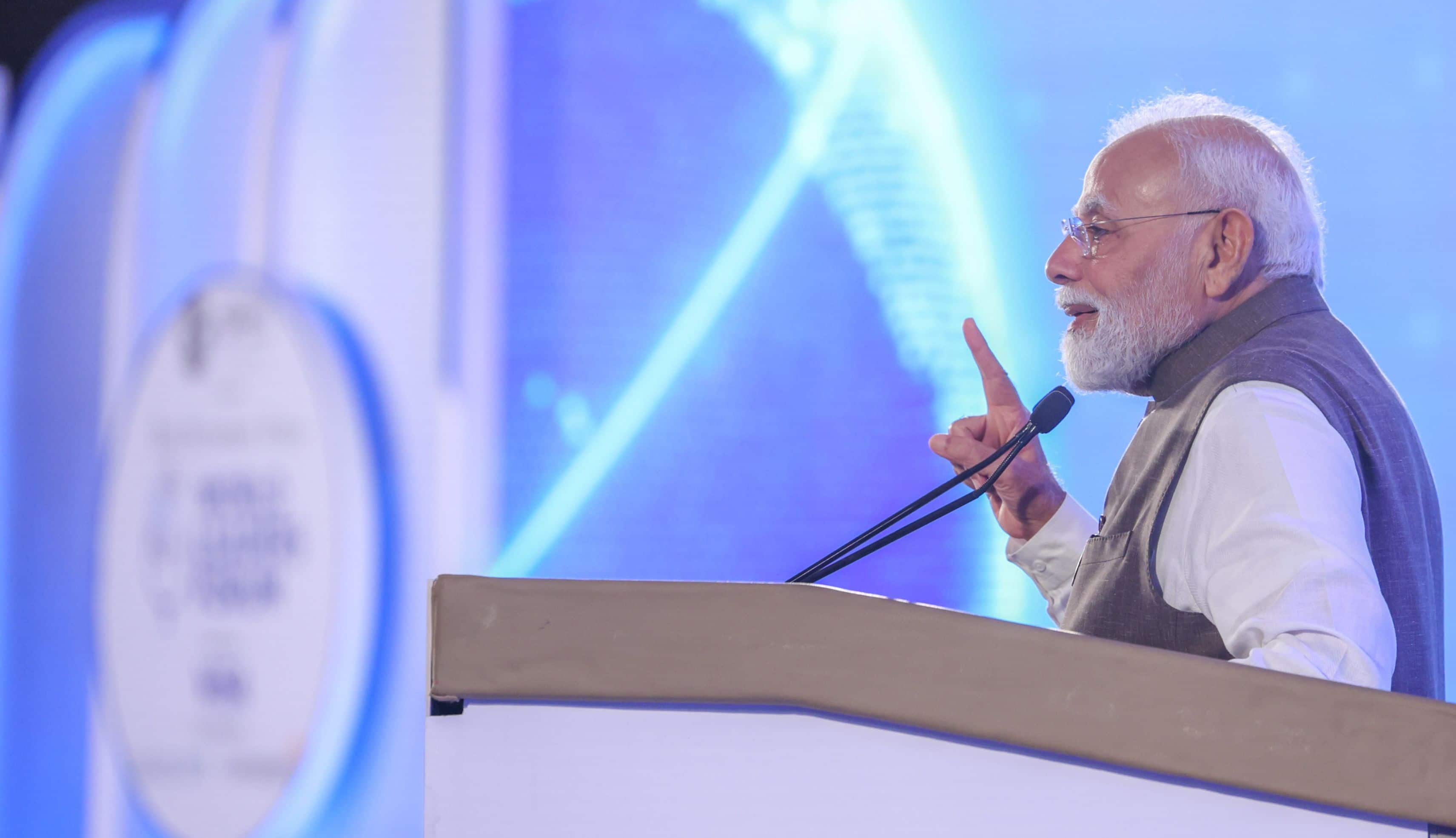
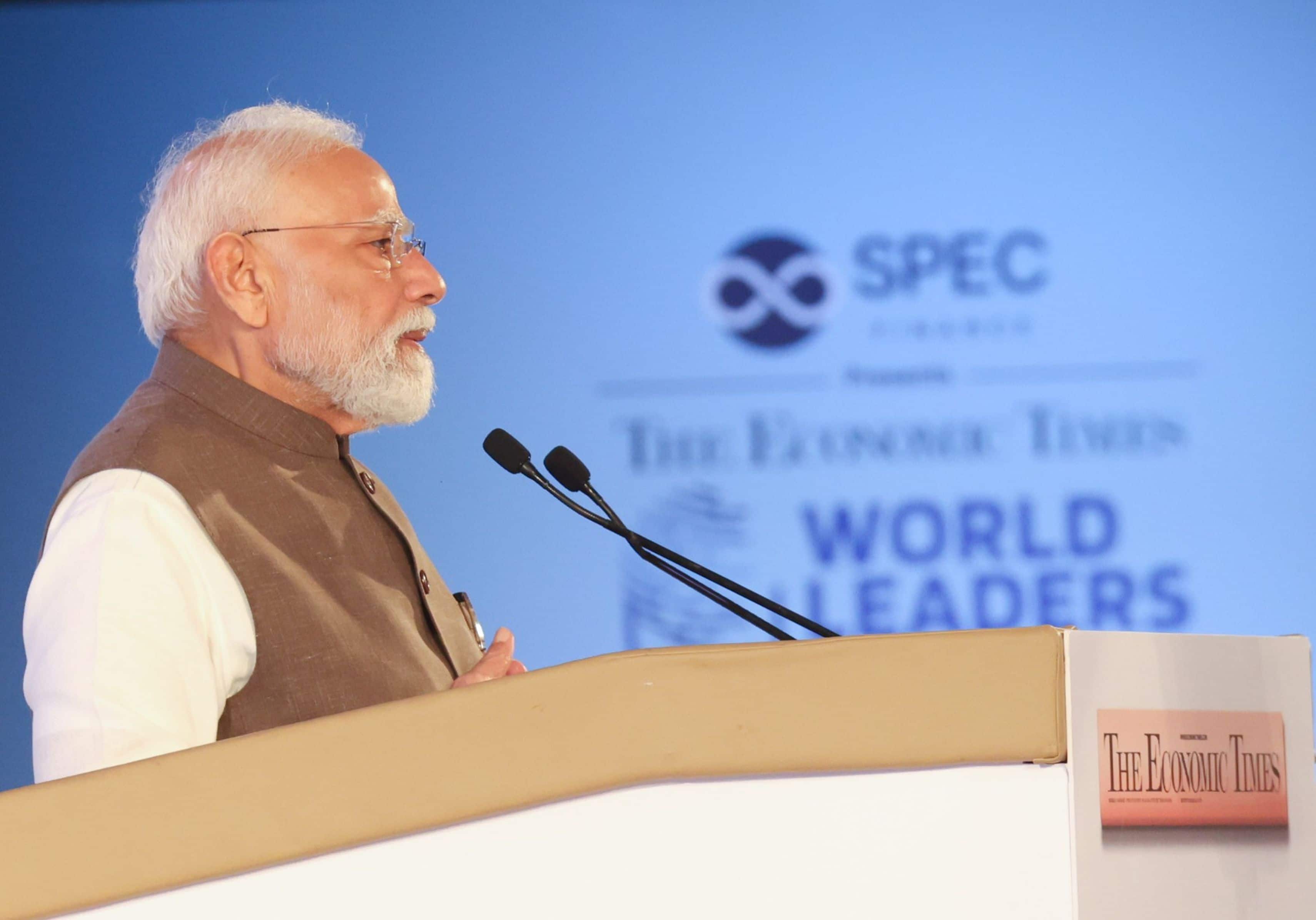
The world is seeing India as a bright spot of growth and hope: PM Modi at Economic Times World Leaders Forum 2026
August 21, 2026
The world sees India as a bright spot for growth and hope: PM
Today, India is implementing next-generation reforms at the policy level and undertaking reforms at governance level: PM
Increasing production was met with punishment earlier but today, our government is providing incentives for boosting production
India has political stability and continuity in its policies: PM
Earlier, the approach of regulations was, 'prohibited unless permitted’; We are changing this approach and taking it towards 'permitted unless prohibited’: PM
The relationship between the government and citizens should be based on trust, not suspicion: PM
Today, we are shaping policies that are pro-people, pro-growth and pro-development: PM

World Leaders Forum - this prestigious platform, all the well‑known stalwarts of the world of business and industry, policy makers, other dignitaries, ladies and gentlemen.

It is very natural to feel happy coming among you all. This year the summit’s focus is on Shared Future. In the past few years the world has seen many ups and downs. And these experiences have made one thing very clear: whether one likes it or not, the future of every country is interconnected. Nothing is possible in isolation. That is why this theme of Shared Futures has become even more relevant today. And India has always carried this spirit. During its G‑20 presidency, India’s guiding mantra was One Earth, One Family, One Future. The spirit of a shared future, and the sense of responsibility that comes with it, provides solutions to many of the problems of the 21st‑century world.

Friends,

Today there are many concerns about growth in the world. In recent times the world has seen a very frightening form. Resources are being weaponized. An atmosphere of distrust is bringing many new challenges for the world. But even in such times, the world sees India as a bright spot of growth and hope. In the last 10–12 years, India has lifted 250 million people out of poverty. Not only that, if we talk about the coming days, the IMF forecast is that India will remain the fastest‑growing major economy in the world. And India is continuously taking steps that are accelerating its development.

Friends,

Just last week, on 15th August, from the Red Fort I spoke about the seven streams of seven strengths. Manufacturing, technology and innovation, food processing, green and blue economy - I spoke of seven sectors on which India is highly focused today. And that is why India is carrying out next‑generation reforms at the policy level, to secure our future. Reforms in governance, reforms for ease of living. Last time when I connected with you through this very platform, I had said then too - these reforms are not a compulsion for us. They are our commitment, they are our conviction.

Friends,

In 2014, when our government was formed, since then reforms have changed the direction and condition of the country. I want to give you a very interesting example of this. Perhaps hardly anyone here knows about PLP. Is there anyone who knows about PLP? Raise your hand. So many media stalwarts are sitting here - do you know PLP? And you will be surprised to hear. PLP means Production Linked Punishment. No one knows about this. And another term you surely have heard - PLI. Most people know this. PLI means Production Linked Incentive.

Friends,

These two terms define two different time periods of India. Nowadays it is the age of explainers, so let me explain to you.

Friends,

The young generation today will be shocked to hear that there was a time in our country when if any company produced more than the fixed limit, it was punished. This was the PLP - Production Linked Punishment model of the earlier license‑raj governments. There were even examples that if a factory, seeing higher demand, produced more, it was sent a notice. Forced by this, the company would destroy its own product instead of selling it in the market.

Friends,

Today those who mock Make in India and the Atmanirbhar Bharat campaign - their forefathers’ thinking was exactly this: PLP, Production Linked Punishment. Behind such actions was a particular distorted mentality. People with such mentality always wanted shortages of essential goods to continue. Keeping citizens in deprivation was their policy. They wanted people to fold hands before them, to beg - you understand whom I am talking about. After making people join hands, they would act as if they were doing a favor. That was the way of those governments, and that is why they followed the Production Linked Punishment model. You can imagine, by doing this they strangled the basic principle of employment generation. And the surprising thing is - their courtiers, again I repeat, their courtiers, never raised a voice against it.

Friends,

Every reform begins first with reforming your way of thinking, your mental framework, the range in which you work. Where earlier increasing production brought punishment, today our government gives incentive for increasing production. And today the success of the PLI scheme is being seen by the world. Just because of this one scheme - I am not talking of all schemes, only one - actual investment of about 2.5 lakh crore rupees has taken place. More than 22 lakh crore rupees of production and sales have happened. More than 15 lakh crore rupees of exports have taken place. And more than 14 lakh direct and indirect jobs have been created. And I remind you again - these figures are only of one scheme. Think about it: the punishment model of the earlier license‑raj governments increased unemployment, while today our incentive model is creating lakhs of new jobs.

Friends,

Today in India this rapid development, these rapid reforms are happening because in India - and as Satya just mentioned - there is political stability, there is continuity in our policy. Earlier, those who talked about reforms in the country would make announcements, but later forget them. But we created a clear roadmap for reforms. The main direction of this roadmap has been - reforms at the level of governance! For this, today in 21st‑century India, we are not just changing regulations, we are changing the entire philosophy of regulation. Earlier the approach of regulations was: “Prohibited unless permitted.” That is, until the government gave permission, you could not do that work. We are changing this approach to “Permitted unless prohibited.” That is, for work that the law has not explicitly forbidden, there should be no need for permission at every step. And behind this thinking is something very simple - the basis of the relationship between government and citizen should be trust, not suspicion.

Friends,

This thinking is also visible in the Jan Vishwas Bill. I believe it is not right to consider every procedural mistake a criminal offence. That is why many offences have been decriminalized. In many cases, instead of jail, only financial penalty has been provided. In the relationship between government and enterprise, we are advancing this same reform mindset. In recent years, more than 40,000 compliances have been removed - forty thousand. More than 1,500 old and useless laws have been abolished. And when you look at all these reforms together, you realize how much burden has been reduced from the shoulders of our industries and businesses.

Friends,

We are continuously working on this process of governance reforms. In the recent monsoon session of Parliament we passed the Bankers’ Book Evidence Bill. And that too when the opposition had created continuous disruption in Parliament. We did not allow the work of serving the nation to stop. Now this law has replaced the 19th‑century English law. Now the acceptability of banks’ digital records has been given legal recognition. This will reduce legal complications, bring transparency in the system, and increase ease of doing business.

Friends,

One meaning of reform in governance is also that systems should be built with sensitivity toward every human life and its time. I will give the example of railways. In our railways too, work has been done with this approach. Today, more than 6,500 railway stations have electronic interlocking arrangements. More than 10,000 level crossing gates have also been connected with interlocking. This has greatly reduced the possibility of accidents due to human error.

Friends,

When our government came in 2014, there were about 9,000 unmanned crossings. Removing them was not rocket science. Because of unmanned crossings, thousands of people lost their lives, but earlier governments did not care much. We, in mission mode, in the past ten years, eliminated these unmanned crossings. We also increased the speed of building road overbridges and road underbridges many times. And the result of this is that compared to before 2014, the number of train accidents has reduced by up to ninety percent - 90, ninety percent. Twelve years ago, about 150 rail accidents used to happen in a year. Now their number has reduced to 15–20. And we are continuously trying to reduce it even further.

Friends,

Cleanliness in railways is also a big example of governance reform. There was a time when filth and human waste on railway tracks used to be a big problem. Today the situation has completely changed. Before 2014, about 12,000 bio‑toilets had been installed in our trains. After 2014, more than 360,000 bio‑toilets have been installed in trains. That means more than 97 percent of bio‑toilets have been installed in the last 12 years. This change is not just about cleanliness, it is a new model of governance in the direction of dignity of passengers, cleanliness, and building a modern India. It is also a campaign to give a better experience to crores of passengers.

Friends,

Another measure of the quality of governance is time. A project that starts should be completed on time. And the service that people receive should also meet the test of time. The Delhi–Meerut Namo Bharat Rapid Rail System is a very good example of this. On this corridor trains are running at a speed of 160 kilometers per hour. This could never have been imagined in our country before. So far more than 40 million passengers have traveled in it. And there is another important factor which is not discussed. The punctuality of the Delhi–Meerut Namo Bharat Rapid Rail is 99.9 percent. Otherwise we used to say for everything, if late, “this is Indian time.” Times have changed. I mention these small things so that we realize how broad and extensive the work is. Similarly, the punctuality of the Delhi Metro. The punctuality of the Delhi Metro is 99.9 percent. And this punctuality has become almost equal to metros of cities like New York, Hong Kong, and Paris. This is not just the story of a metro and rapid rail running on time. This is the identity of India changing with time. I know that still - and I am not someone who sits satisfied with just this - still in this direction we have much to do, much remains. But we are continuously doing it. A beginning has been made, and this beginning is commendable.

Friends,

Another major dimension of our reforms roadmap is reforms at the policy level! Today we are making policies that are pro‑people, pro‑growth, pro‑development! Policies should be according to the needs of the country and its people, not that policies are made and the country is forced to run according to them! I want to give you another interesting example. Until a few years ago, even making a map of the country was illegal. If you made a map, it was illegal, you could go to jail. Without permission you could not even do mapping work in the country. Think about it - foreign satellite technology could map any corner of India, but in India, Indians were prohibited from making a map of India.

Friends,

In today’s era of technology, just this one restriction could have killed so many startups! So many ideas could have been deprived of implementation! We changed this system too. We deregulated geospatial data, and today geospatial data has become the foundation of many startups.

Friends,

Today you are continuously seeing the growing utility of drones. In agriculture, in defense, in delivery, in shooting, in content creation - all this would not have been possible if the government had not carried out reforms in the rules related to it. Earlier, drone flying in the country was completely bound in rules and restrictions. We freed it from those restrictions, and today India’s drone industry is moving forward with an unprecedented flight.

Friends,

Earlier, the thinking of governments regarding border areas was that if roads and infrastructure increased at the border, then the enemy could also benefit from it. We changed this thinking. We said, border infrastructure is not a weakness, it is the strength of the nation. And that is why today the network of roads, bridges, and tunnels in border areas is rapidly increasing. In just 2024 and 2025 alone, 250 infrastructure projects of BRO have been dedicated to the nation. When the thinking changed, the picture of border infrastructure also changed.

Friends,

There is also an example of nuclear reforms. At a time when development was completely energy‑dependent, because of restrictions and prohibitions, the country was not able to use its nuclear potential. Through the Shanti Bill we carried out a major reform in this too. Today in India the path has been opened for the private sector in nuclear energy. Similarly, we carried out a major policy reform in the defense sector too. The system that had been running for 200 years, we changed it by merging more than 40 ordnance factories into 7 factories. And we are seeing its results. Today India is becoming self‑reliant even for its defense needs, and compared to 2014, our defense exports have increased 55 times. And that is why, many times reforms blend into our lives in such a way that we do not even notice them. Think about how your ordinary day passes today. You wake up in the morning, order household items on your phone, and by the time you are ready for office, all that stuff has reached your home. From the street vendor in your lane to the showroom of your car, all your payments are done just by scanning a QR code. If your daughter is studying in another city, you can send her money by phone, and that money reaches her within seconds. Many times the daughter even shares a QR saying, “Papa‑Maa, I bought this dress, please make the payment,” and you get her shopping done while sitting at home. These things are remarkable, but now they do not surprise the people of India. When outsiders come, they are astonished - “Oh, it happens like this.” For the people of India, it has become routine. It has become part of the life of the ordinary citizen of India. Think - before 2014, how many of these things were possible?

Friends,

In the past 10–12 years, the reforms India has carried out related to ease of living have changed people’s lives - especially the lives of our middle class - in a way that is still only a dream in many developed countries of the world.

Friends,

Today the cheapest data in the world is in India. We are making cheap and good smartphones. Just now Satya described it. India is among the countries carrying out the fastest 5G rollouts in the world. We linked Aadhaar with banking, mobile connectivity, and services, making services like e‑KYC and digital authentication possible. Today if you want to open a bank account, you don’t even need to go to the bank. The government has brought the bank to you. Today whether it is paying a bill, booking a ticket, there is no need to go to a government office - all this work happens online. Filing income tax has become easier. A system has been created where maximum information in the form is already filled. You verify this information, add what you need, and submit - your work is done. Earlier refunds used to take months to arrive, now they come in just a few days.

Friends,

Today with the help of e‑Sanjeevani - perhaps it is still discussed very little - with the help of e‑Sanjeevani, people in distant villages can directly consult doctors from anywhere and take the path of treatment. And those who earlier had to travel many kilometers to reach a hospital, today the doctor is available to them at home, on their screen. And this figure will surely astonish you - showing how India has adapted technology, how it has simplified the life of the ordinary person. So far, under e‑Sanjeevani, nearly 500 million tele‑consultations have taken place.

Friends,

Today in India the travel experience is changing, the journeys of India’s citizens have completely changed. It is difficult to find a person in this hall who has not used DigiYatra at the airport. Similarly, nowadays much work is happening seamlessly. FastTags are running on highways, so that you can pay tolls without stopping and move ahead. This is the true meaning of ease of living. Time is being saved, life is becoming easier, and crores of people are able to focus on their progress.

Friends,

In politics, often those decisions become headlines whose effect is visible today - that is, whose life is 24 hours. Earlier governments adopted the formula of making announcements with elections in view. But such announcements did not change the country. The decisions that change the country are those whose impact is visible on the ground, which are taken keeping both the present and the future in mind.

Friends,

The PM‑KUSUM scheme and the PM SuryaGhar Free Electricity scheme are very unique examples of this. Through the KUSUM scheme, farmers have been freed from the worry of electricity. And through the SuryaGhar scheme, the middle class has benefited greatly.

Friends,

I know that if I had announced that from today electricity is free for millions of families, then all the media, all the screens, all the newspapers would have made big headlines saying “Modi ji announced free electricity today.” But we started work with a different approach. We resolved to raise a sun on the roof of every house. And today more than 5 million families in the country are connected with the PM SuryaGhar Free Electricity scheme. The government has given more than 22,000 crore rupees to these families to install solar systems, so that solar plants can be installed on their roofs to produce solar power. Now these families are selling extra electricity to the grid and earning money. Their own bill has become zero, and they have started earning too. This scheme is also expanding people’s dreams. With electricity bills reduced, people are now buying and keeping things like refrigerators, coolers, washing machines, TVs. Now there is no fear that milk will spoil because of power cuts, no worry remains. Now school‑going children can sleep peacefully at night. I say again - whether elections happen or not, this SuryaGhar and its light will remain. The benefit of this plant will continue to reach families of the country for years.

Friends,

In the coming time, ease of living and ease of doing business will expand further. For the youth of the country, for women power, for farmers, for the poor and the middle class, our government will continue to work. Our reform express will move forward at even greater speed. To fulfill the goal of a developed India, we will continue to work with full commitment. And I - for me, if India’s future is secured, then from this very land a great work will be done to bring stability to the world’s future too. With this confidence, the more stable India becomes, the more secure India’s future becomes, the strength to give the world a sense of security will arise from here. With this capability, with this resolve, once again I heartily thank the entire team of Economic Times for inviting me to today’s program. Vande Mataram!