Youth of India can take the nation to greater heights: PM Modi

Published By : Admin | March 4, 2018 | 16:24 IST
I am always eager to interact with youth, understand their hopes and aspirations and work accordingly: PM Modi 
Between the 19th and 20th century, there was a collective resolve among people to defeat the forces of colonialism: PM Modi 
Election results of Northeastern states have given the entire a nation a reason to rejoice: PM Modi 
There was a sense of alienation among the people of Northeast earlier, but it has changed in the last four years. There is now an emotional integration: PM 
Only integration can counter radicalization, says PM Modi
India is a youthful nation, 65% of its population is under the age of 35. The youth has the potential to transform the nation: PM Modi 
Since forming government in 2014, we have initiated steps that are youth-centric: PM Narendra Modi 
Innovation is the bedrock to build a better future: PM Modi

The great revered Swami Gautamanand ji Maharaj, Swami Jitkamanand ji Maharaj, Swami Nirbhayanand Saraswatiji, Swami Vireshanand ji Saraswati Maharaj, Swami Paramanand ji Maharaj, Saint and scholars from across the country and my young companions present in large numbers. 

Greetings in Kannada language. 

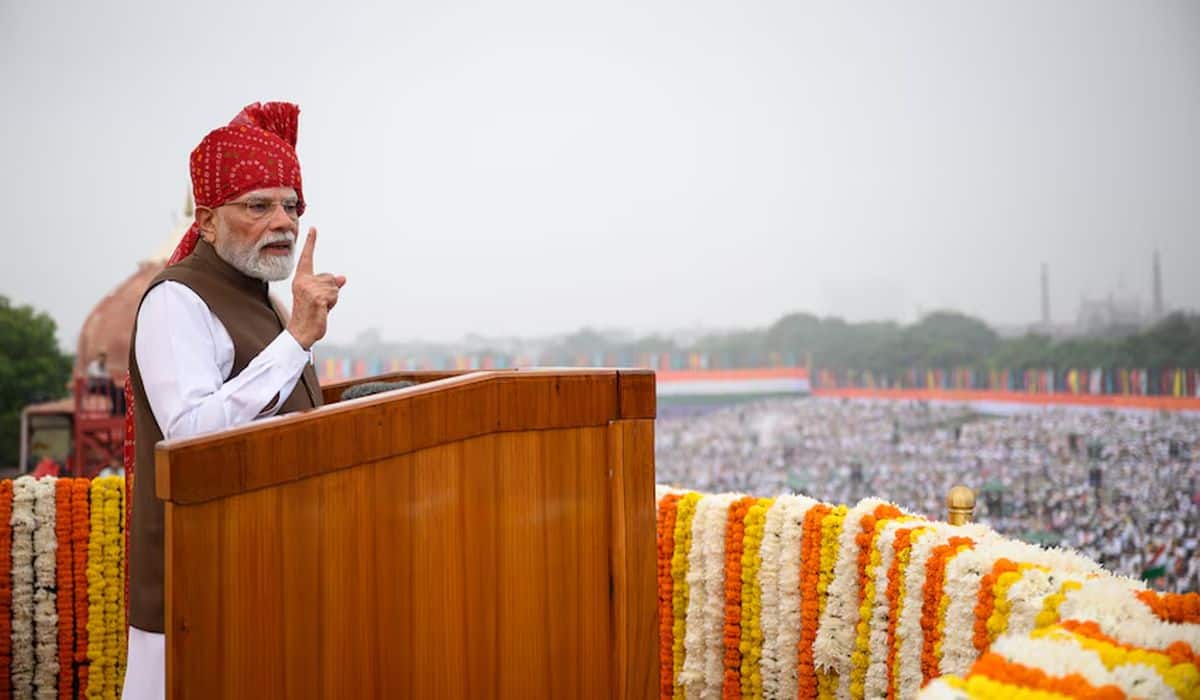
This stadium of Tumakuru is glowing with the energy of thousands of Swami Vivekanandas and Sister Niveditas. This saffron colour is increasing the enthusiasm even more. I wanted to personally seek the blessings of this energy and was really excited to be present there when I received the letter from Swami Vireshanand ji three days back. However, there are sometimes constraints of time. And you all know that the Parliament session will begin from tomorrow. So it was a little difficult for me to be personally present amongst you but thanks to the modern technology that I got the opportunity to connect with you all through it. 

There's always something or the other to learn from the conversations with the younger generation. Therefore, I try to engage in conversation with the youth more and more so as to listen to their experiences and learn from them and so that I am able to ceaselessly make efforts for their welfare in accordance with their hopes, dreams and aspirations. 

I am fortunate to have received this opportunity to inaugurate this event of the great youth convention and the sadhu-bhakt programme. I still remember the love that was showered on me by the youngsters and the people of Tumakuru 3 years back when I had visited Tumakuru to seek the blessings of respected Shivkumar Swami ji. The respected Shivkumar Swami ji is committed to the penance of nation building with the blessings of Lord Basveshvara and Swami Vivekananda ji. He has sacrificed every moment of his life for the country's welfare. I always pray to God for his good health and long life. 

Friends, 

It is rare to have celebrations of three important occasions together but this is a divine combination of the three festivals in Tumakuru. I believe that this occasion that marks 25th anniversary of the establishment of Ramkrishna Mission, 125th anniversary of Swami Vivekananda ji's address at Chicago as well as 150th birth anniversary of Sister Nivedita, in itself holds a great significance. It indeed is an achievement to have thousands of youngsters attending the celebration of this grand event! I once again extend my greetings to respected swamiji, Ramkrishna Mission, senior citizens and to everyone present on this occasion. 

Today the focus of the programme is on Swami Vivekananda ji. We all are aware of Swamiji's love for Karnataka. Before leaving for America and Kanyakumari he had spent a few days in Karnataka. Swami Vivekananda ji had linked our spiritual thoughts to the need of the time. He had linked our glorious past with the present. I am glad that today I am able to make efforts to carry my country forward by linking the spiritual extension with the present generation through the Sadhu-bhakt programme and the Youth Convention. 

Both the sages as well as the youngsters have assembled here from across the country. We will be able to discuss about both pilgrimage and technology on the same platform. On one hand we will talk about God and on the other hand about innovation. A model of spiritual festival and youth festival is being developed in Karnataka. I hope that this programme will inspire others in our country. This confluence of the old traditions with the present generation is quiet impressive! 

If we look at the period of India's freedom struggle in the 19th-20th century, we will find a collective pledge at different levels. This collective resolution was to free the country from the shackles of slavery. Everyone in this society - a saint or a devotee, a theist or an atheist, a teacher or a disciple, a worker or a professional; had associated themselves with this common pledge. 

At that time, our great saints were aware of the fact that the divided society with the different castes could not have fought with the British rulers. In order to get rid of this weakness, they started several socio-religious reform movements in different parts of the country. The country was united with the help of these movements; and these campaigns were started to rid the country of its internal weaknesses. The leaders of these movements united the people, elevated the people to one equal platform and gave everyone equal respect. Understanding the need of the country, they merged their spiritual journey with the nation building. Service to the people became synonymous to service to God.

Friends, 

That was the period when people from all walks of life- students, professionals, teachers, lawyers, scientists, doctors or engineers had joined the freedom struggle from different regions. These professionals gave a new direction to the country's freedom movement; and after Independence the foundation of nation building was strengthened. 

When these efforts were merged, the country was built both intellectually and socially and the united people of India were determined to drive away the British fulfilling their resolution. 

After several decades of independence, the same strength, the same resolution and the same determination has been shown by the country. We sometimes see the power of that resolution today. Day before yesterday, the country was painted in the colour of Holi and yesterday the election results in the Northeast have once again created a festive mood in the country. 

Probably you are wondering why I am talking about this topic in this programme. I believe that I should express my feelings. See, I am not viewing this victory in the Northeast from the prism of politics. The important thing is that the nation was involved in the happiness of the people of Northeast. Such occasions where the accomplishment of the people of Northeast becomes the accomplishment of the entire country, are rarely seen. We saw that the people, in line with the feelings of the people of Northeast, were glued to their TV sets since morning, as if they were the part of the elections there. Every Indian has this same feeling. 

I believe that for my brothers and sisters of Northeast, the mandate that they have provided, in itself is a great change! The Ramkrishna Mission, the Vivekananda centre and several workers ranging from the youth to the saints have committed their lives for the welfare of the people of Northeast. Therefore, the people sitting over there are well aware of the ground reality. So, the mood of the entire country after the elections in Northeast shows that the feelings of the nation are inter-twined closely with that of the people of Northeast. The strength of these feelings is immense for the unity of the country and for promoting 'Ek Bharat Shrestha Bharat'. 

Friends, 

Earlier the policies and the schemes had alienated the people of Northeast from the mainstream. They were feeling cut-off from the stream of development. This feeling was the root cause of several other problems. For the past four years, our government has made efforts to fill these loopholes and to eliminate this feeling of alienation. We have vowed for emotional integration of the Northeast and have also fulfilled that. 

I am highly satisfied by the election results of the tribal areas of Tripura. I want to elaborate upon this. Friends, there are 20 assembly seats in the small state of Tripura. An illusion is created in our minds that tribal areas are Naxalite-dominated areas or Maoist-affected regions with left-wing extremism. Attempts are made to alienate the regions with these rumours so that the land becomes a breeding ground for the separatists. However, the election results in Tripura have set a good example. The people of Northeast have defeated hate-politics by voting in favour of Bharatiya Janata Party. 

Friends, 

Radicalization can be tackled only with integration. Steps are being taken by our government so that no community or section of the society feels alienated. However, the entire country should strive to strengthen the spirit of unity. 

We can feel the impact of the power of resolution in this stadium of Karnataka. The dignitaries present on the stage can feel it even more. 

Friends, 

This pledge for nation building can be better understood with a quote of Swami Vivekananda ji. Swamiji had said - 

"Life is short, but the soul is immortal and eternal, and one thing being certain, death, let us therefore take up a great idea and give up our whole life to it." 

Life is short and uncertain but death is certain. Therefore, we should set a resolution and commit our lives to it. 

Today, in the presence of thousands of youngsters, I want to ask one question to you all -' what should this resolution be?' Many a time it has been seen that whenever a youngster is posed with this question, he is unable to answer it directly. Often he is confused with the purpose of his life. Friends, only when we are clear about our purpose in life, we will be able to prove something and contribute to the society. If our goals are not clear, we will not be able to achieve it. If you are confused about which train to board after reaching the platform, you can neither reach your destination nor frame your itinerary. 

There is another famous saying of Swami Vivekananda ji- 

“Take up one idea. Make that one  idea your life, think of it, dream of it, live on that idea, let the brain, muscles, nerve, every part of your body be full of that idea and just leave every other idea alone. This is the way to success.” 

I want to urge the youngsters who have come to attend the youth festival to be clear about their resolutions and what they want to do in the future. 

Brothers and sisters, 

Today, India is the youngest nation of the world. 65% of the population is below 35 years of age. The strength of the youth can change the fate of the country. It can become the fuel for the entire country. After we got elected in 2014, several schemes were started, keeping this youth power in mind, to tap this energy of the youth for nation building. 

You must be aware of the fact that as soon as we came to power, a separate Ministry was created for skill development, keeping in mind the future of the youngsters. Skill development was there even before but it was scattered among 40-50 ministries and their mandate was also different. Sometimes these came into conflict with one another. Today, a single ministry is doing the job of skill development. Skill development centres are being established in every district under this ministry. Short term and long term training are being provided to meet the requirements of the youth and the industry. The government has come up with the Pradhan Mantri MUDRA Yojana to provide loans without guarantee so that the youth can start their business. Till date about 11 crore loans have been given under this scheme. More than 1 crore 14 Lakhs loans have been approved for the youngsters of Karnataka. Thanks to the scheme, today the country has almost 3 crore new entrepreneurs. My young friend, this is really of great significance! In such a short time, 3 crore new entrepreneurs are contributing to develop the country's economy. 

Our government has not only pushed for skill development and self-employment but also for creating new markets for the products of the youngsters. 

The government has made a policy change so that the local products are given priority in government procurements. Besides, an online system called GeM, i.e., Government e-Market has been developed through which any young man or a woman or a person from a village can directly sell his/her products or services required by the government. There is no need for middlemen or tenders or any big company. The government can directly purchase from the common man. We are also encouraging the state governments to connect with this portal for encouraging their young entrepreneurs. 20 states have already joined hands with the central government for this. 

Friends, 

Due to these efforts of the government, today the youth can seek training as per the requirement of the industries and can sell his products in the market on his own. The youngsters of Karnataka know better the importance of such an environment. The Government has started schemes like Start-up India and Stand-up India to give wings to the hopes and aspirations of crores of youngsters like you. For the first time, our government has linked employment with tax incentives. The government is providing tax incentives to the companies who are allowing apprenticeship to the youth. The Government is contributing to the Provident Funds of the youngsters that are getting deducted. Those companies whose turnover is up to Rs. 2 crores and who are making payments digitally are also getting tax benefits. 

I believe that there is no shortage of 'Sense of Mission' in the youth of our country. They want to put their innovative ideas and solutions on the ground in a more efficient and economical way. Therefore, our government is encouraging them in the way they should be encouraged to achieve that objective. 

Friends, 

Innovation is the basis of a better future. Applying this thought in our education system, we are making efforts to incorporate innovation in the schools' culture. The government has introduced the Atal Innovation Mission (AIM) to transform the ideas of the children into innovation. So far more than 2400 Atal Tinkering Labs have been approved in the country. 

The central government is working on another great mission with the task of setting up 20 World class 'Institutes of Eminence' in the country. Under this Mission, selected 10 public sector institutions will be provided financial assistance of Rs.10 thousand crore for a set time period. These 'Institutes of Eminence' will revive India's position back in the modern education. 

In this Budget, we have started a new scheme - RISE. Under this scheme, the Government will spend 1 Lakh crore rupees in the next 4 years to transform the education system of the country.  

The Prime Minister's Research Fellow scheme has also been announced by the government in this budget. Under this scheme, 1000 meritorious engineering students will be provided with Rs 70,000- Rs. 80,000 per month for 5 years to pursue PhD programme. 

Keeping in mind the strength of our human resource and considering the needs of the future, the benefits of the schemes of the central government are also easily accessible to the youngsters of Karnataka. The efforts being made by the central government in the fields of Artificial intelligence, Internet of things etc. are opening new opportunities for the youth of Karnataka in innovation. Smart Cities Mission has made it easier to access the talent of the youth of Karnataka, ensuring better utilization of their talent. 

Friends, 

Sister Nivedita had once commented - what should be done so that the Indian students do not copy ideas of the other countries and be complete in them? Further extending this point she said- 

“Your education should be an education of the heart and the spirit, and of the spirit as much of the brain; it should be a living connection between yourselves and your past as well as the modern world!” 

This means that it is very important to create a link between our past and the future. The stronger is the bond with our tradition; the stronger will be the youth of the country. 

Brothers and sisters, 

This feeling of respect for our traditions can be seen in the central government's Khelo India scheme. I would say that those who play shall blossom. Thus, we have made a major change in the policy. To promote Guru-Shisya tradition, the government will not only honour the current coach but also every other coach who has played a role in the player's sports journey. All the coaches will be given some part of the winning amount in case of an international victory. 

Keeping the traditions in mind, indigenous sports like Kabaddi and kho-kho are also being promoted in the Khelo India programme. The government is trying to provide a platform after identifying the talent in all sports from every corner of the country. The Government has planned to provide financial assistance of Rs. 5 lakhs each to 1000 selected players every year for their training with modern sports infrastructure. 

Friends, 

'Vidyarthi Devo bhava': this slogan is not only for you but is also a mantra for us. With your permission,  I would like to add - 'Yuva Devo bhava, Yuva Shakti devo bhava'. 

I consider the youth as equal to the divine power. I believe that Youth is not a situation or just the age in terms of years but a mental state. The young generation does not think that only the past was better. They believe in learning from the past and making the present and the future better. Therefore, they work and make efforts to change the country and the world. The youth wants the future to be much better than the past and the present. 

Therefore, I salute the youth power of the country again. You must have heard of 'Ek Bharat Shrestha Bharat'. Sardar Vallabh Bhai Patel had worked hard to unite the country. It is our responsibility to make this united India as the best! Some of you must be interested in learning French or Spanish language. It is a good thing. It is always good to learn any language of the world. However, have we ever thought of learning the languages of our country?  It is a vast country with 100 languages, 1700 dialects. We can also learn 5-50 lines of the languages of our country. We can learn some songs of another state. I believe that this power is necessary to unite the country. We can develop it naturally and spontaneously. Even I tried speaking Kannada in bits and pieces; but as soon as I started speaking in the language it touches your hearts. You didn't bother whether my words were correct or not, whether it was grammatically correct or not or the usage of idioms was apt or not. You just felt that he was making efforts to connect with us. This has the power of uniting the country. 

Much of the responsibility of taking forward the campaign of 'Sankalp se Siddhi' and the dream of a New India lie on the country's youth. I once again extend my best wishes to the country's youth and would like them to emulate the ideals of Swami Vivekananda ji and Sister Nivedita. We should remember that service to people is service to God. We should see Lord Siva in the living beings. This philosophy should be applied for transforming the country - be it the Swachh Bharat Mission, Beti Bachao Beti Padhao, or schemes for the welfare of senior citizens, or technologies for farmers. We should move ahead with one or the other objective. I believe that the young people here will move ahead by seeking inspiration from the great saints and scholars present here on the sacred soil of Tumakuru. 

I hope you all are connected to the Narendra Modi app. I want to connect with you all. Please connect with me through the Narendra Modi app. Talk to me and convey your feelings to me. I want to tell you that although I couldn't talk to you in Kannada language and had to speak in Hindi as I don't know this language, but if you want to listen and read this speech in Kannada language I will tell my team to upload the main parts in Kannada language on the Narendra Modi app so that you can better understand my thoughts and feelings in your language and take it forward. 

I once again congratulate Ramkrishna-Vivekanda Ashram for today's 10-triveni Sangam. I salute the saints, Sivagiri Mutt and my best wishes to all the youngsters.  

Thanks a lot!

Explore More
ಶ್ರೀರಾಮ ಜನ್ಮಭೂಮಿ ಮಂದಿರದ ಧ್ವಜಾರೋಹಣ ಉತ್ಸವ ಉದ್ದೇಶಿಸಿ ಪ್ರಧಾನಮಂತ್ರಿ ಅವರ ಭಾಷಣ

ಜನಪ್ರಿಯ ಭಾಷಣಗಳು

ಶ್ರೀರಾಮ ಜನ್ಮಭೂಮಿ ಮಂದಿರದ ಧ್ವಜಾರೋಹಣ ಉತ್ಸವ ಉದ್ದೇಶಿಸಿ ಪ್ರಧಾನಮಂತ್ರಿ ಅವರ ಭಾಷಣ
India's high-flying ambitions: How policy overhaul doubled nation's MRO footprint from 96 to 166

Media Coverage

India's high-flying ambitions: How policy overhaul doubled nation's MRO footprint from 96 to 166
NM on the go

Nm on the go

Always be the first to hear from the PM. Get the App Now!
...
India-Netherlands Joint Statement on the visit of Prime Minister of India to Netherlands
May 17, 2026

At the invitation of the Prime Minister of the Netherlands, Mr. Rob Jetten, Prime Minister Shri Narendra Modi paid an official visit to the Netherlands on 16-17 May 2026. This marked Prime Minister Modi’s second visit to Netherlands.

In the morning of May 16, Prime Minister Modi was hosted by Their Majesties King Willem Alexander and Queen Maxima of the Netherlands at the Royal Palace Huis ten Bosch in the Hague for a bilateral meeting. Their Majesties also hosted a luncheon for Prime Minister Modi.

Prime Minister Jetten and Prime Minister Modi met for restricted and delegation level talks, followed by a dinner in the evening of May 16. Both Prime Ministers recalled the longstanding and historical trade linkages, deep rooted people-to-people ties and robust bilateral relations between the two countries and expressed their desire for further expanding and deepening this multifaceted relationship. In this context, the two leaders noted with satisfaction the progress achieved in recent years across various cooperation programmes through regular interactions, including at the highest political level and through the fruitful collaboration during India’s Presidency of the G20 in 2023 and the AI Impact Summit in New Delhi in February 2026.

Acknowledging the strong momentum in the relationship and the growing convergences between the two countries, the two leaders decided to elevate the relations between India and the Netherlands to a 'Strategic Partnership'. In this context, they welcomed the adoption of a Strategic Partnership Roadmap under which both sides agreed to work through regular and structured cooperation in all areas, including political, trade and investment, defence & security cooperation, cyber security, critical & emerging technologies including semiconductors, space, AI & quantum system, science & innovation, sustainability, health, sustainable agriculture and food systems, water management, climate change and energy transition, sustainable transport, maritime development, education, culture and people-to-people ties. The two sides also agreed to explore exchanges in the domain of policy planning.

Both leaders welcomed in this regard the agreements concluded in December 2025 across different priority sectors, such as on defence, semiconductors and related emerging technologies, enhanced cooperation in digital and cyberspace, collaboration in pharmaceuticals and medical devices, the establishment of a Joint Trade and Investment Committee, as well as the cooperation between the maritime museums in Lothal and Amsterdam.

The two leaders noted the Pact for the Future and reaffirmed their commitment to upholding shared values and principles including democracy, human rights, international peace and security, and a rules-based international order in line with the purposes and principles of the UN Charter. Both governments also underscored their commitment to strengthen and reform the multilateral system including expansion of both permanent and non-permanent categories of membership of the UN Security Council to reflect contemporary realities and called for text-based negotiations within a fixed timeframe. Prime Minister Modi thanked Prime Minister Jetten for the continued Dutch support to India’s permanent membership of a reformed and expanded UN Security Council.

Both leaders reaffirmed their commitment to further deepen the India-EU Strategic Partnership and welcomed in this regard the conclusion of negotiations for a mutually beneficial India-EU Free Trade Agreement in January this year. They agreed that the free trade agreement will strengthen political and economic ties between the world's second and fourth largest economies, at a time of rising geopolitical tensions and global economic challenges and highlight the joint commitment to economic openness and rules-based trade. The two leaders further welcomed the simultaneous signing of the Security and Defence partnership that will strengthen EU and India’s dialogue and cooperation on security and defence, and deliver concrete results in areas such as maritime security, cyber, counterterrorism and defence industrial collaboration.

The leaders agreed on the importance of a free, open, secure and peaceful lndo-Pacific, based on respect for international law, sovereignty and territorial integrity, freedom of navigation, and absence of coercion and conflicts. Recalling the EU Strategy on the Indo-Pacific, Prime Minister Jetten announced the decision of the Netherlands to join the Indo-Pacific Oceans Initiative (IPOI) and co-lead the Capacity Building & Resource Sharing pillar along with Germany and the European Union.

On Ukraine, the two sides expressed concern over the ongoing war, which continues to cause immense human suffering and carries global consequences. Both leaders agreed to continue to support efforts towards the achievement of a comprehensive, just, and lasting peace in Ukraine through dialogue and diplomacy, based on the principles of the UN Charter and international law.

Both leaders expressed deep concern over the situation in West Asia / the Middle East, noting its serious implications for the region and the wider world, including immense human suffering and disruptions to global energy supplies and trade networks. The leaders welcomed the ceasefire announced on 08 April 2026. They underscored the importance of de-escalation, dialogue and diplomacy and expressed hope for lasting peace in West Asia / the Middle East. They also called for freedom of navigation and global flow of commerce through the Strait of Hormuz, while opposing any restrictive measures, and reaffirmed their support for ongoing efforts and initiatives in this regard.

Economic Cooperation, Trade & Investment

Both leaders noted that the Netherlands–India economic partnership stands out as a model of cooperation, driven by shared priorities such as sustainability, innovation, and long-term growth, creating mutual prosperity for both nations. They welcomed the growth in bilateral trade between the two countries, supported by efficient supply chains and shared commitment to open markets. The Netherlands, with its world class logistics network also serves as a strategic gateway to Europe for Indian exporters, including via its Port of Rotterdam whilst India offers a vast and dynamic market for Dutch companies who will also benefit significantly from upscaling opportunities, its business friendly environment, and the availability of a vast and skilled talent pool in India. At the same time, Indian businesses can leverage advanced Dutch expertise, particularly in water management, sustainable agriculture, and smart cities.

Expressing satisfaction with the existing economic collaboration between the two countries, the leaders emphasized the immense potential for further growth particularly in light of opportunities arising from the India-EU Free Trade Agreement. The Netherlands continues to remain one of India’s major trade and investment partners, reflecting the depth and resilience of the bilateral economic ties.

In order to further facilitate trade and investment, the Prime Ministers welcomed the signing of the Agreement on Mutual Administrative Assistance in Customs Matters, enabling the exchange of information between the customs authorities of the countries and thus contributing to enhanced customs enforcement and the facilitation of legitimate trade between India and the Netherlands.

The leaders reaffirmed their commitment to further advancing bilateral trade and investment through, amongst others, the India–Netherlands Joint Trade and Investment Committee and the Fast Track Mechanism. They agreed to focus on enhancing investment facilitation and strengthening innovation ecosystems to support sustainable growth, job creation and resilient value chains.

Both Prime Ministers underscored the strong potential for cooperation in startups and innovation, noting that solutions developed in India and the Netherlands can scale globally, including across Indian and EU markets. They agreed to further connect both countries’ startup ecosystems, facilitate exchanges, and explore digital soft-landing programmes, as well as increased participation in trade missions, innovation missions and technology summits.

Defence & Security Cooperation

Both leaders welcomed the signing of the Letter of Intent on Defence Cooperation and emphasized the importance of deepening of the defence cooperation between the two countries including through regular interaction between respective Ministries of Defence and staff level talks, to coordinate exchanges of information, visits, research, innovation and training activities. They also concurred to move towards further expanding the scope of Defence Industrial Cooperation between the two countries.

Both leaders also agreed to enhance cooperation in the defence sector, under EU mechanisms and with other partners, and will explore possibilities of establishing a Defense Industrial Roadmap in which defence industrial collaboration for manufacturing of defence equipment, systems, components and other key capabilities through co-development, transfer of technology and setting up of joint ventures for co-production towards meeting the needs of the Armed Forces of both countries are laid down.

The leaders agreed to further enhance the security co-operation, including through regular exchanges between the National Security Apparatus of both countries on traditional and non-traditional security issues, including defence, maritime security, economic security, critical and emerging technologies, cyber security, counter terrorism and other mutually agreed matters of international security.

Both leaders expressed satisfaction with the annual bilateral cyber consultations as well as noted the holding of 8th session of the online cyber school, as means to further strengthen cooperation between the two countries to ensure an open, free and secure cyberspace. In this context, the leaders welcomed the signing of the Letter of Intent on enhanced collaboration in cyberspace, including closer coordination in multilateral fora and joint efforts on countering cyber threats and cybercrime through capacity building and the exchange of knowledge.

Both leaders underlined the importance of an open, free, secure, stable, accessible and peaceful ICT environment, which is seen as an enabler for innovation and economic growth and innovation. In this regard Prime Minister Modi thanked the Netherlands for its constructive participation in the AI Impact Summit that took place on 19 February 2026 in New Delhi.

Prime Minister Jetten strongly condemned the heinous and abhorrent terrorist attack on civilians in Pahalgam, Jammu & Kashmir, India in April 2025 and expressed Netherlands’ solidarity and unwavering support to India in its fight against terrorism, including cross-border terrorism and the two leaders called for holding the perpetrators accountable. The two Prime Ministers unequivocally condemned terrorism in all its forms and manifestations. They called for zero tolerance approach to terrorism and rejected double standards in countering terrorism.

The two leaders reaffirmed the need to combat terrorism in a comprehensive and sustained manner through both bilateral and multilateral mechanisms, including in the UN and the FATF. They further called for concerted action against all terrorists and terrorist groups, including groups proscribed by the United Nations Security Council (UNSC) 1267 Sanctions Committee and their proxies, affiliates, sponsors, backers and financiers. Both sides also called upon all countries to continue to work towards eliminating terrorist safe havens and infrastructure as well as to disrupt terrorist networks and their financing and bring perpetrators of terrorism to justice swiftly, in accordance with international law. Prime Minister Jetten expressed support for India’s endeavors to establish a UN Comprehensive Convention on International Terrorism (CCIT).

Both leaders noted with concern the growing threats from the use of new and emerging technologies for terrorist purposes such as unmanned aircraft systems, use of virtual assets by terrorists, and terrorist entities and the misuse of information and communication technologies for radicalization.

Recognizing a shared commitment to combat terrorism and strengthen the framework for global cooperation in this regard, both leaders emphasized the importance of upholding international standards on anti-money laundering and combating the financing of terrorism by all countries.

Emerging technologies, Innovation, Science, and Education

Both leaders welcomed the signing of the MoU on a Partnership on Semiconductors and Related Emerging Technology, which provides the framework for intensified cooperation in semiconductors, including in the areas of investment, research and talent exchange.

Both leaders welcomed the ongoing cooperation in the field of science, technology and innovation, focusing on launching public-private partnerships and connecting the expertise of governments, businesses, and knowledge institutions, through the already active Joint Working Group on Science, Technology and Innovation, which facilitates joint R&D projects, talent mobility, and technology transfer, through regular bilateral dialogues. Both leaders reflected on the almost fifty large research and innovation programs which were jointly launched in the past years and underlined the growing importance of continued collaboration in the domain of key enabling technologies, aimed at addressing common societal challenges with shared solutions.

Both leaders also welcomed the initiative to connect the Dutch Semicon Competence Centre to the Indian Semiconductor Mission (ISM), which aims to support and strengthen the semiconductor sector, specifically industries, startups, scale-ups, SMEs, and their suppliers, through collaboration, technology and talent development. Further both Prime Ministers expressed their appreciation for the Indo-Dutch Semicon Online School and its continuation for next phase.

The two leaders welcomed the adoption of a Memorandum of Cooperation between Eindhoven University of Technology and University of Twente and six Indian leading Technical Institutes (IISc Bangalore, IIT Bombay, IIT Delhi, IIT Gandhinagar, IIT Guwahati and IIT Madras) for a brain bridge in semiconductors and related technologies, with industry partnership from NXP, ASML, TATA and CG Semi. This would catalyse the R&D and talent development with academia and industry participation from both sides.

Recognizing the strategic importance of critical minerals for continued innovation, and the need for global cooperation to build resilient and sustainable supply chains, the two leaders expressed their mutual interest in strengthening cooperation across the critical minerals value chain, including exploration, research and innovation, integration of value chains, supply chain resilience, circularity and ESG standards and related assessments. In this context, the leaders welcomed the signing of a Memorandum of Understanding on Critical Minerals.

The two leaders also welcomed the signing of a Memorandum of Understanding on Higher Education between the Ministry of Education of India and the Ministry of Education, Culture and Science of the Netherlands to promote cooperation between the higher education institutions of the two countries, in accordance with their respective academic and educational priorities and needs.

Both leaders also expressed satisfaction at the on-going institutional cooperation between Dutch and Indian universities including recent collaborations for example between: University of Groningen and Nalanda University; Delft University of Technology and Mumbai Metropolitan Regional Development Authority; Survey of India and ITC, University of Twente; Vrije Universiteit Amsterdam and Indian Institute of Technology Roorkee; and many more. Both leaders acknowledged that platforms like Indo-Dutch Education & Academic Network can play a significant part to further strengthen the educational and scientific collaboration.

Both leaders acknowledged the ongoing space partnership between India and the Netherlands and the possibility for intensifying the same, specifically on using space-based applications in addressing societal challenges including climate change, water issues, food security as well as air quality.

Energy Security and Transition / Circular Economy

Noting the active bilateral cooperation in biofuels and bio-chemicals, Prime Minister Modi welcomed the Netherlands joining the Global Biofuel Alliance that was launched during India’s Presidency of the G20. The two Prime Ministers also reaffirmed their commitment to work on bio-economy and reflected on the success of Mission Innovation Program on Biorefineries, co-chaired by India and the Netherlands.

Acknowledging the ongoing cooperation on ‘waste to value’, the leaders noted that the 2025 update of the Dutch National Circular Economy Programme 2023-2030 and the Indian presidency of the World Circular Economy Forum (WCEF) 2026 will provide the opportunity for expansion of the partnership in new areas. This includes industrial circularity, solid and liquid waste management for sustainable and climate resilient urban systems, by technology deployment in pilot and scalable projects, introduction of innovation, and opportunities for trade and investment promotion, such as through B2B partnerships for which Dutch companies were invited to join the Resource Efficiency and Circular Economy Industry Coalition (RECEIC). In the field of sustainable mobility, cooperation may be deepened in areas such as smart and inter operable charging infrastructure, battery technology and system integration, standardization and open protocols, heavy and medium-heavy zero-emission vehicles, smart urban mobility systems and multimodal integration, and, alternative fuels and active mobility.

With a view to further strengthening the partnership between India and the Netherlands in the field of Renewable Energy, the two leaders welcomed the establishment of a Joint Working Group under the Memorandum of Understanding on Renewable Energy which provides ample scope for a diversified agenda for cooperation in renewable energy, including innovative solar energy, green hydrogen, storage and investments in the renewable energy sector to facilitate energy transition.

To further strengthen the cooperation and two-way investments on renewable energy, the leaders launched the ambitious India-Netherlands Roadmap on the Development of Green Hydrogen. The leaders agreed that the roadmap will help support India’s ambition, vast potential and competitive advantages for production, usage and export of Green Hydrogen while also contributing to a swifter adoption of Green Hydrogen as a sustainable source of energy in both countries.

In addition to this, the renewal of the Joint Statement of Intent on Capacity Building for Energy Transition between NITI Aayog and the Netherlands will ensure continued collaboration in Energy Security and Transition areas.

The two leaders furthermore welcomed the signing of a Memorandum of Understanding between the University of Groningen (RUG) and 19 Indian Institutes for Technology (IITs) to strengthen academic cooperation. They also welcomed the establishment of a PhD Fellowship Programme on Hydrogen between the Department of Science and Technology of India and RUG.

Water Management

The two leaders noted the progress made under the Strategic Partnership on Water in building upon the synergies between the water related requirements of India and the expertise and experience of the Netherlands. Both Prime Ministers appreciated the joint efforts being undertaken in the field of water and river management, including partnership in the Namami Gange Mission, urban water management for climate resilience through Urban River Management Plans in combination with ‘Water as Leverage’, delta management, water quality management, waste water re-use and introduction of new water technologies. Both leaders emphasized the importance of safely managed sanitation and inclusive access to clean water and acknowledged the contribution of the Netherlands in sustainable finance for WASH related developmental projects internationally, aligned with India’s Swachh Bharat Mission goals.

Both leaders welcomed the establishment of a Centre of Excellence on Water under the aegis of Ministry of Jal Shakti, Government of India in collaboration with the Ministry of Infrastructure & Water Management, Government of the Netherlands at the Indian Institute for Technology (IIT) Delhi. The leaders also noted the progress under various ongoing joint programs in the states of Uttar Pradesh, Maharashtra, West Bengal, Tamil Nadu and Keralam.

Both leaders agreed to further enhance cooperation on the Kalpasar Project in Gujarat, where Dutch expertise and technical assistance in the Project can lead to the further strengthening of Strategic Partnership on Water.

The leaders noted the progress made so far on the Urban Water Infrastructure Resilience program of the India-led global Coalition for Disaster Resilient Infrastructure (CDRI), through which the Netherlands shares its expertise as part of its membership. Both leaders look forward to the roll-out of the developed training program both in Indian cities with the National Disaster Management Authority (NDMA) and globally in others of the 50+ CDRI member countries.

Maritime development

The two Prime Ministers noted the recently renewed Memorandum of Understanding on Maritime Cooperation and underscored the importance of continued collaboration towards a safe, secure and sustainable maritime sector, supporting the development of a strategic ‘Green and Digital Sea Corridor’ between India and the Netherlands, as outlined in the Letter of Intent signed in October 2025. In this context, they agreed to further deepen and broaden their partnership in the areas of smart and sustainable development of ports and inland waterways, supply chain optimization and green ports and shipping. As a next step, both Prime Ministers agreed to explore developing a comprehensive 'Strategic Roadmap on a Green and Digital Sea Corridor' which aims at working towards an environmentally sustainable, digitally integrated and economically efficient future-ready maritime corridor between India and the Netherlands.

Given the shared interest in global and regional maritime security, particularly in the Indo-Pacific region, both Prime Ministers agreed to exchange best practices – between relevant government entities, businesses and knowledge institutes – in the field of protecting critical infrastructure including cyber resilience in ports and inland waterways and promoting diversified and resilient supply chains (including critical raw materials, medicine and food).

Health Sector

Both leaders emphasized the importance of scaling up bilateral cooperation on health, particularly in addressing global public health risks such as infectious diseases and anti-microbial resistance, as well as the growing impact of non-communicable diseases. Both leaders agreed to encourage further cooperation in digital health (including AI and cybersecurity) and capacity building. They welcomed the renewal of the Memorandum of Understanding on Healthcare and Public Health and consideration of new co-operation initiatives in areas such as women’s health, capacity development for climate and health preparedness, and knowledge exchange on sustainable healthcare systems in both countries. In the light of this renewed Memorandum of Understanding. The two leaders also welcomed the recently signed Letter of Intent between the Dutch National Institute for Public Health and the Environment (RIVM) and the Indian Council of Medical Research (ICMR), focusing on areas such as infectious diseases, vector-borne diseases, One Health and disease surveillance.

Both leaders further underscored that, within the framework of the India-Netherlands strategic partnership, enhanced focus will be given to collaboration in pharmaceuticals and medical devices, to ensure high-quality, accessible, safe, and sustainable healthcare. In 2026, the first Joint Working Group meeting will be convened under the newly signed Memorandum of Understanding to discuss the implementation and further development of the Memorandum of Understanding and its WorkPlan, and to identify key opportunities for collaboration, including through academic cooperation, regulatory cooperation, business engagement, and knowledge exchange on market access.

Agriculture & food systems

Both leaders noted with satisfaction the on-going India-Netherlands collaboration in the field of agriculture, food systems and responsible value chains, including the exchange of knowledge and experience sharing through the Joint Working Group on Agriculture. The leaders welcomed the growing presence of Dutch companies in India in the field of protected cultivation, food processing, dairy and poultry. The leaders underscored the importance of leveraging the opportunities for co-operation between Indian and Dutch companies related to the agricultural sector including agri-tech.

The leaders reviewed the progress in setting up of Centers of Excellence in agri-related sectors in India, with Dutch expertise. These Centres are promoting technology in high-tech greenhouse agricultural productions as well as improved agricultural inputs and capacity building for smallholder farmers, leading to more sustainable and higher quality/productivity and reduced water and agro-chemical use.

The leaders underscored their commitment to further enhancing the impact and effectiveness of the Centers through continued collaboration and knowledge exchange. They also agreed to explore expanded collaboration in vocational education across various aspects of the food systems.

The leaders further welcomed the signing of a Joint Declaration between the Ministry of Fisheries, Animal Husbandry and Dairying and the Ministry of Agriculture, Fisheries, Food Security and Nature of the Netherlands as well as the establishment of an Indo-Dutch Center of Excellence on Training in Dairy at the Center of Excellence for Animal Husbandry (CEAH), Bengaluru. Both sides agreed to continue to explore cooperation in Dairy and other allied agricultural sectors including food processing.

The leaders noted the work being undertaken, to boost Indian-Dutch cooperation in horticulture for establishment of Clean Plant Centres (CPCs) under India’s ongoing Clean Plant Programme in order to promote the availability of disease free, quality planting material of high value horticultural and fruit crops for global competitiveness of Indian Horticulture Sector. In this regard, the leaders welcomed the conclusion of the Memorandum of Understanding on capacity building and support between Naktuinbouw and National Horticulture Board, Department of Agriculture & Farmers’ Welfare, Government of India

Underscoring the importance of food safety and security, both leaders welcomed the Memorandum of Understanding between Netherlands Food and Consumer Product Safety Authority (NVWA) and Food Safety and Standards Authority of India (FSSAI).

People-to-People Exchanges & Culture

The two Prime Ministers acknowledged the strong people-to-people ties which represent an important pillar of the India-Netherlands relationship. Prime Minister Jetten showed gratitude for the contribution made by the Indian community in the Netherlands to Dutch society. Both leaders reaffirmed their resolve to further facilitate people-to-people contacts between the two countries, particularly through youth, academia, professional workforce, sports, and cultural exchanges.

Noting the importance of facilitating fair migration and mobility between the two countries, both leaders welcomed the signing the Memorandum of Understanding on Migration and Mobility.

The two countries also agreed to further strengthen cooperation with a view to prevent and combat irregular migration and trafficking of human beings, and encourage the fair mobility of highly skilled professionals. This approach is guided by international standards that ensure migrant workers are treated with dignity and respect, including fair mobility, transparent visa processes, and the protection of workers' rights.

The two Prime Ministers agreed to deepen cultural ties between the two countries through enhanced cultural cooperation including by promoting exhibitions and cultural initiatives to deepen mutual knowledge, in fields such as, design, performing arts, visual arts, museum and heritage cooperation and exchanged views on the possible establishment of a Joint Working Group on Cultural Cooperation.

Highlighting the importance of mutual cultural appreciation, the leaders appreciated the efforts to showcase the artworks of Amrita Sher-Gil exhibition at the Drents Museum, as part of the Memorandum of Understanding between the Drents Museum and the National Gallery of Modern Art. They also looked forward to the return exhibition showcasing an artwork by Van Gogh and other Dutch artworks at the National Gallery of Modern Art.

Both Prime Ministers underscored the importance of cooperating in the return and restitution of cultural artifacts and in that regard welcomed the return of the Chola Era Copper Plates from the University of Leiden to the Indian authorities.

Recalling the centuries-old bilateral maritime history between India and the Netherlands, both leaders welcomed the signing of the Memorandum of Understanding for cooperation in development of the National Maritime Heritage Complex (NMHC) in Lothal (Gujarat), between National Maritime Museum of Amsterdam and the Ministry of Ports, Shipping and Waterways of India.

The talks were held in a friendly and cordial atmosphere, and both leaders expressed their confidence in the ample scope for further development of bilateral relations and of the multifaceted cooperation across sectors of India-Netherlands Strategic Partnership Roadmap. Prime Minister Modi thanked Prime Minister Jetten for the warm hospitality and extended an invitation to Prime Minister Jetten to visit India at his earliest convenience.