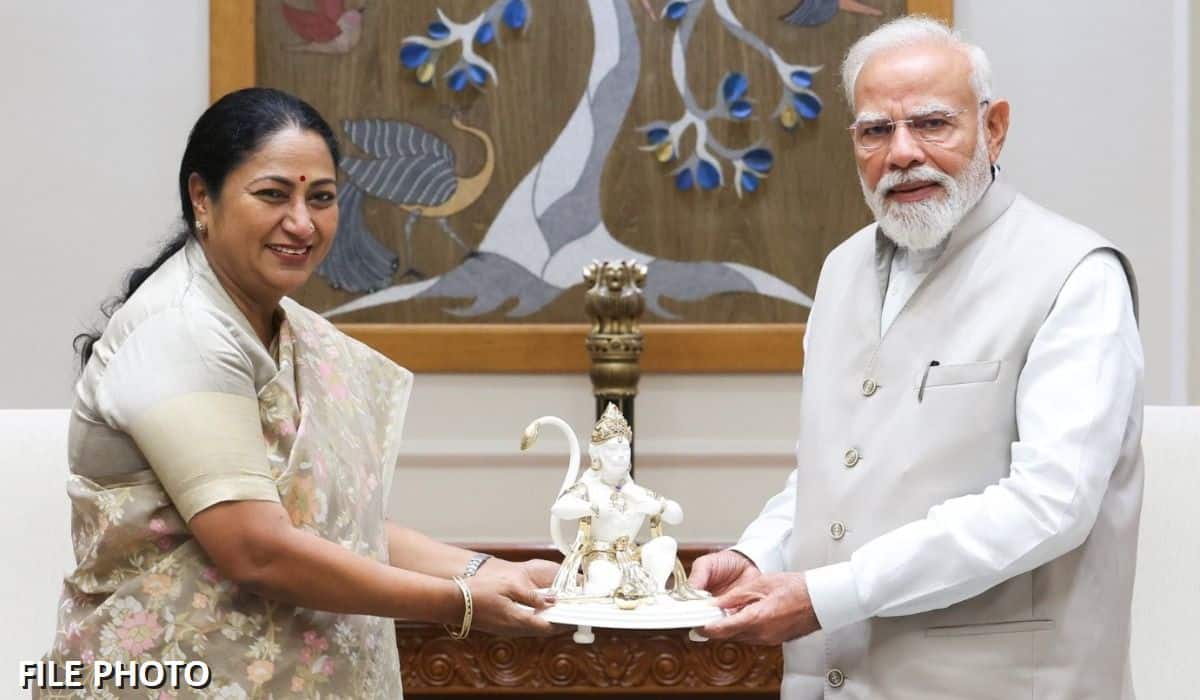
Today, as I extend my heartfelt greetings to Prime Minister Narendra Modi on his 75th birthday, I feel proud as a citizen and as the former Vice President of the remarkable progress made by the country under his helmsmanship in over a decade.

With a vision rooted in progress and national pride, India has been weaving economic reform, technological advancement, grassroots welfare initiatives and diplomatic boldness into a powerful model of exemplary governance. The unwavering resolve to keep “India First”, be it about the government’s foreign policy and diplomatic initiatives or internal security, is central to this model of governance.

Operation Sindoor is an example of a new Bharat, determined, sovereign, and swift in action. We find the same decisive approach when it comes to the execution of welfare schemes, infrastructure development, economic management and bringing about a cultural renaissance. Most significantly, the legacy of this government extends beyond the policies which are being implemented to the aspirations that have been awakened. Through a fearless approach to reforms, redefinition of the terms of global engagement based on mutual respect and strategic autonomy, and the conviction of putting people at the heart of national progress, what we see is purpose-driven leadership.

As it marches into Amrit Kaal, emerging as the fourth largest economy in the world, poised to become the third largest sooner than predicted, it must be noted that India is projected to be the world’s fastest-growing major economy at 6.3 per cent to 6.8 per cent in 2025–26. The Goods and Services Tax (GST) unified indirect taxes. A significant number of development projects were launched in the Northeast, integrating much-neglected parts of the country into the mainstream. ISRO also notched up exemplary achievements in space, including the Chandrayaan-3 mission in 2023. There are many other milestones reached since 2014, some of which I will attempt to touch upon.

As the world has seen, the abrogation of Article 370 was a landmark legislation, and I feel proud to have presided over the Rajya Sabha during the passage of this historic Bill on August 5, 2019. In a step which empowered Muslim women and protected their rights, the Muslim Women (Protection of Rights on Marriage) Act, 2019, declared instant divorce granted by pronouncement of “talaq” three times as void and illegal.

Over the last 11 years, Vikasvaad, a powerful development-centric approach, has become the cornerstone of this government’s approach. The implementation of his vision through the JAM Trinity (Jan Dhan, Aadhaar and Mobile) has revolutionised welfare schemes. This has brought in unprecedented transparency, eliminated intermediaries, and enabled direct transfer of benefits to citizens.

Some statistics from the ground for perspective: As per the revised International Poverty Line (IPL) from $2.15/day (2017 PPP) to $3.00/day (2021 PPP) put out by the World Bank, India’s extreme poverty rate declined sharply to 5.3 per cent in 2022-23 from 27.1 per cent in 2011-12. Today, a staggering 15.59 crore rural households have tap water with 100 per cent coverage in eight states and three UTs under Jal Jeevan Mission, while 2.86 crore households have been electrified under the SAUBHAGYA scheme. Around 10.33 crore LPG connections have been distributed under the PM Ujjwala Yojana with 32.94 crore active users, as of March 2025.

Housing has been a priority since 2014, and up until now, over four crore houses have been built under Pradhan Mantri Awas Yojana (PMAY), including 92.72 lakh under PMAY-Urban (90 lakh owned by women) and 2.77 crore under PMAY-Grameen.

In what is known as the world’s largest food security scheme, the Pradhan Mantri Garib Kalyan Anna Yojana delivers free rations to 81 crore people. A sanitation revolution has transformed rural areas, with more than 12 crore toilets built across the country, with more than 6 lakh villages ODF, under the Swachh Bharat Mission.

Farmers are now seen as key stakeholders, leading India toward global food leadership. The agriculture budget has seen a sharp hike by nearly five times, from Rs 27,663 crore (2013–14) to Rs 1,37,664.35 crore (2024–25). Under PM-KISAN, Rs 3.7 lakh crore were transferred to 11 crore farmers as direct financial assistance, as of May 2025, while Rs 10 lakh crore credit was provided to 7.71 crore farmers under Kisan Credit Card (KCC), and the loan limit was increased to Rs 5 lakh for 2025-26. As a result, foodgrain production grew from 265.05 million tonnes (2014–15) to 347.44 million tonnes (2024–25).

Financial and digital inclusion is one of the hallmarks of this period, with the PM Jan Dhan Yojana boasting of 55.17 crore bank accounts, Rs 2.61 lakh crore deposits, and 30.80 crore women account holders, as of March 2025. StartUp India has turned the country into the third-largest startup and Unicorn (118) ecosystem in the world. Another key milestone is the construction of 4 lakh km of rural roads and 40,000 km of highways.

The country saw a remarkable spike in FDI inflows ($667.74 billion: FDI received in 2014-24, which equals 67 per cent of total FDI since 2000). India is the world leader in digital transactions today, with UPI processing 172 billion transactions in 2024 alone.

Posterity will record Bharat’s cultural renaissance through the redevelopment of temple corridors and pilgrimage sites such as the Kashi Vishwanath corridor and the Ram Lalla temple in Ayodhya, among others.

While these highlights of accomplishments are by no means exhaustive, they present a compelling glimpse into some of the major achievements of the government since 2014. This is the story of New India, scripted by the contribution of the youth, scientists, technocrats, entrepreneurs, women and farmers, under the government led by PM Modi. These milestones serve as a foundation for continued progress on Viksit Bharat’s journey into Amrit Kaal.

The writer is former Vice President of India


Explore More
ಶ್ರೀರಾಮ ಜನ್ಮಭೂಮಿ ಮಂದಿರದ ಧ್ವಜಾರೋಹಣ ಉತ್ಸವ ಉದ್ದೇಶಿಸಿ ಪ್ರಧಾನಮಂತ್ರಿ ಅವರ ಭಾಷಣ

ಜನಪ್ರಿಯ ಭಾಷಣಗಳು

ಶ್ರೀರಾಮ ಜನ್ಮಭೂಮಿ ಮಂದಿರದ ಧ್ವಜಾರೋಹಣ ಉತ್ಸವ ಉದ್ದೇಶಿಸಿ ಪ್ರಧಾನಮಂತ್ರಿ ಅವರ ಭಾಷಣ
UPI goes live at Eiffel Tower and French airports as India-France digital ties strengthen

Media Coverage

UPI goes live at Eiffel Tower and French airports as India-France digital ties strengthen
NM on the go

Nm on the go

Always be the first to hear from the PM. Get the App Now!
...
ಭಾರತವನ್ನು ಮತ್ತೆ ಜಾಗೃತಗೊಳಿಸಿದ ನಾಯಕ: ನರೇಂದ್ರ ದಾಮೋದರದಾಸ್ ಮೋದಿ
June 14, 2026

Narendra Damodardas Modi’s journey, from a humble background to the leadership of the world’s largest democracy, is ultimately the story of a man who reawakened the faith of a nation in itself.

The fate of a nation is intertwined with the fate of its leaders. Nations grow and prosper under strong, decisive leadership; they decay under feeble, indecisive, corrupt leadership. People are the life energy of a nation, but the leaders are the one who channelizes the mass energy into the right, productive direction. One cannot imagine nations without their founding fathers, their leaders. When we think of the United States, the names of its prominent leaders like Thomas Jefferson, Washington, Abraham Lincoln, John F. Kennedy, F.D. Roosvelt come to our minds. Similarly, the Indian nation was built upon the vision of its great founding fathers like Mahatma Gandhi, B.R. Ambedkar, and Veer Savarkar.

Strong leadership plays a vital role in uplifting the spirits of the people; wise leaders nudge the nation on the path to prosperity and glory. Leadership matters the most at the time of a national crisis, like Matsya Avtara of Lord Vishnu, who steered and rescued the great ship of Manu Maharaj during the pralaya. Leaders steer and rescue the nation during hours of crisis. Shri Narendra Damodardas Modi took centre stage in Indian politics during such a time of crisis.

Prime Minister Narendra Modi emerged on the national stage at a juncture when Indian politics had reached a low, an era in which a nominal Prime Minister was being imposed upon the people of India. The government was struck with policy paralysis. Corruption had become deeply entrenched in the national political system, scams like Coalgate, 2G spectrum, Commonwealth Games had become a recurring phenomena. Media, businessmen, and politicians formed an unholy nexus and were siphoning public money with impunity. Entrepreneurs, industrialists, and academia were drowned in pessimism; their trust started eroding in the Indian state. Common people felt ashamed of their cultural legacy.

At that pivotal moment, Shri Narendra Damodardas Modi entered the national stage with a clear, resounding vision. He inspired the youth, women, and veterans alike. PM Modi reinstated hope, faith, and trust back again towards the leadership and the political system, PM Modi revitalised the economic machinery, entrepreneurship, and industry, and re-energised the bureaucracy. Being himself from a humble background, PM Modi possessed within him a deep understanding of society, and being an RSS pracharak, he had a profound understanding of Indian culture.

Being one of the longest-serving CMs in India came with an impeccable administrative and electoral record. PM Modi brought with him the mantra of “minimum government and maximum governance”.

PM Modi, through the rapid digitalization of government services, reduced the inertia in governance and brought government to the fingertips of the common citizens. At the very beginning of his tenure, he replaced the requirement of attestation of documents by gazetted officers with self-attestation by the common citizens. Such is his minute understanding of the bureaucratic impediments that stall the progress of a common citizen. Due to reform measures initiated by him, India’s rank in the international business indicators improved. PM Modi has demonstrated a strong will to an efficient, transparent, and accountable government. Rules and policies are now formed among people, not in closed AC chambers.

PM Modi, since his ascension, has worked tirelessly to transform the Indian economy into a manufacturing hub and make it Atmanirbhar Bharat. PM Modi launched initiatives like Skill India, Startup India, and Production Linked Incentives (PLIs). For strengthening the supply chain, PM Modi sanctioned greenfield expressways, airports, shipping ports, and sped up the construction of brownfield expressways, airports and stations. PM Modi expanded India’s premier higher education infrastructure by establishing new IITs and IIMs. PM Modi restored faith in the underprivileged section through his mantra of “Sabka Saath, Sabka Vikas, Sabka Vishwas, Sabka Prayas” in the Indian government. Such is his sensitivity that he launched the PM Ujjwala Yojana as he was aware of the discomfort caused to our mothers and sisters due to the smoke of the traditional gas chulha.

PM Modi brought cleanliness and sanitation to the daily discourse through the Swachh Bharat Abhiyaan. Through the toilets built under the scheme, PM Modi provided a dignified life to our mothers and sisters. Due to the Bhaagirathi Prayas of PM Narendra Modi, Nari Shakti Vandan Adhiniyam was passed for the political empowerment of the women of India.

A nationalist to the core, PM Modi led a cultural renaissance of the nation. Remnants of the colonial legacy, the Indian Penal Code and CrPC (Code of Criminal Procedure) were scrapped, and Bhartiya Nyay Samhita was born. PM Modi is rebuilding our sacred tirths incessantly. Due to his efforts, our cultural and spiritual centres of Ayodhya and Kashi were reclaimed. PM Modi has promoted our indigenous knowledge of Ayurveda as a brand ambassador, formulated policies to establish Ayurveda as principal medicinal practice.

PM Modi, through his incredible work, unflinching dedication, and commitment towards a Viksit Bharat, inspires one and all to participate in his vision for a Viksit Bharat by 2047.

Yet, the true measure of a leader is not merely in the policies he enacts or the institutions he builds, but in the confidence he instils in his people. Over the past 12 years, Prime Minister Narendra Modi has sought to restore that confidence—confidence in governance, confidence in India’s civilisational heritage, confidence in the abilities of ordinary citizens, and confidence in the nation’s future.

From revitalising the economy and empowering the poor to strengthening national security, restoring cultural pride, and elevating India’s stature on the global stage, PM Modi’s leadership has left an indelible imprint on contemporary India. More importantly, he has transformed governance into a national movement, inspiring millions to become active participants in the country’s development journey. 

As India marches towards the centenary of its Independence in 2047, the vision of a Viksit Bharat is no longer a distant aspiration; it has become a collective national mission. History remembers those leaders who rise to the occasion when their nation needs them the most, leaders who not only govern their times but shape the destiny of generations. 

Narendra Damodardas Modi’s journey, from a humble background to the leadership of the world’s largest democracy, is ultimately the story of a man who reawakened the faith of a nation in itself. The foundations of a stronger, more confident, and more aspirational India have been laid. The task before the nation now is to carry forward this momentum and transform the dream of a Viksit Bharat into reality. 

As India stands at the threshold of even greater possibilities, the words of Robert Frost resonate with renewed meaning, 

“The woods are lovely, dark and deep,

But I have promises to keep,

And miles to go before I sleep,

And miles to go before I sleep.”

For India, those promises are to its people, to its civilization, and to future generations. The achievements of the past twelve years are the foundation. The journey continues, and the miles ahead are filled not with uncertainty but with opportunity, purpose, and the promise of a Viksit Bharat. 

(Rekha Gupta is the Chief Minister of Delhi.)