From his days as Swayamsevak, Prime Minister Narendra Modi has been continuously involved with the rural side of the nation. This gave him an edge in capturing rural issues sensitively and promptly. His unique ability to connect to women makes them comfortable to discuss their hardships, even on the most sensitive and hushed topics that used to remain only in the private realm. Access to water at home through taps, especially in rural areas, has become a significant aspiration for all.
After coming into power in 2014, the government under PM Modi initiated a country-wide campaign to gauge and tackle water accessibility and scarcity in rural areas on a mission mode. As an outcome of the brainstorming process, the Jal Jeevan Mission scheme was rolled out in 2019 to transform the access to water paradigm in rural areas rapidly.
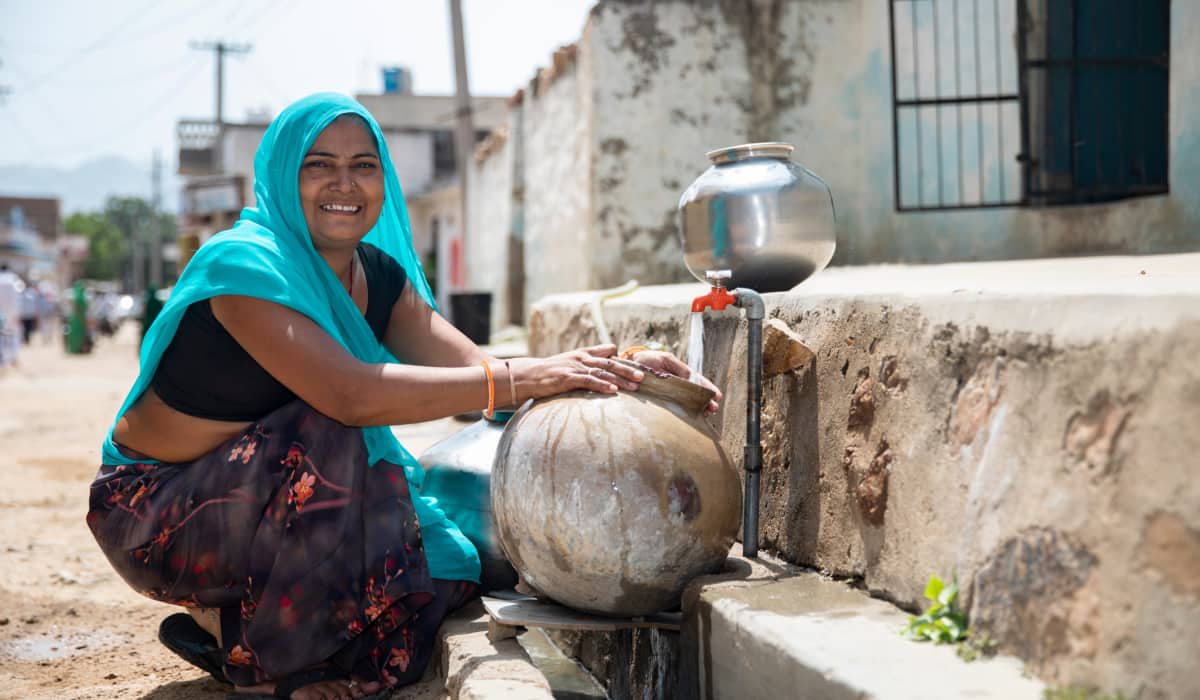
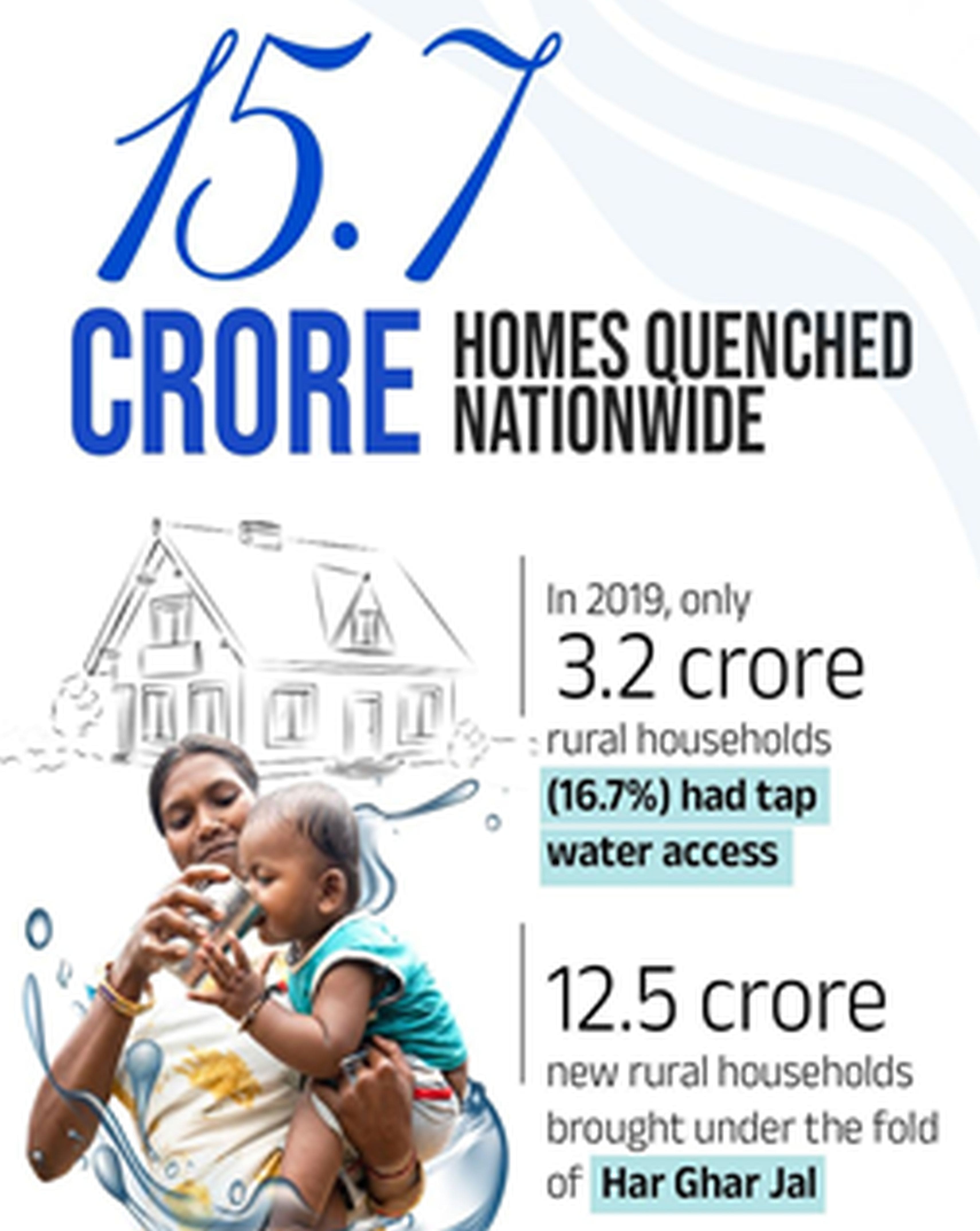
As of 2019, out of approximately 19.32 crore rural families, around 3.23 crore (17%) had tap water connections in their homes, leaving about 16 crore families reliant on external water sources. Particularly in water-stressed regions, especially during the summer, inadequate access to potable water has significantly impacted daily life.
The Jal Jeevan Mission is an initiative led by the central government under the Ministry of Jal Shakti that seeks to ensure piped water access to every household in India. Envisioned to achieve individual household tap connections nationwide by 2024, the mission prioritises safe and sufficient drinking water for rural households. It also emphasises source sustainability through measures like greywater management, water conservation, and rainwater harvesting. Adopting a community-driven approach, the mission integrates information, education, and communication components to foster a widespread understanding and commitment to water conservation. Additionally, the Har Ghar Nal Se Jal program, announced in the 2019-20 budget, is an integral part of the Jal Jeevan Mission, aiming to implement source sustainability measures like greywater management and rainwater harvesting.
With a focus on 'Sabka Saath, Sabka Vikas, Sabka Vishwas', the Jal Jeevan Mission (JJM) embraces the principle of 'equity and inclusion,' guaranteeing that no individual is excluded from gaining access to tap water connection and consistent water supply in villages, particularly prioritising marginalised and vulnerable segments of society.
Within this mission, the focus has been reoriented, in a departure from the past, to ensure speedy delivery and long-term sustainable solutions to the water scarcity challenge in rural areas. The shift in focus for water supply has transitioned from 'habitations' to 'households'. Mission prioritises delivering safe water directly to households, shifting away from just building infrastructure.
The mission includes extensive training programs for local communities, including masons, plumbers, and pump operators, as well as public health engineers, to ensure consistent and reliable tap water service. Public Health Engineering Departments, Gram Panchayats, and their sub-committees are tasked with providing public utilities, ultimately enhancing people's lives and improving the overall ease of living. In order to enhance transparency and empower communities, water supply initiatives are tailored to local demands. Modi government's decentralised, demand-based approach and approach schemes are planned and executed with community involvement. The local village community takes ownership of the water supply system, ensuring its operation and maintenance for sustained, reliable access to every household. These systems are designed to endure their full lifespan, preventing wastage of public funds while providing safe piped water to homes in the long term.
With a focus on "speed and scale," this transformative mission has rapidly expanded rural tap connections from 3.23 crore households at the mission's inception in August 2019 to 13 crore in just over four years. Six states (Goa, Telangana, Haryana, Gujarat, Punjab, and Himachal Pradesh) and three union territories (Puducherry, D&D, and D&NH, and A&N Islands) have achieved 100% coverage. Bihar, at 96.39%, and Mizoram, at 92.12%, are also nearing full saturation. A total of 145 districts and 186,818 villages across the country have reported complete coverage.
A comprehensive study conducted by IIM-Bangalore with technical support from the International Labour Organization (ILO) has meticulously analysed the direct and indirect employment prospects stemming from the Jal Jeevan Mission (JJM) of the Modi government. It projects a substantial potential for generating employment through JJM, amounting to an estimated 2.82 crore person-years. Anticipated employment generation comprises 59.93 lakh person-years of direct employment during the construction phase of JJM, along with an additional 2.22 crore person-years of indirect employment across the nation. The indirect employment arises from the engagement of personnel involved in the production of materials such as pipes, valves, and pumps. Additionally, access to clean drinking water in arsenic and fluoride-affected areas has also been successfully addressed.
Every day now in India is a testimony to the remarkable achievements and significant progress toward realising the 'Har Ghar Jal' vision for the people of India by the Narendra Modi government.
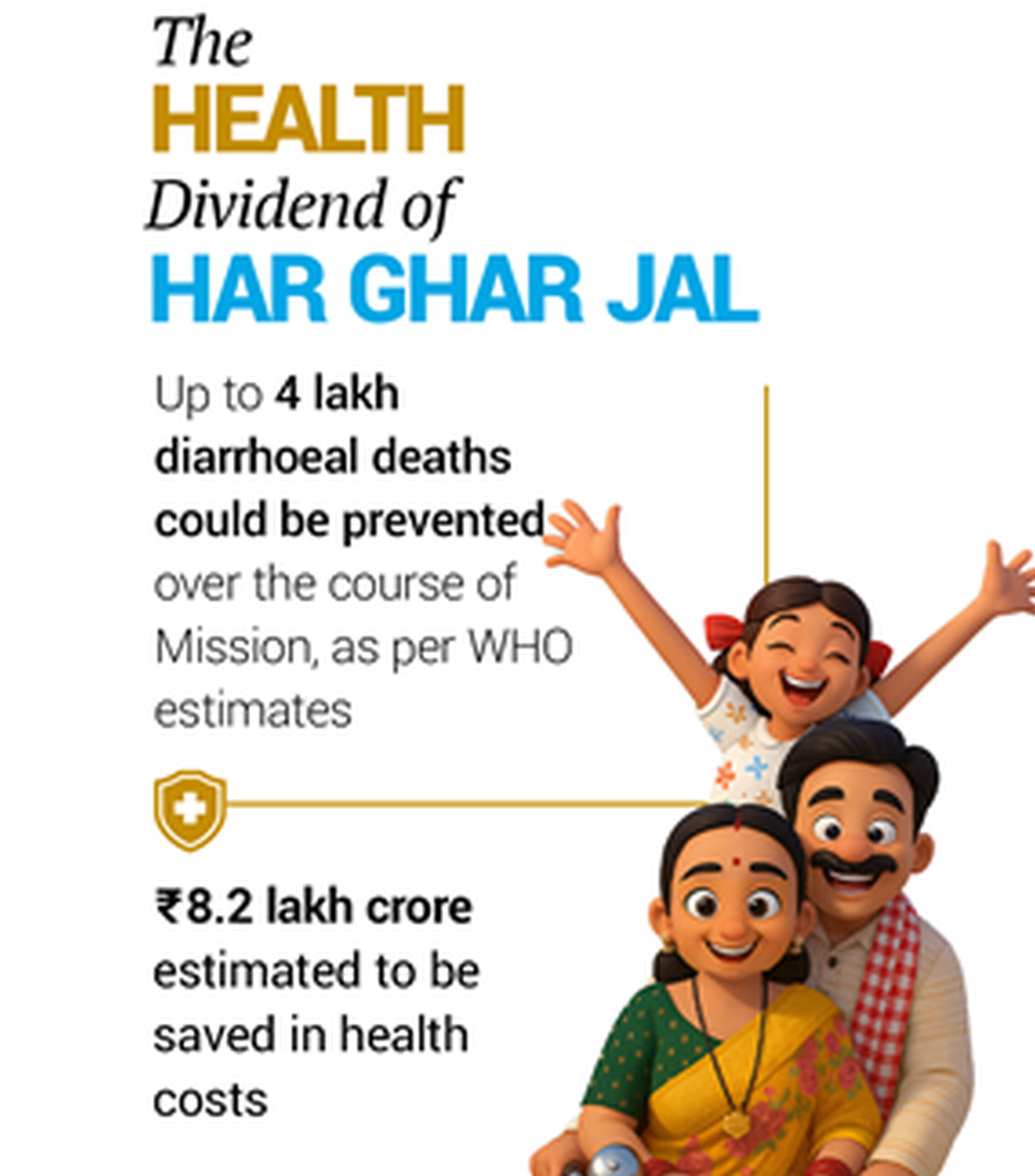
Since January 1st, 2023, an average of 87,500 tap connections have been provided daily, evidence of the resounding success at the grassroots level. A vetting by WHO is a feather in the cap that highlights the positive public health impact of JJM, estimating that with 100% tap water coverage, more than 4 lakh diarrheal deaths could be averted, resulting in substantial economic savings. Furthermore, the WHO projects that 100% tap water coverage could save more than 6.6 crore hours of time each day, primarily benefiting women who would otherwise spend considerable time collecting water for daily needs. Notably, Nobel laureate Prof. Michael Kemer's findings underscore the potential of safe drinking water to prevent 1.36 lakh child deaths under the age of 5, translating to nearly a one-third reduction in child mortality rates. These findings prove beyond doubt that the Narendra Modi government's Har Ghar Jal Mission Is A Success!