Prime Minister’s Inaugural Address at Economic Times Global Business Summit

Published By : Admin | January 16, 2015 | 21:19 IST

My colleague Shri Arun Jaitley ji

Shri Vineet Jain

Friends from India and abroad,

I am happy to be here today, to address the Global Business Summit. This is a good platform, for bringing together economists and industry leaders. I compliment The Economic Times for organising this event.

Over the next two days, you will debate growth and inflation, manufacturing and infrastructure, missed chances and unlimited possibilities. You will see India as a country of opportunities, unmatched across the world. I assure you that your inputs shall receive my government’s highest attention.

Friends,

मकर संक्रांति(
Makar Sankranti) was celebrated on 14 January. It is an important festival. It is the beginning of उत्तरायण
(Uttarayan), which is considered to be a पुण्यकाल
(Punya kaal). The लोहड़ी (
Lohri) festival also coincides with it. On this day, the Sun begins its journey North. This marks the transition from winter to spring.

The New Age India has also begun its transition; from a winter of subdued achievements lasting 3 to 4 years, to a new spring that beckons.

The country had fallen into deep despair, with two back-to-back years of below 4% growth, and governance at rock bottom. A series of scams, from telecom to coal had paralysed the economy. We deviated from the dream of India as a land of opportunity. No longer can we afford the flight of capital and labour, for lack of opportunity.

We have to repair the damage that has happened. Restoring growth momentum will be an uphill task. It will take hard work, sustained commitment and strong administrative action. But we can overcome the mood of despair. And we must. It is in this context that all the steps we have taken must be seen.

Friends,

Destiny has favoured me to serve this great nation. Mahatma Gandhi said that we should not rest until we “
wipe every tear from every eye”. Elimination of poverty is fundamental to me. This is at the core of my understanding of cohesive growth. To translate this vision into the reality of a New Age India, we must be clear about our economic goals and objectives.

The government must nurture an eco-system:

  • where the economy is primed for growth; and

o  growth promotes all-round development;

  • where development is employment-generating; and

o  employment is enabled by skills;

  • where skills are synced with production; and

o  production is benchmarked to quality;

  • where quality meets global standards; and

o  meeting global standards drives prosperity

Most importantly, this prosperity is for the welfare of all.

That is my concept of economic good governance and all round development. It is up to us to create conditions for the people of India to blossom and create this New Age India.

Friends,

Let me outline what we are doing to usher in this new spring. My government is moving fast in designing policies and laws to promote growth. This is where I seek everybody’s cooperation.

First, we are committed to achieving the fiscal deficit target announced in the budget. We have worked systematically in this direction.

Many of you practise Kaizen in your companies. Reducing wastage means cutting excess and preventing misuse. This requires self-discipline.

That is why we have the Expenditure Management Commission to suggest cuts in wasteful expenditure. This way, we will make the Rupee more productive, and deliver maximum bang for the buck.

Second, the petroleum sector has seen major reforms.


Diesel prices
have been deregulated. This has opened up space for private players to enter into petroleum retail.


Gas prices
have been linked to international prices. This will bring a new wave of investment. It will increase supplies. It will resolve problems in the key power sector.

Today, India’s cooking gas subsidy is the world’s largest Cash Transfer Programme. Over 80 million households receive subsidy directly as cash into their bank accounts. This is one-third of all households in this country. This will completely eliminate leakage.

Building on this, we plan to introduce direct cash transfers in other benefit schemes.

Third, inflation has been controlled through firm measures.

While falling oil prices helped, even non-oil inflation is at a very low level. Food inflation has come down from over 15% a year ago to 3.1% last month. The fall has been sharp since May 2014.

This set the stage for RBI to reduce interest rates, and push growth in a stable manner.

Fourth, the consensus we arrived with States for amending the Constitution to implement GST is a major breakthrough.

GST has been pending for over a decade. This alone has the potential to make India competitive and attractive for investment.

Fifth, the poor have been included in the financial system.

In a short span of 4 months, over 100 million new bank accounts have been opened under the Pradhan Mantri Jan Dhan Yojana. For a country of our size, this was an immense challenge. But with will, determination and the full support of every banker, we are today a nearly 100% banked country. Soon, all accounts will be linked with Aadhaar. Banking habits will become common across the country.

This now opens immense possibilities for the future. People’s savings will rise. They will invest in new financial instruments. 1.2 billion people can hope for pensions and insurance. As the nation progresses, these bank accounts will drive demand and growth.

We have always debated about social unity, national unity and so on. But we have never debated about financial unity. About bringing everyone into the financial system. This is one cause which both capitalists and socialists agree on. What, my friends, can be a bigger reform?

Sixth, the energy sector has been reformed.


Coal blocks
are now allocated transparently through auctions.


Mining laws
have been changed to facilitate efficient mining.

Similar reforms are on the way in the
Power sector
. We have revived long pending projects in Nepal and Bhutan, with the cooperation of their governments. Steps are being taken to deliver 24 x 7 Power for All, using every possible source, including renewable energy.

Seventh, India is being made an attractive destination for investment.

FDI caps have been raised in Insurance and Real estate.

FDI and private investment are being promoted in Defense and Railways.

The Land Acquisition Act has been amended to smoothen the process and speed up matters. This will give a thrust to infrastructure and manufacturing, while protecting the compensation to farmers.

Eighth, infrastructure is being given a boost.

Greater investment is planned in railways and roads. New approaches and instruments are being put in place to unlock their potential.

Ninth, transparency and efficiency in governance, and institutional reforms are essential elements for rapid growth. These, along with a positive regulatory framework, tax stability, and ease of doing business, are being pushed ahead at top speed.

For instance, I recently assured
Public Sector Banks
they will have total autonomy in taking business decisions, without any interference from Government on loans and their operations.

We need to use
technology
to deliver good governance. Whether it is a simple one like biometric-based attendance, which has improved office attendance and work culture. Or a cutting edge one, like space technology in mapping and planning.

I intend to launch a massive National Program for PDS Computerisation. The entire PDS supply chain, from the FCI godown to the ration shop and consumer will be computerised. Technology will drive welfare and efficient food delivery.

A major institutional reform is the move away from merely planning, to transforming India. The setting up of the National Institution for Transforming India,
NITI Aayog
, is a step in this direction. This will take the country forward on the path of cooperative federalism, with a competitive zeal. The NITI Aayog is our Mantra for creating trust and partnership between the Centre and States.

This list can be endless. I can go on for days, but I do not think we have the time.

However, I have given you a sense of the immense activity we are engaged in. We have done a lot so far and more will be done in future.

Friends,

Reforms are not an end in itself. Reforms must have a concrete objective. The objective must be to improve the welfare of the people. Approaches may be many. But the goal is one.

Reforms may not be apparent to one and all at first sight. But small acts can drive reforms. What appears minor can actually be vital and fundamental.

Further, there is no contradiction between doing big tickets items and doing small things.

One approach is to have new policies, programmes, large projects and path breaking changes. Another approach is to focus on the small things that matter, create a people’s movement and generate mass momentum, which then drives development. We need to follow both paths.

Let me explain this a bit. Generating 20,000 MW of power attracts a lot of attention. That is important.

At the same time, 20,000 MW of power can be saved through a people’s movement for energy efficiency.

The end result is similar. The second is more difficult but is as important as the first. In the same way, improving a thousand primary schools is as important as opening a new university.

The new AIIMS we are setting up will improve public health in the same way as our promise of Health Assurance. To me, Health Assurance is not a scheme. It is about ensuring that every Rupee spent on health is well spent; that every citizen has access to proper healthcare.

Similarly, when we do Swachh Bharat, it has multiple impacts. It is not just a fad or a slogan. It changes people’s mindsets. It changes our lifestyle. Swachhata becomes a habit. Waste management generates economic activity. It can create lakhs of Swachhata entrepreneurs. The nation gets identified with cleanliness. And of course, it has a huge impact on health. After all, diarrhoea and other diseases cannot be defeated without Swachhata!

The mantra of independence was सत्याग्रह
(Satyagraha)
. And the warriors were सत्या-ग्रही
(Satyagrahis)
. The mantra of New Age India must be स्वच्छता-ग्रह
(Swachhagraha)
. And the warriors will be स्वच्छता-ग्रही
(Swachhagrahis)
.

Take the case of Tourism. It is an untapped economic activity. But tapping it requires a Swachh Bharat. It needs improvement in infrastructure and telecom connectivity. It requires better education and skill development. Therefore, a simple goal can generate reforms in multiple sectors.

People must understand the Clean Ganga program, as an economic activity also. The Gangetic plains account for 40% of our population. They have over one hundred towns, and thousands of villages. Improving Ganga will develop new infrastructure. It will promote tourism. It will create a modern economy helping millions of people. In addition, it preserves the environment!

Railways is another example. There are thousands of railway stations in the country where not more than 1 or 2 trains stop in a day. These facilities, created at a cost, remain unused for most of the day. These stations can become growth points for the nearby villages. They can be used for skill development.

Small indeed, is beautiful.

In agriculture too, our main goal is to raise productivity. This will require using technology, increasing soil fertility, producing more crop per drop, and bringing the latest from lab to land. Cost of cultivation will go down as efficiency rises. This will make agriculture viable.

On the output side, the entire value chain in agriculture will be addressed through better storage, transport and food processing linkages. We will link farmers to global markets. We will give the world the
Taste of India
.

Friends,

I have often called for Minimum Government Maximum Governance. This is not a slogan. This is an important principle to transform India.

सरकारी तंत्र की दो समस्याएं हैं - वे जटिल भी हैं और शिथिल भी। 

Government systems suffer from two weaknesses. They are complex. And they are slow.

In life, people go on a चारधामयात्रा(
chaar dham yatra) to get मोक्ष (
moksha). In government, a file has to go to छत्तीसधाम
(chattees dham), and yet not get मोक्ष
(moksha)!

We need to change this. Our systems need to bemade sharp, effective, fast and flexible. This requires simplification of processes and having trust in citizens. This needs a Policy Driven State.

What is Maximum Governance, Minimum Government? It means government has no business to be in business. There are many parts of the economy where the private sector will do better and deliver better. In 20 years of liberalisation, we have not changed a command and control mindset. We think it is okay for government to meddle in the working of firms. This must change. But this is not a call for anarchy.

First, we need to focus government upon the things that are required of the State. Second, we need to achieve competence in government so that the State delivers on the things it sets out to do.

Why do we need the State? There are 5 main components:

  • The first is public goods such as defence, police, and judiciary.
  • The second is externalities which hurt others, such as pollution. For this, we need a regulatory system.
  • The third is market power; where monopolies need controls
  • The fourth is information gaps; where you need someone to ensure that medicines are genuine and so on.
  • Last, we need a well designed welfare and subsidy mechanism to ensure that the bottom of society is protected from deprivation. This specially includes education and healthcare.

These are five places where we require government.

In the five areas where we need government, we require competent, efficient and non-corrupt arms of government. We in government, must constantly ask the question: How much money am I spending, and what outcomes am I getting in return? For this, government agencies have to be improved to become competent. This requires rewriting some laws. Laws are the DNA of government. They must evolve with time.

India is a 2 trillion dollar economy today. Can we not dream of an India with a 20 trillion dollar economy?

Should we not create the environment for this to happen? We are preparing the ground for it. This is hard work. Quick and easy reforms will not be enough for creating a fast growing economy. That is our challenge and that is what we aim to do.

Digital India and Skill India are attempts in this direction.


Digital India
will reform government systems, eliminate waste, increase access and empower citizens. It will drive the next wave of growth, which will be knowledge-driven. Broadband in every village, with a wide range of online services, will transform India in a manner we cannot foresee.


Skill India
will harness the demographic dividend which everyone talks of.

Friends,

Improvement in governance is a continuous process. We are making changes wherever acts, rules and procedures are not in tune with needs. We are cutting down on multiple clearances that choke investment. Our complex tax system is crying for reform, which we have initiated. I believe in speed. I will push through change at a fast pace. You will appreciate this in times to come.

At the same time, we need to take care of the poor, deprived and left behind sections of society.

I believe that subsidies are needed for them. What we need is a well targeted system of subsidy delivery. We need to cut subsidy leakages, not subsidies themselves.

Wastage, as I said earlier, must be removed in subsidies. The target group should be clearly identified and the subsidies should be well delivered. The ultimate objective of subsidies should be to empower the poor, to break the cycle of poverty, and become foot-soldiers in our war on poverty.

At this point, I would also say that development has to result in jobs. Reforms, economic growth, progress – all are empty words if they do not translate into jobs.

What we need is not just more production, but mass production and production by masses.

Friends,

Economic development cannot take a nation forward on its own.

Development has many dimensions. While on one hand we need higher incomes, we also need a society which is cohesive. Which balances the stress and strain of a modern economy.

History is witness to the rise and fall of nations. Even now, many countries have become rich in an economic sense, but are poor in a social sense. Their family systems, value systems, social networks and other elements which hold a society together have broken.

We should not go down that path. We need a society and economy which complement each other. That is the only way for a nation to go forward.

Further, development seems to have become the agenda only of government. It is seen as a scheme. That should not be the case.

Development should be everyone's agenda. It should be a people's movement.

Friends, like the rest of the World, we are concerned about two dangers - Terrorism and Climate change. Together, we will find a way to face these.

Today, everyone is looking towards Asia for inspiration and growth. And within Asia, India is important. Not just for its size, but for its democracy, and its values. India’s core philosophy is सर्व मंगल मांगल्यम्
(Sarva Mangala Maangalyam) and सर्व भवन्तु सुखिनः
(Sarve Bhavantu Sukhinah). This is a call for global welfare, global cooperation and balanced living.

India can be a role model of growth and cohesiveness for the rest of the world.

For this, we need a workforce and economy which meet global needs and expectations.

We need to quickly improve social indicators. India should no longer be bracketed with the least developed. We can do this.

Swami Vivekananda had said “
Arise, awake, do not stop until the goal has been attained”.

This should inspire us all to achieve the vision of a New Age India.

Together, we can!

Thank you.

Explore More
ಶ್ರೀರಾಮ ಜನ್ಮಭೂಮಿ ಮಂದಿರದ ಧ್ವಜಾರೋಹಣ ಉತ್ಸವ ಉದ್ದೇಶಿಸಿ ಪ್ರಧಾನಮಂತ್ರಿ ಅವರ ಭಾಷಣ

ಜನಪ್ರಿಯ ಭಾಷಣಗಳು

ಶ್ರೀರಾಮ ಜನ್ಮಭೂಮಿ ಮಂದಿರದ ಧ್ವಜಾರೋಹಣ ಉತ್ಸವ ಉದ್ದೇಶಿಸಿ ಪ್ರಧಾನಮಂತ್ರಿ ಅವರ ಭಾಷಣ
But where is India’s economic growth?

Media Coverage

But where is India’s economic growth?
NM on the go

Nm on the go

Always be the first to hear from the PM. Get the App Now!
...
Over its 100-year journey, SRCC has shaped generations and connected them with a bright future: PM Modi
September 05, 2026
Over the years, this institution has given generations of students the opportunity to learn, grow and make a difference: PM
From policy paralysis to policy dynamism, India has come a long way: PM
India's 7.8% growth amid global uncertainty reflects its economic strength: PM
Together, 140 crore Indians will make India both Viksit and Aatmanirbhar: PM
India is moving forward at a new pace; What once took decades is now happening in just a few years: PM
If Indians can lead the world's top companies, Indian companies can lead the world too, It is all possible: PM

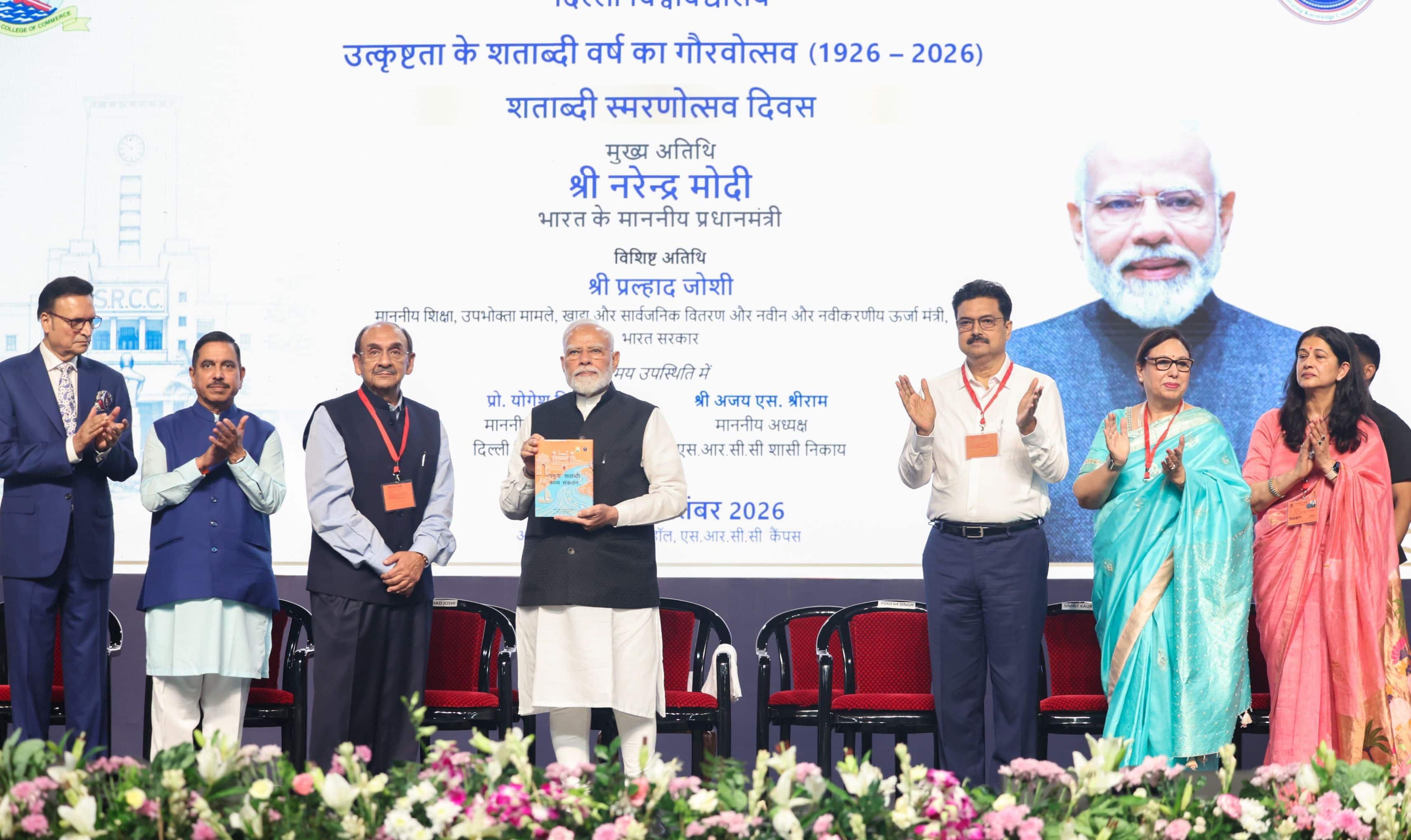
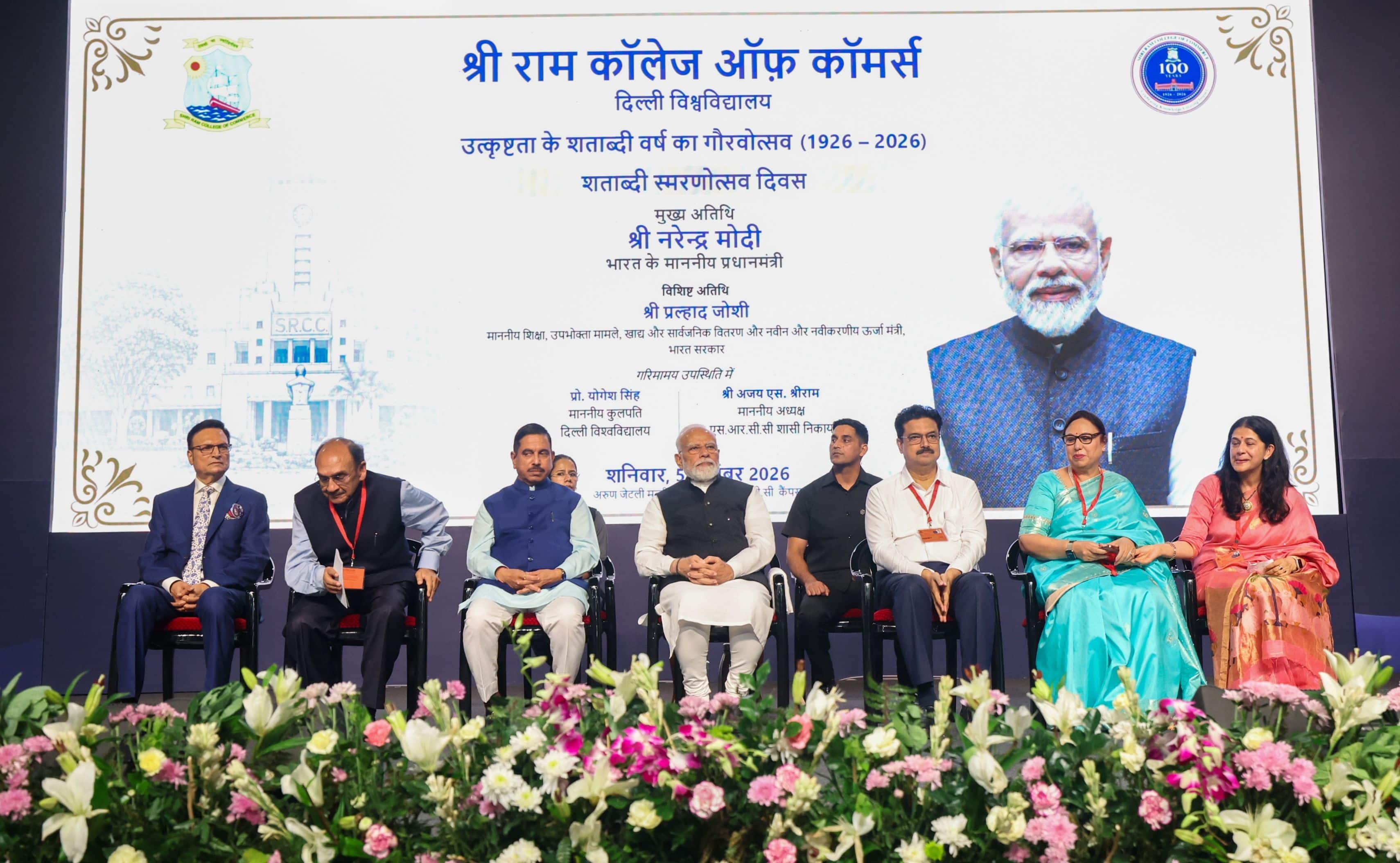
My colleagues in the Union Cabinet Shri Prahlad Joshi ji, DU Vice Chancellor Yogesh Singh ji, SRCC Principal Simrit Kaur ji, Ajay ji, Mallika ji, Rajat ji, all companions connected with SRCC, faculty, staff, SRCC alumni, and my young friends!

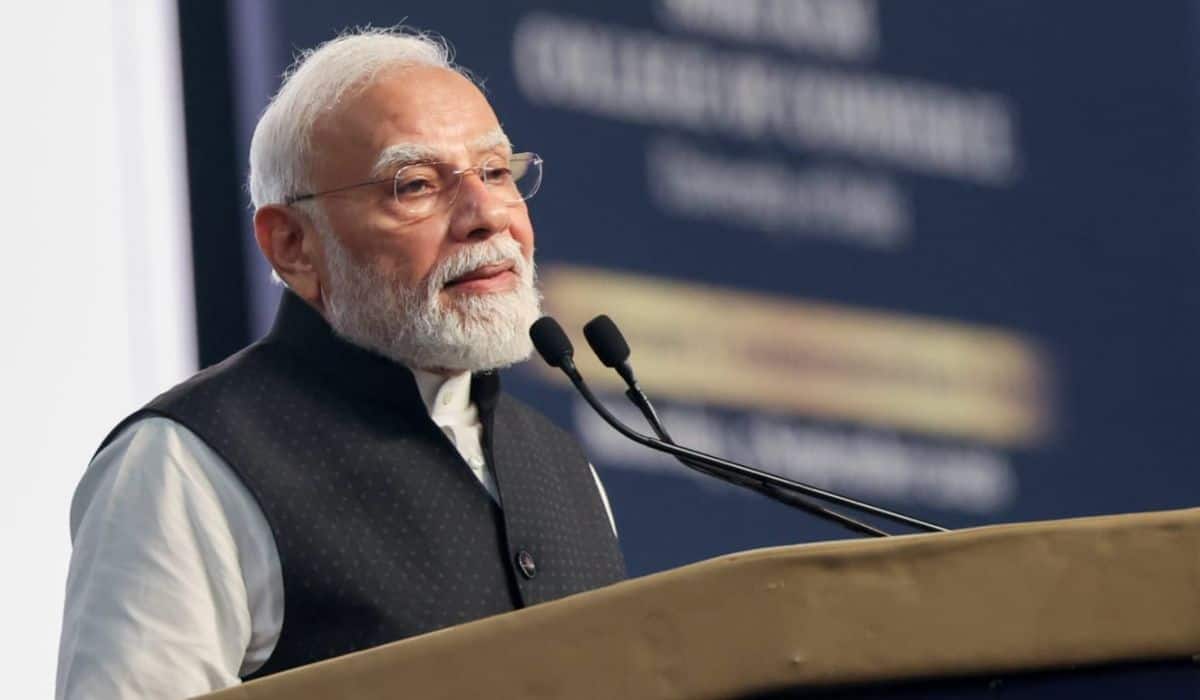
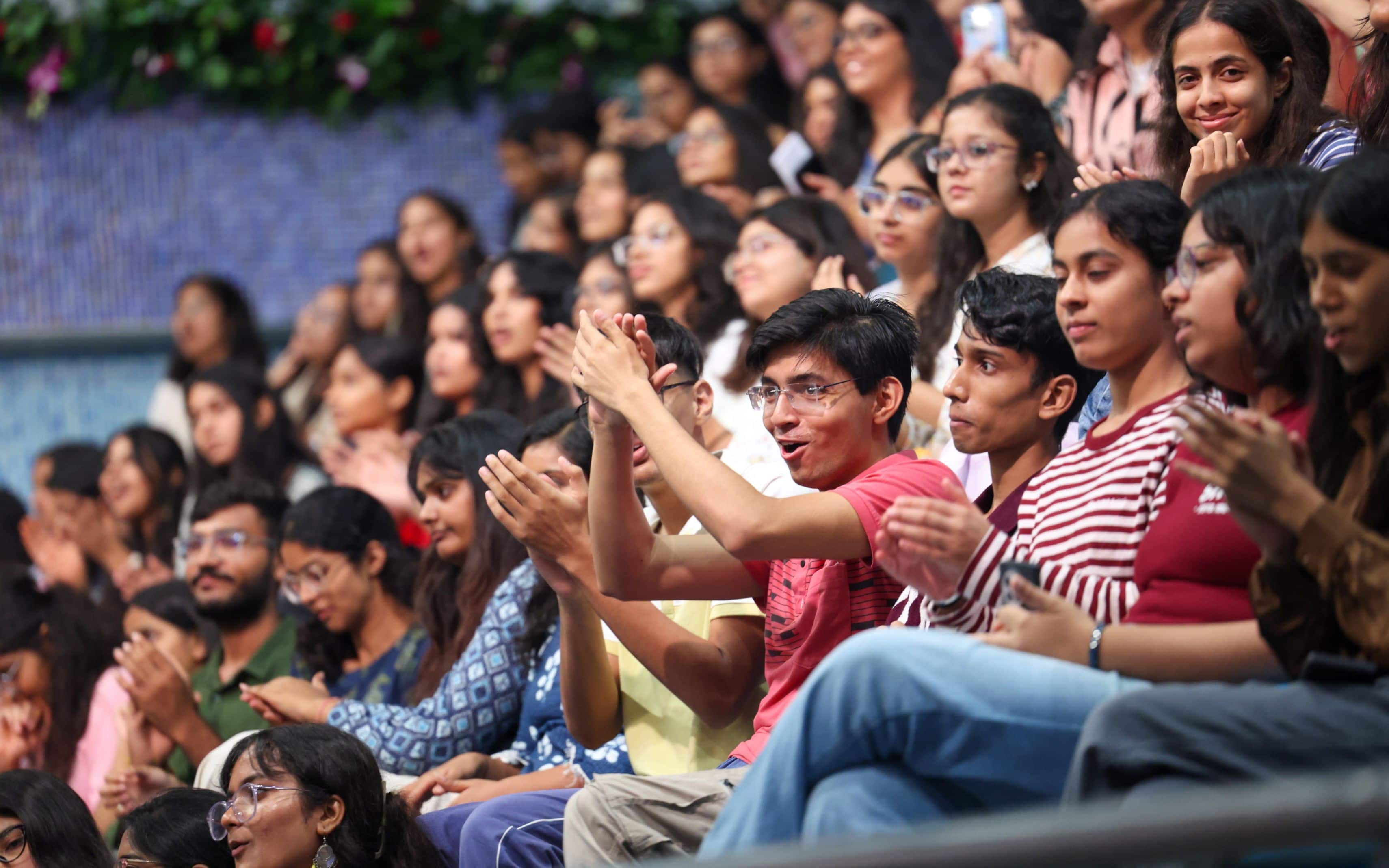
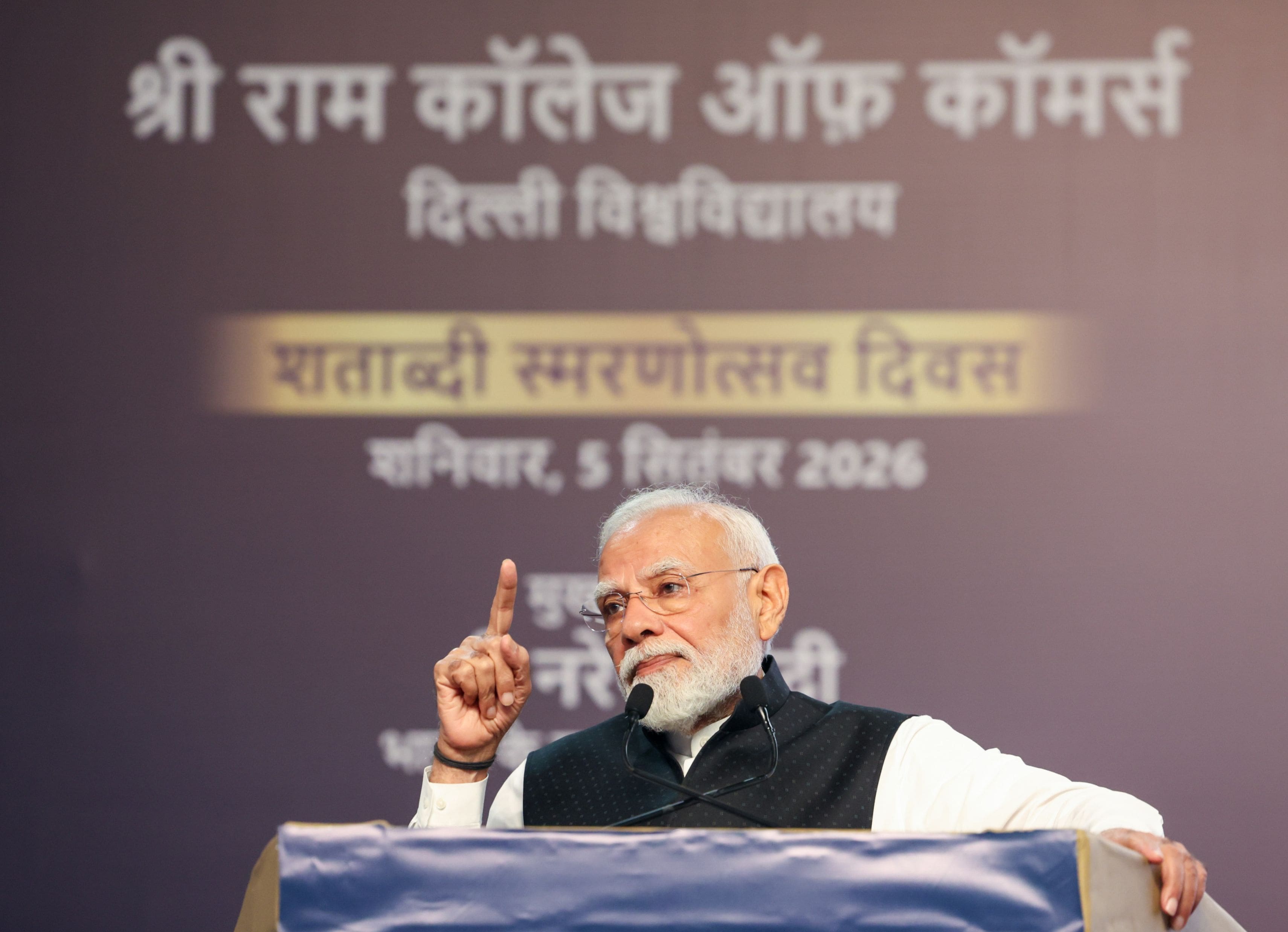
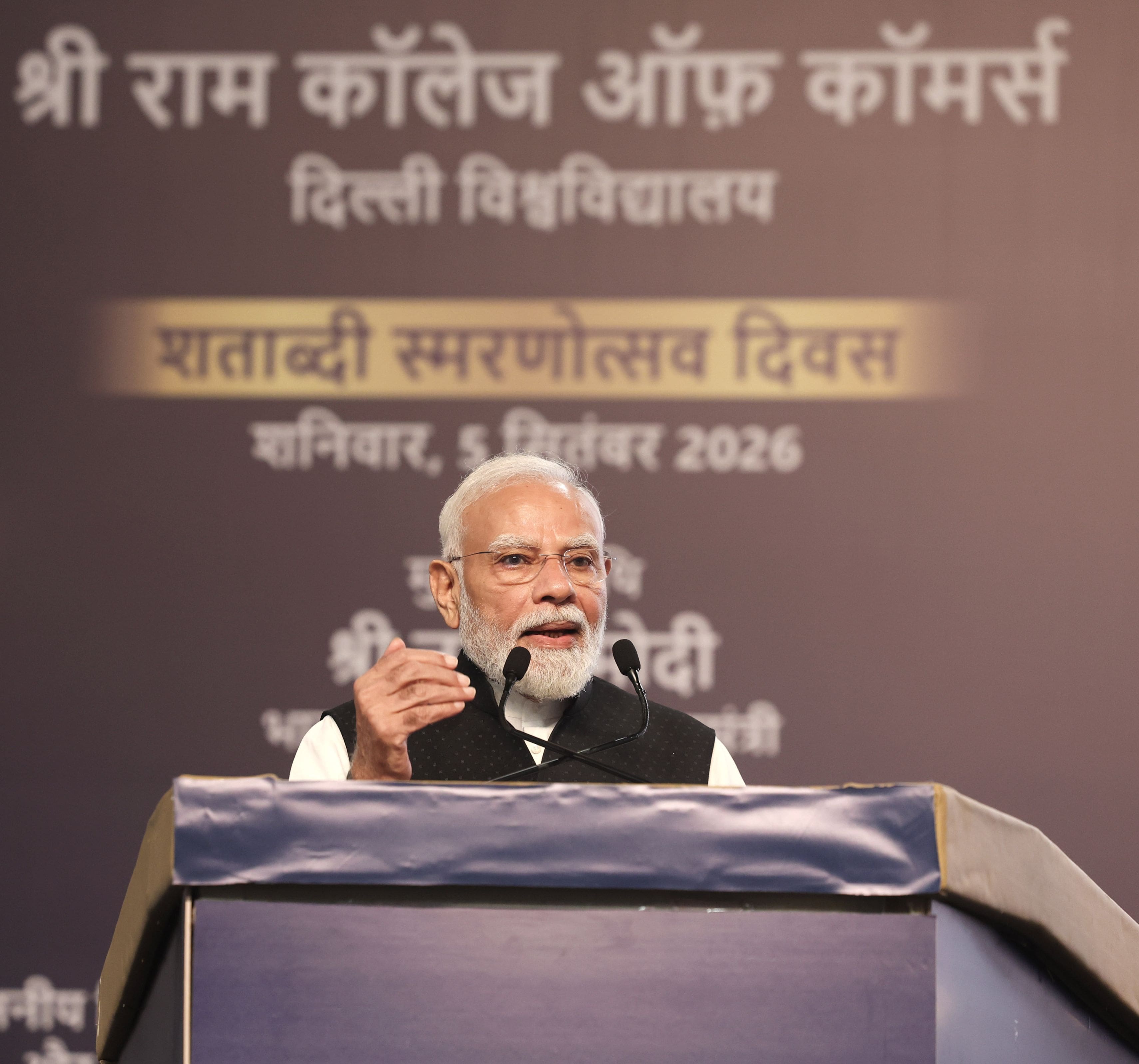
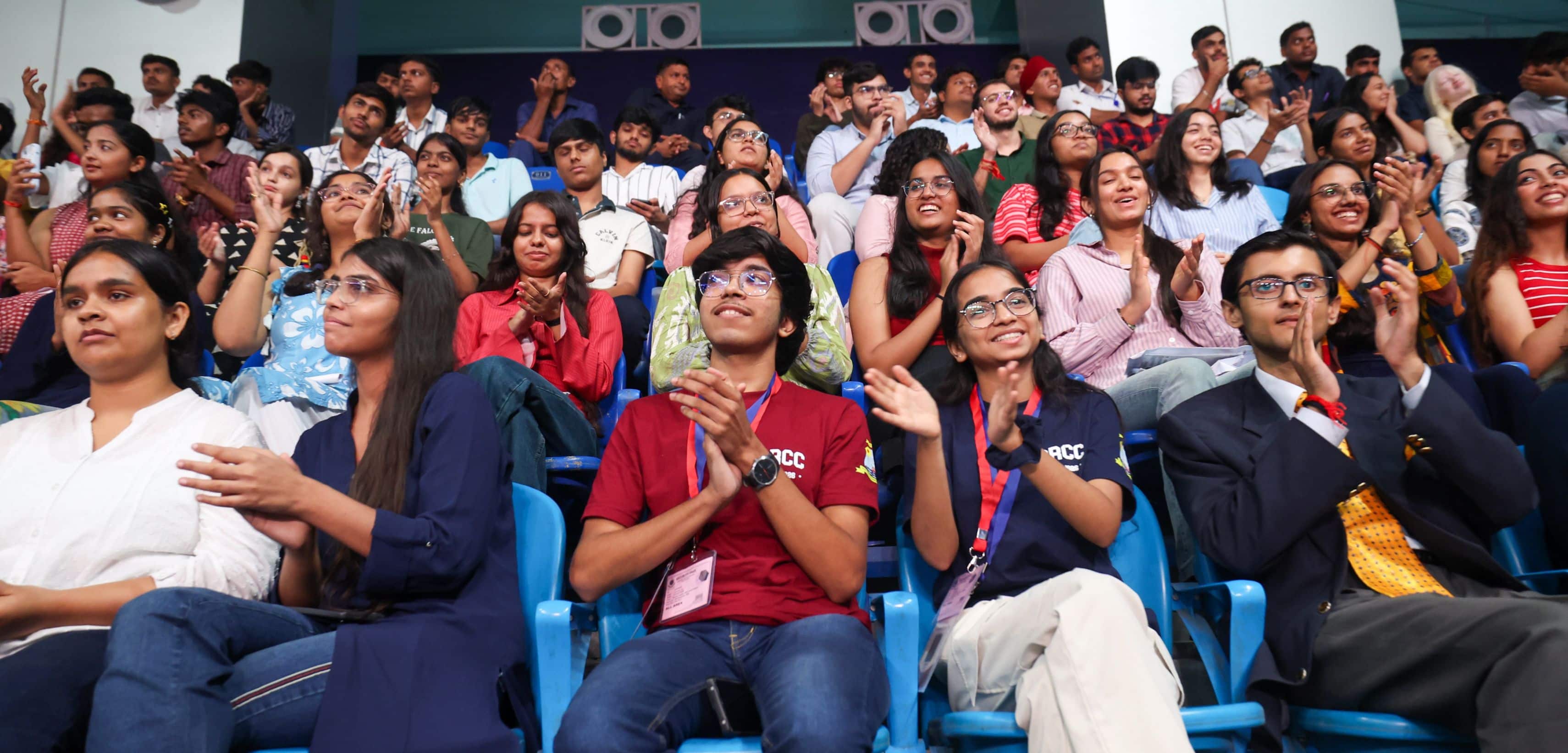
I am the sixth player. Today’s occasion is very historic for Shri Ram College of Commerce, and equally important for the country’s education world. Here, many generations who have been part of SRCC have gathered together. I extend my heartfelt congratulations to all of you for this centenary celebration of SRCC. I respectfully pay tribute to its founder, Sir Shri Ram ji, and bow to his vision.

Friends,

When a person lives for 100 years, he is considered an ocean of experiences. And when an institution completes 100 years, it becomes an ocean of achievements and inspirations. In its 100‑year journey, SRCC has shaped generations, connecting them to a bright future. Those who came studied, and those who left went out as well‑shaped individuals. The journey of this college began in Daryaganj, in a small place, and today that small college has become a huge tree. A tree that has given shade to many generations, and enriched them with its coolness. Even today, in DU, when someone asks which college, saying SRCC itself is a flex in itself.

Friends,

The alumni of SRCC have also been very special. If I say in your language, the alumni here are the OGs, who carried SRCC’s name across the world, making their mark in different fields. Rajat ji mentioned a long list. And I too have had the opportunity to work with some of them. Our Arun Jaitley ji studied here. And I can say that perhaps there was never a meeting with him where he did not narrate some incident of SRCC. Sometimes I would get tired, because he would repeat the same incident again and again. In my team today, brother Sanjeev Sanyal also studied here. Many other companions are here too. And it is not that only people from the world of economics came out of here - many artists, leaders, lawyers, judges have also come from here. That is, SRCC people have created a stir in every field. They may not all be giants, but they certainly created a stir.

Friends,

For the past few days, this program has been much discussed. Especially people are remembering my 2013 address. People have listened to it again, read it again. It is possible that the new generation has also revisited it. That speech, I can say, became a wave, a movement. And even today, 13–14 years later, the impact of that gathering, that address, remains.

Friends,

Then, in your place, your seniors were sitting. And I was then a Chief Minister, but also a member of the country’s main opposition party. And perhaps people then expected that I would make long attacks on the central government of that time, shower accusations.

But friends,

Even while being in opposition, even while being a critic of the then government, I did not use that platform for that. I placed a vision, spoke positive things. Whatever I said then was my conviction. I have always lived those words, those dreams. I have always walked that path - dedicating myself wholeheartedly for the country, living with the spirit of serving the nation. That inner world of mine, that emotional universe, on that day in 2013, from this very platform, came out one by one in a garland of words. And I spoke at length. Then I asked the students if I should continue, and they loudly said, “Yes, continue.”

Friends,

That day I gave the example of a glass of water, and it was much discussed in the country. I explained the three perspectives of looking at a glass half‑filled with water. One, those who see the glass as half full of water. Second, those who see the glass as half empty. And third, those who see the glass as completely full - half with water and half with air.

Friends,

This was the time when the country was sunk in the swamp of despair. Even then I said that I do not see the glass as half, I do not see it as incomplete - I see the glass as completely full. Half with water, half with air. And at that time you all must have been in school, but today if you go on the internet and read the news of 2013 and around that period, you will realize what the situation was. And I urge the youth - just look once at that period of 2013 on the internet, the headlines around my speech then. Whether newspapers or TV channels, what were the headlines then? Let me give you a glimpse of those headlines. Now there is a gang that will cut my words into small pieces and put them in my account, so I warn beforehand that what I am telling you is what dominated the media in 2013, such as:

• Indian soldiers killed on the LoC - today’s generation may find it strange that such things happened, but they did.

• World Bank lowered GDP growth forecast.

• Current account deficit at an all‑time high.

• Inflation rate around ten percent.

• Industrial sector caught in recession.

• Helicopter deal bribery exposed.

• Bomb blasts in Hyderabad.

These were the headlines of that time. I am sure today’s students do not know all this. These things show what the condition of the country was then. Growth was on the floor and inflation was on the ceiling. Scams were at their peak and the corrupt roamed fearlessly. The economy was in bad shape, everywhere there was talk of policy paralysis. The world counted India among the “Fragile Five.” Terrorists were unchecked and Pakistan was uncontrollable. That is, then there was nothing but despair and frustration.

Friends,

That was the day when on every front the country was struggling, and this is today - today those spreading terrorism are subdued. If Pakistan does any nefarious act, India’s forces enter their home and strike. From Jammu & Kashmir to the North East, peace has increased. Maoist terror, Naxalism has been broken. The world that was then worried about policy paralysis in India, today talks about India’s policy dynamism. Then the world called India part of the Fragile Five, today the world sees India becoming the fastest‑growing major economy. Just in the past week, many positive news items have come about India’s economy. The 7.8 percent quarterly growth has boosted the nation’s enthusiasm, and in the same period a Japanese credit rating agency has upgraded India’s rating.

And friends,

This 7.8 percent growth has come at a time when war is going on in West Asia, when there have been many trade‑related obstacles. To achieve such growth at such a time shows India’s capability in itself.

Friends,

I know, you also know, those who were infamous for pushing India into the Fragile Five, they cannot digest these figures. But you all understand the numbers seriously. Between April and June, electricity production increased by 9 percent, vehicle sales grew by more than 20 percent. In that too, two‑wheelers grew by 20 percent, and three‑wheelers by nearly 30 percent. That means consumer demand is running, and commercial activity is strong. Growth in steel and cement consumption increased by 8 percent. That means construction, housing, infrastructure, and industrial activity are all rising. That means India is growing, and creating new employment opportunities too. Despite this, for those who saw the glass half empty in 2013, their thinking remains the same even today. For them the glass will always be half empty. When I speak of the glass, I am not speaking of anything being empty.

Friends,

In 2013, speaking here at SRCC, I also spoke of P2G2 - Pro‑People Good Governance. Those who ran governments for long had a style - wake up only when there is fire, dig a well only when there is drought. I spoke of changing this approach. And after forming government in 2014, we have shown this in action. Let me give you an example.

Friends,

Recently, the Jan Dhan Yojana completed 12 years. Today you are living in a completely different era of fintech, but those were also the days of 2013 when students from villages or small towns had to struggle a lot even to open savings bank accounts. At that time our population had crossed 1.25 billion, but by March 2014, more than 50 percent of the country’s population did not even have bank accounts. And those outside the banking system were mostly the poor, women, migrant laborers, students. That is why we brought the Jan Dhan scheme, and in the past 12 years, because of Jan Dhan Yojana, nearly 600 million new bank accounts have been opened. Today almost every family in the country is connected to the banking system. This became the foundation of India’s fintech revolution.

Friends,

Now think also about those people who opposed even connecting millions of people to the banking system. In fact, such people enjoyed only when the glass was half full, so that the poor ordinary citizens kept circling around them. This “mai‑baap” culture they had continued for decades. But this is Modi - standing like a rock before those who liked the mai‑baap culture.

Friends,

There is an old saying: truth fears no fire. I have courage, and that is why I am reminding you of what I said that day, bringing my report card before you. I know that before the roar of truth, the echo of lies cannot stand.

Friends,

In that 2013 program itself, when I said that we must work on Made in India, the people of the old ecosystem of that time could not even understand it. They thought that in that era of despair, Made in India would not be possible at all! And those who grew up in that thinking still mock Made in India.

But friends,

Today you are seeing the brand value of Make in India. Let me explain with an example. Today every hand has a smartphone. The world’s biggest phone brands are making India their base. Made in India smartphones are reaching every corner of the world. In 2014, India imported most of its mobile phones. Today India exports mobile phones worth more than 2.5 lakh crore rupees.

Friends,

I am not a person who takes small and easy targets. I set big goals for the country, and I put my whole life into achieving them. Look at the defense sector. Earlier, most things for India’s armed forces were bought from abroad. As soon as I came, I told the defense people - make a negative list. First they made a list of 500 items, saying these we will not bring from outside. Then they made 1,000, then 3,000. Army, Navy, Air Force - many times even for a small piece of equipment they had to wait for months. We made a plan together with the armed forces, made lists of items, then told Indian companies to make all these. And today you see, the country’s defense manufacturing is at its all‑time high. Today India is producing defense equipment worth nearly 2 lakh crore rupees. In 2013–14, we exported defense equipment worth 600–700 crore rupees. Today this figure has reached nearly 40,000 crore rupees. And these achievements are possible because today a vibrant defense manufacturing ecosystem is being built in the country.

Friends,

I have trust in the country, trust in the country’s capability, trust in you youth. And on the basis of this trust I speak of a developed India. I am confident that we 1.4 billion Indians together will make our country developed and self‑reliant.

• In the coming time, India will be a hub of manufacturing.

• In the coming time, Hindustan will be a hub of research and innovation.

• India will be a superpower of agricultural exports.

My young friends,

• India will have its own space station.

And you will also see the day when India will host an Olympics in such a way that the world will be left watching in awe.

And these are not just words, these are our resolutions. And to turn these resolutions into reality, continuous work is happening in the country.

Friends,

Right now your life is running in SRCC mode. Whether it is tea at the co‑op, discussions over cold coffee, last‑minute notes for exams, rushing for printouts, or the hard work put into Crossroads and the Business Conclave - you have made every moment here a memory of your life. But outside this campus, a new world awaits you. You will meet two kinds of people. One, those who positively transform the power of society into the power of the nation. The second species are those who, whenever any work begins, become the “angry uncle.” Their favorite job is to oppose everything. Their permanent dialogue is: “What is the need for this? What is the need for this?” That is the permanent line of every such uncle. When we were building the world’s tallest statue, these uncles tightened their belts and said, “What is the need for this?” When we started work on the high‑speed train, they again said, “What is the need for this?” When we brought UPI, these same people said, “Why UPI? What is the need for UPI?” When we spoke of making chips, again they said, “What is the need for this?” When we built the new Parliament building, they said, “What is the need for this?” When we built a memorial for our brave military commanders who gave the supreme sacrifice for the nation, again they came out saying, “What was the need for this?” But India has answered all such uncles - whatever is necessary for the country, no one can stop India from doing it.

Friends,

Today India is moving forward with a different temperament. Work that earlier took decades is now happening within just a few years. Let me give you another example with full facts. India’s first electric train ran in 1925. Your college started in 1926, but the train ran in 1925. After that, until 2014 - that is, 90 years - less than 30 percent of railway lines were electrified. In just 12 years, we have shown nearly 100 percent electrification of railway lines.

Friends,

This speed in India’s policy decisions is being seen and understood by the rest of the world. That is why they are increasing their partnerships with India. In the past decade, trade agreements and free trade agreements have been signed with nearly 40 countries. Because of this, new markets are opening for leather, textiles, fruits and vegetables, our processed food, shrimp, and many other products. Who better than you knows what it means when new markets open, when tariffs are reduced for India’s goods and services. This is creating a new sky of opportunities for India’s youth.

Friends,

Today, compared to 2013, the country is far more secure economically and socially. But seeing this, some people’s restlessness and frustration are increasing. You must have heard my speech on 15th August. For such people, I gave a dose of homeopathy from the Red Fort - a small homeopathy pill. And you know, they say the nature of homeopathy is that when you start the medicine, at first the illness flares up even more. That is the nature of homeopathy. So from the Red Fort I gave a homeopathy pill - “mental Naxal.” This mental Naxal treatment, as I said, first flares up the illness for some time, and then begins the cure. In the same way, as soon as I gave the mental Naxal pill, all the mental Naxals started coming out. And those who are promoting this illness, now the public is seeing their true colors too.

Friends,

I have said so many things, some people may think - oh, what is the big deal, it was a country of 1.4 billion, it was easy, what new did Modi do? But was it really so easy? Let me take you back once again to the old days. Remember when you were in school. In 2013, when the disaster struck Kedarnath, the entire government was shaken. They did not know what to do, how to do it. In 2008, when the banking crisis came, the government of that time tried to hide behind that crisis until 2014, not daring to even touch it. India’s entire banking system was brought to the brink of collapse. In 2008 itself, when the horrific terrorist attack happened in Mumbai, the government then came under external pressure, but did not even show the courage to teach Pakistan a lesson.

Friends,

In the past 12 years, many disasters have struck the country, we have faced huge cyclones, but the nation has faced them strongly. In the past 6 years, very big crises have come. First the pandemic of corona, which shut down the whole world. Then the war broke out between Russia and Ukraine. After that, the era began of weaponizing trade and supply chains. Then came the crisis in West Asia. Every time it was said, now India will not survive. And those who are my “special admirers” were happy thinking - now Modi is trapped, now Modi will fall, now he will be crushed. But the blessings of my country’s people have such strength, such strength, that every wish of those who wanted India’s downfall has been left unfulfilled.

Friends,

Now in the 21st century, a world of new opportunities is before us. I am happy that you are ambitious, because ambition cannot be taught from a textbook. Ambition comes from the environment that inspires you to dream big. Today our young companions say - if I do something, I will start a startup, if I build a company, I will make it a unicorn. I will join sectors like space and drones, I will do something big. I will build cutting‑edge AI solutions, I will innovate in agriculture. Thirteen years ago, your seniors could not even dream such dreams. But today you are dreaming them, because in today’s India an ecosystem has been built to support those dreams.

Friends,

Now is the time to set big goals and achieve them. Just recently from the Red Fort I said some things. I want to repeat them among you. Take a pledge - why can’t India have global consulting firms? Why can’t our accounting firms, our legal firms, our financial firms become global leaders? We proudly say that today Indians are leading the world’s top companies. If Indians are leading the world’s top companies, then why can’t companies created by Indians lead the world?

Friends,

All this is possible. For this you have both networks and knowledge.

Friends,

Our inspiration, your inspiration, is also the SRCC college crest. It has two beautiful symbols. One is the rising sun, and the other is the ship moving forward in the sea. The sun, which shows direction, and the ship, which moves forward in that direction. We must walk on such new paths, where the sun is ours, the sea is ours. The boat is ours, the sailor is ours. The courage to write victory on the waves is ours. The flight is ours, the sky is ours. The spirit to face strong winds is ours. The dream is ours, the resolve is ours, the banner of self‑reliant India is ours. On the path of developed India, every step rising swiftly is ours. Once again, on this special occasion, I extend my many best wishes to all connected with SRCC.

Vande Mataram.