PM Modi approves Central Assistance of Rs. 2000 crore for 36,384 displaced families from POJK and Chhamb
Centre's development package for J&K: Rs. 5.5 lakh cash benefit per family to be disbursed to the displaced families

The Union Cabinet, chaired by the Prime Minister, Shri Narendra Modi has approved Central Assistance of Rs. 2000 crore for 36,384 displaced families from Pakistan occupied areas of Jammu & Kashmir (POJK) and Chhamb following an announcement of Prime Minister's Development Package for Jammu & Kashmir-2015 in November, 2015

As per the package, Rs. 5.5 lakh cash benefit per family will be disbursed to the displaced families to enable them to earn an income and subsist their livelihood. The amount will be released to the State Government of J&K to be disbursed to eligible families through Direct Benefit Transfer (DBT).
In the aftermath of partition of the country in 1947, thousands of families from Pakistan occupied areas of Jammu & Kashmir migrated to the State of Jammu & Kashmir. Subsequently, during Indo-Pak Wars of 1965 and 1971, a large number of families were displaced from Chhamb Niabat area of Jammu & Kashmir. Series of relief and rehabilitation packages have been extended by the Government of India/State Government of J&K from time to time to mitigate the hardship of displaced persons from PoJK and Chhamb and to rehabilitate them.

Explore More
Today, the entire country and entire world is filled with the spirit of Bhagwan Shri Ram: PM Modi at Dhwajarohan Utsav in Ayodhya

Popular Speeches

Today, the entire country and entire world is filled with the spirit of Bhagwan Shri Ram: PM Modi at Dhwajarohan Utsav in Ayodhya
How ODOP is helping Pratapgarh turn its amla into a bigger business

Media Coverage

How ODOP is helping Pratapgarh turn its amla into a bigger business
NM on the go

Nm on the go

Always be the first to hear from the PM. Get the App Now!
...
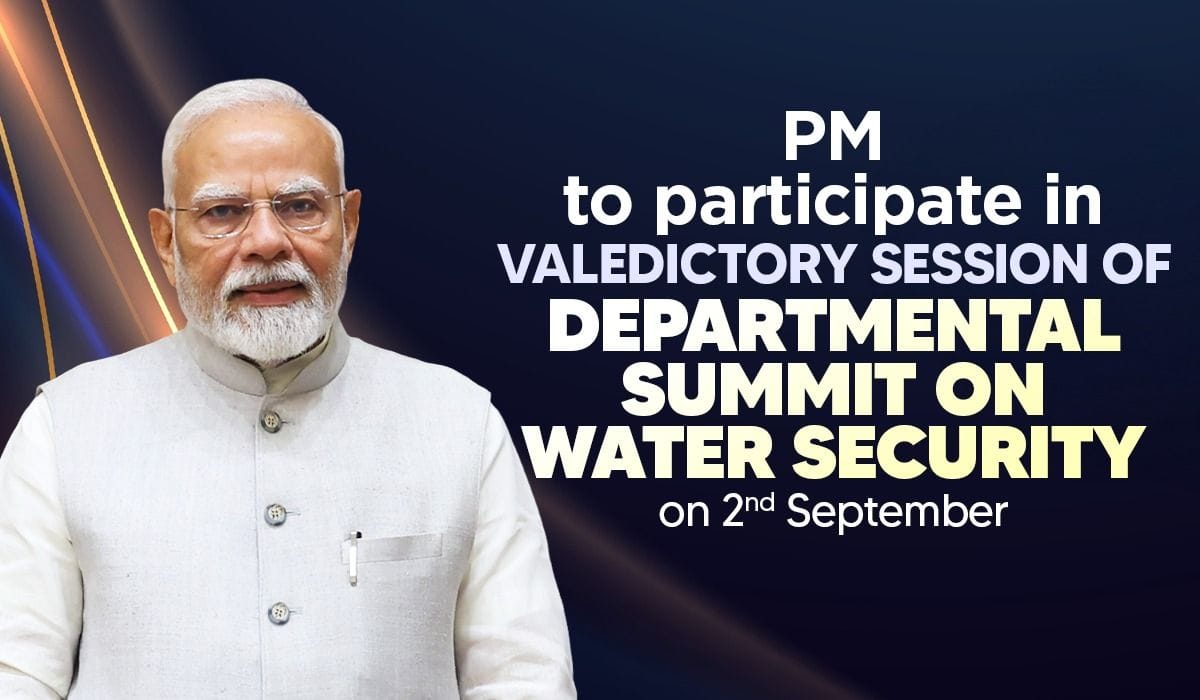
PM to participate in Valedictory Session of Departmental Summit on Water Security on 2nd September
September 01, 2026
This marks the first in a series of Summits envisioned by Prime Minister to strengthen spirit of Team India and deepen cooperative federalism
Summit brings together Centre and States to deliberate on priorities and evolve time-bound action plans
The summit will focus on timely implementation of water infrastructure projects, Jal Sanchay Jan Bhagidari, drinking water source sustainability and JJM 2.0.

Prime Minister Shri Narendra Modi will participate in the valedictory session of Departmental Summit of Ministry of Jal Shakti on 2nd September 2026 at around 4:30 PM at Sushma Swaraj Bhawan, New Delhi. He will also address the gathering on the occasion.

The two-day Departmental Summit, being held on 1-2 September 2026, is the first in a series of Departmental Summits envisioned by Prime Minister to strengthen the spirit of Team India, deepen cooperative federalism and foster collective ownership of national priorities through closer collaboration between the Centre and the States. The initiative provides a structured platform to jointly deliberate on critical sectoral priorities and accelerate implementation and outcomes.

The Summit will bring together political leadership and senior officials from the Union and State Governments to deliberate on key priorities, share best practices, address implementation challenges and evolve time-bound action plans. The initiative seeks to promote shared responsibility for national goals and ensure that deliberations translate into measurable improvements in governance and service delivery.

The Summit will focus on four key areas:

  1. Timely implementation of water infrastructure projects
  2. Jal Sanchay Jan Bhagidari - Catch the Rain
  3. Source sustainability of drinking water systems
  4. Operation and maintenance of rural drinking water supply schemes under Jal Jeevan Mission 2.0

The consultations are expected to result in concrete and time-bound actions for accelerating water infrastructure projects, enhancing public participation in water conservation, ensuring sustainable drinking water sources and improving the reliability and accountability of rural drinking water services.