10,000 e-Buses to be deployed on PPP model in 169 cities; Infrastructure to be upgraded in 181 cities under Green Urban Mobility Initiatives
Total estimated cost of the scheme to be Rs.57,613 crore
Expected direct employment generation over 45,000

The Cabinet chaired by the Prime Minister Shri Narendra Modi, has approved a bus scheme “PM-eBus Sewa” for augmenting city bus operation by 10,000 e-buses on PPP model. The Scheme would have an estimated cost of Rs.57,613 crore, out of which support of Rs.20,000 crore will be provided by the Central government. The Scheme will support bus operations for 10 years.

Reaching the Unreached:

The scheme will cover cities of Three lakh and above population as per census 2011 including all the Capital cities of Union Territories, North Eastern Region and Hill States. Under this scheme priority will be given to cities having no organized bus service.

Direct Employment Generation:

The scheme will generate 45,000 to 55,000 direct jobs through deployment of around 10,000 buses in city bus operation.

The Scheme has two segments:

Segment A – Augmenting the City bus services:(169 cities)

The approved bus scheme will augment city bus operations with 10,000 e-buses on Public Private Partnership (PPP) model.

Associated Infrastructure will provide support for Development/ up-gradation of depot infrastructure; and Creation of behind-the-meter power infrastructure (substation, etc.) for e-buses.

Segment B– Green Urban Mobility Initiatives (GUMI): (181 cities)

The scheme envisages green initiatives like bus priority, infrastructure, multimodal interchange facilities, NCMC-based Automated Fare Collection Systems, Charging infrastructure, etc.

Support for Operation: Under the scheme, States/Cities shall be responsible for running the bus services and making payments to the bus operators. The Central Government will support these bus operations by providing subsidy to the extent specified in the proposed scheme.

Boost to E-Mobility:

The scheme will promote e-mobility and provide full support for behind-the-meter power infrastructure.


Cities will also be supported for development of charging infrastructure under Green Urban Mobility Initiatives.


The support to bus priority infrastructure shall not only accelerate the proliferation of state-of-the-art, energy efficient electric buses but also foster the innovation in the e-mobility sector as well as development of resilient supply chain for electric vehicles.


This scheme shall also bring in economies of scale for procurement of electric buses through aggregation for e-buses.


Adoption to Electric mobility will reduce noise and air pollution and curb carbon emission.
Modal shift due to increased share of bus-based public transportation will lead to GHG reduction.

Explore More
Today, the entire country and entire world is filled with the spirit of Bhagwan Shri Ram: PM Modi at Dhwajarohan Utsav in Ayodhya

Popular Speeches

Today, the entire country and entire world is filled with the spirit of Bhagwan Shri Ram: PM Modi at Dhwajarohan Utsav in Ayodhya
India's pace of economic growth shows that its Viksit Bharat dream is not out of reach

Media Coverage

India's pace of economic growth shows that its Viksit Bharat dream is not out of reach
NM on the go

Nm on the go

Always be the first to hear from the PM. Get the App Now!
...
PM chairs valedictory session of National Departmental Summit on Water
September 02, 2026
This marks the first in a series of Summits envisioned by PM to strengthen spirit of Team India and deepen cooperative federalism
PM stresses adoption of a continuous process of review and follow up to act on actionable and time-bound outcomes
Emphasising Jan Bhagidari, PM calls for promoting Jal Utsav to deepen public awareness on water conservation
PM calls for greater adoption of water-saving technologies and learning from global best practices
PM calls for robust water data governance through effective use of AI
PM suggests structured inter-State Study-visits involving public representatives, officials and farmers on water related issues

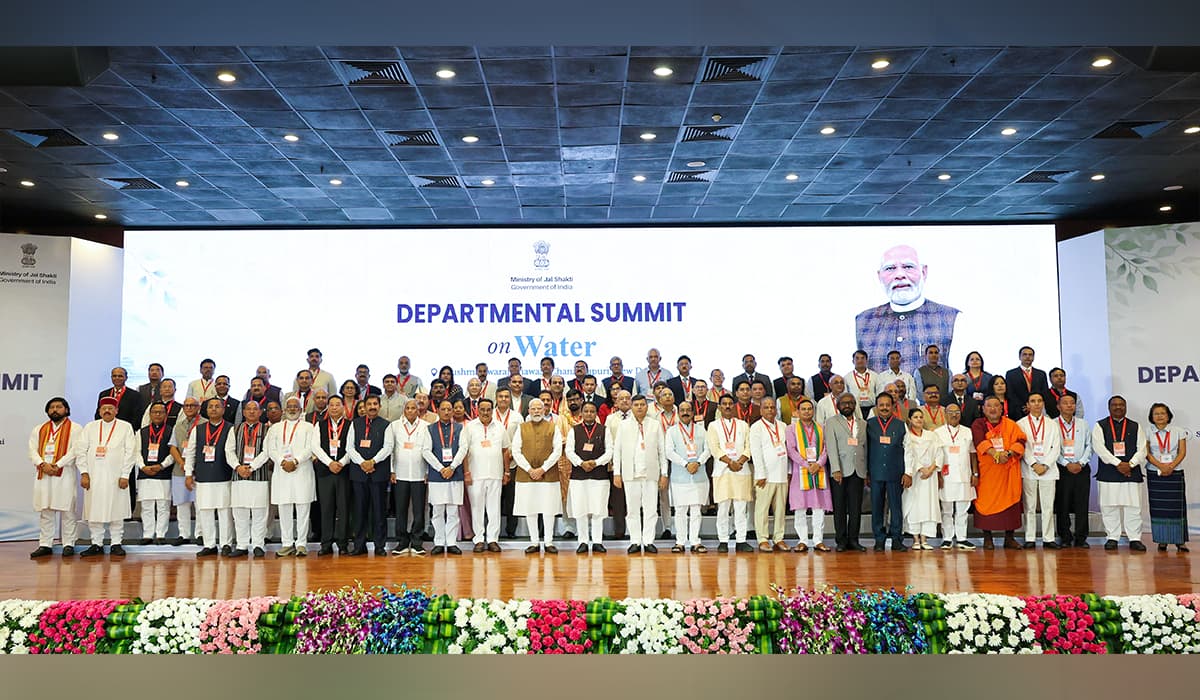
Prime Minister Shri Narendra Modi today chaired the valedictory session of the two-day National Departmental Summit on Water, organised by the Ministry of Jal Shakti. The Summit is the first in a series of Departmental Summits envisioned by Prime Minister to strengthen the spirit of Team India, deepen cooperative federalism and foster collective ownership of national priorities through closer collaboration between the Centre and the States. It brought together Ministers and senior officials from States and Union Territories for focused deliberations on various dimensions of India’s water security.

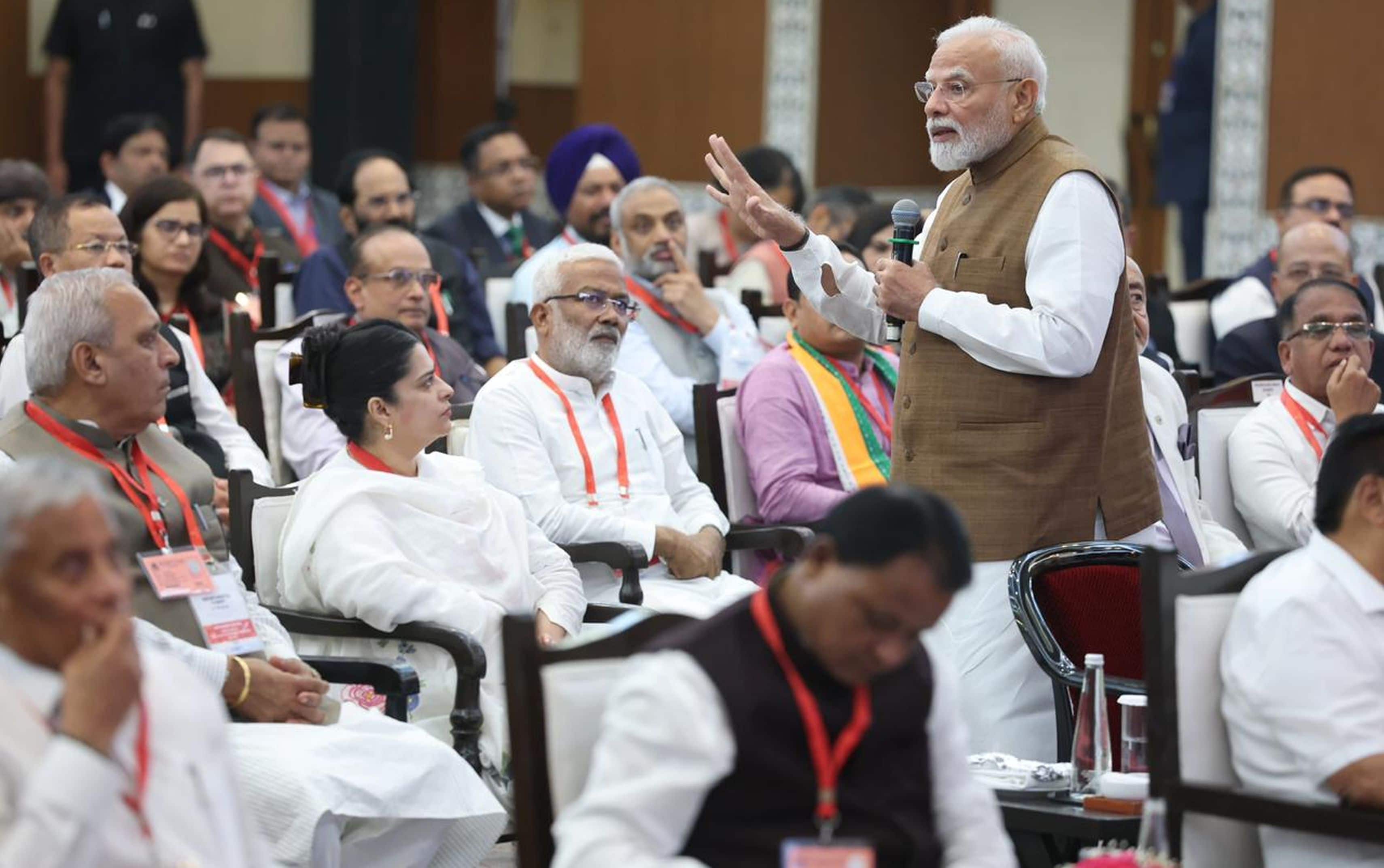
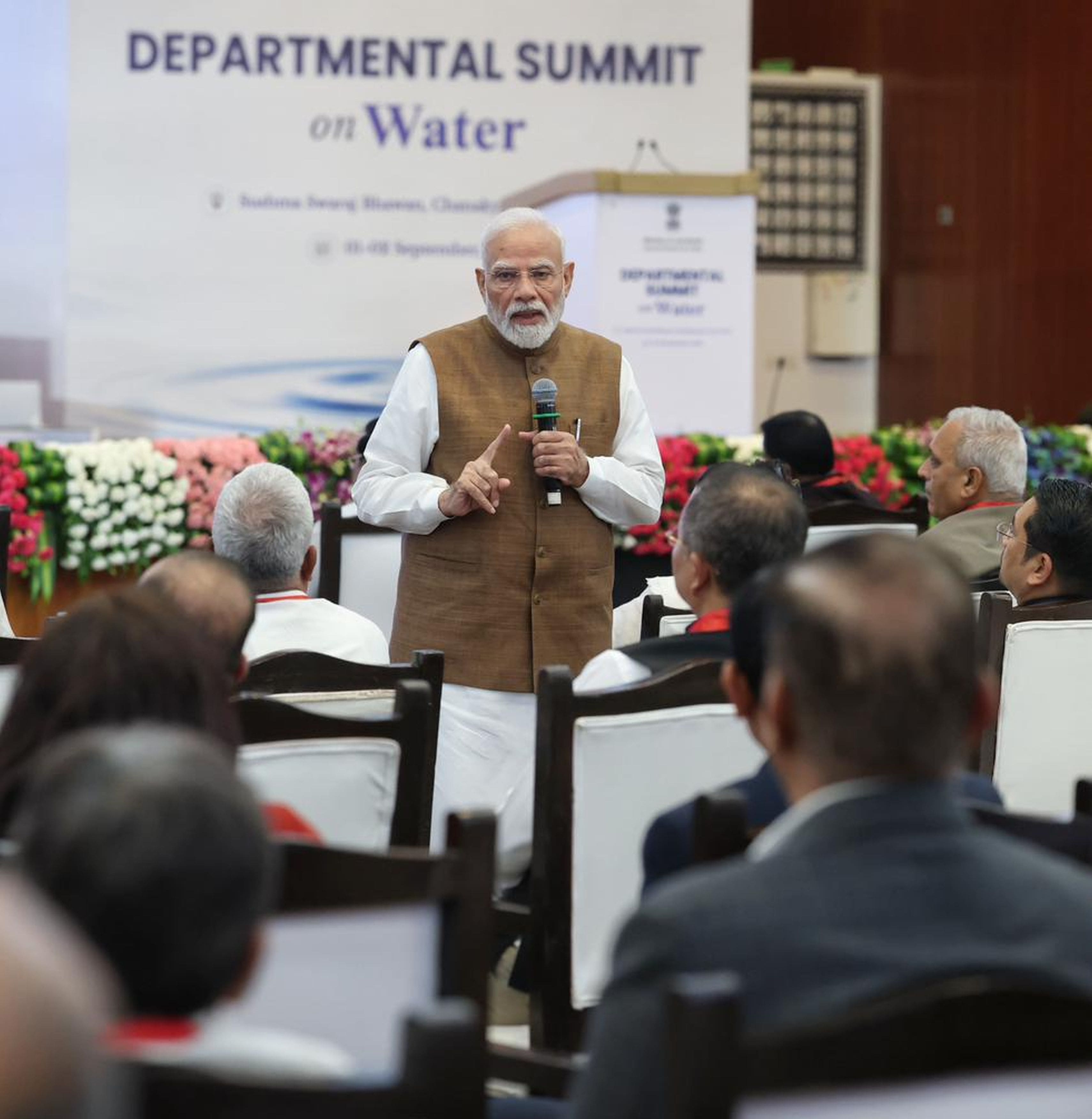
Prime Minister appreciated the intensive two-day deliberations and emphasised that the actionable and time-bound action points emerging from the Summit should be pursued through a continuous process of review and learning. He suggested that the Summit should not remain a one-time exercise and called for a continuous process of review and follow-up.

Prime Minister called for sensitising Urban Local Bodies to the challenges arising from urbanisation, including population growth and future water requirements, and suggested organising similar Chintan Shivirs for Urban Local Bodies. He called for greater adoption of water-saving technologies. He also suggested dedicated exhibitions and workshops, including exposure to global best practices, to enable Indian manufacturers and stakeholders to develop and scale efficient solutions.

Emphasising Jan Bhagidari, Prime Minister suggested promoting “Jal Utsav” to create greater awareness among people. Prime Minister called for making de-silting a regular programme and developing clear criteria and SOPs for de-silting. On dam safety, he stressed rigorous preparedness before every monsoon, adherence to prescribed precautions and creating awareness among school students, including through suitable incorporation in educational curricula.

Prime Minister further called for strengthening knowledge and capacity on water management and governance in universities and higher educational institutions. He suggested structured inter-State study-visits involving public representatives, officials and farmers to facilitate practical learning and replication of successful interventions.

Prime Minister called for robust water data governance, with water-sector data brought together, systematically managed, analysed and effectively utilised. He recommended the use of AI for data collection and analysis through a uniform format. He also stressed anticipatory and integrated planning to address water scarcity through suitable utilisation of treated water for agriculture and industrial purposes.

Drawing upon his experience as Chief Minister of Gujarat, Prime Minister noted that instances of water scarcity could be transformed into opportunities through systematic planning, commitment and deployment of adequate resources and capable officers.

Union Minister for Jal Shakti Shri C. R. Patil highlighted four key outcomes of the summit: accelerated completion of water infrastructure projects; strengthening water conservation as a sustained people’s movement; ensuring long-term sustainability of drinking-water sources; and institutionalising effective operation and maintenance of rural drinking-water schemes.