Gautama Buddha is one of the most impactful teachers in world history: PM
Gautama Buddha's teachings have inspired millions of people over centuries, says PM
Gautama Buddha gave eight-fold path and the Panchsheel while Shri Krishna gave invaluable lessons of life: PM Modi
Bodh Gaya is the land of enlightenment: Narendra Modi
Great privilege to have participated in the Inaugural function of the first International Hindu Buddhist Initiative: PM
Hindu philosophy was one of the greatest beneficiaries of advent & teachings of Buddha: PM
Buddha never bowed down to anything, neither Veda, nor caste, nor priest, nor custom: PM Modi
Buddha was the first human being to give to this world a complete system of morality: PM
Buddha was a great preacher of equality, says PM Modi
Enlightenment which Buddha attained in Bodh Gaya lit the light of enlightenment in Hinduism: PM

Shri Ramnath Kovind, Governor of Bihar,

Venerable KHAMBA LAMA CH. DEMBEREL from Mongolia,

Venerable MING KUANG SHI from Taiwan,

Venerable THICH THIEN TAM from Vietnam,

Venerable TELO TULKU RINPOCHE from Russia,

Venerable Banagala Upatissa from Sri Lanka,

Venerable LAMA LOBZANG,

My Ministerial colleague Shri Kiren Rijiju,

Minister Lyonpo Namgay Dorji of Bhutan,

Minister Bayarsaikhan of Mongolia

Venerable members of the Maha Sanga, visiting Ministers and Diplomats from foreign countries,

I am very happy to be in the midst of all of you. I feel very blessed to be here at Bodh Gaya. After Pandit Jawaharlal Nehru and Atal Bihari Vajpayee, I have the opportunity to visit this sacred place.

I am meeting you all on a very special day. Today, we in India are observing Teachers’ Day, to commemorate the birth anniversary of our 2nd President, a great scholar and teacher, Dr. Sarvepalli Radhakrishnan.

In this symposium we have been talking about one of the most impactful teachers in world history, Gautama Buddha. His teachings have inspired millions of people over centuries.

Today, we are also celebrating Janmashtami, the day Lord Krishna was born. The world has so much to learn from Lord Krishna. When we talk about Lord Krishna we say, श्री कृष्णम वंदे जगतगुरुम -Shri Krishna, the teacher of all teachers; the Guru of all Gurus.

Both, Gautama Buddha and Lord Krishna have taught the world so much. The themes of this conference, in a way are inspired by the values and ideals given by these two greats.

Shri Krishna gave his message before the start of the Great War in the Mahabharata and Lord Buddha repeatedly emphasized on rising above warfare. The message by both of them was about establishing Dharma.

Both of them gave great prominence to principles and processes. Gautama Buddha gave the eight-fold path and the Panchsheel. while Shri Krishna gave invaluable lessons of life in the form of Karma Yoga. These two divine souls had the strength to bring people together, rising above differences. Their teachings are most practical, eternal and are more relevant in this day and age than ever before.

The place where we are meeting makes it even more special. We are meeting in Bodh Gaya, a land that has a distinctive place in the history of humankind.


This is the land of enlightenment. Years ago, what Bodh Gaya got was Siddhartha but what Bodh Gaya gave to the world was Lord Buddha, the epitome of knowledge, peace and compassion.

This is, therefore the ideal venue for a dialogue and meeting here on the auspicious day of Janmashtami and the special day of Teachers’ Day makes this unique.

It was my great privilege to have participated in the Inaugural function of the first International Hindu Buddhist Initiative on “Conflict Avoidance and Environmental Consciousness” hosted by the Vivekananda International Foundation and Tokyo Foundation with the support of the International Buddhist Confederation at Delhi day before yesterday.

The Conference was conceptualised on shifting the paradigm from conflict resolution to conflict avoidance and from environmental regulation to environmental consciousness.

I had shared some of my thoughts on the two critical themes which are threatening humanity as no other challenge before. I recalled how in the context of both issues and for changing the global paradigm of thinking the world is looking to the Buddha today as conflict resolution mechanisms and environmental regulations — both of them dependent on the instrumentality of nation states — are increasingly failing to measure up to challenges.

Spiritual and religious leaders and also intellectuals, largely from Buddhist societies participated in the two day conference and deliberated on the two issues. At the end of the two day conference, and after a churning in which spiritual, religious and intellectual leaders participated, the Tokyo Foundation has announced that they have decided to hold a similar conference in January 2016. And other Buddhist nations have also offered to hold similar conferences in their countries.

This is an extraordinary development which coincides with the rise of Asia as an economic and civilisational phenomenon. The themes of the conference, informed and shaped by the Hindu-Buddhist civilisational and cultural perspectives, promise to deepen the notion of conflict avoidance philosophy and environmental consciousness in Asia and beyond.

The two day conference seems to have arrived at a broad consensus on both issues. On the issue of conflicts — most of which are being driven by religious intolerance — the participants in the conference seem to have agreed that while there is no problem about the freedom to practise one’s religion, it is when the radical elements try to force their own ideologies on others, that the potential for conflict arises. On the issue of environment, the conference seems to have agreed that the philosophic underpinning of the Dharma, which stresses the protection of natural heritage, is critical for sustainable development. I may add that the United Nations too has arrived at the view that sustainable development is achievable only through aligning development to the local culture of the people.

This, in my view, is a positive turn in the development modelling of the world of diversity. I may add that the turn in thinking at the global level has created the eco-system for the Hindu-Buddhist societies to carry forward their consensual ideas to the global fora. I personally consider the Hindu Buddhist Conference on Conflict Avoidance and Environmental Consciousness as an important development in a world that seems to be short of durable ideas on both issues.

Hindu philosophy was one of the greatest beneficiaries of the advent and the teachings of the Lord Buddha.

Many scholars have analysed the impact of Buddha on Hinduism. In fact, Adi Sankara was even critiqued for the way he was influenced by the Buddha and Sankara was called as “Prachhanna Boudha" — meaning Sankara was Buddha in disguised form. That was the extent of influence of the Buddha on Adi Sankara, regarded by many as the tallest Hindu philosopher. At the mass level Buddha was so venerated that Jayadeva in his Geeta Govinda even praised him as Mahavishnu or God himself who descended to preach Ahimsa. So, Hinduism after the Buddha’s advent became Buddhist Hinduism or Hindu Buddhism. They are today an inseparable amalgam.

This is how Swami Vivekananda praised Buddha. 

I quote:

At the time Buddha was born, India was in need of a great spiritual leader, a prophet.

Buddha never bowed down to anything, neither Veda, nor caste, nor priest, nor custom. He fearlessly reasoned so far as reason could take him. Such a fearless search for truth and such love for every living thing the world has never seen.

Buddha was more brave and sincere than any teacher.

Buddha was the first human being to give to this world a complete system of morality. He was good for good's sake, he loved for love's sake.

Buddha was the great preacher of equality. Every man and woman has the same right to attain spirituality— that was his teaching.

I would personally call India Buddhist India as it has imbibed all the values and virtues of the teachings of Buddha by their religious scholars incorporating them in their literature.


When this highest tribute is paid by one of the great Hindu philosophers would it be wrong to call today’s Hinduism in quality and substance as Buddhist Hinduism?

Buddha is the crown jewel of the Indian nation which accepts all ways of worship of all religions. This quality of Hinduism in India was a product of many great spiritual masters chief among them was Buddha. And this is what sustains the secular character of India.

The Enlightenment which Buddha attained in Bodh Gaya also lit the light of enlightenment in Hinduism.

As the first Servant of this ancient nation I revere Buddha as a reformer of not only Hinduism but also the world, who has given all of us a new world view and vision which is critical for the survival of all of us and the entire world.

I recognise how Buddhists all over the world revere Bodh Gaya as a place of pilgrimage. We in India would like to develop Bodh Gaya so that it can become the spiritual capital and civilisational bond between India and the Buddhist world. The government of India would like to provide all possible support that its Buddhist cousin nations need for the satisfaction of their spiritual needs from this holiest of holy places for them.

I am happy to read the Declaration of Buddhist Religions and Spiritual Leaders. This declaration is the result of hardwork and extensive dialogue, which is why it is a pioneering document that will show us the way ahead. I also echo Prime Minister Shinzo Abe of Japan, who the other day highlighted the importance of tolerance, appreciation of diversity, and spirit of compassion and fraternity. His message to this august gathering and his continuous support for furthering this initiative is a matter of great strength for us.

Once again, my congratulations and best wishes to you all. This conference has raised a hope and urge to go beyond clash and create a dialogue framework for civilizational harmony and world peace. I wish you well in your constant and determined efforts to ensure that our wisdom reaches the future generations and that too in a manner in which they can practically relate to. This is essential not for us or them but for the progress of the entire human race and the beautiful surroundings which we have got from Mother Nature.

Thank you very much. Thanks a lot.

Explore More
শ্ৰী ৰাম জনমভূমি মন্দিৰৰ ধ্বজাৰোহণ উৎসৱত প্ৰধানমন্ত্ৰীৰ সম্বোধনৰ অসমীয়া অনুবাদ

Popular Speeches

শ্ৰী ৰাম জনমভূমি মন্দিৰৰ ধ্বজাৰোহণ উৎসৱত প্ৰধানমন্ত্ৰীৰ সম্বোধনৰ অসমীয়া অনুবাদ
India's Merchandise Exports Defy Global Headwinds, Rise 15 Per Cent In April–14 June Period

Media Coverage

India's Merchandise Exports Defy Global Headwinds, Rise 15 Per Cent In April–14 June Period
NM on the go

Nm on the go

Always be the first to hear from the PM. Get the App Now!
...
India is not only a fast-growing economy, but also a credible one: PM Modi
June 22, 2026
India is not only a fast-growing economy, but also a credible one: PM
Along with being a rising power, India is also a reliable power: PM
For India, Nation First is the highest guiding principle: PM
Maoist terror is breathing its last in India: PM
The shift in mindset from "this can never be done" to "this will be done" is India's greatest achievement: PM
The government is empowering the poor and middle-class: PM
The collective efforts of 140 crore Indians will realise the dream of a Viksit Bharat: PM

Swar Sadhana, Manokamana, Aradhana - after such an auspicious beginning, it would have been wonderful if your program had continued. Greetings to all of you.

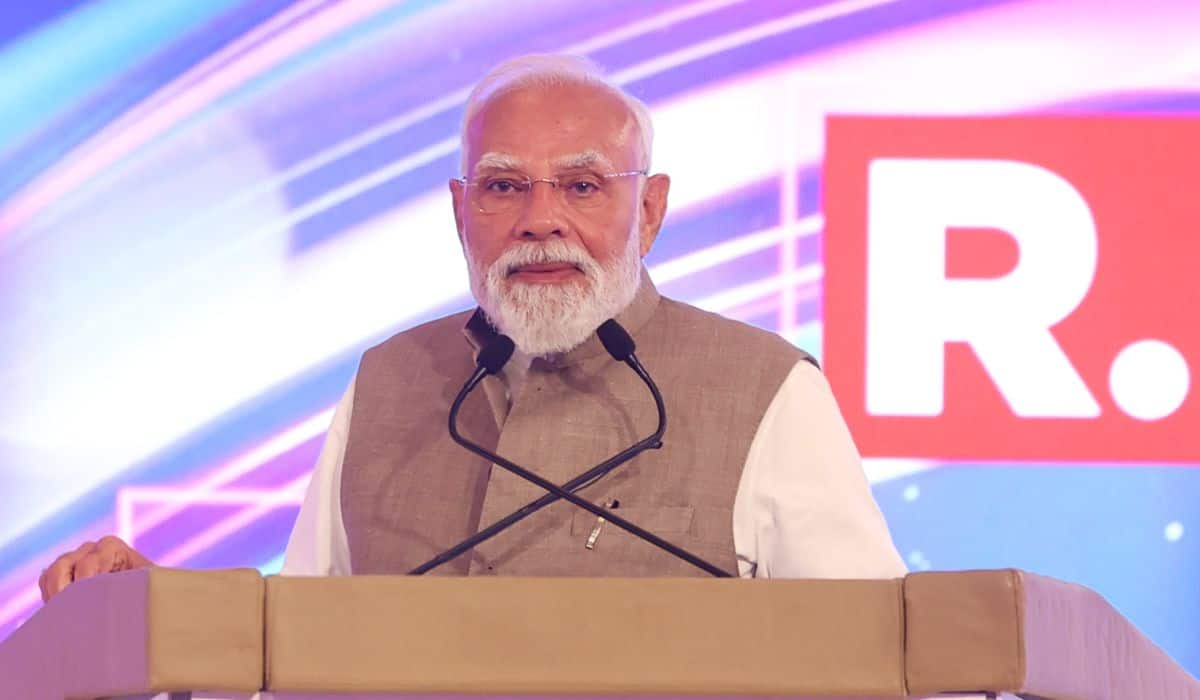
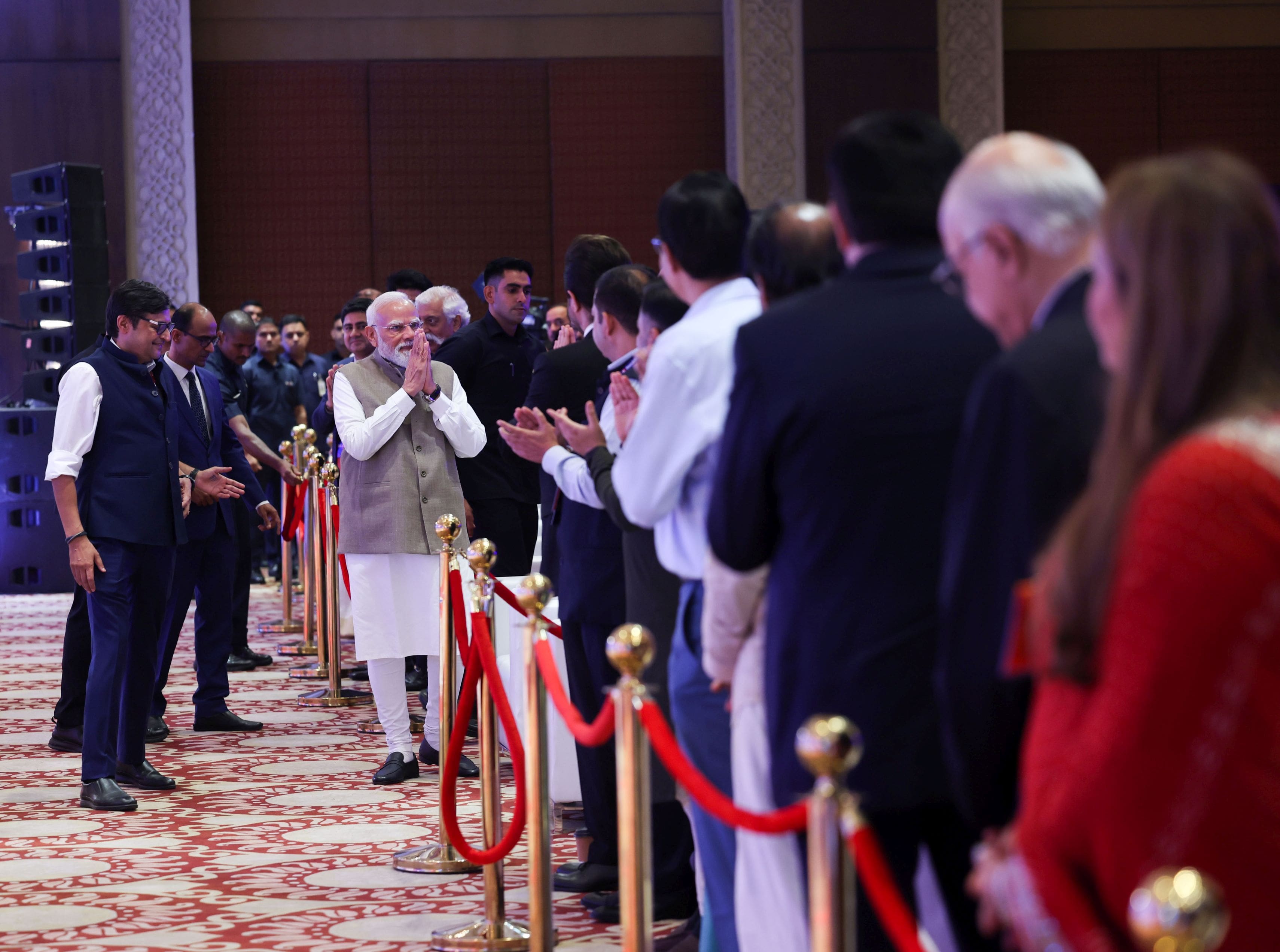
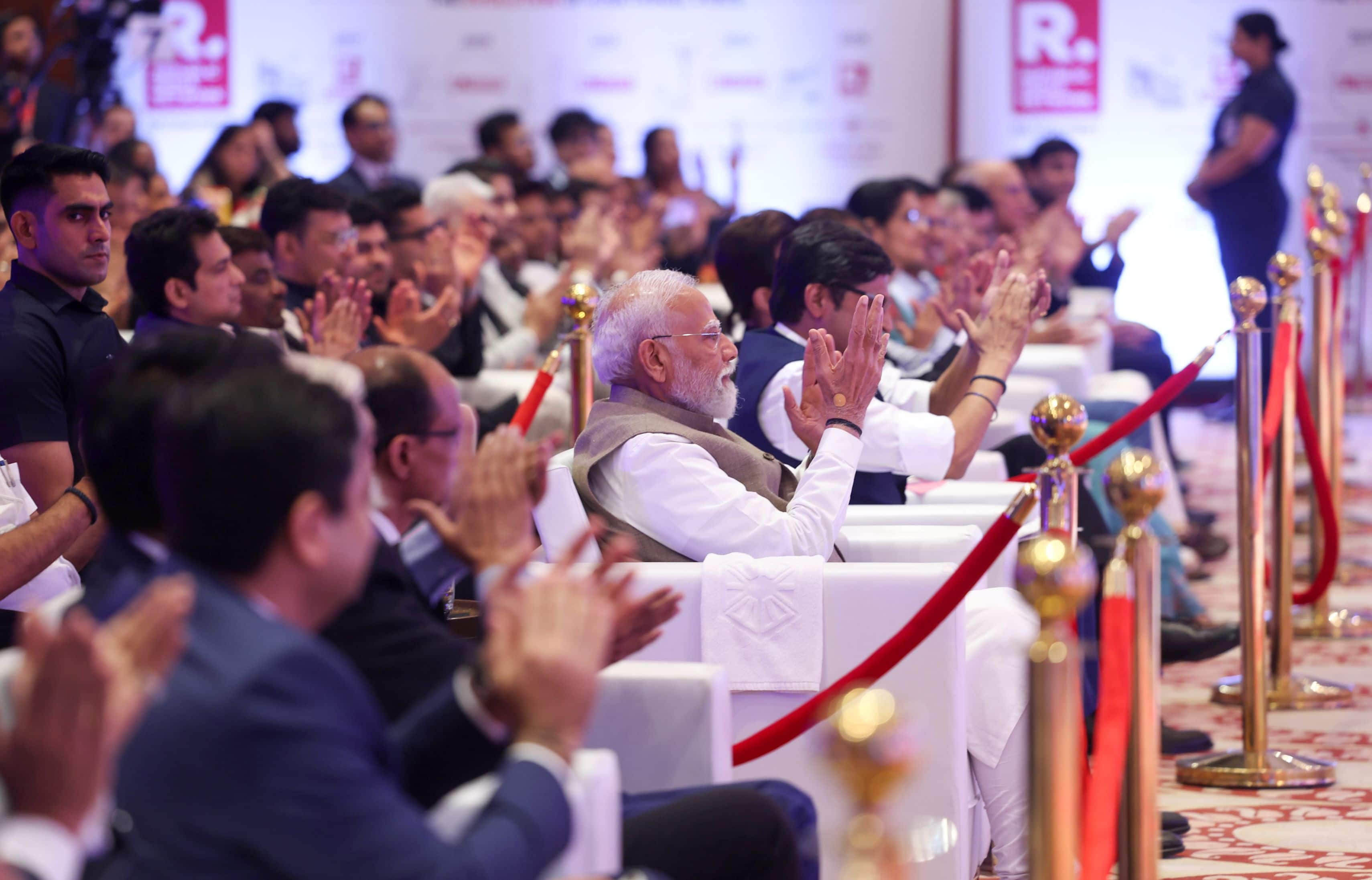
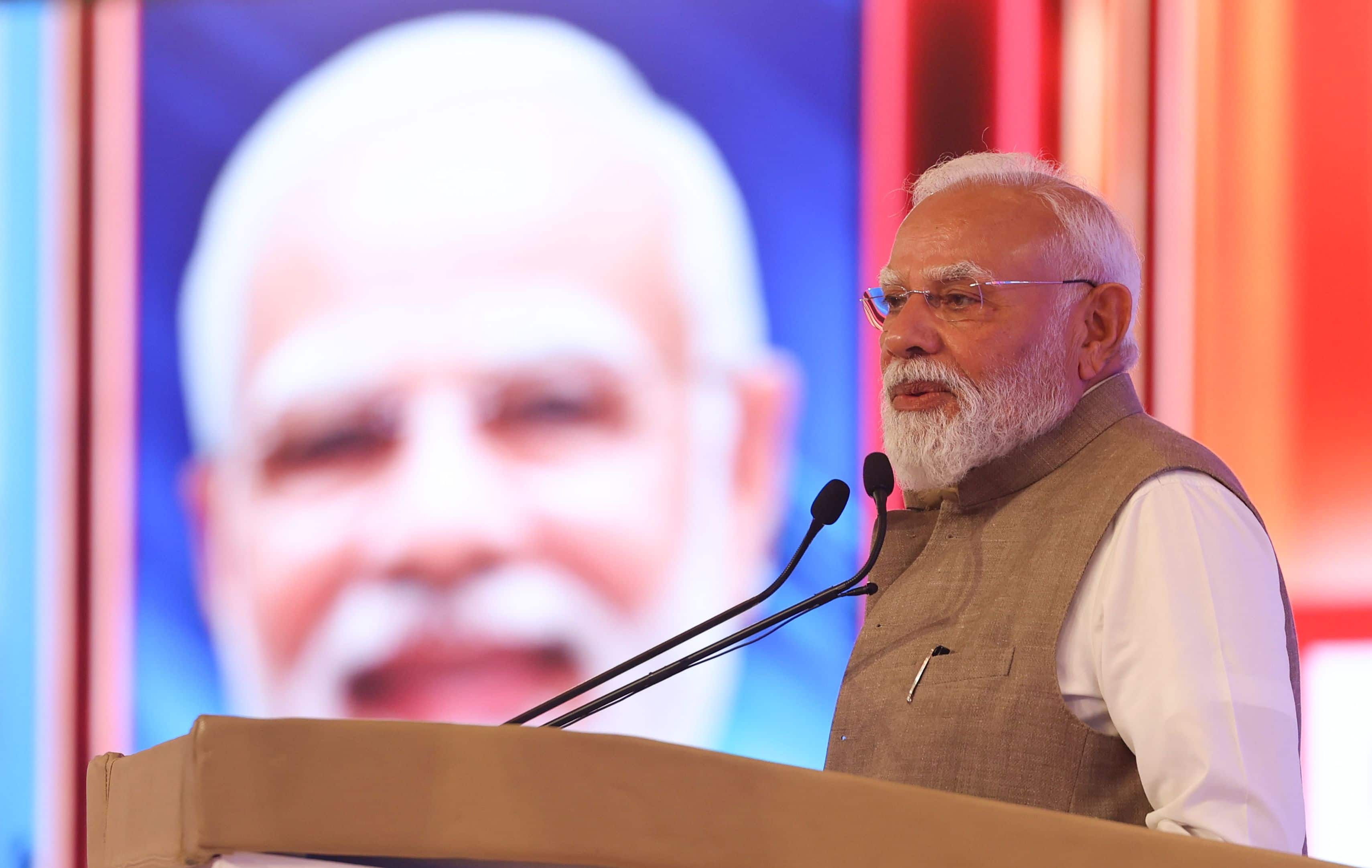
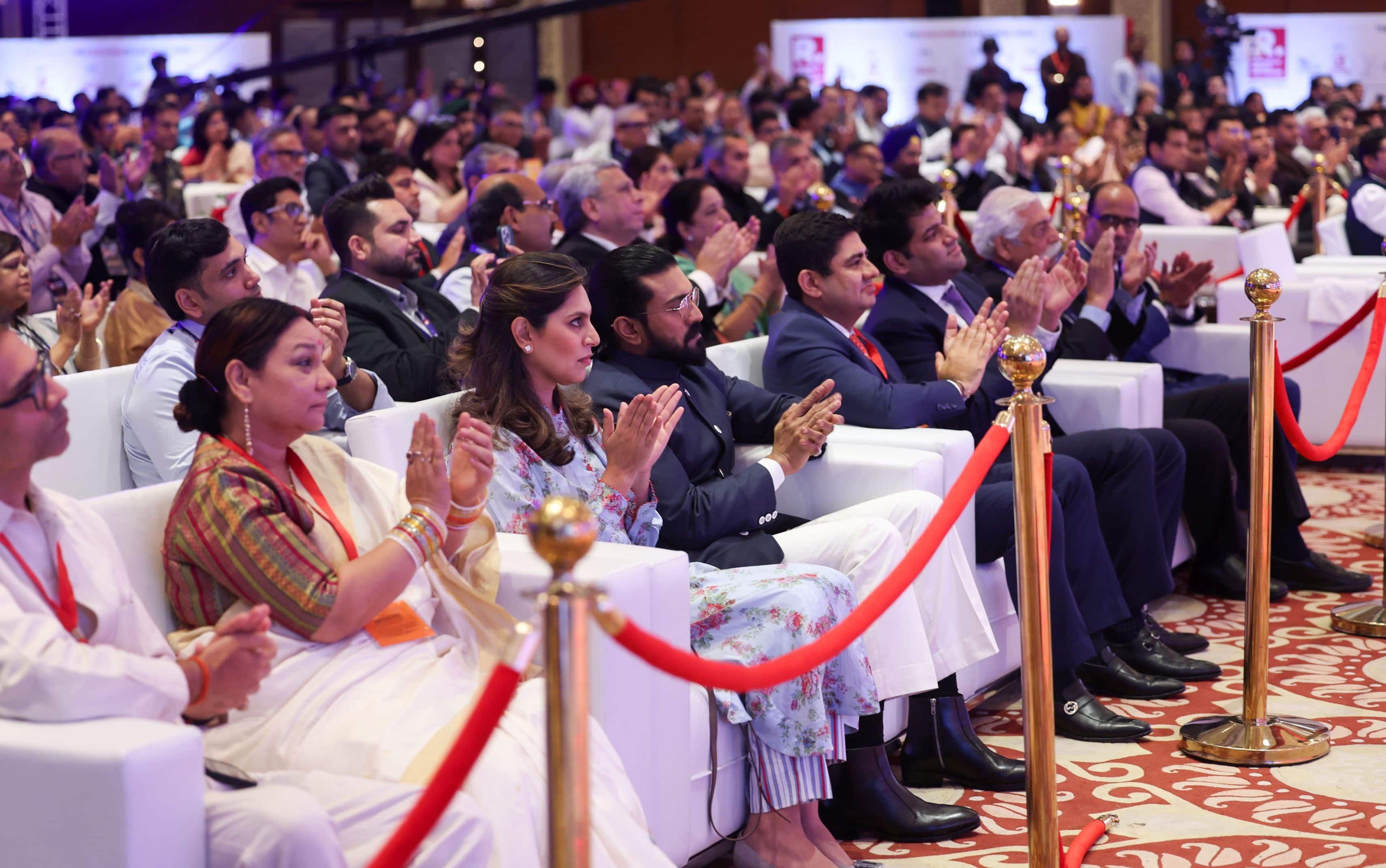
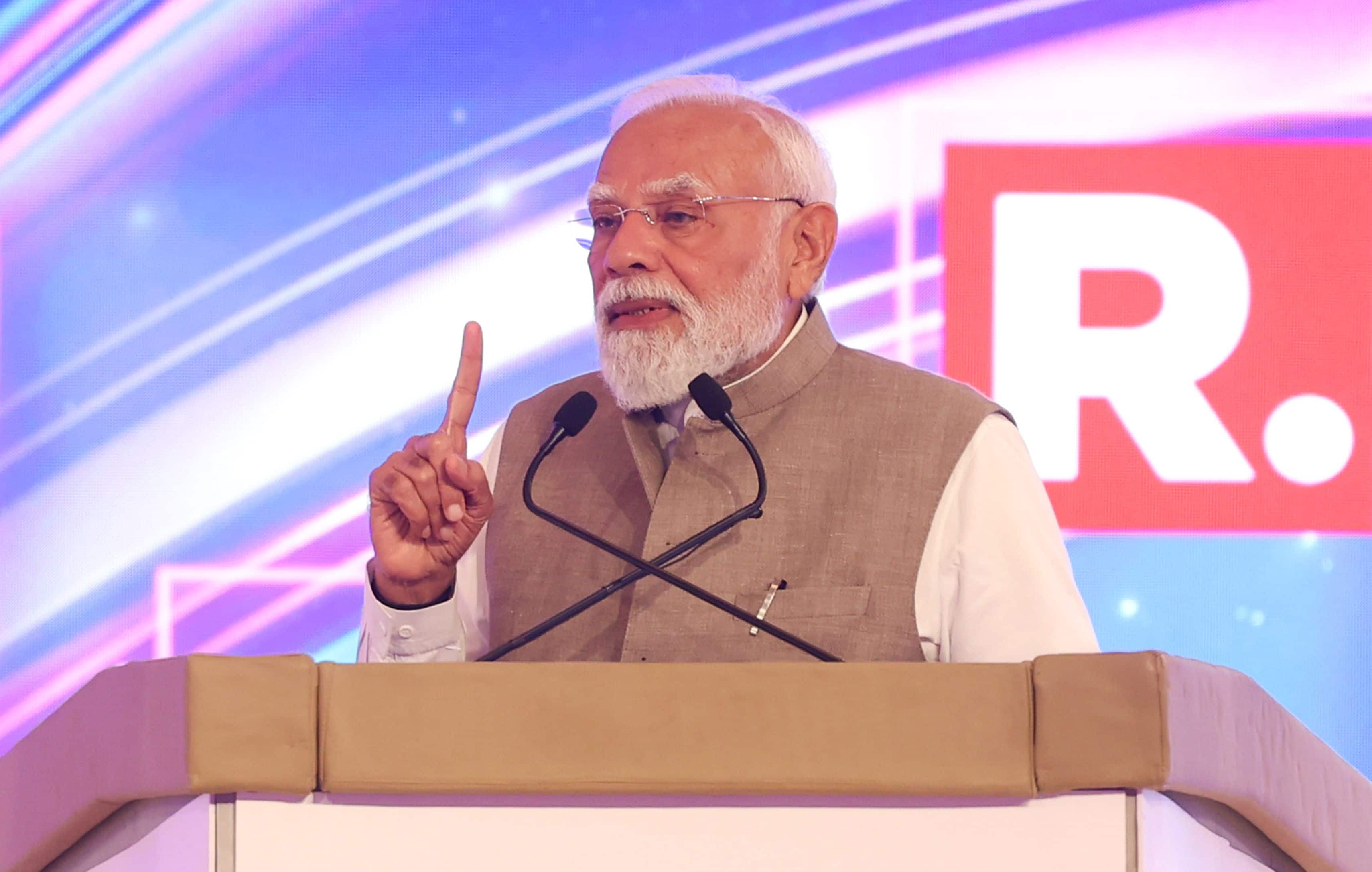
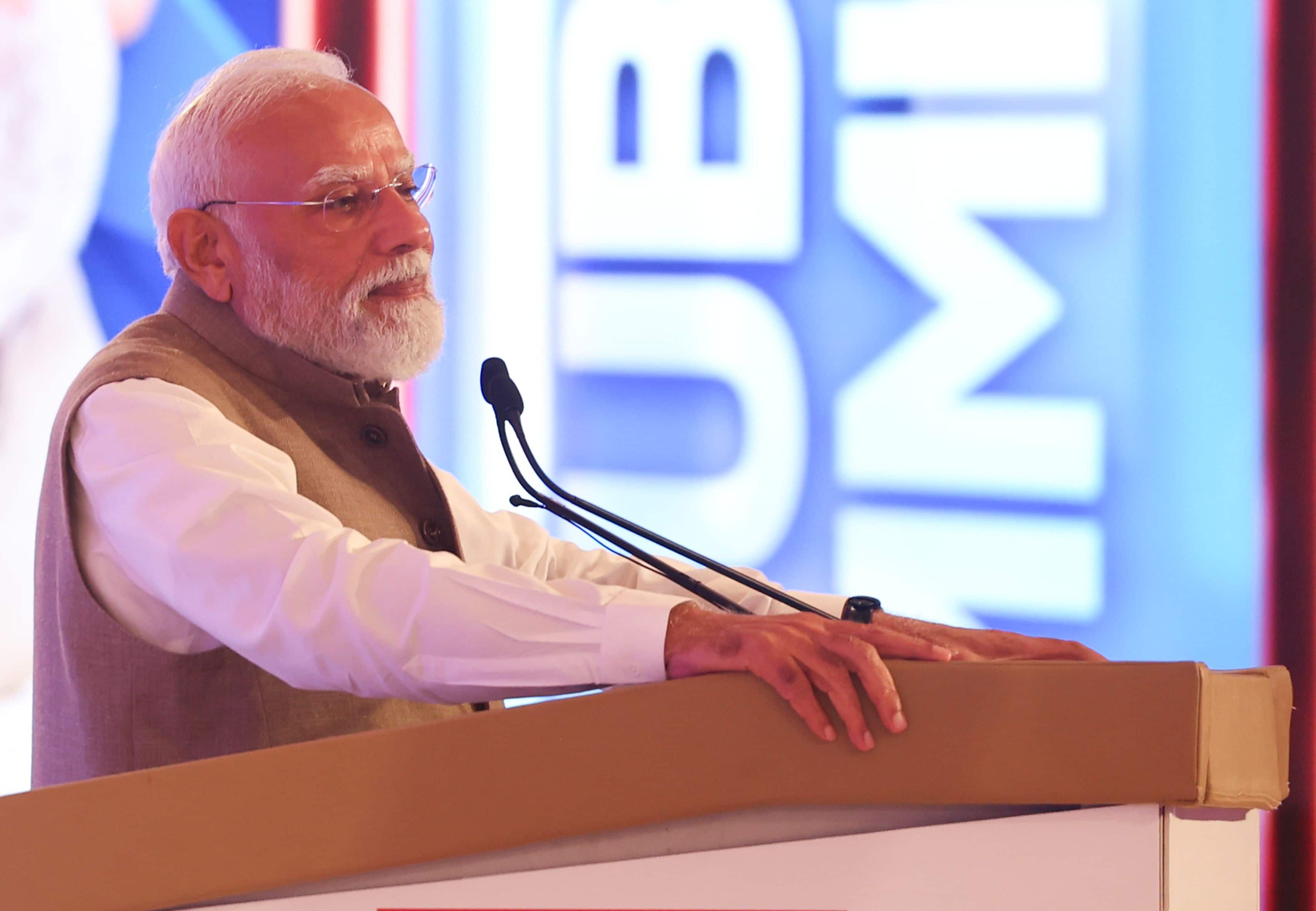
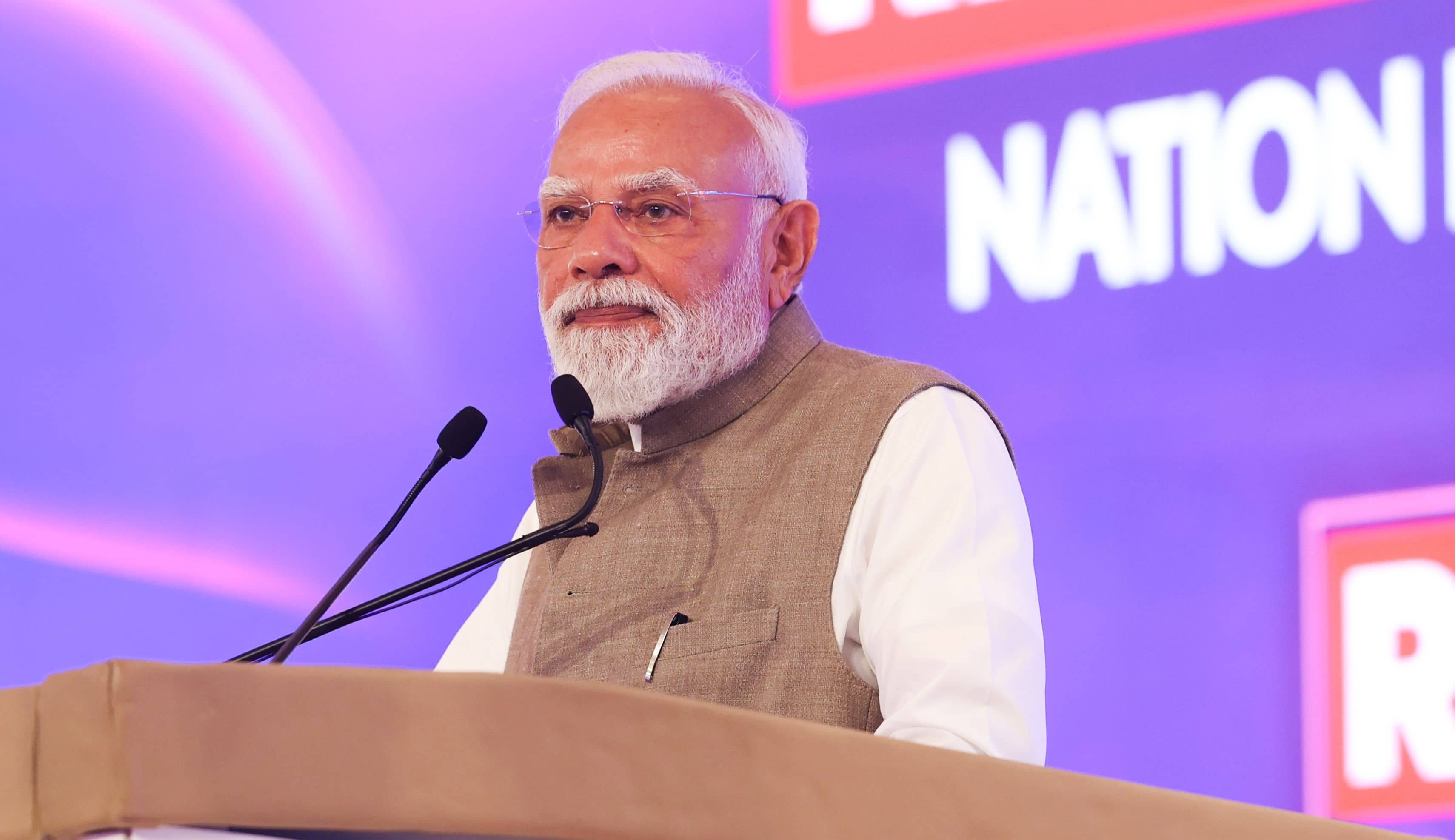
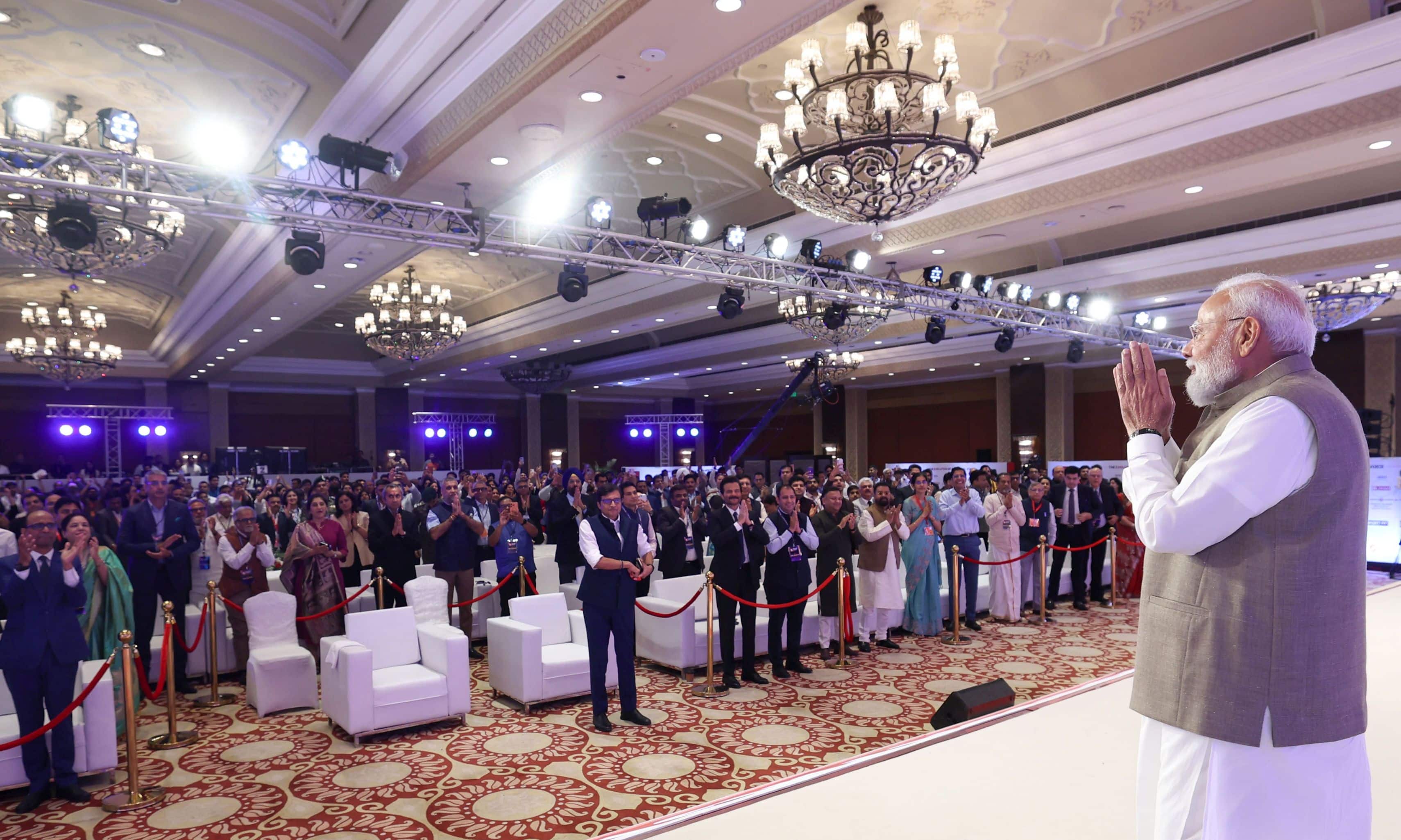
I extend my regards to all viewers of Republic TV Network, which now broadcasts in many languages. I also welcome all companions who have come to participate in this summit. In 24-hour news channels, breaking news holds great importance. And nowadays, if you look anywhere in the world, the entire world seems to be in breaking news mode. Amidst such hustle and bustle, you are hosting and participating in this summit, and therefore you deserve special congratulations. This time, your theme of discussion is equally significant: Great Power India: Nation First.

Friends,

Our scriptures say: Yato Dharmastato Jayah! - meaning, the root of victory and strength is Dharma. And Dharma means duty, Dharma means justice, Dharma means equality, Dharma means dialogue, Dharma means compassion. This very essence is embedded in the spirit of Nation First. India views its power through this lens, weighing it on this scale.

Friends,

India has another unique quality, which the world has now acknowledged. We are not a nation that reacts hastily to momentary events. We are a nation that has witnessed both development and destruction, endured them as well. We are a nation with the memory chip of ages embedded in our consciousness - a nation with the memory chip of millennia. That is why what India is doing today - and I say this with full responsibility - what India is doing today will write the future of the next thousand years. This is India’s greatest guarantee to the world. India is not only a fast-growing economy, it is also a credible economy. Alongside being a rising power - and you even stretched the dictionary to call it a superpower - I would certainly say that India is a reliable power. Just a few days ago, I returned from the G7 Summit, and every leader, every country understands very well that for today’s India, Nation First is the greatest mantra, the highest principle.

Friends,

Just a few days ago, our government completed 12 years. Arnab even compelled you to clap for that. If you weigh the achievements of the past twelve years, you will find that at the core of every decision, every step, every effort lies the spirit of Nation First. From the Swachh Bharat Abhiyan to Make in India, from emphasizing khadi to encouraging local products - all these initiatives succeeded because the people of the country placed the nation above all and fulfilled their duty. I salute the citizens of this country.

Friends,

Here with us is our companion, Shri Sridhar Vembu ji. When our entrepreneurs walk with the spirit of Nation First, when they set their goals by understanding the needs of the nation, institutions are built and the country prospers. I don’t know how much has been discussed here about Shri Vembu ji’s work, but recently I went to VivaTech in France. There were nearly 1.5 to 2 lakh young people there. As I and the President of France walked through different stalls to see the innovations of the youth, we came to the Zoho stall. I was astonished and filled with pride to see the crowd of European youth gathered there, eager to understand what this new creation was. Perhaps in India it is not discussed as much, but what I saw in France was remarkable. Congratulations to you.

Friends,

The impact of Nation First in government policy and decisions can be seen in our tribal regions. I am not here to deliver philosophy, but let me share a few light examples so you can understand how work happens. I speak of tribal areas - a population of more than 100 million, the tribal society. We all know that for decades, Maoist terror had entrenched itself there. Even in the 21st century, these terrorists did not allow a single facility to reach those areas. No government vehicle could pass through; they would be riddled with bullets. Many governments came and went, generations passed, and it seemed this misfortune of violence would remain forever. You can imagine - between 2004 and 2014, in those ten years, due to Maoist terror, more than 17,000 violent incidents occurred, and nearly 7,000 lives were lost.

Friends,

For you, today’s headline or half-hour TV debate might be that Maoist terrorism has ended. But things don’t happen like that. It requires immense effort, and that is why I want to explain. Nowadays, some people keep waving the Constitution, but when they were in government, in Naxal-affected areas, even uttering the word “Constitution” could get you shot. At that time, they sat silently, their hands trembling, unable to hold up the Constitution. The Congress was hardly affected by that painful situation.

Friends,

After 2014, we moved forward with the spirit of Nation First to change the situation. We did not just talk, we did not just announce, we acted. We resolved to uproot Naxalism-Maoism completely, and today the whole country can see the result. Maoist terrorism in India is now counting its final breaths.

And friends,

Often the final outcome is so vast and significant that the hard work behind it goes unnoticed. I want to especially tell Republic TV viewers about this.

Friends,

In those Naxal-affected areas where even going out in daylight would terrify ordinary people - fearing abduction, extortion, or looting - where even speaking of development was impossible, we advanced with a pledge of progress. In the past 12 years, our government has built more than 12,000 kilometers of roads in such regions. Many times, our construction equipment was burned, contractors were chased away. If 25 people worked on a road, 200 police personnel had to guard them so the work could continue. We did all this because we had resolved to do it.

Friends,

We built more than 9,500 mobile towers. Earlier, even one tower could not be installed, and if installed, it would be destroyed. Because they always wanted to fuel anger. We brought mobile connectivity to nearly 45,000 villages. In Naxal-affected districts, more than 1,800 bank branches were opened. Around 75,000 banking correspondents and more than 6,000 new post offices were established. We did not rely only on bombs, guns, and bullets, friends - we invested every ounce of strength given by God to win hearts.

Friends,

With firm resolve, we went into Naxal-affected areas to fulfill the hopes and aspirations of ordinary people. You will be astonished - a notorious Naxalite, with a bounty of crores on his head, his mother received a ration card from us for the first time. Her son never allowed her to get one, because he wanted to run his terror regime. There are countless such incidents. I was shocked. And the government of that time sat silently, blind to the Constitution. But the result of all these efforts was a new wave of trust among the people. Today, look at Bastar - instead of bombs and guns, Bastar Olympics are celebrated with great enthusiasm. Two editions have already been held. In the first, more than 1.5 lakh youth participated, and in the second, nearly 4 lakh youth joined. Where once there was terror, now talent is finding opportunity, and sports are flourishing.

Friends,

One of the greatest achievements of these 12 years of service has been building an India filled with hope and aspiration, rising out of despair.

Friends,

Naxalism may have been concentrated in certain areas, but its pain was felt across every corner of India. And when news began to spread that Naxalism was ending, the sense of trust was not limited to those affected regions - it spread across the entire nation. In the ten years before 2014, under the Congress government, the discontent was not only about governance. The despair was far deeper. The nation had lost hope. People felt nothing could change, nothing could improve.

Friends,

In the past 12 years, India has transformed despair into hope, and this gives me the greatest satisfaction. Today, everyone feels that with a little more effort, things can be achieved. Gone are the days when the only refrain was “It cannot happen, it cannot happen.” That era has passed. Today, the spirit is “It will happen.” This new confidence is India’s true achievement, and this is real power. Challenges remain, and they always will. Challenges are shape-shifters, appearing in new forms. But whatever form they take, we will fight and we will win. When the nation moves forward with the belief that “it can be done and we will do it,” dreams are fulfilled.

Friends,

I want to speak here about more than 100 districts and over 500 blocks in India. These were left behind on every parameter of development, and earlier governments had stamped them as “backward districts” and “backward areas.” We lifted these vast regions out of the despair of backwardness and ignited aspirations for development. First, we changed their identity. We said these are “aspirational districts,” these are “aspirational blocks.” We created programs for aspirational districts and aspirational blocks, and the government began working meticulously on every parameter of development. In each district, we identified three aspects to overcome, in others six aspects, and focused efforts began. Today, these aspirational districts and blocks are driving the overall growth of states. Earlier, they dragged growth backward. These districts had large populations living in poverty and deprivation. In recent years, 250 million poor people have defeated poverty, and aspirational districts have played a major role in this.

Friends,

We see that when one person is cured of illness, it is not just that individual who recovers - the whole family feels relief. Similarly, when a son or daughter achieves something, it is not just their achievement, but the entire family is filled with pride and confidence. In the same way, when someone rises out of poverty, the entire society benefits, the nation benefits. When 250 million people have come out of poverty and entered the neo-middle class, the benefit is not limited to those families. The middle class also gains, because these are new consumers who drive the economy, ultimately creating opportunities for the middle class. Thus, poverty reduction is not merely a matter of welfare - it is a story of expanding opportunities, a source of new aspirations.

Friends,

The vast middle class that has emerged in the country over the past 12 years has been a major priority for the government. For the ease of living of the middle class, the government has worked at every level. Take the dream of owning a home. Every middle-class family desires to have their own house. In 2014, if a family wanted to buy a home, home loans came with double-digit interest rates. Today, loans are available from banks at 7–8 percent interest. Earlier, getting a loan was like winning a war, requiring immense effort. Today, it is possible from the comfort of one’s home. Here in Delhi-NCR, people know how thousands of urban middle-class homes were stuck incomplete. Families had paid their life savings to builders, who showed glossy pamphlets and dreams, but the houses were never delivered. Families had to pay rent while waiting endlessly for their homes. It was a terrible situation. To complete these stalled projects, we created a special fund of ₹25,000 crore. You will be glad to know that nearly 60,000 long-delayed homes have now been delivered across the country.

Friends,

Another aspect that affects daily life is connectivity and transport. Today, if you look at social media, tourists from around the world are amazed by our metro system.

Friends,

In 2014, about 2.8 million people traveled daily by metro. Today, nearly 12.8 million people travel by metro every day. Now, high-speed trains like Vande Bharat, Namo Bharat, and Amrit Bharat are connecting the nation. With better roads and highways, not only is time saved, but vehicle maintenance costs have also reduced. In recent years, the number of airports has doubled. This has given the middle class in many smaller cities the opportunity to fly for the first time.

Friends,

In the past 12 years, India has not only increased the earnings of the middle class but also their savings. In 2013–14, income up to about ₹2 lakh was taxable, and the middle class bore that burden. Today, income up to ₹12 lakh is tax-free. In other words, tax-free income has multiplied several times.

Friends,

GST reforms have also brought great convenience to the middle class. Filing taxes has become easier, saving both time and money. Income tax returns can now be filed from home, and even settlement issues are handled in a faceless manner.

Friends,

A major expense for middle-class families is treatment for diabetes and other lifestyle-related conditions. At Jan Aushadhi Kendras, such medicines are available at an 80 percent discount. If earlier you spent ₹1,000, today you spend only ₹200, saving ₹800. Over the years, this has resulted in savings of nearly ₹40,000 crore for countless families. Another significant portion of the middle-class budget goes toward healthcare for the elderly. Today, every citizen above 70 years of age is entitled to free treatment up to ₹5 lakh.

Friends,

It is human nature to forget past difficulties when conveniences become routine. Earlier, you paid tax on ₹2 lakh income; now, up to ₹12 lakh is tax-free. Yet applause comes only when reminded. On the other hand, if a bus or train is delayed, complaints pour in. This is the most vocal class.

Friends,

As I said, people forget old troubles. You may not even remember the difficulties once faced in getting a driving license or passport. Earlier, it was a struggle. Today, obtaining a driving license is easier, and passports are usually issued within three days.

Friends,

I know the way our government works has raised people’s aspirations. Once a demand is met, people immediately seek something better, something upgraded. If earlier the demand was for a new road, once built, the next question is: when will the metro arrive? Earlier, expectations were that trains should arrive on time and provide clean seating. Today, the demand is: why isn’t Vande Bharat running on our route?

Friends,

Some see this as dissatisfaction, but it is aspiration. In fact, even the Congress party constantly says, “Modi ji, this should happen, that should happen.” They trust that if anyone can deliver, it is this government.

Friends,

Aspirations arise only where people believe dreams can be fulfilled. This is the aspiration of India’s youth, poor, and middle class. Today, it is the driving energy of BJP-NDA governments.

Friends,

On one side, a large section of the nation is aspirational. On the other side, there is a political group whose life mantra has become “Always Against.” This group is filled with chronic dissatisfaction. Let me share some symptoms so Republic TV viewers can recognize them. They will say, “Why doesn’t this place have 24-hour electricity?” But the next day, they protest against dams, solar parks, thermal plants, or nuclear projects. One day they ask why there is no electricity, the next day they oppose power generation. These are the same people who once opposed mineral mining, but today ask where India’s rare earth mineral reserves and supply chains are, and why India doesn’t have an EV ecosystem like other countries. They once debated “data versus flour,” but now demand to know what India has done in AI. In one breath, they say AI should have advanced further, and in the next, they oppose data centers and semiconductor plants, listing endless drawbacks on social media, TV debates, and newspapers.

Friends,

These people bring up corruption indices from around the world to put India in the dock. Their ecosystem’s media amplifies it 24/7. But when action is taken against corruption, they are the first to cry foul, claiming raids and investigations are harassment. They question why action is taken now, why not then, why against A and not B. This is their game.

Friends,

It is vital for the nation to understand their character. Especially our youth, and Gen Z in particular, must recognize them quickly. Otherwise, as I say, “Suryavanshi has arrived,” and he explains swiftly.

Friends,

These people claim the armed forces lack freedom and weapons. But when the government makes a defense deal or buys modern arms, they are the first to question why. They challenge India’s diplomacy worldwide, but when India builds infrastructure projects for diplomacy and security, they protest loudly.

Friends,

At this crucial juncture, India must identify such people, understand their flawed arguments, and remain alert. Unfortunately, today the main opposition party, Congress, has been taken over by such elements. To imagine Congress speaking of Nation First, as it did in Gandhi ji’s time, is now a false dream.

Friends,

The world today is challenging old paradigms, and the scale of disruption is immense. But these challenges also bring new opportunities. Every youth, entrepreneur, innovator, and startup in India must focus on these opportunities. The government, with the spirit of Nation First, stands fully with the people. India is now riding the Reform Express. This momentum will only accelerate. From this Republic TV platform, I say again: our dreams are vast, and our efforts will be equally immense. The collective endeavor of 1.4 billion Indians will build a developed India. And I assure you, you will see this developed India with your own eyes. It will not be left for future generations to wait. With this confidence, I once again extend my best wishes to Republic TV, its viewers, and all of you. Thank you very much!