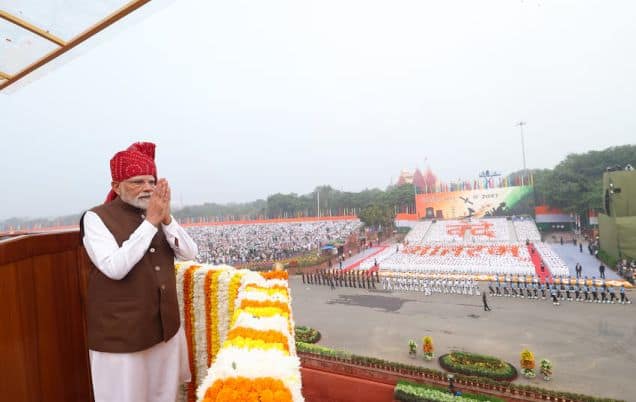
Prime Minister Shri Narendra Modi addressed a function on “Depositors First: Guaranteed Time bound Deposit Insurance Payment up to Rs. 5 Lakh” in New Delhi today. Union Finance Minister, MoS Finance and RBI Governor were among those present on the occasion. The Prime Minister also handed over cheques to some of the depositors.

Addressing the gathering, the Prime Minister said today is a very important day for the banking sector and crores of bank account holders of the country as this day is witnessing how a big problem which was going on for decades has been solved. He stressed that the spirit of ‘Depositors First’ is very meaningful. In the last few days, more than one lakh depositors have got their money back that was stuck for years. This amount is more than Rs 1300 crore, Shri Modi said.

The Prime Minister said any country can save the problems from getting worse only by timely resolution of them. However, he said, for years there was a tendency to avoid problems. Today's new India strives for solving problems, today India does not avoid problems.

The Prime Minister informed that in India, the system of insurance for bank depositors came into being in the 60s. Earlier, out of the amount deposited in the bank, only the amount up to 50 thousand rupees was guaranteed. Then it was raised to one lakh rupees.That is, if the bank sank, then the depositors had a provision to get only up to one lakh rupees. There was no time limit on when this money would be paid. “Understanding the concern of the poor, understanding the concern of the middle class, we increased this amount to Rs 5 lakh”, The Prime Minister said. Another problem was tackled by amending the law. “Earlier where there was no time limit for refund, now our government has made it mandatory within 90 days i.e. 3 months. That is, even in the event of a bank sinking, the depositors will get their money back within 90 days”, he said.

The Prime Minister remarked that banks play a major role in the prosperity of the country. And for the prosperity of the banks, it is equally important for the depositors' money to be safe. If we want to save the bank, then depositors have to be protected.
The Prime Minister noted that over the years, by merging many small public sector banks with large banks, their capacity, capability and transparency have been strengthened in every way. When RBI monitors co-operative banks, it increases the confidence of the common depositor in them. He said.
The Prime Minister said the problem was not only about the bank account, but also about the delivery of banking services to the remotest villages. Today, in almost every village of the country, the facility of a bank branch or a banking correspondent has reached within a radius of 5 km. He added that today, the common citizen of India is able to do even the smallest transactions digitally anytime, anywhere, 24 hours a day. The Prime Minister remarked that there are many such reforms that have helped India's banking system run smoothly even in the biggest calamity in 100 years. “When even the developed countries of the world were struggling to provide help to their citizens, India provided direct help to almost every section of the country at a fast pace”, he added.

The Prime Minister said that measures taken in the last few years have taken the facilities like insurance, bank loans and financial empowerment to a large underserved segment of the poor, women, street vendors and small farmers. The Prime Minister said banking had not reached women of the country in any significant way earlier. He said this was taken as a priority by his government. Of the crores of bank accounts opened under Jan Dhan Yojana, more than half belong to women. “The effect these bank accounts have on the economic empowerment of women, we have also seen in the recent National Family Health Survey”, he said.

Deposit insurance covers all deposits such as savings, fixed, current, recurring deposits, etc. in all commercial banks, functioning in India. Deposits in State, Central and Primary cooperative banks, functioning in States/Union Territories are also covered. In a path breaking reform, Bank deposit insurance cover was enhanced from Rs. 1 lakh to Rs. 5 lakh.
With deposit insurance coverage of Rs. 5 lakh per depositor per bank, the number of fully protected accounts at end of previous financial year constituted 98.1% of the total number of accounts, as against the international benchmark of 80%.

The first tranche of interim payments has been released by the Deposit Insurance and Credit Guarantee Corporation recently, against claims received from depositors of 16 Urban Cooperative Banks which are under restrictions by RBI. Payout of over Rs 1300 crore has been made to alternate bank accounts of over 1 lakh depositors against their claims.

आज के आयोजन का जो नाम दिया गया है उसमें Depositors First की भावना को सबसे पहले रखना, इसे और सटीक बना रहा है।
— PMO India (@PMOIndia) December 12, 2021
बीते कुछ दिनों में एक लाख से ज्यादा Depositors को बरसों से फंसा हुआ उनका पैसा वापस मिला है।
ये राशि 1300 करोड़ रुपए से भी ज्यादा है: PM @narendramodi
आज देश के लिए बैंकिंग सेक्टर के लिए और देश के करोड़ों बैंक अकाउंट होल्डर्स के लिए बहुत महत्वपूर्ण दिन है।
— PMO India (@PMOIndia) December 12, 2021
दशकों से चली आ रही एक बड़ी समस्या का कैसे समाधान निकाला गया है, आज का दिन उसका साक्षी बन रहा है: PM @narendramodi
कोई भी देश समस्याओं का समय पर समाधान करके ही उन्हें विकराल होने से बचा सकता है।
— PMO India (@PMOIndia) December 12, 2021
लेकिन वर्षों तक एक प्रवृत्ति रही की समस्याओं को टाल दो।
आज का नया भारत, समस्याओं के समाधान पर जोर लगाता है, आज भारत समस्याओं को टालता नहीं है: PM @narendramodi
यानि अगर बैंक डूबा, तो Depositors को, जमाकर्ताओं को सिर्फ एक लाख रुपए तक ही मिलने का प्रावधान था।
— PMO India (@PMOIndia) December 12, 2021
ये पैसे भी कब मिलेंगे, इसकी कोई समय सीमा नहीं तय थी।
गरीब की चिंता को समझते हुए, मध्यम वर्ग की चिंता को समझते हुए हमने इस राशि को बढ़ाकर फिर 5 लाख रुपए कर दिया: PM @narendramodi
हमारे देश में बैंक डिपॉजिटर्स के लिए इंश्योरेंस की व्यवस्था 60 के दशक में बनाई गई थी।
— PMO India (@PMOIndia) December 12, 2021
पहले बैंक में जमा रकम में से सिर्फ 50 हजार रुपए तक की राशि पर ही गारंटी थी।
फिर इसे बढ़ाकर एक लाख रुपए कर दिया गया था: PM @narendramodi
कानून में संसोधन करके एक और समस्या का समाधान करने की कोशिश की है।
— PMO India (@PMOIndia) December 12, 2021
पहले जहां पैसा वापसी की कोई समयसीमा नहीं थी, अब हमारी सरकार ने इसे 90 दिन यानि 3 महीने के भीतर अऩिवार्य किया है।
यानि बैंक डूबने की स्थिति में भी, 90 दिन के भीतर जमाकर्ताओं को उनका पैसा वापस मिल जाएगा: PM
देश की समृद्धि में बैंकों की बड़ी भूमिका है।
— PMO India (@PMOIndia) December 12, 2021
और बैंकों की समृद्धि के लिए Depositors का पैसा सुरक्षित होना उतना ही जरूरी है।
हमें बैंक बचाने हैं तो Depositors को सुरक्षा देनी ही होगी: PM @narendramodi
बीते वर्षों में अनेक छोटे सरकारी बैंकों को बड़े बैंकों के साथ मर्ज करके, उनकी कैपेसिटी, कैपेबिलिटी और ट्रांसपेरेंसी, हर प्रकार से सशक्त की गई है।
— PMO India (@PMOIndia) December 12, 2021
जब RBI, को-ऑपरेटिव बैंकों की निगरानी करेगा तो, उससे भी इनके प्रति सामान्य जमाकर्ता का भरोसा और बढ़ेगा: PM @narendramodi
हमारे यहां समस्या सिर्फ बैंक अकाउंट की ही नहीं थी, बल्कि दूर-सुदूर तक गांवों में बैंकिंग सेवाएं पहुंचाने की भी थी।
— PMO India (@PMOIndia) December 12, 2021
आज देश के करीब-करीब हर गांव में 5 किलोमीटर के दायरे में बैंक ब्रांच या बैंकिंग कॉरस्पोंडेंट की सुविधा पहुंच चुकी है: PM @narendramodi
आज भारत का सामान्य नागरिक कभी भी, कहीं भी, सातों दिन, 24 घंटे, छोटे से छोटा लेनदेन भी डिजिटली कर पा रहा है।
— PMO India (@PMOIndia) December 12, 2021
कुछ साल पहले तक इस बारे में सोचना तो दूर, भारत के सामर्थ्य पर अविश्वास करने वाले लोग इसका मज़ाक उड़ाते फिरते थे: PM @narendramodi
ऐसे अनेक सुधार हैं जिन्होंने 100 साल की सबसे बड़ी आपदा में भी भारत के बैंकिंग सिस्टम को सुचारु रूप से चलाने में मदद की है।
— PMO India (@PMOIndia) December 12, 2021
जब दुनिया के समर्थ देश भी अपने नागरिकों तक मदद पहुंचाने में संघर्ष कर रहे थे, तब भारत ने तेज़ गति से देश के करीब-करीब हर वर्ग तक सीधी मदद पहुंचाई: PM
जनधन योजना के तहत खुले करोड़ों बैंक अकाउंट्स में से आधे से अधिक महिलाओं के ही हैं।
— PMO India (@PMOIndia) December 12, 2021
इन बैंक अकाउंट्स का महिलाओं के आर्थिक सशक्तिकरण पर जो असर हुआ है, वो हमने हाल में आए नेशनल फैमिली हेल्थ सर्वे में भी देखा है: PM @narendramodi