From Inclusion to Empowerment: India on the Rise

Published By : Admin | September 26, 2016 | 12:31 IST

When the NDA Government led by Narendra Modi came in power in May 2014, there were millions of Indians who still did not have a bank account. Decades had gone since the nationalisation of banks, but financial inclusion still remained elusive to millions in our country.

The Jan Dhan Yojana was launched in mission mode to ensure financial inclusion for all. In a short span of two years, 23.93 crore bank accounts have been opened. What is more heartening is the fact that Rs 41,789 crore have been deposited in these bank accounts. There will be millions of people whose lives would become stable with the help of savings they are able to generate with the help of a bank account. Doors of institutional credit have also opened for millions of people, who till now were captive to lenders and their high interest rates. The Jan Dhan Bank Account has also features over draft, insurance, etc like which are being used widely. An initial criticism of the Jan Dhan Yojana was the number of zero balance accounts. But the proportion of zero balance accounts to total bank accounts have been continuously falling, implying that a vast majority of people are using the bank accounts.

With the fast pace of opening of Jan Dhan Accounts, NDA Govt’s vision of JAM trinity started falling in place. The Government moved very fast with Aadhar enrolments. While 65 crore Aadhar enrolments happened till 30 May 2014, the Govt opened another 35 crore. Today 105 crore Indians have an Aadhar card. Almost every Indian today has a mobile phone. Thus, an entire enabling architecture was in place, through which Government could transfer subsidies or any Govt benefits. It was now possible to identify the right person and transfer money right into his bank account, without any middlemen or delay. The Govt has now enabled Direct Benefit Transfer for schemes, and transferred crore directly into the bank account of the beneficiaries. This has stopped leakages and diversions and resulted in savings of in the last 2 years. Rs 61,822 crore has been directly transferred to 31 crore beneficiaries in 2 years. Due to various reform initiatives under DBT, about Rs. 36,500 Cr has been saved by eliminating bogus beneficiaries & leakages.

Micro, Small & Medium Enterprises play an important role in our country. They not only provide millions of jobs, but are also important contributors in our economy. But it has been observed that only a small fraction of them receive institutional finance, with the majority firms being forced to take credit from money lenders.

The NDA Government launched the Mudra Yojana to help these small entrepreneurs with cheap, collateral free finance and give scale to their aspirations. In the year 2015-16, Rs 1,32,954.73 crore were disbursed against a target of Rs 1,22,188 crore. A total of 3.48 crore entrepreneurs received finance. Of these, 1.25 crore were new entrepreneurs, who received Rs 58,908 crore. A whopping 79% of the beneficiaries were women, who received Rs 63,190 crore. The loan disbursement target for Mudra Yojana in 2016-17 has been increased by 50% over the previous year to Rs 1,80,000 crore.

The above initiatives have resulted in a paradigm shift in the lives of Indians. From not having basic facilities like bank accounts, to getting bank accounts with multiple features and easy, collateral free finance; a lot has changed for India’s poor since May 2014. Subsidies and benefits are no longer hostage to middlemen or require multiple visits to a Govt office. With DBT & JAM, transfer of benefits has become easy, efficient and transparent.


Explore More
Today, the entire country and entire world is filled with the spirit of Bhagwan Shri Ram: PM Modi at Dhwajarohan Utsav in Ayodhya

Popular Speeches

Today, the entire country and entire world is filled with the spirit of Bhagwan Shri Ram: PM Modi at Dhwajarohan Utsav in Ayodhya
Govt disburses Rs 28,748 crore under 14 PLI schemes till December 2025

Media Coverage

Govt disburses Rs 28,748 crore under 14 PLI schemes till December 2025
NM on the go

Nm on the go

Always be the first to hear from the PM. Get the App Now!
...
6 Years of Jal Jeevan Mission: Transforming Lives, One Tap at a Time
August 14, 2025
Jal Jeevan Mission has become a major development parameter to provide water to every household.” - PM Narendra Modi

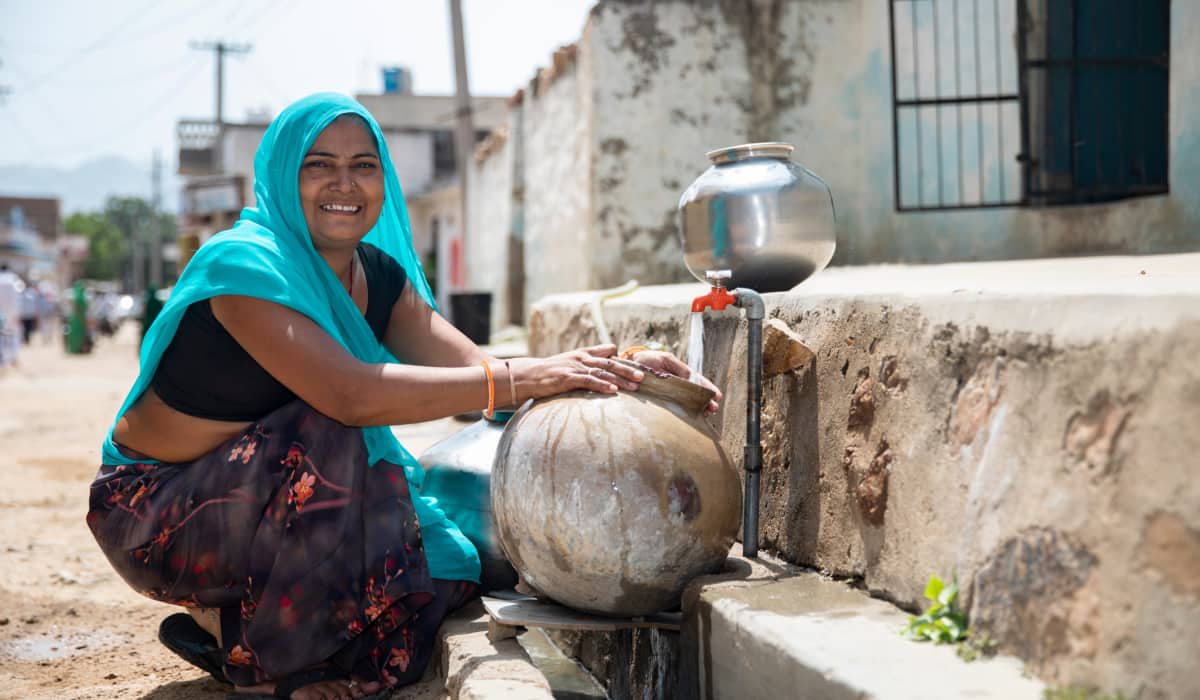
For generations, the sight of women carrying pots of water on their heads was an everyday scene in rural India. It was more than a chore, it was a necessity that was an integral part of their everyday life. The water was brought back, often just one or two pots which had to be stretched for drinking, cooking, cleaning, and washing. It was a routine that left little time for rest, education, or income-generating work, and the burden fell most heavily on women.

Before 2014 water scarcity, one of India’s most pressing problems, was met with little urgency or vision. Access to safe drinking water was fragmented, villages relied on distant sources, and nationwide household tap connections were seen as unrealistic.

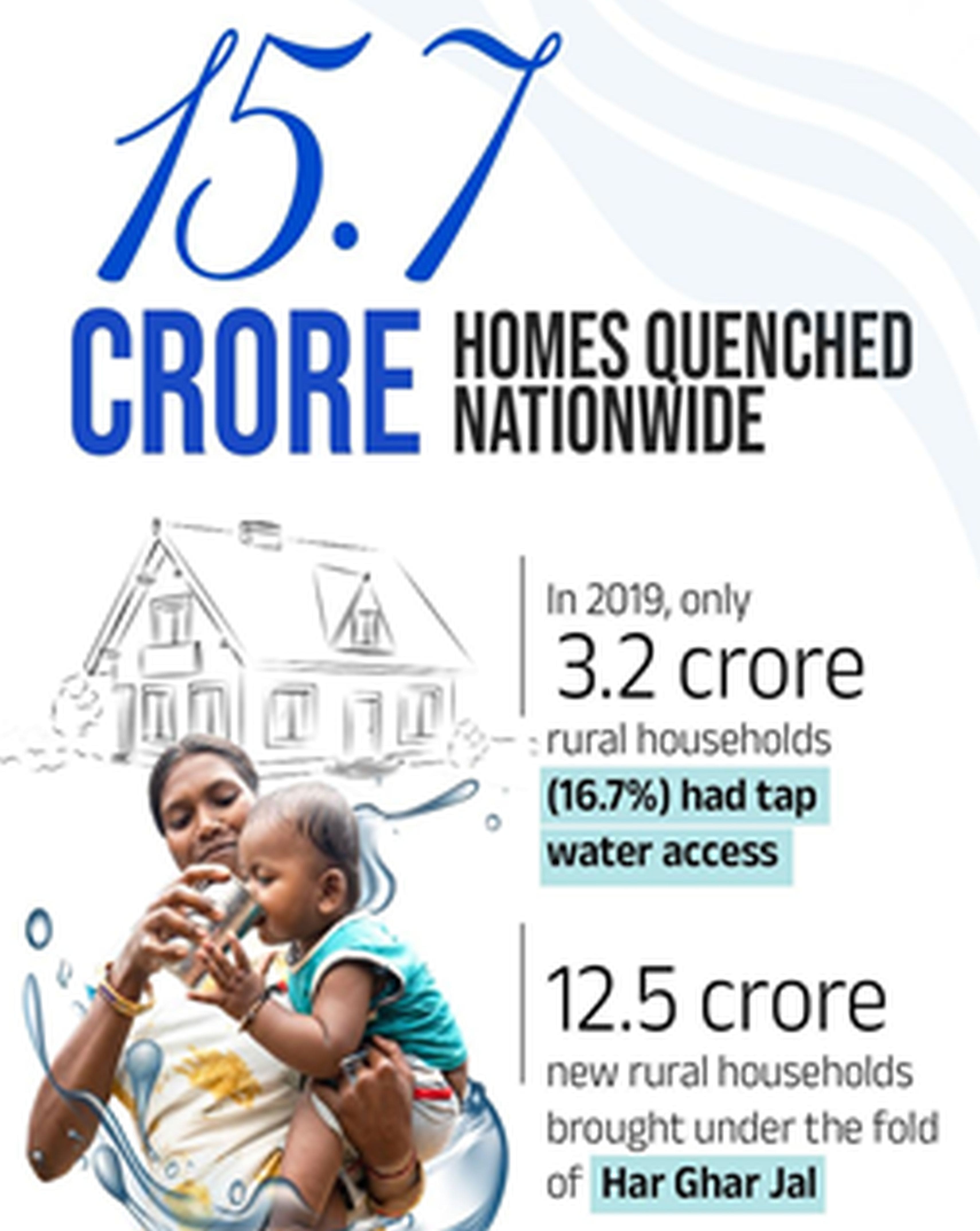
This reality began to shift in 2019, when the Government of India launched the Jal Jeevan Mission (JJM). A centrally sponsored initiative which aims at providing a Functional Household Tap Connection (FHTC) to every rural household. At that time, only 3.2 crore rural households, a modest 16.7% of the total, had tap water. The rest still depended on community sources, often far from home.

As of July 2025, the progress under the Har Ghar Jal program has been exceptional, with 12.5 crore additional rural households connected, bringing the total to over 15.7 crore. The program has achieved 100% tap water coverage in 200 districts and over 2.6 lakh villages, with 8 states and 3 union territories now fully covered. For millions, this means not just access to water at home, but saved time, improved health, and restored dignity. Nearly 80% of tap water coverage has been achieved in 112 aspirational districts, a significant rise from less than 8%. Additionally, 59 lakh households in LWE districts have gained tap water connections, ensuring development reaches every corner. Acknowledging both the significant progress and the road ahead, the Union Budget 2025–26 announced the program’s extension until 2028 with an increased budget.

The Jal Jeevan Mission, launched nationally in 2019, traces its origins to Gujarat, where Narendra Modi, as Chief Minister, tackled water scarcity in the arid state through the Sujalam Sufalam initiative. This effort formed a blueprint for a mission that would one day aim to provide tap water to every rural household in India.

Though drinking water is a State subject, the Government of India has taken on the role of a committed partner, providing technical and financial support while empowering States to plan and implement local solutions. To keep the Mission on track, a strong monitoring system links Aadhaar for targeting, geo-tags assets, conducts third-party inspections, and uses IoT devices to track village water flow.

The Jal Jeevan Mission’s objectives are as much about people as they are about pipes. By prioritizing underserved and water-stressed areas, ensuring that schools, Anganwadi centres, and health facilities have running water, and encouraging local communities to take ownership through contributions or shramdaan, the Mission aims to make safe water everyone’s responsibility..

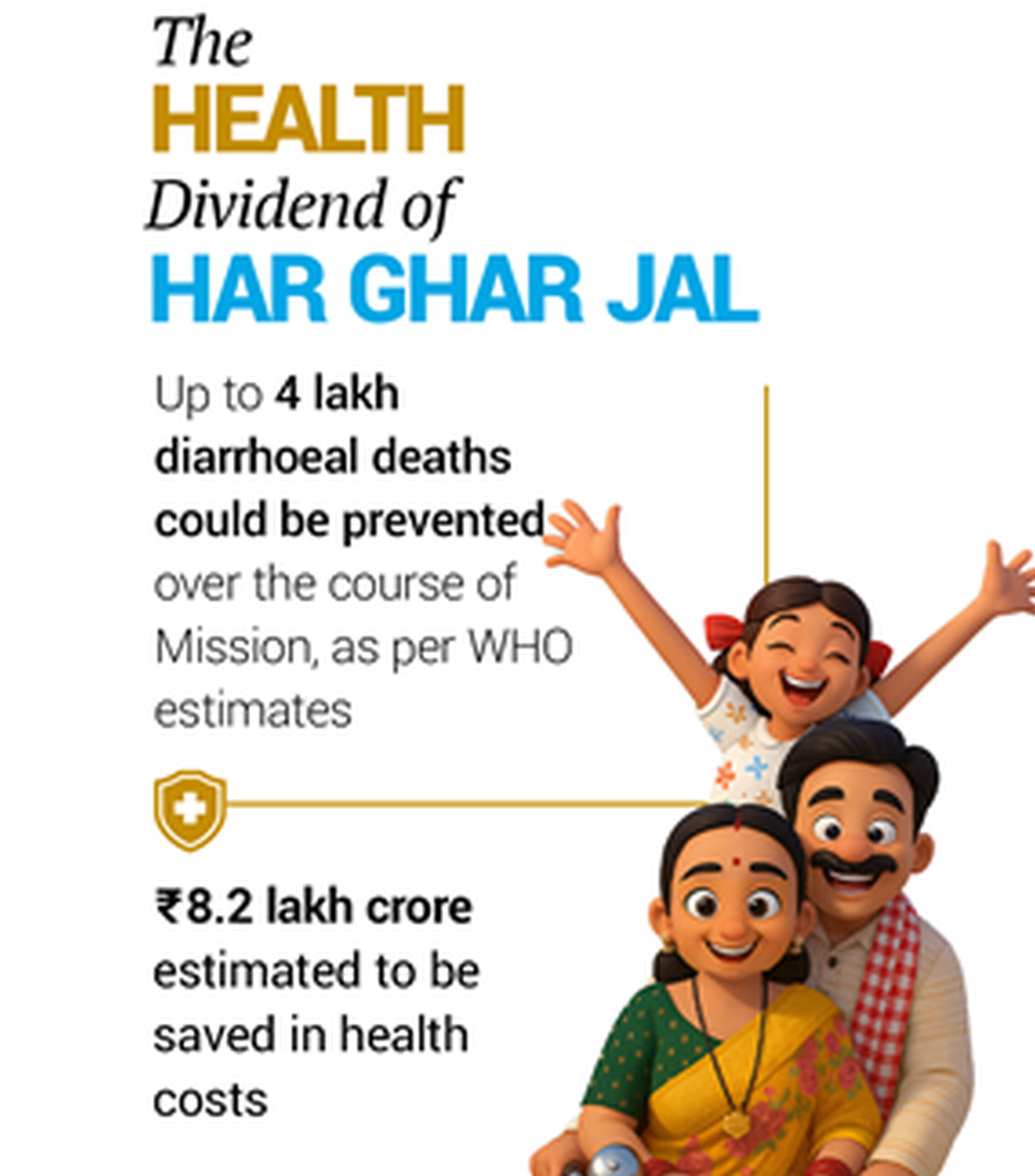
The impact reaches far beyond convenience. The World Health Organization estimates that achieving JJM’s targets could save over 5.5 crore hours each day, time that can now be spent on education, work, or family. 9 crore women no longer need to fetch water from outside. WHO also projects that safe water for all could prevent nearly 4 lakh deaths from diarrhoeal disease and save Rs. 8.2 lakh crores in health costs. Additionally, according to IIM Bangalore and the International Labour Organization, JJM has generated nearly 3 crore person-years of employment during its build-out, with nearly 25 lakh women are trained to use Field testing Kits.

From the quiet relief of a mother filling a glass of clean water in her kitchen, to the confidence of a school where children can drink without worry, the Jal Jeevan Mission is changing what it means to live in rural India.