CM blogs on Congress suggestion to ban opinion polls

Published By : Admin | November 4, 2013 | 20:10 IST

Today Opinion Polls, what next?

Dear Friends,

Hope you have had a wonderful Diwali with your family and loved ones!

In the last few days, I have been reading news articles in the newspapers, Internet and social media on the views of our friends in the Congress Party on the banning of opinion polls. In response to that, two Tweets caught my attention. BJD’s Lok Sabha MP, Jay Panda wrote in response to that, saying “Next step, curb opinions” and Chetan Bhagat Tweeted, “Ban Opinion Polls. Better ban opinions. Or best, ban polls.”


Friends in their humor there is a profound message.

Those who have followed Indian politics and the workings of the Congress party after Independence would agree that the stand of the Congress Party does not come as a surprise. The biggest casualty of the Congress Party’s arrogance while in power and its tendency to trample over Institutions has been our Fundamental Right to Free Speech.

It was not too long ago that the UPA Government showed us how intolerant it was of Social Media criticism when Twitter handles were suspended by the Government. On that occasion I had blackened my Twitter display picture as a mark of solidarity with all those in Social Media who were speaking up for free speech and expression. On the Nirvan Diwas of Dr. Babasaheb Ambedkar in 2011, many Central Ministers spoke of controlling social media. Irony truly died a hundred times over that day.  Some months back a Restaurant in Mumbai was threatened for expressing its Opinion against the UPA’s Policies in a creative manner on a Sales Receipt.

At a time when the nation is reeling under high prices, and unemployment is rising, we have this shameful spectacle of a Central Ministry writing to media persons regarding the television coverage of the PM’s Independence speech on the 15th August, that too two months later. This is clearly a case of terribly misplaced priorities. Energy is being wasted on non-serious issues by this Government instead of addressing the pressing issues of national importance.

I would also like to ask my media friends why they are silent on these proposals and advisories aimed at restricting their freedom of expression?

As for opinion polls, it is not that I have any particular affinity for them. In fact, I am quite aware of their limitations. Our enlightened pollsters made assertions about how Gujarat will vote against the BJP in 2002, then again in 2007 and even in 2012 with such great confidence only to be proven incorrect by the people.

However there is an important principle and ethic here that holds true for every Party and Government. From Bhishma in the Mahabharata to Kautilya in the Arthashastra we have been taught how important it is for those in Government to be attuned to Public Opinion. A government that is in denial over where the Public Opinion really stands is doomed to be thrown out of power.

Opinion Polls in India have a mixed record. They get their predictions right sometimes and not so right some other times. It is up to us as political parties to determine what to do with the findings of an opinion poll.

If the poll is favourable we are free to become complacent or we can continue our work on the ground without becoming over confident.

If they are not favourable to us, we are free to reject the numbers and remain in denial or we can choose to take corrective action where it merits.

To resort to extreme steps simply because the Opinion Polls do not tell us what we may want to hear is utterly puerile.

My concern is not limited to this proposal to ban opinion polls. Tomorrow, the Congress may seek a ban on articles, editorials and blogs during election time on the very same grounds. If they lose an election they may then seek a ban on the Election Commission and if the Courts do not support them then they may say why not ban the courts! After all this a Party that resorted to imposing the Emergency in response to an inconvenient Court Verdict.

I am glad that my colleague Arun Jaitley ji has raised these issues in an article as well.

If you ask me, the solution is much simpler. Rather than cope with these authoritarian and subversion tactics of the Congress, it is better we reject the anti-democratic Congress not merely in an opinion poll but in the Polling Booth where it matters the most.

People are the best judge!

Narendra Modi

Explore More
Today, the entire country and entire world is filled with the spirit of Bhagwan Shri Ram: PM Modi at Dhwajarohan Utsav in Ayodhya

Popular Speeches

Today, the entire country and entire world is filled with the spirit of Bhagwan Shri Ram: PM Modi at Dhwajarohan Utsav in Ayodhya
World Bank Projects India's Growth At 7.2% Due To

Media Coverage

World Bank Projects India's Growth At 7.2% Due To "Resilient Activity"
NM on the go

Nm on the go

Always be the first to hear from the PM. Get the App Now!
...
Somnath Swabhiman Parv – A 1000 Years of Unbroken Faith (1026-2026)
January 05, 2026

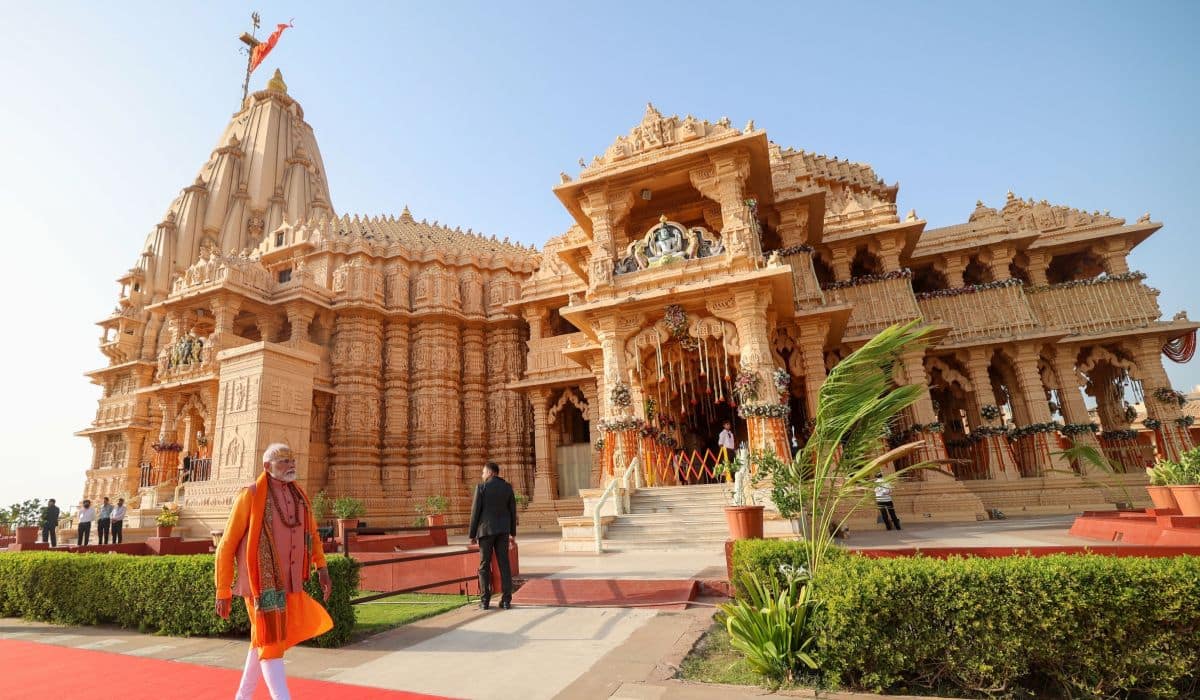
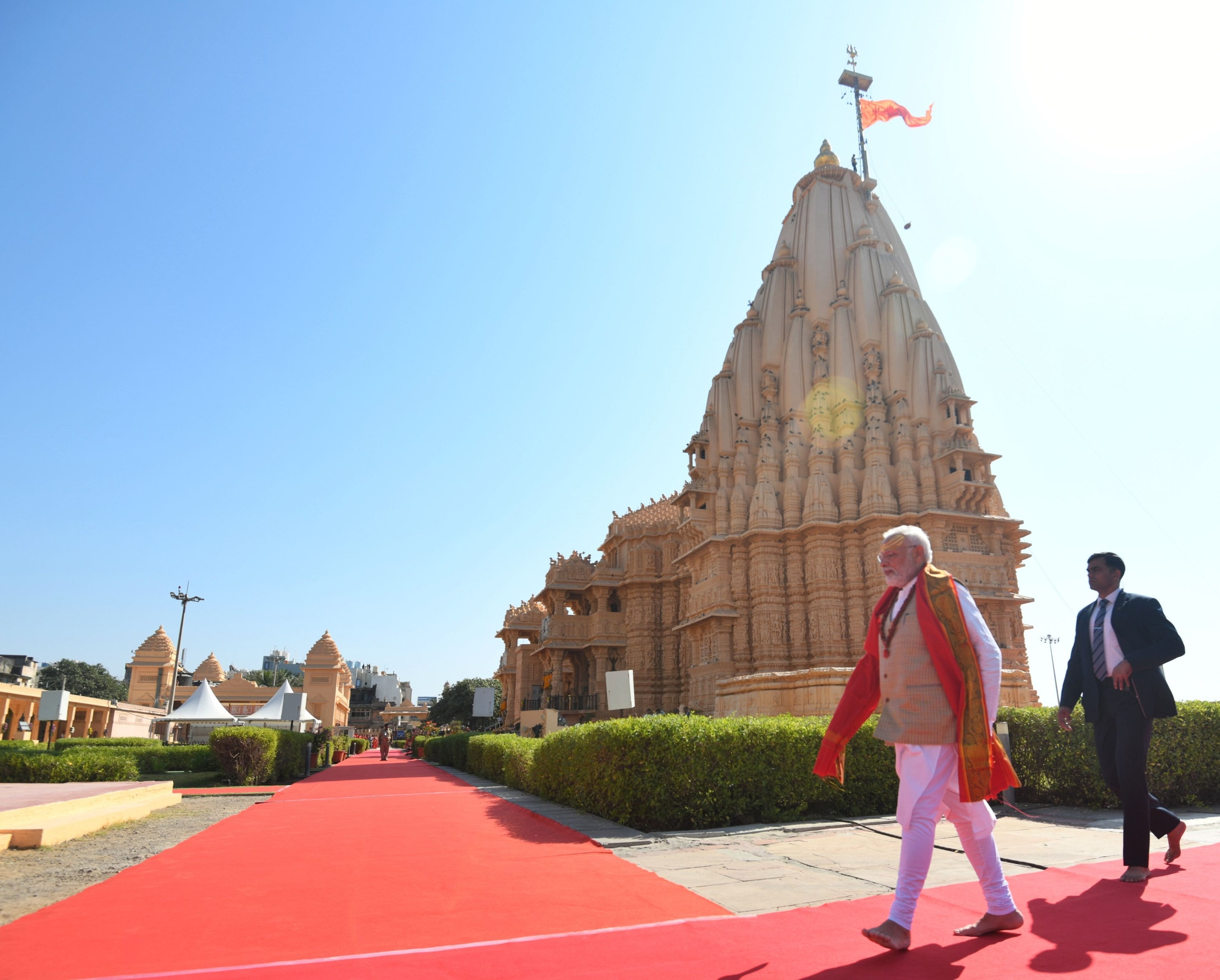
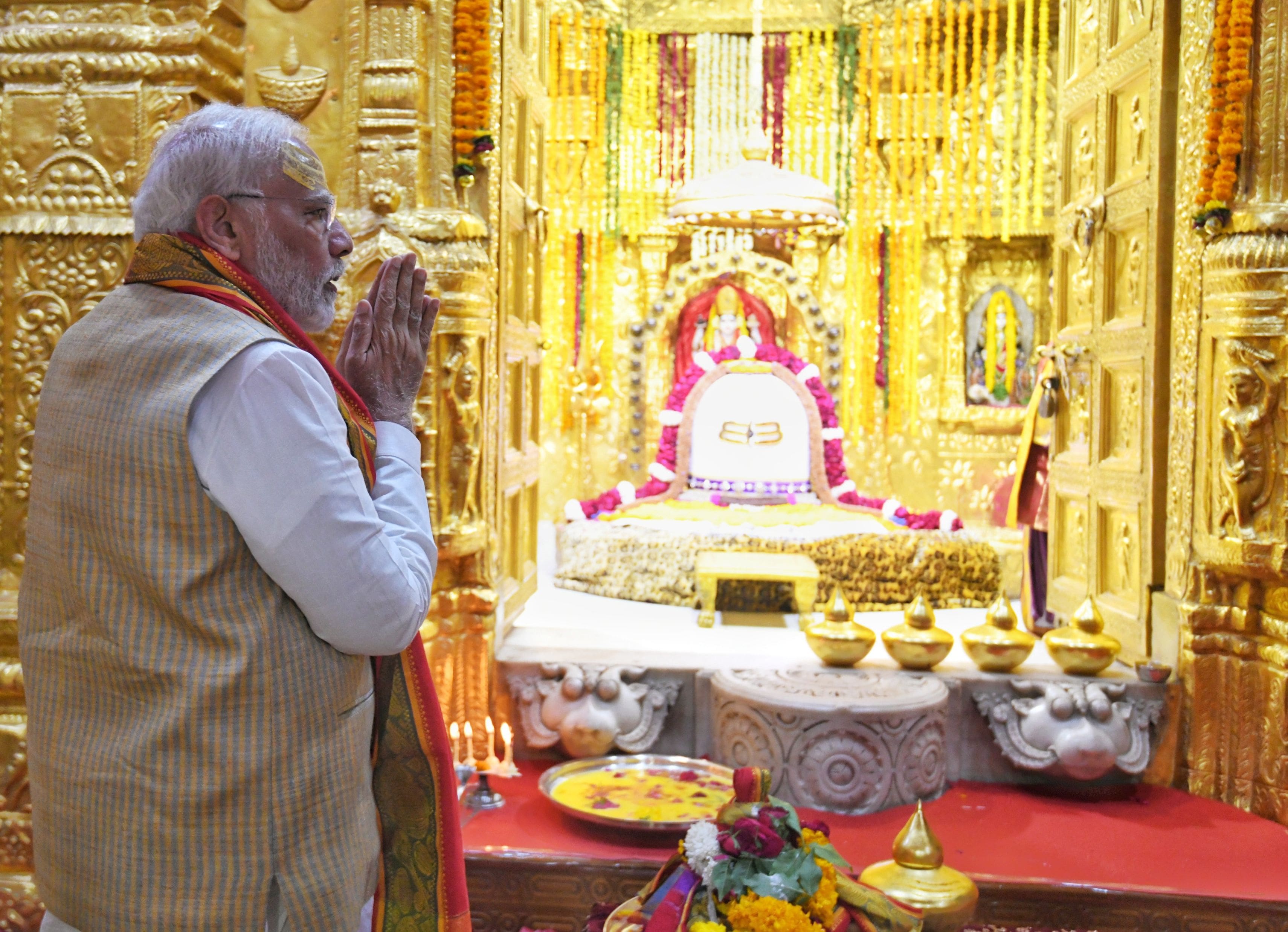
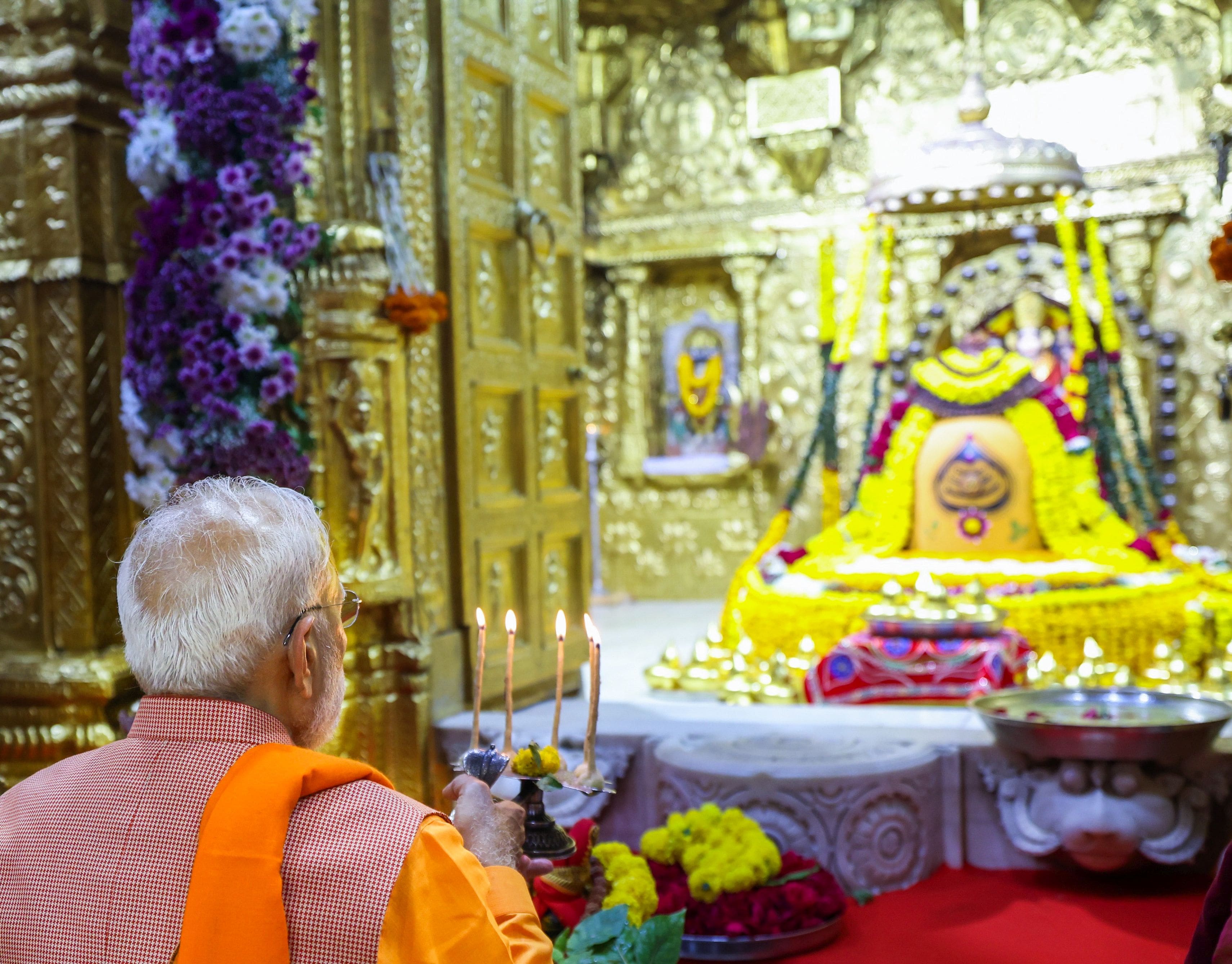
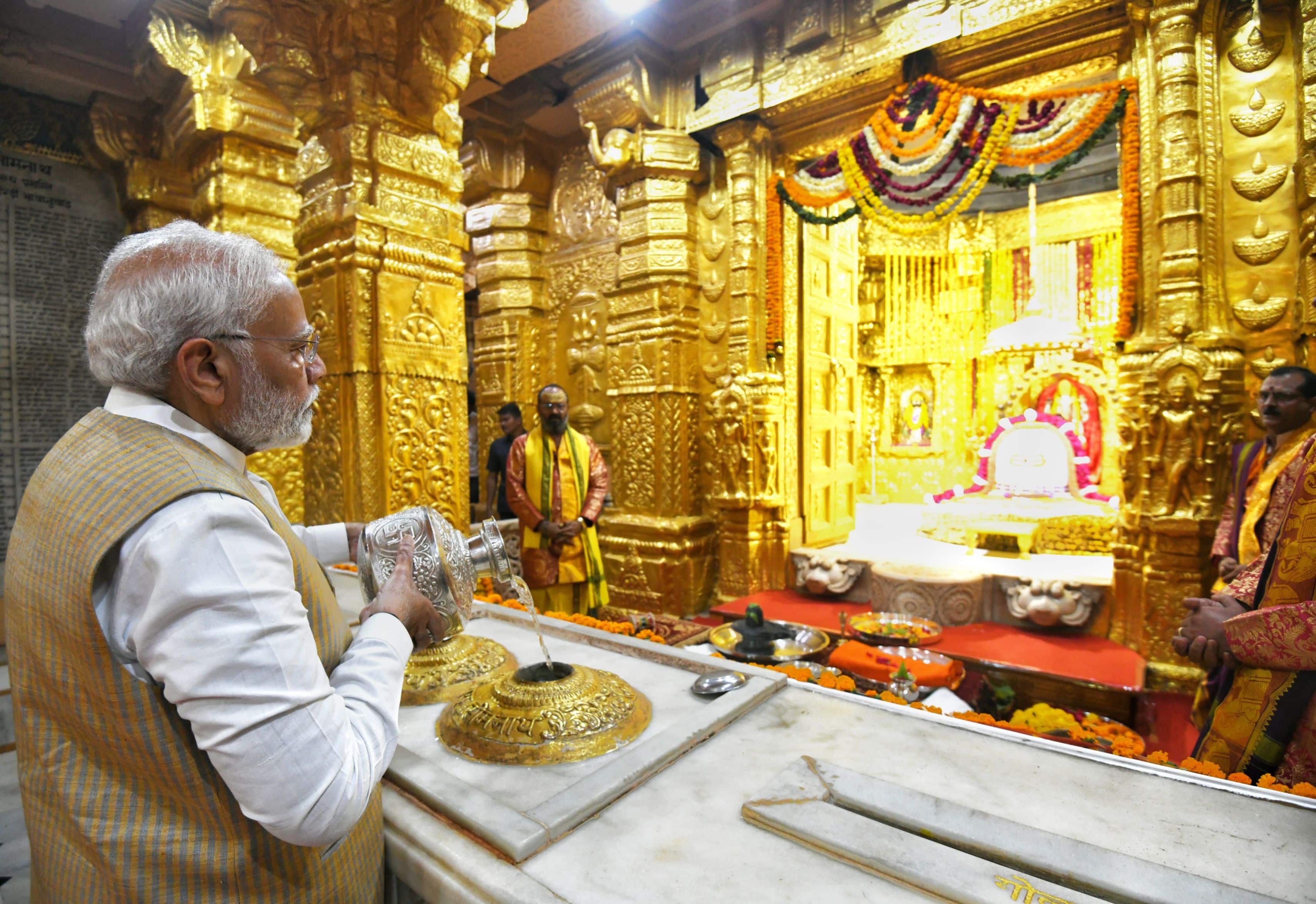
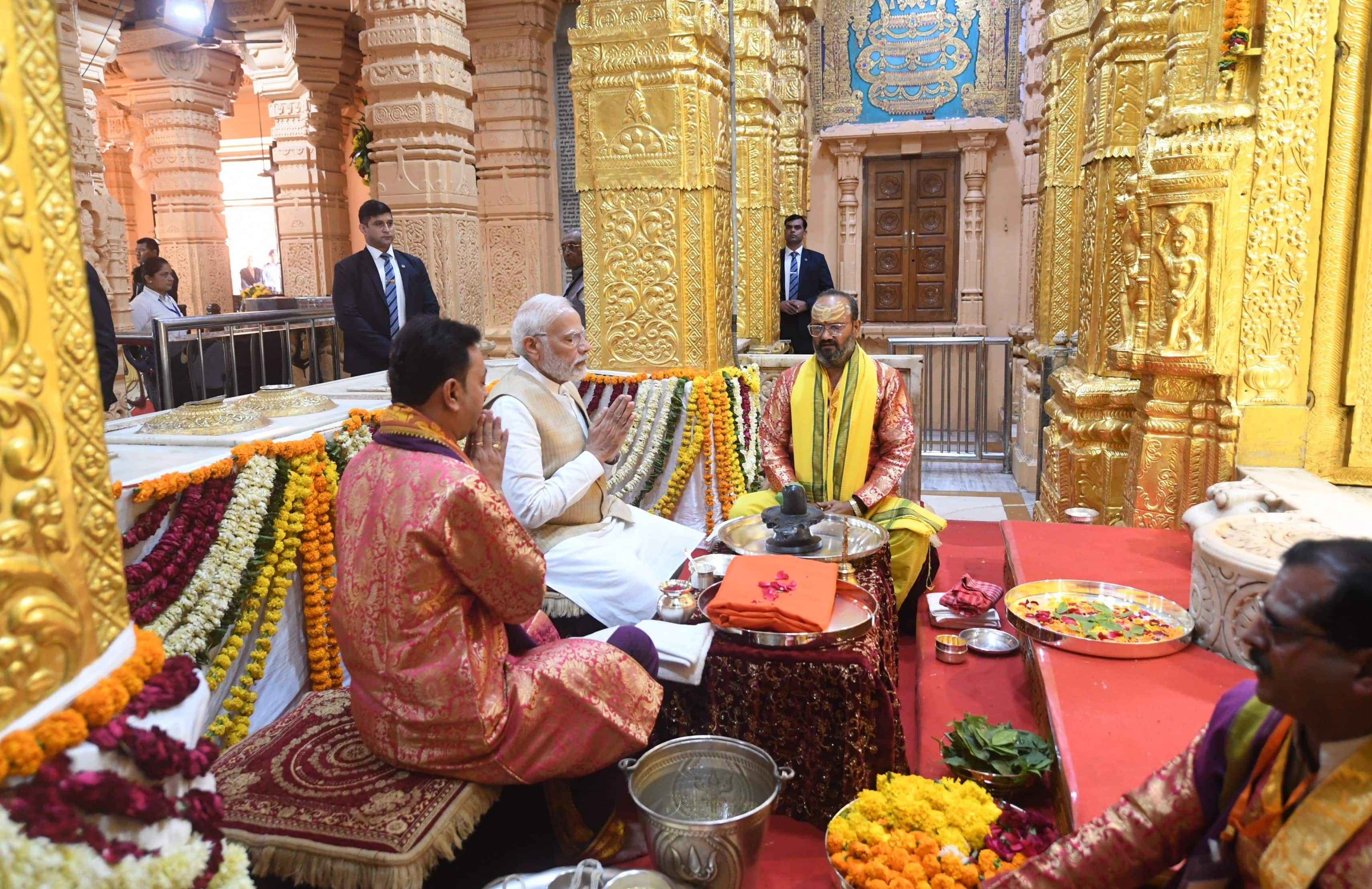
Somnath…hearing this word instils a sense of pride in our hearts and minds. It is the eternal proclamation of India’s soul. This majestic Temple is situated on the Western coast of India in Gujarat, at a place called Prabhas Patan. The Dwadasha Jyotirling Stotram mentions the 12 Jyotirlings across India. The Stotram begins with “सौराष्ट्रे सोमनाथं च..”, symbolising the civilisational and spiritual importance of Somnath as the first Jyotirling.

It is also said:

सोमलिङ्गं नरो दृष्ट्वा सर्वपापैः प्रमुच्यते।
लभते फलं मनोवाञ्छितं मृतः स्वर्गं समाश्रयेत्॥

It means: Just the sight of Somnath Shivling ensures that a person is freed of sins, achieves their righteous desires and attains heaven after death.

Tragically, this very Somnath, which drew the reverence and prayers of millions, was attacked by foreign invaders, whose agenda was demolition, not devotion.

The year 2026 is significant for the Somnath Temple. It has been 1,000 years since the first attack on this great shrine. It was in January of 1026 that Mahmud of Ghazni attacked this Temple, seeking to destroy a great symbol of faith and civilisation, through a violent and barbaric invasion.

Yet, one thousand years later, the Temple stands as glorious as ever because of numerous efforts to restore Somnath to its grandeur. One such milestone completes 75 years in 2026. It was during a ceremony on May 11th 1951, in the presence of the then President of India, Dr. Rajendra Prasad, that the restored Temple opened its doors to devotees.

The first invasion of Somnath a thousand years ago in 1026, the cruelty that was unleashed upon the people of the town and the devastation that was inflicted upon the shrine have been documented in great detail in various historical accounts. When you read them, the heart trembles. Each line carries the weight of grief, cruelty and a sorrow that refuses to fade with time.

Imagine the impact it had on Bharat and the morale of the people. After all, Somnath had great spiritual significance. It was also on the coast, giving strength to a society with great economic prowess, whose sea traders and seafarers carried tales of its grandeur far and wide.

Yet, I am proud to state unequivocally that the story of Somnath, a thousand years after the first attack, is not defined by destruction. It is defined by the unbreakable courage of crores of children of Bharat Mata.

The medieval barbarism that began a thousand years ago in 1026 went on to ‘inspire’ others to repeatedly attack Somnath. It was the start of an attempt to enslave our people and culture. But, each time the Temple was attacked, we also had great men and women who stood up to defend it and even made the ultimate sacrifice. And every single time, generation after generation, the people of our great civilisation picked themselves up, rebuilt and rejuvenated the Temple. It is our privilege to have been nurtured by the same soil that has nurtured greats like Ahilyabai Holkar, who made a noble attempt to ensure devotees can pray at Somnath.

In the 1890s, Swami Vivekananda visited Somnath and that experience moved him. He expressed his feelings during a lecture in Chennai in 1897 when he said,Some of these old temples of Southern India and those like Somnath of Gujarat will teach you volumes of wisdom, will give you a keener insight into the history of the race than any amount of books. Mark how these temples bear the marks of a hundred attacks and a hundred regenerations, continually destroyed and continually springing up out of the ruins, rejuvenated and strong as ever! That is the national mind, that is the national life-current. Follow it and it leads to glory. Give it up and you die; death will be the only result, annihilation, the only effect, the moment you step beyond that life current.”

The sacred duty of rebuilding the Somnath Temple after independence came to the able hands of Sardar Vallabhbhai Patel. A visit during Diwali time in 1947 moved him so much that he announced that the Temple will be rebuilt there. Finally, on May 11th 1951, a grand Temple in Somnath opened its doors to devotees and Dr. Rajendra Prasad was present there. The great Sardar Sahib was not alive to see this historic day, but the fulfilment of his dream stood tall before the nation. The then Prime Minister, Pandit Jawaharlal Nehru, was not too enthused with this development. He did not want the Honourable President as well as Ministers to associate with this special event. He said that this event created a bad impression of India. But Dr. Rajendra Prasad stood firm and the rest is history. No mention of Somnath is complete without recalling the efforts of KM Munshi, who supported Sardar Patel very effectively. His works on Somnath, including the book, ‘Somanatha: The Shrine Eternal’, are extremely informative and educative.

Indeed, as the title of Munshi Ji’s book conveys, we are a civilisation that carries a sense of conviction about the eternity of spirit and of ideas. We firmly believe that that which is eternal is indestructible, as outlined in the famous Gita verse “नैनं छिन्दन्ति शस्त्राणि…”. There can be no better example of our civilisation’s indomitable spirit than Somnath, which stands gloriously, overcoming odds and struggles.

It is this same spirit that is visible in our nation, one of the brightest spots of global growth, having overcome centuries of invasions and colonial loot. It is our value systems and the determination of our people that have made India the centre of global attention today. The world is seeing India with hope and optimism. They want to invest in our innovative youngsters. Our art, culture, music and several festivals are going global. Yoga and Ayurveda are making a worldwide impact, boosting healthy living. Solutions to some of the most pressing global challenges are coming from India.

Since time immemorial, Somnath has brought together people from different walks of life. Centuries ago, Kalikal Sarvagna Hemchandracharya, a respected Jain monk, came to Somnath. It is said that after praying there, he recited a verse, “भवबीजाङ्कुरजनना रागाद्याः क्षयमुपगता यस्य।”. It means - Salutations to That One in whom the seeds of worldly becoming are destroyed, in whom passion and all afflictions have withered away.” Today, Somnath holds the same ability to awaken something profound within the mind and soul.

A thousand years after the first attack in 1026, the sea at Somnath still roars with the same intensity as it did back then. The waves that wash the shores of Somnath tell a story. No matter what, just like the waves, it kept rising again and again.

The aggressors of the past are now dust in the wind, their names synonymous with destruction. They are footnotes in the annals of history, while Somnath stands bright, radiating far beyond the horizon, reminding us of the eternal spirit that remained undiminished by the attack of 1026. Somnath is a song of hope that tells us that while hate and fanaticism may have the power to destroy for a moment, faith and conviction in the power of goodness have the power to create for eternity.

If the Somnath Temple, which was attacked a thousand years ago and faced continuous attacks thereon, could rise again and again, then we can surely restore our great nation to the glory it embodied a thousand years ago before the invasions. With the blessings of Shree Somnath Mahadev, we move forward with a renewed resolve to build a Viksit Bharat, where civilisational wisdom guides us to work for the welfare of the whole world.

Jai Somnath!