PM Narendra Modi’s approach has shown a transformative journey which fosters an inclusive development model and empower the marginalised communities. Upliftment of the backward classes is central which includes Schedule Castes (SC), Schedules Tribes and Some Vulnerable Tribal Groups. Modi government attempts to foster inclusive development through a series of targeted policies, schemes and inititatives.


Particularly Vulnerable Tribal Groups (PVTGs) are among the most marginalized communities. And they require special attention and support by the government. Due to this Pradhan Mantri PVTG Development Mission was launched by the Modi government in 2023 with a budget of 24000 crore. The aim was to enhance the socio-economic conditions of PVTGs by providing safe housing, education, drinking water and sustainable livelihood opportunities.


On similar lines Prime Minister Narendra Modi also initiated the Viksit Bharat Sankalp Yatra on Janjatiya Gaurav Divas which is the Birth anniversary of tribal leader Birsa Munda. The purpose of this yatra was to raise awareness and provide information about different government welfare programs in tribal areas. 2.55 million Gram Panchayats and 3600 urban local authorities were covered by Janurary 25,2024. The government through these initiatives aimed to address specific tribal concerns like healthcare initiatives like Sickle Cell Anaemia Elimination Mission and scholarship Programs


Along with that there were schemes aimed at improving the lives of Scheduled Castes (SC) and Scheduled Tribes (ST). These includes PM-Gram Sadak Yojana and PM-Gram Awas Yojana. These provided basic infrastructure and affordable housing in rural areas which are inhabited by SCs and STs. In order to provide clean drinking water Jal Jeewan Mission was initiated. Along with that, Ayushman Bharat and PMJAY offer financial security for healthcare expenses. Food security is ensured by Prime Minister Garib Kalyan Anna Yojana and economic empowerment is promoted through initiatives like Deeendayal Antyodaya Yojana-National Rural Livelihood Mission due to which backward classes got the chance to become self-employed.


Realising the need for education in uplifting backward classes and breaking the cycle of poverty, Modi led government has launched initiatives to increase access to education opportunities for the SCs, STs and other marginalised communities. The Pradhan Mantri Jan Vikas Karyakram (PMJVK) aims to provide quality education to children belonging to SC, ST and Minority communities.Likewise the National Fellowship for Scheduled Caste students (NFSCS) provides assistance to SC students who are pursuing higher education. Along with that youth is getting employed through Skill India Mission.


There is Stand-up India scheme that has been launched by Modi government which aims to provide financial assistance and support to SC,ST and women entrepreneurs by providing bank loans for starting new business. Pradhan Mantri Mudra Yojana (PMMY) provides financial assistance to Micro and small enterprises owned by individuals from backward classes.
Healthcare for backward classes is provided through Ayushman Bharat Scheme known as Pradhan Mantri Jan Arogya Yojana.


Modi’s holistic approach reflects a comprehensive strategy which aims to diminish the socio-economic disparities. There are policies and welfare schemes for the SCs, STs and other backward classes.

Explore More
Today, the entire country and entire world is filled with the spirit of Bhagwan Shri Ram: PM Modi at Dhwajarohan Utsav in Ayodhya

Popular Speeches

Today, the entire country and entire world is filled with the spirit of Bhagwan Shri Ram: PM Modi at Dhwajarohan Utsav in Ayodhya
India's electronics exports cross $47 billion in 2025 on iPhone push

Media Coverage

India's electronics exports cross $47 billion in 2025 on iPhone push
NM on the go

Nm on the go

Always be the first to hear from the PM. Get the App Now!
...
6 Years of Jal Jeevan Mission: Transforming Lives, One Tap at a Time
August 14, 2025
Jal Jeevan Mission has become a major development parameter to provide water to every household.” - PM Narendra Modi

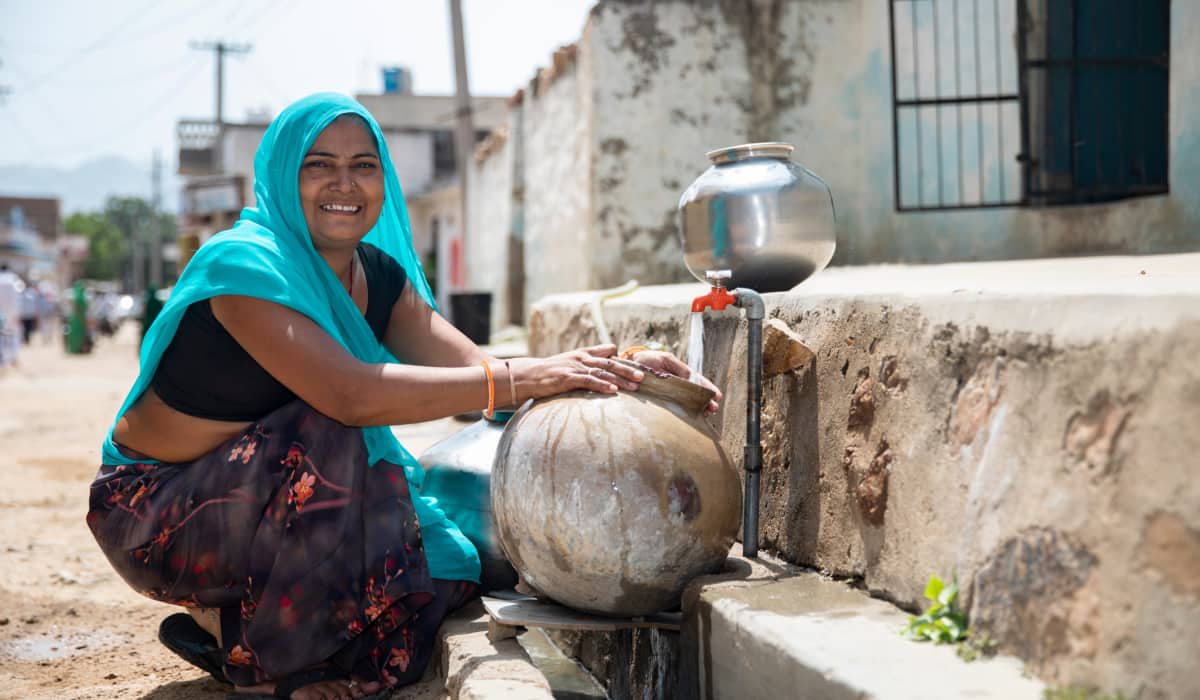
For generations, the sight of women carrying pots of water on their heads was an everyday scene in rural India. It was more than a chore, it was a necessity that was an integral part of their everyday life. The water was brought back, often just one or two pots which had to be stretched for drinking, cooking, cleaning, and washing. It was a routine that left little time for rest, education, or income-generating work, and the burden fell most heavily on women.

Before 2014 water scarcity, one of India’s most pressing problems, was met with little urgency or vision. Access to safe drinking water was fragmented, villages relied on distant sources, and nationwide household tap connections were seen as unrealistic.

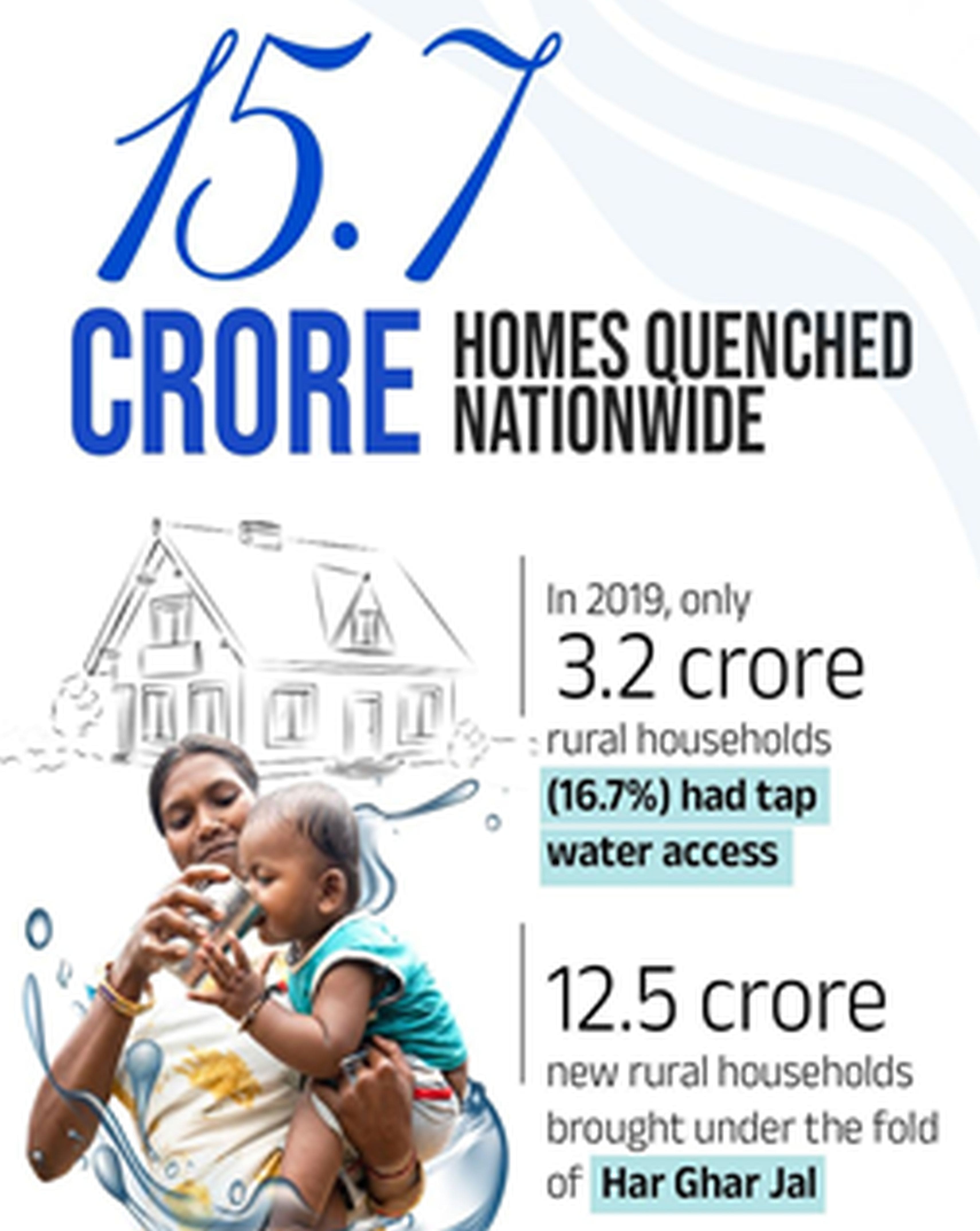
This reality began to shift in 2019, when the Government of India launched the Jal Jeevan Mission (JJM). A centrally sponsored initiative which aims at providing a Functional Household Tap Connection (FHTC) to every rural household. At that time, only 3.2 crore rural households, a modest 16.7% of the total, had tap water. The rest still depended on community sources, often far from home.

As of July 2025, the progress under the Har Ghar Jal program has been exceptional, with 12.5 crore additional rural households connected, bringing the total to over 15.7 crore. The program has achieved 100% tap water coverage in 200 districts and over 2.6 lakh villages, with 8 states and 3 union territories now fully covered. For millions, this means not just access to water at home, but saved time, improved health, and restored dignity. Nearly 80% of tap water coverage has been achieved in 112 aspirational districts, a significant rise from less than 8%. Additionally, 59 lakh households in LWE districts have gained tap water connections, ensuring development reaches every corner. Acknowledging both the significant progress and the road ahead, the Union Budget 2025–26 announced the program’s extension until 2028 with an increased budget.

The Jal Jeevan Mission, launched nationally in 2019, traces its origins to Gujarat, where Narendra Modi, as Chief Minister, tackled water scarcity in the arid state through the Sujalam Sufalam initiative. This effort formed a blueprint for a mission that would one day aim to provide tap water to every rural household in India.

Though drinking water is a State subject, the Government of India has taken on the role of a committed partner, providing technical and financial support while empowering States to plan and implement local solutions. To keep the Mission on track, a strong monitoring system links Aadhaar for targeting, geo-tags assets, conducts third-party inspections, and uses IoT devices to track village water flow.

The Jal Jeevan Mission’s objectives are as much about people as they are about pipes. By prioritizing underserved and water-stressed areas, ensuring that schools, Anganwadi centres, and health facilities have running water, and encouraging local communities to take ownership through contributions or shramdaan, the Mission aims to make safe water everyone’s responsibility..

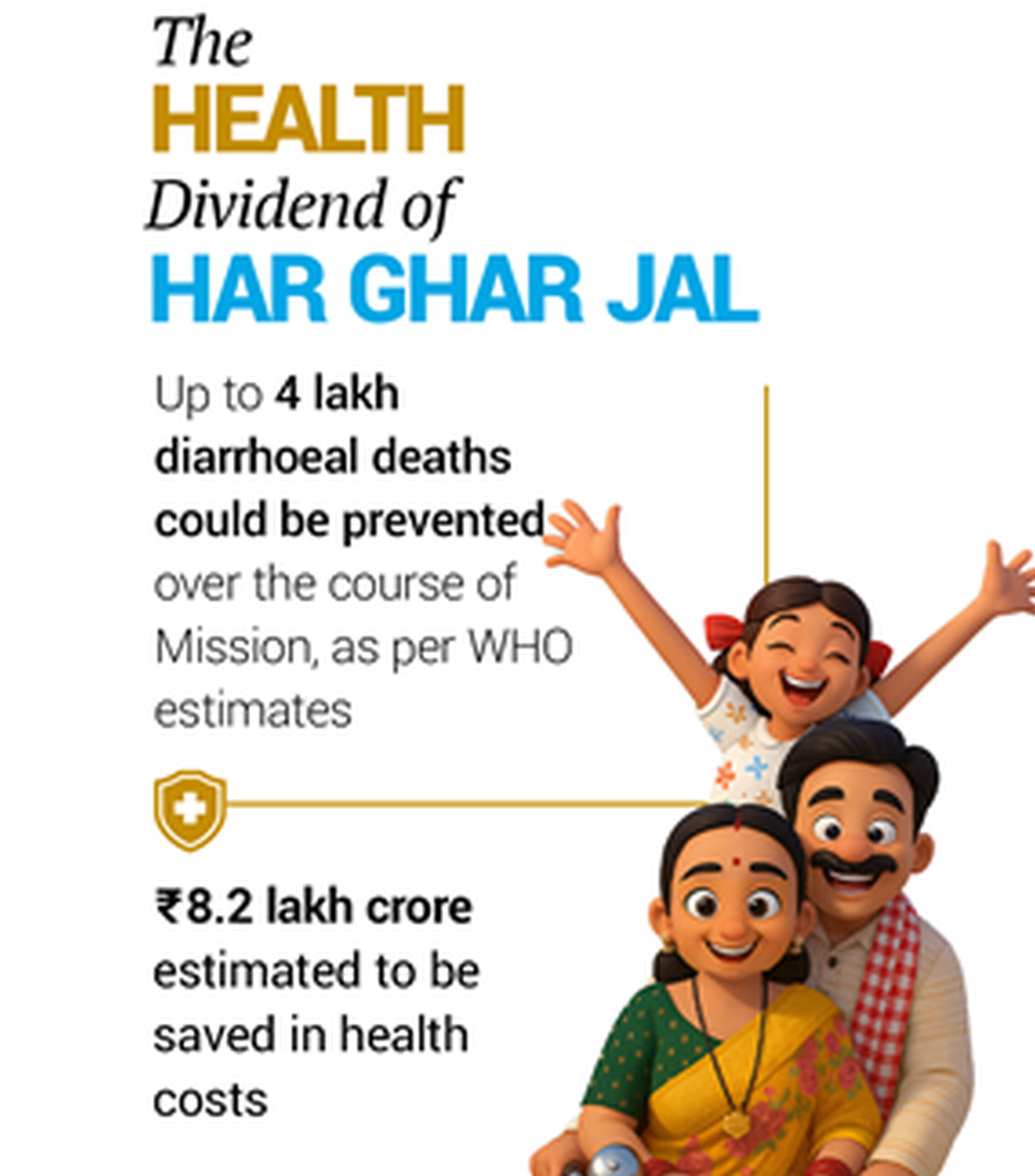
The impact reaches far beyond convenience. The World Health Organization estimates that achieving JJM’s targets could save over 5.5 crore hours each day, time that can now be spent on education, work, or family. 9 crore women no longer need to fetch water from outside. WHO also projects that safe water for all could prevent nearly 4 lakh deaths from diarrhoeal disease and save Rs. 8.2 lakh crores in health costs. Additionally, according to IIM Bangalore and the International Labour Organization, JJM has generated nearly 3 crore person-years of employment during its build-out, with nearly 25 lakh women are trained to use Field testing Kits.

From the quiet relief of a mother filling a glass of clean water in her kitchen, to the confidence of a school where children can drink without worry, the Jal Jeevan Mission is changing what it means to live in rural India.