"Baba Ramdev, Rajnath Singh, Arun Jaitley and Narendra Modi share stage at foundation day celebrations of Bharat Swabhiman Trust"
"Narendra Modi lauds the efforts of Baba Ramdev"
"The way to end corruption is a progressive, policy driven state with proper implementation: Narendra Modi"
"I assure you all that we will try our level best to fulfill the expectations that are there from us: Narendra Modi"
"Our demographic dividend is our asset: Narendra Modi"
"If we want to increase GDP, we have to increase productivity: Narendra Modi"
"We do not need men and women from other planets to develop India. Our people, our youth are skilled: Narendra Modi"
"We have to make our presence felt in the manufacturing sector and for that we need to focus on value addition: Narendra Modi"

Go by track record, not tape record…go by track record not mere promises! This was the resounding message of hope, vision and aspiration emerging from Shri Narendra Modi’s speech at the foundation day celebrations of Bharat Swabhiman Trust, which works under the guidance of the respected Yoga Guru Baba Ramdev ji. Shri Modi spoke on a variety of issues and said that it is possible to bring change for the betterment of the people. Shri Modi affirmed that India is a skilled nation and that for the nation’s development we do not need men and women from other planets, we need to empower our people and our youth with the right skills and opportunity. He gave the example of the successful launch of the GSLV D5, to illustrate the skill and talent India is blessed with. Shri Modi reiterated his belief that the nation’s demographic dividend is an asset and that unfortunately, the Congress led UPA considers it a disaster.

One by one, Shri Modi shared his invaluable insight and experience in governance and shared light on how change can be possible in the nation. He called for increasing productivity in order to increase agriculture. On agriculture, Shri Modi said that it is a very important aspect of the nation’s growth and added that the focus must be on farming, farming of trees and on animal husbandry. He spoke on Gujarat’s success in animal husbandry including the rise in milk production. He affirmed that on one hand efforts must be made to enhance the white and green revolution but unfortunately the Centre is more concerned about the pink revolution that encourages export of mutton. Will animals or their meat help our farmers, Shri Modi asked. Shri Modi talked about the success of the Wadi project, that was conceived during the NDA time and how it helped the farmers.

Shri Modi called for making India’s presence felt in the manufacturing sector and substantiated his point by talking about the importance of value addition. He opined that the way to end corruption is to have a progressive and policy driven state with proper implementation. He agreed that the taxation system has become a burden for the common man and that reform is needed, on which the BJP is also working. He stressed on the fact that systems must make things simpler and further observed that it is very much possible to bring change. Shri Modi commented that it is not that change is not possible, what happens is government start focusing on elections from day 1 itself.

The way to end corruption is a progressive, policy driven state with proper implementation: Narendra Modi

Shri Modi also agreed with the eminent dignitaries on the dais that we need to be proud of our languages and at the same time we need to embrace modern science and technology so that we can answer the world is any and every language possible. He reaffirmed his commitment against black money as well.

On a personal note, Shri Modi assured Swami Ramdev and all those who had gathered that both the BJP and him would try their level best to live upto the expectations of the people and try to fulfill the expectations. He profusely lauded the efforts of Baba Ramdev, that are devoted towards brining change in the nation, saying that when Saints do such Manthan, the outcome is Amrut (nectar). Shri Modi shared that he himself is not a pessimist because he has lived life without any pessimism. He added that when he thinks about all the negativity against him, he looks back and sees how the people of India have given so much love to him, a person who used to sell tea as a child. Shri Modi opined that those who experience pain in their life do not have to go on Yatras to see pain and suffering. He expressed his happiness that now elections are about development politics as opposed to only caste and ‘jod tod’ as it was earlier.

Present on the occasion were BJP President Shri Rajnath Singh and Leader of the Opposition in the Rajya Sabha Shri Arun Jaitley. All the leaders lauded the contribution and service of Baba Ramdev to the nation.

The way to end corruption is a progressive, policy driven state with proper implementation: Narendra Modi


Explore More
Today, the entire country and entire world is filled with the spirit of Bhagwan Shri Ram: PM Modi at Dhwajarohan Utsav in Ayodhya

Popular Speeches

Today, the entire country and entire world is filled with the spirit of Bhagwan Shri Ram: PM Modi at Dhwajarohan Utsav in Ayodhya
India's pace of economic growth shows that its Viksit Bharat dream is not out of reach

Media Coverage

India's pace of economic growth shows that its Viksit Bharat dream is not out of reach
NM on the go

Nm on the go

Always be the first to hear from the PM. Get the App Now!
...
PM chairs valedictory session of National Departmental Summit on Water
September 02, 2026
This marks the first in a series of Summits envisioned by PM to strengthen spirit of Team India and deepen cooperative federalism
PM stresses adoption of a continuous process of review and follow up to act on actionable and time-bound outcomes
Emphasising Jan Bhagidari, PM calls for promoting Jal Utsav to deepen public awareness on water conservation
PM calls for greater adoption of water-saving technologies and learning from global best practices
PM calls for robust water data governance through effective use of AI
PM suggests structured inter-State Study-visits involving public representatives, officials and farmers on water related issues

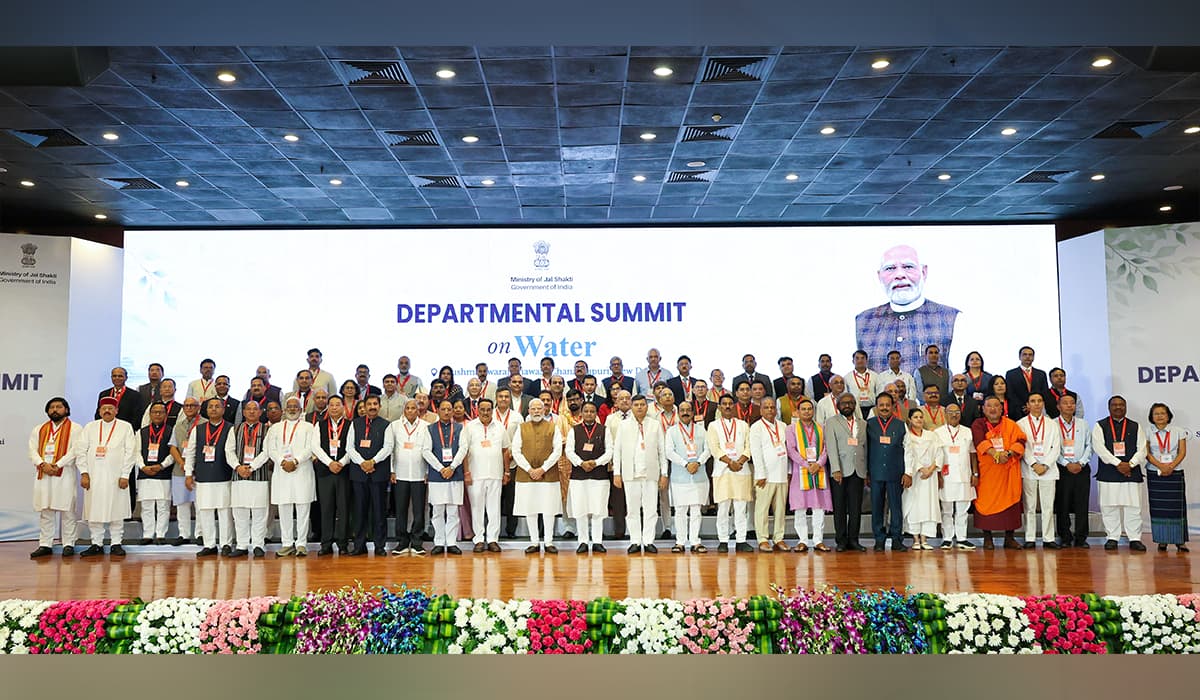
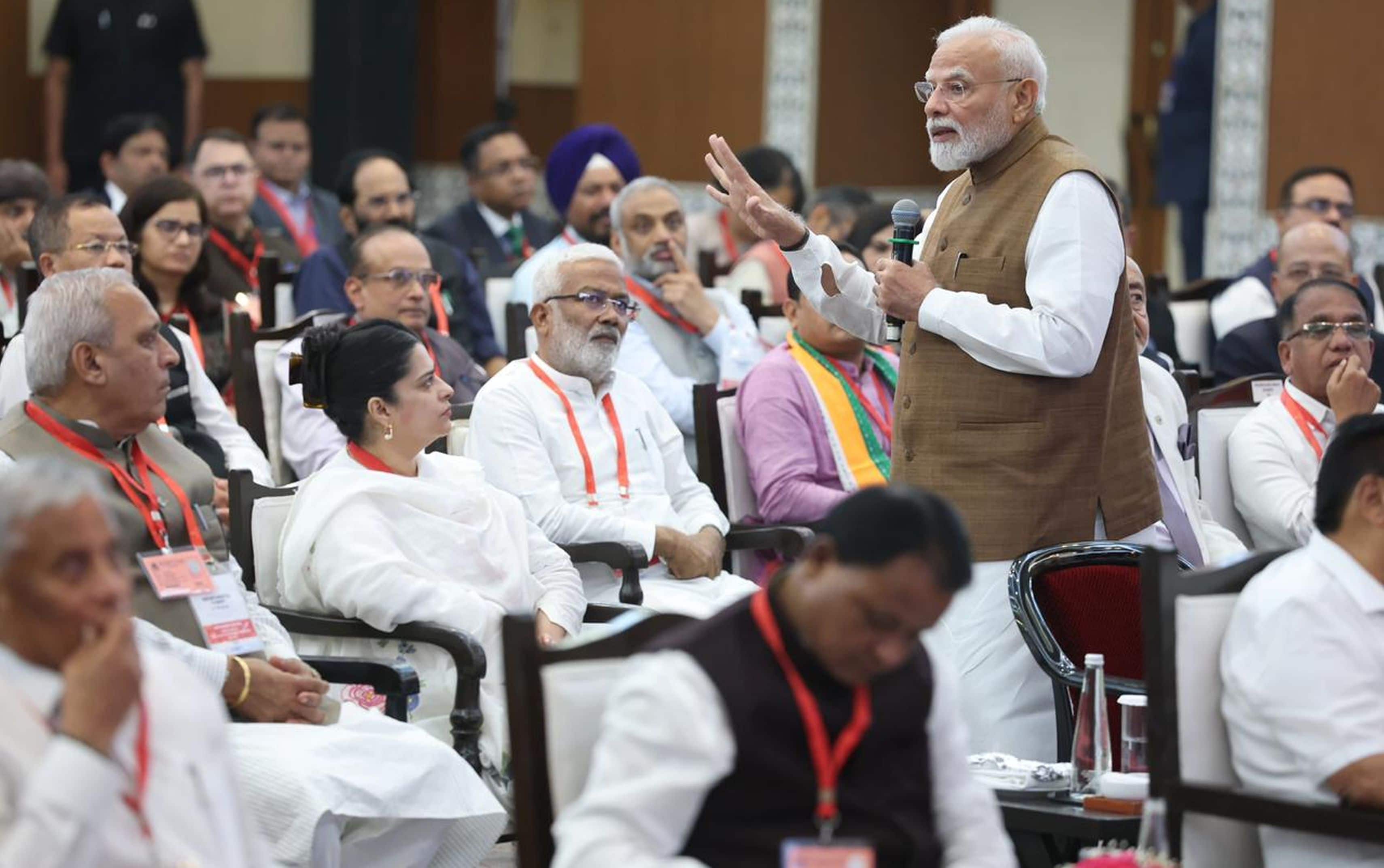
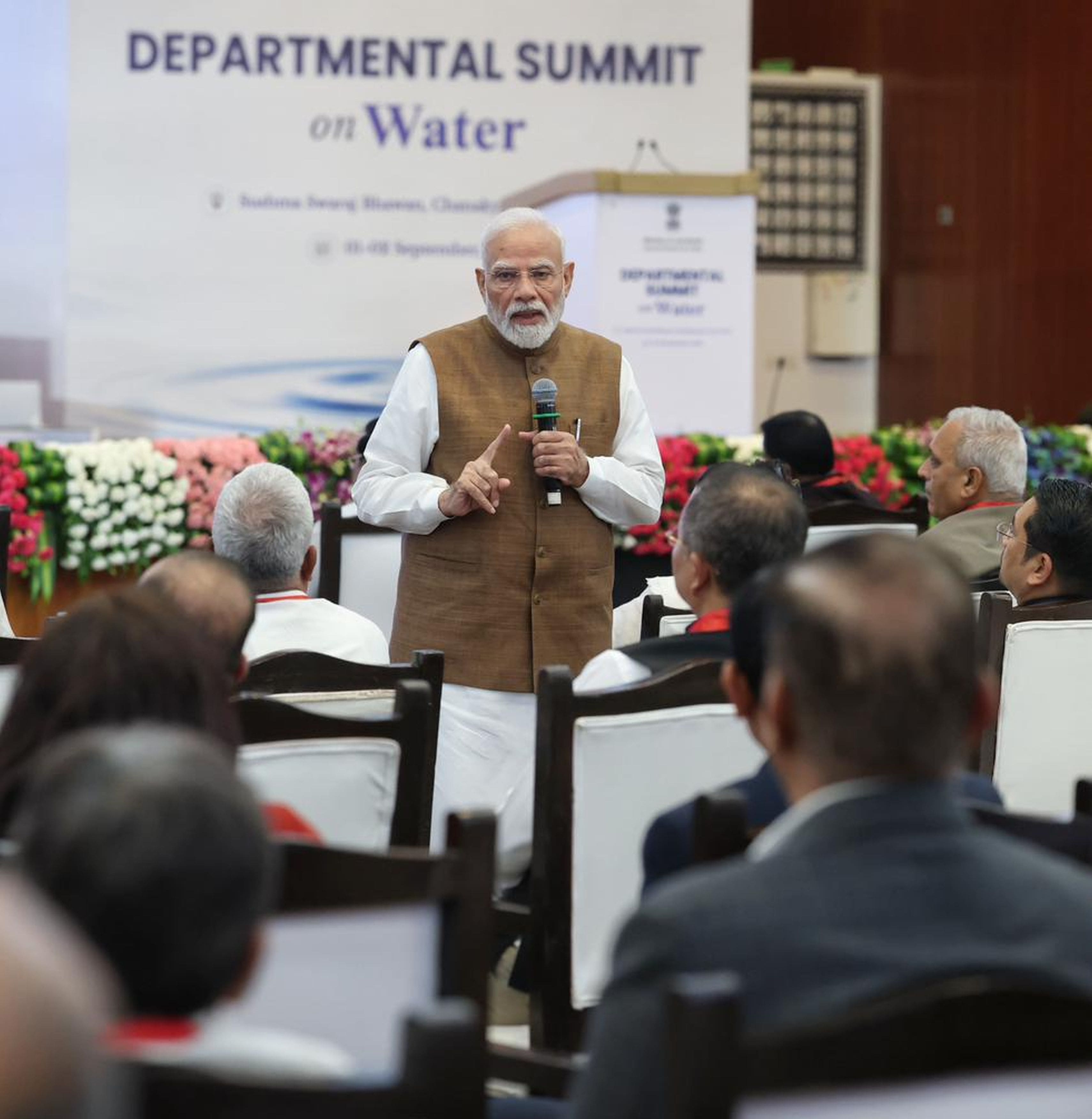
Prime Minister Shri Narendra Modi today chaired the valedictory session of the two-day National Departmental Summit on Water, organised by the Ministry of Jal Shakti. The Summit is the first in a series of Departmental Summits envisioned by Prime Minister to strengthen the spirit of Team India, deepen cooperative federalism and foster collective ownership of national priorities through closer collaboration between the Centre and the States. It brought together Ministers and senior officials from States and Union Territories for focused deliberations on various dimensions of India’s water security.

Prime Minister appreciated the intensive two-day deliberations and emphasised that the actionable and time-bound action points emerging from the Summit should be pursued through a continuous process of review and learning. He suggested that the Summit should not remain a one-time exercise and called for a continuous process of review and follow-up.

Prime Minister called for sensitising Urban Local Bodies to the challenges arising from urbanisation, including population growth and future water requirements, and suggested organising similar Chintan Shivirs for Urban Local Bodies. He called for greater adoption of water-saving technologies. He also suggested dedicated exhibitions and workshops, including exposure to global best practices, to enable Indian manufacturers and stakeholders to develop and scale efficient solutions.

Emphasising Jan Bhagidari, Prime Minister suggested promoting “Jal Utsav” to create greater awareness among people. Prime Minister called for making de-silting a regular programme and developing clear criteria and SOPs for de-silting. On dam safety, he stressed rigorous preparedness before every monsoon, adherence to prescribed precautions and creating awareness among school students, including through suitable incorporation in educational curricula.

Prime Minister further called for strengthening knowledge and capacity on water management and governance in universities and higher educational institutions. He suggested structured inter-State study-visits involving public representatives, officials and farmers to facilitate practical learning and replication of successful interventions.

Prime Minister called for robust water data governance, with water-sector data brought together, systematically managed, analysed and effectively utilised. He recommended the use of AI for data collection and analysis through a uniform format. He also stressed anticipatory and integrated planning to address water scarcity through suitable utilisation of treated water for agriculture and industrial purposes.

Drawing upon his experience as Chief Minister of Gujarat, Prime Minister noted that instances of water scarcity could be transformed into opportunities through systematic planning, commitment and deployment of adequate resources and capable officers.

Union Minister for Jal Shakti Shri C. R. Patil highlighted four key outcomes of the summit: accelerated completion of water infrastructure projects; strengthening water conservation as a sustained people’s movement; ensuring long-term sustainability of drinking-water sources; and institutionalising effective operation and maintenance of rural drinking-water schemes.