



My colleague in the Council of Ministers Shri Rajnath Singh ji, all the honourable Chief Ministers of Northeast, Shri Kiran Rijiju ji and all the officers and leaders of the police force. I heartily congratulate all those who have been honoured today.
Since the times of Chanakya, we have studied what is vital for nation’s security, more than having advantage of good weaponry; it depends on who has those weapons. But even more important than having weaponry and trained manpower handling those weaponry, is having the best intelligence network; as the success of any nation’s security depends on it. The system that has the best form of intelligence will never require either the weapon holder or weaponry and there definitely won't be any need of use of weapons. If there is any unit that holds utmost importance in terms of nation’s security, it is the intelligence system. I have been privileged enough to honour the officers serving in this arena. I would like to once again congratulate them for their excellent service.
Everyone is surprised that the tradition of holding this conference in New Delhi since so many years has been discontinued and the ceremony has been shifted from Delhi to Guwahati. But you must have noticed that when you come to Delhi for a meeting, you come there with a lot of work. You feel that since we have come all the way to Delhi, you might as well get with a few other things done like visit the ministry, meet the secretaries. But now you need to concentrate a little on the issues faced by the state. Now the meeting is out of Delhi and hence from the time you have come here, you must have been well acquainted with each other. There is no other activity here, so the entire focus will be on the ongoing activity. And the one to benefit the most would be the people of Northeast, the police force here would be very happy and encouraged and this would also help you understand how big result a minor change can bring about. It is possible that later in life you also take this initiative. This is an auspicious beginning. In the future too we want such events to take place outside Delhi in different states. I am sure Delhi will also get a chance; it is not that Delhi will never host such meets anymore. But when the programme is held in Delhi, there is no role played by the Delhi police. The Indian Government and Vigyan Bhavan are ready with your accommodation, where you stay in your quarters and then leave. This is a change and every system of change needs to have a life. Robotic systems do not work. Systems should be alive and full of life. Systems should encourage and augment the liveliness and this change will lead you in that direction. I am sure you will also adopt similar experiments in your state.
You have been here since yesterday and there have been talks - some of serious nature and there have been some light conversations. Even I am going to be with you till today afternoon. I want to spend maximum time listening to you. But there are a few things that I want to express today. After our country’s independence, the fact that 33 thousand policemen have sacrificed their lives while protecting the country and safeguarding the comforts of its citizens, is by no means, a minor feat. But does the entire police force know that 33 thousand policemen have sacrificed their lives to protect the country? How would then the common citizens of India know about this fact? I feel it is of prime importance that this sacrifice does not go waste. How can their respect get enhanced in the society? He also must have been someone's son. And he has died in the line of duty and I do not know why we have not shown enough concern towards them. I would want a small taskforce to be formed from amongst you, consisting of some senior and experienced people. We should be able to find out ways to incorporate the positives from the heritage of this sacrifice in a manner such that it is embedded as our inspiration forever. A protocol also has to be set up to honour them during their last rites. Every state has its own police academy where the new recruits are trained. I want to know if their syllabus can include a thorough knowledge comprised in a comprehensive book based on the life of all those who have sacrificed their lives from that region. Every state should have its own book - an official Government Book. Who has sacrificed their life, at what occasion, how did they lose their life in the line of duty, what courage did they show and how many lives they did they save; all should be mentioned in the book. The new generation of police, the new constables who are under training, will learn these things. He will have to read this book too and answer an exam on the same. Through this, he will realise of the martyrdom of those before him who sacrificed their lives. This will then be passed on through the generations. Should we bring out a new edition of the book every year? We can decide now that every state publishes an e-book that mentions the martyrdom of all these 33 thousand martyrs with their photos which can be sourced from their families. It should be in the regional and national language. This will be a small effort but one with huge repercussions in form of the inspiration. I have also noticed that the police department holds a lot of programmes for police welfare. Cine stars are a part of these programmes and performances and plays are also a part of it. It is done in a grand way in Mumbai. During this time, a souvenir is also issued. Advertisement is asked for and funds are collected. I have not gone into the details, nor do I wish to. But can we decide to include a list of those who have sacrificed their lives in that particular year in the souvenir, speaking of their deeds. We shouldn't let their lives go waste in this manner. He may not be physically alive, but for the police force and the society, he should never die. It is our responsibility. I don't want to discuss if something similar has happened in the past but something like this should happen now as I believe it will make a huge difference.
The other thing is police welfare. I am well aware that the police force leads a life full of stress. He puts his life on the line of fire for his duty. If there is no well-being and happiness in his family, how will they go on duty? No matter how sacrificial and selfless the police officer is, family's discomfort also causes him discomfort. It is the role of the government and all of us to establish a system for the welfare of their families. Everything from them and their family's health check up to their children's education should be taken care of. How are the residential facilities of those in the lower ranks? Someone should pay some heed to this. And it's not as if this is not happening. A good thing now is that our home minister was a successful Chief Minister of one of the biggest states of our country. And hence he knows the nuances of this topic. His guidance will be of a lot of help to us in the coming days. It has also been my privilege that since I was a Chief Minister for quite a long time and held the control of the home department, I am also aware of the way it functions. I am aware of what goes on the ground. And hence it might be a possibility that we are treating this on priority. We want to approach the task of police welfare in a scientific manner and that is the bare minimum we can do. And if we do this, then there will be a huge change.
Sometimes the movies depict a policeman in a certain grey light and this goes into the minds of common man. I have seen a very few movies that talk about the sacrifice of these policemen and that is the reason such an image of policemen has embedded in the minds of a common man. We should make special efforts. The Indian Government should make a PR Agency of sorts and meet the film producers and make them aware of their deeds. If the opinion-makers of the society won't protect the integrity of the ones who protect our country, then the rot in the system will also not go away. If there is a kid in the family who keeps committing a mistake, we don't reprimand him for every mistake of his and instead try to point out his achievements then he on his own starts focusing on the good and developing on it. There will be limitations, who doesn't have them? But there is a way to overcome these limitations with the help of the society. I want the thought process of the country towards the policemen to change keeping the onground realities in mind. Any negative story about a policeman has a long shelf life in the media but many positive things never even come to the fore.
When I was in Gujarat, I had conducted an experiment and you too can try it if you find it to be applicable. I don't know what happened after I have left Gujarat. I don't know if they are still following that or not. But I had made a request to every police station to build their own website where they would update their week's best of the best social activities. Whatever the week's positive highlight was, whether they worked towards a social cause or helped a needy and treated them with respect, saved someone from heavy losses… all this would be updated on the website. There are a lot of instances; there is no dearth of such incidents that can be highlighted. Please don't be depressed, there are a lot of good things happening in the country due to you but if you don't bring them out in the open, no one will know about it. We put up a positive story that is absolutely true on the website every week and see the kind of changes it brings in people's perception towards the police. There is no need to be artificial; there are enough positive things to be highlighted. Every person you meet will have at least one positive story to tell about a policeman. But such facts are not collectively presented to the people. I want you to think on this positively and develop a plan of action to take it forward. We will discuss this in detail when we meet.
I have a concept in my mind - that of SMART police - a SMART police force. How can we work with this vision? When I talk about SMART police I mean S - Strict but also S - Sensitive, police should be Strict yet Sensitive, M – Modern and there should be Mobility, there should be no stagnancy, A - Alert and Accountable, R - Reliable and Responsive, T - Techno savvy and Trained. We have to take these five points and march ahead. I truly believe we can fill the police force with a new life and a renewed sense of consciousness.
Once again, I would like to thank and congratulate all those whom I have had the privilege of honouring today. In future too, the mighty police force will be successful in serving the citizens, protecting them and most importantly instilling in them a sense of faith. The rest, we will discuss in detail when we meet.
Best wishes, thank you.
(The original speech was in Hindi, this is the English rendering. Original speech remains the authoritative version)
Published By : Admin |
November 30, 2014 | 10:24 IST
-
Share
-

-

-


Login or Register to add your comment
Explore More

Popular Speeches
Today, the entire country and entire world is filled with the spirit of Bhagwan Shri Ram: PM Modi at Dhwajarohan Utsav in Ayodhya
Media Coverage
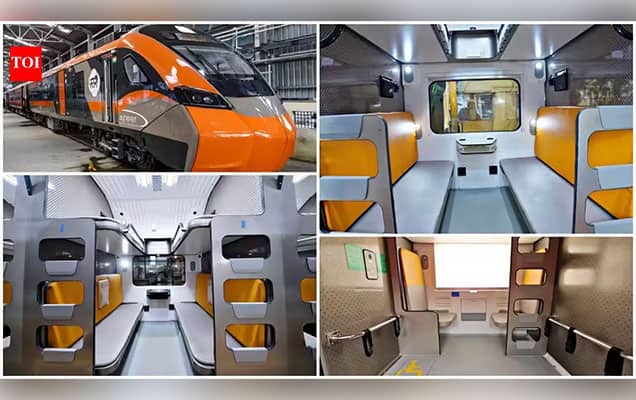
In 2019, India launched its first Vande Bharat Express; seven years later came the sleeper version, and Railways now plans 260 Vande sleeper rakes with world-class features

Nm on the go
Always be the first to hear from the PM. Get the App Now!

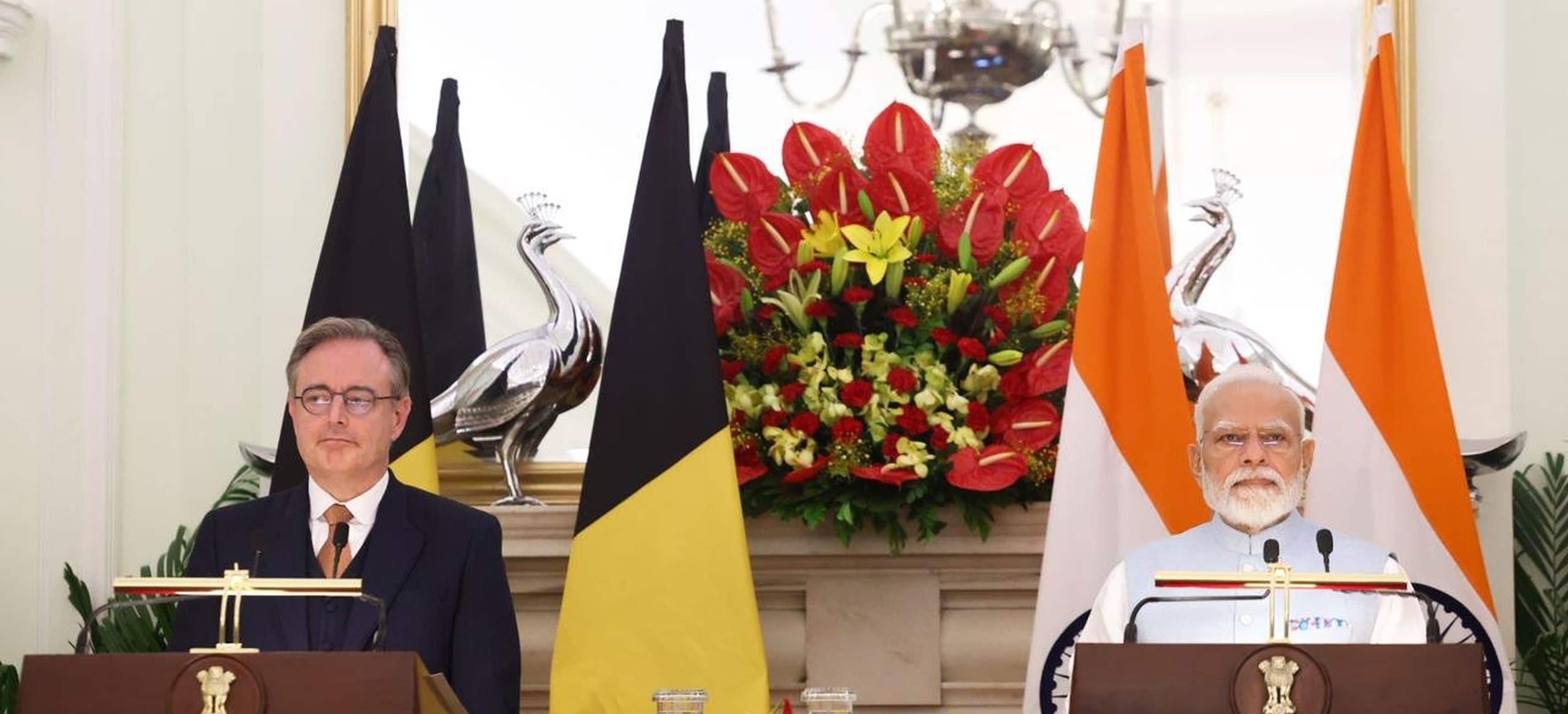
The roots of India-Belgium relations run deep in history: PM Modi during joint press meet with PM Bart De Wever
September 03, 2026
-
Share
-
-
-
Your Excellency, Prime Minister,
Delegates from both countries,
Friends from media,
Namaskar!
I am delighted to warmly welcome the Prime Minister on his first visit to India.
This is certainly his first visit to India, but he has a long-standing association with India. He served as the Mayor of Antwerp for many years and has always supported the large Indian community in Antwerp and India–Belgium diamond trade.
Friends,
The roots of India–Belgium relations run deep in history. The courage and sacrifice of thousands of Indian soldiers in Belgium during the First World War are an important part of our shared memory.
Today, democratic values, market economy, and deep people-to-people ties make us natural partners.
Friends,
Ten years ago, I had the opportunity to visit Belgium, and I am very pleased that our partnership has made remarkable progress over the past decade.
Today, the scope of our cooperation has expanded beyond traditional sectors to strategic areas such as defence and clean energy. We are working together on advanced defence equipment, such as the Zorawar tank. In Kakinada, Andhra Pradesh, we are developing one of the world’s largest green ammonia projects.
Friends,
Today, the world is going through a period of great upheaval. Conflicts continue to persist in many parts of the world. Whether it is food, fuel, or supply chains, every sector is being impacted by uncertainty.
In this challenging environment, India’s economy has maintained its momentum. We recorded 7.8% growth in the last quarter. Today, India’s growth story is becoming a source of confidence and new opportunities for the world.
Friends,
At the beginning of this year, we concluded the historic India–European Union Free Trade Agreement. This unprecedented cooperation between two of the world’s largest democratic powers will also give new impetus to global stability, development, and shared prosperity.
India’s sustained economic progress and this Agreement have opened new avenues for our economic relations. Today, we have taken several important steps to translate these possibilities into concrete outcomes.
Friends,
For Belgian companies, we have established an Investment Fast-Track Mechanism in India. We have decided to make the India–Belgium Business Forum a regular mechanism. We will strengthen coordination among the financial, fintech, and regulatory institutions of both countries.
Through all these initiatives, we will realise our goal of doubling bilateral trade over the next five years.
Friends,
Defence and security cooperation is a key pillar of our relationship. Today, we agreed to enhance military exchanges and training cooperation between the two countries.
The agreements between our governments and defence industries will open up new opportunities for defence co-development and co-production. We will also further strengthen intelligence sharing and cooperation between our agencies in combating crime.
Friends,
A clean energy future and reliable supply chains are our shared priorities. The MOU on Renewable Energy signed today will give new momentum to our sustainability cooperation. In critical minerals, we have decided to enhance cooperation in processing and recycling.
Belgium’s expertise in semiconductors and India’s scale are complementary to each other. In this direction, we will work together to connect Belgium’s IMEC Institute with India’s semiconductor ecosystem.
Friends,
People-to-people ties are the greatest strength of our relationship. Today, we agreed to strengthen connections between our start-ups and enhance capacity building in the maritime sector.
We will also strengthen university and research cooperation. And, to facilitate talent mobility, we will soon conclude a “Migration and Mobility Partnership Agreement”.
Friends,
Today, we also had detailed discussions on regional and global developments. Both India and Belgium believe in the rule of law, dialogue, and diplomacy.
Whether it is Ukraine or West Asia, we support all efforts aimed at an early end to conflicts and the restoration of peace. And eliminating terrorism in all its forms and manifestations is our shared commitment.
Your Excellency,
Last month, Belgium and the Netherlands jointly hosted the Hockey World Cup. I congratulate you on the successful organisation of this grand World Cup. I also commend our players for their hard work and performance.
Diamonds have long been a link between India and Belgium. Today, we are transforming this historic connection into a new and more comprehensive relationship.
I am confident that today’s discussions mark the beginning of a new chapter in our bilateral relations. Once again, I extend a warm welcome to you and your delegation to India.
Thank you very much.
भारत और बेल्जियम के संबंधों की जड़ें इतिहास में गहरी हैं।
— PMO India (@PMOIndia) September 3, 2026
पहले विश्व युद्ध में बेल्जियम में हजारों भारतीय सैनिकों का साहस और बलिदान, हमारी साझा स्मृति का अहम हिस्सा है: PM @narendramodi
दस वर्ष पहले मुझे बेल्जियम की यात्रा करने का अवसर मिला था और मुझे बहुत खुशी है कि पिछले एक दशक में हमारी साझेदारी ने उल्लेखनीय प्रगति की है।
— PMO India (@PMOIndia) September 3, 2026
आज हमारे सहयोग का दायरा traditional sectors से आगे बढ़कर defence और clean energy जैसे strategic क्षेत्रों तक पहुँच चुका है।
हम ज़ोरावर…
आज विश्व एक बड़े उथल-पुथल के दौर से गुजर रहा है।
— PMO India (@PMOIndia) September 3, 2026
दुनिया के कई हिस्सों में संघर्ष की स्थिति बनी हुई है।
Food, fuel या supply chains, हर क्षेत्र में अनिश्चितता का प्रभाव पड़ रहा है।
इस चुनौतीपूर्ण माहौल में भी भारत की economy ने अपनी गति बनाए रखी है।
पिछले quarter में हमने 7.8…
एक clean energy future और reliable supply chain हमारी साझी प्रथमिकताएँ है।
— PMO India (@PMOIndia) September 3, 2026
Renewable Energy पर आज हुआ MOU हमारे sustainability सहयोग को नई गति देगा।
Critical minerals में हमने processing और recycling में सहयोग बढ़ाने का निर्णय लिया है।
Semiconductors में Belgium की expertise…
भारत और बेल्जियम, दोनों ही rule of law, dialogue और diplomacy में विश्वास रखते हैं।
— PMO India (@PMOIndia) September 3, 2026
यूक्रेन हो या वेस्ट एशिया, हम संघर्ष की शीघ्र समाप्ति और शांति के सभी प्रयासों का समर्थन करते हैं।
और आतंकवाद के हर रूप को जड़ से समाप्त करना हमारी साझी प्रतिबद्धता है: PM @narendramodi
- Tags

- Belgium
- Bart De Wever
- India First
- Indian Community
- India-Belgium Diamond Trade
- Indian Army
- People Connect
- Democracy First
- Comprehensive Strategic Partnership
- Clean Energy
- Defence
- Zorawar Tank
- Green Ammonia
- Food
- Global Supply Chains
- Enviornment
- Economy
- GDP
- Inclusive Growth
- Opportunity
- India-EU Free Trade Agreement
- Democracy
- Investment
- India-Belgium Business Forum
- Fintech
- Training
- Renewable Energy
- National Critical Mineral Mission
- Semiconductors
- IMEC
- Dholera
- Start up India
- Capacity Building
- Maritime Sector
- Ease Of Mobility
- West Asia
- Hockey World Cup
- Sports
- Speech


Posted via www.narendramodi.in