India’s youth are playing a vital role in accelerating the journey towards a Viksit Bharat: PM
Rozgar Mela reflects our Government’s commitment to empowering the Yuva Shakti with new opportunities: PM
The world is excited by India’s youth and technological progress and today the global community wants to partner in India’s development journey: PM
Sectors like clean energy, critical minerals, green hydrogen, and sustainable manufacturing are advancing rapidly and partnerships in these areas are creating new opportunities: PM Modi
Every Indian is moving forward with the resolve of building a Viksit Bharat by 2047: PM Modi at Rozgar Mela
Today, Rapid transformation is clearly visible even in rural areas; Enhanced connectivity has opened new avenues for farmers, small traders, and students: PM
Viksit Bharat will be built by the efforts of such youth who view their work as a means of national service: PM Modi

Friends,

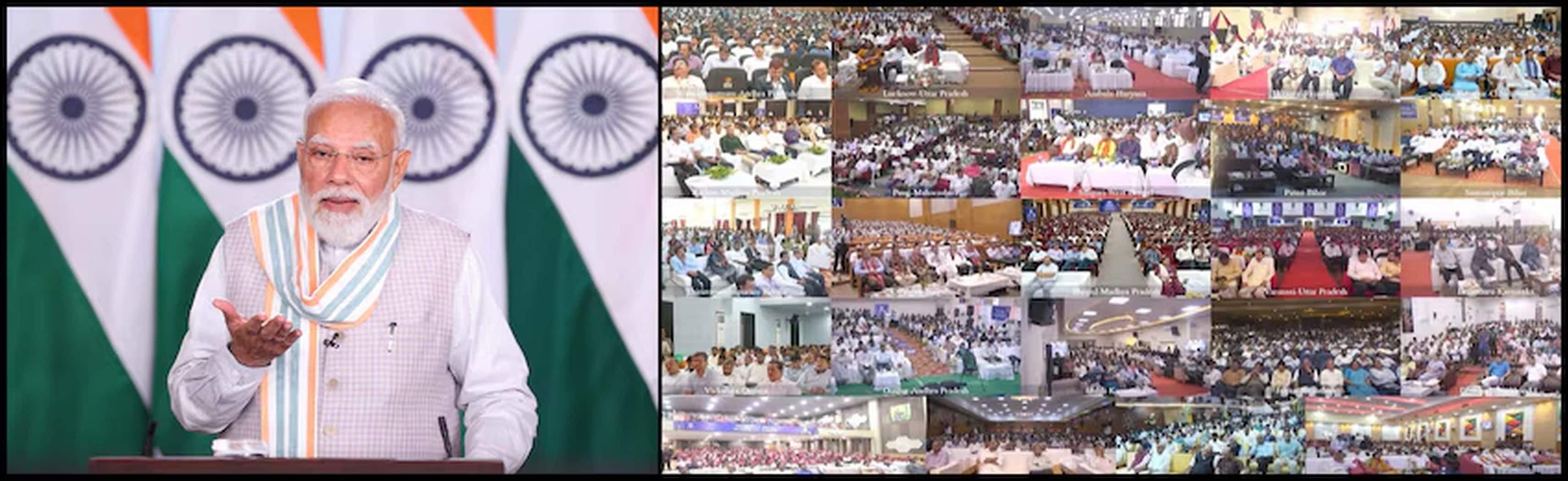
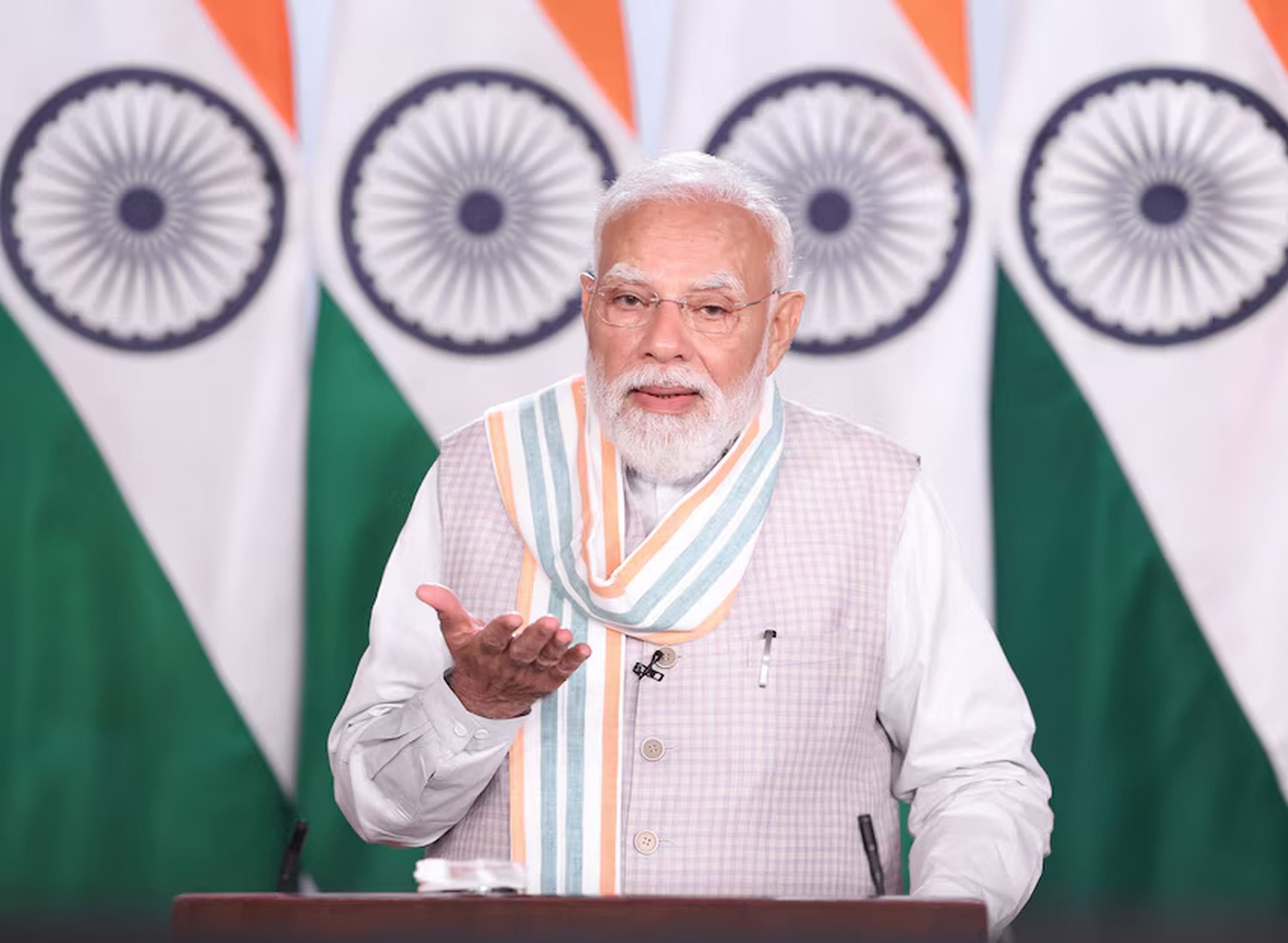
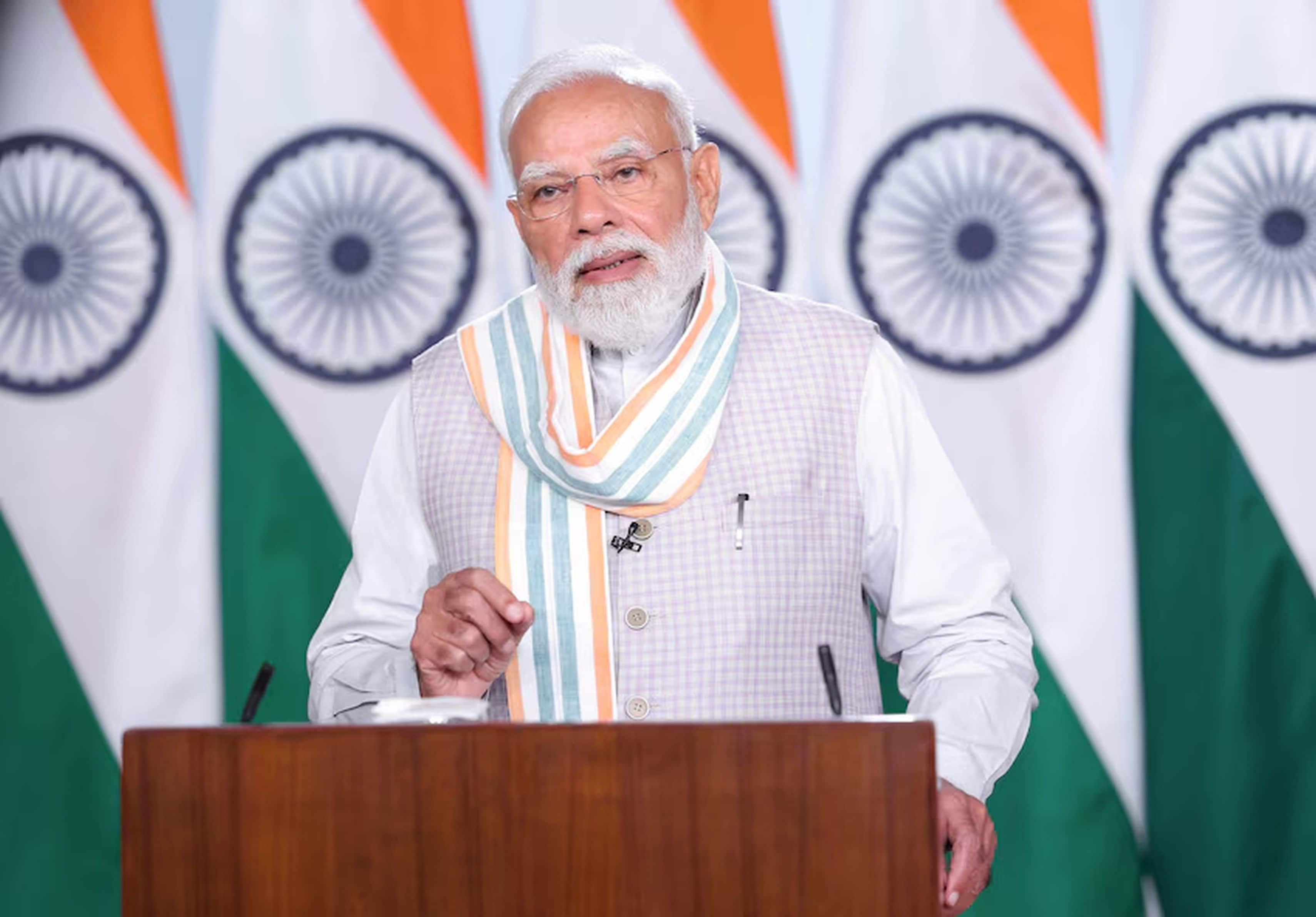
Today is a very important day for thousands of young people across the country. More than 51,000 youth have received appointment letters for government jobs today. You are becoming vital partners in the nation’s development journey, responsible partners. In railways, banking, defense, health, education, and many other sectors, you are going to take on new responsibilities. In the coming years, you will play a crucial role in fulfilling the resolve of a developed India.

Friends,

To reach this stage, you must have gone through long preparation and hard work. For this achievement, I extend my heartfelt congratulations to you and your families. The contribution of your parents and families in bringing you here is immense. But it is not just the family-society also plays a very big role in helping us reach here. We do not arrive here only because of ourselves, or only because of our families. The contribution of this vast nation’s 1.4 billion citizens also holds great importance. Therefore, our responsibility is not only towards ourselves and our families, but equally towards society as a whole. I am confident that you will make yourselves even more capable for all these tasks. I wish you all the very best.
Friends,

You all know that just two days ago I returned from a visit to five countries. Though it was only five countries, during this time I had discussions and meetings with leaders of major companies from dozens of nations. Everywhere, I felt one thing in common-the world is very excited about India’s youth and India’s technological progress. Today the world wants to be part of India’s development journey. India too is partnering with different countries. The purpose is to ensure opportunities for India’s youth, to provide employment, and to let their potential shine. I want my country’s young people to gain global exposure as well. During this trip, for example, with the Netherlands we discussed semiconductors, water, agriculture, and advanced manufacturing; with Sweden, cooperation in artificial intelligence and digital innovation; with Norway, green technology and maritime cooperation; with the UAE, important agreements on strategic energy and technology partnerships; and with Italy, agreements in defense, critical minerals, and science & technology-areas of great importance.

Friends,

All these agreements will directly benefit India’s youth. You must have noticed that these subjects bring with them the guarantee of a bright and capable future for India. Every new investment, every technology partnership, every industrial collaboration not only brings new opportunities for India’s youth, but also creates countless fresh possibilities.

My young friends,

We must remember-these are the sectors where upcoming investments and partnerships will shape the industries that define global growth for the next three to four decades. And certainly, India’s youth will have a very significant role in this.
Friends,

Let me give you an example of how India is becoming a trusted supply chain partner for the world. Many of you are familiar with the Dutch semiconductor company ASML. ASML has signed an agreement with India’s Tata company. India is one of the very few countries in the world with which this company has entered into such an agreement. This single agreement between ASML and Tata Electronics will create countless new employment opportunities in India and open the gateway to next-generation technology. Similarly, technology and AI partnerships with Sweden, supercomputing cooperation with the UAE-these will greatly strengthen India’s technological capacity. These agreements will certainly generate new opportunities for our youth.

Friends,

Today, sectors related to clean energy, critical minerals, green hydrogen, and sustainable manufacturing are growing rapidly. Partnerships in these areas are opening doors to a new economy and new opportunities. With countries like Sweden, Norway, and Italy, cooperation in green transition and sustainable technology is increasing. This will strengthen India in future industries connected to clean manufacturing. In addition, India has been working swiftly on agreements related to ports, shipping, and maritime infrastructure. Partnerships with the UAE and Norway will strengthen India’s shipbuilding ecosystem. And you know well that shipbuilding requires a large amount of skilled manpower. This means the demand for India’s engineers, technicians, and skilled workers will rise to levels you cannot even imagine, creating vast opportunities.

Friends,

With every new partnership, we are creating new pathways for Indian startups, researchers, and young professionals to connect with the world. This will give Indian youth access to advanced expertise, global markets, and new opportunities for growth. Today, the world respects those countries that innovate, that build, and that can deliver at scale. India is advancing rapidly in all three directions, and the greatest strength behind this transformation is you-my young companions, the youth of India. Wherever I go in the world, I spend considerable time discussing India’s youth power.
Friends,

Today every Indian is moving forward with a great resolve-the resolve to build a developed India by 2047. To achieve this goal, the country is investing in different sectors. This investment is creating millions of new employment opportunities for the youth. For example, India is building the entire supply chain for semiconductor manufacturing. In the coming years, India’s ten major semiconductor units will make their mark globally. These will be powered by the capability, intellect, and commitment of India’s youth-and naturally, they will generate employment. India is also developing an ecosystem for shipbuilding, ship repair, and overhauling. For this, an investment of about 75,000 crore rupees is being made. Similarly, we are building a complete MRO ecosystem-maintenance, overhaul, and repair facilities-within India. This will greatly support the aviation sector and open a new employment sector for India’s youth.

Friends,

India today is a major electronics manufacturer. We are building the complete value chain of electronics within India itself. Through the PLI scheme, record production of electronics is happening in the country, and millions of jobs are being created for the youth.

Friends,

On many such campaigns, India’s public and private sectors together are making massive investments. These investments are giving jobs to the youth within the country and fulfilling their dreams. As government employees-an identity you will now carry after receiving your appointment letters-you must always remember how important ease of doing business is for the nation.
Friends,

India’s growth story and employment generation-both are well known to you. Infrastructure plays a huge role in this. When villages, small towns, and remote areas are connected to development, then the benefits of progress reach more people. In the past twelve years, there has been unprecedented expansion in railways, highways, airports, logistics, ports, and digital infrastructure. Development has taken place at every level. Today, if you travel 100 kilometers in any direction, you will see some project of the Government of India underway. Even villages are witnessing rapid change. With improved connectivity, new pathways have opened for farmers, small traders, and students. Today, millions of families have received permanent houses. In fact, the number of houses we are building exceeds the total housing stock of many countries. Not only that, I never let people forget my Swachh Bharat campaign, nor do I forget it myself-where toilets play a very important role, and we are emphasizing that too. Electricity has reached millions of homes. Rooftop solar energy has brought many new vendors into the field. And with the Jal Jeevan Mission, water is reaching homes through taps. I was recently observing that when I wanted PNG connections to expand in cities, I faced a shortage of plumbers-because so many plumbers were already engaged in the Jal Jeevan Mission. This shows how sometimes the demand for skilled people exceeds supply, and how rapidly opportunities are growing.

Friends,

The impact of these changes is not limited to the convenience of ordinary citizens. When roads reach villages, access to markets becomes easier. With improved electricity facilities, small industries and businesses begin to grow. Even in villages, agriculture starts to see value addition. Earlier, if they sold red chilies, now with electricity they produce chili powder, package it, and sell it. Thus, small industries in villages keep expanding. With increased digital connectivity, villagers are connecting with the entire world, embracing modernity. The difference between cities and villages is gradually disappearing. This has accelerated the pace of the economy. And all of this has a positive effect that guarantees a brighter future for the youth of the nation. Jobs are created, but beyond that, the nation moves forward with new self-respect, and millions of people gain new opportunities.

Friends,

Today, the youth of India have opportunities to move forward and fulfill their dreams like never before. I am not blaming anyone, but the reality is that everything is happening at great speed, on a vast scale, and with immense diversity. Manufacturing, technology, startups, digital services, railways, defense, and even space-countless opportunities await us in these sectors. Our effort is to ensure that as many young people as possible can benefit from these opportunities, and that the youth of the country get every chance to showcase their talent. That is why continuous emphasis is being placed on skill development, industry-linked education, and future technologies. ITIs are being modernized. National Skill Training Institutes are being strengthened. Campaigns like PM SETU are working in this direction.
Friends,

In recent years, a new culture of self-employment and entrepreneurship has developed in the country. India is the world’s third-largest startup ecosystem. Remember this figure-there are more than 230,000 recognized startups in the country. And each of them involves groups of young people. The important point is that this change is not limited to big cities, and that gives me the greatest satisfaction. Nowadays, youth from tier-2 and tier-3 cities are also showing their strength in the world of startups and innovation in large numbers. Their capabilities are being recognized. This transformation has become an important part of the nation’s economy. In this change, the role of our women power is also continuously increasing. Today, a large number of women-led startups fill us with pride. I tell people around the world that women in India are playing a major role in startups, and many are coming forward in large numbers. Under the Mudra Yojana, millions of women have received financial support. Schemes like PM SVANidhi have given millions of women the opportunity to become self-reliant. Today, in villages and small towns, more women than ever before are starting new ventures on their own.

Friends,

Amidst these policies and decisions, you must remember one more thing. The real strength of any system lies in its people. The power of the people, the “jan shakti,” becomes the power of the nation. The system you are becoming part of is directly connected to the lives of millions of citizens, to their hopes and aspirations. Government jobs are a medium to make people’s lives easier. Whatever department you work in, your behavior, sensitivity, and working style will matter greatly. The nation has placed its trust in you. Now it is your responsibility to strengthen that trust through your work, conduct, speech, and behavior. Meeting you should fill citizens with new confidence and inspire them to move forward with new hope. Therefore, every young karmayogi must see their work as a responsibility.

For me, you are much more. In earlier times, we heard of “Sahasrabahu”-those with a thousand arms. Today, you are the arms of the government, its strength. Those already in service and those newly joining are all part of this. The aspirations of India’s people are rising, and I see this as a positive sign of development. We must understand the aspirations of our people and work at the same speed to meet them. In this, the role of young people entering public service has become very important. You must keep learning continuously. You must prepare yourself for new technologies, new systems, and new needs. The iGOT Karmayogi platform will help you greatly in this. Modules like Karmayogi Prarambh will make it easier for you to understand your responsibilities. I urge you to make the most of these resources.

Friends,

Today, India’s youth are making their mark in every field across the world. The same spirit, the same energy must also be visible in public service. A developed India will be built through the efforts of such youth who see their work as a medium of service to the nation, service to the people. And in our tradition, it is said-public service is divine service. I am fully confident that the young companions receiving appointment letters today will give new momentum to India’s development journey. Through your work and decisions, the resolve of a developed India will be fulfilled. And you must never forget our mantra-Citizen is Divine. The welfare of the citizens is our duty. Once again, I extend my best wishes to all the youth receiving appointment letters today, for their future and for fulfilling this opportunity of serving the nation. Thank you all very much.

Explore More
Today, the entire country and entire world is filled with the spirit of Bhagwan Shri Ram: PM Modi at Dhwajarohan Utsav in Ayodhya

Popular Speeches

Today, the entire country and entire world is filled with the spirit of Bhagwan Shri Ram: PM Modi at Dhwajarohan Utsav in Ayodhya
Railways to operate over 300 special trains for Jagannath Rath Yatra, 100 for Onam: Ashwini Vaishnaw

Media Coverage

Railways to operate over 300 special trains for Jagannath Rath Yatra, 100 for Onam: Ashwini Vaishnaw
NM on the go

Nm on the go

Always be the first to hear from the PM. Get the App Now!
...
India-Indonesia Joint Statement on the State Visit by Prime Minister of India to Indonesia
July 07, 2026

At the invitation of the President of the Republic of Indonesia, H.E. Mr. Prabowo Subianto, the Prime Minister of the Republic of India, H.E. Shri Narendra Modi undertook a State Visit to Indonesia from 6-8 July 2026. Building on the State Visit of President Prabowo to India from 23-26 January 2025 as the Chief Guest for India’s 76th Republic Day celebrations, the visit of Prime Minister Modi marked an important milestone reflecting the shared commitment of the two leaders to achieve a substantial upwards trajectory in the India-Indonesia Comprehensive Strategic Partnership.

2. During the visit, Prime Minister Modi was accorded a ceremonial reception at the Istana Merdeka, Jakarta. This was followed by bilateral talks between President Prabowo and Prime Minister Modi, in both tête-à-tête and delegation level formats. President Prabowo also hosted a state banquet in honour of Prime Minister Modi. At the invitation of the Speaker of the House of Representatives of the Parliament of Indonesia, H.E. Dr. Puan Maharani, Prime Minister addressed the Indonesian Parliament. Prime Minister Modi and President Prabowo inaugurated the initiation of the restoration and conservation works at the UNESCO World Heritage Site Prambanan Temple Compounds in Yogyakarta. The two leaders also participated in a reception hosted by the Indian community in Indonesia, in honour of the visiting dignitary.

Political Cooperation

3. Prime Minister Modi and President Prabowo held official bilateral talks on 7 July 2026 at Istana Merdeka, Jakarta. The official talks covered the full spectrum of bilateral relations, including political engagement, defence and security cooperation, maritime cooperation, trade and investment, digital economy, science and technology, space, critical minerals, energy, agriculture, health, pharma, education, culture, tourism, youth exchanges and people-to-people ties, in addition to regional and global developments of mutual interest. They also witnessed the exchange of a number of bilateral documents, aimed at further strengthening the India-Indonesia Comprehensive Strategic Partnership.

4. Desirous of enhancing the intensity of two countries’ strategic engagement, and acknowledging the importance of holding high level exchanges, both leaders agreed to hold regular Summit Meetings including on the margins of multilateral events.

5. Both leaders also affirmed the importance of strengthening existing Joint Working Group mechanisms and continuing regular bilateral consultations including the Joint Commission Meeting (JCM), Foreign Office Consultation (FOC) and other ministerial and senior officials’ dialogues mechanisms and exchanges.

6. Both leaders welcomed the establishment of the India-Indonesia Parliamentary Friendship Groups in respective Parliaments and affirmed the need to enhance Parliamentary exchanges between the two democracies through regular visits of delegations between the two Parliaments.

7. Both leaders welcomed the deepening of mutual understanding and enhanced engagement between think tanks, academic institutions and policy experts between the two countries including through the 3rd India-Indonesia Policy Planning Dialogue held in Jakarta on 23 April 2025, the 2nd India-Indonesia Track 1.5 Dialogue held in Jakarta on 15-16 September 2025 and the Jakarta Futures Forum in Jakarta on 5-6 August 2025.

Defence and Maritime Cooperation

8. Recognizing that India and Indonesia are maritime neighbours and strategic partners with robust defence cooperation, and recalling the adoption of the "Shared Vision of India-Indonesia on Maritime Cooperation in the Indo-Pacific” in 2018, both leaders reaffirmed their strong commitment to further enhance and broaden the defence and maritime partnership.

9. Both leaders welcomed the convening of the 3rd Defence Ministers' Dialogue in New Delhi on 27 November 2025, and agreed to further strengthen cooperation and enhance engagements in both traditional and emerging areas of defence cooperation, including regular defence dialogue, joint exercises, staff talks, joint research and co-production of new defence technologies, port calls, peacekeeping activities, information sharing, hydrography, capacity building, cadet training and exchanges, and defence industrial cooperation. They welcomed the elevation of defence cooperation, including through cooperation on BrahMos Missile System, and the Air-to-Air Missile Cooperation Agreement.

10. The two leaders also welcomed the continued maritime cooperation, including in the field of maritime domain awareness (MDA), maritime connectivity, coastal surveillance, humanitarian assistance and disaster relief (HADR), pollution control and search and rescue (SAR) based on mutual interest and priorities of the two countries, that also contributes to delivering peace, security and prosperity in the region and greater stability in the wider Indo-Pacific region. Both leaders also welcomed the renewal of the Memorandum of Understanding (MoU) on Maritime Safety and Security Cooperation and the conclusion of the Implementing Arrangement between BAKAMLA RI and Indian Coast Guard.

11. Both leaders noted the strategic and operational importance of joint exercises and defence training programmes, and towards further strengthening the existing naval cooperation. The two leaders noted the importance of exploring the possibility to continue constructive discussions on maritime issues of mutual interests, in accordance with the respective national laws and regulations, as well as the principles of international law, including 1982 UNCLOS.

12. Both leaders welcomed the positioning of an International Liaison Officer (ILO) from Indonesia at Information Fusion Centre-Indian Ocean region (IFC-IOR) Gurugram. They agreed to continue discussions to identify mutually beneficial areas of cooperation in maritime security.

13. Both leaders identified collaboration in defence industry and technology as one of the priority areas of cooperation and agreed to expand mutually beneficial collaboration between the defence industries for joint production of equipment, technology transfer, technical assistance and capacity building, sourcing of defence equipment including cooperation in ship-building, establishment of MRO facilities for similar defence platforms, exploring establishment of defence R&D, and strengthening defence supply chain ecosystem. Both leaders welcomed progress in pharmaceutical collaboration between Armed Forces Medical Establishments of India and Indonesia on supply of military medicines.

Counter Terrorism and Security Cooperation

14. The leaders unequivocally and strongly condemned terrorism in all its forms and manifestations. They called for decisive and concerted international efforts to combat terrorism in a comprehensive and sustained manner and in accordance with international law, and in this context called for action against globally proscribed terrorists, and terror entities including those listed in the UNSC 1267 Sanctions Committee.

15. The leaders agreed to enhance cooperation in preventing and countering terrorism and violent extremism conducive to terrorism, including through efforts to counter terrorist financing, promote internationally agreed anti money laundering and countering financing of terrorism (AML/CFT) standards, prevent the misuse of new and emerging technologies for terrorist purposes, and address terrorist recruitment, including online recruitment and radicalization through digital platforms, and strengthen cooperation on countering radicalization and prevention of violent extremism (PVE) programs.

16. The leaders called for a zero-tolerance approach to countering terrorism. They reaffirmed strong commitment to continue taking active measures to disrupt the terror financing channels and strengthen bilateral and multilateral cooperation including in the UN and FATF.

17. Recognising the linkages between terrorism and transnational organised crime, the two leaders agreed to enhance cooperation, in accordance with respective domestic laws and international obligations, including through sharing of information and best practices. The leaders also welcomed the early conclusion of the MoU on Cooperation in Counter Terrorism between the two countries, to be signed in the near future.

18. The leaders welcomed the planned convening of the 3rd India-Indonesia Security Dialogue (IISD) as a platform to discuss security-related issues in a comprehensive manner. Through the dialogue, the two countries resolved to significantly enhance bilateral cooperation in countering terrorism, organized and transnational crime, emerging technology and cyber security, and defence industry, maritime, and space cooperation.

19. Both leaders also agreed to further discuss potential cooperation in cyber domain, including through policy dialogue, capacity building, sharing of best practices and exchanges of expertise on digital public infrastructure, financial technology, digital economy, artificial intelligence, digital forensics and Computer Emergency Response Team (CERT) cooperation, protection of critical information infrastructure and capacity building on digital skills.

Economic and Trade Cooperation

20. The leaders highlighted that economic and trade cooperation remains a key pillar of the dynamic India-Indonesia ties. Both leaders acknowledged the vast economic and developmental synergies between India's vision of ‘Viksit Bharat 2047’ and ‘Indonesia Emas 2045’, and the role of broader and deeper economic integration between the two countries for unlocking greater economic opportunities. Towards this, the leaders expressed desire for a timely conclusion of ASEAN India Trade in Goods Agreement (AITIGA) review for a balanced, mutually beneficial and facilitative trade environment, followed by a comprehensive deeper bilateral trade engagement to enhance bilateral trade.

21. Both leaders emphasised the need to fully utilise and strengthen the existing bilateral economic mechanisms, including the convening in 2026 of the 2nd meeting of the Working Group on Trade and Investment (WGTI), the 4th Biennial Trade Ministers’ Forum (BTMF), and the 1st meeting of the Joint Economic and Financial Dialogue (EFD). They noted that these mechanisms should work towards achieving concrete and business-oriented outcomes in addressing outstanding tariff and non-tariff issues, improving market access, facilitating trade and investment, and advancing cooperation in finance, digital economy, industry and supply chains, while respecting each country’s domestic regulations and development priorities.

22. The two leaders underscored the importance of further strengthening collaboration in critical minerals and rare earths with a focus on building diversified and resilient supply chains essential for the growth of domestic manufacturing industries towards reducing vulnerabilities and strengthening economic security. The leaders commended the growing collaboration between the two countries on rare earths, and in this regard welcomed the signing of the MoU between Non- Ferrous Materials Technology Development Centre (NFTDC), Midwest Ltds., and PT. Perusahaan Mineral Nasional (PERMINAS).

23. The leaders also welcomed the signing of the MoU in cooperation in the field of Minerals and Technology of Steel Supply Chain. They also welcomed the Strategic Joint Venture between Steel Authority of India Ltd. (SAIL) and PT. Krakatau Steel to explore the establishment of Stainless-Steel Slab Manufacturing Facility in Indonesia.

24. Both leaders welcomed the progress towards the operationalisation of guidelines on Local Currency Transaction (LCT) between the Reserve Bank of India and Bank Indonesia and noted that this would further promote trade and investment between India and Indonesia and deepen financial integration between the two economies.

Health, Pharma, Food and Energy Security

25. Both leaders noted the importance of the Red and White Cooperative Network as a potential logistical distribution platform in Indonesia, to deliver, among others, pharmaceuticals and medical products from both countries, in accordance with respective domestic laws and regulations.

26. The two leaders reaffirmed their commitment to strengthening health sector cooperation and welcomed the signing of the Implementation Arrangement on Professional Health Workforce Development. The Arrangement will strengthen cooperation through facilitation of fellowship programmes and skill enhancement programmes for professionals, hands-on clinical training in specialized medical fields, exchanges of health professionals and experts, sharing of best practices in medicine and health services, and other mutually agreed collaborative activities. They urged early conclusion of the MoU between BPOM and FSSAI on Regulatory Cooperation in the Field of Processed Food products.

27. The leaders also agreed to deepen cooperation in food security and nutrition, while respecting each country’s domestic policies. They welcomed efforts to enhance cooperation in agriculture and food security, including through food and agriculture trade, joint studies, innovation, and knowledge sharing to support sustainable and resilient food systems, as mutually agreed. The leaders looked forward to the early conclusion of the MoU on cooperation in the field of Agriculture and Allied sectors, and the early renewal of MoU in the field of Marine and Fisheries Cooperation.

28. The leaders welcomed the ongoing collaboration in the field of pharmaceuticals and medical products. They welcomed the signing of the MoU between CDSCO and BPOM on cooperation in the field of Medical Products Regulation.

29. The leaders agreed to strengthen cooperation in the fertilizer sector and underscored the importance of ensuring stable, affordable and reliable fertilizer availability amid evolving global market conditions.

30. The two sides reaffirmed their commitment to strengthening cooperation, joint studies, and capacity building in the field of energy security, including conventional, new and renewable energy, as mutually agreed, and welcomed enhanced collaboration in areas such as LNG, green hydrogen, bioenergy, solar energy, and energy efficiency technologies.

Infrastructure and Connectivity

31. Both leaders emphasised the importance of enhanced maritime and air connectivity between the countries and encouraged greater air connectivity and port-to-port connections. Both leaders look forward to the 3rd Joint Task Force Meeting on Andaman-Aceh Connectivity to be convened in the second half of 2026 and for a plan of action to be implemented expeditiously.

32. President Prabowo welcomed India’s interest in partnering on the integrated development of the Sabang Port. Both leaders recognized that such a partnership —spanning cruise and marine-tourism facilities, maritime industries (ship-repair and shipbuilding), and shore-based services supporting offshore energy activities in the Andaman Sea — would foster institutional, physical, digital and flow of people and commodities between Andaman and Nicobar Islands of India and Provinces in Sumatra Island, that contribute to generating investment, employment, transfer of technology and shared regional prosperity. Both leaders encouraged their concerned authorities to work out the scope, modalities and financing of the project, consistent with Indonesia’s development plans and applicable regulations, in a time-bound and mutually beneficial manner.

33. Both leaders welcomed the launch of Indonesia Open Network (ION), based on Open Network for Digital Commerce (ONDC) architecture in India, to increase the participation of Indonesian MSMEs in the digital economy through digital networks.

34. The two leaders welcomed the progress towards the implementation of the Cross-Border QR Payment Linkage between India and Indonesia as agreed between the Reserve Bank of India and Bank Indonesia. This initiative marks an important milestone in strengthening bilateral payment connectivity between Indonesia and India. The linkage will enhance transaction efficiency, strengthen financial resilience, and promote inclusive economic growth, particularly by supporting MSMEs, tourism, and students.

35. Both leaders welcomed the conclusion of the MoU on Cooperation in the Field of Telecommunications Technologies and Services between India and Indonesia which will further strengthen cooperation in telecommunications technologies and digital connectivity to support inclusive economic growth and digital transformation.

Biodiversity Conservation and Sustainable Development

36. President Prabowo acknowledged the pivotal role played by India in the field of biodiversity conservation and appreciated Prime Minister Modi’s initiative of International Big Cat Alliance (IBCA). Prime Minister Modi welcomed the intention of Indonesia to joining IBCA in accordance with the relevant domestic procedure while noting Indonesia’s initiatives, namely the World Mangrove Center (WMC) and the International Tropical Peatland Center (ITPC), reflecting a shared commitment to strengthening global cooperation on biodiversity, mangrove, and peatland conservation.

37. Recognising the vulnerability of both countries to natural and man-made disasters, the leaders stressed on the need to strengthen disaster management cooperation. Both leaders welcomed the signing of the MoU on Cooperation in Disaster Management between the National Disaster Management Authorities of both countries aimed at enhancing cooperation through exchange of information, experiences, and best practices, as also capacity building and training for disaster response, recovery, mitigation and preparedness, data application for effective disaster mitigation and disaster resilient infrastructure. The leaders also noted the importance of the Coalition for Disaster Resilient Infrastructure (CDRI) in promoting international cooperation in disaster risk reduction and resilience.

Science & Technology, Space including Critical and Emerging Technologies

38. The leaders welcomed the convening of the inaugural Joint Commission Meeting on Science and Technology (S&T) on 12 August 2025, and the signing of the MoU on Research, Technology and Innovation Cooperation between India and Indonesia.

39. The two leaders expressed satisfaction at the ongoing space cooperation between Indian Space Research Organisation (ISRO) and National Research and Innovation Agency (BRIN) as well as the 6th Joint Commission Meeting on Outer Space Cooperation held in Bengaluru, India on 24th - 25th June 2026. They also welcomed the signing of the Extension of the Framework Agreement on Cooperation in the Exploration and Uses of Outer Space for Peaceful Purposes between India and Indonesia.

40. Prime Minister Modi expressed his appreciation to President Prabowo for Indonesia’s continued cooperation in support of India’s satellite and launch vehicles programmes and to India's Gaganyaan Mission through collaborative arrangements between BRIN-ISRO and the Biak Telemetry, Tracking and Command (TTC) Facilities. President Prabowo appreciated India’s support for the launch of Indonesian satellites and for the training of Indonesian officials including through the Center for Space Science Technology Education in Asia and the Pacific (CSSTEAP), and ASEAN-India space cooperation. President Prabowo welcomed space ecosystem-level collaboration between both countries on space port project in Indonesia.

41. The two leaders noted the ongoing discussions for cooperation in the peaceful uses of nuclear energy between the two countries, which would further strengthen collaboration in research, capacity building, and nuclear safety. They welcomed efforts to promote the use of civil nuclear energy, including the related regulatory and technological advancements and applications in industry, nuclear medicine, agriculture, and water management.

Culture, Tourism and People - to - People Exchanges

42. Both leaders welcomed the inauguration of the India-supported project towards restoration and conservation of the UNESCO World Heritage Prambanan Temple Compounds in Yogyakarta by Archaeological Survey of India (ASI). Indonesia also appreciated the gifting of a replica of the original Nalanda Copper Plate, dating to approximately 860 CE engraved in Devanagari script and in Sanskrit language, by National Museum of India, now exhibited, in the new museum at Muara Jambi. They recalled the principles contained in the "Kashi Cultural Pathway” as adopted at the G20 Culture Ministers’ Meeting in Varanasi, August 2023, and noted the importance of continued consultations between the two Governments on cultural heritage matters, in accordance with their respective laws and procedures, and in the spirit of friendship and mutual respect.

43. Both leaders recognised the enduring intellectual legacy and shared educational vision of Rabindranath Tagore and Ki Hajar Dewantara, whose exchanges helped lay an important foundation for the shared cultural and educational vision ties between India and Indonesia, and agreed to commemorate 2026–2027 as the “Tagore–Dewantara Year of India–Indonesia Cultural and Educational Diplomacy.” The commemoration will mark the centenary of Rabindranath Tagore’s visit to Indonesia in 1927 through a year-long programme of joint cultural, educational, academic, and people-to-people initiatives in both countries.

44. Underscoring the potential of tourism as driver of people-to-people ties, both leaders expressed their shared commitment to further deepening tourism cooperation and enhancing two-way visitor flows between the two countries. They agreed to further discuss ways to streamline ease of travel and visa facilitation on each side.

45. The leaders noted the ongoing cooperation in the field of education sector and encouraged both sides to work towards greater academic and institutional collaborations including student exchanges. The leaders encouraged the early conclusion of the MoU on Cooperation in the field of Primary and Secondary Education.

46. The two leaders reaffirmed their commitment to strengthening bilateral cooperation in higher education, science and technology. They encouraged the expansion of mutually beneficial partnerships through academic mobility, joint research, knowledge exchange, capacity building, institutional collaboration, and other initiatives that support human capital development. They looked forward to the early conclusion of the MoU on Cooperation in the Field of Higher Education, Science, and Technology. President Prabowo welcomed growing interest of reputed Indian institutes of higher education towards setting up branch campuses in Indonesia. The two leaders welcomed the proposed setting up of a campus by Indian Institute of Management, Bangalore in Indonesia.

47. The leaders took note of the ongoing collaboration between the Election Commission of India and the General Election Commission (KPU) of Indonesia towards human resources development, improved management, and use of technology in the field of elections. They welcomed the signing of an MoU between ECI and KPU on Cooperation in the Field of Management and Technology Utilisation in Elections.

48. The leaders welcomed the proposed cooperation between the the Ministry of Statistics and Programme Implementation (MOSPI), India and Statistics Indonesia (BPS) and in the field of official statistics, capacity building, and strategic collaboration.

Regional and Multilateral Cooperation

49. Taking note of the current geopolitical situation, economic and supply chain disruptions, and global issues of mutual concern, both leaders underscored the need for greater strategic convergence and close coordination between India and Indonesia in multilateral and regional forums, including in the United Nations and its specialised agencies, towards a more balanced and representative world order based on international law, grounded in peace, stability, cooperation and prosperity in the region and beyond. The two sides reaffirmed their common respect for sovereignty and territorial integrity, and underlined the importance of upholding cultural and religious diversity, pluralism, and the rule of law as foundations for peace, stability and mutually beneficial cooperation in the region and beyond. Towards this, both leaders acknowledged the increasing role of South-South Cooperation and agreed to enhance cooperation on strengthening the voice of the Global South.

50. Both leaders agreed to work towards meaningful reforms of international institutions reflective of the contemporary geopolitical realities and responsive to the aspirations of the Global South. Both sides reiterated the need for comprehensive reform and expansion of the United Nations Security Council, both in permanent and non-permanent categories of membership, through inclusive and member state-driven intergovernmental negotiations, including text-based negotiations. Reflecting the strong spirit of mutual support in multilateral forums, the two leaders discussed mutual support for various international candidatures.

51. The leaders also acknowledged the need for reforms in global financial architecture as well as the importance of a rules-based, fair, open and inclusive international trading system with WTO at its core, responding to challenges of non-market practices, concentration of supply chains and uncertain market access.

52. Indonesia reaffirmed full support to India’s 2026 BRICS Chairship and India expressed its commitment to supporting Indonesia’s role as a BRICS Member country. Both leaders agreed to step up engagements through key platforms including BRICS, G20, IORA to contribute constructively to equitable global governance and sustainable development.

53. Recalling the Shared Vision of India-Indonesia Maritime Cooperation in the Indo-Pacific announced in 2018, both leaders reaffirmed their commitment towards a free, open, transparent, rules-based, peaceful, prosperous and inclusive Indo-Pacific region.

54. The leaders underscored the importance of respect for sovereignty and territorial integrity, adherence to international law, including the 1982 UNCLOS, freedom of navigation and overflight, while refraining from the threat or use of force and promoting dialogue and cooperation.

55. President Prabowo appreciated India’s consistent support for ASEAN Unity and ASEAN Centrality in the evolving regional architecture for regional peace, stability and prosperity. The two sides supported further strengthening of the ASEAN-India Comprehensive Strategic Partnership, which complements bilateral relations with respective Member States. Both leaders encouraged deepening of synergies, including through concrete initiatives, between ASEAN Outlook on the Indo-Pacific (AOIP) for Peace, Stability and Prosperity in the Region’ and India’s Indo-Pacific Oceans Initiative (IPOI).

56. Both leaders welcomed cooperation through effective trilateral mechanism of India-Indonesia-Australia trilateral and explore opportunities for collaboration including in the areas of maritime domain awareness, marine pollution, blue economy and also under the frameworks of East Asia Summit (EAS), Indo-Pacific Oceans’ Initiative (IPOI) and Indian Ocean Rim Association (IORA).

57. The leaders expressed deep concerns over the situation in West Asia/Middle East and its global effects. They welcomed the Memorandum of Understanding signed on 17 June 2026. They underlined the importance of de-escalation and reiterated that all issues must be resolved through dialogue and diplomacy. They also share the same view to respect freedom of navigation and global flow of commerce and the implementation of transit passage through the Strait of Hormuz, in accordance with international law including the provisions of UNCLOS.

58. Prime Minister Narendra Modi conveyed his sincere appreciation to President Prabowo Subianto for the warm welcome and excellent hospitality extended to him and his delegation during the visit. Wishing the friendly people of Indonesia prosperity and progress, Prime Minister Modi extended a cordial invitation to President Prabowo Subianto to pay a visit to India at a mutually convenient time.