



The Chief Minister was just speaking on a lot of topics - there are no roads, no hospitals and nothing of Film Division of any sort. I felt satisfied to hear him discussing these problems as it made me feel that this Chief Minister trusts this government to change things. And since he has such faith in my government, I feel the need to fulfill these wishes.
The Porbandar-Silcher Road that he mentioned - I had laid the foundation stone of the road in Gujarat at Porbandar in the capacity of Chief Minister of the State during the period of Atal Bihari Vajpayee government. It is also possible that I come here for a similar inauguration in future. But all the subjects that the Chief Minister has mentioned are important. We too are keen on developing North East, the land of Ashta Lakshmi and hence we have allotted a budget of about Rs 60000 crores towards the development of its infrastructure.
During the bilateral talks in Myanmar on my recent visit there, the maximum impetus was on the subject of how to establish connectivity with Imphal. Be it air connectivity, road connectivity or i-ways, it should benefit everyone and the government of Myanmar has also taken important decisions to get associated with the infrastructure projects with the government of India so that this region can be made more accessible. You will surely notice the results in the coming days.
Today, I have had the good fortune of being here for the Sangai festival. Our country has a lot of potential for tourism. No matter where in the world a tourist goes, our one State of India is capable of showcasing more than all that one country can offer the tourist. A tourist can easily tour a State for a month and if he keeps visiting our country every year, choosing to experience a new State, a lifetime wouldn't be enough to see entire India. Every State of our country has a different highlight, such varied is the heritage of our country!
North East and especially Manipur have a lot of opportunities for the development of tourism. Like the Chief Minister just pointed out, I belong to Gujarat. Krishna is celebrated in Dwarka there and I have been brought up in a similar environment, worshipping Lord Krishna. When I saw you worshipping Lord Krishna, singing his praises, I felt right at home in Manipur.
The world tourism sector has an estimated potential worth 3 trillion dollars. If there is any one sector that is growing by leaps and bounds globally, it is the tourism sector. Some places have shown a growth of 40 per cent in this sector. India has a lot to offer to the world that can influence and inspire them. But this area is still largely untapped. It is our constant effort to attract the world through our rich heritage.
The game of Polo was born here. There was a Polo programme arranged here yesterday, in which, according to the information I have, 8 countries participated. This is your heritage. I want the world to know about the place that gave birth to Polo and hence I will match steps with the state in its efforts to highlight their assets.
I just met with delegates from the HRD Ministry and asked them if there was a possibility of about 100 students from all the universities of the country visit North East as tourists. Only if university students start visiting, the tourism scene of the region will change drastically.
They have already begun work towards making this a possibility and you should be able to see the results soon. And there is such diversity of heritage in Manipur. There is song, dance, theatre, costumes and what not. It is truly reflective in its rich cultural heritage. The reason of my joining in the Sangai festival is the same. I want the world to see what Manipur has to offer and when they see the PM visiting, they might want to find out what the hoopla is all about.
There are two theories - one that says if the infrastructure is developed, tourism will develop and the other goes if tourism prospers, infrastructure will have to develop. Both theories carry equal weight. If tourism prospers, the quality of infrastructure will improve which in turn will bring in more visitors. These changes take place gradually over a period of time. We just need to create a friendly environment.
If there is good connectivity then there will be a droves of visitors here. I firmly believe that tourism is one such sector that gives maximum returns in the minimum investment. Everyone - from a snack vendor, an auto rickshaw driver, a florist, a vegetable vendor to a cab driver, a guest house owner and even those offering the option of home stay and a tea vendor - everyone can benefit from the development of tourism. I will be particularly happy if the tea vendor earns well. What I mean to say is that even the poorest of poor would benefit from it.
The government of India has recognised the power of Manipur and hence we have decided to establish a sports university here. Manipur has a huge role to play in India's achievements in sports. We want to harness this power to the optimum as this power is inherent in the DNA of the people of Manipur. Additionally, the people of Manipur have a sportsman spirit and we want to set an example for the rest of the country.
Some people think that a sports university only helps in creating good players but that is not the case. A sport in itself is a large economy. Right from making a playground to those who write scoreboards, the one involved in collection of data, those looking after the players' food habits, physiotherapy and sportsman costumes - everyone finds employment. The youth of Manipur who might not have been able to become players but they can train themselves in this university to become an umpire, a scorer or become a physiotherapist of a good sportsman or can become dietician of a good sportsman, they can also become makers or architects of a playground. In a manner, opportunities of overall development are associated with a sports university. Many people might otherwise think that a sports university would mean a place where players would be trained. But that is not the case. It is a science, an economy, a complete creation with elements of technology, arithmetic and many such elements. You cannot imagine the amount of changes a university can bring about in Manipur.
When I visited Australia recently, I have asked them to collaborate with us on the Manipur Sports University. I want to connect the countries of the world with Manipur and you will reap the benefits in the coming days.
The youth of Manipur wants job and there is a need for skill development that will eventually lead to jobs. I have also asked an IT professional that I just met, to focus on the possibility of establishing call centers here in cities like Manipur, Nagaland, Meghalaya, Mizoram etc. instead of in cities like Hyderabad and Bangalore. The weather here would diminish the need of air conditioners, thus bringing down the cost hugely. The youth here also speak fluent English, so the language shouldn't be a barrier. I am trying to get this done. I will try and pull some companies here due to which there will be a lot of opportunities for the youth here and they wouldn't have to leave Manipur in search of better jobs.
I have also thought of the possibility of employing the youth of Manipur in the police force of Delhi. When the world sees the youth from the North East policing the streets of Delhi, keeping it safe, they will realise the true potential of these States. I want to work towards this as well.
When I was the Chief Minister of Gujarat, I had a plan that wasn't put into action. I had envisioned a strategy of sort where every State of the North East - 8 of them - will select and send 200 women each to be a part of the police force in Gujarat, in every two years. So, a total of 1600 women would have joined the police forces in Gujarat. Imagine the kind of national integration that would be!
At the same time I had also emphasised how Gujaratis were the best tourists in the whole world. No matter where you go, you will find a Gujarati there. We like to roam around, spending the wealth we have. So as per my plan, if 1600 girls would stay in Gujarat for 2 years, they would at least mingle with 15-20 families each who would in return visit their State thus enhancing tourism. I have told the Chief Minister of Gujarat to explore the possibility and if anyone from the North East wants to visit Gujarat, we would welcome them with open arms. Imagine the benefits these states will reap by associating with a prosperous state like Gujarat.
Therefore, my brothers and sisters of Manipur, all the points that have been raised by the Chief Minister at the closing ceremony of the Sangai festival today, naturally having faith in me, please be assured that I will do my best to keep that faith as I am a man who tries to live up to them. I will go back and discuss the issues with the people of the concerned departments and see what can be done about them. I will also try to fulfill all the promises I have made here today and put all the plans into action. I will also expect that the manner in which Manipur has made us proud in the field of sports, similarly it becomes the flag bearer in the arena of development.
However, I am deeply concerned by one issue here which I would like to address. The youth of Manipur are victims of drug abuse and this deeply hurts me. My heart goes out to the parents of such youth. It is our responsibility to ensure that our future generation does not suffer due to this. It is a dangerous path and it is not about an individual but the whole family and eventually the society and the country suffers immensely due to this.
Hence we need to make a collective decision as a society, to ensure that we will end this. In a land where Lord Krishna and his miracles are celebrated, where we find the country's best players, we will not let Manipur suffer from such a disease. The youth of Manipur have the capability of changing the future of the country. Drugs destroy everything and today as we have gathered here at the pious occasion of the Sangai festival, I request the youth of Manipur to give up drugs. I know it is a difficult addiction to kick, but once you decide, you will be able to come out of it. Once you save yourself, you and your family will benefit from it and grow.
With this request, I thank the people of Manipur for inviting me here and being a part of your celebrations. Thank you!
(The original speech was in Hindi, this is the English rendering. Original speech remains the authoritative version)
Published By : Admin |
November 30, 2014 | 17:42 IST
-
Share
-

-

-


Login or Register to add your comment
Explore More

Popular Speeches
Today, the entire country and entire world is filled with the spirit of Bhagwan Shri Ram: PM Modi at Dhwajarohan Utsav in Ayodhya


Nm on the go
Always be the first to hear from the PM. Get the App Now!

India and Ethiopia are natural partners in regional peace, security and connectivity: PM Modi during the Joint session of Ethiopian Parliament
December 17, 2025
-
Share
-
-
-
Your Excellency, the Prime Minister of Ethiopia,
Honourable Speakers of both Houses of Parliament,
Honourable Members,
Excellencies,
and my dear sisters and brothers of Ethiopia,
It is a moment of great privilege for me to stand before you today. It is wonderful to be here in Ethiopia, the land of lions. I feel very much at home. Because my home state Gujarat in India, is also home to Lions.
I am honoured to be here, in this temple of democracy, in the heart of a nation with ancient wisdom and modern aspirations. And, I come to you with deep respect for your Parliament, your people, and your democratic journey. On behalf of the 1.4 billion people of India, I bring greetings of friendship, goodwill, and brotherhood.
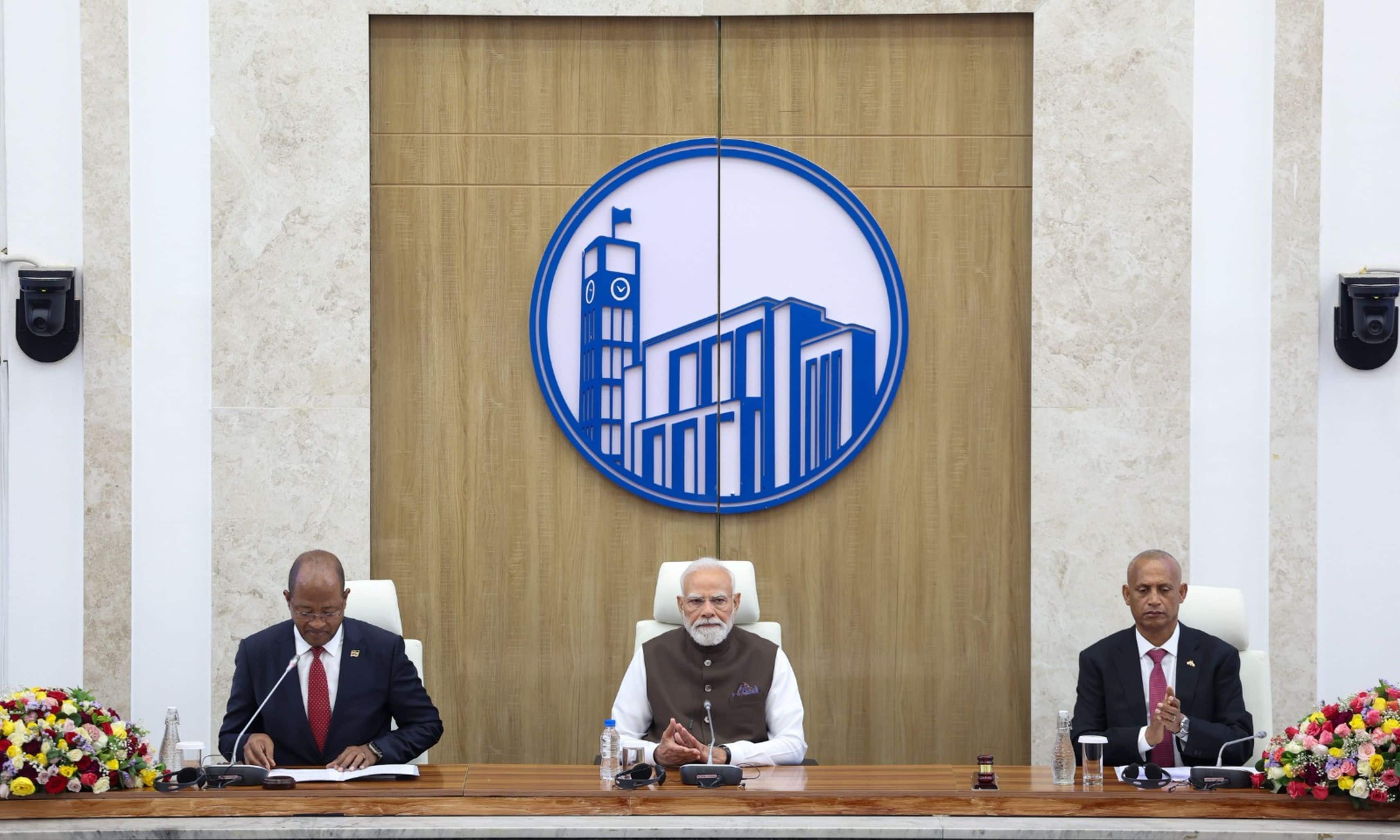
I bring greetings of friendship, goodwill, and brotherhood.
तेना इस्तील्लीन
सलाम
Honourable Members,
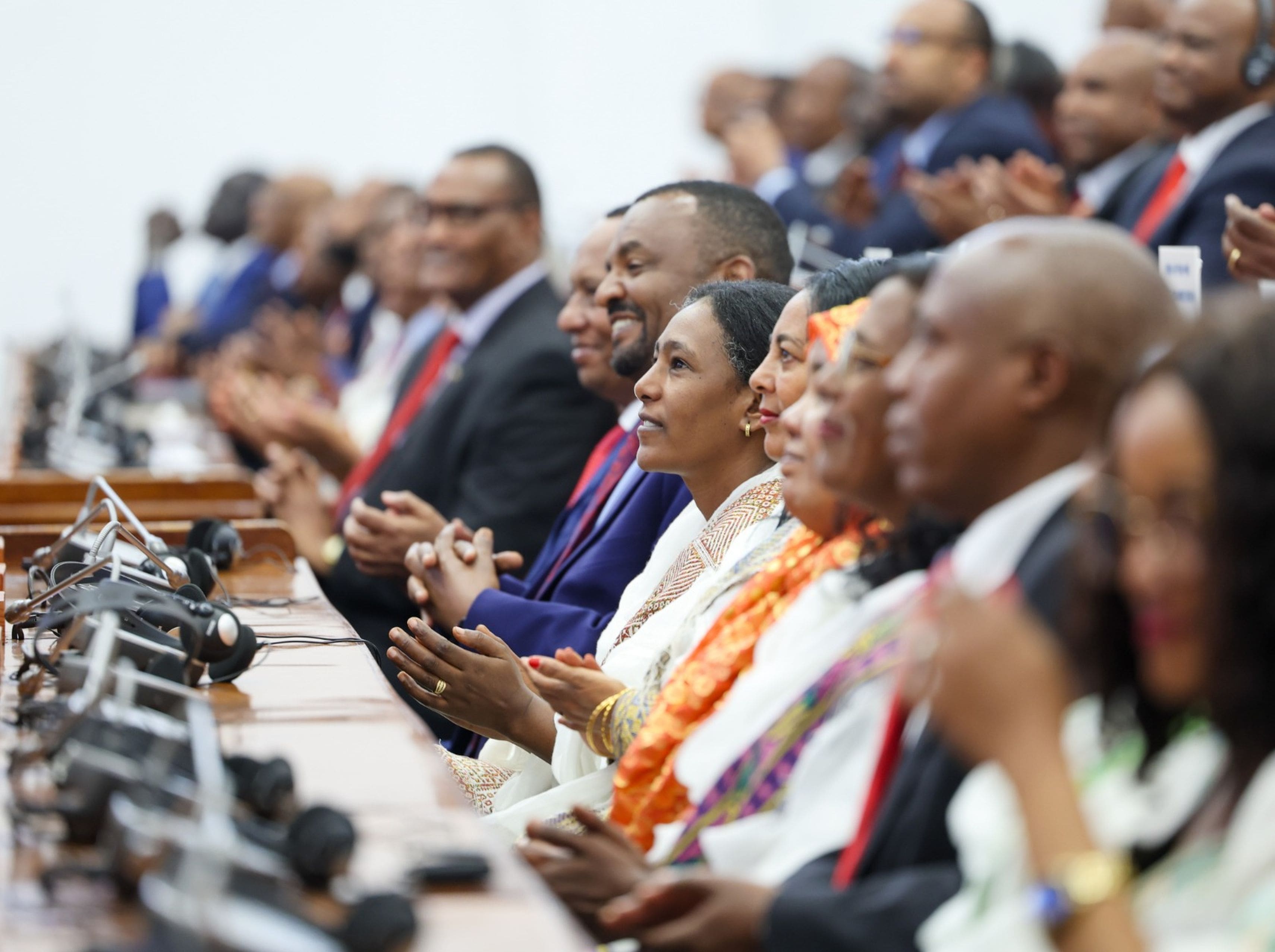
In this great building, your laws are shaped. Here, the will of the people becomes the will of the state. And when the will of the state is in harmony with the will of the people, the wheel of progress moves forward with hope and purpose.
Through you, I am also speaking to your farmers in the fields, To the entrepreneurs building new ideas, to the proud women leading communities and institutions, and, to the young people of Ethiopia who are shaping the future. I thank you for this immense privilege.
Yesterday, I was also honoured to receive the Grand Honor, Nishan of Ethiopia, from my dear friend Prime Minister Dr. Abiy Ahmed. I accept this award with folded hands, with humility, on behalf of the people of India.
आम सग्नालो
Honourable Members,
Ethiopia is one of the oldest civilisations in human history. Here, history is alive in the mountains, in the valleys, and in the hearts of the Ethiopian people. Today, Ethiopia stands tall because its roots are deep. To stand in Ethiopia is to stand where the past is honoured, the present is full of purpose, and the future is welcomed with open hearts.
This blend of old and new... This balance between ancient wisdom and modern ambition... This is the true strength of Ethiopia.
This spirit of मेडेमर, or synergy, is very familiar to us in India. Like the monolithic churches of लालिबेला, the ancient rock temples of Tamil Nadu in India are also prayers set in stone. We too are an ancient civilisation, walking confidently into the future.
With the call of सबका साथ, सबका विकास, सबका विश्वास, सबका प्रयास। Together, for everyone’s growth, with everyone’s trust and effort. Our emotions for our motherland, also reflect our shared perspectives.
India’s national song Vande Mataram, and the Ethiopian national anthem, both refer to our land as the mother. They inspire us to take pride in the heritage, culture, natural beauty and protect the motherland.
Honourable Members,
Science has traced some of the earliest footprints of our species in Ethiopia. When the world speaks of Lucy, of दिन्किनेश they are not speaking only of a fossil. They are speaking of a beginning. A beginning that belongs to all of us, whether we live in आडिस अबाबा or in Ayodhya.
In India, we say Vasudhaiva Kutumbakam, the world is one family. It reminds us that beyond politics, beyond borders, beyond differences, we share a common origin. And if our beginning was shared, then our destiny must also be shared.
Honourable Members,
India and Ethiopia share warmth in climate, as well as in spirit. Nearly two thousand years ago, our ancestors built connections across great waters. Across the Indian Ocean, merchants sailed with spices, cotton, coffee, and gold. But, they traded more than goods. They exchanged ideas, stories, and ways of life. Ports like अदूलिस and Dholera were not just trade centres. They were bridges between civilisations.
In modern times, our relationship entered a new era. Indian soldiers fought alongside Ethiopians for the liberation of Ethiopia in 1941. Our formal diplomatic relations began soon after India became independent.
But even before embassies were set up, our people had already started writing a new chapter together. Thousands of Indian teachers came to Ethiopia. They taught children in आडिस अबाबा, in दिरे दावा, from बाहिर दार to मेकेले. They reached Ethiopian schools, and entered Ethiopian hearts. Even today, many Ethiopian parents speak warmly about Indian teachers who shaped the future of their children.
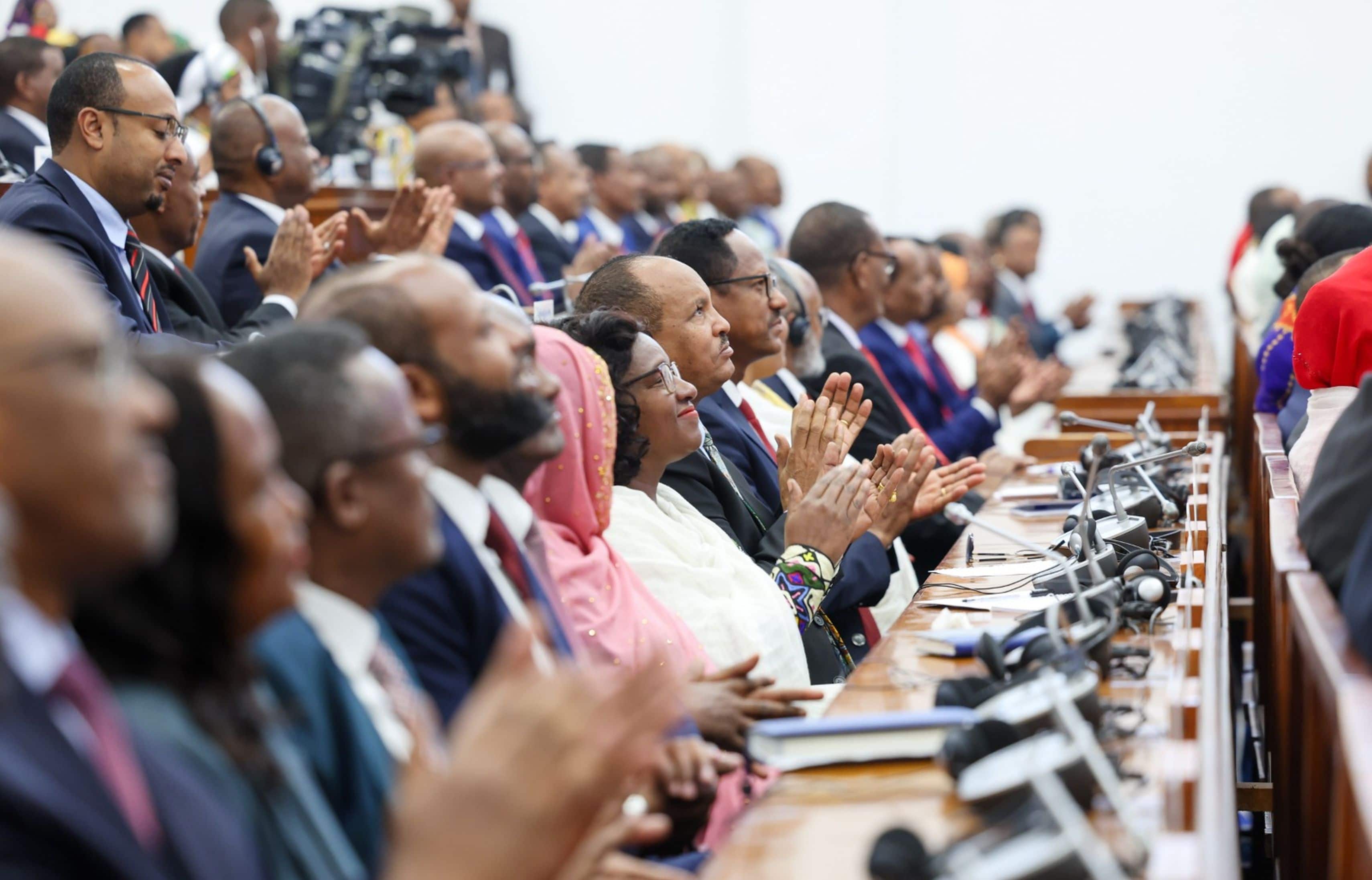
And just as Indian teachers came here, Ethiopian students also travelled to India, seeking knowledge and friendship. They went to India as students and returned home as the builders of modern Ethiopia. I am told that some of them are present here in this Parliament right now! Including the Honourable Speaker तागेसे चाफो.
They have also played a special role in building our people-to-people ties. Because they introduced Ethiopian cuisine in India. In India, we also enjoy eating "श्री अन्न” millets like Ragi and Bajra. So, the flavour of Ethiopian टेफ is very comforting for us. And, since we enjoy eating the Indian Thali, the Ethiopian बेया-नैतू also feels very familiar to us.
Honourable Members,
Today, Indian companies are among the largest foreign investors in Ethiopia. They have invested more than five billion dollars in diverse sectors like textiles, manufacturing, agriculture, health, and more. And, they have created more than seventy-five thousand local jobs.
But, I am sure we can all agree, our partnership has a lot more potential. That is why, Prime Minister Dr. Abiy Ahmed and I took a big step forward yesterday. We have decided to elevate our bilateral relationship to the level of a Strategic Partnership.
This will unleash the potential of our economies, through cooperation in technology, innovation, mining, sustainability, and clean energy. It will also help secure the future for our peoples through cooperation in food security, health security and capacity building. In addition, we will also enhance our trade and investment cooperation, as well as on defence and security matters.
Honourable Members,
As developing countries, we have a lot to learn from and offer to each other. Agriculture forms the backbone of our two nations. It feeds our people. It sustains our farmers. It connects tradition with innovation. We can work together to develop better seeds, irrigation systems and soil-health technologies.
As climate change affects rainfall and crop cycles, we can share knowledge in climate-resilient farming. From dairy farming to farm mechanisation, from millet research to food processing, together, we can help our farmers prosper.
Honourable Members,
In India, we have built a robust Digital Public Infrastructure. It has transformed the way we deliver services and how people access them. Today, every citizen in India can use technology for payments, for identity, and for government services. More than half of the world’s real-time digital payments now happen in India.
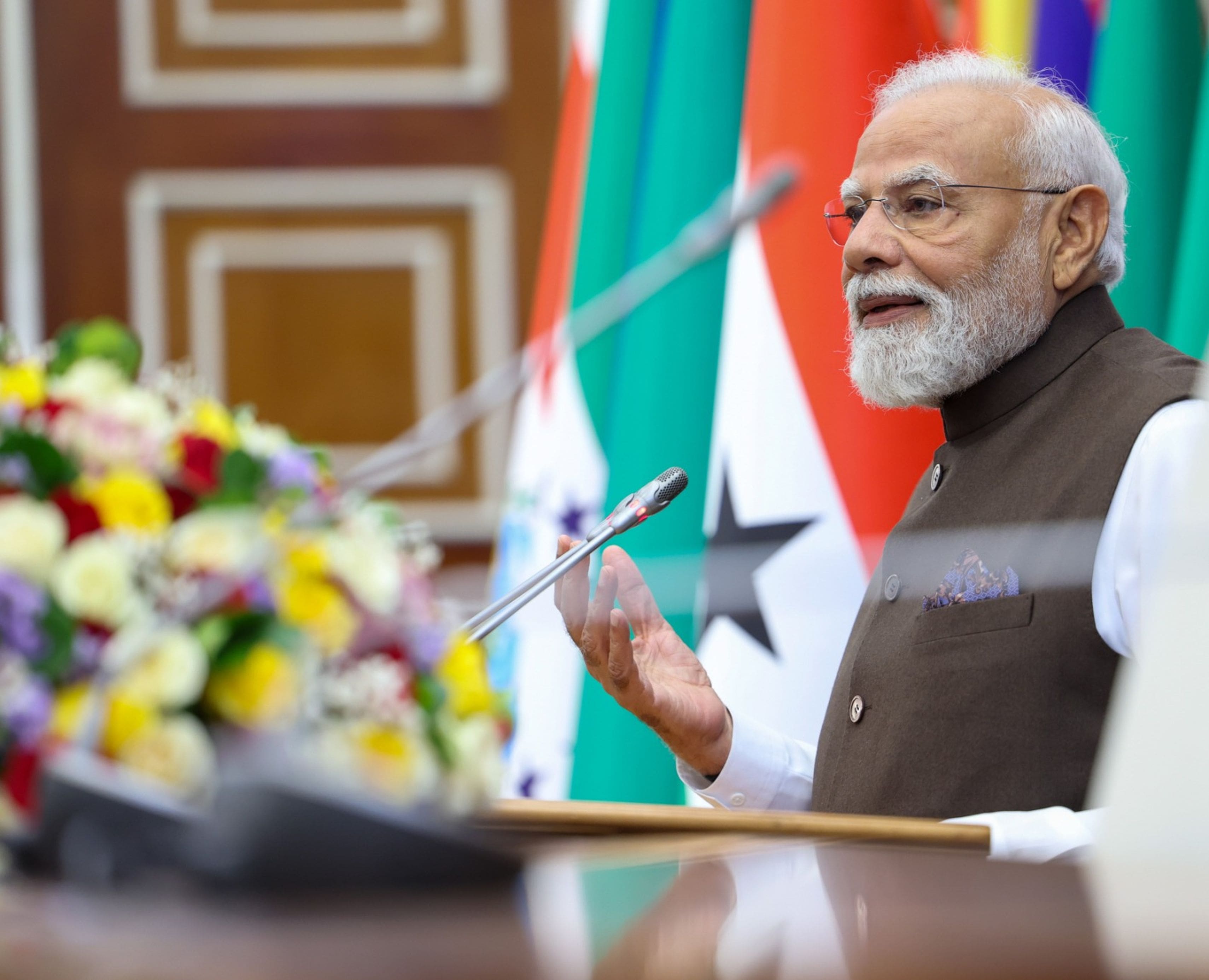
Welfare benefits worth over 500 billion dollars have reached hundreds of millions of beneficiaries directly in their bank accounts, without leakages or corruption. Three times every year, nearly 100 million farmers receive financial assistance at the click of a button.
As you roll out the Digital Ethiopia 2025 Strategy, we are ready to share our expertise and our experience with Ethiopia. And, we are honoured that you have picked India as the trusted partner to develop the Data Centre for your Foreign Ministry.
Honourable Members,
India is known as the pharmacy of the world. During the Covid pandemic, the entire world was worried. It was a very difficult time. Despite limited resources, we considered it our sacred duty to humanity to do everything possible to help others.
India sent medicines and vaccines to more than 150 countries. It was India’s proud privilege to supply Ethiopia with over 4 million vaccine doses. And, our good fortune to do so in partnership with the W.H.O led by डॉक्टर टेडरोस, a proud son of Ethiopia, known in India as तुलसी भाई.
I am glad that our healthcare cooperation is growing, from pharmaceuticals to hospitals, and from traditional medicine to telemedicine. We are committed to strengthen our health security cooperation further - from provisioning of new equipment in hospitals, to capacity building of healthcare professionals.
Honourable Members,
Ethiopia sits at a crossroads of Africa. India stands at the heart of the Indian Ocean. We are natural partners in regional peace, security, and connectivity.
Our commitment to mutual security became stronger with the signing of the Defence Cooperation Agreement earlier this year. This agreement focuses on closer military cooperation. It includes collaboration in cybersecurity, in defence industries, in joint research, and in capacity building.
I take this opportunity to thank Ethiopia for your solidarity after the terrorist attack in India in Pahalgam in April. I also thank you for receiving our All Party Parliamentary Delegation so warmly, and for affirming the commitment of Zero Tolerance towards terrorism.
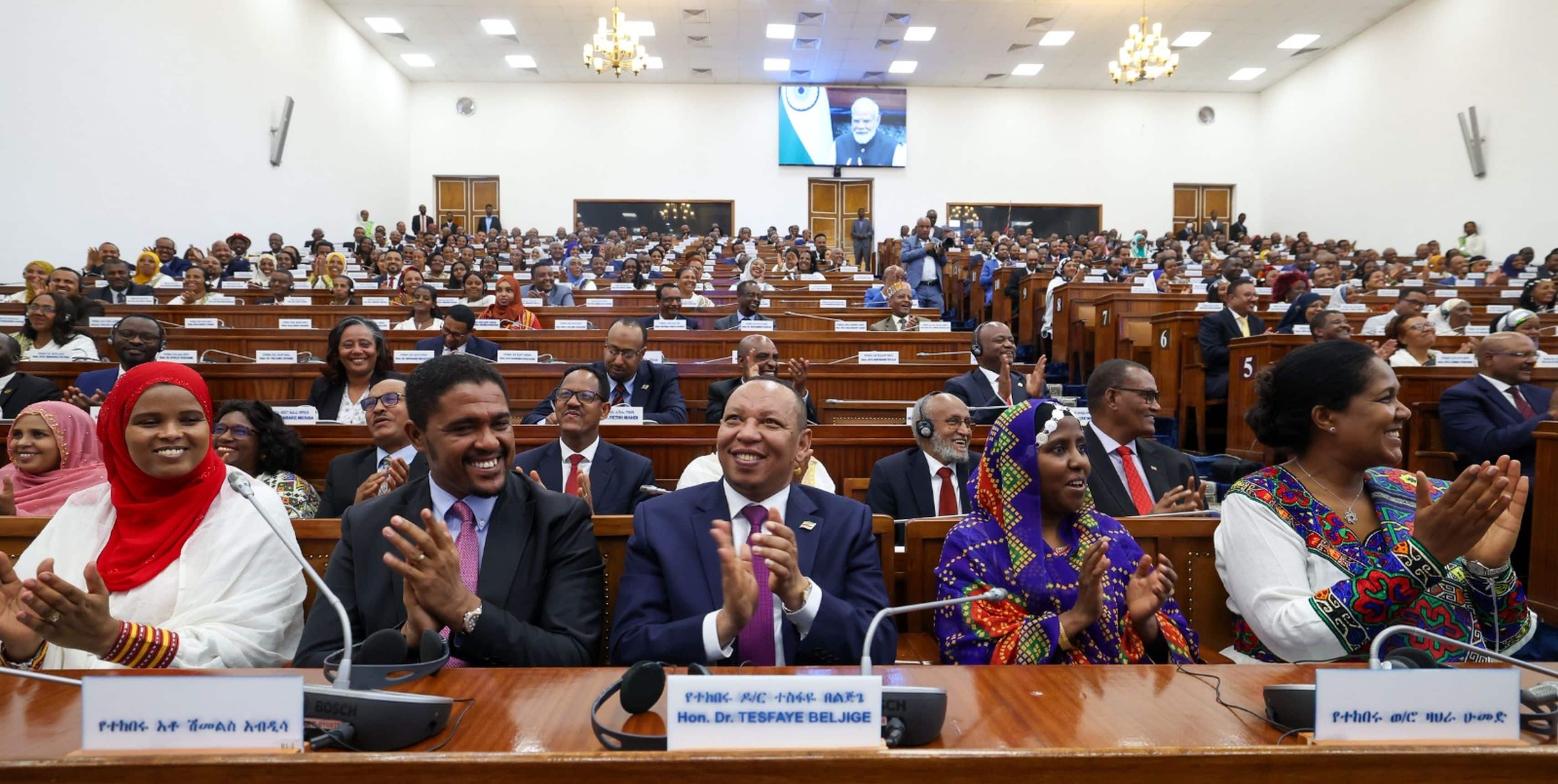
Honourable Members,
As vibrant and diverse democracies, we both understand that democracy is a way of life, and it is a journey. It is shaped sometimes by debate, sometimes by disagreement, but always by belief in the rule of law and the will of the people.
Both our constitutions also reflect this spirit. India’s Constitution begins with the words: "We, the People of India.” Ethiopia’s Constitution begins with: "We, the Nations, Nationalities and Peoples of Ethiopia.” Their message is the same: our destiny is in our hands.
This morning, I had the honor to lay a wreath at the आड्वा Victory Monument. This monument is a timeless reminder of how Ethiopia’s victory inspired the entire colonised world in its quest for dignity and freedom. And in these times of conflict and uncertainty, it is a reminder that the people of the Global South can stand up for themselves.
Honourable Members,
Mahatma Gandhi gave us the concept of trusteeship. We do not own this beautiful planet and its resources. Instead, we are trustees who must take care of them and pass them to our children. The spirit of trusteeship that guides India’s "एक पेड़ माँ के नाम” - "A Tree for Mother” initiative - is also reflected in Ethiopia’s Green Legacy Initiative.
Both our nations believe in caring for Mother Earth. Both believe in giving back to nature. Together, let us work on renewable energy and green jobs. Let us work on disaster resilient infrastructure and bio-fuels. And let us raise a strong voice for climate justice. India will be happy to support Ethiopia’s efforts to give a powerful voice to the Global South at COP-32 in 2027.
Honourable Members,
I am told that there is a saying in Ethiopia, "When spider webs unite, they can tie up a lion.” We too believe in India, that मन मिलें तो पर्वत भी रास्ता दे देते हैं - when hearts are united, even mountains give way.
Indeed, solidarity is strength, and cooperation is power. And today, as nations of the Global South, as ancient civilisations, as friends, India and Ethiopia are standing together. We stand together as members of one family. And we work for a world that is more just, more equal, and more peaceful.
It was here, in आडिस अबाबा, that the dreams of African unity found a home. I am told that many streets of this wonderful city are even named after African countries!
On the other side of the Indian Ocean, it was in New Delhi, that India was honoured to welcome the African Union as a permanent member of the G20. Last year, we marked another historic step with the inclusion of Ethiopia as a full member of the BRICS.
In fact, over the 11 years of my government, the connection between India and Africa has grown manifold. During this period, we have exchanged more than 100 visits at the level of Heads of State and Government.
Honourable Members,
The Global South is writing its own destiny. And, India and Ethiopia share a vision for it. Our vision is of a world where the Global South rises not against anyone, but for everyone.
A world where development is fair, where technology is accessible, and where sovereignty is respected. A world where prosperity is shared, and peace is defended. And, a world where decision-making reflects today’s reality, not the world of 1945. Because the world cannot move forward if its systems remain locked in the past.
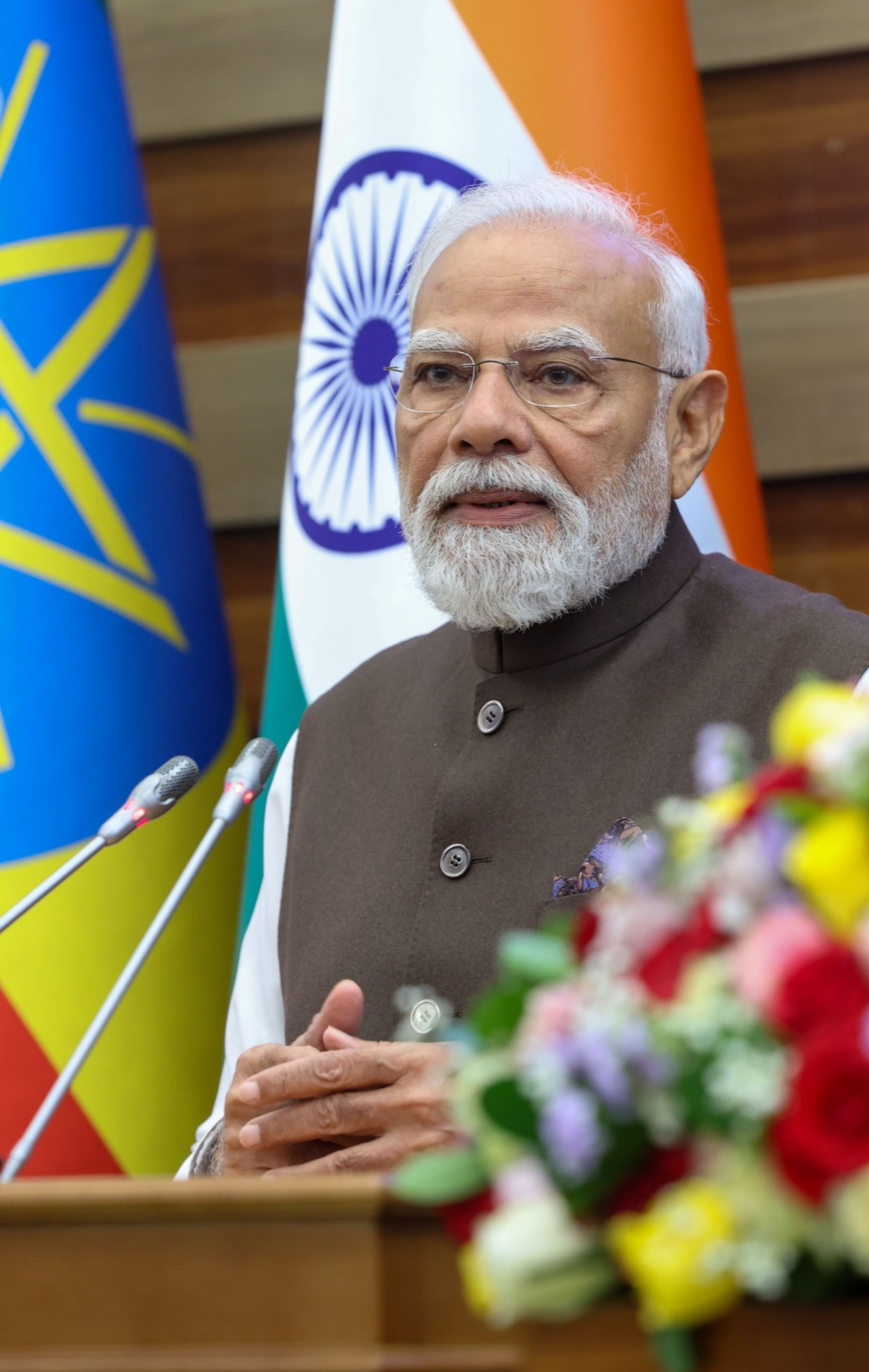
That is why, India has emphasized a Global Development Compact. It will prioritize technology sharing, affordable finance, capacity building, and trade for sustainable growth. That is why, at the G-20 Summit in November, I called for an "Africa Skills Multiplier Initiative”, to train one million trainers. It will build local capacities, and help your efforts towards inclusive and sustainable development.
Honourable Members,
My personal association with tea is well-known. But, it is impossible to come to Ethiopia and not mention coffee! It is one of your greatest gifts to the world!
In an Ethiopian coffee ceremony, people sit together, time slows down, and friendships deepen. In India too, a cup of tea is an invitation to talk, to share, to connect. And, just like Ethiopian coffee and Indian tea, our friendship is brewing stronger!
Today, I stand before you, among sisters and brothers, with a deep sense of gratitude, and bright hopes for the future. The future is calling. And, India and Ethiopia are ready to answer.
Honourable Members,
As I conclude, I give you my word, that we will walk together as equals. We will build together as partners. And, we will succeed together as friends.
Thank you for the honour of addressing this Parliament. Thank you for your friendship. Thank you for your trust.
तब्बारकु
देना हुन्नु
आम सग्नालो
Thank you.
- Tags

- Ethiopia
- Modi In Ethiopia
- Parliament
- Ethiopia Parliament
- India First
- Democracy
- Entrepreneur
- Great Honor Nishan of Ethiopia
- Abiy Ahmed Ali
- Vande Mataram
- Technology
- Vasudhaiva Kutumbakam
- Dholera
- Children
- Manufacturing
- Agriculture
- Health
- Innovation
- Mining
- Clean Energy
- Investment
- Climate Change
- Digital Public Infrastructure
- Digital Economy
- WHO
- Healthcare
- Pharmaceutical
- Connectivity
- Sustainable Development Goals
- Pahalgam
- Adwa Victory Monument
- Global South
- Mahatma Gandhi
- Ek Ped Maa Ke Naam
- G20
- New Delhi
- Trade
- coffee
- Sustainable Development
- Speech


Posted via www.narendramodi.in