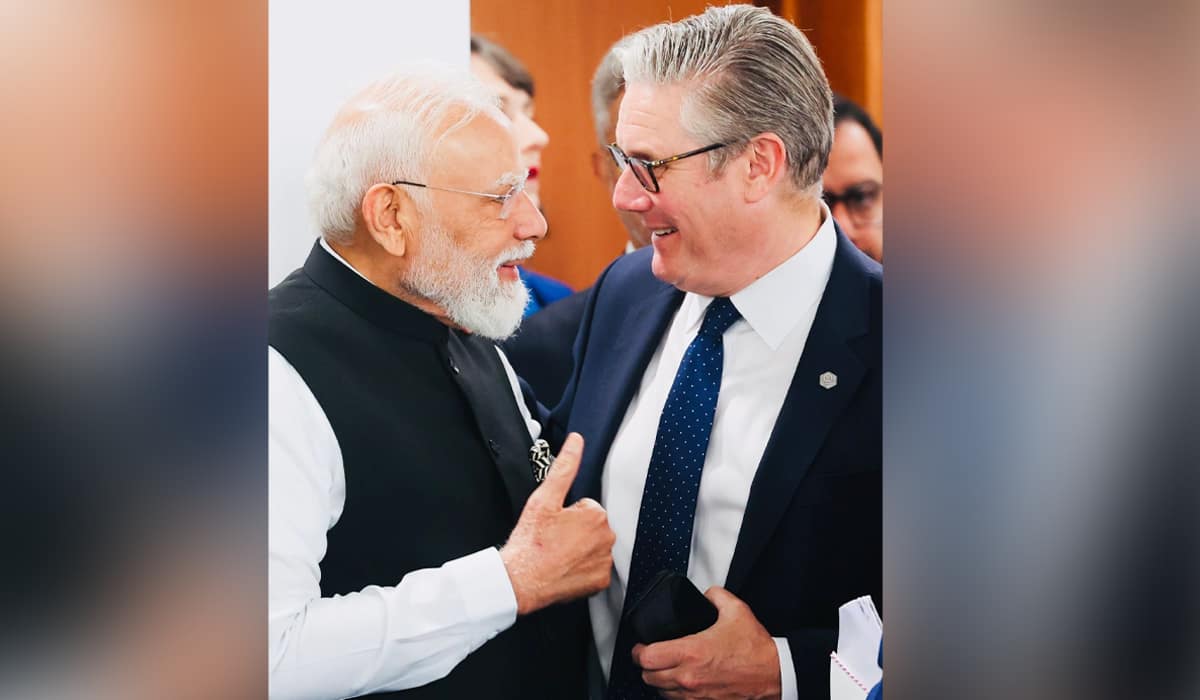
The Chief Minister of Andhra Pradesh, Shri Chandrababu Naidu, the Chief Minister of Haryana, Shri Manohar Lal, and the Chief Minister of Uttarakhand, Shri Harish Rawat, today called on the Prime Minister, Shri Narendra Modi, and submitted the final report of the sub-group of Chief Ministers on Swachh Bharat Abhiyaan.
The Prime Minister complimented the Chief Ministers for their efforts. He said that the task of accomplishing Swachh Bharat, though difficult, is not impossible to achieve.

The Sub-Group of Chief Ministers on Swachh Bharat Abhiyaan was constituted on March 24, 2015 pursuant to the decision taken in the first Governing Council Meeting of the NITI Aayog held on February 8, 2015. The Sub-Group consisted of Chief Ministers of Andhra Pradesh, Bihar, Delhi, Haryana, Karnataka, Maharashtra, Mizoram, Sikkim, Uttarakhand and West Bengal as Members with Chief Minister of Andhra Pradesh as the Convener of the Sub-Group. The Sub-Group met four times at New Delhi, Chandigarh and Bengaluru where intense deliberations on the subject were held.
The Terms of Reference of the Sub-Group included the following (i) To examine financial requirements for comprehensive implementation of the Swachh Bharat Mission and suggest measures for meeting budgetary needs; (ii) To recommend robust institutional mechanisms for effective implementation; (iii) To recommend measures for technological support for different components of SBM, including solid and liquid waste management in rural and urban areas; (iv) To examine models for private sector participation in the Swachh Bharat Mission and to suggest ways for substantial improvement in participation of private sector and civil society organisations for effective implementation; (v) To recommend ways to make the SBM sustainable; and (vi) Any other measures.
The main recommendations of the report include bringing the behavior change and encouraging positive habits related to sanitation and cleanliness among the people. To bring about this transformation, a professionally driven behaviour change communication strategy and increasing the funding for the Information, Education and Communication (IEC) component of the Mission, has been suggested. Including sanitation and cleanliness in school curriculum and formation of a team of students to be called as ‘Swachhta Senani’ in schools and colleges have been proposed to spread awareness about sanitation and cleanliness.

Given the scale and importance of the programme, it has been suggested that the sharing pattern of funds for this programme between Centre and States may be in the ratio of 75:25, while for hilly States it may be kept at 90:10. To raise resources for the programme, Swachh Bharat bonds may be issued and a Swachh Bharat cess may be levied by the Central Government on petrol, diesel, telecom services and also on accumulated waste produced by plants generating mineral waste like coal, aluminum, and iron ore.
To provide guidance, support and monitoring of the programme, the report recommends setting up of a dedicated Mission for the Swachh Bharat Abhiyaan, both at National and State Level. A National Technical Board has been recommended to handhold the States and Local Bodies in identification, evaluation, selection and procurement of technologies. It has been recommended to reduce the subsidy on chemical fertilizer and increase the subsidy on compost to encourage its use. In order to improve the viability of waste management activities, the report proposes provision of tax exemptions by the Centre and the State Government to the private sector.
The report recommends certain measures to attract private sector participation and Public Private Partnership (PPP). It has been recommended that waste to energy plants may be set up on PPP mode in bigger municipalities and cluster of municipalities, whereas, composting method may be adopted for smaller towns and villages.
Measures for operation and maintenance of community and public toilets have been proposed, including different measures for rural and urban areas. To resolve inter-sectoral and inter-departmental issues, a common platform may be provided by NITI Aayog. It is proposed that NITI Aayog may develop an objective assessment framework for assessing Open Defecation Free (ODF) and ODF plus.

Incentive measures have been proposed such as Swachh Bharat Grading/Rating for all Gram Panchayats, Municipalities, Blocks, Districts and States, each year to promote competition among them. Further, it has been recommended that one day in each month and one week each year (culminating with 2nd October) may be assigned for the activities of the Swachh Bharat Abhiyaan and to reward best performing Gram Panchayat, Block, ULB, District and State as per the ratings. The report proposes to enhance the assistance for construction of one unit of individual household toilet in both urban and rural areas to Rs. 15,000/-.
The report recommends integration of rag pickers into the waste management system so that their livelihood is not adversely affected. Further, both Centre and States should make efforts towards eradication of manual scavenging activity through strict enforcement of the Prohibition of Employment as Manual Scavengers and Their Rehabilitation Act, 2013. All laws and rules on waste management need to be reviewed for ensuring their strict enforcement.