



The Prime Minister, Shri Narendra Modi, today addressed the Joint Session of the Parliament of Bhutan in Thimphu. 
The Prime Minister said that in the last century or so, while the global trend has largely been of expansion and centralization of power, Bhutan has been an exception. It laid the strong foundation for democracy, and has made the transition to a constitutionally established democracy.
The Prime Minister said 7 years is a short time in the history of a country’s democracy. But in this short time, the people of Bhutan have developed faith in the institutions of democracy. There has also been a change in Government. This reflects the maturity and awareness of the people. Shri Modi said India had also witnessed an election recently, and the people of India had voted for good governance and development.
Referring to the welcome remarks by H.E. Mr. Jigme Zangpo, Speaker of the National Assembly, that the stronger India is, the better it is for Bhutan, the Prime Minister said he agreed. He added that the entire region, especially the SAARC countries, would benefit if India is prosperous. Only a strong, prosperous India can help alleviate the problems that its neighbours face, Shri Modi said.
Speaking about the India-Bhutan relationship, the Prime Minister said this is not just based on administrative ties. He said both India and Bhutan have seen transitions of power, but the relationship has remained strong. This is because the relationship is based on a shared cultural heritage. We have opened our hearts for each other, Shri Modi said, adding that leaderships may change, but these open hearts will not close, and the heritage that this relationship represented would be nurtured by future generations. India’s people and Government are committed to it, he said.
Referring to the development that has been achieved in Bhutan despite the constraints imposed by nature, Shri Modi said that in future, many small countries across the world will treat this as a model. He said while the world talks of GDP, you talk of Gross National Happiness, and this is because the leadership is concerned about the last man in the line.
Shri Modi said the plans to harness Bhutan’s hydropower potential were not just about Bhutan’s economy, or meeting India’s energy needs, but a small contribution to the fight against global warming. 
The Prime Minister also talked about the large contribution made for education in Bhutan’s budget, and said this reflected Bhutan’s investment in the future generations. He said India was keen to make a contribution to this cause. He said India would help set up an e-library in Bhutan, for the benefit of the youth, which would help them connect with the world. He said India would also double the scholarships that are being given to Bhutanese students.
Stating that India and Bhutan must think of how to take the relationship even further, Shri Modi suggested that the Himalayan states of India, along with Bhutan, and perhaps Nepal, could hold a sports meet every year. He said connecting people through sports, brings sportsman spirit, and that contributes to happiness.
The Prime Minister said India’s space technology could also be harnessed to help Bhutan develop even further.
Shri Narendra Modi said people sometimes said the Himalayas separated us. But he thought the Himalayas united us, as they are a part of our common heritage. He said people on both sides of the Himalayas looked up to them as a source of strength. But the need of the hour is to study various aspects of the Himalayas. He said India had already set up a National Action Plan for Climate Change. He said a National Mission for sustaining the Himalayan System could also be considered. He said India also wanted a Central University for Himalayan Studies to be established, and Bhutan would benefit a lot from it.
The Prime Minister said India and Bhutan could together form a holistic approach to tourism, and develop a circuit combining India’s North-Eastern states and Bhutan. He said “Terrorism divides. Tourism unites,” and added that if Bhutan’s natural wealth and capabilities join together, it will be a big invitation for the world.
The Prime Minister referred to a quote from the third King of Bhutan: like milk and water, India and Bhutan cannot be separated. He said the friendship is everlasting, and based on shared cultural heritage. He also thanked the people of Bhutan for the warm welcome they had given him.
The vote of thanks was given by H.E. Dr. Sonam Kinga, Chairman of the National Council.

Published By : Admin |
June 16, 2014 | 13:58 IST
-
Share
-

-

-


Login or Register to add your comment
Explore More
NEXT READ


Media Coverage
UPI at 10: From payments pipe to backbone of India’s digital financial ecosystem

Nm on the go
Always be the first to hear from the PM. Get the App Now!

Prime Minister expresses deep concern over hospitalization of Asha Bhosle Ji
April 12, 2026
-
Share
-
-
-
PM prays for her good health and speedy recovery
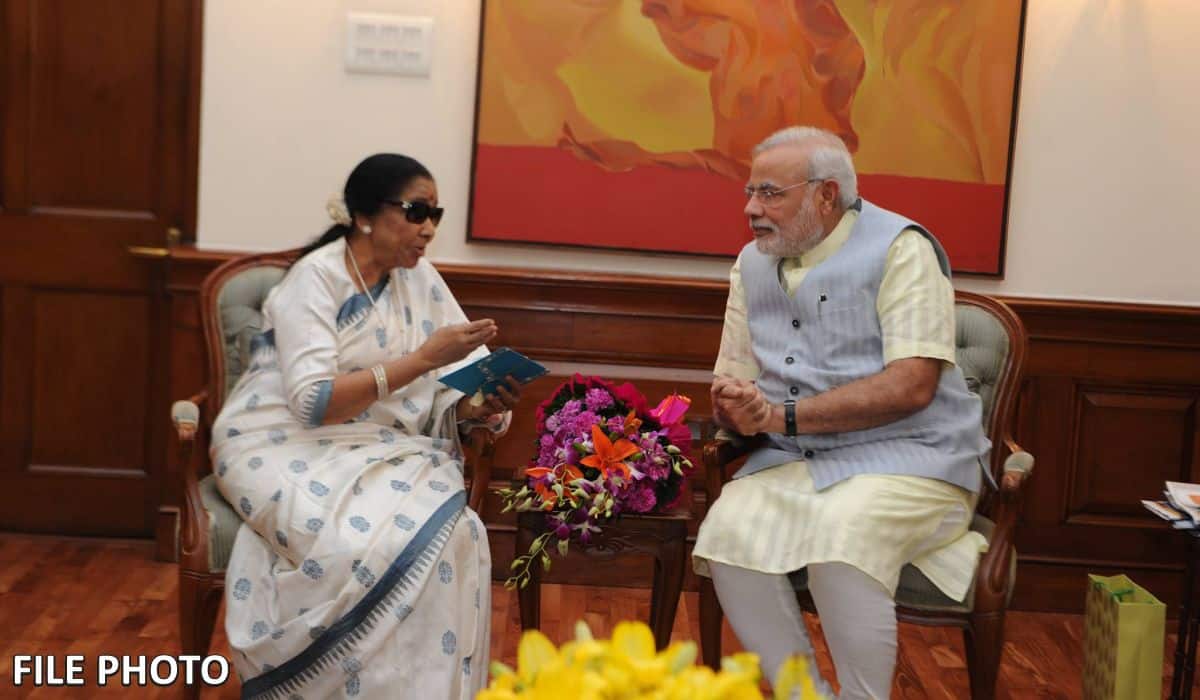
Prime Minister Shri Narendra Modi today expressed deep concern upon hearing that Asha Bhosle Ji has been admitted to the hospital.
The Prime Minister stated that he is praying for her good health and a speedy recovery.
The Prime Minister wrote on X:
"Deeply concerned to hear that Asha Bhosle Ji has been admitted to hospital. Praying for her good health and a speedy recovery."
Deeply concerned to hear that Asha Bhosle Ji has been admitted to hospital. Praying for her good health and a speedy recovery.
— Narendra Modi (@narendramodi) April 12, 2026


Posted via www.narendramodi.in