Low GDP growth rate is wake up call for GoI facing policy paralysis: Gujarat CM Narendra Modi 

Indecision, adrift in Centre casting dark shadow on States

New Delhi: The Annual Plan for Gujarat for 2012-13 was finalized on Friday at Rs. 51,000 crore at a meeting held here between Gujarat Chief Minister Shri Narendra Modi and Planning Commission Deputy Chairman Shri Montek Singh Ahluwalia. The current plan size is 34.21 % higher than the previous year’s plan size of Rs.38,000 crore.

In the meeting, Gujarat CM expressed his concern that we are starting 12th FYP with news that the growth rate last year was on 5.3%, in a scenario of low investor confidence, falling rupee, falling inflow of FDI and policy paralysis in the Central Government. He observed that there is no urgency or seriousness in tackling the economic crisis facing the country. While answering questions from media, Shri Modi showed his surprise that there was no anticipation from the Prime Minister and the Central Government that the growth figures would be this bad. As late as March, the PM was confident of achieving 7% growth.

He further mentioned that global factors alone could not be held responsible for economic crisis. There is a policy paralysis and vital decisions concerning a wide range of issues have not been taken. The Central Government is in coma.

Shri Modi expressed serious concern regarding low GDP growth, falling rupee and inability to control inflation and hoped that this 5.3% growth figures would serve as a wakeup call for the GoI.

During Gujarat’s annual plan discussion, Chief Minister Shri Narendra Modi expressed confidence that Gujarat is committed to observing fiscal discipline and meeting the targets for prudent debt management and credibility in budgetary operations fixed under the Gujarat Fiscal Responsibility Act, 2005. During the last three years gross fiscal deficit has been reduced from 3.5% of GSDP to 2.16% GSDP. On the revenue side, surplus has been achieved in the revised estimates for 2011-12. The debt stock is estimated to decline to 21.07% of GSDP below the target ceiling of 27.1%, he said.

During the entire Eleventh Plan, an allocation of Rs. 53,830 crore was made for the social sectors, amounting to 42% of the total Plan Size. This reflects the commitment of the state government to inclusive growth and human development, he counted. Gujarat registered a growth rate of 9.10 percent in 2011-2012 as compared to national rate of 6.9 percent for the same period.

For the Twelfth Five Year Plan, Shri Modi emphasized Gujarat’s development strategy will continue on human development and inclusive growth while aiming at sustainable double digit growth with uniform development of agriculture, manufacturing and services. He further said that the State Government will make tedious efforts to increase the reach of its three flagship schemes – Vanbandhu Kalyan Yojana; Sagarkhedu Sarvangi Vikas Yojana and Garib Samrudhhi Yojana.

Addressing the members of the Planning Commission, Gujarat Chief Minister raised the voice against the attitude and approach of UPA government and said doubts are being raised about the India Growth Story as “never before has the common man reeled under such heavy burden.” With rupee rapidly depreciating against the dollar, Sensex plummeting and RBI appearing helpless in controlling inflation in spite of raising interest rates, and prices of food items soaring high over 10 percent during last five years, the Government of India and Planning Commission should take concrete steps to improve macroeconomic fundamentals as the effects of indecision and adrift in the Centre are casting its dark shadow on the States, he said.

Shri Modi apprised that with the sizable increase in current Plan size as approved by Planning Commission, the State Government would include number of new initiatives and schemes as under:

a) Mukhyamantri Amrutam Yojana to provide financial assistance to BPL families to combat deadly diseases including cancer screening for women in remote locations. Plans afoot to open a medical college in Himmatnagar, two Ayurvedic colleges and one homeopathy college in a tribal area. b) To strengthen ICDS infrastructure, a provision of Rs. 551.91 crore is made for 12,045 new anganwadi Nand Ghars during 2012-13, out of which 4213 will be in urban areas. c) To institutionalize the successfully run School Assessment and Evaluation Programme (Gunotsav) by introducing Gujarat School Evaluation and Accreditation Council for effective implementation of continuous and comprehensive evaluation. d) Development of coastal tourism in all the port areas estimated at Rs 120 crore e) Nand Ghar and construction of Anganwadis of Rs 115 crore. f) 10 new ITIs with five exclusively for women. g) It is envisaged to establish three new Bull Mother Farms and to cover more than 18 lakh animals under scientific breeding. Five new animal hostels during 2012-13.

There are many issues and instances of injustice done to Gujarat and mentioning just few Shri Narendra Modi said the Central government passed the Right to Education (RTE) Act, 2009 without making any financial provisions and simply levied financial burden on the states. He also lamented that out of Rs 6500 crore under Sarva Shiksha Abhiyan (SSA), only 3400 crore was approved by the Centre. In contrast, he highlighted that the State government will construct 350 new secondary school buildings and 73 new model schools and girl hostels during the current year.

Gujarat produces the maximum vegetables in the country after West Bengal and is on the way of becoming the horticulture hub of India. Gujarat Chief Minister also criticized the anti farmer policies and decisions of the Central Government which has led to widespread distress, agitation and anger amongst farmers in Gujarat. He said Gujarat contributes 1/3rd cotton production in the country. More than 40% cotton seeds and 50% cotton export from India is from Gujarat.

He added that arbitrary banning on cotton export has laid to Gujarat farmers heavily loss of Rs. 14,000 crore in last year. They will also be losses in the current year. Textile Ministry attempts to bring the license raj stiffed in backward direction.

In the meeting, Gujarat Chief Minister pointed out several issues which are pending with various Ministries in the Government of India which include considering DDP areas at par with DPAP areas for funding under A.I.B.P. Scheme, anti-farmer policy on cotton exports, discrimination against Gujarat for CST compensation, non-payment of royalty etc. Shri Modi said that these issues are affecting the development as well as pace of development of the State and its financial resources. Despite repeated representation from the State Government at various levels, there is no positive response from the Central Government. It is unfortunate that some issues remain pending for years together without resolution which leads to a feeling of injustice.

Shri Modi said that UPA has done great injustice to Gujarat by not allocating KG basin gas and low priced gas of LNG for transportation in Ahmedabad city gas network.

Referring several successful initiatives taken on reduction of IMR, MMR and strengthening healthcare services in State during the Eleventh Plan Shri Modi said “We were able to achieve reduction of four points in IMR in a single year (SRS 2010) and the current rate is 44 per thousand live births. Reducing IMR to thirty by 2015 is an important goal for Gujarat. As per SRS 2010, achieved Safe delivery rate is 91.2 and Institutional delivery rate is 79.8%”.

The expansion in irrigation and water management with the spread of drip irrigation and sprinkler irrigation, provision of Soil Health Cards for all land holders, preparation of village wise soil fertility maps (including micronutrients) as well as several others innovations and initiatives like Krishi Mahotsav has resulted in Gujarat achieving 10.8% agricultural growth during the last decade. Under micro irrigation scheme it is proposed to cover 2.5 lac hectares in the current year.

Shri Modi urged the Deputy Chairman to assist the State in expediting the requisite approval for the Sardar Sarovar Project as early completion of the Project would be in the overall interest of the nation. He further said it would be in the national interest for the Central Government to permit Gujarat and other States to buy imported gas and produce electricity and supply the same to NTPC.

“There is an urgent need for the Planning Commission to provide special allocations for urban areas in the Twelfth Plan. There has been considerable delay in announcement of a revamped JnNURM to effectively address the concerns of smaller towns and ensure proportionately higher allocations for the more urbanized states.”

Gujarat Ministers Shri Vajubhai Vala, Shri Saurabhbhai Patel, Shri Ranjitbhai Gilitwala, Vice-Chairman, Planning Commission Shri Bhupendrasinh Chudasama, Chief Secretary Shri A. K. Joti and senior officers from the State Government participated in the meeting.

Explore More
శ్రీరామ జన్మభూమి ఆలయ ధ్వజారోహణ ఉత్సవం సందర్భంగా ప్రధానమంత్రి ప్రసంగం

ప్రముఖ ప్రసంగాలు

శ్రీరామ జన్మభూమి ఆలయ ధ్వజారోహణ ఉత్సవం సందర్భంగా ప్రధానమంత్రి ప్రసంగం
Year Ender 2025: Major Income Tax And GST Reforms Redefine India's Tax Landscape

Media Coverage

Year Ender 2025: Major Income Tax And GST Reforms Redefine India's Tax Landscape
NM on the go

Nm on the go

Always be the first to hear from the PM. Get the App Now!
...
PM chairs Fifth National Conference of Chief Secretaries in Delhi
December 28, 2025
Viksit Bharat is synonymous with quality and excellence in governance, delivery and manufacturing: PM
PM says India has boarded the ‘Reform Express’, powered by the strength of its youth
PM highlights that India's demographic advantage can significantly accelerate the journey towards Viksit Bharat
‘Made in India’ must become a symbol of global excellence and competitiveness: PM
PM emphasises the need to strengthen Aatmanirbharta and strengthen our commitment to 'Zero Effect, Zero Defect’
PM suggests identifying 100 products for domestic manufacturing to reduce import dependence and strengthen economic resilience
PM urges every State must to give top priority to soon to be launched National Manufacturing Mission
PM calls upon states to encourage manufacturing, boost ‘Ease of Doing Business’ and make India a Global Services Giant
PM emphasises on shifting to high value agriculture to make India the food basket of the world
PM directs States to prepare roadmap for creating a global level tourism destination

Prime Minister Narendra Modi addressed the 5th National Conference of Chief Secretaries in Delhi, earlier today. The three-day Conference was held in Pusa, Delhi from 26 to 28 December, 2025.

Prime Minister observed that this conference marks another decisive step in strengthening the spirit of cooperative federalism and deepening Centre-State partnership to achieve the vision of Viksit Bharat.

Prime Minister emphasised that Human Capital comprising knowledge, skills, health and capabilities is the fundamental driver of economic growth and social progress and must be developed through a coordinated Whole-of-Government approach.

The Conference included discussions around the overarching theme of ‘Human Capital for Viksit Bharat’. Highlighting India's demographic advantage, the Prime Minister stated that nearly 70 percent of the population is in the working-age group, creating a unique historical opportunity which, when combined with economic progress, can significantly accelerate India's journey towards Viksit Bharat.

Prime Minister said that India has boarded the “Reform Express”, driven primarily by the strength of its young population, and empowering this demographic remains the government’s key priority. Prime Minister noted that the Conference is being held at a time when the country is witnessing next-generation reforms and moving steadily towards becoming a major global economic power.

He further observed that Viksit Bharat is synonymous with quality and excellence and urged all stakeholders to move beyond average outcomes. Emphasising quality in governance, service delivery and manufacturing, the Prime Minister stated that the label "Made in India' must become a symbol of excellence and global competitiveness.

Prime Minister emphasised the need to strengthen Aatmanirbharta, stating that India must pursue self-reliance with zero defect in products and minimal environmental impact, making the label 'Made in India' synonymous with quality and strengthen our commitment to 'Zero Effect, Zero Defect.’ He urged the Centre and States to jointly identify 100 products for domestic manufacturing to reduce import dependence and strengthen economic resilience in line with the vision of Viksit Bharat.

Prime Minister emphasised the need to map skill demand at the State and global levels to better design skill development strategies. In higher education too, he suggested that there is a need for academia and industry to work together to create high quality talent.

For livelihoods of youth, Prime Minister observed that tourism can play a huge role. He highlighted that India has a rich heritage and history with a potential to be among the top global tourist destinations. He urged the States to prepare a roadmap for creating at least one global level tourist destination and nourishing an entire tourist ecosystem.

PM Modi said that it is important to align the Indian national sports calendar with the global sports calendar. India is working to host the 2036 Olympics. India needs to prepare infrastructure and sports ecosystem at par with global standards. He observed that young kids should be identified, nurtured and trained to compete at that time. He urged the States that the next 10 years must be invested in them, only then will India get desired results in such sports events. Organising and promoting sports events and tournaments at local and district level and keeping data of players will create a vibrant sports environment.

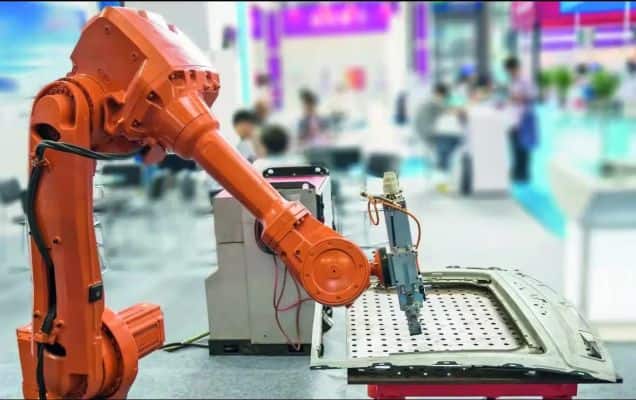
PM Modi said that soon India would be launching the National Manufacturing Mission (NMM). Every State must give this top priority and create infrastructure to attract global companies. He further said that it included Ease of Doing Business, especially with respect to land, utilities and social infrastructure. He also called upon states to encourage manufacturing, boost ‘Ease of Doing Business’ and strengthen the services sector. In the services sector, PM Modi said that there should be greater emphasis on other areas like Healthcare, education, transport, tourism, professional services, AI, etc. to make India a Global Services Giant.

Prime Minister also emphasized that as India aspires to be the food basket of the world, we need to shift to high value agriculture, dairy, fisheries, with a focus on exports. He pointed out that the PM Dhan Dhanya Scheme has identified 100 districts with lower productivity. Similarly, in learning outcomes States must identify the lowest 100 districts and must work on addressing the issues around the low indicators.

PM also urged the States to use Gyan Bharatam Mission for digitization of manuscripts. He said that States may start a Abhiyan to digitize such manuscripts available in States. Once these manuscripts are digitized, Al can be used for synthesizing the wisdom and knowledge available.

Prime Minister noted that the Conference reflects India’s tradition of collective thinking and constructive policy dialogue, and that the Chief Secretaries Conference, institutionalised by the Government of India, has become an effective platform for collective deliberation.

Prime Minister emphasised that States should work in tandem with the discussions and decisions emerging from both the Chief Secretaries and the DGPs Conferences to strengthen governance and implementation.

Prime Minister suggested that similar conferences could be replicated at the departmental level to promote a national perspective among officers and improve governance outcomes in pursuit of Viksit Bharat.

Prime Minister also said that all States and UTs must prepare capacity building plan along with the Capacity Building Commission. He said that use of Al in governance and awareness on cyber security is need of the hour. States and Centre have to put emphasis on cyber security for the security of every citizen.

Prime Minister said that the technology can provide secure and stable solutions through our entire life cycle. There is a need to utilise technology to bring about quality in governance.

In the conclusion, Prime Minister said that every State must create 10-year actionable plans based on the discussions of this Conference with 1, 2, 5 and 10 year target timelines wherein technology can be utilised for regular monitoring.

The three-day Conference emphasised on special themes which included Early Childhood Education; Schooling; Skilling; Higher Education; and Sports and Extracurricular Activities recognising their role in building a resilient, inclusive and future-ready workforce.

Discussion during the Conference

The discussions during the Conference reflected the spirit of Team India, where the Centre and States came together with a shared commitment to transform ideas into action. The deliberations emphasised the importance of ensuring time-bound implementation of agreed outcomes so that the vision of Viksit Bharat translates into tangible improvements in citizens’ lives. The sessions provided a comprehensive assessment of the current situation, key challenges and possible solutions across priority areas related to human capital development.

The Conference also facilitated focused deliberations over meals on Heritage & Manuscript Preservation and Digitisation; and Ayush for All with emphasis on integrating knowledge in primary healthcare delivery.

The deliberations also emphasised the importance of effective delivery, citizen-centric governance and outcome-oriented implementation to ensure that development initiatives translate into measurable on-ground impact. The discussions highlighted the need to strengthen institutional capacity, improve inter-departmental coordination and adopt data-driven monitoring frameworks to enhance service delivery. Focus was placed on simplifying processes, leveraging technology and ensuring last-mile reach so that benefits of development reach every citizen in a timely, transparent and inclusive manner, in alignment with the vision of Viksit Bharat.

The Conference featured a series of special sessions that enabled focused deliberations on cross-cutting and emerging priorities. These sessions examined policy pathways and best practices on Deregulation in States, Technology in Governance: Opportunities, Risks & Mitigation; AgriStack for Smart Supply Chain & Market Linkages; One State, One World Class Tourist Destination; Aatmanirbhar Bharat & Swadeshi; and Plans for a post-Left Wing Extremism future. The discussions highlighted the importance of cooperative federalism, replication of successful State-level initiatives and time-bound implementation to translate deliberations into measurable outcomes.

The Conference was attended by Chief Secretaries, senior officials of all States/Union Territories, domain experts and senior officers in the centre.