Dholera SIR to be developed on Shanghai model – Shri Narendra Modi at Yangshang

Published By : Admin | November 10, 2011 | 09:19 IST

“Gujarat to serve as trade link between Asia and Middle East, Europe”

“Dholera SIR to be developed on Shanghai model”

- Narendra Modi at Yangshang

Ahmedabad, Thursday: Impressed by China’s Yangshan deepwater seaport on River Yangtze, Gujarat Chief Minister Narendra Modi today resolved to develop the Dholera Special Investment Region (SIR) on the Shanghai model.

The Chief Minister, leading a 22-member high-level business delegation to China, took round of the China’s deepest seaport at Yangshan after successful visit to Beijing yesterday.

The construction of the Yangshan Port was undertaken by the Shanghai International Shipping Centre in 2002 and completed by December 2005. It spread over 72-km and comprising 16 deepwater all-weather berths with a capacity to handle 20 million tonnes container cargo traffic.

Tanks to Gujarat’s port-led development growth for the last 10 years, 1,600-km long coastline is already with humming with 45 ports, including three major ports, two LNG terminals at Hazira and Dahej, an exclusive Chemicals Terminal Port at Dahej, with two more LNG terminals coming up. A New Port City is also being developed now.

With encouragement to the private sector in port sector, he said that over 70 per cent of the state’s sea trade is routed through private ports. The Gujarat model has lately attracted global attention. He said that Gujarat vision is to serve as a vital trade link between Asia and Middle East-Europe.

The Chief Minister on a five-day visit to China met Indians and their family members over a get-together at Shanghai today. He talked about Gujarat’s all round development and setting new benchmarks during the last ten years.

Gujarat Chief Minister Narendra Modi wishes success to Indian students pursuing various courses in Shanghai

Ahmedabad, Thursday: Gujarat Chief Minister Narendra Modi addressing a group of Indian students from different states pursuing various courses at Shanghai today and wished them success in their pursuits and life.

Mr. Modi, leading a 22-member high-level business delegation to China, met nearly 100 families over a get-together held under the aegis of the Indian community.

They were impressed by the Chief Minister’s detailed talk about Gujarat’s all round development and good governance, setting new benchmarks during the last ten years.

Explore More
శ్రీరామ జన్మభూమి ఆలయ ధ్వజారోహణ ఉత్సవం సందర్భంగా ప్రధానమంత్రి ప్రసంగం

ప్రముఖ ప్రసంగాలు

శ్రీరామ జన్మభూమి ఆలయ ధ్వజారోహణ ఉత్సవం సందర్భంగా ప్రధానమంత్రి ప్రసంగం
Small towns emerge big growth driver for connected TV in India

Media Coverage

Small towns emerge big growth driver for connected TV in India
NM on the go

Nm on the go

Always be the first to hear from the PM. Get the App Now!
...
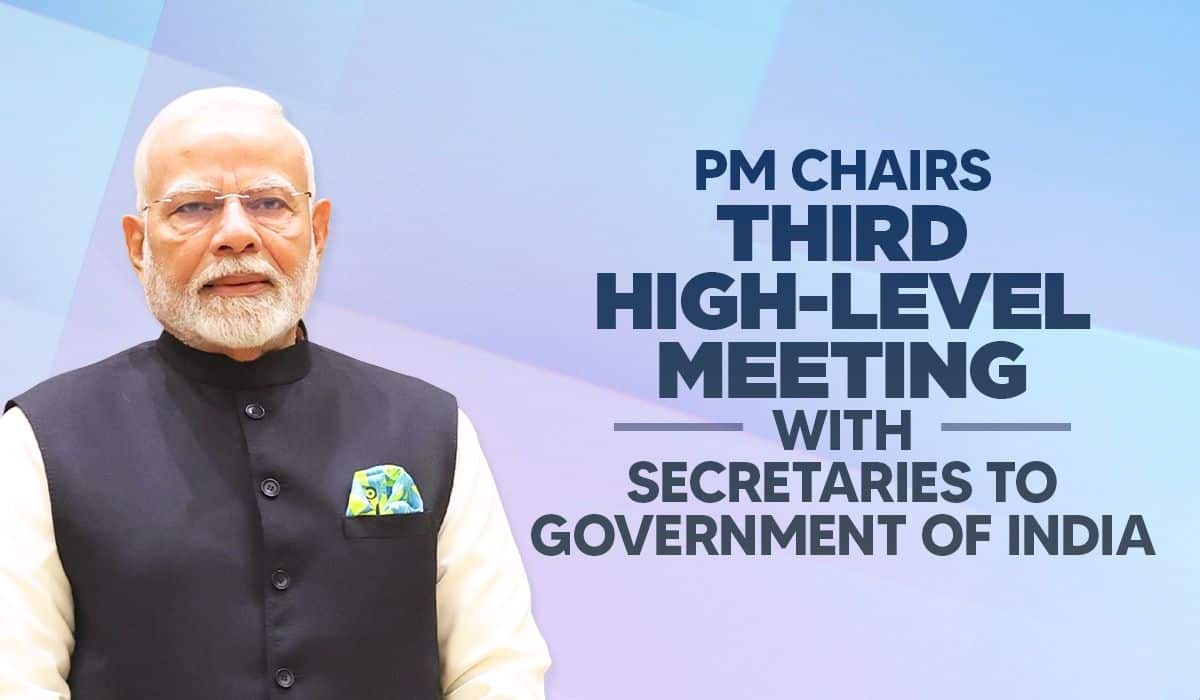
PM Chairs Third High-Level Meeting with Secretaries to Government of India
August 20, 2026
PM urges Secretaries to think with a long-term perspective on how the country’s future should be shaped
PM says data is a national asset and a resource for the future; calls for greater interoperability and effective use of data
PM says that silos are not merely an organisational problem but also a problem of mindset; urges officials to work with a spirit of belongingness
PM highlights importance of informal interaction and building team spirit among officers
PM calls for greater engagement between government departments, universities and young people to bring fresh perspectives in policymaking
PM calls for effective use of AI while ensuring human intervention and judgement
PM emphasises the need to further strengthen India’s defence industry and make it more competitive at global level
Secretaries share perspective on key priorities and implementation challenges

Prime Minister Shri Narendra Modi chaired the third high-level meeting with Secretaries to the Government of India at his residence at 7, Lok Kalyan Marg earlier today. He discussed the future action agenda of Ministries and Departments dealing with Infrastructure and Connectivity, Security and External Affairs, and Governance.

Noting that deliberations had already been held with two groups of Secretaries, Prime Minister said that Secretaries, in addition to thinking about immediate issues and statistics, should also think with a long-term perspective on how the country’s future should be shaped.

Discussing the challenge of overcoming silos, Prime Minister stressed that silos are not merely an organisational problem but also a problem of mindset. He said silos can be both horizontal and vertical. He stressed that officials must take ownership of their responsibilities and work with a spirit of belongingness.

Emphasising the importance of collective effort, Prime Minister cited the experience of the COVID-19 pandemic and the West Asia crisis, when officials across departments worked together effectively. He said that such coordination mechanisms should become a natural part of the government’s work culture.

Prime Minister called for effective use of Artificial Intelligence while ensuring human intervention and judgement. He called for exploring innovative ways of combining the capabilities of AI with human expertise.

Prime Minister emphasised that data is a national asset and a resource for the future. He noted that the government invests resources in collecting, storing and managing data, but its full potential is not always realised because of departmental silos and fragmented systems. He pointed to differences in the manner in which data is collected and managed for various purposes, and called for finding solutions that enable greater interoperability and effective use of data.

Prime Minister called for greater engagement between government departments, universities and young people to bring fresh perspectives in policymaking. He said wider engagement with universities and young people can bring new and unconventional ideas.

Prime Minister also called for greater focus on research and innovation, including in the defence sector. He emphasised the need to further strengthen India’s defence industry and make it more competitive at the global level. He stressed the importance of developing innovative defence courses and strengthening human resource development in the defence sector.

Prime Minister also discussed the need for a comprehensive approach to strengthening India’s maritime sector. He recalled that shipbuilding was accorded infrastructure status and called for assessing whether the intended objectives are being achieved in mission mode. He reiterated the need for India to move from port development to port-led development.

Prime Minister emphasised the need for better connectivity between manufacturing units and export-oriented units, so that India’s manufacturing and export capabilities can fully benefit from its maritime infrastructure.

Prime Minister concluded by reiterating the need for a whole-of-government approach, greater coordination, innovative thinking and collective ownership to address complex challenges and shape India’s future with a long-term perspective.

Prime Minister underlined the importance of informal interaction and building team spirit among officers. He encouraged senior officers to develop greater personal and informal engagement with junior colleagues and to build stronger networks across cadres and departments.

The Secretaries shared their experiences on sectoral priorities, emerging challenges and implementation issues. The meeting was attended by the Cabinet Secretary, Secretaries of key Ministries and Departments, and senior officials from the Prime Minister’s Office.