Gujarat Chief Minister Narendra Modi hits hard at the Centre’s utter failure at unprecedented petrol price hike. 

Centre’s failure to control inflation seen in this massive price hike. Gujarat will suffer losses of hundreds of crores: Shri Modi 

Why was this unpardonable hike announced 24 hours after Parliament session ended: Shri Modi 

VAT rates on petrol in Congress ruled states like AP, Assam, Kerala, Maharashtra, Rajasthan & those ruled by UPA allies UP & WB are higher than in Gujarat. 

Even in the past, Shri Modi has taken on UPA for its several anti-people and anti-federal measures. 

On the evening of Wednesday 23rd May 2012, Gujarat Chief Minister Shri Narendra Modi lambasted the Congress-ruled UPA for the steep hike of Rs. 7.50 in petrol prices that was announced yesterday.

Sharing his views on Twitter, Shri Modi Tweeted, “Massive hike in petro prices is a prime example of the failure of Congress-led UPA. This will put a burden of hundreds of crores on Gujarat.” He added, “This decision to hike petrol prices taken a day after the ending of Parliament session is a stinging rebuke to the dignity of Parliament” and that the people would not forgive the Government for the same.

It should also be noted that the VAT rates on Petrol in Andhra Pradesh, Assam, Kerala, Maharashtra, Rajasthan, which are Congress ruled States and West Bengal and Uttar Pradesh (UPA allies) is more than Gujarat rates. In Andhra Pradesh, Assam, Kerala and Rajasthan   4% VAT is levied on LPG and Kerosene whereas in Gujarat it is ’NIL’.

This is not the first time Shri Modi has come down heavily on the Centre for its anti-people legislation. He has been at the forefront of opposing the unilateral cotton export ban and has even written letters to the Prime Minister on the same. Recently during his speech at Krishi Mahotsav, the Chief Minister urged the Centre to raise the height of the main dam of the Sardar Sarovar Project, something it has sat on for two generations now.

In addition, he has written letters opposing more anti-people measures be it the Centre’s meat export policy and its promoting of the anti-farmer ‘pink revolution’ or the Centre’s measure to bring duties on non-branded gold jewelry. He has also severely condemned the move to bring TDS on the transfer of immovable property.

Shri Modi has even taken the lead in opposing National Counter Terrorism Centre (NCTC) and changes in the RPF Act, terming them as detrimental to the federal structure of the nation.

Explore More
శ్రీరామ జన్మభూమి ఆలయ ధ్వజారోహణ ఉత్సవం సందర్భంగా ప్రధానమంత్రి ప్రసంగం

ప్రముఖ ప్రసంగాలు

శ్రీరామ జన్మభూమి ఆలయ ధ్వజారోహణ ఉత్సవం సందర్భంగా ప్రధానమంత్రి ప్రసంగం
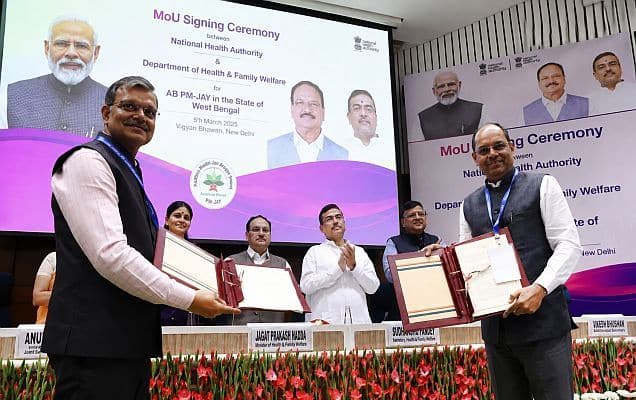
West Bengal Joins Ayushman Bharat PM-JAY, Becomes 36th State/UT To Implement Scheme

Media Coverage

West Bengal Joins Ayushman Bharat PM-JAY, Becomes 36th State/UT To Implement Scheme
NM on the go

Nm on the go

Always be the first to hear from the PM. Get the App Now!
...
Cabinet approves Ahmedabad Metro Rail project Phase 2A (Koteshwar Road to Airport corridor)
June 10, 2026

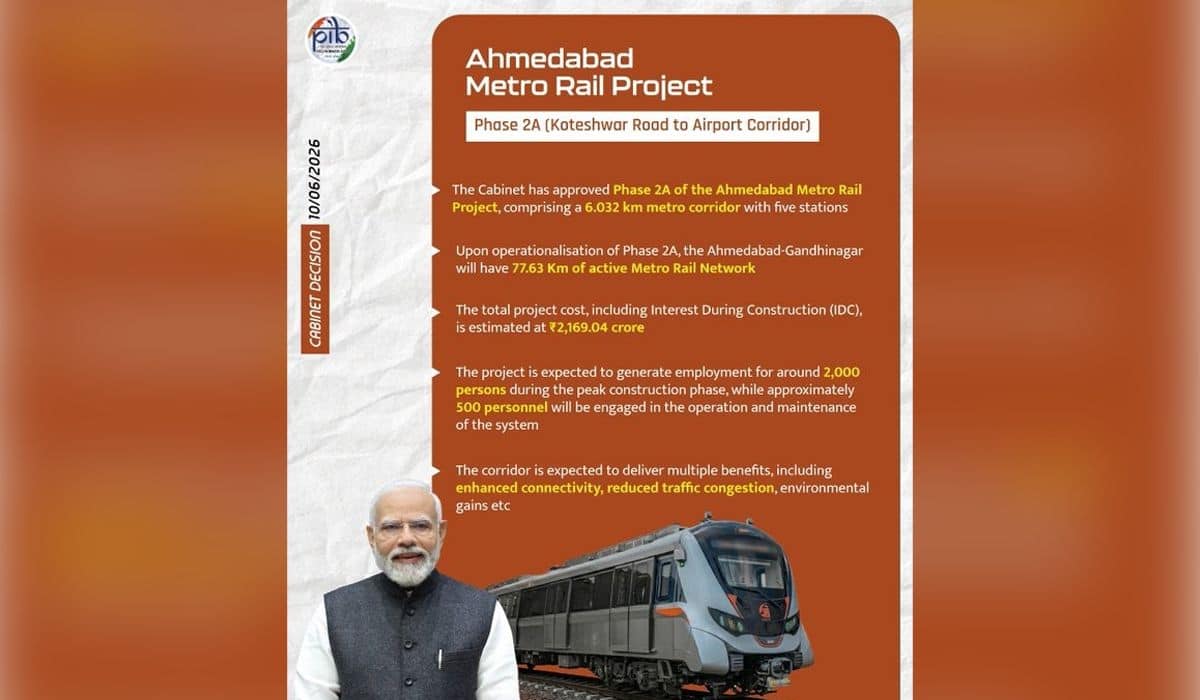
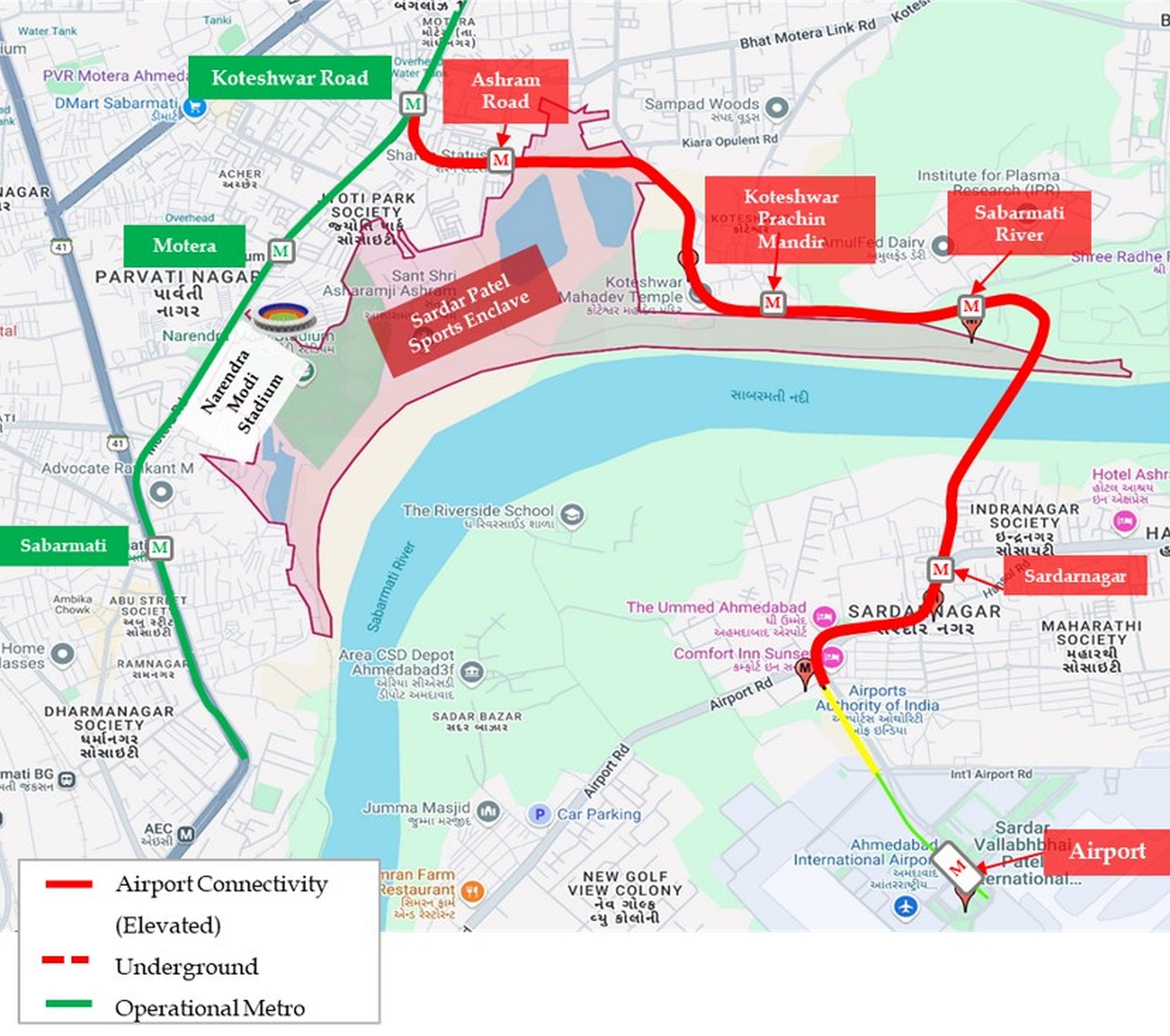
The Union Cabinet chaired by the Prime Minister Shri Narendra Modi has approved Phase 2(A) of Ahmedabad Metro Rail Project with corridor for a length of 6.032 Km with 05 stations (04 Elevated and 01 underground). On operationalisation of Phase 2(A), Ahmedabad-Gandhinagar will have 77.63 Km of active Metro Rail Network. The names of stations in the Phase 2(A) Corridor are- Ashram Road, Koteshwar Prachin Mandir, Sabarmati River, Sardar Nagar and Airport.

The total completion cost including IDC (Interest during Construction) for the project will be Rs.2,169.04 crore.

Benefits and Bolstering Growth:

The Phase 2(A) of Ahmedabad Metro Rail Project represents a significant advancement in the city’s infrastructure development. Phase 2(A) acts as a major expansion of the Metro Rail Network in the city.

Enhanced Connectivity:

Phase 2(A) of the Ahmedabad Metro Project envisages the development of approximately 6.032 km of new metro corridor, aimed at substantially enhancing public transportation by providing seamless connectivity to the airport and linking key residential and commercial areas that presently lack efficient transit access.

This phase aims to seamlessly integrate key zones, including residential & Commercial hubs with existing Ahmedabad-Gandhinagar corridor. Further, likelihood of sports facilities also being developed in the vicinity for the World Police Games 2029 and Commonwealth Games 2030.

By bridging these vital areas with the metro network, Phase 2(A) will not only enhance connectivity but also stimulate economic activity, tourism, and ease urban mobility for both residents and visitors.

Reduction in Traffic Congestion: Metro Rail as an efficient alternate road transport and with Phase 2(A) as an extension of the Metro Rail network to the Airport, will be particularly impactful inside Ahmedabad. Reduction in road traffic can lead to smoother movement of vehicles, reduction in travel time, increasing overall road safety etc.

Environmental Benefits: With the addition of Phase 2(A) of Ahmedabad Metro Rail Project and increase in overall Metro Rail Network in Ahmedabad & Gandhinagar cities, can significantly reduce carbon emissions compared to traditional fossil fuel-based transport.

Economic Growth: Reduced travel times and improved access to different parts of the city such as Airport, Railway Stations and Bus Depots can enhance productivity by allowing individuals to reach their workplaces and destinations more efficiently. Also, the enhanced connectivity can stimulate local businesses, especially in areas near new metro stations which can also attract investment and development in previously less accessible regions.

Social Impact: The expansion of Phase 2(A) Metro Rail network in Ahmedabad will provide more equitable access to public transport, benefiting diverse socio-economic groups and reducing transport disparities which will contribute to a higher quality of life by reducing commute times and improving access to essential services.
The Phase 2(A) of Ahmedabad Metro Rail Project is set to be a transformative development for the city. It promises to deliver enhanced connectivity, reduced traffic congestion, environmental benefits, economic growth, and improved quality of life. By addressing key urban challenges and providing a foundation for future expansion, Phase 2(A) will play a crucial role in shaping the city's development trajectory and sustainability.

The Ahmedabad Metro Phase 2A will generate employment of around 2,000 persons during the peak period of construction activity and 500 persons are likely to work during Operation & Maintenance of the system.

Route Map: