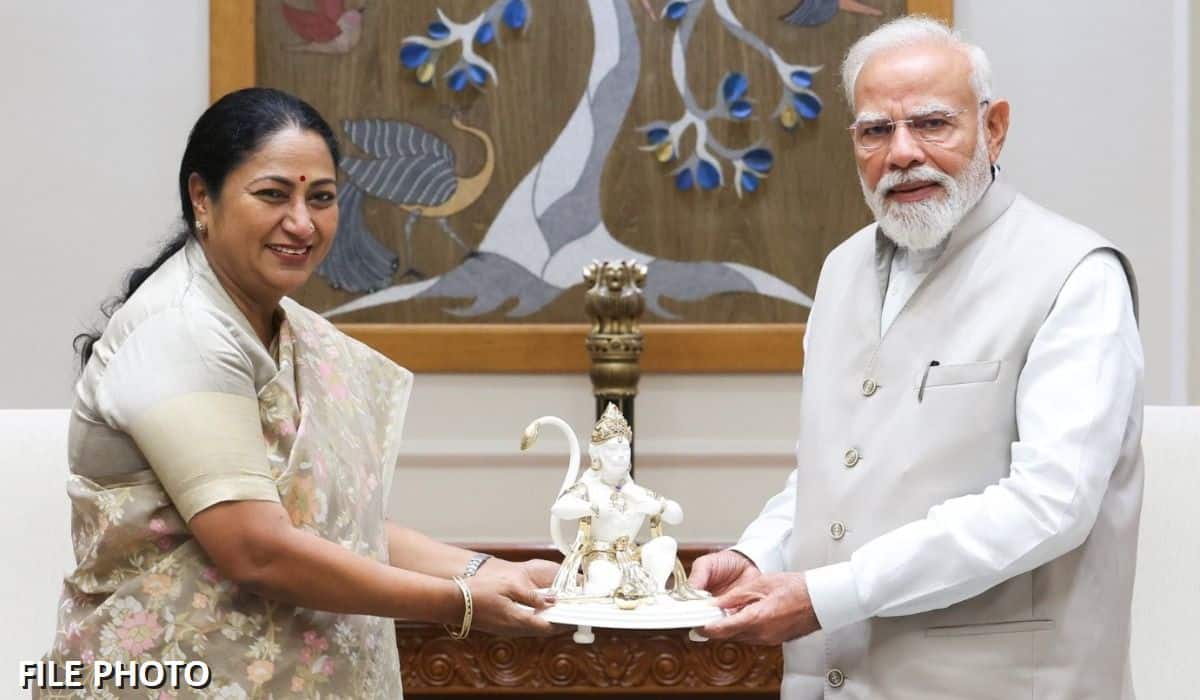
Today is a special day, the birthday of a remarkable leader, our beloved Prime Minister (PM), Narendra Modi. His journey in public life has been marked by an unwavering commitment to social service, national development, and the welfare of the less fortunate. Every moment of his life, every atom of his being, has been dedicated to these noble causes.
PM Modi has become a symbol of progress, trust, and cultural resurgence. His leadership, based on the core principle of “Sabka Saath, Sabka Vikas, Sabka Vishwas, and Sabka Prayas”, has not only elevated India’s stature on the global stage but has also made him a global icon. The people of the country are seeing their hopes and aspirations being fulfilled under his leadership because service to the public is Modi’s guarantee. The world today keenly listens to his words and looks up to his leadership. The people of our country see in him an unwavering commitment to serving the public.
Much like Lord Vishwakarma, revered as the deity of creation and craftsmanship, PM Modi is reshaping India across various domains. On this auspicious day of Vishwakarma Jayanti, he is launching the PM Vishwakarma Yojana, a scheme that promises special benefits to small workers, artisans, and craftsmen engaged in 18 different trades, including goldsmiths, blacksmiths, potters, weavers, and sculptors. These unsung heroes, who have long been on the fringes of the mainstream economy, will now receive the support they deserve. This visionary scheme is expected to positively impact around three million workers in the next five years.
Recently, under PM Modi’s leadership, India hosted an extraordinary and historic event, the G20 Summit, showcasing our nation’s rich culture, heritage, inclusive diplomacy, and development story. The way he transformed the summit into a platform for people’s participation and engagement left the world in awe. It was a moment of immense pride to witness how the global leaders at the summit were captivated by India’s diversity and rich heritage. India’s hospitality and strategic diplomacy are now the talk of the world. The India Pavilion at the G20 Summit, a grand and majestic affair, remains etched in everyone’s memories.
Under PM Modi’s guidance, India has introduced itself to the world in an unprecedented way, incorporating its culture and heritage into foreign policy. Such visionary leadership sets ambitious goals and achieves them. Under the leadership of PM Modi, India has moved away from a subservient mindset and is progressing with self-respect. We now have a new Parliament building and the National War Memorial, symbols of our sovereignty. The unveiling of Netaji Subhash Chandra Bose’s statue on Kartavya Path has given the national flag a new significance.
More than seven decades have passed since India attained political freedom, and recently, we celebrated “Amrit Kaal”, marking 75 years of Independence. The PM has set the ambitious goal of making India a developed nation by 2047.
The Atmanirbhar Bharat initiative has been tirelessly pursued, making India strong and secure. Today, India has established a formidable presence in every sector. It is on the threshold of becoming the third largest economic power in the world.
During Covid-19, the whole world saw the decisive and courageous leadership of our PM. His initiative, the Direct Benefit Transfer-Jan Dhan, Aadhaar, Mobile (DBT-JAM), has played an important role in eradicating corruption; all the beneficiaries receive their entitlements directly in their accounts on time. The PM has seamlessly integrated Jai Jawan, Jai Kisan, Jai Vigyan with Jai Anusandhan.
The world recently witnessed the remarkable achievements of Chandrayaan-3 and Aditya-L1, showcasing India’s prowess in space exploration. In the year of “Amrit Kaal”, the PM has taken a commendable step by honouring the unsung heroes of our freedom struggle. Programmes like “Har Ghar Tiranga” and “Meri Maati, Mera Desh” are fostering unity among our citizens.
Indian politics, under PM Modi’s leadership, has taken a new direction, with development, nationalism, and service-oriented policies at the forefront. Good governance is the cornerstone and “Jan Bhagidari” is the bedrock of the Modi government’s approach to governance. Every initiative of his touches the lives of citizens. The workers of Bharatiya Janata Party (BJP), inspired by the principle that “seva hi sangathan”, tirelessly serve the nation under his guidance.
Narendra Modi, who rose from humble beginnings and faced numerous challenges on his path, has demonstrated unwavering determination in fulfilling his duties. When the opportunity arose, he transformed the Raj Path to the Kartavya Path (Path of Duty). Under his effective leadership, the country has been able to find permanent solutions to all burning issues that the countrymen never believed could be solved. It is due to his strong political resolution and commitment that the country was able to find permanent solutions to issues such as Article 370, the construction of a grand temple to Lord Ram, the abolition of triple talaq, the implementation of Goods and Service Tax etc.
India’s culture and civilisation, among the oldest in the world, have received renewed attention and refinement in the last nine years under PM Modi’s leadership.
This has aroused global curiosity about Indian culture, civilisation, yoga, Ayurveda, and traditions. While the world is drawn to our culture, an “arrogant Opposition alliance” continues to insult our country’s heritage. The people of India, with their deep-rooted connection to culture, will never accept such disrespect. Between 2009 and 2014, our nation faced numerous challenges and many had lost hope in its future.
However, with Narendra Modi at the helm, the country’s trajectory began to change rapidly. People started believing that “my country is changing” (mera desh badal raha hai) and “with Modi, everything is possible”(Modi hai to mumkin hai).
The BJP stands steadfastly by the principles of its supreme leader, PM Narendra Modi, as it works towards realising the aspirations of the people. Inspired by his leadership, people are walking the path he has illuminated for India’s resurgence.