Until 2014, minorities succumbed to alienation in India for almost 65 years since independence and resigned to their fate of being left behind with respect to economic development and education. Under the leadership of PM Modi, their lives have been transformed, bringing them relief through assimilation and recognition.
The Modi government has followed an all-inclusive approach while implementing the welfare schemes. It should encompass ‘Sabka Saath, Sabka Vikas’! His government practices only one religion –India First! with unity and inclusivity. As the Prime Minister of India, he is passionate about ensuring development for all and appeasement towards none.
What the governance under PM Modi's leadership has achieved is ensuring non-discriminatory governance delivery to improve the lives of every Indian citizen. PM Modi's vision, address and actions have demonstrated that empowerment through development is the only meaningful solution to addressing social inequities. His approach is straightforward – minorities must and should benefit from the government. But they will get it as equal citizens of the country, just like all other citizens, without any appeasement attached to it.Appeasement Towards None, Respect and Opportunities for All has been the motto of the Modi government. In the last decade, targeted reforms through digital inclusion made a significant difference in the lives of Muslims such that their political representation underwent a healthy change. For the first time in the political history of Jammu and Kashmir, a Muslim candidate won the elections on the current government's ticket in 2014 by triumphing over the Kalakote Assembly seat of Rajouri district. Tickets have been given to roughly 350 Muslim candidates for local body polls in UP in at least 25 wards.
The abolition of the outdated practice of instant triple talaq, which is not even prevalent in many Islamic nations, garnered strong support from nine crore Muslim women. The potential of Muslim women for a variety of leadership-related areas has been harnessed by the Ministry of Minority Affairs (MoMA) through the launch of several skill development programs for six notified minority populations, including "Seekho Aur Kamao," "USTTAD," and "Nai Manzil," wherein at least 30% of the seats were reserved for female trainees. A program called "Nai Roshni" also aims to empower women by providing them with leadership training. Professor Nilofer Khan has been appointed the VC of Kashmir University by the Modi government. She is the first Muslim woman in Jammu Kashmir to be appointed to the prestigious post of Vice-chancellor.
Various scholarship schemes for socio-economic and educational empowerment of the notified minority communities across the country have been initiated over the last nine years. Approximately 22.7 per cent of those benefiting from Skill India schemes hailed from the Muslim community, marking them as the primary beneficiaries.
Large sections of society in the state of Jammu and Kashmir were discriminated against under Article 370 and Article 35-A, which adversely lopsided the constitutional relationship of India with the state and were abolished in 2019. It allowed the minorities in the state to get the same privileges due to the implementation of uniform laws throughout India. Those minorities, who earlier, due to Article 370, could not get the benefit of reservation in education, elections and jobs, but now, after the removal, are presented with umpteen opportunities to move up the economic and social ladder.
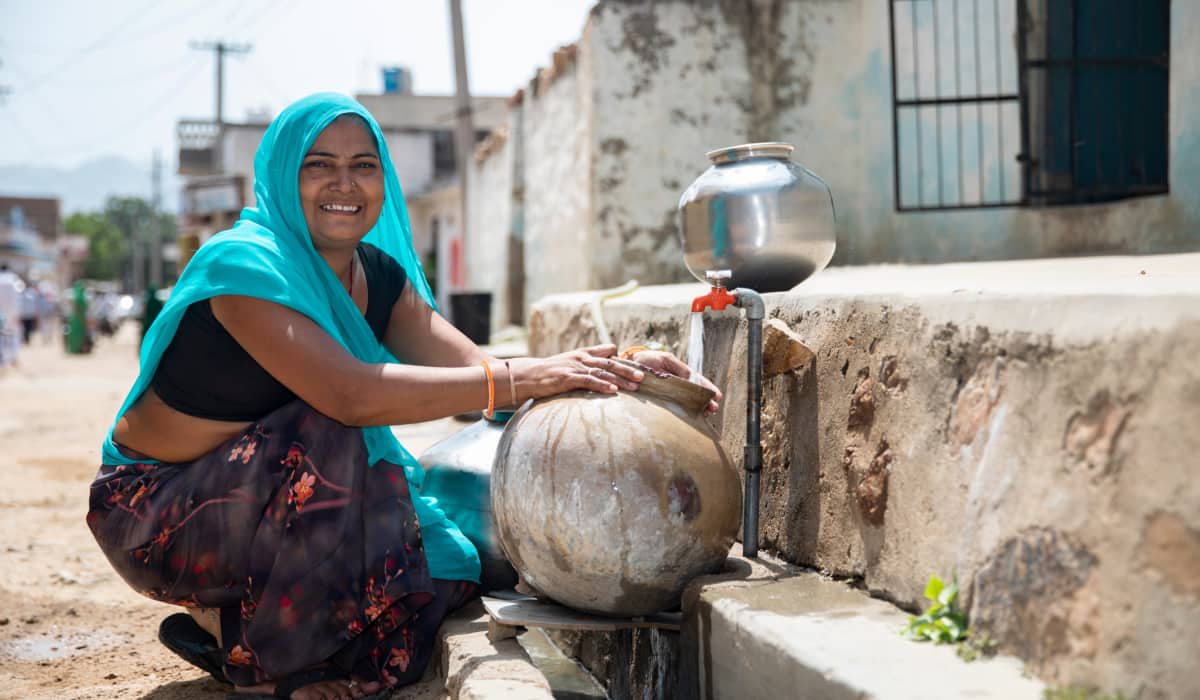
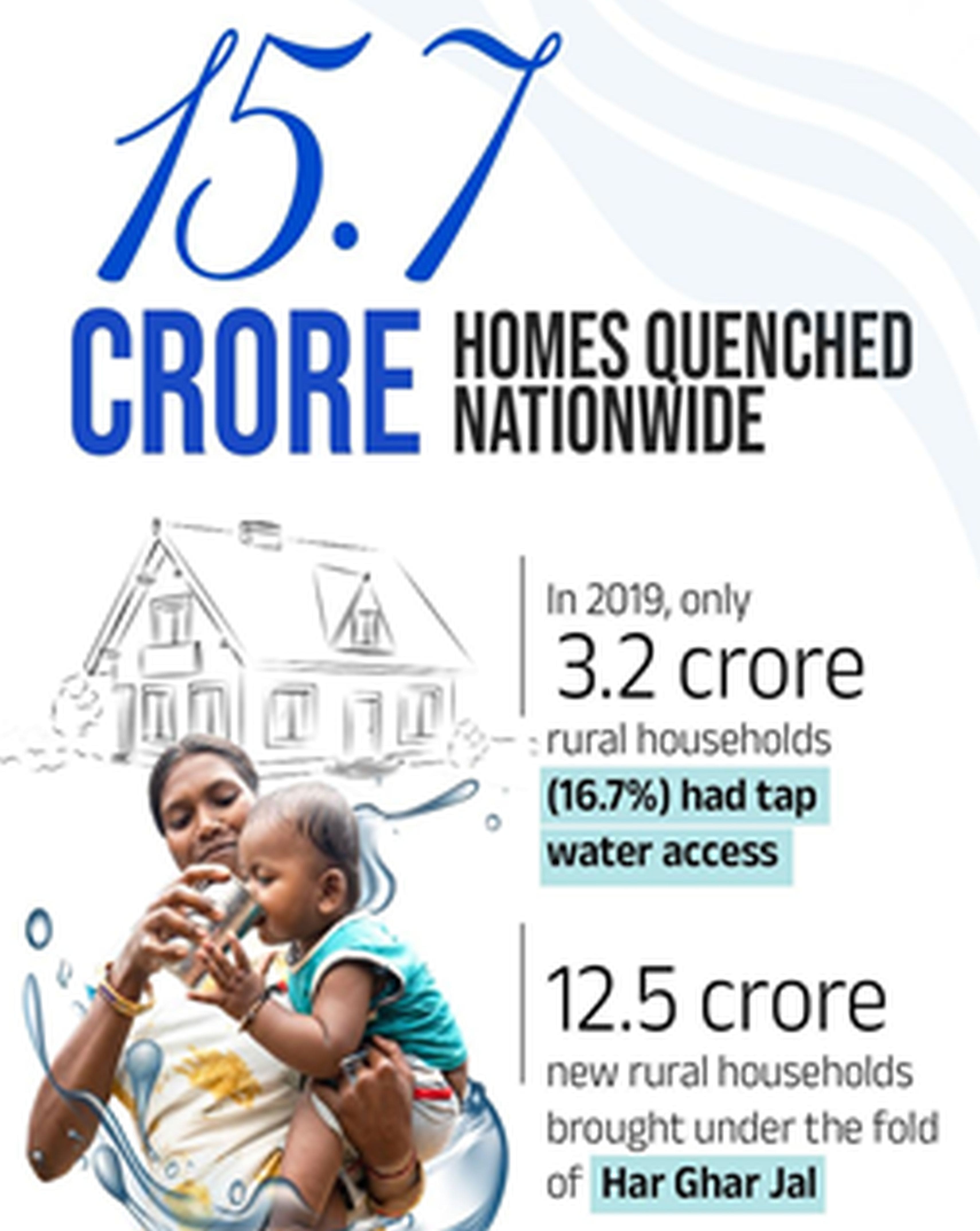
According to the Multiple Indicator Survey 2020–21, 97.2% of Muslims reported having access to an upgraded toilet, while 94.9% reported having an improved source of drinking water. After March 31, 2014, 50.2% of Muslim households made their first purchase or construction of a new home. 818 Kasturba Gandhi Balika Vidyalaya (KGBVs) have also been sanctioned in 88 Muslim Concentration Districts with 20% and above Muslim population, of which 657 are functional. 42 per cent of the accounts established through the flagship PM Jan Dhan Yojana belong to Muslims. It indicates the government's successful endeavours towards financial inclusion of marginalized communities.
Due to the transparency in the reforms adopted, even within the Muslims, the upliftment of the traditionally underprivileged Pasmanda Muslims proves beyond doubt that progressive impacts do not remain restricted to the elite alone. In Uttar Pradesh, 35% of the beneficiaries of the Pradhan Mantri Awas Yojana, 37% of the Pradhan Mantri Ujjwala Yojana, 30% of the Pradhan Mantri Mudra Yojana beneficiaries are Pasmandas. The 'One District One Product' scheme has become a lifeline for numerous Pasmanda artisans. The Modi government's approach of 'Sabka Saath-Sabka Vikaas', aiming to uplift all citizens irrespective of their religious background, fostering a more inclusive society, and fostering social harmony, is indeed a revolution at the grassroots that has garnered unimaginable pace under the leadership of Prime Minister Narendra Modi.