PM Modi inaugurates Delhi BJP’s new office at Deendayal Upadhyaya Marg

Published By : Admin | September 29, 2025 | 17:00 IST
This is a moment filled with new dreams and new resolutions: PM Modi while inaugurating the Delhi BJP’s new Office
Next-gen GST reforms will save nearly Rs 20,000 on family's annual expenditure of Rs 1 lakh for meeting its daily needs: PM Modi
The BJP was founded 45 years ago, and with the guidance and blessings of our senior leaders, we have made significant progress: PM
BJP’s connection with Delhi goes back to the Jana Sangh days and is built on trust and commitment to the city: PM Modi

Inaugurating the Delhi BJP’s new office, PM Modi said, “On this auspicious occasion of Navratri, Delhi BJP has received its new office today. It is a moment filled with new dreams and fresh resolutions.” He added, “For us, every BJP office is no less than a shrine, no less than a temple. A BJP office is not merely a building. It is a strong link that connects the Party with the grassroots and with people’s aspirations.”

Reminiscing about the founders and veteran leaders of the Bharatiya Janata Party, he said, “The party was founded 45 years ago, and with the guidance and blessings of our senior leaders, we have made significant progress.”
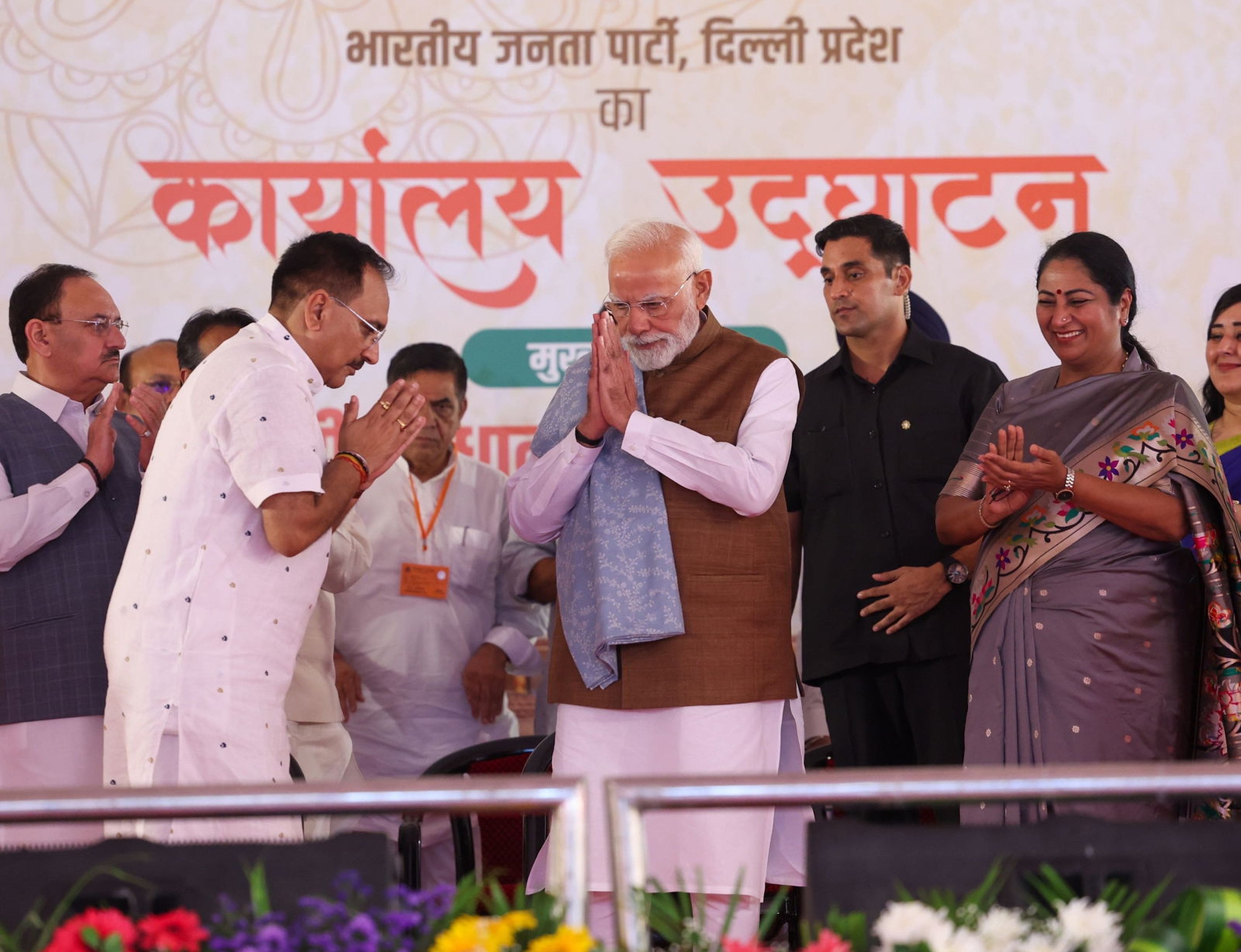
PM Modi reflected on the Party’s remarkable journey, tracing its roots from the Jan Sangh’s formation under Syama Prasad Mookerjee in 1951, to Delhi Jan Sangh’s first President, Vaidya Guru Dutt. He acknowledged leaders who guided Delhi BJP through the years, including Atal Bihari Vajpayee, Lal Krishna Advani, Nanaji Deshmukh, Murli Manohar Joshi, Rajmata Vijaya Raje Scindia, Bhai Mahavir, Hardayal Devgun, VK Malhotra, Kedar Nath Sahni, Sahib Singh Verma, Madan Lal Khurana, Arun Jaitley and Sushma Swaraj. PM Modi emphasised the Party’s enduring commitment to Delhi, its people and the spirit of service, trust and sacrifice that has shaped its decades-long journey.

“During the Emergency, Jan Sangh leaders stood with the people of Delhi and resisted the oppression of power. Even during the 1984 Sikh riots that struck at Delhi’s soul and humanity, Delhi BJP workers did everything possible to protect our Sikh brothers and sisters. The bond between Delhi and the BJP is one of emotion and trust,” he added.
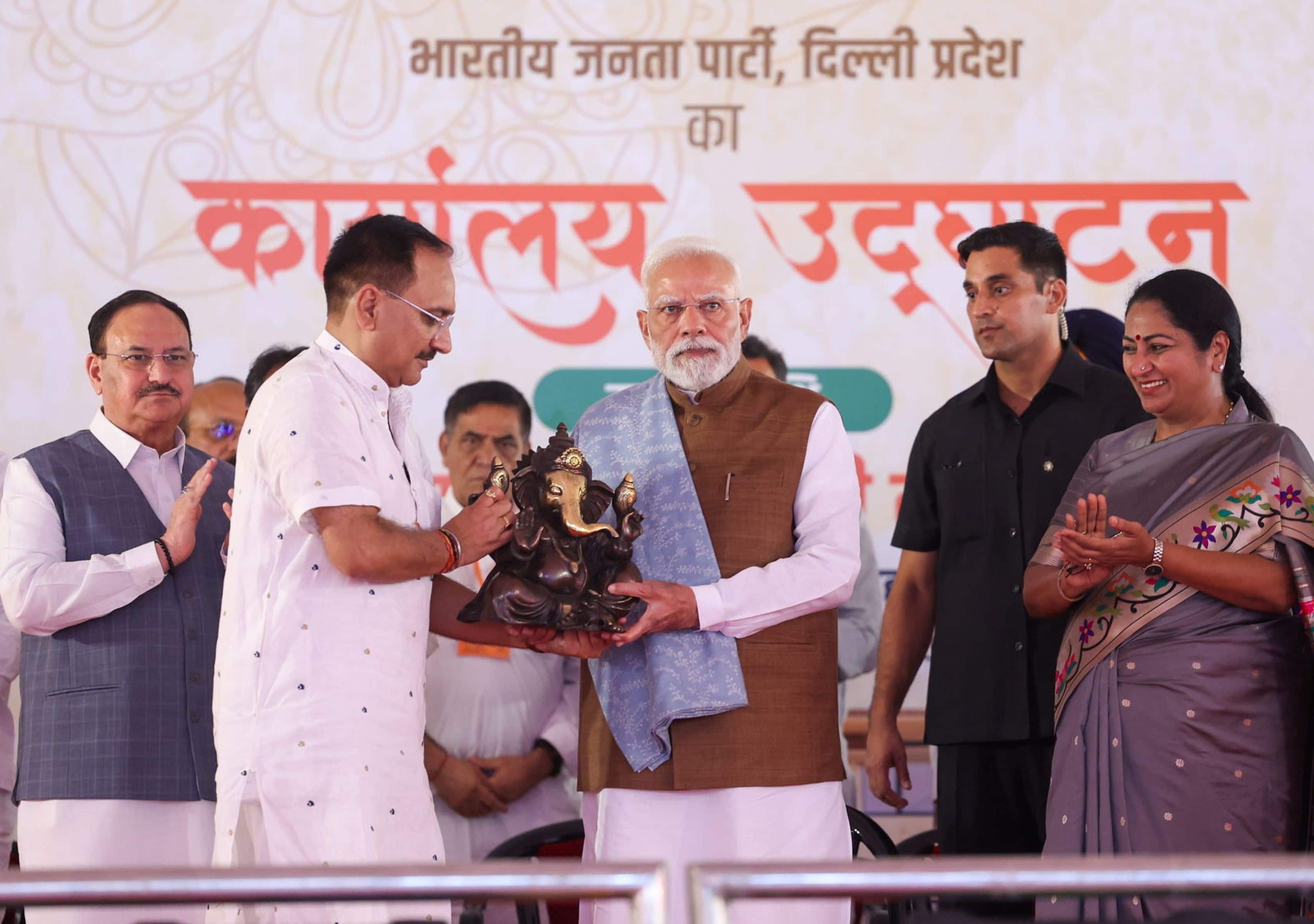
Envisioning a stronger and Viksit Delhi, PM Modi asserted, “After many years, Delhi has a BJP government. The people have entrusted us with their dreams and aspirations for a better future. Our focus is on building homes, upgrading schools and hospitals, running electric buses, cleaning the Yamuna and speeding up metro and flyover projects. When the Delhi BJP government and office work together, we can accelerate Delhi’s growth and realise the vision of a Viksit Bharat and a Viksit Delhi.”

Talking about the GST reforms, PM Modi said, “GST is a strong pillar of BJP’s good governance. Our focus is on delivery and on increasing people’s savings. In 2014, income above Rs 2 lakh was taxed. Today, income up to Rs 12 lakh is tax-free. Before 2014, a middle-class family spending Rs 1 lakh annually paid nearly Rs 25,000 in taxes. After GST and the latest reforms, that burden is down to just Rs 5,000 to 6,000, saving about Rs 20,000 every year. Together with income tax relief, people save nearly Rs 2.5 lakh crore annually.”
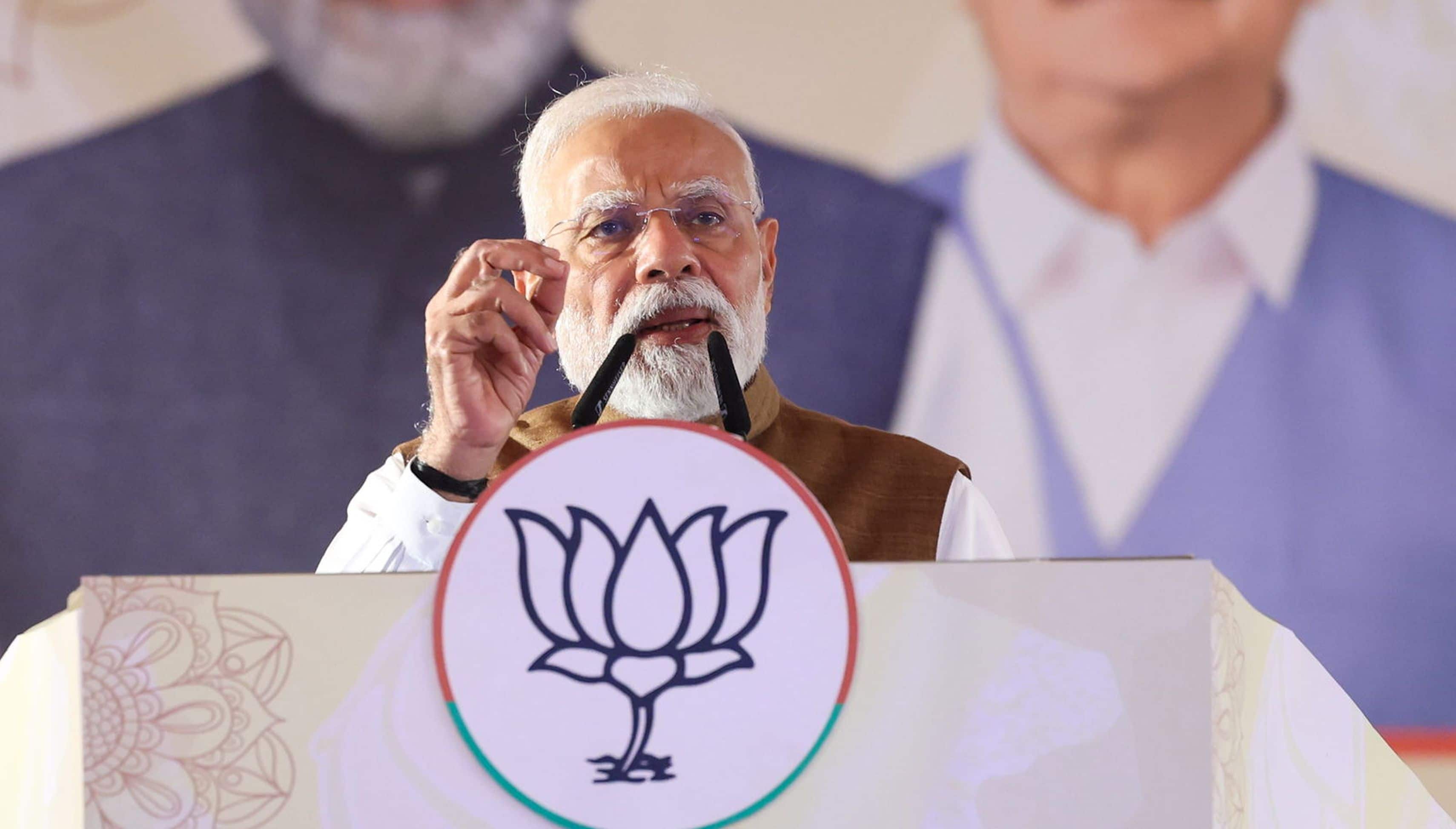
PM Modi called on BJP karyakartas to ensure that the benefits of next-generation GST reforms reach everyone. He highlighted the need to create awareness among both consumers and shopkeepers. He stated that where the BJP is in opposition, the responsibility is even greater to ensure state governments pass on the full benefit of GST cuts to the people.
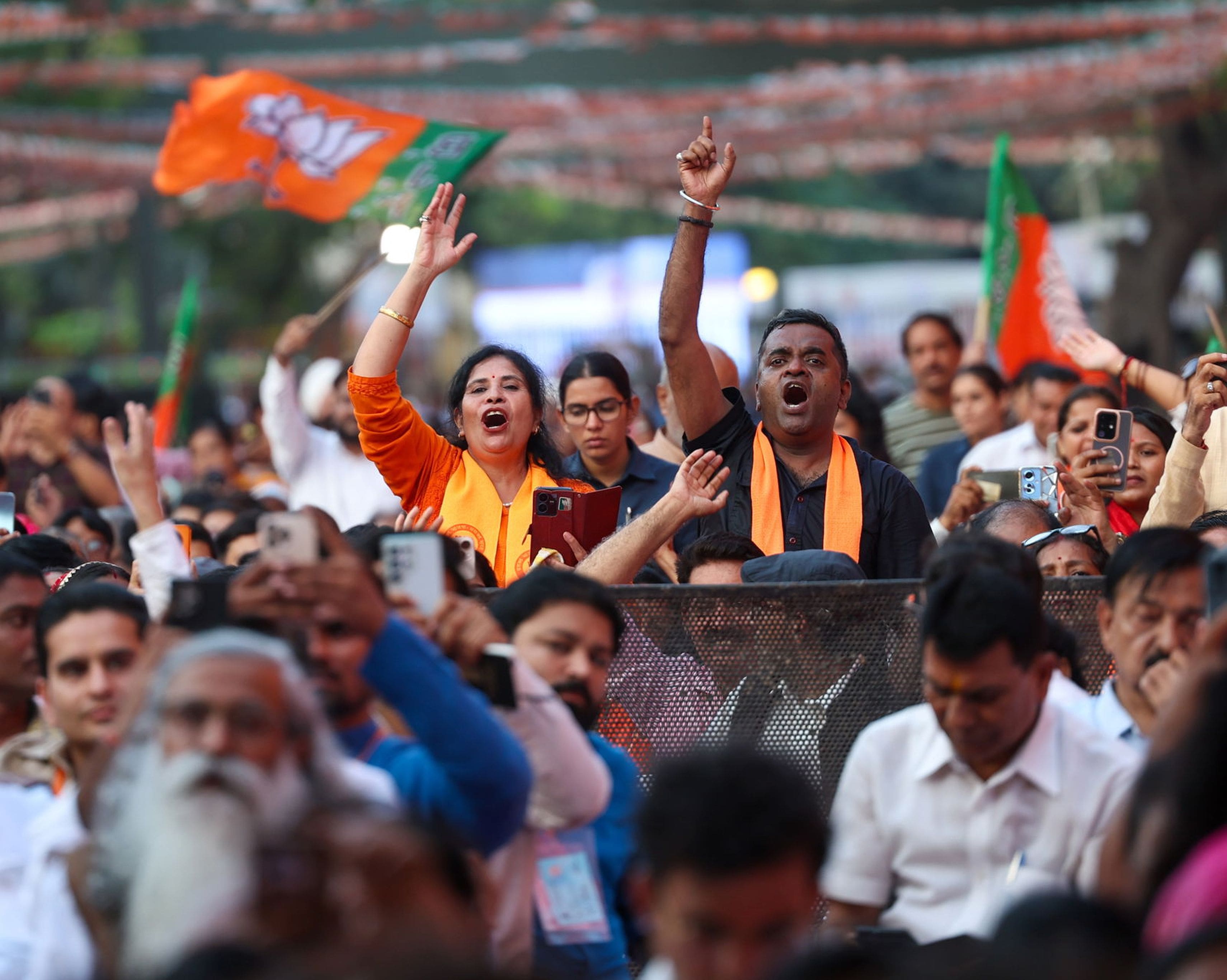
Emphasising self-reliance, PM Modi urged everyone to embrace swadeshi through campaigns in every village and street. He highlighted the ‘Swasth Nari, Sashakt Parivar’ initiative, noting that over 3 crore women have been screened in free health camps for early detection of TB, breast cancer, and cervical cancer. He stated that the campaign will only succeed with healthy women and strong families and also requested Delhi BJP karyakartas to ensure maximum participation in these camps.

Click here to read full text speech

Explore More
Today, the entire country and entire world is filled with the spirit of Bhagwan Shri Ram: PM Modi at Dhwajarohan Utsav in Ayodhya

Popular Speeches

Today, the entire country and entire world is filled with the spirit of Bhagwan Shri Ram: PM Modi at Dhwajarohan Utsav in Ayodhya
Tier 2 cities emerge as next frontiers for India's growing GCC ecosystem

Media Coverage

Tier 2 cities emerge as next frontiers for India's growing GCC ecosystem
NM on the go

Nm on the go

Always be the first to hear from the PM. Get the App Now!
...
India-Australia Roadmap for Sports Collaboration
July 10, 2026

Sports is a powerful bridge between India and Australia, bringing communities together and opening new pathways for collaboration.

Building on the 2023 MoU on Cooperation in Sports, the India-Australia Roadmap for Sports Collaboration sets out practical, future-focused priorities and opportunities to strengthen this cornerstone of our bilateral relationship.

Recognising the decade of opportunity ahead — including the 2030 Commonwealth Games in Ahmedabad, the Brisbane 2032 Olympic and Paralympic Games, and India’s ambition to host a future Olympic and Paralympic Games — this Roadmap identifies targeted areas of cooperation aligned to shared priorities, capabilities and resources.

Respecting differences in the governance of sport and the development of sport ecosystems in Australia and India, and recognising the leadership role of sporting bodies, businesses, state–level governments, universities and community groups in promoting elite and community sports, we are committed to facilitating engagement and supporting collaborative ways of working between relevant institutions, to encourage stronger sports partnerships at all levels that benefits both countries.

Implementation will be pragmatic and outcomes-focused, with activities prioritised in line with available resources and major event timelines.

Cooperation will be delivered through established partnerships, supported by flexible, demand-led arrangements, whereby responsibility for resourcing activities will be negotiated on a case-by-case basis. This approach ensures practical, sustainable and mutually beneficial outcomes.

In this context, the following have been identified as focus areas for collaboration under this Roadmap:

A. Capacity Building:

o Collaborate for sharing best practice in establishing and operating High-Performance Sports Centres in India in priority sports.

o Identify Para sport as a key priority and opportunity for collaboration, including Australian expertise in Para classification, coaching and performance support, with potential links between Indian and Australian universities where appropriate.

o Drawing on Australia’s coach development models, facilitate two-way exchanges that bring Indian coach and coach educators to Australia and Australian coaches and coach educators to India, using a Train the Trainer approach where appropriate.

o A physical education exchange programme between India and Australia may be introduced to facilitate mutual learning, sharing of best practices, and collaboration in areas such as school sports, sports science, and community participation in physical education.

o Recognising the physical and mental health benefits of yoga and the World Yogasana, the federation for yogasana sports based in India, identify opportunities to share knowledge, foster collaboration and encourage participation in yoga in Australia.

o Work with the Australian Sports Commission to build the capability of select Indian coaches as part of the India Australia High Performance Coach Development program.

o Explore opportunities through relevant non-government stakeholders such as sporting organisations and universities to support talented young Indian sportspersons as part of high-performance programs in Australia through student scholarships funded by Government of India.

B. Collaborative Sports Science and Technology Research:

o Encourage joint research and development projects between universities in India and Australia on athlete performance analytics, injury prevention, sports nutrition, wearable performance technology, recovery techniques and Para sport.

o Encourage partnerships between Indian and Australian universities to co-develop sports curriculums.

o Sport Integrity Australia and National Anti-Doping Agency India contribute to international anti-doping efforts by supporting World Anti-Doping Agency (WADA)-led capacity building programs through engagement with the WADA Asia/Oceania Office, and through representation on the UNESCO International Convention against Doping in Sport (Convention) Groups.

C. Major Sporting Events:

o Collaborate with Australian States and Territories, and National Sporting Organisations to exchange best practices for hosting large events.

o Explore opportunities to host exhibition matches and youth events in both countries to promote sports of mutual interest (such as Kabaddi and Kho Kho in Australia, and Australian Football League and basketball in India).

o Leverage the build-up to major sporting events such as Olympic, Paralympic and Commonwealth Games to establish formal, reciprocal arrangements between Indian and Australian sporting bodies for shared facilities, competitions and support networks during and in the build-up to major sporting events.

o Welcoming the inaugural Big Bash League match to be played in India in Chennai in December 2026, encourage Cricket Australia and the Board of Control for Cricket in India to work towards a commitment to host annual BBL matches in India.

D. Sports Industry and Investment Platform:

o Build on the Australia-funded Sports Industry Summit in Mumbai in December 2026 to promote collaboration between Indian and Australian companies on sports equipment manufacturing, sports media and broadcasting, event management, and sports start-ups.

o Facilitate Australian sports sector businesses in the Indian sports market through information sessions and vice-versa.

o Expand India’s export of high quality, competitively priced sports goods to Australia.

o Expand the export of Australian expertise in high performance sports, including coaching, coach development, strength and conditioning, athlete wellbeing, nutrition and psychology.

E. Women in Sports Partnership:

o Launch joint initiatives promoting women’s leadership, health, high performance and participation in sport, including bilateral tournaments for women athletes, drawing on the Australian Sports Commission’s flagship programs, recognising that sport is a powerful pathway for women’s economic empowerment, leadership, health and social inclusion.