PM’s historic address to Constituent Assembly of Nepal

Published By : Admin | August 3, 2014 | 19:58 IST
"Nepal’s Constitution will set example for world to shun violence"
"India supports Nepal’s sovereign right to choose its own destiny"
"PM offers “HIT” mantra – Highways, I-ways-Transways for Nepal"
"PM offers Nepal 10,000 crore Nepali rupee concessional line of credit"

The Prime Minister, Shri Narendra Modi, in a historic address to the Constituent Assembly of Nepal, today said that Nepal’s Constitution would set an example for the whole world, especially to strife-torn regions, as a model for leaving the path of violence, and how a peaceful and democratic process can help achieve goals.

Shri Narendra Modi, said he was deeply touched to be the first foreign leader invited to address this Constituent Assembly. He said this was a gesture of respect from the Nepali people, not only to him, but to 125 crore Indians.

Asserting that India would always support Nepal’s sovereign right to choose its own destiny, the Prime Minister said India wished for a democratic and prosperous Nepal, which would rise as high as the Himalayas, and set an example for the whole world.

l2014080355561

The Prime Minister, began his address in Nepali language, saying his Government accorded top priority to relations between the two countries – which he added – were as timeless as the Himalayas and the Ganga. They were relations built on the bonding of hearts, and a shared cultural heritage. “Humaare sambandh kaagaz ki kashtiyon se aage nahin badhe hain. Humaare sambandh dilon ki daastaan kehte hain.”

Dwelling on the shared heritage, the Prime Minister said he belonged to the land of Somnath, began his journey in national politics from Kashi, and had now arrived at the feet of Pashupatinath. This is the land that gave birth to Lord Buddha, who held the whole world spellbound, the Prime Minister remarked.

All the wars that India has won, have witnessed Nepali blood being shed, and Nepalis attaining martyrdom defending India, the Prime Minister observed. “I salute the Nepali braves who have laid down their lives for India”, Shri Narendra Modi said.

The Prime Minister quoted Field Marshal Sam Manekshaw to highlight the bravery of the Gorkha soldiers.

SR1_5042  _ 684

Noting that the world was keenly observing the Constituent Assembly of Nepal, the Prime Minister said that the members of this assembly were not just drafting Constitutional provisions, or rights of different sections of society. The Constitution of Nepal should be a document like the “sanhita” of Vedas and Upanishads, the Prime Minister said - it should define a new direction for the country. But, the Prime Minister added, “Rishi-Man” – the mind of a sage – is required for this task. The mind which can see far, which can anticipate problems, which can think of taking society forward even a hundred years later. The Rishi-Man had developed the Vedas and Upanishads – such application was required now.

Giving the example of the Indian Constitution, the Prime Minister said it unites different parts of India, and represents the hopes and aspirations of 125 crore Indians. He said that the Constitution of Nepal would inspire the hopes and dreams of not just the people of Nepal, but the entire world.

Elaborating on this theme of “Yuddh se Buddh ki ore” – the Prime Minister said, that once upon a time, the great King Ashoka had adopted this path and created history. Today, the members of this Constituent Assembly had shunned the path of violence and embarked on building a Constitution, that would be a beacon of peace and hope, not only for Nepal, but also for various strife-torn regions of the world.

SR1_5073 _ 684

I congratulate those who have left the bullet, in favour of the ballot, the Prime Minister said.

Nepal is a sovereign nation; let this sovereign nation touch the heights of Himalaya; let the world take notice, the Prime Minister asserted.

Let the Nepali Constitution be one in which all sections of Nepali society feel that it is a bouquet where one flower represents them and their aspirations, the Prime Minister said. “Har Nepali ko lage ki yeh ek aisa guldasta hai jismein mere ek phool ki bhi mahak hai.”

May the sanvidhaan (Constitution) represent the ideal of “Sarvjan Hitay, Sarvjan Sukhay.”A Constitution unites, it does not divide, the Prime Minister said. He added that it should not collapse under the weight of the present, but build on hopes for the future. That, the Prime Minister said, would be “Rishi-Man” – the mind of a sage – which would make a Constitution for future generations.

Let commas and full-stops not become poison for the future, the Prime Minister urged the Constituent Assembly.

Noting that a Federal Democratic Republic is the goal of the Constituent Assembly, the Prime Minister said India respected and welcomed it, and hoped it would be reality soon.

Referring to India-Nepal relations, the Prime Minister remarked that when an adverse wind blows in Nepal, India too feels cold. Therefore, the Prime Minister remarked, how can India be happy if Nepal is unhappy. Giving the example of the Kosi floods in Nepal, the Prime Minister said his Government has been working since yesterday itself to help provide relief.

Speaking on economic issues, the Prime Minister said Nepal’s hydropower potential can resolve India’s power shortage. He said this potential, if harnessed properly, can make Nepal a prosperous country. Referring to an age-old saying – paani aur jawaani pahaad ke kaam nahin aate – the Prime Minister said the time had come to change this thought. India and Nepal are both young nations, and we can give our youth opportunity by harnessing natural resources. India wants to walk shoulder-to-shoulder with Nepal in its journey of progress, the Prime Minister asserted.

In a series of announcements, the Prime Minister said pipelines would be built to help transport oil to Nepal. He said scholarships to students from Nepal would be increased. India would help Nepal emerge as a major exporter of herbal medicines. India would also help develop the tourism potential of Nepal, both as a spiritual, and adventure tourism destination. SR1_5008  _ 684

The Prime Minister gave a HIT formula for Nepal, saying India wants to help Nepal build highways (H), information highways (I) and transways - transmission lines (T).

The Prime Minister announced that he is keen to double power supply to Nepal.

Stating that the sooner Nepal comes close to us, the better, the Prime Minister urged that the bridge on the Mahakali river and the Pancheshwar multi-purpose project should be taken up at the earliest.

Noting that it is more expensive to make a telephone call between India and Nepal, than it is to make a call between India and USA, the Prime Minister said he is keen to change this fact.

The India-Nepal border should not be a barrier but a bridge which helps bring prosperity to both sides, the Prime Minister said.

He offered assistance to Nepal in the fields of organic farming, and soil health.

The Prime Minister announced that India will give Nepal 10,000 crore Nepali rupee concessional line of credit, for its development.

May the friendship between India and Nepal live long, and may Nepal rise higher than the Himalayas, the Prime Minister said.

Explore More
Today, the entire country and entire world is filled with the spirit of Bhagwan Shri Ram: PM Modi at Dhwajarohan Utsav in Ayodhya

Popular Speeches

Today, the entire country and entire world is filled with the spirit of Bhagwan Shri Ram: PM Modi at Dhwajarohan Utsav in Ayodhya
7 hyper local foods that PM Modi made popular via speeches, social media and Mann ki Baat

Media Coverage

7 hyper local foods that PM Modi made popular via speeches, social media and Mann ki Baat
NM on the go

Nm on the go

Always be the first to hear from the PM. Get the App Now!
...
Fulfilling public aspirations is the core objective of this budget and the resolution of this government: PM Modi
March 09, 2026
India is working today on a vision of preventive and holistic health: PM
In recent years, the country’s health infrastructure has strengthened, with medical colleges opening in hundreds of districts and health services reaching every village through Ayushman Bharat and Arogya Mandirs: PM
Our Yoga and Ayurveda are becoming popular across the entire world: PM
We must accelerate linking our education system with the real-world economy and increase our focus on AI, automation, digital economy and design-driven manufacturing: PM
India is moving towards an innovation-driven economy: PM
As we prepare for futuristic technologies today; it is crucial that no daughter is held back due to a lack of opportunities: PM
In recent years, sports have been seen as a key pillar of national development; initiatives like Khelo India have energised the sports ecosystem and sports infrastructure is being strengthened nationwide: PM

Friends,

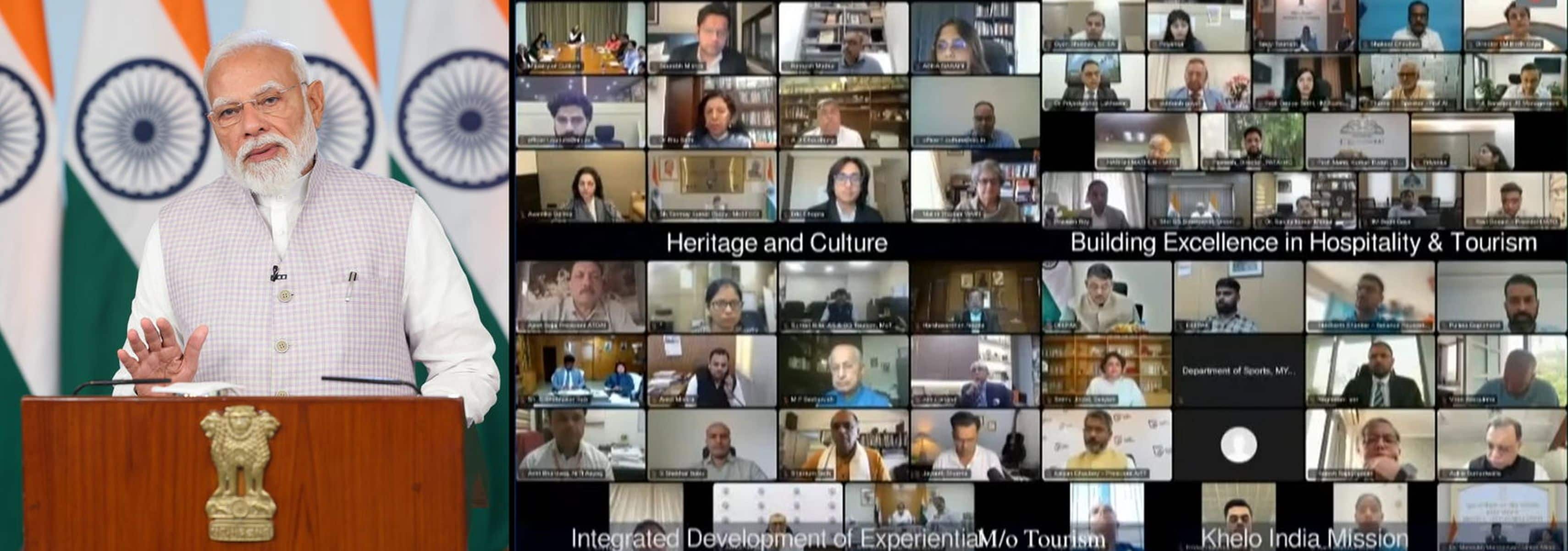
In this series of post-budget webinars, today marks the fourth and most significant one. Fulfilling aspirations of people is not merely a subject of discussion-it is the core objective of this budget and the firm resolve of this government. Education, Skill, Health, Tourism, Sports, and Culture are fundamental sectors that serve as the major means of fulfilling these aspirations. Therefore, in this webinar, we are deliberating on these crucial dimensions. For the implementation of budget announcements, the thoughts and suggestions of all experts, policymakers, scholars, entrepreneurs, and my young companions present here are extremely important. I warmly welcome and greet you all in this fourth session of the budget webinar.

Friends,

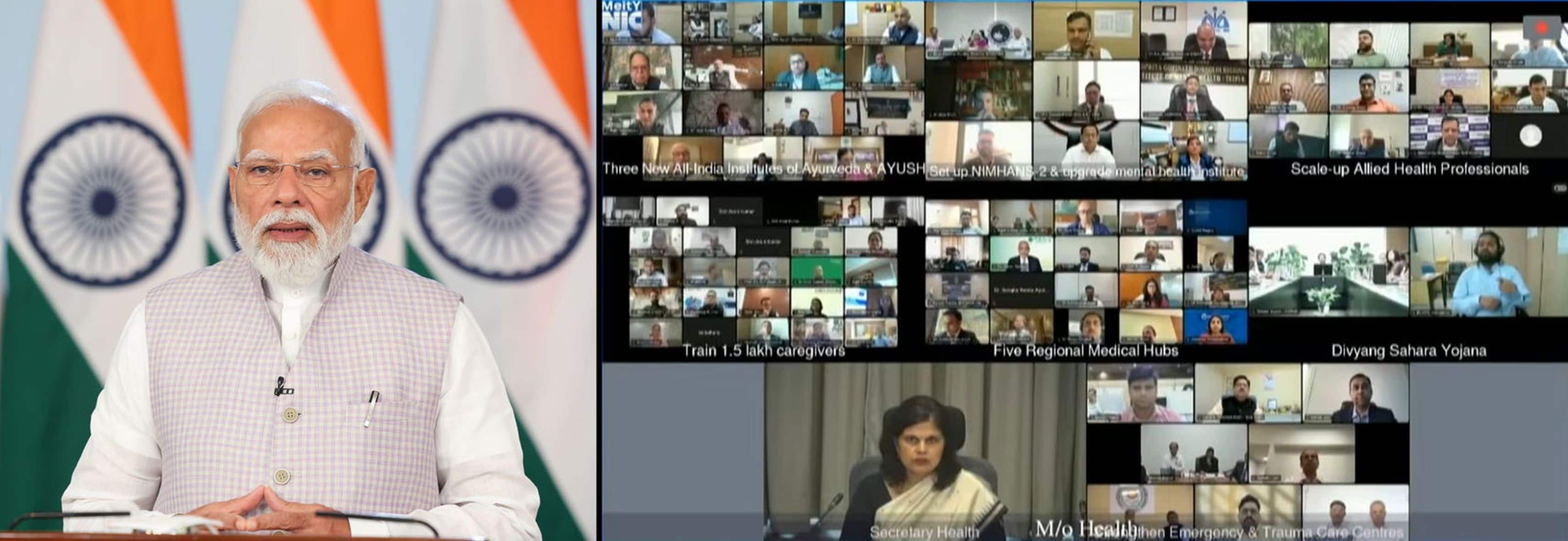
India today is working on a vast vision for preventive and holistic health. In recent years, the country’s health infrastructure has been strengthened, with hundreds of new medical colleges opening across districts. Through the Ayushman Bharat scheme and wellness centers, healthcare services have expanded to villages nationwide. Our yoga and Ayurveda are gaining popularity across the world. You will certainly discuss various aspects of this, but I would like to highlight one important subject-the care economy. In the coming decade, the number of senior citizens in the country will rise rapidly. Moreover, even today, many countries across the world face a huge demand for caregivers. Therefore, in the health sector, new skill-based employment opportunities are emerging for millions of youth. I urge the health sector experts present in this webinar to suggest new training models and partnerships so that the training ecosystem in the country can be further strengthened.

Friends,

Closely related to this is the subject of telemedicine. Today, a large number of people in remote areas are benefiting from it, and trust in it is steadily growing. However, I believe there is still a great need to increase awareness and ease of access in this area.

Friends,

Over the past decade, a major transformation has taken place in the mindset of the country. Today, beyond the boundaries of villages, towns, and cities, every young Indian wants to do something new, driven by the spirit to achieve. This new mindset of the new generation is the nation’s greatest strength, its most valuable capital for a bright future. To capitalize on this, we must continuously modernize and upgrade our education system. The new education policy has laid the necessary foundation for this. Now, it is essential that our curriculum remains updated according to market needs! We must accelerate the process of linking our education system with the real-world economy. We need to place greater focus on subjects like AI and automation, digital economy, and design-driven manufacturing.

Friends,

The country is consistently working to connect education with employment and enterprise. New models like university townships reflect this approach. Today, India is promoting the A.V.G.C. sector-Animation, Visual Effects, Gaming, and Comics. India is moving towards an innovation-driven economy. Many academicians and academic institutions are connected to this webinar today. I urge you to deliberate on developing your campuses as centers of industry collaboration and research-driven learning. This will provide students with real-world exposure and strengthen the skill ecosystem.

Friends,

A very important subject is STEM-Science, Technology, Engineering, and Mathematics. It is a matter of great pride that the number of daughters showing interest in STEM subjects is steadily increasing in our country. As we prepare for futuristic technologies, it is crucial that no daughter is held back due to lack of opportunities. In this webinar, you must discuss this direction. We need to place greater emphasis on increasing women’s participation. We must build a research ecosystem where young researchers have full opportunities to experiment and work on new ideas.

Friends,

Youth power becomes national power only when it is healthy, disciplined, and full of self-confidence. That is why, in recent years, sports have been seen as an important stream of national development. Initiatives like Khelo India have infused new energy into the sports ecosystem of the country. Sports infrastructure is being strengthened across the nation. In this webinar, you must deliberate on some key questions: How can talent be identified more accurately even from small towns and villages? How can structured financial support for thousands of athletes be improved? And thirdly, how can our sports bodies be made more professional? In the coming years, the Commonwealth Games will be held in India, and the country is striving to host the Olympics. In such a scenario, we must identify young athletes at an early age and nurture them, only then will India be able to raise its flag high in international competitions.

Friends,

Tourism and culture play a major role in creating new employment opportunities. When tourism grows in a place, the branding of that location or city also increases. This accelerates the overall development of that city. India has no shortage of historical sites. But for a long time, tourism remained confined to a few select destinations. Now, we are focusing on developing tourist destinations across every corner of the country.

Friends,

In this webinar, you must discuss a holistic approach to strengthening India’s tourism ecosystem. Your suggestions on trained guides, hospitality skills, digital connectivity, community participation, cleanliness, tourism, and related subjects will be very important.

Friends,

When institutions, industry, and academia work together, the pace of transformation accelerates. I am confident that this series of post-budget webinars will provide concrete direction for the future. Such efforts will further strengthen the foundation of a developed India. And friends, it is a very pleasant experience that due to the tradition of webinars, after the budget and especially during implementation, I have been told that this year, lakhs of people connected to these subjects-experts, beneficiaries, and those involved in the system-have actively participated in the webinars. Our officials have informed me that excellent and practical suggestions are coming in. This means not only solutions to problems but also new energy and new momentum to move forward with confidence. I say this is a very delightful experience of the webinars. All those who participated in these webinars are worthy of appreciation and gratitude. Once again, I extend my best wishes and heartfelt thanks to all of you.

Namaskar!