Shri Narendra Modi’s speech at eIndia 2011

Published By : Admin | December 4, 2011 | 06:36 IST
"India missed out on the gains of the industrial revolution due to colonialism but we have risen due to ICT (Information Communication Technology) revolution."
"Gujarat has made great strides in IT, especially in adoption of modern technology for governance."
"I am very enthusiastic about the potential of Mobile Governance (m-Governance) as a tool for providing good governance."

Place: Gandhinagar, Date: 14-12-2011


India, which was once known as the land of snake charmers is now known for its mouse charmers. India might have missed out on the gains of Industrial Revolution as it was under foreign rule, but with a progressive attitude we have risen to adapt Information and Communication Technology (ICT). Our youth have led the field and compelled the world to take note of our growth.

To me, e-Governance is nothing but easy, economic and effective governance. e-Governance is a key component of good governance, which is the key to sustainable development. The state has been constantly innovating, aiming at excellence in governance. The opportuneunderstanding of the importance of technology in effective and efficient delivery of services has enabled the state to take up many innovative steps for empowering people. Gujarat has made long strides in the field of IT during the last decade, especially in adoption of modern technology for governance. We celebrated the year 2004 as the ‘Year of e-Governance’, emphasizing upon the important role technology can play in providing good governance.

The Gujarat Government’s major e-Governance initiatives include e-Dhara forcomputerization of land records, broadband connectivity in all the 18,000-odd villagePanchayats of the state, Citizens’ Charter providing information about 100 public services at 300 Janseva Kendras, e-Gram programme, SWAGAT to redress online peoples’ grievances, e-Mamta, use of technology in distance learning and so on.

The state government has also initiated online recruitment process, bar coding ofration cards and computerization of all the check posts on highways through e-Governance. All check-posts have been computerized and every commercial vehicle going from the state to theneighboring state is accounted for. The sales tax collection has been computerized, resulting in additional revenues for the state government. Computerization of check posts has facilitated the process of verification of documents, estimation of penalty amount and its collection.

To arrest the dropout rates of school children, a district-level officer in the stateadministration has developed in-house software to keep a tab on dropouts. If a student is absent continuously for a period longer than 7 days, the system will automatically send a report to the Taluka level educational officer and in case of absence for over 15 days, it will be reported to the district-level officer. This can help in reducing the dropout rate in the state.

To encourage innovations in primary education, an attempt has been made by the Gujarat Educational Innovations Commission to recognize innovators who silently work at thegrassroots level. One way through which this has been achieved is in the form of a book that showcases 25 teachers who have redefined primary education through their innovations.

The state has received a full-fledged transponder of 36 MHz Q-band from Indian Space Research Organisation (ISRO). The transponder will enable the state in implementing long distance education system across the state as it has fully developed the capacity. We will use the transponder in bringing about a qualitative change in the primary education bydelivering education programmes to the schools, colleges, universities and for imparting the medical education, technical education and skill development knowledge. Besides, the educational programmes for farmers would be transmitted to the interior villages of the state.

Our cities are also emerging as IT hubs. According to recent NASSCOM reports, cities likeSurat and Ahmedabad have managed to position themselves on the top list that are attracting people with IT background.

I am very enthusiastic about the potential of Mobile Governance (m-Governance) as a tool for providing good governance. The common man is now using mobiles with ease and Gujarat has been among the early adopters of m-Governance. We are working on a m-Governance policy and will soon come out with a detailed policy for use of mobilecommunication devices for government.

Gujarat had ushered in transparency and accountability in governance through use of Information Technology. When technology becomes a part of your life, it starts driving you. The person, who understands this, can bring change. I wish that Indians use IT with as much ease as mobile.

I believe that IT+IT=IT i.e. Indian talent + Information technology = India Tomorrow. It is my firm belief that our talent will build the future of India with the help of IT.

Explore More
ଶ୍ରୀରାମ ଜନ୍ମଭୂମି ମନ୍ଦିର ଧ୍ଵଜାରୋହଣ ସମାରୋହରେ ପ୍ରଧାନମନ୍ତ୍ରୀଙ୍କ ଅଭିଭାଷଣ

ଲୋକପ୍ରିୟ ଅଭିଭାଷଣ

ଶ୍ରୀରାମ ଜନ୍ମଭୂମି ମନ୍ଦିର ଧ୍ଵଜାରୋହଣ ସମାରୋହରେ ପ୍ରଧାନମନ୍ତ୍ରୀଙ୍କ ଅଭିଭାଷଣ
How ODOP is helping Pratapgarh turn its amla into a bigger business

Media Coverage

How ODOP is helping Pratapgarh turn its amla into a bigger business
NM on the go

Nm on the go

Always be the first to hear from the PM. Get the App Now!
...
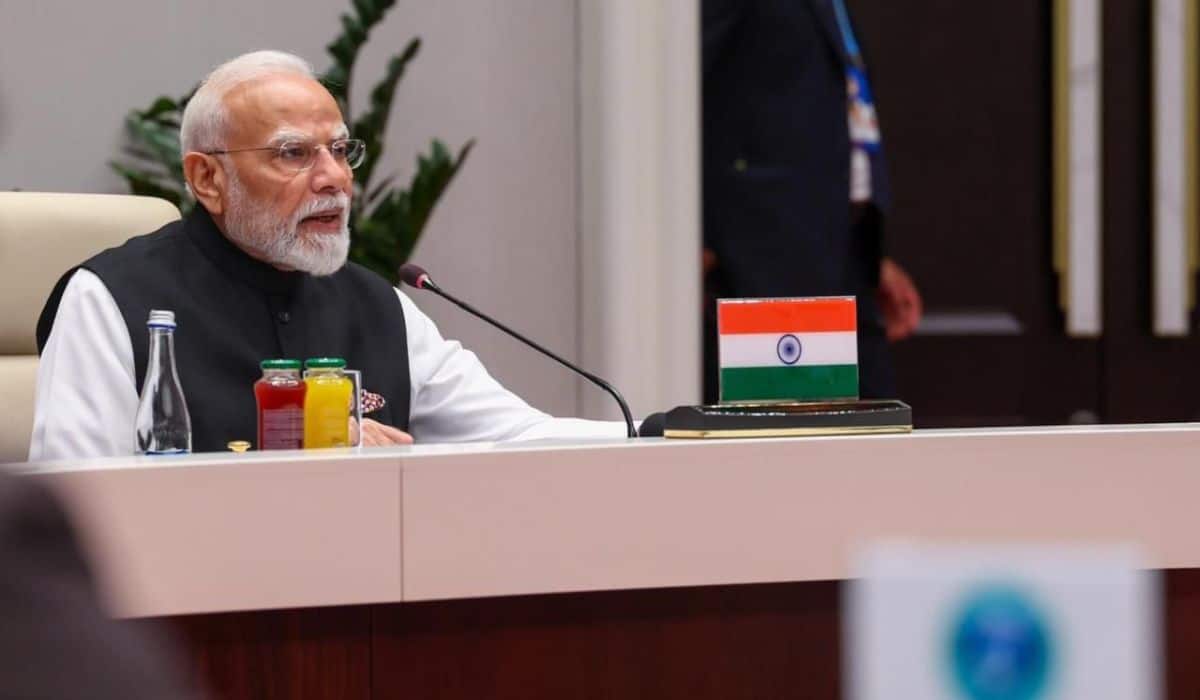
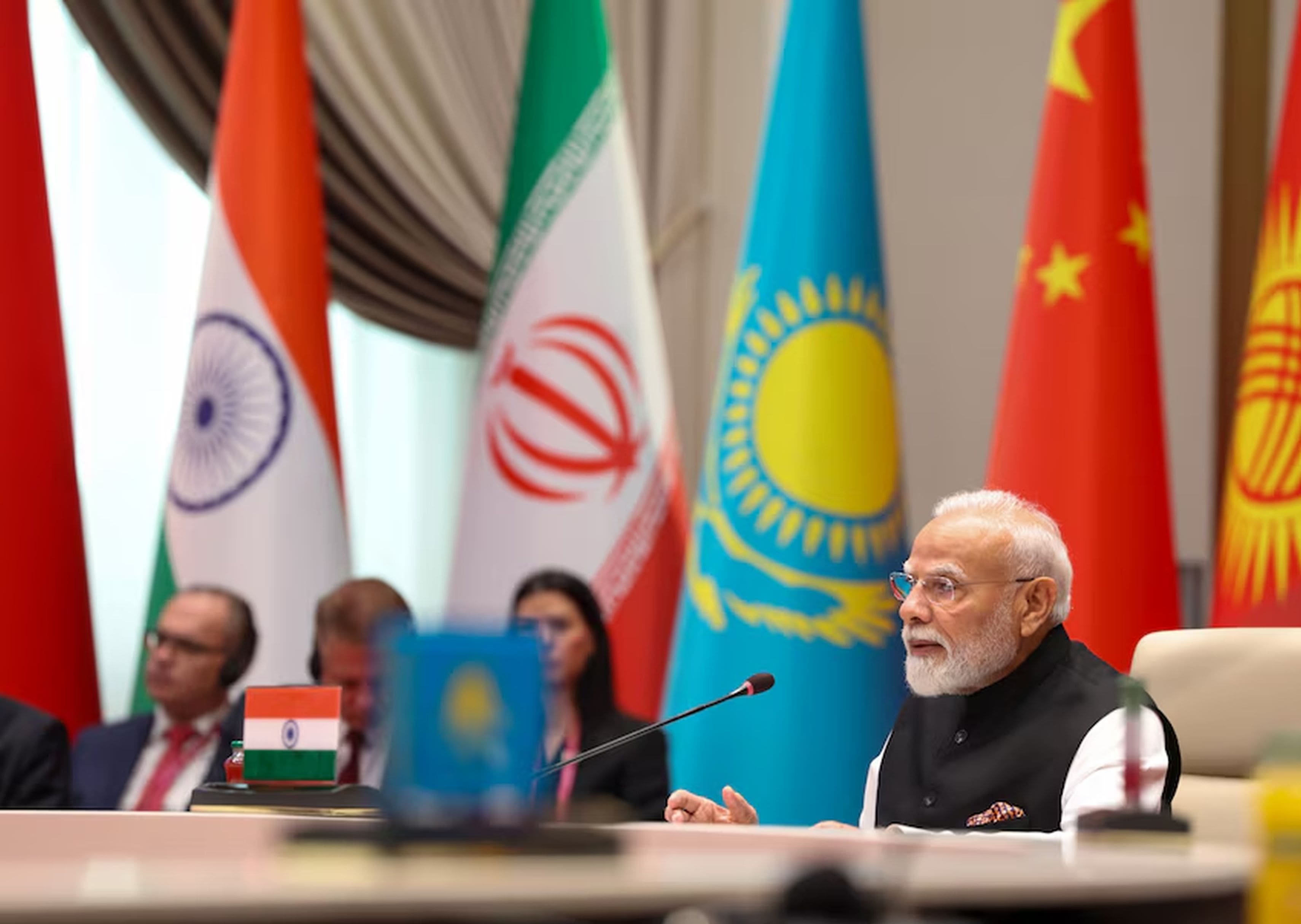
We must transform our shared geography into shared opportunities: PM Modi at SCO Summit
September 01, 2026

President of Kyrgyzstan,

Excellencies,

Namaskar!

It is a matter of great pleasure for me to be here amongst all of you on this special occasion of the 25th anniversary of the SCO.

I sincerely thank President Japarov for the warm welcome and gracious hospitality extended to us in Bishkek.

We had the privilege of being here yesterday, on the occasion of Kyrgyzstan’s Independence Day. I once again extend my warmest congratulations to the President and the people of Kyrgyzstan.

And today, on the occasion of Uzbekistan’s Independence Day, I extend my warmest congratulations to the President and the people of Uzbekistan as well.

During the spectacular Opening Ceremony of the World Nomad Games, we all caught a glimpse of Kyrgyzstan’s rich culture and our shared heritage. This shared heritage and our deep people-to-people connections are among the great strengths of the SCO family.

Friends,

Over the past twenty-five years, the SCO has developed a strong tradition of dialogue and cooperation across the vast expanse of Eurasia. Together, we have made valuable contributions not only to the well-being of our people, but also to the advancement of humanity. Over these twenty-five years, we have laid a strong foundation for cooperation. In the next twenty-five years, our goal should be to translate this cooperation into tangible outcomes.

At a time when the world is passing through uncertainty and instability, we must transform our shared geography into shared opportunities. And through our efforts, we must bring about positive change in the lives of our people.

Friends,

At the previous meeting, I had outlined the three main pillars of India’s vision for the SCO:

S - Security,

C – Connectivity, and

O – Opportunity

The time has come to move these three pillars beyond vision and translate them into concrete outcomes. The first and foremost requirement for this is peace and security. Terrorism continues to pose a serious challenge to humanity as a whole. In the fight against terrorism, we cannot remain confined to an action-reaction approach.

We must dismantle the entire ecosystem of terrorist financing, recruitment, radicalisation, and safe havens. We must speak with one voice and make it clear that there can be no place for double standards on this serious issue.

We must send a strong message to countries that use terrorism as an instrument of policy and provide safe haven and support to terrorists that terrorism can never be a strategic asset for anyone.

Our shared aspiration for a peaceful and secure Eurasia is also closely linked to peace and stability in Afghanistan. India has been contributing to the development and provision of humanitarian assistance to the people of Afghanistan and will continue to do so.

In today’s interconnected world, the scope of security has become even broader. The crisis in West Asia has demonstrated that a conflict in one region does not remain confined to that region. Its impact is felt across the world, affecting energy security, maritime trade, and supply chains. The countries of the Global South bear the greatest brunt of such disruptions. Therefore, India has consistently called for all tensions and conflicts to be resolved not on the battlefield, but through dialogue and diplomacy.

Drug trafficking is not merely a crime; it is a serious threat to our younger generation and regional security. The Centres being established under the SCO to address challenges such as security threats, organised crime, information security, and narcotics are a positive step. We must make these Centres an effective instrument for practical coordination and timely action.

Friends,

The second pillar of our shared development is strong and reliable connectivity. India supports all efforts that connect markets, facilitate trade, and open up new avenues for development. However, it is equally essential that such efforts respect the sovereignty and territorial integrity of all countries. This is also the fundamental spirit of the SCO Charter.

Going forward, the scope of connectivity will become even broader. Along with roads, railways, and air corridors, we must simplify customs processes, promote digital documentation, and make logistics networks more efficient.

Friends,

The third pillar is — Opportunity.

It means that the benefits of SCO cooperation should reach our people directly. Our greatest strength is the connections between our people. For India, the SCO is a confluence of great civilisations, cultures, and ideas. Over the next twenty-five years of the SCO, people-to-people ties should remain at the heart of our cooperation.

The true measure of our success should be how many new opportunities our efforts create for young people, how many new markets open up for our entrepreneurs, how much our farmers benefit from technology, and how much better the lives of our citizens become.

This is the true meaning of “Security, Connectivity, and Opportunity.”

Our cooperation in the SCO should not be merely government-driven; it should also be people-driven. I am pleased that, under Kyrgyzstan’s chairmanship, special emphasis has been placed on youth engagement within the SCO. India has taken initiatives such as the SCO Start-up Forum, Young Authors’ Conclave, and Young Scientists’ Forum.

Last year, India proposed the SCO Civilizational Dialogue Forum. I am pleased that its first session will be held in India this year. I am confident that with the active participation of all of you, this forum will become a strong platform for vibrant dialogue within the SCO.

Friends,

Kyrgyzstan’s great literary figure, Chingiz Aitmatov, gave the world a beautiful and profound thought. He said that we often focus more on the things that divide us, and less on the things that unite us.

This message is equally relevant for the SCO today. Our diversity is our identity, and our shared purpose is our strength. From Bishkek, we should move forward with this resolve:

From shared geography to shared opportunities,

from vision to outcomes,

and from government-driven cooperation to people-driven partnership.

With the same belief and commitment, India is ready to contribute to the SCO family’s shared journey.

Thank you very much.