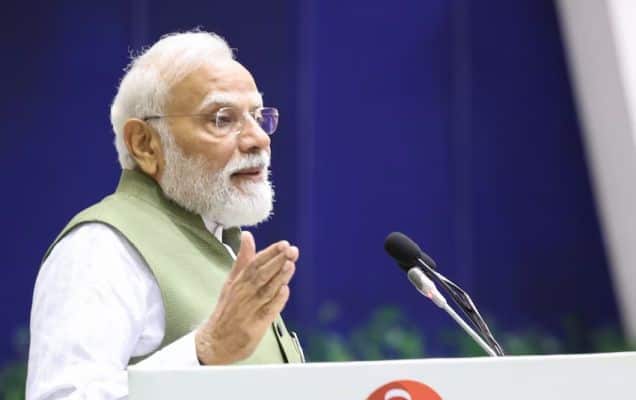
My dear countrymen, generally speaking, I touch upon varied subjects in Mann ki Baat. But today, the foremost concern in everyone’s mind in the country and all over the world is the catastrophic Corona Global Pandemic. Amidst that, it will not be appropriate on my part to reflect on anything else. But first of all, I extend a heartfelt apology to all countrymen. And I strongly feel from the core of my heart that you will forgive me – since certain decisions had to be taken, resulting in myriad hardships for you. And when it comes to my underprivileged brothers and sisters, they must be wondering on the kind of Prime Minister they have, who has pushed them to the brink! My wholehearted apologies, especially to them. It is possible that many are annoyed with me for their confinement in their homes. I fully understand your situation; I can feel what you are going through. But in order to battle Corona in a country of 130 crore people such as India, there was no other option. The fight against Corona is one between life and death itself…we have to win. And that is why such strong measures had to be resorted to. No one wants to go that way; looking at what the world is going through, this was the only way left. After all, the safety of you and your families has to be ensured. Once again, I apologize for any inconvenience, any hardship caused to you. Friends, we have an adage-“ Evam Evam Vikar, api tarunha Saadhyate Sukham”… which means, an illness and its scourge should be nipped in the bud itself. Later when it becomes incurable its treatment is very difficult. Today the whole of India, every Indian is doing just that. Brothers, Sisters, Mothers and the elderly, Corona virus has incarcerated the world. It is posing a challenge to Knowledge, science, the rich and the poor,
the strong and the weak alike. It is not confined to any nation's borders, nor does it make distinction of region or season. This virus has, in a way, obstinately picked up the gauntlet to annihilate the human race. And that is why humankind will have to rise unitedly, in the resolve to exterminate it. Some may feel that by complying with the lockdown, they are helping others! This is a misconception. This lockdown is a means to protect yourself. You have to protect yourself and your family. For the next many days, you have to continue displaying this patience; abide by the Lakshman Rekha. Friends, I know that no one wants to overstep the law and break rules wilfully. But there are some who are doing so, since they are not trying to understand the gravity of the matter. To them I will say that if they don’t comply with the lockdown rule, it will be difficult to save ourselves from the scourge of the Corona virus! The world over, many people nursed this delusion….all of them are regretting now. Friends, we are familiar with our adage “Aarogyam Param Bhagyam, Swasthyam Sarwaarth Sadhanam” -which means good health is the greatest fortune. Health is the only way to happiness in the world. In that backdrop, those breaking the rules are playing with their lives. Friends, in this war, there are many soldiers who are fighting the Corona virus, not in the confines of their homes but outside their homes. These are our front line soldiers-especially our brothers and sisters on duty as nurses, doctors and paramedical staff. These are people who have defeated corona. Today, we shall draw inspiration from them. During the course of the last few days, I spoke to a few such people over the phone, boosting their zeal, in turn raising my own enthusiasm too. I have learnt a lot from them. It was my earnest desire to share with you excerpts of the conversation I had with them, in Mann ki Baat. The first to join us is Shri RamagampaTeja Ji. He happens to be an IT professional….let’s listen to his experiences.
Yes Ram,
Ramgampa Teja: Namaste ji
PM: Yes Ram, Namaste
RT : Namaste, Namaste
PM: I have come to know that you have freed yourself from the clutches of the Corona virus!
RT: Yes
PM: I wanted to talk to you. Since you just came out of the danger zone, I wanted to listen to your experience.
RT: I am an employee of the IT sector. I had gone to Dubai for work; for meetings. It just happened willy-nilly. On my return it began with a fever. After 4 or 5 days, doctors conducted a test for Corona virus. It turned out positive. I was admitted to Gandhi Hospital, Government Hospital, Hyderabad, where I recovered after 14 days and was discharged. All this was a bit scary.
PM: You mean when you came to know of the infection?
RT: Yes
PM: And did you know earlier that virus was dangerous and could put you in trouble?
RT: Yes
PM: So, when it happened to you, what was your immediate response?
RT: First...I was very scared, not ready to believe that it had happened. And how? Because in India, there were only two or three cases, I didn’t know anything about it. When I was admitted to the hospital, they kept me in a quarantine. The first 2-3 days passed just like that. But the doctors and nurses there…
PM: Yes!
RT: They were very nice to me. They would call me up and talk to me and give me confidence that nothing will happen, I would be okay, they kept on saying. Twice or thrice a day, doctors would speak to me...nurses too. So first I was afraid, but later I felt I was with very good people, who knew what to do. I felt I would get better.
P.M : How were family members feeling?
R.T : When I was admitted to the hospital. Everyone was under stress. Media also created some problem there. Everyone’s attention was drawn to it. But yes. First they all had to undergo a test. The result was negative, which was the biggest blessing for us, for our family and all those around me. After that, there was improvement each day. Doctors were talking to me and informing family too.
P.M. : What precautions did you take? What precautions were there for family?
R.T : When the family first came to know, I was in quarantine. But even after quarantine, doctors told me to stay at home for 14 days…House quarantine for myself in my room. So even after coming home, I am at home mostly in my room, wearing a mask the whole day. When I come out for food, hand washing is most important.
PM: Fine Ram! You’ve returned to good health. Good wishes to you and family.
RT: Thank you.
PM: But I want this experience of yours
RT: Yes!
PM: You are from the IT profession,
RT: Yes
PM: So make an audio and…
RT: Yes
PM: Share it with people, make it viral on social media. What will happen is, people will not be scared and at the same time, points on adequate care and preventive measures will easily reach people.
RT: Yes, when I came out, I saw people feeling that being in quarantine is like being in a jail. It is not like that. Everyone should know that government quarantine is for their sake; for their families. On that I would like to ask maximum people to get the test done and not be afraid of quarantine. There should be no stigma attached to being on quarantine.
PM: Fine Ram. Many good wishes to you.
RT: Thank you, Thank you.
PM: Thank you Bhaiyya…Thanks a lot.
RT: Thank you.
Friends, as Ram said, he followed Doctor’s instructions fully when suspected of having Corona. And as a result, he is leading a healthy, normal life today. Another friend, who has defeated Corona is joining us now. His entire family had come under the clasp of this scourge, including a teenage son. Come let us speak to Shriman Ashok Kapoor from Agra.
PM: Ashok ji, Namaste!
Ashok Kapoor: Namaskar ji! I am lucky to be talking to you.
PM: Fine. Am fortunate too. I called you up, since your entire family had to hear the brunt.
AK: ji ji.
PM: I would certainly like to know as to how this infection was diagnosed. What had happened? What happened in the hospital? So that, after listening to you, if something important is to be conveyed to countrymen, I can use that.
AK: Absolutely Sir. I have two sons. They had gone to Italy to attend a shoe fair. We run a factory here, manufacturing shoes.
PM: Yes!
AK: So, when they returned from Italy...
PM: Yes!
AK: Our son in law too had gone there. He stays in Delhi. Feeling a health problem, He went to Ram Manohar Lohiya hospital.
PM: Ok
AK: They said it was positive. They shifted him to Safdurjung.
PM: Yes
AK: They called us up asking both my sons to get tested since they had been with him. Both sons went to Agra District hospital. There they were asked to call family members also. Just for a check. Ultimately all of us went there.
PM: Hmm…
AK: The next day they confirmed six of us positive... both my sons, myself, my wife, my son’s wife and my sixteen year old grandson...By the way, I am 73. I was told to take all of them to Delhi.
PM: O my God!
AK: But we didn’t fear. We thought it was good we came to know. We went to Safdarjung Hospital, Delhi. The Agra Doctors provided us with two ambulances. And we were not charged for that. We are grateful to them and the administration for their efforts and co-operation.
PM: You came in an ambulance!
AK: Yes. We were seated normally inside. Doctors accompanied us till Safdarjung Hospital where their doctors were waiting at the gate. They shifted us to a ward.
All six of us had separate rooms. The rooms were good; had everything. And then Sir, we stayed at the Hospital alone for 14 days. And as far as doctors are concerned, they were very helpful and treated us well….same for staff.
Sir, actually, when they used to enter wearing their dress, one could not make out if it was a doctor or a ward boy or nurse. We would obey their instructions fully. There we did not face even one percent problem.
PM: You come across as someone with immense self confidence.
AK: Sir, I am perfect...Yes. I have earlier undergone a knee surgery also. Even then I am perfect.
PM: No, but since your entire family went through a bad time, including the young sixteen year old…
AK: And Sir, it was time for his ICSE papers! We said no…that can be thought of later. If life stays on, all papers will be managed. Not to worry.
PM Modi: That is true. Your experience in life came to be of use in this crisis and imparted confidence as well as courage to the entire family.
Ashok Kapoor: Yes, we all went there, the entire family, we supported each other and though we did not meet, we would talk on the phone. We wouldn’t meet but the doctors took complete care of us –to the maximum extent possible. We are grateful to them for their compassion. The staff nurses took full care of us.
PM Modi: Let me extend my best wishes to you and your entire family.
Ashok Kapoor: Thank you ji | Thanks | We are all very happy that I have spoken to you.
PM Modi: No! It is a pleasure for us.
Ashok Kapoor: Even then, Sir, I speak for all of us, if it is needed to go anywhere to spread awareness, or to do something, we are ready at all times.
PM Modi: No, in your own way, do it in Agra. If someone is hungry, feed him, be empathetic to the poor, and follow the rules. You must explain to the people that your family was in the clutches of this disease, but you managed to save your family by following the rules, if everyone follows the rules then the country too will be saved.
Ashok Kapoor: We sir, Modi sir, we have shot our videos, and sent them to the TV channels.
PM Modi: Good.
Ashok Kapoor: The channels have also telecast them so awareness can be spread in people and…
PM Modi: This should be streamed in social media also so they become popular.
Ashok Kapoor: Yes. Yes. And in our colony where we live, it is a neat and clean colony, we have told everyone that, look, we have come back from Quarantine, so do not be afraid. If anyone has a health scare, go and get it tested. And those who met should also get their tests done, and remain protected by the mercy of God. Yes sir.
PM Modi: Alright. I wish everyone all the best.
Friends, we pray for the long life of Ashok ji and his entire family. As he mentioned, without panicking, following the right steps on time, contacting doctors on time without getting afraid and by taking proper precautions, we can defeat this pandemic. Friends, to know the capability with which we are dealing with this pandemic at the medical level, I also spoke to some doctors who are leading the front line in this battle. Their daily activity is synchronous with that of their patients. We now joined by Dr. Nitesh Gupta from Delhi…
PM Modi: Hello doctor.
Dr. Nitesh Gupta: Hello Sir
PM Modi: Namaste Niteshji, you are right there on the front, so I want to know what is the mood of the rest of your colleagues in the hospitals? Tell us how is it?
Dr. Nitesh Gupta: Everyone's mood is upbeat. Your blessings are with everyone. Whatever cause you are supporting in the given hospital or whatever we are asking for in line treatment, you are providing it all. So, we are engaged in exactly the same way just like the army battles on the border! And, our only duty is to get the patient back home after being cured.
PM Modi: You are right! This is a war-like situation and you all are managing a frontline.
Dr. Nitesh Gupta: Yes sir.
PM Modi: You must also be counselling the patient along with his treatment?
Dr. Nitesh Gupta: Yes sir that is the most important thing. Because the patient gets traumatized upon hearing what is happening with him. They have to be explained that there is nothing to fear and post quarantine lasting 14 days he will be fine and return home for sure!. So far we have managed to send 16 such patients home.
PM Modi: So what comes across over-all when you converse with such scared patients, are they plagued by worries?
Dr. Nitesh Gupta: They think mostly about what will happen next? What will happen now? It is because what they witness in the outside world with morbid mortality rates and wonder if the same will happen to them! So we explain to them which one of their afflictions will be cured during a particular time frame. We counsel them that their case is very mild akin to a case with a common cold and since one gets well in five-seven days, they too will be fine after a similar period of convalescence. Then we will tell them that after tests which are bound to report as negative and then they can be send home. So that's why we visit them repeatedly after intervals of two-three-four hours, we meet them, ask about their wellbeing. They also feel comfortable throughout the day.
PM Modi: So they have their confidence restored after being scared initially?
Dr. Nitesh Gupta: Initially, they are scared, but when we have counselled and by the second or third day when they start recovering, they also start believing that they can be cured.
PM Modi: But do all the doctors are imbued with the feeling that the work of rendering the greatest service in their lives has to be shouldered by them, is this emotion shared by all of them?
Dr. Nitesh Gupta: Yes, it is. We keep our team motivated to the utmost extent that there is nothing to fear, and there is no such thing that we should fear! If we observe precautions thoroughly, and explain these precautions to the patient that he is to follow, then everything will be fine.
PM Modi: Ok Doctor, a large amount of patients come to you and you are absolutely devoted to their cause. It was nice talking to you. But in this battle, I'm with you! Keep on fighting
Dr. Nitesh Gupta: We seek your blessings. This is what we wish.
PM Modi: Many good wishes Bhaiya
Dr. Nitesh Gupta: Sir Thank you.
PM Modi: Nitish ji, plenty of plaudits to you. Due to efforts of people like you, India will surely achieve victory in the battle against Corona. I urge you to take care of yourself...take care of your loved ones...take care of your family. The world’s experience tells us that in this illness, the number of patients infected with it suddenly grows exponentially. On account of this sudden rise, we have seen the best health systems crumble. In order to ensure that India does not have to face such a situation, we have to keep trying ceaselessly. Another doctor joins us from Pune...Shriman Doctor Borse.
PM Modi: Namaste Doctor
Doctor: Namaste Namaste
PM Modi: You are working relentlessly in the true spirit of ‘Service to Mankind is service to God’. I want to speak to you today on something that will be a message for our countrymen. Firstly, a question that strikes the minds of many is when to contact doctors and when to go for the Corona test! As a doctor, you have dedicated yourself completely in the service of patients. Your words carry weight. I want to hear it from you.
Doctor: Sir, I am a Professor at B.J.Medical College, Pune. And in Pune, there is a Muncipal Corporation Hospital, named Naidu Hospital. It has a fully functional screening centre since Januray 2020. Here till date, 16 Covid -19 positive cases
have been diagnosed. And out of those 16 cases, after due quarantine, isolation and treatment, 7 patients have been discharged Sir. And the remaining nine cases are also very stable and doing well. Despite the virus being inside their bodies, they are getting well; they are recovering out of the Corona virus. Here the sample size is tiny Sir...only 16 cases. But cases of the young population getting affected are coming to light. And despite that, the disease itself is not that serious a disease. It’s a mild disease and patients are successfully recovering. And those remaining 9 people are also going to be well, they are not going to deteriorate, we are keeping a watch on them on a daily basis. They are also going to be well in another 4-5 days. From people who come here as suspects; international travellers and those who come into contact with them...we take a swab... oropharyngeal and nasal. If the nasal swab report is positive, the patient is being admitted to the positive ward. If negative, we advise the patient on home quarantine, how it is to be done at home. After this advice, they are sent home.
PM Modi: What do you explain to them? While at home what aspects do you elucidate to them?
Doctor: Sir, even if one stays at home, one has to stay quarantined there. Observing a 6 feet distance is mandatory. Secondly, one has to use a mask and wash hands very frequently. If you do not have sanitisation, you can use simple soap and water to wash hands, but you have to keep doing it frequently. And while coughing or sneezing, use a simple handkerchief to cough on, so that droplets are not able to spread, nor fall on the floor, thus preventing hand contact and further spread. We explain this Sir. The second thing is, when they are supposed to be in a home quarantine, they are not supposed to leave home at all. During the current lockdown, they ought to be home quarantined properly for a minimum of 14 days...we are informing them, this is our message to them Sir.
PM Modi: Fine Doctor, you are doing a great service and with selfless dedication...your entire team is at work. I firmly believe that all our patients there return home safely. We shall win this battle...it will be victory for the country...with the help from all of you.
Doctor: Sir we believe we shall overcome. We shall win this battle.
PM Modi: Doctor, many good wishes to you. Thank You.
Doctor: Thank you, Thank You Sir.
Friends, all these people, all these friends are persevering to the best extent possible to chase out this scourge. What they tell us is not just for us to listen to; it is to be practised in life in the truest spirit. Today when I witness the sacrifice, perseverance and dedication on part of doctors, I am reminded of the touching words of Acharya Charak while referring to doctors. And it is so visible in Doctor’s lives today! Acharya Charak had said...
Na Aatmarthan Na Api Kaamartham Atbhoot Dayam Prati
Vartate yat Chikitsaym Sa Savarma Iti Vartate
Which means: The one who strives for his patient’s well being in the spirit of service and compassion, with no desire, monetary or otherwise, is the greatest Doctor.
Friends, today I salute the embodiment of humanity...the Nurse. The selfless spirit of service with which you perform your duty is beyond compare. It’s a coincidence that the world is celebrating year 2020 as the International year of the Nurse and Midwife. This goes back 200 years ago, i.e. 1820, the year that is associated with the birth of Florence Nightingale who lent a new identity, a new paradigm to the term ‘Service to humanity’ and the field of Nursing, taking it to newer heights. Dedicated to the spirit of service of every nurse in the world, this year has come as a challenging examination for the entire Nursing community...I believe, all of you will not only clear the exam successfully, you will also save many lives.
We are able to fight a battle on such a massive scale, only on account of the zeal and grit of frontline warriors like you...Be you a Doctor, a nurse, a para medic, Aasha, an ANM worker, sanitation worker, the country is also concerned about your health. Keeping that in mind , for around 20 lakhs colleagues from these fields, the government has announced a health insurance cover of upto Rs 50 lakhs, so that in this battle, you can lead the country with greater self confidence.
My dear countrymen, in this battle against Corona virus we have many examples of real heroes in the society. People who are at the forefront even in these conditions. On the Narendra Modi app, the Namo app, Niranjan Sudhaakar Hebbaale of BengaLuuru has written, that such people are daily life heroes. And that is quite right too. These are people due to whom our daily life runs smoothly.
Just imagine, if the water in your taps runs dry for just a day, or there is a sudden power outage in your house. At that time, it is these daily life heroes who banish
our troubles. Think about the small retail store in your neighbourhood. In these troubled times, he too is taking a great risk. After all, for whom? Isn't it because he wants to ensure that you do not face any difficulty in buying essential goods? Similar to that, think about those drivers and workers, who are continuing to work ceaselessly, so that the nation's supply chain of essential goods is not disrupted. You might have noticed that the government has kept the banking services open. And those working in the banking sector are there at your service – with full commitment and dedication – leading us in this fight. These services are not trivial at a time like this. We cannot thank these bank personnel enough for their service. Many of our friends are engaged with e-commerce companies as delivery personnel. These people are continuing delivering grocery even in these trying times.
Just think, as you watch television during this lock down, using the phone and internet even while being home bound, someone is working hard to ensure that these services continue uninterrupted. During this time, many of you are able to make digital payments with ease, many people are working hard to facilitate that. These are the people who are bearing the burden of the country's work during this lock down. On behalf of all countrymen, today I wish to express my gratitude to all these people, and request them, that they follow all the safety precautions, take care of themselves and their family members.
My dear countrymen, I have come to know of some instances, that some of those people who were suspected to have corona virus and asked to stay in home quarantine, are being ill-treated by others. I am greatly pained to learn of these instances. This is very unfortunate. We need to understand that in the current circumstances, we need to ensure social distance, not human or emotional distance. These people are not criminals. They are merely suspected to be infected with the virus. These people have isolated and quarantined themselves to protect other people from getting infected. At many places, people have taken
their responsibilities very seriously. They have quarantined themselves even when they were asymptomatic. They did so because they had travelled abroad recently and were being doubly cautious. They wanted to ensure that nobody else got infected by this virus. So when people are behaving so responsibly, it is unfair to ill-treat them. On the contrary, they need to be shown sympathy and cooperation.
Social distancing is the most effective way of fighting against corona virus. But we have to understand that social distancing does not mean ending social interaction. Actually, this is the time to give a new lease of life to all your existing social relationships. To energise these relationships. In a way, this time teaches us to reduce emotional distance and increase social distance. Yashvardhan from Kota have written on the Namo app, that they are increasing family bonding during the lock down. They are playing cricket and board games with kids; p reparing new dishes in the kitchen. Nirupama Harsheya from Jabalpur writes on the Namo app, that she finally got an opportunity to fulfil her wish to make a quilt. On top of that she is also fulfilling her gardening hobby. I also happened to read the posts of Pareekshit from Raipur, Aaryaman from Gurugram and Suraj from Jharkhand, and they have discussed about having an e-reunion with their school friends. Their idea is very interesting. It's possible that you too might not have gotten a chance to talk to your school and college mates for decades. You too can try out this idea. Pratyush of Bhubaneswar and Vasudha of Kolkata have mentioned that they are reading books that they had hitherto not been able to read. I also saw on social media, that many people took out musical instruments like table and Veena that were lying unused for years– and started practising on them. You too can do that.
That will not only give you the joy of music, but also take you on a trip down the memory lane. In this crisis, you have got a rare opportunity to not only connect with yourself but also with your passion. You will also get an opportunity to connect with your old friends and with your family.
Shashi ji from Roorke has asked me on the Namo App - what do I do for my fitness during the lock down? How do I observe the Navaraatri fast in these circumstances? Let me reiterate, that although I have urged you to
avoid stepping out of your houses, I have also given you an opportunity to take a look inwards at yourself. This is your chance, don't go out, but go inside, try to know yourself. As far as the navaraatri fast is concerned, that is between me and my faith and the supreme power. As regards fitness, I think that will be quite a lengthy topic, so what I'll do is, I'll upload some videos on this topic on the social media. You can surely see those videos on the Namo app. What I do, possibly, can aid and inspire some of you. But do remember, that I am not a fitness expert, I am also not a yoga teacher. I am merely a practitioner. I do concede however, that some yogaasanaas have greatly benefited me. It's possible that some of these tips might help you too during the lock down.
Friends, this battle against corona is unprecedented as well as challenging. Hence the decisions being taken during this time are unheard of in the history of the world. The steps being taken by Indians to stop the spread of corona, the efforts that we are currently making, will ensure that India conquers this corona pandemic. The determination and restraint of each Indian will also aid in facing this crisis. In addition, our sympathy for the poor should also be far greater. Our humanity stems from the fact that whenever we see a poor or hungry person, we first try and feed him or her in this time of crisis. We should think of their needs and India can do this. These are a part of our values and culture.
My dear countrymen, today every Indian is confined to the home, to ensure his or her own safety, but in the times to come, the very same Indian will tear down all walls on the road to our progress and take the country forward. Stay at home with your family, be careful and safe, we need to win this battle. And we will win. We will meet in Man ki baat again next month. By then we should have overcome this crisis – with this hope, and this wish, I thank you all.
#MannKiBaat begins with an important message by PM @narendramodi. pic.twitter.com/ZmrgbPpNN6
— PMO India (@PMOIndia) March 29, 2020
The battle against COVID-19 is tough and it did require some tough decisions.
— PMO India (@PMOIndia) March 29, 2020
It is important to keep the people of India safe. #IndiaFightsCorona pic.twitter.com/iYuj4PJNAr
Together, India will defeat COVID-19.
— PMO India (@PMOIndia) March 29, 2020
The Lockdown will keep you as well as your families safe. #MannKiBaat pic.twitter.com/OoSIRtz05r
Please remain indoors. #MannKiBaat pic.twitter.com/DasCoeLFgM
— PMO India (@PMOIndia) March 29, 2020
In times such as these, precautions are most important. #MannKiBaat pic.twitter.com/KWsp6JU47Z
— PMO India (@PMOIndia) March 29, 2020
India salutes those at the forefront of fighting COVID-19. #MannKiBaat pic.twitter.com/EVGRqBUvvX
— PMO India (@PMOIndia) March 29, 2020
PM @narendramodi interacts with Ram from Hyderabad who recovers from COVID-19. #MannKiBaat https://t.co/bBE5JIdIiB
— PMO India (@PMOIndia) March 29, 2020
PM @narendramodi now interacts with Ashok Ji from Agra. Do hear their interaction. #MannKiBaat https://t.co/bBE5JIdIiB
— PMO India (@PMOIndia) March 29, 2020
Now, PM @narendramodi is interacting with Dr. Gupta from Safdarjung Hospital. #MannKiBaat https://t.co/bBE5JIdIiB
— PMO India (@PMOIndia) March 29, 2020
Dr. Borse shares his experiences with PM @narendramodi. #MannKiBaat https://t.co/bBE5JIdIiB
— PMO India (@PMOIndia) March 29, 2020
PM @narendramodi salutes hardworking nurses who are working 24/7 to create a healthier India. #MannKiBaat pic.twitter.com/sXzGT4bwSB
— PMO India (@PMOIndia) March 29, 2020
India honours our Daily Life Heroes.
— PMO India (@PMOIndia) March 29, 2020
They are doing so much so that we can lead our lives normally. #MannKiBaat pic.twitter.com/FxjasZ7pdv
Many have gone into quarantine despite having no symptoms. I applaud them for their spirit of responsibility. #MannKiBaat pic.twitter.com/76MtOes1Cj
— PMO India (@PMOIndia) March 29, 2020
People from all over the India are sharing their experiences about what they are doing during this Lockdown period. #MannKiBaat pic.twitter.com/KoLKz3j9YB
— PMO India (@PMOIndia) March 29, 2020
Let us boost emotional distancing in this time of social distancing. #MannKiBaat pic.twitter.com/siKcZVWV8d
— PMO India (@PMOIndia) March 29, 2020