Cabinet approves three rail projects covering 8 districts across several states

Published By : Admin | February 24, 2026 | 16:34 IST
The total estimated cost of the projects is Rs 9,072 crore and will be completed by 2030-31

The Cabinet Committee on Economic Affairs, chaired by the Prime Minister Shri Narendra Modi, today has approved 3 (Three) projects of Ministry of Railways with total cost of Rs. 9,072 crore (approx.). These projects include:

  1. Gondia – Jabalpur Doubling
  2. Punarakh - Kiul 3rd and 4th line
  3. Gamharia - Chandil 3rd and 4th line


The 3 (three) projects covering 8 Districts across the states of Maharashtra, Madhya Pradesh, Bihar and Jharkhand will increase the existing network of Indian Railways by about 307 Kms.

The proposed multi-tracking project will enhance connectivity to approx. 5,407 villages, which are having a population of about 98 lakhs.

The increased line capacity will significantly enhance mobility, resulting in improved operational efficiency and service reliability for Indian Railways. These multi-tracking proposals are poised to streamline operations and alleviate congestion. The projects are in line with the Prime Minister Shri Narendra Modiji’s Vision of a New India which will make people of the region “Atmanirbhar” by way of comprehensive development in the area which will enhance their employment/ self-employment opportunities.

The projects are planned on PM-Gati Shakti National Master Plan with focus on enhancing multi-modal connectivity & logistic efficiency through integrated planning and stakeholder consultations. These projects will provide seamless connectivity for movement of people, goods, and services.

The proposed capacity enhancement will improve rail connectivity to several prominent tourist destinations across the country, including Kachnar Shiv Temple (Jabalpur), Kanha National Park (Balaghat), Gangulpara Dam and Waterfall, Pench National Park, Dhuandhar waterfall, Bargi Dam, Gomji-Somji temple, Chandil Dam, Dalma Hill Top, Hesakocha Waterfall, Raijama Ghati, Dalma Wildlife Sanctuary, etc.

The projects are essential routes for transportation of commodities such as coal, steel, iron ore, cement, ballast and stone chips, fly ash, fertilizers, limestone, manganese, dolomite, foodgrains, POL etc. The capacity augmentation works will result in additional freight traffic of magnitude 52 MTPA (Million Tonnes Per Annum). The Railways being environment friendly and energy efficient mode of transportation, will help both in achieving climate goals and minimizing logistics cost of the country, reduce oil import (6 Crore Litres) and lower CO2 emissions (30 Crore Kg) which is equivalent to plantation of One Crore trees.

Explore More
ଶ୍ରୀରାମ ଜନ୍ମଭୂମି ମନ୍ଦିର ଧ୍ଵଜାରୋହଣ ସମାରୋହରେ ପ୍ରଧାନମନ୍ତ୍ରୀଙ୍କ ଅଭିଭାଷଣ

ଲୋକପ୍ରିୟ ଅଭିଭାଷଣ

ଶ୍ରୀରାମ ଜନ୍ମଭୂମି ମନ୍ଦିର ଧ୍ଵଜାରୋହଣ ସମାରୋହରେ ପ୍ରଧାନମନ୍ତ୍ରୀଙ୍କ ଅଭିଭାଷଣ
UPI — an eventful journey

Media Coverage

UPI — an eventful journey
NM on the go

Nm on the go

Always be the first to hear from the PM. Get the App Now!
...
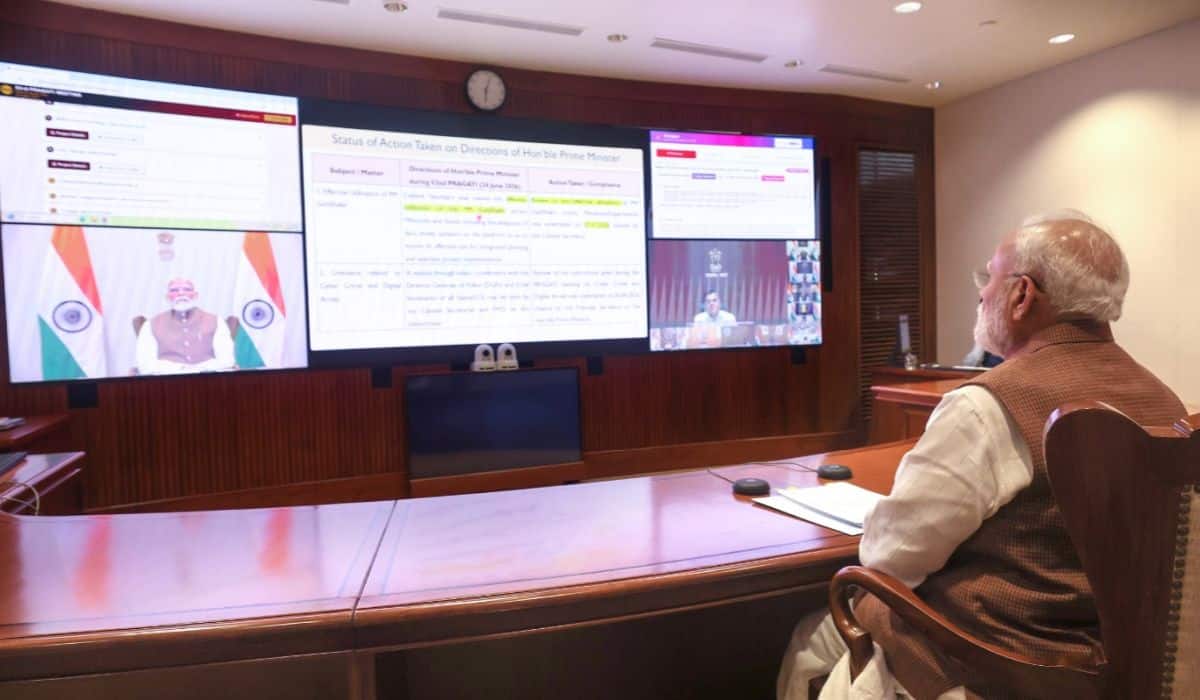
PM chairs 53rd PRAGATI Meeting
August 25, 2026
PM reviews six key infrastructure projects across the Railway, Road and Power sectors
Projects reviewed span across 9 States with cumulative investment of more than ₹30,000 crore
PM says Infrastructure projects should be viewed as an integrated whole, rather than as individual sections or packages
PM calls for continuous reforms across all stages of project implementation and a proactive work culture across Ministries and States
PM says Speed must go hand-in-hand with quality
While reviewing AgriStack, PM emphasises the need to leverage the latest digital technologies including AI to derive greater value from agricultural data
On cyber fraud and ‘digital arrest’, PM stresses training, public awareness, cyber-safety education and coordinated action

Prime Minister Shri Narendra Modi chaired the 53rd meeting of PRAGATI, the ICT-enabled, multi-modal platform for Pro-Active Governance and Timely Implementation, at Seva Teerth earlier today.

During the meeting, Prime Minister reviewed six key infrastructure projects across the Railway, Road and Power sectors, spanning nine States with a cumulative cost of more than ₹30,000 crore. The projects, significant for strengthening connectivity, supporting industrial and economic activity and improving public services, were reviewed with particular emphasis on adherence to timelines, inter-agency coordination, resolution of pending issues and expeditious completion.

Prime Minister emphasised that delays in infrastructure projects have consequences beyond cost escalation, as they also postpone the benefits intended for citizens, businesses and the economy. He said that infrastructure projects should be viewed and monitored as an integrated whole, rather than as isolated sections, stretches or packages. He noted that progress in individual packages should ultimately translate into timely completion and operationalisation of the entire project. Ministries and States were therefore asked to adopt an end-to-end approach, and address critical gaps that could delay the overall commissioning and delivery of benefits. He called for fostering a proactive work culture across Ministries and State Governments, with greater ownership at every level of project implementation.

Prime Minister stressed the need to explore common utility corridors for infrastructure services, wherever feasible, particularly while planning major transport and infrastructure projects. He called upon Ministries and States to examine such integrated approaches at the planning stage itself, keeping in view their technical and economic feasibility.

Prime Minister said that speed of execution must be accompanied by uncompromising quality. He called upon Ministries, States and implementing agencies to adopt modern technologies and strengthen quality assurance and supervision at every stage.

While reviewing AgriStack under the Digital Agriculture Mission, Prime Minister emphasised the need to leverage the latest digital technologies, including Artificial Intelligence, to derive greater value from agricultural data. He stressed that the data ecosystem should be effectively utilised across the agricultural value chain, from input planning to processing, enabling more informed interventions, better targeting and data-driven decision-making. He appreciated the efforts of the States and the Central Government in building the AgriStack ecosystem and called for further strengthening its use for delivering better outcomes for farmers.

During the review of cyber fraud cases, including incidents of digital arrest, Prime Minister said that prevention must be strengthened through a sustained focus on training, awareness and education. He stressed the need for continuous and targeted public-awareness campaigns, particularly for senior citizens, youth and other vulnerable sections, to familiarise them with common fraud techniques, warning signs and safe digital practices. He also called for regular capacity-building of personnel involved so that emerging modes of cyber fraud are identified and acted upon swiftly.