The total completion cost of the project is Rs. 2954.53 crore to be operational by 2029

The Union Cabinet, chaired by the Prime Minister Shri Narendra Modi, today approved the Swargate to Katraj Underground Line Extension of the existing PCMC-Swargate Metro Line of Pune Metro Phase-I project. This new extension is known as the Line-l B extension and will span 5.46 km and will include three underground stations, connecting key areas such as Market Yard, Bibwewadi, Balaji Nagar, and the Katraj suburbs.

The project, aimed at providing seamless connectivity in Pune, is set to be completed by February, 2029.

The estimated cost of the project is Rs.2954.53 crore, with funding to be equally shared by the Government of India and the Government of Maharashtra, along with contributions from bilateral agencies, etc.

This extension will integrate with the Swargate Multimodal Hub, which includes the Metro Station, the MSRTC Bus Stand, and the PMPML Bus Stand, providing seamless connectivity for commuters within and outside Pune City. This extension will enhance connectivity between the southernmost part of Pune, the northern parts of Pune and the eastern and western regions via the District Court interchange station, providing seamless connectivity for commuting within and outside Pune City.

The Swargate to Katraj Underground Line will significantly alleviate road traffic congestion and provide a safer, more comfortable travel experience by minimizing the risk of accidents, pollution, and travel time, thus supporting sustainable urban development.

The new corridor will link various bus stops, railway stations, recreational centers like the Rajiv Gandhi Zoological Park,Taljaihillock (tekdi), malls, etc., various residential areas, educational institutions, colleges, and major business hubs. It will provide a faster and more economical transport option, benefiting thousands of daily commuters, especially students, small business owners and professionals traveling to offices and business centers. The projected daily ridership on the Swargate-Katraj Line for the years 2027, 2037, 2047, and 2057 is estimated to be 95,000,1.58 lakh, 1.87 lakh, and 1.97 lakh passengers, respectively.

The project will be executed by Maha-Metro, which will oversee civil, electro-mechanical, and other associated facilities and works. Maha-Metro has already begun pre-bid activities and is preparing tender documents, with contracts expected to be floated for bidding shortly.

This strategic expansion is expected to unlock Pune's economic potential, providing a significant boost to the city's infrastructure and contributing to its sustainable development.


Explore More
ଶ୍ରୀରାମ ଜନ୍ମଭୂମି ମନ୍ଦିର ଧ୍ଵଜାରୋହଣ ସମାରୋହରେ ପ୍ରଧାନମନ୍ତ୍ରୀଙ୍କ ଅଭିଭାଷଣ

ଲୋକପ୍ରିୟ ଅଭିଭାଷଣ

ଶ୍ରୀରାମ ଜନ୍ମଭୂମି ମନ୍ଦିର ଧ୍ଵଜାରୋହଣ ସମାରୋହରେ ପ୍ରଧାନମନ୍ତ୍ରୀଙ୍କ ଅଭିଭାଷଣ
UPI — an eventful journey

Media Coverage

UPI — an eventful journey
NM on the go

Nm on the go

Always be the first to hear from the PM. Get the App Now!
...
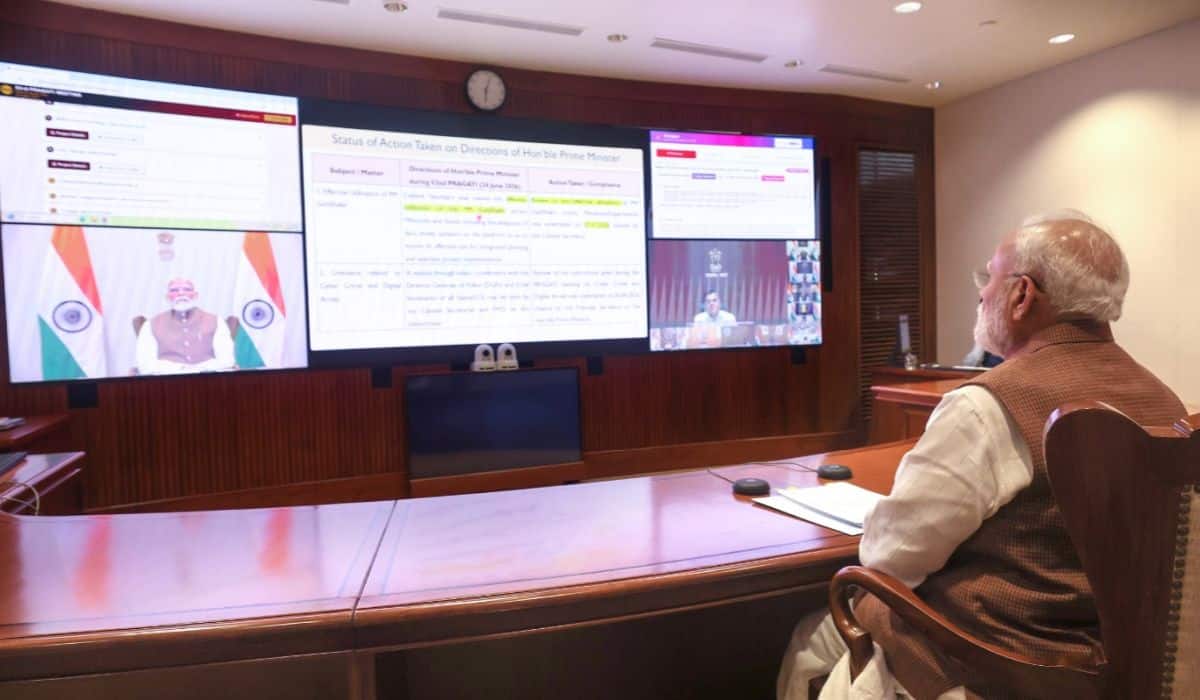
PM chairs 53rd PRAGATI Meeting
August 25, 2026
PM reviews six key infrastructure projects across the Railway, Road and Power sectors
Projects reviewed span across 9 States with cumulative investment of more than ₹30,000 crore
PM says Infrastructure projects should be viewed as an integrated whole, rather than as individual sections or packages
PM calls for continuous reforms across all stages of project implementation and a proactive work culture across Ministries and States
PM says Speed must go hand-in-hand with quality
While reviewing AgriStack, PM emphasises the need to leverage the latest digital technologies including AI to derive greater value from agricultural data
On cyber fraud and ‘digital arrest’, PM stresses training, public awareness, cyber-safety education and coordinated action

Prime Minister Shri Narendra Modi chaired the 53rd meeting of PRAGATI, the ICT-enabled, multi-modal platform for Pro-Active Governance and Timely Implementation, at Seva Teerth earlier today.

During the meeting, Prime Minister reviewed six key infrastructure projects across the Railway, Road and Power sectors, spanning nine States with a cumulative cost of more than ₹30,000 crore. The projects, significant for strengthening connectivity, supporting industrial and economic activity and improving public services, were reviewed with particular emphasis on adherence to timelines, inter-agency coordination, resolution of pending issues and expeditious completion.

Prime Minister emphasised that delays in infrastructure projects have consequences beyond cost escalation, as they also postpone the benefits intended for citizens, businesses and the economy. He said that infrastructure projects should be viewed and monitored as an integrated whole, rather than as isolated sections, stretches or packages. He noted that progress in individual packages should ultimately translate into timely completion and operationalisation of the entire project. Ministries and States were therefore asked to adopt an end-to-end approach, and address critical gaps that could delay the overall commissioning and delivery of benefits. He called for fostering a proactive work culture across Ministries and State Governments, with greater ownership at every level of project implementation.

Prime Minister stressed the need to explore common utility corridors for infrastructure services, wherever feasible, particularly while planning major transport and infrastructure projects. He called upon Ministries and States to examine such integrated approaches at the planning stage itself, keeping in view their technical and economic feasibility.

Prime Minister said that speed of execution must be accompanied by uncompromising quality. He called upon Ministries, States and implementing agencies to adopt modern technologies and strengthen quality assurance and supervision at every stage.

While reviewing AgriStack under the Digital Agriculture Mission, Prime Minister emphasised the need to leverage the latest digital technologies, including Artificial Intelligence, to derive greater value from agricultural data. He stressed that the data ecosystem should be effectively utilised across the agricultural value chain, from input planning to processing, enabling more informed interventions, better targeting and data-driven decision-making. He appreciated the efforts of the States and the Central Government in building the AgriStack ecosystem and called for further strengthening its use for delivering better outcomes for farmers.

During the review of cyber fraud cases, including incidents of digital arrest, Prime Minister said that prevention must be strengthened through a sustained focus on training, awareness and education. He stressed the need for continuous and targeted public-awareness campaigns, particularly for senior citizens, youth and other vulnerable sections, to familiarise them with common fraud techniques, warning signs and safe digital practices. He also called for regular capacity-building of personnel involved so that emerging modes of cyber fraud are identified and acted upon swiftly.