New Delhi : Gujarat Chief Minister Shri Narendra Modi today demanded a white paper on internal security situation in the country, which continues to be vulnerable to the threats posed by cross border terrorism and left wing extremism; besides becoming increasingly susceptible to newer forms of security threats such as cyber-attacks, narco-terrorism and terror-financing. He also criticized the UPA Government for raising a pitch for national security but indulges only in political security.
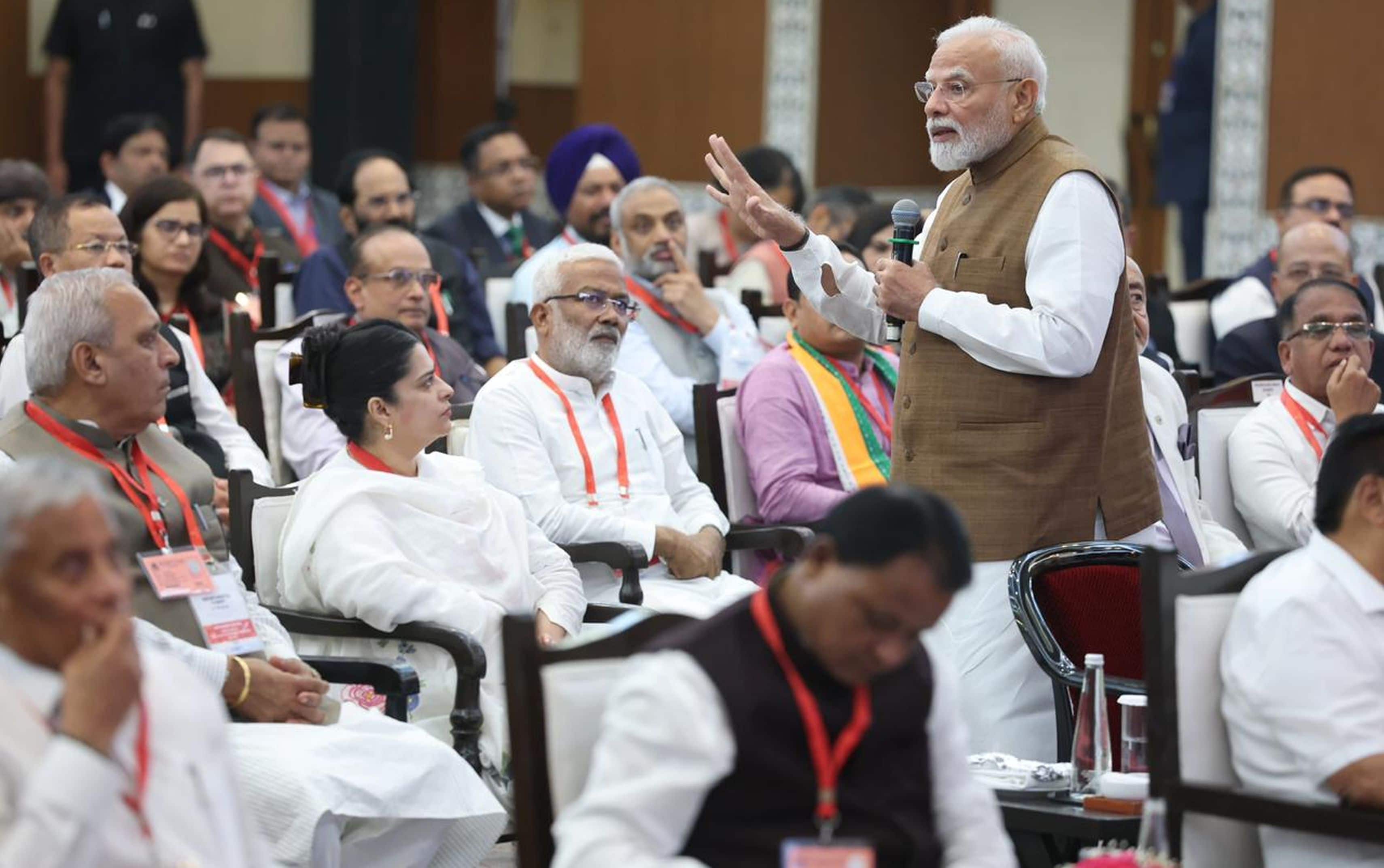
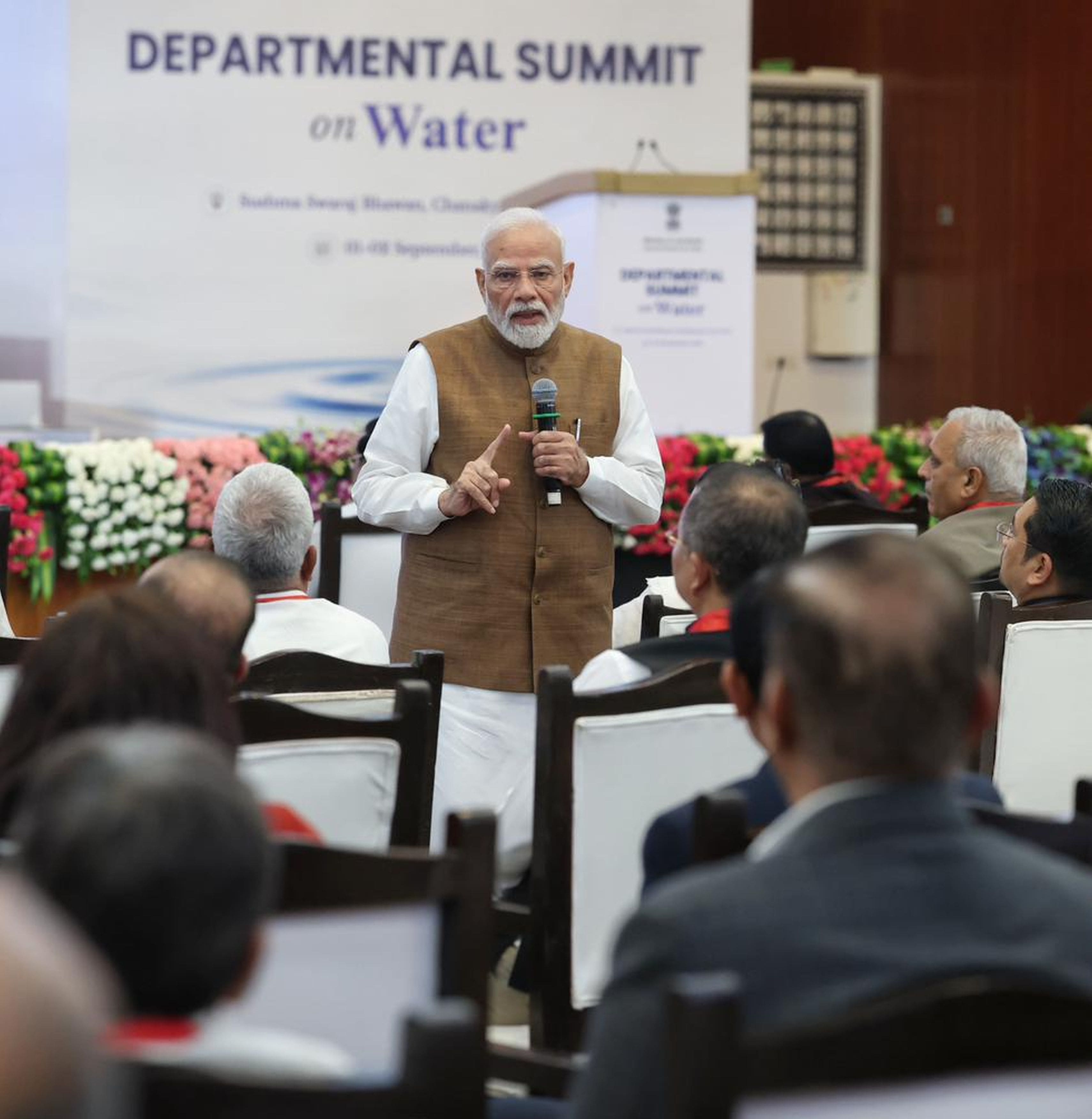
Speaking at the Conference on internal security convened by the Government of India under the chairmanship of Prime Minister Dr. Manmohan Singh in the presence of various Chief Ministers at Vigyan Bhawan here, Shri Modi affirmed that a two-pronged strategy must be followed to tackle Left-Wing Extremism. We do not have a pre-emptive strategy but only a reactionary strategy. There is an urgent need to not only focus upon Maoist violence-affected states but also Maoist violence-targeted regions.
From Pashupati to Tirupati, Maoists have spread a bloodied red corridor. Now they are targeting areas of the country which are the drivers of the industrial progress of the country, he said, adding that he had earlier informed the Prime Minister about the potential targeting of the ‘Golden Corridor’ of the Pune-Mumbai-Ahmedabad industrial belt by the Left Wing Extremism's document on its urban plan. This had been proved in the written reply given by GoI in a Lok Sabha question on October 13, 2011. He demanded that the Central Government must convene a separate meeting of Maoist-targeted States on the lines of the meeting of Naxal-affected States slated later for the day.

Urging the Prime Minister to disband the NCTC proposal for once and all, the Gujarat Chief Minister asserted that the Centre is constantly weakening the federal structure in the name of setting up newer superstructures. He further stated that this will add to multiplicity of existing agencies and will destroy the Constitutional fabric of the well-established agencies in the country.
He cited the example of how MAC (Multi Agency Centre) was established under the Intelligence Bureau but now it is proposed to be shifted to Ministry of Home Affairs. There remains considerable scope for further strengthening of its functioning such that it can provide more actionable intelligence inputs on a real time basis.

On the issue of Modernization of Police Force in the context of funding, many states had made a special request for 100 per cent central funding of the MPF Scheme central funding of the MPF Scheme and not burdening the State Government with a 25 per cent share. But, the Union government instead of agreeing to the same, chose to increase the state share from 25 per cent to 40 per cent. Is this how Go I react to the suggestions of State Governments, he questioned.
Shri Modi pointed out that to strengthen the Coastal Security Mechanism inGujaratState, a Marine Commando Battalion has been created, with its recruitment already underway. In order to setting up of a Marine Police Training Academy in Gujarat, the Union Home Ministry had initially asked for 25 acres of land to set up such a training academy, which the Gujarat Government had promptly responded to, agreeing to provide it for free. Subsequently, the requirement of land was increased to 250 acres. This too the Government of Gujarat conveyed willingness to provide for free - identifying the land in Dwarka, inJamnagardistrict.
He asked the Central government to call a separate meeting of Chief Ministers of all maritime states to discuss all such issues related to coastal and maritime security in a comprehensive manner.
The Gujarat Chief Minister suggested entrusting border fencing to an organization created along the lines of the Border Road Organisation (BRO) - a company of defence personnel / engineering corps to undertake such work instead of the present CPWD. He further emphasized that to strengthen our border security solar parks should come up on international borders of Gujarat and Rajasthan, making the borders ofIndia more secure and also benefitting the energy sector of the country.

Shri Modi also demanded speedy implementation of the recommendations of Sarkaria Commission and Punchchi Commission on settling the inter-state conflicts and Centre-States disputes in an amicable manner.
Gujarat Chief Minister opined that a strong message should emanate from this meeting that the entire country supports the state of Chhattisgarh and its Chief Minister Shri Raman Singh. He further stressed on zero tolerance towards Left Wing Extremism.
Shri Modi drew the attention of the august gathering to the Andhra Pradesh incident where a District Collector was kidnapped by Maoists who demanded release of their seven cadres, which included a chairperson of an NGO run by a member of the National Advisory Council!
Gujarat Minister of State for Home Shri Rajanikant Patel, Principal Secretary Shri G.C.Murmu (Law & Order) Shri Amitabh Pathak, Director General of Police and Resident Commissioner Shri Bharat Lal attended the meeting.