"Today, the development of the people of Jammu and Kashmir is one of the top priorities of our government. Our government is making every decision for the betterment of the state whether it is women empowerment, opportunities for youth, the welfare goals of Dalits, victims and the underprivileged or constitutional and basic rights of the people."- Prime Minister Narendra Modi
Known as the crown jewel of India, the state of Jammu and Kashmir had long been under the siege of terrorism, militancy, underdevelopment, and dynastic politics. However, as Prime Minister Narendra Modi assumed office in 2014, the state has witnessed a remarkable shift in its destiny and dynamics, particularly after the historic decision to abrogate Article 370.
This move has paved the way for comprehensive development, addressing historical deprivations and fostering positive changes across the board.
Restoring Grassroots Democracy and Political Rights:
The abrogation of Article 370 has enabled the residents of Jammu and Kashmir to enjoy full rights as outlined in the Constitution of India. Implementing central laws has facilitated the establishment of a three-tier Panchayati Raj System, bringing elected representatives to the forefront of democratic governance. As elections to Block Development Councils took place for the first time in the history of J&K, panchayats and urban local bodies have gained autonomy and empowerment via adequate transfer of funds, functions, and functionaries.
Voting rights have now been extended to West Pakistani Refugees, Valmikis, and Safai-karamcharies, who were previously excluded despite being residents of Jammu and Kashmir since Independence.
In addition, 10% reservation for Economically Weaker Sections and 4% reservation to Pahari-speaking people, along with a provision for reservation of seats for the Scheduled Tribes community, exemplifies the government's commitment to inclusive development and wider representation of diverse societal needs.
Furthering Good Governance and Social Welfare:
PM Modi's government has been particularly conscious of saturating hitherto excluded areas and communities with basic amenities and newer avenues of growth.
As Swachh Bharat Abhiyan ushered in a new era of sanitation across India, 100% of J&K villages have also been declared Open Defecation Free Plus. 100% saturation has been achieved in 17 beneficiary-centric schemes, including PM Ujjwala, UJALA, and SAUBHAGYA. 12.53 lakh LPG connections have been released in J&K under PM Ujjwala Yojana. In addition, 3.84 lakh houses have been sanctioned in the UT under PM Awas Yojana.
Further, in a push to Digital India and financial inclusion, J&K boasts 27.42 lakh beneficiaries under PM Jan-Dhan Yojana and 19.42 lakh RuPay cards have been issued. Schemes implemented to benefit the elderly, widows, and Divyangjans have also recorded 100% saturation, with a coverage of 10.38 lakh pensioners being paid Rs. 1,000 per month (double the numbers of 2014-15).
Affordable, Accessible, and Quality Healthcare:
Healthcare in Jammu and Kashmir has significantly improved with the introduction of the AB-PMJAY-SEHAT scheme, providing free health insurance coverage up to Rs. 5 lakh per family to all residents. Over 82 lakh beneficiaries have been enrolled under the scheme, with nearly 9 lakh having utilised the scheme with claims totalling Rs. 1,325 crore.
Further, various health initiatives have improved access to healthcare facilities, including 227 Jan Aushadhi Kendras, 19 Amrit pharmacies, Ayushman Bharat Digital Mission, e-Sanjeevani, and Tele-Manas.
All this has resulted in notable reductions in Infant Mortality Rates—from 22 per 1,000 in 2019 to 16.30 per 1,000 in 2023—among many other improvements in health indices.
Women at the Heart of Development:
Under PM Modi's government, Nari Shakti has received the attention and care hitherto missing in the governance paradigm of this country. Besides assisting them with multiple flagship schemes, the Modi government has helped the cause of women in J&K through efforts like the Violence Free Home – A Woman's Right project, under which women victims receive assistance from professional social workers via special cells in each district.
There is a 15% horizontal reservation for women in non-gazetted ranks in J&K police services. Further, 2,014 new posts were created, and two exclusive women battalions were set up in the UT police.
Tribal Dignity Restored:
Scheduled Tribes have ensured increased representation in the legislative assembly as nine seats have been reserved for them for the first time. Significant investments have been made by setting up eight new tribal hostels, 200 smart schools, and 6 Eklavya Model Residential Schools. Tribals have also been supported with skill development initiatives, as 2,000 tribal individuals receive training while 46,000 students have received scholarships. In addition, 2,306 Forest Rights Certificates have also been issued, empowering tribals in the state.
Opening Up New Avenues for Youth:
Jammu and Kashmir's youth have experienced unprecedented education and skill development opportunities. The establishment of 7 new medical colleges, 800 more MBBS seats and 1,870 B.Sc. nursing seats, IIT Jammu, IIM Jammu, operationalisation of AIIMS Jammu, and construction of AIIMS Kashmir have opened avenues for quality education. Additionally, there has been a 210% rise in Pre, Post, and Merit cum Means Minority Scholarship Schemes, from 1.43 lakh in 2018-19 to over 3 lakh in 2022-23. New schemes like Mumkin, Tejaswani, and Spurring Entrepreneurship were introduced to support business establishment and sustainable livelihood projects under Mission Youth.
As the sports potential of the UT remains untapped, 30 sports infrastructure projects along with sports equipment have been sanctioned in J&K and Ladakh, amounting to over Rs. 273 crore. Over 62 lakh participations have been witnessed in various sports activities, a significant increase from less than two lakhs in 2018-19.
Boost in Employment Generation
With the constitution of the Accelerated Recruitment Committee in 2020, transparency has become the new norm for public sector recruitment. As a result, 31,830 vacancies have been successfully filled since August 2019. Further, over 4.7 lakh candidates have been engaged in career counselling sessions, and over 2.1 lakh have participated in awareness camps for career guidance.
7.4 lakh self-employment and livelihood opportunities have been created in J&K since 2021-22, while nearly 32,000 youth have been trained under the HIMAYAT scheme.
Accelerated Infrastructure Development
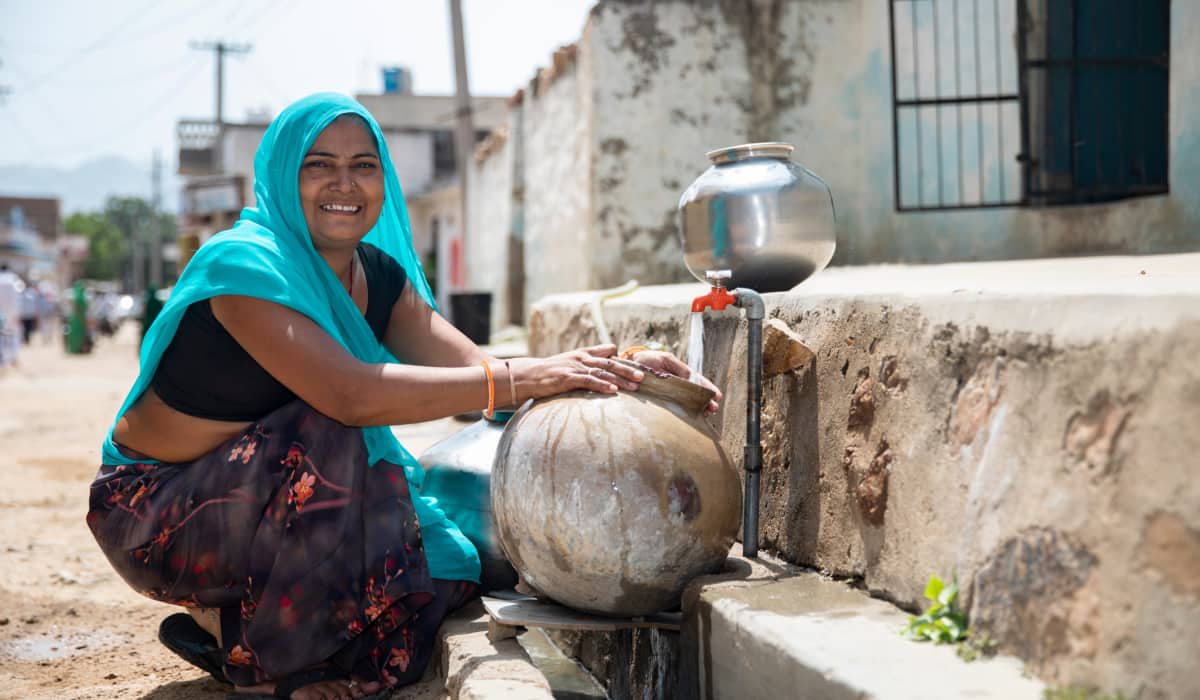
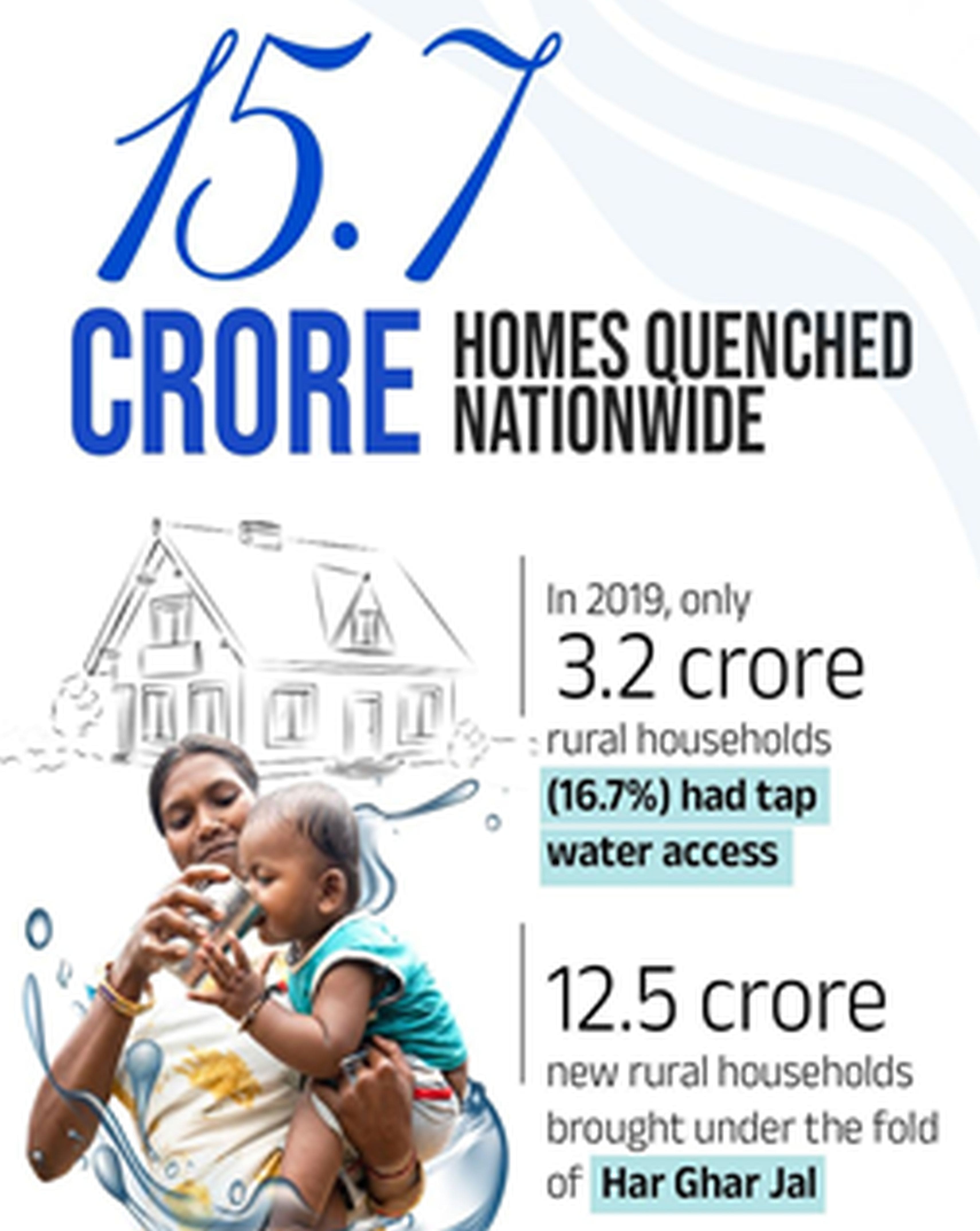
Be it the 13.54 lakh tap water connections to rural households under the Jal Jeevan Mission or over 8,000 km of roads constructed under PM Gram Sadak Yojana—infrastructure development has been a key priority of the Modi government in J&K. Further, 100% of households have now been electrified in the UT even as 32 out of total 53 projects under the Prime Minister's Development Package worth Rs. 58,477 crore stand completed.
Further, the Chenab rail Bridge, the world's highest railway bridge and the Chenani-Nashri tunnel, India's longest road tunnel, have been completed. Air traffic to and from J&K has doubled post-2019, along with the availability of night landing facilities.
Digital Transformation and Business Boost
Digital initiatives have transformed governance, making services accessible to state residents. Today, J&K provides the maximum number of e-Gov services, including M-Seva, digital Village Centre, and the e-UNNAT portal.
Invigorating the business environment in J&K are several initiatives like the new Central Sector Scheme for Industrial Development (with a budget of Rs. 28,400 crore). Key policy initiatives are J&K Industrial Policy 2021-30, J&K Industrial Land Allotment Policy 2021-30, and J&K Private Industrial Estate Development Policy 2021-30. These initiatives have attracted investment proposals totalling Rs. 88,915 crore, promising over 3.98 lakh employment opportunities.
Also, handloom and handicraft exports have doubled from Rs. 563 Crore in 2021-22 to Rs. 1116.37 Crore in 2022-23.
Farmers Welfare
Initiatives like the Holistic Agriculture Development Plan and the extension of PM KISAN to all eligible farmers have positively impacted the agricultural sector. As Rs. 2,517.08 crore have been directly credited to the bank accounts of 12.55 lakh farmers, nearly 13 lakh farmers have benefitted from the Kisan Credit Card scheme. The UT has added 2 lakh MT of cold storage facilities to ensure better returns for growers. High-density plantations covering 2900 hectares, including 320 hectares for apples and 2400 for sub-tropical fruits, have boosted the income of apple growers. As Kashmiri saffron has received a GI tag, a Saffron Park has been established at Dusoo Pampore, serving as a one-stop centre for saffron-related linkages.
Tourism Soars in J&K:
A record 1.88 crore tourists visited Jammu and Kashmir in 2022, and 1.85 crore tourist arrivals have been registered in 2023 (till October). The focus on tourism development in the state is evident in establishing over 1,485 homestays, providing a bed capacity of over 10,000.
Zero Tolerance Policy Against Terrorism and New Era of Peace:
The government's robust measures against terrorism, including intensified operations and preventive strategies, have resulted in a significant decline in terror incidents, civilian casualties, and security personnel fatalities. The number of terror incidents has declined from 228 in 2018 to 41 in 2023; civilian casualties declined from 55 in 2018 to 13 in 2023; security personnel killed in action declined from 91 in 2018 to 20 in 2023.
In conclusion, the comprehensive development witnessed in Jammu and Kashmir under the Modi government reflects a commitment to inclusivity, social welfare, economic growth, and peace-building. The transformative initiatives undertaken across various sectors have laid the foundation for a brighter future for the people of Jammu and Kashmir.