Nagar Ratna Awards: Ahmedabad best-run Municipal Corporation

Published By : Admin | July 8, 2011 | 15:44 IST

It was a function held in presence of the President of India to present the awards to best performing municipal bodies of India, and Gujarat was the state that bagged the highest number of awards with Ahmedabad Municipal Corporation adjudged the best-run organisation prize.

Ahmedabad's Mayor Asit Vora, Municipal Commissioner IP Gautam, Deputy Municipal Commissioner Mahajan receiving the award from the President of India

victoryA selection committee, headed by the former Supreme Court Justice evaluated the performance of various cities on nine parameters, while adjudging the winners. Twenty urban local bodies participated in this competition. They were judged on various parameters like innovative ideas, responsive application, data verification and assessment.

There were two categories of awards. Three awards were given for the best overall performance. Nine awards were declared for good performance in different segments such as public health, roads and streets.

The Ahmedabad Municipal Corporation, which was adjudged the best-run organisation, was given Rs.5 lakh and a trophy. The Mysore City Corporation received the second prize and the Pune Municipal Corporation was declared the third winner. Gujarat looked the best-performing State after four of the 12 awards were bagged by Ahmedabad, Surat, Rajkot and Vadodara. Maharashtra inched a close second as three urban local self-government bodies – Pune, Nashik, Kalyan-Dombivali – bagged prizes.

Under the segment awards, the best public services award went to the Nashik Municipal Corporation. The Kalyan –Dombivili Municipal Corporation won the award for improvement of roads and streets.

The Vadodara Municipal Corporation won the award for providing basic amenities to urban poor. Bengaluru was awarded for financial management, Vishakhapatnam for use of Information Technology in governance and service delivery, Faridabad for recreational facilities, Rajkot for complaints redress system, Surat for innovation and Agartala for transparency and accountability.

Explore More
Today, the entire country and entire world is filled with the spirit of Bhagwan Shri Ram: PM Modi at Dhwajarohan Utsav in Ayodhya

Popular Speeches

Today, the entire country and entire world is filled with the spirit of Bhagwan Shri Ram: PM Modi at Dhwajarohan Utsav in Ayodhya
India's pace of economic growth shows that its Viksit Bharat dream is not out of reach

Media Coverage

India's pace of economic growth shows that its Viksit Bharat dream is not out of reach
NM on the go

Nm on the go

Always be the first to hear from the PM. Get the App Now!
...
PM chairs valedictory session of National Departmental Summit on Water
September 02, 2026
This marks the first in a series of Summits envisioned by PM to strengthen spirit of Team India and deepen cooperative federalism
PM stresses adoption of a continuous process of review and follow up to act on actionable and time-bound outcomes
Emphasising Jan Bhagidari, PM calls for promoting Jal Utsav to deepen public awareness on water conservation
PM calls for greater adoption of water-saving technologies and learning from global best practices
PM calls for robust water data governance through effective use of AI
PM suggests structured inter-State Study-visits involving public representatives, officials and farmers on water related issues

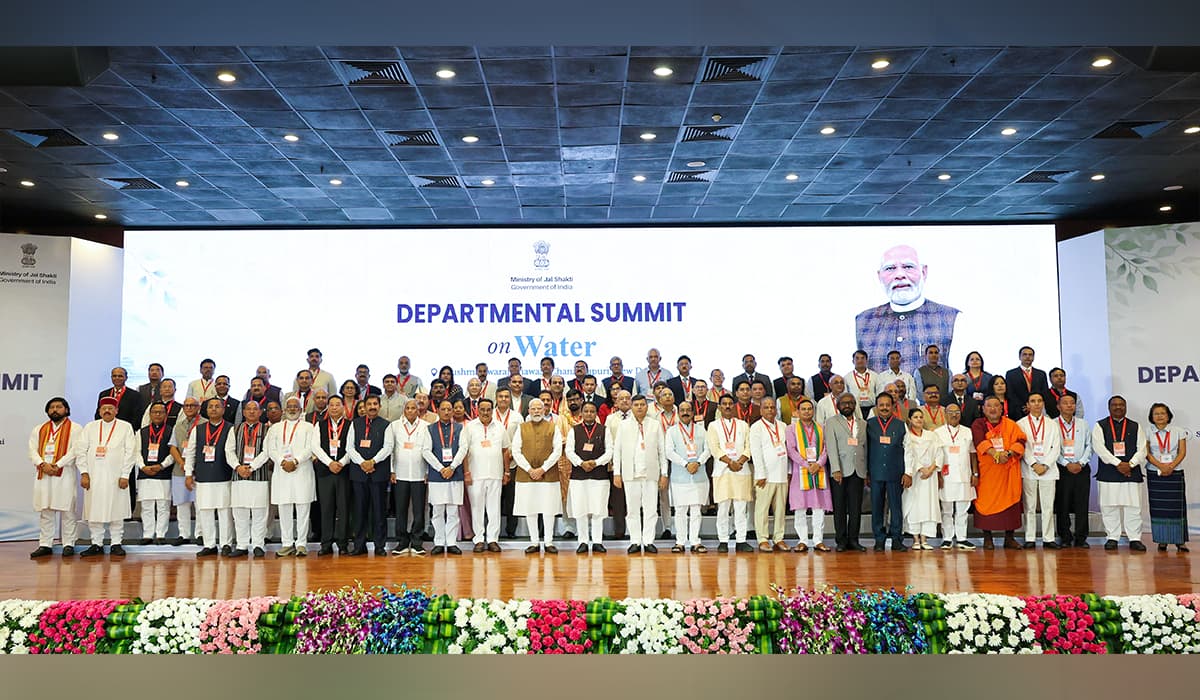
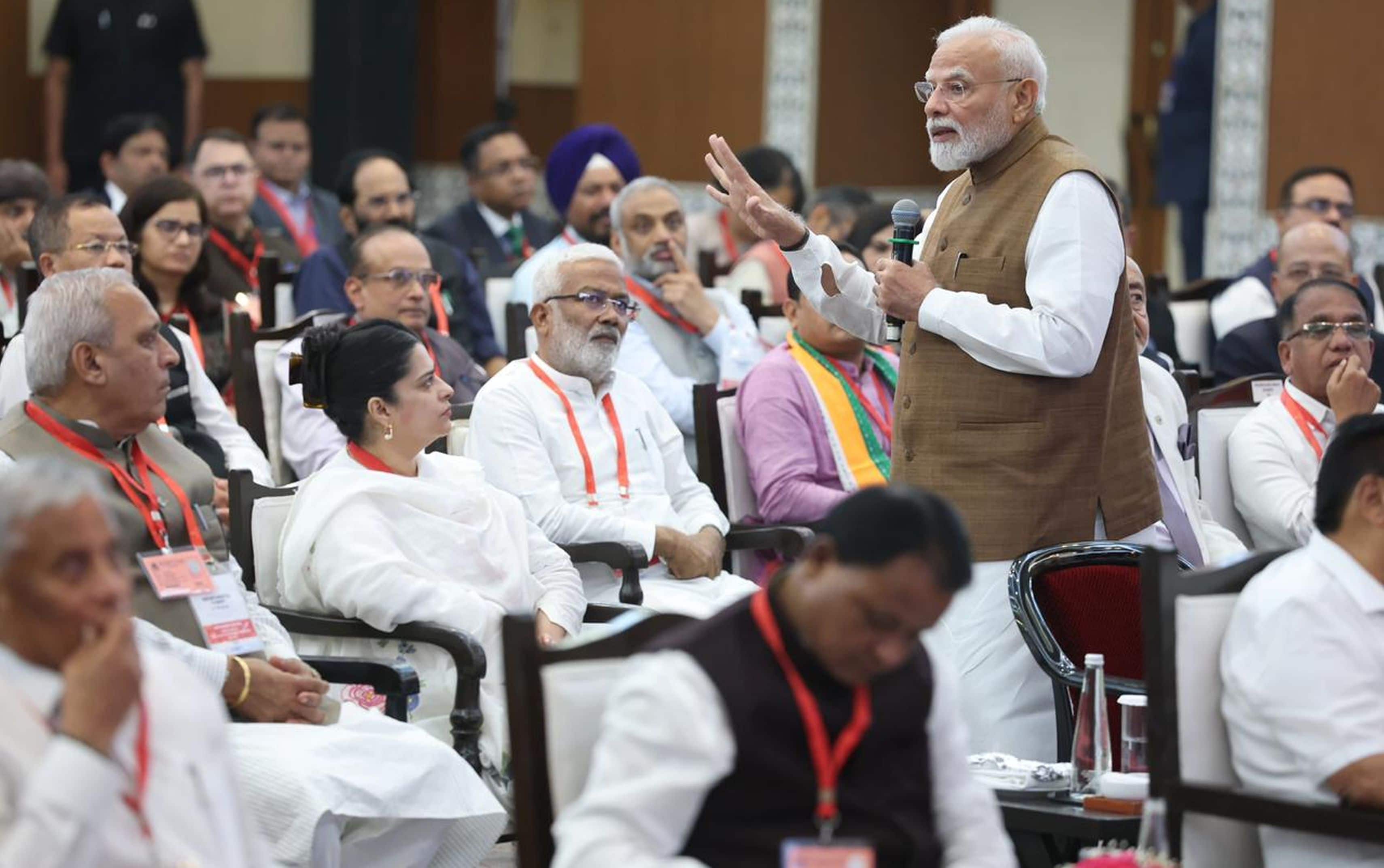
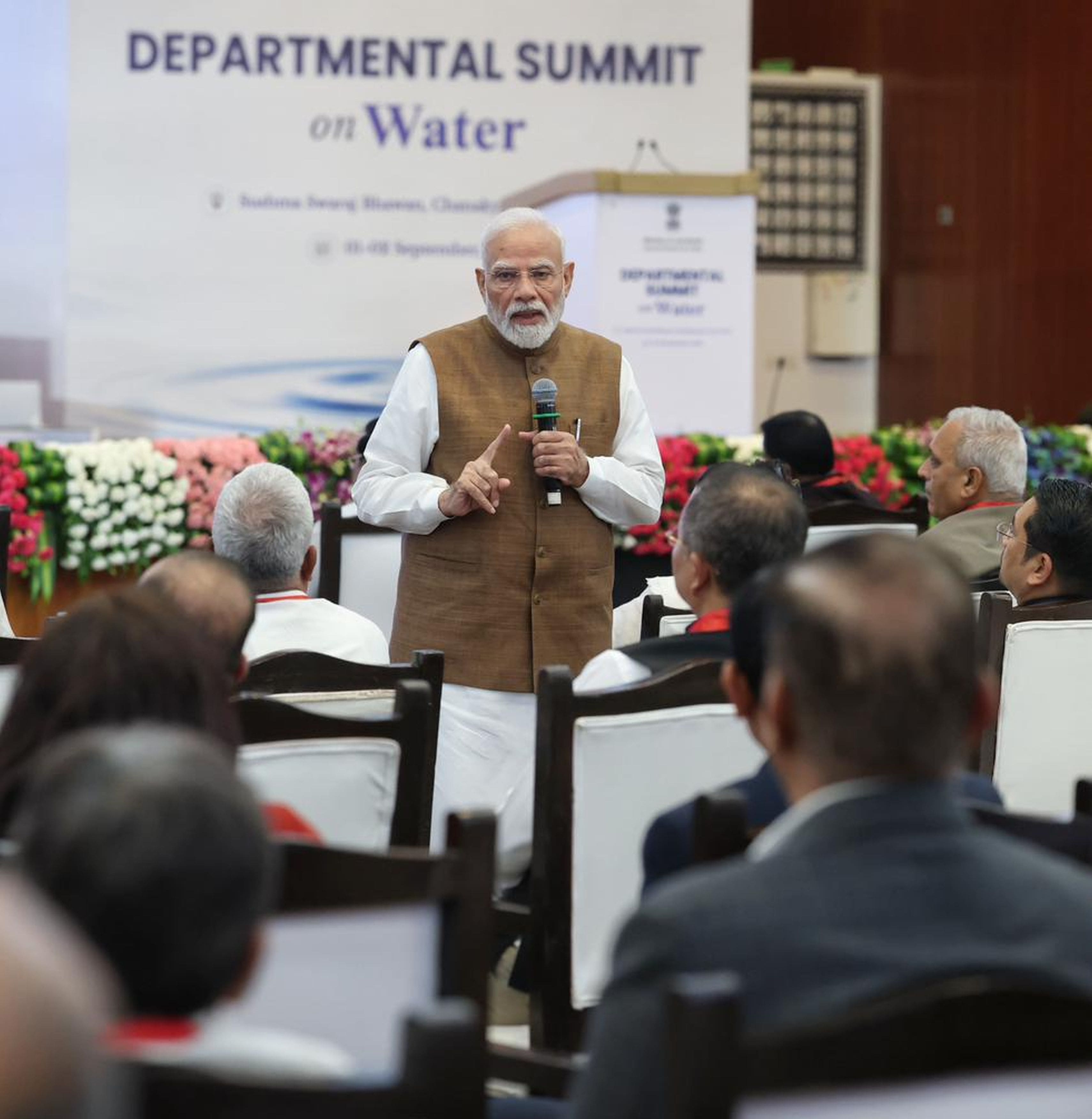
Prime Minister Shri Narendra Modi today chaired the valedictory session of the two-day National Departmental Summit on Water, organised by the Ministry of Jal Shakti. The Summit is the first in a series of Departmental Summits envisioned by Prime Minister to strengthen the spirit of Team India, deepen cooperative federalism and foster collective ownership of national priorities through closer collaboration between the Centre and the States. It brought together Ministers and senior officials from States and Union Territories for focused deliberations on various dimensions of India’s water security.

Prime Minister appreciated the intensive two-day deliberations and emphasised that the actionable and time-bound action points emerging from the Summit should be pursued through a continuous process of review and learning. He suggested that the Summit should not remain a one-time exercise and called for a continuous process of review and follow-up.

Prime Minister called for sensitising Urban Local Bodies to the challenges arising from urbanisation, including population growth and future water requirements, and suggested organising similar Chintan Shivirs for Urban Local Bodies. He called for greater adoption of water-saving technologies. He also suggested dedicated exhibitions and workshops, including exposure to global best practices, to enable Indian manufacturers and stakeholders to develop and scale efficient solutions.

Emphasising Jan Bhagidari, Prime Minister suggested promoting “Jal Utsav” to create greater awareness among people. Prime Minister called for making de-silting a regular programme and developing clear criteria and SOPs for de-silting. On dam safety, he stressed rigorous preparedness before every monsoon, adherence to prescribed precautions and creating awareness among school students, including through suitable incorporation in educational curricula.

Prime Minister further called for strengthening knowledge and capacity on water management and governance in universities and higher educational institutions. He suggested structured inter-State study-visits involving public representatives, officials and farmers to facilitate practical learning and replication of successful interventions.

Prime Minister called for robust water data governance, with water-sector data brought together, systematically managed, analysed and effectively utilised. He recommended the use of AI for data collection and analysis through a uniform format. He also stressed anticipatory and integrated planning to address water scarcity through suitable utilisation of treated water for agriculture and industrial purposes.

Drawing upon his experience as Chief Minister of Gujarat, Prime Minister noted that instances of water scarcity could be transformed into opportunities through systematic planning, commitment and deployment of adequate resources and capable officers.

Union Minister for Jal Shakti Shri C. R. Patil highlighted four key outcomes of the summit: accelerated completion of water infrastructure projects; strengthening water conservation as a sustained people’s movement; ensuring long-term sustainability of drinking-water sources; and institutionalising effective operation and maintenance of rural drinking-water schemes.